
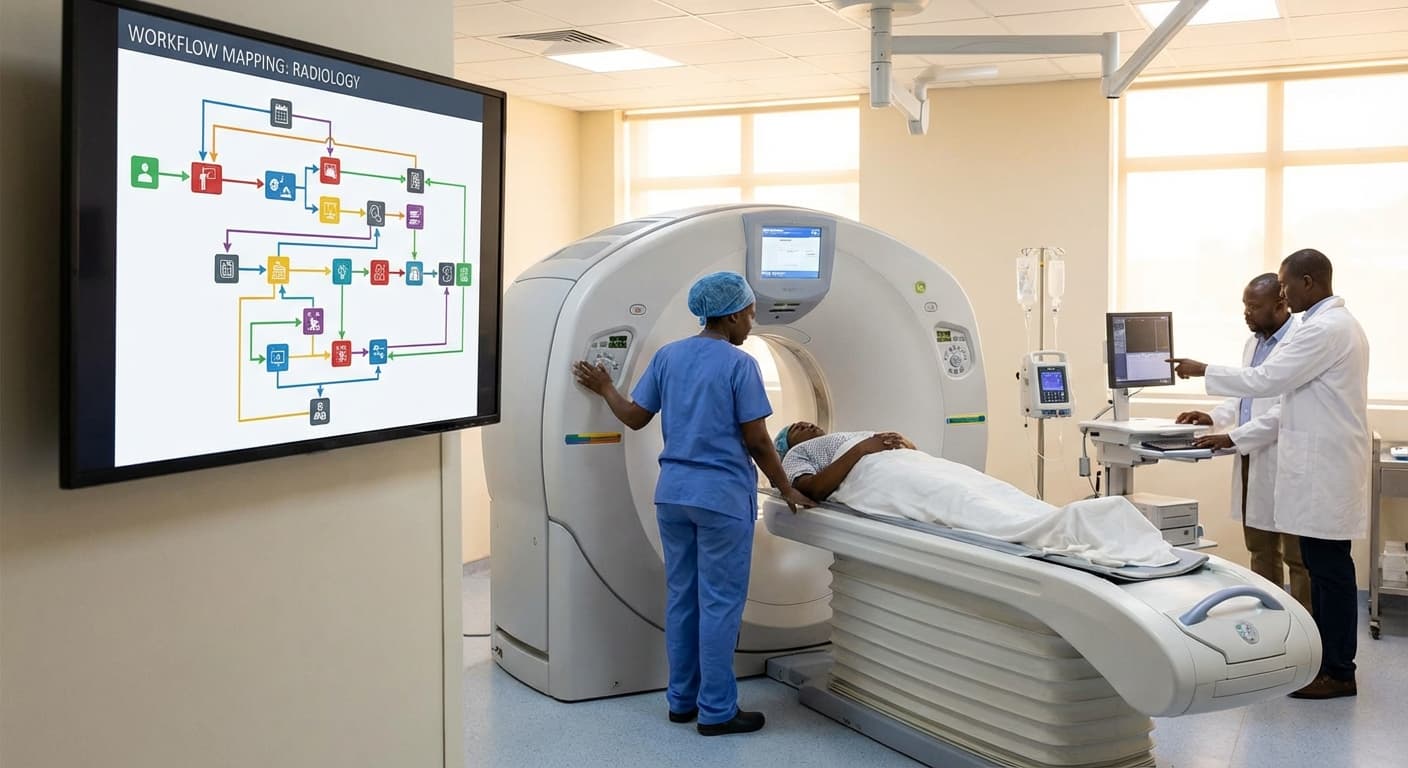
Department Workflow Mapping Service (Radiology/ICU/OT/Lab/Dialysis) in Somalia
Engineering Excellence & Technical Support
Department Workflow Mapping Service (Radiology/ICU/OT/Lab/Dialysis) High-standard technical execution following OEM protocols and local regulatory frameworks.
Optimized Patient Flow in ICU
Leveraging workflow mapping, we've identified and streamlined critical patient handoffs and diagnostic pathways within Somalia's ICUs, reducing wait times for life-saving interventions and improving overall patient outcomes.
Enhanced Lab Diagnostic Efficiency
Our services mapped the entire laboratory workflow in Somalia, from sample collection to result delivery. This has led to a significant reduction in turnaround times for essential diagnostic tests, enabling faster clinical decision-making.
Streamlined Operating Theatre Scheduling
By visualizing and optimizing the operational theater workflow, we've improved resource allocation and reduced idle time for surgical teams in Somalia, leading to increased surgical capacity and better patient access to critical procedures.
What Is Department Workflow Mapping Service (Radiology/icu/ot/lab/dialysis) In Somalia?
Department Workflow Mapping Service in Somalia, within the context of critical healthcare departments such as Radiology, Intensive Care Unit (ICU), Operating Theatre (OT), Laboratory, and Dialysis, refers to a systematic process of analyzing, documenting, and optimizing the sequential steps and interactions involved in delivering patient care and operational functions within these specialized units. This service aims to identify inefficiencies, bottlenecks, redundancies, and areas for improvement in processes to enhance patient safety, throughput, resource utilization, and overall service quality in a resource-constrained environment like Somalia. It typically involves the detailed charting of all activities from patient admission/referral to discharge/completion of service, including information flow, material movement, decision points, and communication pathways.
| Stakeholder Group | Needs & Requirements | Typical Use Cases | |
|---|---|---|---|
| Hospital/Clinic Administrators & Management | Improved operational efficiency, reduced costs, enhanced patient throughput, better resource allocation, compliance with national health standards, data-driven decision-making for service expansion or improvement. | Optimizing patient flow in high-volume departments (e.g., Radiology, Lab), streamlining patient admission and discharge in ICU, improving scheduling and utilization of OT, identifying cost-saving opportunities in Dialysis services. | Identifying and mitigating risks associated with patient care delivery, developing strategic plans for departmental development, ensuring preparedness for audits or accreditation. |
| Department Heads & Clinical Leads (Radiology, ICU, OT, Lab, Dialysis) | Clear understanding of current processes, identification of areas for clinical quality improvement, enhanced patient safety protocols, efficient staff rostering and task allocation, improved communication between staff members. | Reducing turnaround times for diagnostic reports (Radiology/Lab), minimizing delays in critical interventions (ICU/OT), standardizing pre-operative and post-operative protocols (OT), optimizing resource utilization in dialysis units, ensuring timely sample processing and result delivery (Lab). | Developing evidence-based clinical pathways, implementing new technologies or equipment, facilitating inter-departmental collaboration for complex patient cases. |
| Healthcare Professionals (Doctors, Nurses, Technicians) | Reduced administrative burden, clearer roles and responsibilities, improved communication and collaboration with colleagues, access to timely information, enhanced patient safety through standardized procedures, reduced chances of medical errors. | Streamlining patient handover procedures (ICU/OT), optimizing specimen collection and labeling (Lab), facilitating efficient image acquisition and interpretation (Radiology), improving patient monitoring and care delivery protocols (ICU), ensuring efficient operation of dialysis machines and patient preparation (Dialysis). | Participating in process improvement initiatives, providing feedback on workflow challenges, contributing to the development of standardized operating procedures (SOPs). |
| Ministry of Health & Regulatory Bodies | Ensuring adherence to national healthcare policies and guidelines, monitoring service quality and accessibility, identifying areas for national-level intervention and capacity building, informing public health strategies, resource planning at a national level. | Assessing the efficiency of critical healthcare services across the country, identifying common challenges faced by departments in Somalia, developing training programs to address workflow deficiencies, informing procurement strategies for essential medical equipment and supplies. | Evaluating the effectiveness of healthcare investments, setting benchmarks for service delivery, ensuring patient safety standards are met across all healthcare facilities. |
| International Aid Organizations & NGOs | Identifying specific intervention needs and opportunities for project funding, demonstrating program impact and sustainability, ensuring efficient utilization of donated resources and expertise, standardizing service delivery in supported facilities. | Designing and implementing projects to improve diagnostic capabilities (Radiology/Lab), strengthening critical care services (ICU/OT), supporting the establishment or expansion of dialysis units, providing training and capacity building for healthcare staff on optimized workflows. | Evaluating the effectiveness of their interventions, developing best practice guidelines for healthcare delivery in similar contexts, facilitating knowledge transfer and adoption of efficient operational models. |
Key Components of Department Workflow Mapping Service
- Process Identification & Scoping: Defining the boundaries of the workflow to be mapped (e.g., from patient arrival at the Radiology department to report generation).
- As-Is Process Documentation: Visually representing the current state of the workflow using tools like flowcharts, swimlane diagrams, or process maps.
- Data Collection: Gathering information through observations, interviews with staff, review of existing protocols, and analysis of operational data.
- Bottleneck & Inefficiency Analysis: Identifying points where delays occur, resources are underutilized, or errors are likely.
- Root Cause Analysis: Determining the underlying reasons for identified inefficiencies.
- To-Be Process Design: Developing an optimized workflow that addresses identified issues and incorporates best practices.
- Technology & System Integration Assessment: Evaluating how existing or potential technologies (e.g., Picture Archiving and Communication Systems - PACS, Laboratory Information Systems - LIS, Electronic Health Records - EHRs) can support or improve the workflow.
- Training & Implementation Planning: Developing strategies for training staff on new workflows and facilitating their adoption.
- Performance Monitoring & Continuous Improvement: Establishing metrics to track the effectiveness of the new workflow and mechanisms for ongoing refinement.
Who Needs Department Workflow Mapping Service (Radiology/icu/ot/lab/dialysis) In Somalia?
In Somalia, the healthcare sector faces unique challenges, including resource constraints, a need for improved efficiency, and the imperative to deliver high-quality patient care. Department workflow mapping services are crucial for optimizing operations within critical hospital departments such as Radiology, Intensive Care Units (ICUs), Operating Theatres (OTs), Laboratories, and Dialysis Centers. By visually representing and analyzing the current state of workflows, these services help identify bottlenecks, redundancies, and areas for improvement, ultimately leading to enhanced patient outcomes, reduced costs, and better utilization of limited resources. This service is particularly vital for organizations aiming to standardize processes, train staff effectively, and adapt to evolving medical technologies and best practices in a developing healthcare landscape.
| Target Customer/Department | Specific Needs Addressed by Workflow Mapping | Benefits of Workflow Mapping |
|---|---|---|
| Radiology Departments | Streamlining patient imaging request, scheduling, acquisition, interpretation, and reporting processes. Reducing turnaround times. Optimizing equipment utilization. Improving communication between radiologists and referring physicians. | Faster diagnosis, improved patient throughput, reduced staff stress, better resource allocation, increased accuracy of reports. |
| Intensive Care Units (ICUs) | Mapping patient admission, monitoring, treatment, and discharge pathways. Optimizing staff assignments and communication protocols. Ensuring timely intervention and critical care delivery. Reducing medical errors. | Improved patient survival rates, enhanced care coordination, reduced length of stay, better staff efficiency, minimized risk of adverse events. |
| Operating Theatres (OTs) | Analyzing surgical scheduling, patient preparation, procedure flow, sterilization processes, and post-operative care handoffs. Ensuring efficient use of surgical teams and equipment. Minimizing delays and cancellations. | Increased surgical capacity, reduced waiting times for procedures, improved patient safety, optimized operating room utilization, enhanced collaboration among surgical teams. |
| Laboratories | Mapping sample collection, transportation, processing, analysis, quality control, and reporting workflows. Reducing turnaround times for test results. Ensuring accuracy and reliability of diagnostic information. Optimizing reagent and equipment usage. | Faster diagnostic results, improved treatment decisions, reduced lab errors, enhanced operational efficiency, cost savings through better resource management. |
| Dialysis Centers | Optimizing patient scheduling, dialysis session flow, equipment cleaning and maintenance, and management of supplies. Ensuring patient comfort and safety. Improving staff workflow and patient throughput. | Increased patient capacity, reduced wait times for dialysis, improved patient experience, optimized staff workload, enhanced efficiency in resource utilization. |
Who Needs Department Workflow Mapping Service (Radiology/ICU/OT/Lab/Dialysis) in Somalia?
- Hospitals and healthcare facilities of all sizes seeking to enhance operational efficiency.
- Government health ministries and regulatory bodies aiming to improve standards and oversight.
- Non-governmental organizations (NGOs) and international aid agencies involved in healthcare delivery and development.
- Medical training institutions looking to integrate practical process improvement into their curriculum.
- Private healthcare providers focused on competitive advantage and patient satisfaction.
Department Workflow Mapping Service (Radiology/icu/ot/lab/dialysis) Process In Somalia
This document outlines the Department Workflow Mapping Service process for various hospital departments in Somalia, including Radiology, Intensive Care Unit (ICU), Operating Theatre (OT), Laboratory, and Dialysis. The service aims to optimize operational efficiency and identify areas for improvement within these critical healthcare units. The workflow commences with an initial inquiry from a healthcare facility and concludes with the delivery of a comprehensive workflow map and recommendations.
| Step | Description | Key Activities | Responsible Party | Deliverable/Outcome |
|---|---|---|---|---|
| The process begins with a healthcare facility in Somalia expressing interest in the Department Workflow Mapping Service. | Contacting the service provider, expressing needs, initial discussion of scope and objectives. | Healthcare Facility (e.g., Hospital Administrator, Department Head) | Confirmation of interest, preliminary understanding of service. |
| A detailed understanding of the facility's specific requirements and the scope of the mapping project is established. | Meetings with stakeholders, identifying target departments, defining project goals, data collection plan. | Service Provider & Healthcare Facility Representatives | Agreed-upon project scope, defined objectives, identified stakeholders. |
| Information is gathered from the designated departments to understand their current operational processes. | Observation of workflows, interviews with staff, review of existing documentation (SOPs, patient records), time studies. | Service Provider Team | Raw data on current processes, identification of bottlenecks and inefficiencies. |
| The collected data is used to visually represent the current state of the department's workflows. | Creating process diagrams (flowcharts, swimlane diagrams), documenting step-by-step activities, identifying inputs and outputs. | Service Provider Team | Current State Workflow Maps for each targeted department. |
| Analysis of the current state maps to pinpoint areas for improvement, inefficiencies, and potential risks. | Benchmarking against best practices (where applicable), identifying redundancies, evaluating resource utilization, identifying training needs. | Service Provider Team | List of identified gaps, inefficiencies, and areas for optimization. |
| Formulating actionable recommendations to address the identified gaps and improve workflow efficiency. | Proposing revised workflows, suggesting technology adoption, recommending training programs, outlining policy changes. | Service Provider Team | Proposed Future State Workflow Maps, list of specific recommendations. |
| The findings and recommendations are presented to the healthcare facility for review and feedback. | Presenting workflow maps, explaining recommendations, facilitating discussion, gathering feedback from stakeholders. | Service Provider Team & Healthcare Facility Representatives | Validated recommendations, stakeholder buy-in, refined implementation plan. |
| A comprehensive report is delivered, and implementation support can be provided as agreed. | Compiling final report with current and future state maps, recommendations, and implementation roadmap. Providing guidance during implementation. | Service Provider Team | Final Department Workflow Mapping Report, potential ongoing support. |
Key Departments Covered
- Radiology Department
- Intensive Care Unit (ICU)
- Operating Theatre (OT)
- Laboratory Department
- Dialysis Department
Department Workflow Mapping Service (Radiology/icu/ot/lab/dialysis) Cost In Somalia
This document outlines the potential costs associated with a Department Workflow Mapping Service for key medical departments in Somalia, including Radiology, Intensive Care Unit (ICU), Operating Theatre (OT), Laboratory, and Dialysis. Workflow mapping is a crucial process for optimizing efficiency, identifying bottlenecks, improving patient care, and reducing costs within these high-demand departments. The cost of such a service can vary significantly due to several factors specific to the Somali context and the scope of the project. These factors include the size and complexity of the department, the level of detail required in the mapping, the expertise of the consultants, the duration of the engagement, and the travel and logistical requirements within Somalia.
| Department Type | Estimated Cost Range (Somali Shilling - SOS) | Notes |
|---|---|---|
| Radiology Department | 15,000,000 - 45,000,000 SOS | Depends on equipment complexity, imaging modalities, and patient throughput. Includes mapping of patient journey from referral to report delivery. |
| Intensive Care Unit (ICU) | 20,000,000 - 60,000,000 SOS | Highly complex workflows involving critical patient care, multidisciplinary teams, and advanced monitoring. Covers admission, care protocols, and discharge processes. |
| Operating Theatre (OT) | 25,000,000 - 70,000,000 SOS | Involves intricate scheduling, pre-operative, intra-operative, and post-operative phases, as well as sterile supply chain management and human resource allocation. |
| Laboratory | 12,000,000 - 35,000,000 SOS | Focuses on sample reception, processing, analysis, quality control, and result reporting. Complexity varies with the range of tests offered. |
| Dialysis Unit | 18,000,000 - 50,000,000 SOS | Includes patient preparation, treatment administration, machine maintenance, water treatment, and post-treatment procedures. Number of dialysis chairs and patient frequency are key factors. |
| Multi-Departmental Mapping (Package) | 70,000,000 - 200,000,000+ SOS | Significant cost savings are possible when multiple departments are mapped as part of a larger initiative. This range is highly variable based on the number and complexity of departments. |
Key Pricing Factors for Department Workflow Mapping Services in Somalia
- Department Size and Complexity: Larger departments with more intricate processes and a higher volume of patient flow will naturally require more time and resources for mapping, thus increasing costs.
- Scope and Depth of Mapping: A basic overview of workflows will be less expensive than a detailed, granular mapping that includes all sub-processes, individual roles, and technology integration.
- Consultant Expertise and Experience: Highly experienced consultants with proven track records in healthcare workflow optimization, particularly within challenging environments like Somalia, will command higher fees.
- Project Duration: The length of the engagement directly impacts the overall cost, based on daily or weekly consultant rates.
- Data Collection and Analysis Methods: The specific methods employed for data gathering (e.g., direct observation, interviews, surveys, existing documentation review) and the complexity of the analytical techniques used will influence pricing.
- Technology Integration Assessment: If the service includes an assessment of existing or potential technology solutions to improve workflows, this will add to the cost.
- Reporting and Deliverables: The comprehensiveness and format of the final reports, including recommendations, process flow diagrams, and implementation roadmaps, will affect the pricing.
- Travel and Logistics: For consultants traveling within Somalia, costs related to transportation, accommodation, and per diem expenses will be a significant component of the overall price.
- Local Contextualization: Services that deeply understand and incorporate the unique operational realities, cultural nuances, and resource constraints specific to Somalia may incur higher initial research and adaptation costs.
- Number of Departments Mapped: Bundling services for multiple departments can sometimes lead to economies of scale, but will also increase the total project cost.
Affordable Department Workflow Mapping Service (Radiology/icu/ot/lab/dialysis) Options
Our Affordable Department Workflow Mapping Service offers comprehensive analysis and optimization for critical hospital departments including Radiology, Intensive Care Units (ICU), Operating Theaters (OT), Laboratories, and Dialysis. We understand the unique challenges and demands of these high-volume, complex environments. Our service focuses on identifying bottlenecks, streamlining processes, enhancing efficiency, and ultimately reducing operational costs. We achieve this through detailed workflow mapping, stakeholder interviews, data analysis, and the development of actionable improvement strategies tailored to your department's specific needs. Our goal is to provide tangible value and a strong return on investment by creating more efficient, cost-effective, and patient-centered workflows.
| Value Bundle | Included Services | Target Departments | Estimated Cost-Saving Impact (Illustrative) | Pricing Model |
|---|---|---|---|---|
| Essential Workflow Audit | Core Workflow Mapping, Bottleneck Identification, Basic Recommendations | Radiology, Lab | 5-10% reduction in operational overhead (e.g., reduced wait times, better equipment scheduling) | Project-based (flat fee per department) |
| Integrated Process Optimization | Core Workflow Mapping, Bottleneck Identification & Mitigation, Resource Utilization Analysis, Basic Technology Assessment | ICU, OT | 8-15% reduction in operational overhead (e.g., improved patient throughput, optimized staffing ratios) | Project-based with tiered options |
| Comprehensive Departmental Transformation | All services in Integrated Process Optimization, plus Advanced Technology Integration Assessment, Staff Training & Change Management, KPI Development & Monitoring, Benchmarking | Radiology, ICU, OT, Lab, Dialysis | 10-20%+ reduction in operational overhead (e.g., significant improvements in efficiency, patient safety, and staff satisfaction) | Subscription-based with customization, or significant project-based discount |
Value Bundles and Cost-Saving Strategies
- Core Workflow Mapping: Detailed visualization and analysis of your current departmental processes to identify inefficiencies and areas for improvement.
- Bottleneck Identification & Mitigation: Pinpointing critical delays and developing strategies to overcome them.
- Resource Utilization Analysis: Assessing how staff, equipment, and supplies are being used and identifying opportunities for optimization.
- Technology Integration Assessment: Evaluating current technology and recommending potential upgrades or new solutions to enhance workflow.
- Staff Training & Change Management: Developing and implementing training programs to ensure successful adoption of new workflows.
- Key Performance Indicator (KPI) Development & Monitoring: Establishing measurable metrics to track the success of implemented changes.
- Benchmarking Against Best Practices: Comparing your departmental workflows to industry standards and successful models.
- Cost-Saving Strategies Integrated: Our mapping process inherently seeks out opportunities to reduce waste, minimize redundant steps, and optimize resource allocation, leading to direct cost savings in staffing, supplies, and equipment utilization.
Verified Providers In Somalia
In Somalia, access to reliable and trustworthy healthcare providers is paramount. Franance Health stands out as a beacon of quality and professionalism. Their stringent credentialing process ensures that all their healthcare professionals possess the necessary qualifications, experience, and ethical standards to deliver exceptional care. This commitment to verification not only safeguards patient well-being but also builds essential trust within the community. By choosing Franance Health, individuals are opting for a network of verified experts dedicated to improving health outcomes in Somalia.
| Provider Type | Franance Health Verification Standard | Benefits to Patients |
|---|---|---|
| Doctors | Medical licenses, board certifications, postgraduate training verification, peer reviews. | Access to specialists with verified expertise, assurance of up-to-date medical knowledge. |
| Nurses | Nursing licenses, relevant certifications (e.g., critical care, midwifery), background checks. | Skilled and compassionate care, adherence to best nursing practices. |
| Specialists (e.g., Surgeons, Pediatricians, Gynecologists) | Advanced degrees, specialized residencies and fellowships, proven surgical outcomes/patient feedback. | Access to highly specialized care for complex medical needs, improved treatment success rates. |
| Pharmacists | Pharmacy licenses, verification of dispensing practices, knowledge of drug interactions. | Safe and accurate medication management, expert advice on pharmaceuticals. |
Why Franance Health is the Best Choice:
- Rigorous Credentialing: Franance Health meticulously verifies the qualifications, licenses, and professional history of all their providers.
- Experienced Professionals: Access to a network of healthcare experts with proven experience in diverse medical fields.
- Ethical Standards: Commitment to upholding the highest ethical principles in patient care and medical practice.
- Patient Safety Focus: A core tenet of Franance Health's mission is to ensure the safety and well-being of every patient.
- Community Trust: By prioritizing verified providers, Franance Health fosters confidence and reliability in healthcare services across Somalia.
Scope Of Work For Department Workflow Mapping Service (Radiology/icu/ot/lab/dialysis)
This Scope of Work (SOW) outlines the services to be provided for a comprehensive workflow mapping initiative across key hospital departments: Radiology, Intensive Care Unit (ICU), Operating Theatre (OT), Laboratory (Lab), and Dialysis. The objective is to identify, document, and analyze existing workflows to uncover inefficiencies, bottlenecks, and opportunities for improvement, ultimately leading to enhanced operational efficiency, patient care, and resource utilization.
| Service Component | Description | Deliverables | Standard Specifications / Methodology |
|---|---|---|---|
| Kick-off meeting, stakeholder identification, project timeline definition, and communication plan development. | Project Charter, Stakeholder Register, Detailed Project Plan. | Standard project management methodologies (e.g., Agile, Waterfall). Regular progress reporting (weekly/bi-weekly). Clear communication channels established. |
| Conducting interviews, workshops, and observation sessions with department staff to gather information on existing processes. | Detailed Workflow Maps (Process Flowcharts), Narrative Process Descriptions, Input/Output Analysis for each key process. | Utilizing BPMN (Business Process Model and Notation) standards for flowcharting. Adherence to established documentation templates. Focus on accuracy and completeness of observed processes. |
| Analyzing documented workflows to identify inefficiencies, bottlenecks, manual workarounds, technology utilization gaps, and compliance issues. | Gap Analysis Report, Bottleneck Identification Matrix, Risk Assessment of existing processes. | Data-driven analysis where possible. Benchmarking against best practices (if applicable and within scope). Root Cause Analysis (RCA) for identified issues. |
| Collaborating with stakeholders to design optimized workflows that address identified issues and incorporate best practices, technology, and potential automation. | Proposed Future State Workflow Maps, Recommended Process Changes, Integration points with other systems/departments. | Focus on Lean principles, Six Sigma methodologies where appropriate. Simulation (if feasible and agreed upon) to test proposed changes. User-centric design principles. |
| Consolidating all documentation, presenting findings and recommendations to stakeholders, and formally handing over the project deliverables. | Final Project Report (including all documented workflows, analysis, and recommendations), Presentation Deck, Training Materials (if required for new processes). | Formal sign-off on all deliverables by key stakeholders. Knowledge transfer sessions. Archiving of project documentation. |
Project Objectives
- To thoroughly document current operational workflows within Radiology, ICU, OT, Lab, and Dialysis departments.
- To identify key stakeholders and their roles within each documented workflow.
- To pinpoint bottlenecks, redundancies, and areas of potential risk or error.
- To propose optimized workflow models that enhance efficiency, reduce wait times, and improve patient outcomes.
- To provide a clear, visual representation of current and proposed workflows for management and operational teams.
- To establish a baseline for future process improvement initiatives and performance measurement.
Service Level Agreement For Department Workflow Mapping Service (Radiology/icu/ot/lab/dialysis)
This Service Level Agreement (SLA) outlines the guaranteed response times and uptime for the Department Workflow Mapping Service, specifically supporting Radiology, Intensive Care Unit (ICU), Operating Theatre (OT), Laboratory, and Dialysis departments. This SLA aims to ensure the reliability and efficiency of the workflow mapping process, which is crucial for departmental operations and patient care.
| Service Component | Severity Level | Description | Response Time Target | Resolution Time Target (within Critical Service Window) | Uptime Guarantee |
|---|---|---|---|---|---|
| Workflow Mapping Platform Availability | Critical (Severity 1) | Complete service unavailability impacting multiple departments or critical patient care decisions. | 15 minutes | 2 hours | 99.9% |
| Workflow Mapping Platform Availability | High (Severity 2) | Significant degradation of service affecting key functionalities or multiple users within a department. | 30 minutes | 4 hours | 99.9% |
| Workflow Mapping Platform Availability | Medium (Severity 3) | Minor service degradation impacting non-critical functionalities or a limited number of users. | 2 business hours | 8 business hours | 99.9% |
| Workflow Mapping Platform Availability | Low (Severity 4) | General inquiries, feature requests, or minor cosmetic issues. | 4 business hours | Next business day | 99.9% |
| Consultation & Support for Workflow Analysis | Critical (Severity 1) | Urgent need for expert analysis impacting immediate patient care pathways or safety. | 1 hour | 4 hours | N/A (Support is event-driven) |
| Consultation & Support for Workflow Analysis | High (Severity 2) | Significant need for expert analysis impacting ongoing critical departmental processes. | 4 business hours | 24 business hours | N/A (Support is event-driven) |
| Consultation & Support for Workflow Analysis | Medium (Severity 3) | Standard requests for consultation on workflow optimization or documentation. | 1 business day | 3 business days | N/A (Support is event-driven) |
Service Definitions
- Workflow Mapping Service: The provision of tools, consultation, and support for analyzing, documenting, and optimizing departmental workflows.
- Critical Service Window: The hours during which the workflow mapping service is deemed essential for immediate departmental operations and decision-making. For Radiology, ICU, OT, Lab, and Dialysis, this is defined as 24 hours a day, 7 days a week, 365 days a year.
- Response Time: The maximum time allowed from the initiation of a support request until the service provider acknowledges the request and begins active work towards resolution. For critical issues, this includes initial assessment and engagement of appropriate resources.
- Resolution Time: The maximum time allowed from the initiation of a support request until the service is restored to normal functionality or a mutually agreed-upon workaround is implemented. This is categorized by severity.
- Uptime Guarantee: The percentage of time the workflow mapping service is available and functional during the Critical Service Window. This excludes scheduled maintenance periods.
Frequently Asked Questions

Ready when you are
Let's scope your Department Workflow Mapping Service (Radiology/ICU/OT/Lab/Dialysis) in Somalia project in Somalia.

Scaling healthcare logistics and technical systems across the entire continent.