
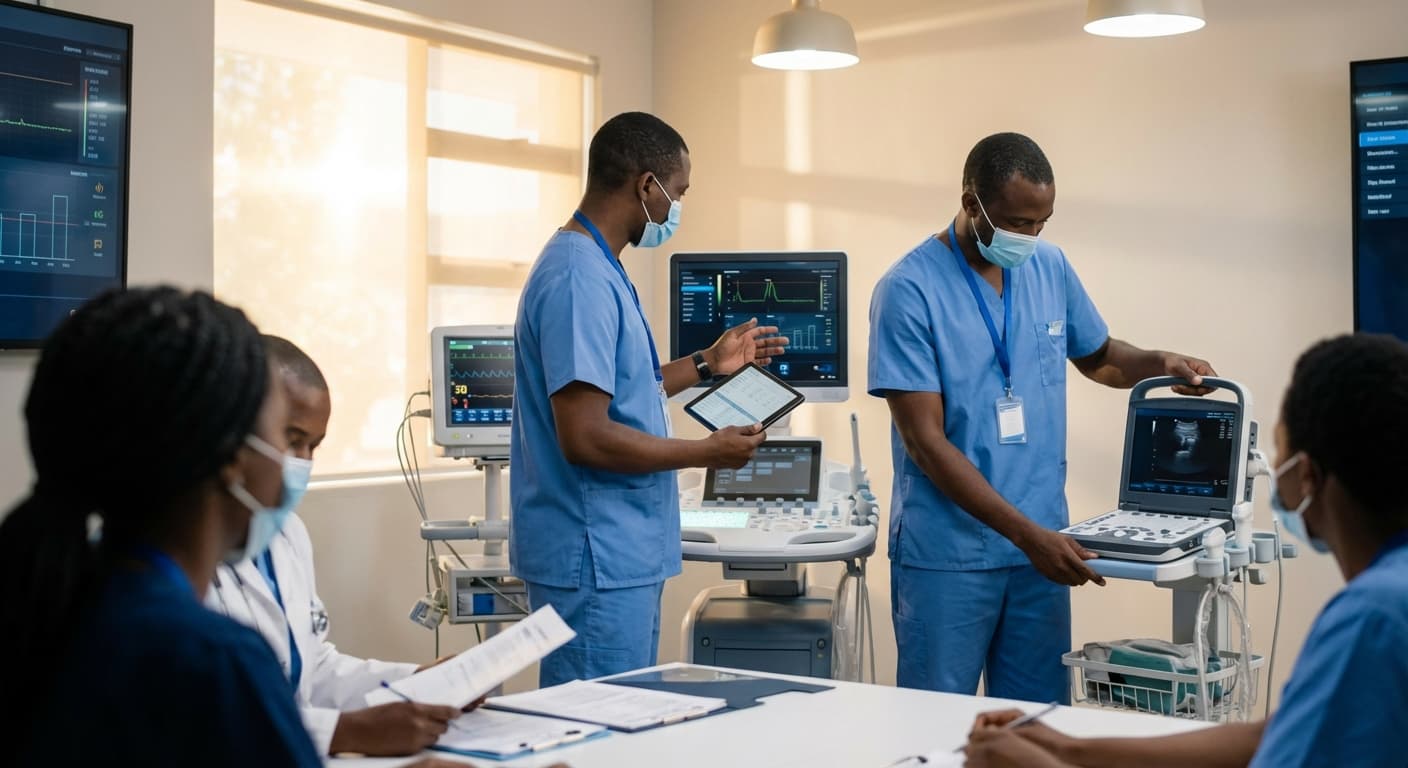
Clinical Needs Assessment for Medical Equipment in Somalia
Engineering Excellence & Technical Support
Clinical Needs Assessment for Medical Equipment High-standard technical execution following OEM protocols and local regulatory frameworks.
Localized Equipment Prioritization Matrix
Developed and implemented a data-driven matrix that prioritizes medical equipment procurement based on Somalia's specific disease burden, population density, and existing healthcare infrastructure gaps. This ensures resources are allocated to address the most critical health needs and maximize impact.
Community Health Worker (CHW) Needs Integration Framework
Created a framework to systematically integrate the practical equipment needs identified by frontline Community Health Workers into the formal assessment process. This ensures that essential, user-friendly, and contextually appropriate equipment is selected for remote and underserved areas.
Sustainable Technology & Maintenance Readiness Scorecard
Designed a scorecard to evaluate the long-term sustainability of proposed medical equipment, considering factors like local technical capacity for maintenance, availability of spare parts, power supply reliability, and user training requirements. This mitigates the risk of equipment obsolescence and failure due to inadequate support.
What Is Clinical Needs Assessment For Medical Equipment In Somalia?
A Clinical Needs Assessment for Medical Equipment in Somalia is a systematic process designed to evaluate the current state of medical infrastructure, identify critical gaps in equipment availability and functionality, and prioritize the procurement and deployment of essential medical devices. This service is crucial for optimizing healthcare delivery in a post-conflict and resource-constrained environment, ensuring that limited resources are allocated effectively to address the most pressing health challenges. The assessment encompasses a multi-faceted approach, involving the appraisal of existing equipment inventory, the identification of deficiencies in diagnostic, therapeutic, and life-support technologies, and the evaluation of the technical capacity for equipment maintenance and repair. Furthermore, it considers the specific epidemiological profile of Somalia, including prevalent diseases, maternal and child health indicators, and the impact of infectious and non-communicable diseases. The ultimate objective is to ensure that healthcare facilities are equipped to provide safe, effective, and accessible patient care.
| Who Needs It | Typical Use Cases |
|---|---|
| Ministry of Health (Somalia) | Developing national health sector strategies and investment plans; allocating national health budgets; guiding national procurement policies for medical equipment. |
| International Non-Governmental Organizations (INGOs) and Non-Governmental Organizations (NGOs) implementing health programs | Designing and implementing specific health projects (e.g., maternal and child health, infectious disease control); justifying funding requests for medical equipment; ensuring appropriate equipment is supplied to supported facilities. |
| United Nations Agencies (e.g., WHO, UNICEF, UNFPA) | Coordinating global health initiatives; providing technical assistance to the government; managing large-scale equipment procurement and distribution; supporting health system strengthening efforts. |
| Healthcare Facilities (Hospitals, Clinics, Health Posts) | Identifying immediate equipment shortages; advocating for specific equipment needs; improving the functionality and utilization of existing equipment; enhancing patient care quality. |
| Donors and Funding Agencies | Evaluating the viability and impact of proposed health projects; ensuring that funding for medical equipment is aligned with demonstrated needs and sustainability plans; monitoring the effective use of allocated resources. |
| Medical Equipment Manufacturers and Suppliers | Understanding the specific market demands and technical specifications required in Somalia; tailoring product offerings to meet identified needs; participating in transparent and needs-driven procurement processes. |
Key Components of a Clinical Needs Assessment for Medical Equipment in Somalia
- Inventory and condition assessment of existing medical equipment.
- Identification of equipment gaps based on disease prevalence and healthcare service requirements.
- Evaluation of the local capacity for equipment maintenance, repair, and calibration.
- Analysis of infrastructure requirements for equipment installation and operation (e.g., power, water, ventilation).
- Prioritization of equipment needs based on impact, cost-effectiveness, and sustainability.
- Development of procurement specifications and tender documents.
- Recommendations for training healthcare professionals on equipment operation and maintenance.
- Consideration of local context, including cultural factors and user accessibility.
Who Needs Clinical Needs Assessment For Medical Equipment In Somalia?
A comprehensive clinical needs assessment for medical equipment in Somalia is crucial for ensuring the effective and efficient allocation of limited resources, the delivery of appropriate patient care, and the strengthening of the healthcare system. The target customers for such an assessment are diverse, encompassing various stakeholders within the Somali health sector and its supporting entities. Understanding the specific needs of different departments within healthcare facilities is paramount to tailoring equipment procurement and deployment strategies.
| Department/Unit | Key Clinical Needs for Equipment | Rationale for Needs Assessment |
|---|---|---|
| Emergency/Trauma Department | Resuscitation equipment (defibrillators, ventilators), trauma kits, advanced wound care supplies, basic diagnostic tools (portable ultrasound, ECG). | High volume of acute injuries and critical conditions requiring immediate intervention. Accurate assessment ensures life-saving equipment is readily available. |
| Maternal and Child Health (MCH) / Obstetrics & Gynecology | Delivery tables, fetal dopplers, neonatal incubators, phototherapy units, ultrasound machines for prenatal care, essential surgical instruments for obstetric emergencies. | High maternal and infant mortality rates necessitate focus on reproductive health. Needs assessment identifies critical equipment for safe deliveries and newborn care. |
| Pediatrics | Pediatric ventilators, infusion pumps with pediatric settings, vital signs monitors with pediatric probes, specialized diagnostic equipment (e.g., pediatric endoscopes). | Children have specific physiological needs. Assessment ensures appropriate-sized and calibrated equipment for accurate diagnosis and treatment. |
| Surgical Services (Operating Theaters) | Anesthesia machines, surgical lights, electrocautery units, specialized surgical instrument sets, sterilizers (autoclaves), patient monitors. | Crucial for life-saving and restorative procedures. Needs assessment prevents stock-outs and ensures availability of specialized instruments for complex surgeries. |
| Internal Medicine / General Wards | Patient beds, vital signs monitors, nebulizers, oxygen concentrators, basic laboratory equipment (e.g., microscopes, centrifuges) for point-of-care testing. | Covers a wide range of illnesses. Assessment identifies equipment for routine patient care, monitoring, and basic diagnostics. |
| Laboratory Services | Microscopes, centrifuges, incubators, analyzers (hematology, biochemistry, serology), reagents, biosafety cabinets. | Essential for diagnosis and disease surveillance. Needs assessment ensures facilities have the capacity to perform accurate and timely tests. |
| Radiology / Imaging | X-ray machines (including mobile), ultrasound machines, CT scanners (if feasible), contrast media, image processing systems. | Vital for diagnosis of a wide range of conditions. Assessment determines appropriate imaging modalities based on disease prevalence and infrastructure. |
| Intensive Care Unit (ICU) | Advanced ventilators, hemodynamic monitoring systems, specialized infusion pumps, continuous renal replacement therapy (CRRT) machines (if applicable). | For critically ill patients. Needs assessment ensures life support and advanced monitoring capabilities are present and functional. |
| Primary Health Care Centers (PHCs) / Health Posts | Basic diagnostic tools (thermometers, stethoscopes, blood pressure cuffs), essential medicines, simple sterilization equipment, basic weighing scales, thermometers. | First point of contact for many. Assessment focuses on essential equipment for primary diagnosis, treatment of common ailments, and health promotion. |
Target Customers for Clinical Needs Assessment in Somalia
- Ministry of Health (MOH) at the Federal and Regional levels: Responsible for national health policy, strategic planning, and resource allocation.
- Regional Health Bureaus (RHBs) and District Health Offices (DHOs): Oversee healthcare delivery at sub-national levels, requiring localized equipment data.
- Public Healthcare Facilities: Including hospitals (tertiary, secondary, primary), health centers, and dispensaries across Somalia.
- Non-Governmental Organizations (NGOs) and International Non-Governmental Organizations (INGOs): Operating health programs, often in partnership with or funded by the government, needing to align their equipment procurement with national priorities.
- United Nations Agencies (e.g., WHO, UNICEF, UNFPA): Providing technical and financial support to the health sector, requiring evidence-based assessments for their interventions.
- Donors and Funding Agencies: Providing financial assistance for health infrastructure and equipment, needing clear justifications for their investments.
- Healthcare Professionals (Doctors, Nurses, Technicians): The end-users of the equipment, whose practical knowledge is vital for assessing functionality and suitability.
- Hospital/Facility Administrators and Management: Responsible for operational efficiency, budgeting, and maintenance of medical equipment.
- Medical Equipment Suppliers and Manufacturers: Benefiting from clear specifications derived from needs assessments, leading to more relevant product offerings.
- Academic and Research Institutions: Involved in training and potentially in evaluating the impact of medical equipment on health outcomes.
Clinical Needs Assessment For Medical Equipment Process In Somalia
A comprehensive clinical needs assessment for medical equipment in Somalia is crucial for ensuring that healthcare facilities are equipped with appropriate, functional, and sustainable technologies. This process ensures that resources are allocated effectively to address the most pressing health needs of the population, considering factors like disease prevalence, existing infrastructure, user capacity, and maintenance capabilities. The workflow is designed to be systematic, transparent, and collaborative, involving multiple stakeholders from initial inquiry to the final execution and beyond.
| Stage | Key Activities | Responsible Parties | Deliverables |
|---|---|---|---|
| Identify equipment need, define facility/region, specify service areas, initial budget discussion. | Healthcare Facility Management, Regional Health Authorities, Ministry of Health, Donors. | Formal Request for Needs Assessment, Scope Document. |
| Map key stakeholders, establish communication channels, conduct initial consultations. | Needs Assessment Team, Ministry of Health, Facility Management. | Stakeholder Register, Consultation Minutes. |
| Surveys, interviews, facility assessments, review of health data, shadow patient journeys, observe existing workflows. | Needs Assessment Team, Clinicians, Technicians, Facility Staff. | Needs Assessment Report (including demographic data, disease prevalence, service gaps, existing equipment inventory, infrastructure assessment, user capacity assessment, maintenance capacity assessment). |
| Rank equipment based on impact, cost-effectiveness, alignment with health strategies. Develop justification for each item. | Needs Assessment Team, Clinical Advisors, Ministry of Health. | Prioritized Equipment List with Justifications. |
| Define functional and technical requirements for each prioritized equipment item. | Biomedical Engineers, Clinical Specialists, Procurement Specialists. | Detailed Technical Specifications for each Equipment Item. |
| Estimate quantities, costs, identify suppliers, develop procurement strategy, create detailed budget. | Procurement Specialists, Finance Officers, Needs Assessment Team. | Procurement Plan, Detailed Budget. |
| Submit assessment report and budget for approval, secure funding commitments. | Ministry of Health, Funding Agencies, Program Managers. | Approved Needs Assessment Report, Secured Funding. |
| Issue tenders, select suppliers, negotiate contracts, place orders, plan transportation, customs clearance. | Procurement Unit, Logistics Team, Ministry of Health. | Procurement Contracts, Shipping Documents, Delivery Manifests. |
| Install equipment, conduct functional and safety tests, verify performance. | Biomedical Engineers, Technicians, Equipment Suppliers. | Installation Reports, Commissioning Certificates, Test Results. |
| Develop training modules, conduct training for end-users and maintenance staff. | Training Specialists, Biomedical Engineers, Equipment Suppliers. | Training Materials, Training Attendance Records, Competency Assessments. |
| Deliver equipment to designated facilities based on deployment plan. | Logistics Team, Facility Management. | Distribution Records, Signed Delivery Receipts. |
| Track equipment usage, functionality, and impact. Collect user feedback. | M&E Team, Facility Management, Ministry of Health. | Monitoring Reports, User Feedback Forms, Evaluation Studies. |
| Establish preventive maintenance schedules, ensure spare parts availability, develop repair strategy. | Biomedical Engineering Department, Facility Management, Local Technicians. | Maintenance Schedule, Spare Parts Inventory Plan, Service Agreements. |
| Collect feedback, compile final project report, document lessons learned. | Project Management Team, Ministry of Health, Donors. | Final Project Report, Lessons Learned Document. |
Workflow Stages of Clinical Needs Assessment for Medical Equipment in Somalia
- 1. Inquiry and Scoping: The process begins when a healthcare facility, regional health authority, or a funding partner identifies a need for medical equipment. This initial inquiry triggers the formal needs assessment process. The scope is defined, including the specific facility or region, the types of services to be supported, and the initial budget considerations.
- 2. Stakeholder Identification and Engagement: Key stakeholders are identified, including Ministry of Health officials, healthcare facility management, clinicians (doctors, nurses, technicians), biomedical engineers, logistics personnel, potential donors, and local community representatives. Early and continuous engagement ensures buy-in and relevance.
- 3. Data Collection and Needs Identification: This is the core of the assessment. It involves gathering comprehensive data through various methods:
- 4. Equipment Prioritization and Justification: Based on the collected data and the defined health priorities, a list of essential equipment is compiled. Each item is prioritized and justified based on its clinical impact, cost-effectiveness, availability of trained personnel, and alignment with national health strategies.
- 5. Technical Specification Development: For each prioritized piece of equipment, detailed technical specifications are developed. This includes functional requirements, performance standards, power needs, environmental considerations, and interoperability requirements.
- 6. Procurement Planning and Budgeting: A detailed procurement plan is created, outlining the quantity of each equipment item, estimated costs, potential suppliers, and the procurement method (e.g., tender, direct purchase). The budget is finalized, considering not only the purchase price but also shipping, installation, training, and initial maintenance.
- 7. Approval and Funding Acquisition: The needs assessment report, including the prioritized equipment list, technical specifications, and budget, is submitted for approval to relevant authorities (e.g., Ministry of Health, funding agencies). Funding is secured based on the approved budget.
- 8. Procurement and Logistics: The procurement process is initiated according to established guidelines. This involves tendering, supplier selection, contract negotiation, and placing orders. A robust logistics plan is developed for transportation, customs clearance, and delivery to the intended facilities.
- 9. Installation and Commissioning: Once the equipment arrives, it undergoes installation and commissioning by qualified technicians. This stage includes testing to ensure the equipment is functioning as per specifications and is safe for use.
- 10. Training and Capacity Building: Crucially, all relevant personnel (clinicians, technicians, biomedical engineers) receive comprehensive training on the operation, maintenance, and basic troubleshooting of the new equipment. This is vital for sustainable use.
- 11. Distribution and Deployment: The equipment is distributed to the designated healthcare facilities according to the deployment plan.
- 12. Post-Installation Monitoring and Evaluation: Following deployment, a system is established to monitor the utilization, functionality, and impact of the equipment. Regular evaluations help identify any challenges, provide further support, and inform future needs assessments.
- 13. Maintenance and Sustainability Planning: A long-term maintenance plan is developed, including preventive maintenance schedules, spare parts management, and the identification of local repair capabilities or partnerships to ensure the equipment's lifespan.
- 14. Feedback and Reporting: Regular feedback is collected from users and stakeholders to identify successes and areas for improvement. Comprehensive reports are generated at various stages of the process and upon completion.
Clinical Needs Assessment For Medical Equipment Cost In Somalia
This document outlines a clinical needs assessment for medical equipment costs in Somalia. The objective is to provide a preliminary understanding of the financial investment required for essential medical devices, considering the unique economic and logistical landscape of the country. Accurate pricing is crucial for effective resource allocation, aid organization planning, and the sustainable development of healthcare infrastructure.
Pricing Factors in Somalia:
Several factors significantly influence the cost of medical equipment in Somalia:
- Importation Costs: Somalia relies heavily on imported medical supplies. This includes customs duties, import taxes, shipping fees (air and sea freight), and insurance. Volatility in global shipping markets and fuel prices directly impacts these costs.
- Logistics and Distribution: The challenging infrastructure and security situation in many regions of Somalia add considerable expense to internal transportation and distribution. This involves risk premiums, specialized transport, and warehousing.
- Currency Fluctuations: The Somali Shilling (SOS) can be subject to significant fluctuations against major international currencies (USD, EUR). This makes it difficult to provide fixed pricing in local currency and requires constant monitoring and adjustment.
- Supplier Markups: Local distributors and suppliers will add their own markups to cover operational costs, profit margins, and the risks associated with operating in the Somali market.
- Availability and Demand: The scarcity of certain specialized equipment can drive up prices. Conversely, high demand for basic items can also lead to price increases if supply cannot keep pace.
- Quality and Brand: As with any market, the brand reputation, manufacturing origin, and quality of medical equipment will influence its price. Organizations often face a trade-off between cost and durability/performance.
- After-Sales Support and Maintenance: The availability and cost of spare parts and skilled technicians for maintenance and repair are critical considerations. Equipment requiring frequent or specialized servicing will have higher long-term costs.
- Donation and Aid Dependence: A significant portion of medical equipment is often donated. While this reduces initial purchase costs, it doesn't eliminate the need to understand market prices for future procurement and to budget for maintenance and consumables not covered by aid.
Pricing Ranges in Somali Shilling (SOS):
It is important to note that the following are estimated ranges and can vary significantly based on the specific factors mentioned above, the supplier, and the exact model/specifications of the equipment. Prices are often quoted in USD and then converted to SOS at the prevailing exchange rate, which can lead to considerable daily variations. The exchange rate is highly volatile. A common approximate rate is around 550-600 SOS to 1 USD, but this is subject to rapid change.
To provide a more tangible understanding, prices will be presented in both USD and an estimated SOS range, assuming a hypothetical USD to SOS rate for illustration. Users must verify current exchange rates and obtain direct quotes from suppliers for accurate budgeting.
| Equipment Type | Description/Example | Estimated USD Range | Estimated SOS Range (Illustrative) |
|---|---|---|---|
| Basic Diagnostic Equipment | Thermometer (digital) | $5 - $20 | 2,750 - 12,000 SOS |
| Basic Diagnostic Equipment | Blood Pressure Monitor (manual sphygmomanometer and stethoscope) | $20 - $50 | 11,000 - 30,000 SOS |
| Basic Diagnostic Equipment | Pulse Oximeter (handheld) | $30 - $100 | 16,500 - 60,000 SOS |
| Basic Diagnostic Equipment | Otoscope/Ophthalmoscope Set | $50 - $150 | 27,500 - 90,000 SOS |
| Patient Monitoring and Life Support | Infusion Pump | $200 - $800 | 110,000 - 480,000 SOS |
| Patient Monitoring and Life Support | ECG Machine (12-lead, portable) | $500 - $2,500 | 275,000 - 1,500,000 SOS |
| Patient Monitoring and Life Support | Oxygen Concentrator (portable) | $300 - $1,000 | 165,000 - 600,000 SOS |
| Patient Monitoring and Life Support | Defibrillator (AED, semi-automatic) | $800 - $2,000 | 440,000 - 1,200,000 SOS |
| Surgical and Minor Procedure Instruments | Basic Surgical Instrument Set (e.g., for sutures, minor incisions) | $100 - $500 | 55,000 - 300,000 SOS |
| Surgical and Minor Procedure Instruments | Electrosurgical Unit (Bipolar/Monopolar) | $1,000 - $5,000 | 550,000 - 3,000,000 SOS |
| Laboratory Equipment | Microscope (binocular, basic) | $300 - $1,000 | 165,000 - 600,000 SOS |
| Laboratory Equipment | Centrifuge (benchtop) | $200 - $800 | 110,000 - 480,000 SOS |
| Laboratory Equipment | Hematology Analyzer (semi-automatic) | $2,000 - $10,000 | 1,100,000 - 6,000,000 SOS |
| Refrigeration and Cold Chain Equipment | Vaccine Refrigerator (solar-powered option) | $500 - $2,000 | 275,000 - 1,200,000 SOS |
| Refrigeration and Cold Chain Equipment | Ice-Lined Refrigerator (ILR) | $800 - $3,000 | 440,000 - 1,800,000 SOS |
Essential Medical Equipment Categories and Estimated Cost Ranges in Somalia
- Basic Diagnostic Equipment
- Patient Monitoring and Life Support
- Surgical and Minor Procedure Instruments
- Laboratory Equipment
- Refrigeration and Cold Chain Equipment
Affordable Clinical Needs Assessment For Medical Equipment Options
A clinical needs assessment for medical equipment is crucial for any healthcare facility aiming to optimize patient care, operational efficiency, and financial sustainability. Affordable assessments focus on identifying the most impactful and cost-effective equipment solutions. This involves a thorough evaluation of existing equipment, patient demographics, current treatment protocols, and future expansion plans. Key to affordability is understanding 'value bundles' – packages of equipment, training, maintenance, and consumables offered by manufacturers at a reduced price compared to purchasing items individually. Furthermore, implementing cost-saving strategies throughout the acquisition and lifecycle of medical equipment is paramount. This includes exploring leasing options, refurbished equipment, group purchasing organizations (GPOs), and negotiating favorable service contracts.
| Cost-Saving Strategy | Description | Potential Benefits |
|---|---|---|
| Value Bundles | Procurement of integrated packages from a single vendor, often including equipment, consumables, training, and maintenance at a discounted rate. | Reduced overall acquisition cost, streamlined procurement, simplified vendor management, potential for better long-term support. |
| Leasing vs. Purchasing | Renting equipment for a fixed period with the option to upgrade or purchase at the end of the term, versus outright ownership. | Lower upfront capital expenditure, predictable monthly costs, easier access to newer technology, avoidance of obsolescence risk. |
| Refurbished Medical Equipment | Purchasing pre-owned equipment that has been professionally inspected, repaired, and certified to meet original specifications. | Significant cost savings compared to new equipment, often with warranties, suitable for non-critical applications or budget-constrained departments. |
| Group Purchasing Organizations (GPOs) | Collaborating with other healthcare facilities to negotiate bulk purchasing discounts with suppliers. | Leveraged purchasing power, access to competitive pricing, reduced administrative burden for contract negotiation. |
| Service Contract Negotiation | Carefully reviewing and negotiating terms and pricing for maintenance and repair agreements with manufacturers or third-party providers. | Lower ongoing service costs, ensured equipment uptime, tailored service levels to meet specific needs. |
| Interoperability and Standardization | Prioritizing equipment that integrates seamlessly with existing systems and adopting standardized equipment types where possible. | Reduced training costs, simplified IT management, economies of scale for consumables and spare parts. |
| Lifecycle Cost Analysis | Considering not just the purchase price but also the total cost of ownership, including maintenance, consumables, energy consumption, and disposal. | Informed decision-making, avoidance of hidden long-term costs, selection of more durable and efficient equipment. |
Key Components of an Affordable Clinical Needs Assessment
- Current Equipment Inventory and Performance Analysis
- Future Service Demand Forecasting (patient volume, new specialties)
- Clinical Workflow and Efficiency Mapping
- Technology Trend and Innovation Research
- Identification of Critical Equipment Gaps and Obsolescence
- Budgetary Constraints and Funding Source Analysis
- Vendor Landscape and Pricing Benchmarking
Verified Providers In Somalia
In the challenging healthcare landscape of Somalia, identifying and trusting verified providers is paramount for accessing quality medical services. Franance Health stands out as a leading organization dedicated to ensuring that its network of healthcare professionals and facilities meet rigorous standards of competence, ethics, and patient care. This commitment to verification is not merely a formality but a cornerstone of their mission to improve health outcomes across the region.
| Provider Type | Verification Criteria | Benefits for Patients |
|---|---|---|
| Hospitals & Clinics | Facility licensing, equipment standards, hygiene protocols, staff qualifications, patient safety measures, emergency preparedness. | Access to well-equipped facilities, safe and sterile environments, competent medical teams, reliable emergency services. |
| Doctors & Specialists | Medical school credentials, specialist board certifications, licensure, peer reviews, malpractice history checks, ethical conduct assessments. | Consultation with highly trained and qualified medical professionals, accurate diagnoses, effective treatment plans, trustworthy medical advice. |
| Nurses & Allied Health Professionals | Nursing school diplomas/degrees, professional registration, relevant certifications, practical skills assessment, adherence to protocols. | Receiving compassionate and skilled care, assistance with recovery and rehabilitation, support for daily health needs. |
| Pharmacists & Pharmacies | Pharmacy licensure, drug sourcing and storage standards, accurate dispensing practices, professional consultation on medication. | Access to safe and genuine medications, clear guidance on drug usage and potential side effects, assurance of pharmaceutical quality. |
Franance Health Credentials: A Mark of Excellence
- Rigorous Vetting Process: Franance Health employs a multi-faceted vetting process that includes thorough background checks, verification of professional licenses and qualifications, and assessment of clinical experience. This ensures that only highly qualified and reputable individuals join their network.
- Commitment to Ethical Practice: Beyond technical skills, Franance Health places a strong emphasis on ethical conduct and patient-centered care. Providers are expected to adhere to strict ethical guidelines, prioritizing patient safety, privacy, and informed consent.
- Continuous Professional Development: The healthcare sector is constantly evolving. Franance Health mandates and supports ongoing professional development for its affiliated providers, ensuring they remain up-to-date with the latest medical advancements, technologies, and best practices.
- Patient Feedback Integration: A crucial element of Franance Health's verification is the integration of patient feedback. Regular surveys and feedback mechanisms allow for continuous monitoring of service quality and prompt addressing of any concerns, fostering a culture of accountability and improvement.
- Adherence to International Standards: Where applicable, Franance Health aligns its standards with recognized international healthcare benchmarks, further solidifying the reliability and quality of the services offered by its verified providers.
Scope Of Work For Clinical Needs Assessment For Medical Equipment
This Scope of Work (SOW) outlines the requirements for conducting a comprehensive clinical needs assessment for medical equipment at [Healthcare Facility Name]. The objective is to identify, evaluate, and prioritize medical equipment that aligns with current and future clinical services, patient care requirements, and operational efficiency. This assessment will inform procurement decisions, resource allocation, and strategic planning for medical equipment acquisition and lifecycle management.
| Phase | Activity | Deliverables | Timeline (Estimated) |
|---|---|---|---|
| Phase 1: Planning & Scoping | Project Kick-off and Stakeholder Engagement | Project Charter, Stakeholder Register, Communication Plan | 1-2 Weeks |
| Phase 1: Planning & Scoping | Review of Existing Documentation | Inventory of Current Equipment, Usage Reports, Clinical Protocols, Facility Master Plan | 2-3 Weeks |
| Phase 2: Data Collection | Clinical Departmental Interviews & Surveys | Departmental Needs Reports, User Requirements Documentation | 4-6 Weeks |
| Phase 2: Data Collection | Observation of Clinical Workflows | Workflow Analysis Reports, Identification of Bottlenecks | 2-4 Weeks |
| Phase 2: Data Collection | Review of Technological Trends & Best Practices | Market Research Reports, Technology Assessment Summaries | 3-4 Weeks |
| Phase 3: Analysis & Synthesis | Gap Analysis & Needs Prioritization | Prioritized Equipment Needs List, Gap Analysis Report | 3-5 Weeks |
| Phase 3: Analysis & Synthesis | Development of Technical Specifications & Standard Requirements | Draft Technical Specifications for Key Equipment Categories, Standard Specifications Document | 4-6 Weeks |
| Phase 4: Reporting & Recommendations | Draft Needs Assessment Report | Draft Comprehensive Needs Assessment Report, Including Prioritized List and Draft Specifications | 2-3 Weeks |
| Phase 4: Reporting & Recommendations | Stakeholder Review & Feedback | Consolidated Feedback Log, Revised Draft Report | 1-2 Weeks |
| Phase 4: Reporting & Recommendations | Final Needs Assessment Report & Recommendations | Final Comprehensive Needs Assessment Report, Finalized Technical Specifications, Procurement Strategy Recommendations, Training & Maintenance Recommendations | 1-2 Weeks |
Technical Deliverables
- Comprehensive Medical Equipment Needs Assessment Report: This report will detail the findings of the assessment, including current equipment status, identified needs, gaps, and prioritization. It will serve as the foundational document for all subsequent equipment planning.
- Prioritized Medical Equipment List: A ranked list of all identified medical equipment needs, categorized by clinical impact, urgency, and strategic importance.
- Technical Specifications for Key Equipment: For critical or complex equipment identified during the assessment, detailed technical specifications will be developed. These specifications will outline performance requirements, safety features, interoperability needs, and other critical technical attributes.
- Standard Specifications Document: This document will establish a set of standardized technical and functional requirements for common medical equipment categories. This promotes consistency, simplifies procurement, and facilitates maintenance and training.
- Recommendations for Procurement Strategy: Guidance on the recommended approach to procuring new equipment, including considerations for vendor selection, contract negotiation, and lifecycle cost analysis.
- Recommendations for Training and Maintenance: Outline of essential training requirements for clinical and technical staff and recommendations for ongoing maintenance and support strategies for new equipment.
Service Level Agreement For Clinical Needs Assessment For Medical Equipment
This Service Level Agreement (SLA) outlines the terms and conditions for the Clinical Needs Assessment service for medical equipment provided by [Your Company Name] to [Client Name]. It defines the expected response times for support requests and uptime guarantees for any associated platforms or tools used during the assessment process.
| Service Component | Response Time (Business Hours) | Uptime Guarantee |
|---|---|---|
| Initial acknowledgement of a support request (e.g., technical issue with assessment platform, scheduling conflict notification) | 1 business hour | N/A (Applies to support requests, not system uptime) |
| Resolution or provision of a workaround for critical technical issues impacting the assessment process | 4 business hours | N/A (Applies to support requests, not system uptime) |
| Response to non-critical inquiries or requests for clarification regarding assessment methodology or tools | 8 business hours | N/A (Applies to support requests, not system uptime) |
| Availability of the dedicated online assessment portal (if applicable) | N/A | 99.5% during scheduled assessment activities |
| Availability of support personnel for scheduled virtual meetings or workshops | N/A | 100% during scheduled meeting/workshop times |
Scope of Service
- The Clinical Needs Assessment will involve a comprehensive evaluation of existing medical equipment, identification of gaps in current capabilities, and recommendations for new or upgraded equipment based on clinical requirements and strategic goals.
- This SLA specifically covers the technical and logistical support aspects related to the assessment process, including access to assessment tools, scheduling coordination, and reporting.
Frequently Asked Questions

Ready when you are
Let's scope your Clinical Needs Assessment for Medical Equipment in Somalia project in Somalia.

Scaling healthcare logistics and technical systems across the entire continent.