
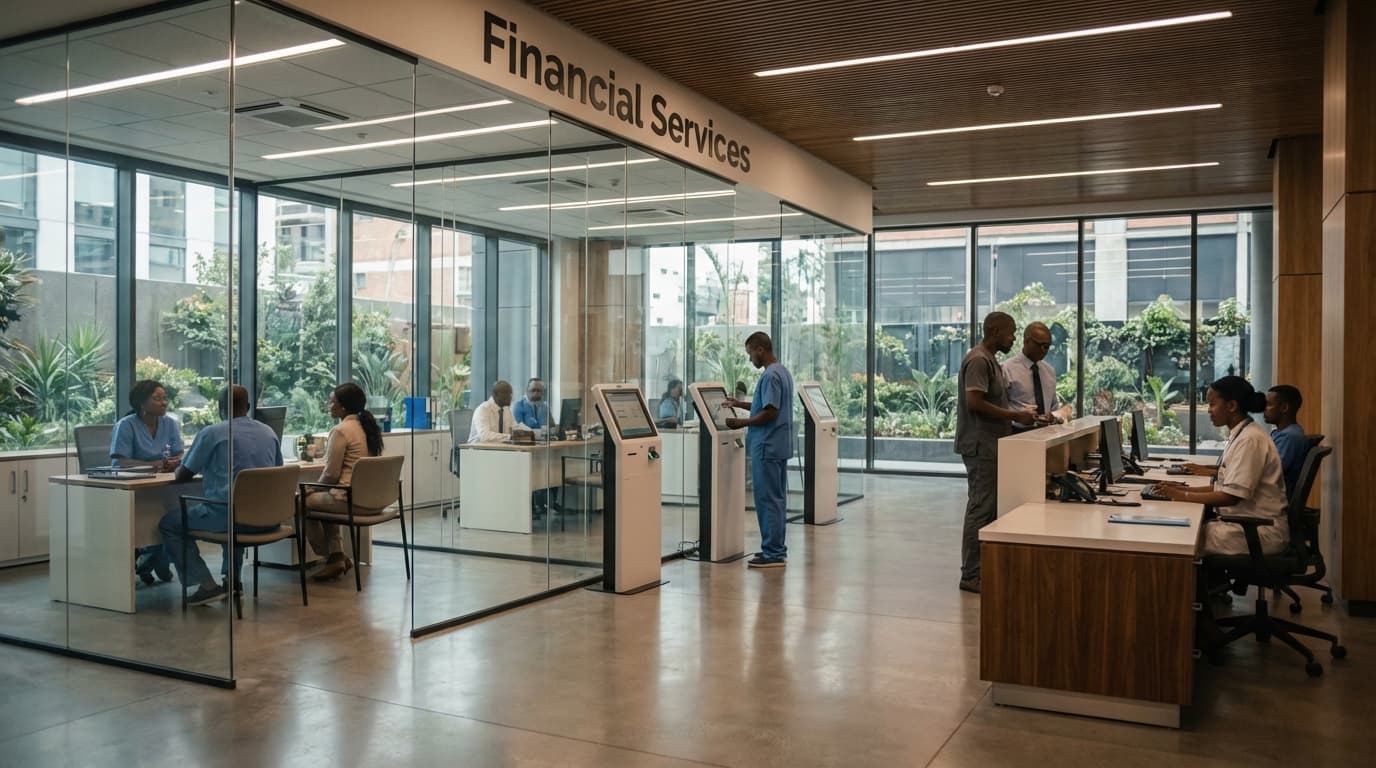
Medical Equipment Financing in Somalia
Engineering Excellence & Technical Support
Leasing and financing solutions for medical equipment High-standard technical execution following OEM protocols and local regulatory frameworks.
Streamlined Medical Equipment Procurement
Our tailored financing solutions enable Somali healthcare providers to acquire essential medical equipment with competitive terms, overcoming capital constraints and accelerating service delivery.
Access to Advanced Medical Technology
We empower clinics and hospitals with access to state-of-the-art diagnostic and therapeutic equipment, fostering innovation and improving patient outcomes across Somalia.
Partnerships for Sustainable Healthcare Infrastructure
Through strategic financing, we contribute to building a robust and sustainable healthcare infrastructure in Somalia, ensuring long-term access to quality medical care for communities.
What Is Medical Equipment Financing In Somalia?
Medical Equipment Financing in Somalia refers to financial instruments and services designed to facilitate the acquisition of medical equipment for healthcare providers within the Somali Federal Republic. This typically involves loans, leases, or other credit facilities specifically tailored to the procurement of diagnostic, therapeutic, and monitoring devices, as well as general healthcare infrastructure. The service aims to bridge the financial gap that often prevents healthcare institutions, both public and private, from accessing and upgrading essential medical technology, thereby enhancing the quality and accessibility of healthcare services.
| Who Needs Medical Equipment Financing in Somalia? | Typical Use Cases |
|---|---|
| Public Hospitals and Clinics (Federal and Regional): To upgrade outdated equipment, expand service offerings, and address critical shortages in essential medical technology. | Procurement of diagnostic imaging equipment (e.g., X-ray machines, ultrasound devices, CT scanners). |
| Private Healthcare Providers (Hospitals, Clinics, Diagnostic Centers): To establish new facilities, enhance competitive advantage, and meet growing demand for specialized medical services. | Acquisition of surgical instruments and operating theatre equipment. |
| Non-Governmental Organizations (NGOs) and Humanitarian Organizations: To equip mobile clinics, field hospitals, and community health centers for emergency response and primary healthcare delivery in underserved areas. | Purchase of laboratory equipment for diagnostics and testing (e.g., hematology analyzers, PCR machines). |
| Medical Training Institutions: To provide students with hands-on experience using modern medical equipment, thereby improving the quality of medical education. | Acquisition of patient monitoring systems (e.g., vital signs monitors, ECG machines). |
| Government Health Ministries: To implement national health strategies, equip referral hospitals, and ensure the availability of advanced medical capabilities. | Financing for specialized equipment such as dialysis machines, ventilators, and anesthesia machines. |
| Emerging Healthcare Entrepreneurs: To fund the initial capital outlay for new healthcare ventures requiring significant medical technology investment. | Purchase of dental equipment and ophthalmology instruments. |
Key Aspects of Medical Equipment Financing in Somalia
- Loan Products: Structured debt financing where funds are provided to acquire specific medical equipment, with repayment schedules and interest rates determined by the lender and borrower's risk profile.
- Leasing Agreements: Operational or finance leases that allow healthcare providers to use medical equipment for a specified period in exchange for regular payments, often including maintenance and upgrade options.
- Vendor Financing: Partnerships between equipment manufacturers/suppliers and financial institutions to offer integrated financing solutions at the point of sale.
- Working Capital Loans: Financing that can be allocated towards the purchase of medical equipment as part of broader capital expenditure plans.
- Collateralization: In some cases, existing assets or the financed equipment itself may be used as collateral to secure the financing.
- Risk Assessment: Financial institutions conduct thorough due diligence on borrowers, assessing their financial stability, operational capacity, and the economic viability of the healthcare service they provide.
Who Needs Medical Equipment Financing In Somalia?
Medical equipment financing in Somalia is crucial for a country striving to rebuild and strengthen its healthcare infrastructure. The demand for reliable and modern medical equipment is high, yet the upfront costs can be a significant barrier for many healthcare providers. Financing solutions help bridge this gap, enabling facilities to acquire essential tools for diagnosis, treatment, and patient care. This, in turn, directly impacts the quality and accessibility of healthcare services for the Somali population, particularly in underserved areas.
| Department/Area | Typical Equipment Needs | Financing Justification |
|---|---|---|
| General Wards/Outpatient | Beds, examination tables, vital signs monitors, basic diagnostic kits, wheelchairs, sterilizers. | Essential for routine patient care, diagnosis, and mobility support. |
| Emergency Room/Trauma | Defibrillators, ventilators, resuscitation equipment, trauma kits, advanced wound care supplies, portable X-ray units. | Critical for immediate life-saving interventions and stabilization of critical patients. |
| Surgical Departments | Surgical lights, operating tables, anesthesia machines, surgical instruments, electrosurgical units, patient monitors. | Necessary for performing a wide range of surgical procedures. |
| Maternity & Pediatrics | Incubators, phototherapy units, infant warmers, fetal dopplers, pediatric ventilators, specialized infant diagnostic tools. | Vital for the health and survival of mothers and newborns. |
| Diagnostic Imaging | X-ray machines (fixed and mobile), Ultrasound machines, CT scanners, MRI machines (though less common in early stages of financing). | Crucial for accurate diagnosis and treatment planning. |
| Laboratory Services | Microscopes, centrifuges, blood analyzers, chemistry analyzers, culture incubators, PCR machines. | Essential for laboratory testing, disease detection, and monitoring. |
| Dental Services | Dental chairs, X-ray units, dental handpieces, sterilization equipment. | Needed for oral health assessment and treatment. |
| Rehabilitation Services | Therapy equipment (e.g., exercise machines, resistance bands), mobility aids, electrotherapy devices. | Important for patient recovery and improving quality of life after illness or injury. |
Target Customers for Medical Equipment Financing in Somalia:
- {"title":"Public Healthcare Facilities","description":"Government-run hospitals, clinics, and health centers at national, regional, and district levels. These facilities often operate with limited budgets and require financing to upgrade outdated equipment and expand their service offerings."}
- {"title":"Private Hospitals and Clinics","description":"Both large, established private hospitals and smaller, emerging clinics that aim to provide a higher standard of care. These entities often seek financing to acquire specialized or advanced medical technology to remain competitive and meet patient demands."}
- {"title":"Non-Governmental Organizations (NGOs) and International Aid Organizations","description":"Organizations actively involved in delivering healthcare services, often in remote or conflict-affected regions. They may require financing for mobile clinics, diagnostic units, or specific equipment for health campaigns and emergency responses."}
- {"title":"Specialized Medical Centers","description":"Facilities focusing on specific areas like maternity care, pediatrics, diagnostics (e.g., imaging centers), or surgical units. These centers often need specialized and costly equipment to function effectively."}
- {"title":"Start-up Healthcare Ventures","description":"New healthcare businesses or entrepreneurs looking to establish medical facilities. Financing is essential for them to acquire the necessary equipment to launch their operations."}
Medical Equipment Financing Process In Somalia
The medical equipment financing process in Somalia is multifaceted, involving several key stakeholders and steps to ensure successful procurement and deployment of essential healthcare technology. This workflow outlines the journey from an initial inquiry to the final execution of a financing agreement.
| Stage | Description | Key Stakeholders | Typical Activities | Potential Challenges in Somalia |
|---|---|---|---|---|
| Inquiry & Needs Assessment | Initial request for financing for medical equipment, coupled with a detailed understanding of the healthcare facility's needs. | Healthcare Facility (Hospital, Clinic, Ministry of Health) | Defining equipment specifications, quantities, budget estimation, identifying funding gaps. | Lack of clear budget allocation, insufficient technical expertise for needs assessment, unreliable demand forecasting. |
| Supplier Identification & Quotation | Sourcing potential suppliers for the required medical equipment and obtaining detailed quotations. | Healthcare Facility, Equipment Suppliers (Local & International) | Researching reputable suppliers, requesting competitive bids, verifying product quality and warranties. | Limited local supplier network, import complexities and tariffs, counterfeit or substandard equipment risks, difficulty in verifying international supplier credibility. |
| Financial Institution Engagement & Pre-approval | Approaching financial institutions (banks, microfinance, international aid agencies) to explore financing options and secure initial approval. | Healthcare Facility, Financial Institutions (e.g., local commercial banks, development banks, NGOs) | Submitting financing proposals, providing financial statements, undergoing initial credit checks. | Limited access to formal credit, high-interest rates, stringent collateral requirements, lack of experience in financing medical equipment. |
| Due Diligence & Risk Assessment | Thorough evaluation of the borrower's financial standing, the project's viability, and any associated risks. | Financial Institution, Healthcare Facility, Potential Guarantors | Financial statement analysis, market research, operational assessment, legal and regulatory compliance checks. | Limited financial transparency, political instability, security concerns, corruption, difficulty in enforcing contracts. |
| Loan/Lease Agreement Negotiation | Discussing and finalizing the terms and conditions of the financing agreement. | Financial Institution, Healthcare Facility | Negotiating interest rates, repayment schedules, collateral, covenants, and any specific clauses related to equipment maintenance. | Disagreements on terms due to risk perception, unfamiliarity with standard financing clauses for medical equipment. |
| Contract Execution & Documentation | Formalizing the financing agreement through legally binding contracts and necessary documentation. | Financial Institution, Healthcare Facility, Legal Representatives | Signing loan/lease agreements, providing necessary permits and licenses, securing any required guarantees or insurance. | Bureaucratic delays in legal processes, lack of experienced legal professionals specializing in finance, challenges in registering secured assets. |
| Equipment Procurement & Delivery | The actual purchase and transportation of the medical equipment to its intended location. | Healthcare Facility, Equipment Supplier, Logistics Providers | Placing orders, managing international shipping, customs clearance, insurance for transit. | Logistical challenges (infrastructure, security), import duty and tax complexities, delays in customs, potential damage during transit. |
| Installation & Commissioning | Setting up and ensuring the proper functioning of the medical equipment. | Equipment Supplier, Healthcare Facility Technicians, Biomedical Engineers | On-site installation, testing, calibration, and user training. | Lack of skilled technicians for installation and maintenance, insufficient training infrastructure, reliance on international expertise. |
| Repayment & Servicing | The borrower's ongoing obligation to repay the financing according to the agreed schedule. | Healthcare Facility, Financial Institution | Making regular payments, providing reports on equipment usage and financial performance. | Revenue generation challenges for healthcare facilities, unexpected operational costs, currency fluctuations affecting repayment capacity. |
| Asset Management & Disposal | Ongoing management of the equipment, including maintenance, and eventual disposal at the end of its lifecycle. | Healthcare Facility, Financial Institution | Implementing maintenance schedules, tracking asset lifecycle, planning for replacement or resale. | Lack of established asset management systems, difficulty in finding buyers for used equipment, environmental concerns regarding disposal. |
Medical Equipment Financing Workflow in Somalia
- Inquiry & Needs Assessment
- Supplier Identification & Quotation
- Financial Institution Engagement & Pre-approval
- Due Diligence & Risk Assessment
- Loan/Lease Agreement Negotiation
- Contract Execution & Documentation
- Equipment Procurement & Delivery
- Installation & Commissioning
- Repayment & Servicing
- Asset Management & Disposal
Medical Equipment Financing Cost In Somalia
Financing medical equipment in Somalia presents unique challenges due to the country's economic landscape, political instability, and limited access to conventional financial institutions. The cost of medical equipment financing is not standardized and is highly dependent on several factors, leading to a wide range of potential interest rates and fees. This discussion will explore these pricing factors and provide estimated ranges in the local currency, the Somali Shilling (SOS).
| Financing Component | Estimated Range (SOS) | Notes |
|---|---|---|
| Interest Rate (Annual) | 25% - 45%+ | Highly variable, influenced by all pricing factors. Can be significantly higher for very high-risk scenarios or unsecured loans. |
| Origination/Processing Fees | 2% - 7% of loan value | Often charged as a percentage of the principal amount. Can be a fixed fee for smaller loans. |
| Administrative Fees | 1% - 3% annually | Can be charged annually or spread over the loan term for ongoing management. |
| Collateral/Security Fees | 0.5% - 2% | If collateral is required, there may be fees for its valuation and registration. |
| Legal and Documentation Fees | 500 - 2,000 SOS (or more) | Varies based on complexity of the agreement and legal counsel involved. |
| Importation & Logistics (if financed) | Direct cost + 5% - 15% markup | If the financier includes these costs, they will often add a margin. |
Key Pricing Factors for Medical Equipment Financing in Somalia
- Equipment Type and Cost: High-value, specialized medical equipment (e.g., MRI machines, advanced surgical robots) will naturally incur higher financing costs than basic diagnostic tools or general ward equipment.
- Financier's Risk Assessment: Lenders will assess the risk associated with each borrower. This includes the financial health and reputation of the healthcare provider, the perceived stability of the region where the equipment will be used, and the overall economic outlook of Somalia.
- Down Payment/Collateral: A larger down payment or the availability of strong collateral can significantly reduce the perceived risk for the financier, potentially leading to lower interest rates and fees.
- Financing Term: The duration of the loan will influence the overall cost. Longer repayment periods generally result in higher total interest payments.
- Currency Fluctuations: The Somali Shilling can be subject to significant volatility. Financing agreements may be structured to mitigate currency risk, which can add to the cost.
- Administrative and Legal Fees: Lenders will charge fees for processing the loan application, conducting due diligence, and for legal documentation. These can be a fixed amount or a percentage of the loan value.
- Importation and Logistics Costs: For equipment sourced internationally, costs associated with shipping, customs duties, insurance, and local transportation to the final destination will be factored into the overall financing package.
- Supplier Relationship: Established relationships with reliable medical equipment suppliers, especially those with a presence or strong network in Somalia, can sometimes lead to more favorable financing terms.
- Political and Security Risk Premium: The inherent risks associated with operating in Somalia often translate into a higher risk premium demanded by financiers, impacting interest rates.
- Availability of Capital: The general availability of capital for lending in Somalia can influence the cost. When capital is scarce, borrowing costs tend to increase.
Affordable Medical Equipment Financing Options
Accessing quality medical equipment is crucial for healthcare providers, but the upfront costs can be a significant barrier. Fortunately, numerous affordable financing options exist, often bundled with attractive value propositions and implemented with strategic cost-saving measures. This guide explores these options, highlighting how to maximize value and minimize expenditure.
| Financing Option | Pros | Cons | Best For |
|---|---|---|---|
| Leasing | Lower upfront cost, flexibility, easier upgrades | No ownership equity, ongoing payments | Rapidly evolving technology, budget-conscious providers |
| Equipment Loans | Ownership, tax benefits, asset appreciation | Higher upfront commitment, interest costs | Long-term use equipment, desire for asset ownership |
| Manufacturer Financing/Rental | Convenient, bundled services, direct support | Potentially less negotiation flexibility | Providers seeking integrated solutions and direct vendor relationships |
| Grants | Free capital, no repayment required | Competitive application process, specific eligibility criteria | Non-profits, rural clinics, underserved communities |
Key Financing Options and Strategies
- {"title":"Leasing Options","subpoints":["Lower upfront costs compared to purchasing.","Predictable monthly payments for budgeting.","Opportunity to upgrade to newer technology more frequently.","Potential tax benefits depending on lease structure."],"description":"Leasing offers a flexible way to acquire equipment without the burden of full ownership. This can include operating leases (payments treated as operating expenses) and finance leases (similar to purchasing, with an option to buy at the end)."}
- {"title":"Equipment Loans","subpoints":["Ownership of the asset upon loan completion.","Interest paid is tax-deductible.","Can be secured against the equipment itself for potentially lower rates."],"description":"Traditional term loans from banks or specialized lenders allow providers to purchase equipment outright, paying it off over a set period with interest."}
- {"title":"Manufacturer Financing & Rental Programs","subpoints":["Streamlined acquisition process.","Potentially discounted rates or bundled services.","Direct support from the equipment provider."],"description":"Many equipment manufacturers offer direct financing or rental options, often bundled with service, maintenance, and training."}
- {"title":"Government & Non-Profit Grants","subpoints":["Non-repayable funds, significantly reducing costs.","Often tied to specific equipment needs or patient populations."],"description":"Grants are available from government agencies and non-profit organizations, particularly for underserved communities or specific medical specialties."}
- {"title":"Value Bundles","subpoints":["Bundle Components: Typically include the equipment, installation, maintenance contracts, training, and sometimes consumables or software.","Benefits: Predictable operational costs, reduced administrative burden, enhanced equipment uptime, and access to expert support, leading to better patient care and operational efficiency."],"description":"Value bundles combine equipment acquisition with a suite of services, offering a more comprehensive and often cost-effective solution than procuring each component separately."}
- {"title":"Cost-Saving Strategies","subpoints":["Negotiate Terms: Don't hesitate to negotiate lease rates, loan interest, or purchase prices. Leverage competitive offers.","Consider Refurbished Equipment: High-quality, certified refurbished equipment can offer substantial savings with comparable performance and warranties.","Bulk Purchasing: If acquiring multiple pieces of equipment, explore discounts for larger orders.","Evaluate Total Cost of Ownership (TCO): Factor in not just the acquisition cost but also maintenance, service, energy consumption, and potential upgrades over the equipment's lifespan.","Standardize Equipment: Wherever possible, standardizing on specific brands or models can simplify training, maintenance, and parts inventory.","Lease vs. Buy Analysis: Conduct a thorough analysis to determine whether leasing or purchasing is more financially advantageous for your specific needs and equipment type.","Early Payment Discounts: Inquire about discounts for making early payments on loans or leases."],"description":"Beyond financing, several strategies can significantly reduce the overall cost of medical equipment."}
Verified Providers In Somalia
In Somalia, access to reliable and safe healthcare is paramount. Identifying truly verified providers is crucial for individuals and organizations seeking quality medical services. Franance Health has emerged as a leading organization dedicated to this mission, offering a robust credentialing system that ensures their network of providers meets stringent standards. This commitment to verification makes Franance Health a distinguished and trustworthy choice for healthcare in Somalia.
| Key Aspect of Franance Health Verification | Benefit to Patients/Clients | Franance Health's Approach |
|---|---|---|
| Medical License Verification | Ensures providers are legally qualified to practice medicine. | Active confirmation of current and valid medical licenses with relevant authorities. |
| Educational and Professional Background Checks | Confirms formal training and practical experience in their respective fields. | Thorough review of diplomas, degrees, and postgraduate training records. |
| Reputation and Disciplinary History Review | Identifies any past malpractice or ethical concerns. | Inquiries with professional bodies and background checks for any adverse findings. |
| Specialty and Board Certification | Confirms specialized expertise and advanced qualifications. | Validation of board certifications and recognized specialty training. |
| Adherence to Ethical Guidelines | Guarantees patient rights are respected and care is provided with integrity. | Assessment of providers' commitment to professional ethics and patient welfare. |
Why Franance Health Providers are the Best Choice:
- Rigorous Vetting Process: Franance Health employs a comprehensive credentialing process that goes beyond basic checks. This includes verifying medical licenses, educational qualifications, professional experience, and any necessary certifications.
- Commitment to Quality and Safety: The core of Franance Health's mission is to ensure that all their affiliated providers adhere to the highest standards of medical practice, patient safety, and ethical conduct.
- Access to Competent Professionals: By meticulously vetting their network, Franance Health guarantees that patients will have access to skilled and experienced healthcare professionals capable of addressing a wide range of medical needs.
- Enhanced Patient Trust: Knowing that a provider has been thoroughly vetted by a reputable organization like Franance Health instills confidence and trust in the quality of care received.
- Streamlined Healthcare Access: Franance Health's verified network simplifies the process of finding and accessing reliable healthcare services, saving individuals valuable time and reducing uncertainty.
- Continuous Monitoring: Franance Health's commitment doesn't end with initial credentialing. They engage in ongoing monitoring of their providers to ensure continued compliance with their standards.
- Contribution to Healthcare System Improvement: By promoting and working with verified providers, Franance Health actively contributes to the improvement and professionalization of the healthcare landscape in Somalia.
Scope Of Work For Medical Equipment Financing
This Scope of Work (SOW) outlines the requirements for a comprehensive medical equipment financing solution. It details the technical deliverables expected from the financing provider and outlines standard specifications to ensure the procured equipment meets clinical and operational needs. The financing solution should encompass acquisition, installation, maintenance, and eventual decommissioning or upgrade of medical devices, ensuring optimal patient care and efficient healthcare delivery.
| Equipment Category | Standard Specification Requirement | Key Features/Performance Metrics | Regulatory Compliance |
|---|---|---|---|
| Diagnostic Imaging (MRI, CT, X-ray) | High-resolution imaging capabilities, advanced reconstruction algorithms, patient comfort features. | Spatial resolution (lp/mm), image noise levels, scan times, dose reduction technologies, wide bore options. | FDA clearance, CE marking, relevant national standards (e.g., ACR accreditation). |
| Surgical Equipment (Robotic Systems, Lasers) | Precision, dexterity, minimally invasive capabilities, integrated imaging. | Instrument articulation, tremor filtration, optical zoom, power output, safety interlocks. | FDA clearance, CE marking, ISO 13485 compliance for manufacturers. |
| Patient Monitoring (ECG, SpO2, NIBP) | Real-time physiological data acquisition, alarm management, connectivity. | Accuracy of measurements, sampling rates, battery life, wireless communication protocols (e.g., HL7, DICOM). | FDA clearance, CE marking, IEC 60601 series standards. |
| Laboratory Equipment (Analyzers, Microscopes) | High throughput, accuracy, reliability, automation capabilities. | Test menu breadth, precision (CV%), linearity, detection limits, sample processing speed. | FDA clearance (for IVD devices), CE marking, ISO 13485 compliance. |
| Therapeutic Equipment (Ventilators, Infusion Pumps) | Precise delivery of therapy, safety features, user-friendly interface. | Flow rates, pressure ranges, tidal volume accuracy, occlusion detection, drug library management. | FDA clearance, CE marking, IEC 60601 series standards. |
| Sterilization Equipment (Autoclaves, Sterrads) | Effective microbial inactivation, cycle validation, safety interlocks. | Cycle times, temperature/pressure parameters, validation capabilities, load capacity. | FDA clearance, CE marking, relevant ISO standards (e.g., ISO 17665 for steam sterilization). |
Key Technical Deliverables from Financing Provider
- Detailed financing proposal including all costs, interest rates, and repayment schedules.
- Procurement and acquisition of specified medical equipment from approved vendors.
- Management of equipment delivery, installation, and initial setup.
- Provision of comprehensive warranties and service agreements for all financed equipment.
- Implementation of a robust asset management system for tracking equipment.
- Regular reporting on equipment status, maintenance history, and remaining lease/loan terms.
- Technical support and troubleshooting for equipment malfunctions.
- Training for clinical staff on the proper operation and maintenance of new equipment.
- Facilitation of equipment upgrades or replacements as per contractual agreement.
- Safe and compliant decommissioning or disposal of end-of-life equipment.
Service Level Agreement For Medical Equipment Financing
This Service Level Agreement (SLA) outlines the performance standards, response times, and uptime guarantees for the provision and maintenance of medical equipment financed through our services. This agreement ensures that healthcare providers receive reliable and accessible equipment, minimizing operational disruptions.
| Service Component | Severity Level | Response Time (Business Hours) | Resolution Time (Business Hours) | Uptime Guarantee (Monthly) |
|---|---|---|---|---|
| Critical Equipment (e.g., Life Support Systems, Imaging Machines) | High (System Failure, Significant Impact) | 1 Hour | 4 Business Hours | 99.5% |
| Critical Equipment (e.g., Life Support Systems, Imaging Machines) | Medium (Partial Failure, Moderate Impact) | 2 Hours | 8 Business Hours | 99.5% |
| High-Priority Equipment (e.g., Diagnostic Tools, Patient Monitoring) | High (System Failure, Significant Impact) | 2 Hours | 6 Business Hours | 99.0% |
| High-Priority Equipment (e.g., Diagnostic Tools, Patient Monitoring) | Medium (Partial Failure, Moderate Impact) | 4 Hours | 12 Business Hours | 99.0% |
| Standard Equipment (e.g., Non-critical patient care devices) | Low (Minor Malfunction, Minimal Impact) | 8 Business Hours | 24 Business Hours | 98.0% |
Key Performance Indicators (KPIs)
- Response Time: The maximum time elapsed between a reported equipment issue and the commencement of diagnostic efforts by our technical support team.
- Resolution Time: The maximum time elapsed from the initial report of an issue to the successful restoration of the equipment to full operational capacity.
- Uptime Guarantee: The minimum percentage of time the financed medical equipment is expected to be operational and available for use.
- Preventive Maintenance Schedule: The agreed-upon frequency and scope of routine inspections and servicing to prevent potential failures.
- Replacement/Repair Turnaround: The maximum time allowed for the delivery and installation of replacement parts or a fully functional replacement unit.
Frequently Asked Questions

Ready when you are
Let's scope your Medical Equipment Financing in Somalia project in Somalia.

Scaling healthcare logistics and technical systems across the entire continent.