
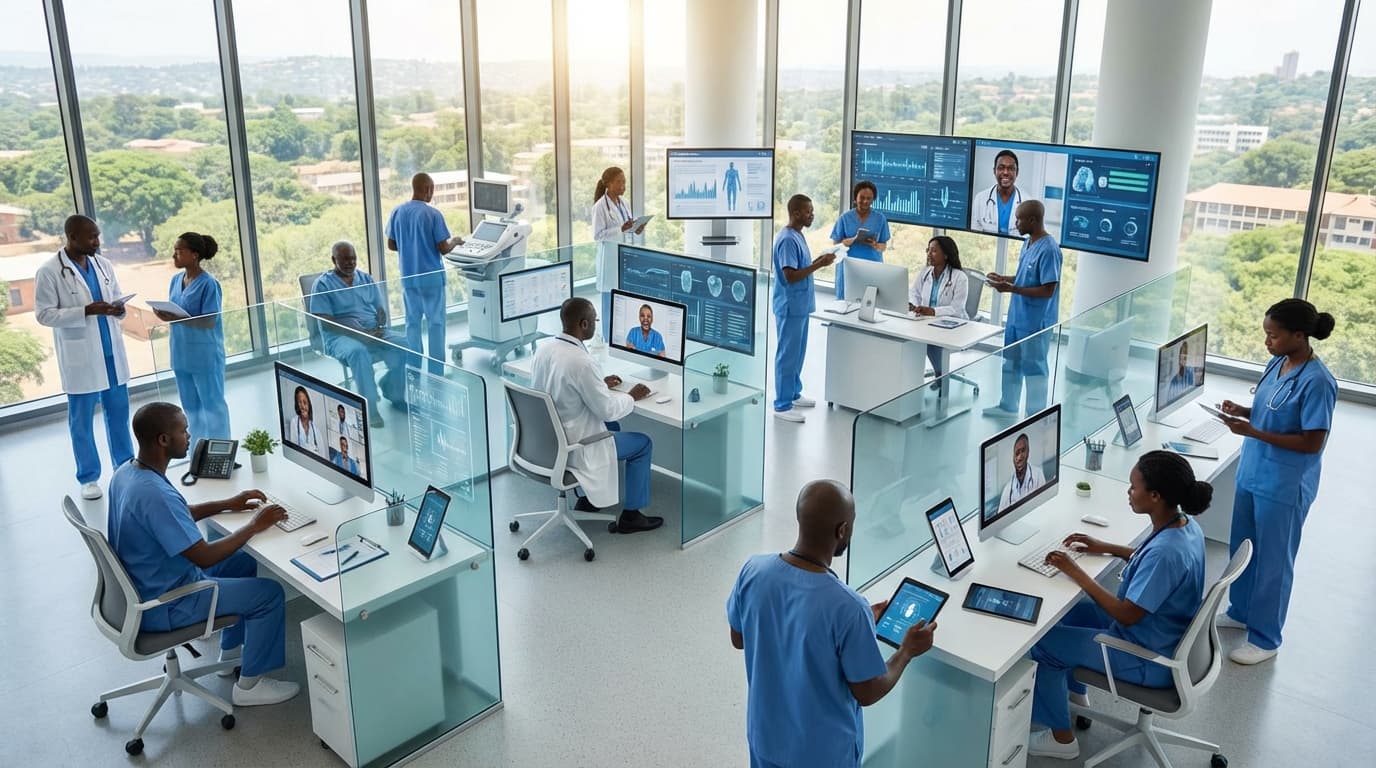
PACS/RIS Migration & Integration in Somalia
Engineering Excellence & Technical Support
Data migration, interoperability and workflow integration for imaging IT. High-standard technical execution following OEM protocols and local regulatory frameworks.
Cloud-Native PACS/RIS Deployment
Leveraging scalable, secure cloud infrastructure for rapid PACS/RIS deployment across diverse Somali healthcare facilities, ensuring high availability and remote access capabilities to critical imaging data.
Interoperability Framework for Legacy Systems
Implementing a robust integration layer utilizing HL7 FHIR standards to seamlessly connect new PACS/RIS with existing legacy HIS/EMR systems, enabling unified patient records and streamlined clinical workflows.
Data Localization and Security Assurance
Designing and implementing data security protocols that comply with international standards and local regulations, ensuring patient data privacy and security through encryption, access controls, and secure data residency within Somalia.
What Is Pacs/ris Migration & Integration In Somalia?
PACS/RIS migration and integration in Somalia refers to the process of transferring, consolidating, and interoperating Picture Archiving and Communication Systems (PACS) and Radiology Information Systems (RIS) within the Somali healthcare landscape. This service is critical for modernizing medical imaging workflows, enhancing data accessibility, improving diagnostic efficiency, and facilitating regional collaboration. The core objective is to establish a unified, secure, and robust digital infrastructure for managing radiological images and associated patient and operational data. This involves the strategic planning, execution, and validation of data migration from legacy systems (which may be disparate, outdated, or non-existent in some facilities) to a new, standardized platform, alongside the integration of this platform with other hospital information systems (HIS) and Electronic Health Records (EHRs) where applicable.
Who Needs It:
- Hospitals and Diagnostic Centers: Facilities with existing or planned radiology departments that require efficient image storage, retrieval, and reporting capabilities.
- Ministry of Health and National Health Agencies: Entities responsible for national health data standardization, public health surveillance, and the oversight of healthcare infrastructure development.
- Healthcare Providers and Practitioners: Radiologists, technicians, and referring physicians who require seamless access to diagnostic images and reports to inform patient care decisions.
- Research and Educational Institutions: Organizations involved in medical research, training, and the development of healthcare professionals, necessitating access to anonymized or aggregated imaging data.
- International Health Organizations and NGOs: Bodies supporting the development and improvement of healthcare services in Somalia, often requiring standardized data for monitoring and evaluation.
Typical Use Cases:
| Use Case Scenario | Description | Benefits |
|---|---|---|
| Centralized Imaging Repository | Consolidating scattered imaging data from various departments or clinics into a single, accessible PACS archive. | Improved data accessibility, reduced redundant imaging, enhanced study comparison over time, streamlined workflow for radiologists. |
| Enhanced Diagnostic Workflow | Integrating RIS for scheduling, patient registration, and report generation with PACS for image retrieval and viewing, creating a seamless end-to-end workflow. | Reduced manual data entry, faster report turnaround times, improved radiologist productivity, fewer errors. |
| Interoperability with EHR/HIS | Linking PACS/RIS data (e.g., patient demographics, exam orders, reports) with the Electronic Health Record or Hospital Information System. | Holistic patient view for clinicians, improved care coordination, reduced administrative burden, data-driven decision-making. |
| Teleradiology Implementation Support | Establishing a secure and reliable platform for transmitting DICOM images and reports to remote radiologists for interpretation. | Addressing radiologist shortages, providing specialized diagnostic services to underserved areas, faster diagnosis in critical cases, potential for remote consultations. |
| Public Health Surveillance & Research | Enabling anonymized or aggregated data extraction from the PACS/RIS for epidemiological studies, outbreak monitoring, and medical research. | Informed public health policy, identification of disease trends, advancement of medical knowledge, improved national health strategies. |
| Disaster Recovery & Business Continuity | Implementing robust backup and recovery strategies for imaging data to ensure availability of critical diagnostic information in case of system failures or unforeseen events. | Minimizing downtime, protecting vital patient data, ensuring uninterrupted patient care, compliance with data retention policies. |
| Standardization of Imaging Protocols | Enforcing consistent imaging protocols and nomenclature across different facilities through the integrated RIS/PACS. | Improved image quality consistency, easier comparison of studies across sites, enhanced radiologist training and understanding. |
PACS/RIS Migration & Integration in Somalia - Key Components & Objectives
- Data Migration: Extracting, transforming, and loading (ETL) imaging studies (DICOM format), patient demographics, examination reports, and associated metadata from legacy PACS/RIS into a new, centralized system.
- System Integration: Establishing interoperability between the new PACS/RIS and existing hospital IT infrastructure, including HIS, EHRs, dictation systems, and billing systems, using standards like HL7 and FHIR.
- Infrastructure Assessment & Planning: Evaluating existing IT capabilities, network bandwidth, power stability, and security protocols to design a suitable migration and integration strategy.
- System Deployment & Configuration: Installing and configuring the chosen PACS/RIS software and hardware, ensuring compliance with international imaging standards and local regulatory requirements.
- User Training & Support: Providing comprehensive training to radiologists, technicians, IT staff, and administrative personnel on the new system's functionalities and workflows.
- Data Archiving & Disaster Recovery: Implementing robust strategies for long-term image archiving and establishing data backup and recovery mechanisms to ensure business continuity.
- Security & Compliance: Implementing stringent security measures for patient data protection (e.g., HIPAA, GDPR principles if applicable) and ensuring compliance with any national data privacy regulations.
- Performance Optimization & Validation: Testing and optimizing the integrated system to ensure efficient image loading, reporting turnaround times, and data integrity.
- Inter-facility Connectivity: Enabling secure access to imaging studies and reports for referring physicians and radiologists across different healthcare facilities, potentially through a federated or cloud-based model.
- Teleradiology Enablement: Creating a foundation for remote diagnostic services by facilitating the secure transmission of imaging studies to off-site radiologists.
Who Needs Pacs/ris Migration & Integration In Somalia?
In Somalia, the need for PACS/RIS migration and integration is driven by a growing demand for modernized healthcare infrastructure and improved diagnostic imaging services. While still in its nascent stages, the healthcare sector is increasingly recognizing the benefits of digital radiology. This includes enhanced efficiency, better data management, improved patient care through faster diagnoses, and the potential for remote consultation and collaboration, which is particularly valuable given the country's geographical distribution.
| Target Customer Type | Key Departments Benefiting | Specific Needs Addressed |
|---|---|---|
| Public Hospitals | Radiology Department, IT Department, Administration, Referring Physicians (various specialties) | Replacing outdated film-based systems, improving image accessibility, standardizing reporting, enabling better workload management, facilitating data archival and retrieval for clinical and research purposes. |
| Private Hospitals & Clinics | Radiology Department, IT Department, Administration, Referring Physicians | Enhancing competitive advantage through modern technology, improving turnaround times for reports, streamlining workflows, offering advanced imaging services, attracting and retaining skilled radiologists. |
| Diagnostic Imaging Centers | Radiology Department, IT Department, Administration, Referring Physicians | Optimizing operational efficiency, increasing throughput, ensuring data security and integrity, facilitating DICOM compliance, enabling seamless integration with other hospital systems. |
| Government Health Ministries/Agencies | Planning & Statistics Department, Public Health Programs, IT Division | Gaining insights into national imaging trends, supporting public health initiatives with data, ensuring quality standards, facilitating policy development, improving oversight of healthcare facilities. |
| NGOs in Healthcare | Clinical Operations, IT Department, Project Management | Establishing robust imaging services in underserved areas, improving diagnostic capabilities for health programs, enabling efficient data collection for monitoring and evaluation, facilitating partnerships with local health providers. |
| Medical Schools/Universities | Radiology Department, Medical Education Units, Research Departments | Providing students with exposure to modern radiology workflows, facilitating teaching and learning with digital archives, supporting research activities, enabling remote access to imaging data for educational purposes. |
Target Customers and Departments for PACS/RIS Migration & Integration in Somalia
- Hospitals (Public and Private)
- Diagnostic Imaging Centers
- Large Clinics with Imaging Capabilities
- Government Health Ministries and Agencies
- Non-Governmental Organizations (NGOs) involved in healthcare delivery
- Educational Institutions (Medical Schools with radiology departments)
Pacs/ris Migration & Integration Process In Somalia
This document outlines the typical workflow for migrating and integrating Picture Archiving and Communication Systems (PACS) and Radiology Information Systems (RIS) within the healthcare landscape of Somalia. The process is designed to be comprehensive, addressing the unique challenges and opportunities present in the region, from initial vendor inquiry to full system deployment and ongoing support.
| Phase | Key Activities | Deliverables | Considerations for Somalia |
|---|---|---|---|
| Initial stakeholder meetings (Ministry of Health, hospitals, clinics) Needs assessment (current infrastructure, IT capabilities, user requirements) Scope definition (which departments, modalities, existing systems) Budget allocation & funding acquisition Risk assessment (security, power, connectivity, expertise) Project team formation (internal and external) | Project charter Needs assessment report Scope document Initial budget proposal Risk register | Understanding existing healthcare infrastructure limitations Assessing internet availability and stability Identifying local IT talent and expertise Cultural sensitivity in planning and communication |
| Request for Proposal (RFP) development Vendor research and pre-qualification Proposal evaluation (technical, financial, experience) Demonstrations and site visits (if feasible) Contract negotiation (pricing, SLAs, support, data ownership) Legal and compliance review | RFP document Vendor evaluation matrix Selected vendor contract Service Level Agreements (SLAs) | Focus on vendors with experience in similar emerging markets Clear contractual terms for data privacy and security Ensuring vendor provides adequate training and support |
| Detailed workflow analysis (radiology reporting, image viewing, scheduling) Integration planning with existing hospital information systems (HIS) Hardware and software requirements definition Network infrastructure assessment and upgrades Security protocols and access control design Customization of templates and reports | System architecture design Integration plan Hardware/software specifications Network design Security plan Customized workflow diagrams | Prioritizing robust and user-friendly interfaces Adapting workflows to local practices and regulations Ensuring system compatibility with existing medical equipment |
| Hardware procurement, installation, and configuration Software installation and setup Network configuration and testing Data migration strategy and execution (historical imaging data) Integration testing with other hospital systems Initial system configuration and parameter setting | Installed and configured hardware Installed and configured PACS/RIS software Successful network connectivity Migrated imaging data Integrated system components | Managing power outages during critical installation periods Phased data migration to minimize disruption Thorough validation of migrated data integrity |
| Unit testing (individual components) Integration testing (system interactions) User Acceptance Testing (UAT) with key stakeholders Performance testing under simulated load Security vulnerability testing Data integrity checks | Test plans and scripts Test results and reports UAT sign-off Bug tracking and resolution log | Involving a diverse group of end-users in UAT Thoroughly testing system performance with potentially limited bandwidth Ensuring data accuracy and completeness post-migration |
| Development of training materials (manuals, guides) End-user training sessions (radiologists, technicians, administrators) Train-the-trainer programs for local capacity building Final system readiness checks Phased or big-bang go-live strategy Post-go-live immediate support | Training materials Trained end-users Go-live readiness checklist Successful system launch Post-go-live support plan | Tailoring training to different user levels and technical proficiencies Providing ongoing support and reinforcement post-training Managing expectations during the transition period |
| Ongoing technical support and troubleshooting System performance monitoring and tuning Regular software updates and patches User feedback collection and system refinement Periodic system audits Long-term maintenance and upgrade planning | Support tickets and resolution logs Performance reports System update logs User feedback summaries Optimization recommendations | Establishing a sustainable local support model Proactive monitoring to prevent issues exacerbated by infrastructure limitations Continuous improvement based on user experience and evolving needs |
PACS/RIS Migration & Integration Process in Somalia: Workflow Overview
- Phase 1: Discovery & Planning
- Phase 2: Vendor Selection & Contract Negotiation
- Phase 3: System Design & Customization
- Phase 4: Technical Implementation & Data Migration
- Phase 5: Testing & Quality Assurance
- Phase 6: Training & Go-Live
- Phase 7: Post-Implementation Support & Optimization
Pacs/ris Migration & Integration Cost In Somalia
Migrating and integrating a Picture Archiving and Communication System (PACS) and Radiology Information System (RIS) in Somalia presents a unique set of challenges and opportunities, influencing the cost significantly. Unlike more developed markets, the local IT infrastructure, availability of skilled personnel, and established vendor landscape play crucial roles in pricing. These systems are vital for modern healthcare facilities, enabling efficient radiology workflow, image storage, retrieval, and reporting. The costs are highly variable and depend on the size and complexity of the healthcare facility, the chosen vendor, the scope of integration, and the required level of customization.
| Cost Component | Estimated Range (Somali Shilling - SOS) | Notes |
|---|---|---|
| Basic PACS/RIS Software License (per modality/user) | 15,000 - 50,000+ SOS | Varies significantly by vendor and feature set. Subscription models may have lower initial cost. |
| Server Hardware (Storage & Processing) | 20,000 - 100,000+ SOS | Depends on storage capacity, redundancy, and performance requirements. |
| Workstations (Radiologist/Technologist) | 5,000 - 25,000+ SOS per unit | High-resolution medical monitors are a significant part of this cost. |
| Integration Services (EHR/HIS) | 30,000 - 150,000+ SOS | Complexity of integration, number of interfaces, and custom development. |
| Data Migration Services | 10,000 - 80,000+ SOS | Volume of data, format, and validation effort. |
| Implementation & Configuration | 25,000 - 100,000+ SOS | Time and expertise required for setup and customization. |
| Training (On-site & Remote) | 10,000 - 50,000+ SOS | Duration, number of users, and vendor's training package. |
| Annual Maintenance & Support | 10-20% of initial software cost | Recurring cost for software updates, patches, and technical assistance. |
| Network Infrastructure Upgrades | Variable, potentially 10,000 - 50,000+ SOS | If existing network cannot handle PACS traffic. |
| Project Management | 5-15% of total project cost | Can be internal resource cost or external consultant fees. |
Key Pricing Factors for PACS/RIS Migration & Integration in Somalia
- {"title":"System Scope and Scale","description":"The number of departments, imaging modalities (X-ray, CT, MRI, Ultrasound), user licenses, and the volume of images to be migrated will directly impact the cost. Larger hospitals with more complex imaging needs will naturally incur higher expenses."}
- {"title":"Vendor and Software Licensing","description":"The choice of vendor (local vs. international) and the specific PACS/RIS software chosen are primary cost drivers. International vendors often have higher initial licensing fees, while local solutions might have lower upfront costs but potentially fewer advanced features or scalability issues. Subscription-based models (SaaS) are becoming more common and can offer predictable monthly costs."}
- {"title":"Hardware and Infrastructure Requirements","description":"This includes servers for image storage, workstations for radiologists and technicians, network upgrades (if necessary to support high data volumes), and potentially new imaging equipment compatible with the new system. The existing IT infrastructure in Somalia can be a limiting factor, potentially requiring significant investment."}
- {"title":"Integration Services","description":"Integrating the PACS/RIS with existing Electronic Health Records (EHR) or other hospital information systems (HIS) is crucial for seamless workflow. The complexity of these integrations, the need for custom interfaces (HL7, DICOM), and the number of systems to be integrated will affect costs."}
- {"title":"Data Migration","description":"Migrating legacy imaging data from existing archives to the new PACS can be a substantial undertaking. The volume of data, the format of the old data, and the effort required for validation and quality control will influence the cost."}
- {"title":"Implementation and Configuration","description":"This covers the installation, setup, and configuration of the PACS/RIS to meet the specific needs of the healthcare facility. This includes defining user roles, workflows, reporting templates, and image display protocols."}
- {"title":"Training and Support","description":"Comprehensive training for radiologists, technologists, IT staff, and administrative personnel is essential for successful adoption. Ongoing technical support, maintenance contracts, and remote assistance are also recurring costs."}
- {"title":"Customization and Development","description":"If the standard PACS/RIS solution doesn't meet all the unique requirements of the facility, custom development or significant customization might be needed, which can add considerable expense."}
- {"title":"Local Market Factors","description":"The availability of local IT expertise and support services in Somalia can impact pricing. If specialized skills need to be brought in from outside the country, travel and accommodation costs will be incurred. Currency fluctuations and import duties on hardware can also play a role."}
- {"title":"Project Management","description":"Effective project management is critical for a successful migration and integration. The cost of dedicated project managers, either internal or external, should be factored in."}
Affordable Pacs/ris Migration & Integration Options
Migrating and integrating Picture Archiving and Communication Systems (PACS) and Radiology Information Systems (RIS) can be a significant undertaking, but strategic planning and the adoption of value bundles can lead to substantial cost savings and improved operational efficiency. This guide explores affordable PACS/RIS migration and integration options, focusing on value bundles and cost-saving strategies to help healthcare organizations make informed decisions.
| Value Bundle Component | Description | Cost-Saving Benefit |
|---|---|---|
| Integrated PACS/RIS Software Suite | A single vendor offering a unified PACS and RIS solution, often with pre-configured workflows. | Reduces integration complexity and potential compatibility issues between separate systems. Streamlined support and maintenance. |
| Migration Services (Data & Workflow) | Vendor-provided services for data transfer, configuration, and user training during the transition. | Minimizes downtime, reduces internal IT burden, and ensures a smoother adoption, preventing costly errors or delays. |
| Cloud Hosting & Management | Hosting PACS/RIS on vendor-managed cloud infrastructure. | Eliminates significant upfront hardware investment and ongoing maintenance costs. Offers scalability and predictable subscription fees. |
| Ongoing Support & Maintenance Contracts | Bundled support agreements that cover software updates, technical assistance, and system monitoring. | Provides predictable operational costs and proactive issue resolution, preventing expensive emergency repairs or extended downtime. |
| Interoperability & Integration Connectors | Pre-built or easily configurable interfaces for connecting with EHRs, modalities, and other hospital systems. | Reduces custom integration development costs and time, ensuring seamless data flow and improving clinical workflows. |
| Training & Customization Packages | Bundled user training and workflow customization services tailored to the organization's needs. | Increases user adoption and efficiency, leading to improved productivity and reduced training overhead. |
Key Considerations for Affordable PACS/RIS Migration & Integration
- Define Clear Project Scope and Objectives: Understanding specific needs, existing infrastructure, and desired outcomes is crucial for avoiding scope creep and unnecessary expenses.
- Assess Current Infrastructure: Evaluating existing hardware, network capabilities, and software compatibility will inform the best integration approach and potential upgrade requirements.
- Vendor Selection and Negotiation: Thoroughly research vendors, compare offerings, and leverage negotiation to secure favorable pricing and contract terms.
- Phased Migration Approach: Implementing changes in stages can reduce immediate financial impact and allow for continuous operational adjustments.
- Cloud-Based Solutions: Exploring cloud PACS/RIS can offer lower upfront costs, scalability, and reduced IT infrastructure burden.
- Interoperability Standards: Prioritizing solutions that adhere to standards like DICOM and HL7 simplifies integration with existing and future systems.
- Data Archiving and Management: Developing a robust data management strategy can optimize storage costs and ensure compliance.
Verified Providers In Somalia
Navigating the healthcare landscape in Somalia requires trust and assurance. Verified providers offer a crucial layer of security, ensuring patients receive quality care from legitimate and competent professionals. Franance Health stands out as a leading organization committed to this standard, meticulously credentialing its network of healthcare professionals. This dedication to verification isn't just a formality; it's a fundamental aspect of their mission to improve health outcomes in Somalia.
| Credentialing Aspect | Franance Health's Approach | Benefit to Patients |
|---|---|---|
| Professional Qualifications | Thorough verification of academic degrees, licenses, and specialized training. | Ensures competence and expertise in chosen medical fields. |
| Clinical Experience | Validation of prior work experience and successful patient outcomes. | Provides confidence in the provider's practical application of knowledge. |
| Ethical Conduct | Background checks and adherence to a strict code of ethics. | Guarantees patient safety and respectful treatment. |
| Continuing Professional Development (CPD) | Mandatory participation in ongoing training and education. | Ensures providers stay current with medical advancements. |
| Patient Feedback Mechanisms | Regular collection and analysis of patient testimonials and reviews. | Drives continuous improvement and accountability. |
Why Franance Health's Verified Providers Excel:
- Rigorous vetting processes ensure all healthcare professionals meet stringent qualification and ethical standards.
- Continuous monitoring and evaluation maintain high levels of performance and patient satisfaction.
- Commitment to transparency builds trust and empowers patients to make informed healthcare decisions.
- Focus on accessibility and affordability ensures quality healthcare is within reach for more Somalis.
- Dedication to evidence-based practices guarantees patients receive the most effective and up-to-date treatments.
Scope Of Work For Pacs/ris Migration & Integration
This Scope of Work (SOW) outlines the requirements for the migration and integration of the existing Picture Archiving and Communication System (PACS) and Radiology Information System (RIS) to a new, unified platform. The project aims to enhance workflow efficiency, improve data accessibility, and ensure long-term scalability and maintainability. This document details the technical deliverables, standard specifications, and key activities involved in achieving these objectives.
| Technical Deliverable | Description | Standard Specifications/Requirements | Acceptance Criteria |
|---|---|---|---|
| Data Migration Plan | Detailed plan for migrating all studies, images, and associated metadata from the legacy PACS to the new PACS. | Must include data mapping, validation procedures, migration timelines, rollback strategy, and security measures. | Approved by stakeholders; successful test migration completed with 99.9% data integrity. |
| Image Data Migration | Actual migration of all historical DICOM studies and associated metadata. | DICOM compliance (conformance statements to be provided), data integrity checks, and performance benchmarks. | All selected historical studies successfully migrated; no loss or corruption of image data; query/retrieve within acceptable latency. |
| RIS Data Migration/Integration | Migration or integration of patient demographics, study orders, reports, and other relevant RIS data. | Data mapping, transformation rules, and validation scripts. HL7 v2.x or FHIR compliance for integration. | Accurate and complete transfer/synchronization of RIS data; successful bidirectional HL7 communication for patient registration and study updates. |
| HL7 Interface Development & Configuration | Development and configuration of HL7 interfaces for seamless communication between the new PACS/RIS and other hospital systems. | Support for ADT (Admit/Discharge/Transfer), ORM (Order Entry), ORU (Observation Result), and other relevant message types. NIST HL7 standards. | Successful message exchange with connected systems; data validation and error handling implemented. |
| PACS/RIS System Deployment | Installation, configuration, and deployment of the new PACS and RIS software and hardware. | Server hardware specifications, operating system requirements, database configuration, network setup, security hardening, and disaster recovery plan. | System deployed and functional as per vendor specifications; performance testing completed. |
| User Acceptance Testing (UAT) Plan & Execution | Development and execution of a UAT plan to validate the functionality and usability of the new system. | Test scripts covering all critical workflows, including image viewing, reporting, order entry, and data retrieval. Defined UAT scenarios and user groups. | Successful completion of all critical UAT test cases; sign-off from key user representatives. |
| Training Materials & Sessions | Development of comprehensive training materials and delivery of training sessions for end-users and IT support. | User manuals, quick reference guides, and hands-on training modules. Training tailored to different user roles. | Training materials approved; attendance and feedback from training sessions indicate adequate knowledge transfer. |
| System Documentation | Comprehensive documentation of the new PACS/RIS system, including architecture, configuration, and operational procedures. | Technical architecture diagrams, configuration guides, administration manuals, and troubleshooting guides. | Documentation is complete, accurate, and readily accessible to IT staff. |
| Decommissioning Plan for Legacy Systems | Plan for the secure and complete decommissioning of the legacy PACS and RIS systems. | Data archival procedures, hardware disposal, and software uninstallation. Compliance with data retention policies. | Legacy systems successfully decommissioned; all necessary data archived. |
Project Objectives
- Seamless migration of all historical image data from the legacy PACS to the new PACS.
- Integration of the legacy RIS data (patient demographics, studies, reports) with the new RIS.
- Establishment of robust HL7 interfaces for interoperability with other hospital systems (e.g., EMR, HIS).
- Configuration and deployment of the new PACS/RIS solution.
- Comprehensive testing of all migrated data, interfaces, and functionalities.
- Training of end-users and IT support staff.
- Decommissioning of the legacy PACS/RIS systems upon successful transition.
Service Level Agreement For Pacs/ris Migration & Integration
This Service Level Agreement (SLA) outlines the agreed-upon response times and uptime guarantees for the successful migration and integration of the Picture Archiving and Communication System (PACS) and Radiology Information System (RIS). This SLA is intended to ensure minimal disruption to clinical operations and maintain the availability of critical imaging and patient data.
| Service Component | Response Time Target (Business Hours) | Response Time Target (24x7) | Resolution Time Target (Severity 1 - Critical) | Resolution Time Target (Severity 2 - High) | Resolution Time Target (Severity 3 - Medium) | Uptime Guarantee |
|---|---|---|---|---|---|---|
| PACS/RIS System Access & Availability | 15 minutes | 30 minutes | 4 hours | 8 business hours | 24 business hours | 99.9% (excluding scheduled maintenance) |
| Image Retrieval & Display | 30 minutes | 1 hour | 6 hours | 12 business hours | 48 business hours | 99.8% (excluding scheduled maintenance) |
| RIS Order Entry & Results Reporting | 30 minutes | 1 hour | 6 hours | 12 business hours | 48 business hours | 99.8% (excluding scheduled maintenance) |
| Data Migration Completion (Post-Go-Live) | N/A (Project Milestone) | N/A (Project Milestone) | Defined in Project Plan | Defined in Project Plan | Defined in Project Plan | N/A |
| Integration Points (e.g., EMR, Billing) | 1 hour | 2 hours | 8 hours | 16 business hours | 72 business hours | 99.5% (excluding scheduled maintenance) |
Key Performance Indicators (KPIs)
- Response Times: Measures the time taken by the support team to acknowledge and begin addressing reported incidents.
- Resolution Times: Measures the time taken to resolve incidents and restore full system functionality.
- Uptime Guarantees: Specifies the percentage of time the PACS/RIS systems are expected to be operational and accessible.
Frequently Asked Questions

Ready when you are
Let's scope your PACS/RIS Migration & Integration in Somalia project in Somalia.

Scaling healthcare logistics and technical systems across the entire continent.