
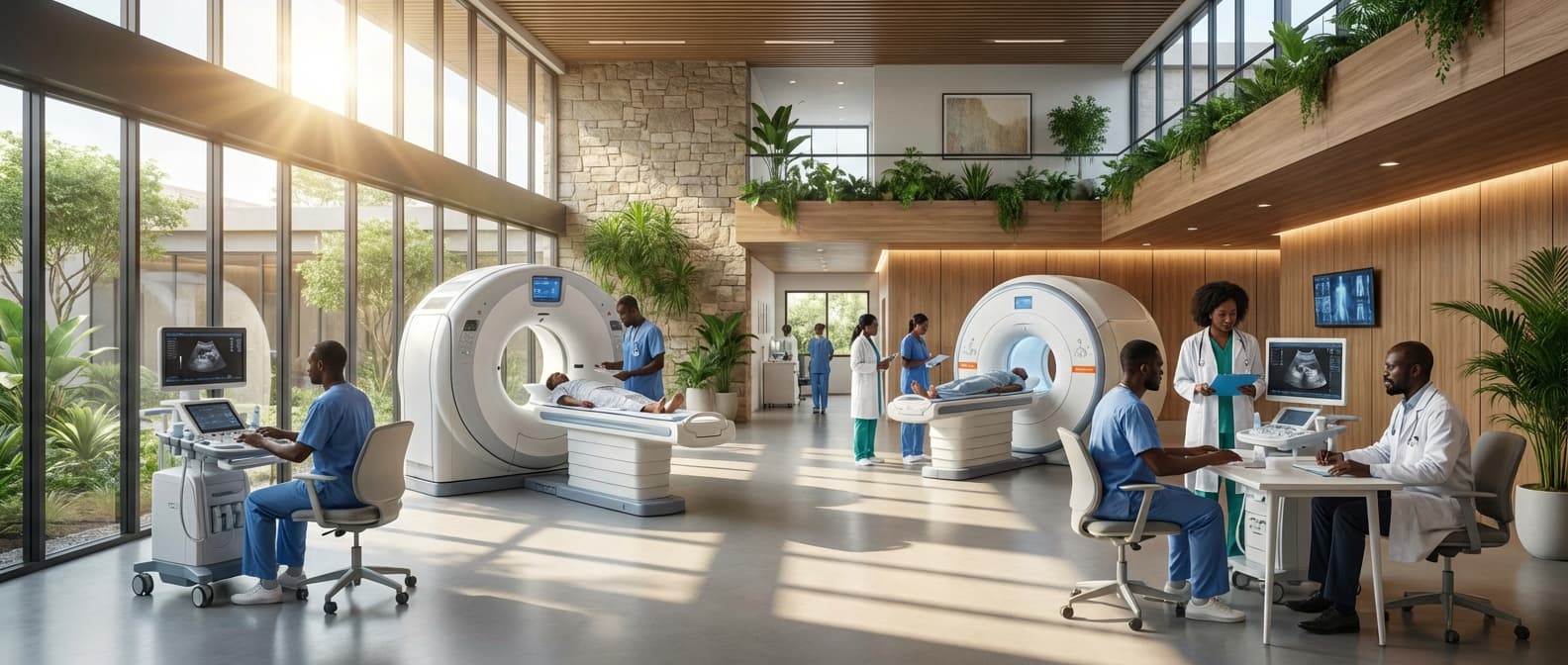
Diagnostic Imaging in Somalia
Engineering Excellence & Technical Support
High-resolution imaging systems including CT scanners, MRI, X-ray, and ultrasound technology for accurate clinical diagnosis. High-standard technical execution following OEM protocols and local regulatory frameworks.
Accessible X-ray Units Deployed in Remote Areas
Introduction of portable and robust X-ray machines in previously underserved rural health centers, enabling basic radiographic diagnostics for conditions like fractures, pneumonia, and tuberculosis, significantly reducing patient travel time and associated costs.
Mobile Ultrasound Services for Maternal and Child Health
Deployment of mobile ultrasound units equipped with skilled technicians to conduct vital obstetric scans, antenatal care monitoring, and pediatric ultrasounds in communities lacking fixed imaging facilities. This has led to earlier detection of pregnancy complications and improved infant health outcomes.
Teleradiology Network for Specialist Interpretation
Implementation of a teleradiology platform connecting local healthcare facilities with international radiologists for expert interpretation of complex imaging studies. This bridges the gap in specialist expertise, allowing for timely and accurate diagnoses of critical conditions across Somalia.
What Is Diagnostic Imaging In Somalia?
Diagnostic imaging in Somalia refers to the use of various medical technologies to create visual representations of the interior of the body for clinical analysis and medical intervention. These technologies produce images that aid healthcare professionals in diagnosing diseases, monitoring treatment efficacy, and guiding medical procedures. The service involves the application of non-invasive or minimally invasive techniques to visualize anatomical structures and physiological processes, thereby facilitating accurate and timely healthcare decisions in the Somali context. The availability and implementation of these services are crucial for improving healthcare outcomes in a region facing significant public health challenges.
| Who Needs Diagnostic Imaging? | Typical Use Cases | |||||
|---|---|---|---|---|---|---|
| Patients presenting with: | General Applications: | |||||
|
|
|
|
|
|
|
| Specific Patient Groups: | Modalities and their specific uses: | |||||
|
|
|
|
|
| |
| X-ray: Diagnosis of fractures, dislocations, pneumonia, foreign bodies, and some bone pathologies. | Ultrasound: Evaluation of soft tissues, abdominal organs (liver, kidneys, gallbladder), reproductive organs, blood flow (Doppler), and prenatal imaging. | CT Scan: Detailed cross-sectional imaging for evaluation of head injuries, stroke, complex fractures, abdominal pathologies (e.g., appendicitis, diverticulitis), and thoracic conditions. | MRI: High-resolution imaging of soft tissues, including the brain, spinal cord, muscles, ligaments, and internal organs, offering superior detail for neurological and musculoskeletal conditions. |
Key Components and Aspects of Diagnostic Imaging in Somalia
- Modalities: Common diagnostic imaging modalities include X-ray (radiography), Ultrasound (sonography), Computed Tomography (CT) scans, and Magnetic Resonance Imaging (MRI). The accessibility of these modalities varies significantly across different healthcare facilities in Somalia.
- Personnel: The service requires trained professionals such as radiologists, radiographers (radiologic technologists), sonographers, and medical physicists for operation, interpretation, and quality assurance.
- Equipment: Diagnostic imaging facilities necessitate specialized equipment such as X-ray machines, ultrasound transducers and consoles, CT scanners, and MRI scanners, along with associated infrastructure like power supply, cooling systems, and radiation shielding (where applicable).
- Interpretation and Reporting: Raw images are analyzed by qualified radiologists to generate diagnostic reports, which are then communicated to referring physicians for patient management.
- Referral Pathways: A structured referral system is essential, allowing primary healthcare providers to refer patients to facilities equipped with diagnostic imaging services when indicated.
- Challenges: Significant challenges in Somalia include limited availability of equipment, maintenance issues, shortage of trained personnel, inadequate power supply, and accessibility constraints, particularly in rural areas.
Who Needs Diagnostic Imaging In Somalia?
Diagnostic imaging plays a crucial role in modern healthcare, enabling accurate diagnosis, treatment planning, and monitoring of various medical conditions. In Somalia, where healthcare infrastructure is recovering and facing numerous challenges, understanding who needs and benefits from diagnostic imaging services is paramount to strategic resource allocation and service delivery. This document outlines the key target customers and departments that would benefit most from robust diagnostic imaging capabilities in Somalia.
| Department | Key Diagnostic Imaging Needs | Primary Modalities Used | Rationale for Use |
|---|---|---|---|
| Emergency Department/Trauma Centers | Rapid assessment of fractures, dislocations, internal bleeding, organ damage, foreign bodies. | X-ray, CT Scan | Critical for immediate life-saving interventions and preventing further complications. |
| Maternity and Obstetrics Wards | Fetal assessment, anomaly detection, monitoring high-risk pregnancies, placental assessment, neonatal imaging. | Ultrasound (Obstetric) | Ensures maternal and fetal well-being, allows for early detection of potential complications. |
| Surgical Departments (General Surgery, Orthopedics, Neurosurgery, etc.) | Pre-operative planning, assessment of trauma, identification of surgical targets, post-operative monitoring. | X-ray, CT Scan, MRI (for specific cases) | Improves surgical outcomes, reduces complications, and guides operative decisions. |
| Internal Medicine/General Wards | Diagnosis of pneumonia, pleural effusions, heart conditions, kidney abnormalities, gastrointestinal issues. | X-ray, Ultrasound, CT Scan | Aids in differential diagnosis and guiding medical management for a wide range of illnesses. |
| Pediatric Wards | Diagnosis of congenital abnormalities, infections, trauma, and developmental issues in children. | X-ray, Ultrasound, CT Scan (with appropriate protocols) | Essential for the unique diagnostic needs of the pediatric population. |
| Outpatient Clinics/Primary Healthcare Centers (referral-based) | Initial screening for musculoskeletal issues, chest conditions, and abdominal complaints, leading to referrals for more advanced imaging. | X-ray, Ultrasound | Provides basic diagnostic capabilities and identifies patients requiring further investigation. |
| Infectious Disease Units | Diagnosis and staging of tuberculosis (e.g., chest X-ray), assessment of lung involvement in other infections. | X-ray, CT Scan | Crucial for managing prevalent infectious diseases in Somalia. |
| Oncology Units (if available or developing) | Cancer detection, staging, treatment monitoring, and follow-up. | CT Scan, MRI, Ultrasound | Integral to cancer care pathway. |
Target Customers for Diagnostic Imaging in Somalia
- Patients with Acute Trauma: Individuals suffering from accidents, injuries, or violence requiring immediate assessment for fractures, internal bleeding, or organ damage. This includes victims of road traffic accidents, falls, and interpersonal violence.
- Patients with Suspected Infectious Diseases: Individuals presenting with symptoms indicative of serious infections such as tuberculosis, pneumonia, meningitis, or sepsis, where imaging can help identify affected organs and guide treatment.
- Patients with Chronic Diseases: Individuals managing long-term conditions like cardiovascular disease, respiratory illnesses (e.g., COPD, asthma), kidney disease, or neurological disorders, who require regular monitoring and assessment of disease progression or complications.
- Pregnant Women and Newborns: For prenatal screening, identifying fetal abnormalities, monitoring high-risk pregnancies, and diagnosing conditions in newborns that may require immediate intervention.
- Patients with Suspected Cancers: Individuals presenting with symptoms suggestive of malignancy, requiring imaging for detection, staging, and to guide biopsy or treatment decisions.
- Patients with Neurological Conditions: Individuals experiencing symptoms like stroke, seizures, persistent headaches, or movement disorders, where imaging is essential for diagnosis and management.
- Patients Requiring Pre-operative Assessment: Individuals undergoing surgical procedures to assess the extent of disease, identify anatomical variations, and plan the surgical approach.
- Patients Undergoing Follow-up and Treatment Monitoring: Individuals receiving treatment for various conditions, requiring imaging to assess treatment efficacy and monitor for recurrence or complications.
Diagnostic Imaging Process In Somalia
Diagnostic imaging in Somalia faces significant challenges due to limited infrastructure, shortages of trained personnel, and infrequent availability of equipment. The workflow, while striving for a logical progression, is often fragmented and subject to delays. The process typically begins with a clinical suspicion by a healthcare provider, leading to a referral for imaging. However, the availability of imaging services varies drastically between urban centers and rural areas. If a facility has imaging capabilities, the patient is scheduled. The imaging procedure itself, whether X-ray, ultrasound, or CT (where available), is performed by a technician or radiographer. Following the scan, an interpretation is required, which is often a bottleneck due to a scarcity of radiologists. Reports are then generated and sent back to the referring physician for diagnosis and treatment planning. Challenges throughout this process include equipment maintenance, supply chain issues for consumables, and the need for robust quality assurance.
| Stage | Description | Key Considerations/Challenges in Somalia |
|---|---|---|
| Inquiry/Referral | Healthcare provider identifies need for diagnostic imaging. | Limited diagnostic capabilities at primary care level; long distances to referral centers. |
| Access to Service | Patient seeks imaging at a functional healthcare facility. | High concentration of services in urban areas; limited or no services in rural regions. |
| Scheduling & Preparation | Appointment is made, and patient is briefed on preparation. | Limited appointment slots due to equipment availability and staff shortages; communication challenges for instructions. |
| Image Acquisition | Imaging procedure is performed by technician/radiographer. | Shortage of trained personnel; frequent equipment downtime and lack of maintenance; unreliable power supply. |
| Interpretation | Radiologist analyzes images and generates a report. | Critical shortage of radiologists; reliance on visiting specialists or remote interpretation (if infrastructure permits). |
| Reporting & Delivery | Report is compiled and sent to referring physician. | Manual reporting systems prone to delays; potential for miscommunication or loss of reports. |
| Clinical Application | Referring physician uses report for diagnosis and treatment. | Challenges in managing complex cases due to delayed or incomplete reports; need for ongoing medical education. |
Diagnostic Imaging Workflow in Somalia: Key Stages and Challenges
- Clinical Suspicion & Referral: A healthcare provider identifies a need for imaging based on patient symptoms and medical history.
- Access to Imaging Facilities: Patient's proximity to functional imaging centers significantly impacts the next step.
- Scheduling & Patient Preparation: If a facility is available, the patient is scheduled and receives necessary pre-imaging instructions.
- Image Acquisition: A trained technician or radiographer performs the imaging procedure (X-ray, Ultrasound, CT).
- Image Interpretation: A radiologist analyzes the acquired images and generates a report. This is a major bottleneck.
- Report Generation & Delivery: The interpreted report is compiled and sent back to the referring physician.
- Diagnosis & Treatment Planning: The referring physician uses the imaging report to inform their diagnosis and treatment decisions.
- Key Challenges:
- Limited availability of advanced imaging equipment (e.g., MRI, CT).
- Frequent equipment malfunction and lack of maintenance/spare parts.
- Severe shortage of trained radiologists and radiographers.
- Inadequate supply chain for consumables (e.g., contrast agents, films).
- Power instability affecting equipment operation.
- Inconsistent quality control and assurance measures.
Diagnostic Imaging Cost In Somalia
Diagnostic imaging plays a crucial role in healthcare, enabling accurate diagnosis and treatment planning. However, the cost of these services in Somalia can be a significant barrier to access for many. Several factors influence the pricing of diagnostic imaging in the country, and these costs can vary considerably depending on the facility, location, and the specific imaging modality used.
Key Pricing Factors:
- Type of Imaging Modality: Different imaging techniques have vastly different costs. X-rays are generally the most affordable, followed by ultrasounds. More advanced imaging like CT scans and MRIs are considerably more expensive due to the higher capital investment in equipment, maintenance, and specialized personnel required.
- Facility Type and Ownership: Public hospitals, often operating with limited budgets and sometimes relying on donor funding, may offer lower prices or even subsidized services compared to private clinics and hospitals, which need to cover operational costs and generate profit. Private facilities often have newer equipment and a wider range of services.
- Location: Major urban centers like Mogadishu tend to have a higher concentration of well-equipped facilities and potentially more competitive pricing. However, they might also have higher operational costs. Remote or less developed areas may have fewer options, leading to higher prices due to limited competition and higher logistical costs for consumables and maintenance.
- Equipment Age and Technology: Newer, state-of-the-art equipment is more expensive to purchase and maintain, which can be reflected in the service cost. Older equipment, while potentially cheaper to operate, might have limitations in diagnostic accuracy or speed.
- Technician and Radiologist Expertise: The availability of skilled and experienced radiologists and radiographers is crucial for accurate interpretation. Scarce specialized personnel can drive up costs.
- Consumables and Maintenance: The cost of contrast agents (if required), electricity, and regular maintenance of imaging equipment are significant operational expenses that are factored into pricing.
- Supply Chain and Import Costs: Many diagnostic imaging machines and their parts are imported, subject to customs duties, shipping costs, and currency fluctuations, all of which impact the final price.
- Insurance and Payment Schemes: While formal health insurance is not widespread in Somalia, some NGOs or employers might offer schemes that influence out-of-pocket expenses for patients. Cash payments are the norm for most.
Estimated Cost Ranges in Somali Shillings (SOS):
It's important to note that these are estimates and actual prices can vary significantly. These figures are based on general observations and reports, and a precise, up-to-date price list is not readily available due to the dynamic nature of the market and lack of centralized pricing.
- X-ray: Can range from approximately 100,000 SOS to 400,000 SOS, depending on the number of views and the body part being examined.
- Ultrasound (Abdomen, Pelvic, Obstetric): Typically ranges from 150,000 SOS to 500,000 SOS. Specialized ultrasounds (e.g., Doppler) can be higher.
- CT Scan: Prices can range from 1,500,000 SOS to 5,000,000 SOS or more for a single scan, with costs escalating for contrast-enhanced scans or scans of larger body areas.
- MRI: This is generally the most expensive modality. Prices can start from 4,000,000 SOS and go up to 10,000,000 SOS or even higher for complex scans or specific body parts. Access to MRI services is also more limited.
These costs represent a significant financial burden for many Somalis, highlighting the need for improved healthcare infrastructure, more affordable access to technology, and potentially subsidized services or insurance programs to ensure equitable access to essential diagnostic imaging.
| Imaging Modality | Estimated Cost Range (SOS) |
|---|---|
| X-ray | 100,000 - 400,000 |
| Ultrasound | 150,000 - 500,000 |
| CT Scan | 1,500,000 - 5,000,000+ |
| MRI | 4,000,000 - 10,000,000+ |
Factors Influencing Diagnostic Imaging Costs in Somalia
- Type of Imaging Modality (X-ray, Ultrasound, CT, MRI)
- Facility Type and Ownership (Public vs. Private)
- Geographical Location (Urban vs. Rural)
- Age and Technology of Equipment
- Availability of Skilled Personnel (Radiologists, Technicians)
- Cost of Consumables and Maintenance
- Import Duties and Supply Chain Logistics
- Currency Exchange Rates and Inflation
Affordable Diagnostic Imaging Options
Diagnostic imaging plays a crucial role in diagnosing and monitoring a wide range of medical conditions. However, the costs associated with these services can be a significant barrier for many patients. Fortunately, there are affordable diagnostic imaging options available, and understanding value bundles and cost-saving strategies can help individuals navigate the healthcare system more economically. Value bundles are often offered by imaging providers, combining multiple related services into a single, discounted price. These can be particularly beneficial when a patient requires a series of scans or follow-up procedures. Cost-saving strategies involve proactive measures like comparing prices across different facilities, understanding insurance coverage thoroughly, exploring self-pay options for uninsured or underinsured individuals, and inquiring about financial assistance programs.
| Imaging Type | Potential Cost-Saving Measures | Considerations |
|---|---|---|
| MRI | Bundle with related follow-up scans, compare prices between hospitals and freestanding centers, inquire about off-peak hour appointments. | MRI costs vary significantly by body part and facility. |
| CT Scan | Check for package deals including contrast dye, ask about self-pay discounts, compare pricing across different providers. | CT scans are generally less expensive than MRIs but still can be costly. |
| X-Ray | Often bundled with other initial diagnostic tests, many clinics offer competitive pricing for basic X-rays. | X-rays are typically the most affordable imaging modality. |
| Ultrasound | Often used as a less expensive alternative to MRI or CT, inquire about pricing for specific diagnostic needs. | Ultrasound is excellent for soft tissues and fluid-filled structures. |
Cost-Saving Strategies for Diagnostic Imaging
- Compare prices: Obtain quotes from multiple imaging centers and hospitals for the same procedure.
- Understand your insurance: Familiarize yourself with your deductible, co-pays, co-insurance, and out-of-pocket maximums.
- Ask about self-pay discounts: If you are uninsured or have a high deductible, inquire about reduced rates for paying out-of-pocket.
- Seek out accredited facilities: While not always directly tied to cost, accredited facilities often have efficient processes, potentially leading to better value.
- Inquire about financial assistance: Many imaging providers and hospitals offer financial aid or payment plans for eligible patients.
- Consider freestanding imaging centers: These facilities may offer lower prices compared to hospital-based imaging departments.
- Discuss necessity with your doctor: Ensure the imaging ordered is truly necessary and explore less expensive alternatives if available (e.g., ultrasound instead of MRI for certain conditions).
- Leverage health savings accounts (HSAs) or flexible spending accounts (FSAs): Use pre-tax dollars to pay for eligible medical expenses, including diagnostic imaging.
Verified Providers In Somalia
In Somalia, accessing reliable healthcare is paramount. Verified providers are essential for ensuring quality care and patient safety. Franance Health stands out as a leading organization that rigorously vets its healthcare providers, offering a level of trust and assurance that is crucial in the current landscape. This commitment to verification not only safeguards patients but also elevates the standard of healthcare services available.
| Provider Characteristic | Franance Health Verification Standard | Benefit to Patients |
|---|---|---|
| Medical Licenses & Certifications | Mandatory submission and verification of all relevant, up-to-date licenses and certifications from recognized authorities. | Ensures providers are legally qualified and have met educational and training requirements. |
| Professional Background Checks | Thorough review of past employment, disciplinary actions, and any relevant legal or ethical concerns. | Minimizes risk by identifying and excluding providers with a history of malpractice or misconduct. |
| Clinical Competency Assessment | May involve ongoing assessment of practical skills, adherence to best practices, and continuing medical education. | Guarantees a higher standard of medical expertise and up-to-date knowledge. |
| Patient Feedback & Reviews | Incorporates a system for collecting and analyzing patient experiences to monitor service quality and identify areas for improvement. | Provides insights into provider performance from a patient's perspective, promoting satisfaction and continuous improvement. |
| Ethical Conduct & Professionalism | Adherence to a strict code of conduct and ethical guidelines governing patient interactions and medical practice. | Ensures respectful, honest, and patient-centered care. |
Why Franance Health Represents the Best Choice for Verified Providers in Somalia:
- Rigorous Vetting Process: Franance Health employs a multi-stage verification process that scrutinizes credentials, licenses, and professional backgrounds of all affiliated healthcare providers. This ensures that only qualified and legitimate practitioners are included.
- Commitment to Quality: Beyond basic verification, Franance Health actively assesses the quality of care provided by its network. This may include patient feedback mechanisms, peer reviews, and adherence to established medical protocols.
- Enhanced Patient Safety: By partnering with Franance Health, patients gain confidence that they are receiving care from providers who meet stringent safety standards and ethical guidelines.
- Accessibility and Network: Franance Health works to build a comprehensive network of verified healthcare professionals across Somalia, making it easier for individuals to find the specialized care they need.
- Transparency and Accountability: The organization promotes transparency in its verification processes and holds its providers accountable for delivering exceptional service, fostering a culture of trust and reliability.
Scope Of Work For Diagnostic Imaging
This document outlines the Scope of Work (SOW) for Diagnostic Imaging services, detailing the technical deliverables and standard specifications required for the procurement and execution of these services. It is intended to provide a clear framework for vendors to understand the expectations and requirements.
| Deliverable | Description | Format/Standard | Timeline (Example) |
|---|---|---|---|
| Imaging Studies (e.g., X-ray, CT, MRI, Ultrasound) | Acquisition of diagnostic imaging scans as per physician orders. | DICOM 3.0 compliant digital images. | Within 24-48 hours of scan completion |
| Radiology Reports | Interpretation of imaging studies by qualified radiologists, providing a comprehensive report. | HL7 compliant (for EHR integration) or PDF format. | Within 24-48 hours of scan completion |
| CD/DVD/PACS Archiving | Provision of images for patient records or further review. | DICOM 3.0 standard on secure media or direct PACS upload. | Upon request or as per defined protocol |
| Image Quality Assessment Reports | Documentation of image quality checks and adherence to established protocols. | PDF or structured data format. | Monthly |
| Equipment Maintenance Logs | Records of routine maintenance, calibration, and any repairs performed on imaging equipment. | Digital records or logbooks. | As performed and retained for audit |
| Personnel Qualifications and Certifications | Verification of qualifications, licenses, and certifications for all imaging technologists and radiologists. | Scanned copies of credentials, verifiable through relevant authorities. | Upon onboarding and annually |
| Radiation Dose Reports (for relevant modalities) | Documentation of radiation dose metrics for procedures involving ionizing radiation. | Structured data format compatible with dose management systems. | As per modality and protocol |
Key Sections
- Introduction and Purpose
- Scope of Services
- Technical Deliverables
- Standard Specifications
- Reporting Requirements
- Quality Assurance and Control
- Performance Metrics and Evaluation
- Security and Data Privacy
- Implementation and Transition
- Training and Support
- Pricing and Payment Terms
- Contractual Obligations and Amendments
Service Level Agreement For Diagnostic Imaging
This Service Level Agreement (SLA) outlines the performance standards for diagnostic imaging services provided by [Provider Name] to [Client Name]. It specifically addresses response times for image access and interpretations, as well as uptime guarantees for the Picture Archiving and Communication System (PACS) and related infrastructure.
| Service Metric | Target Level | Measurement Period | Exclusions |
|---|---|---|---|
| Response Time for Image Access (Urgent/STAT Exams) | Within 15 minutes of technologist completion | 24x7x365 | Scheduled system maintenance, network outages outside provider control, client-side network issues |
| Response Time for Image Access (Routine Exams) | Within 60 minutes of technologist completion | 24x7x365 | Scheduled system maintenance, network outages outside provider control, client-side network issues |
| Response Time for Image Interpretation (Urgent/STAT Exams) | Within 30 minutes of image availability in interpretation queue | 24x7x365 | Radiologist availability, complexity of exam requiring consultation |
| Response Time for Image Interpretation (Routine Exams) | Within 24 hours of image availability in interpretation queue | Business Hours (e.g., 8 AM - 6 PM, Mon-Fri) | Radiologist availability, complexity of exam requiring consultation, weekend/holiday processing |
| PACS Uptime Guarantee | 99.5% | Monthly | Scheduled maintenance windows (notified 48 hours in advance), force majeure events |
| Ancillary Systems Uptime Guarantee | 99.0% | Monthly | Scheduled maintenance windows (notified 48 hours in advance), force majeure events |
Key Service Metrics
- Response Time for Image Access: The time it takes for a requested diagnostic image to be made available to authorized personnel via the PACS.
- Response Time for Image Interpretation: The time from when a diagnostic imaging study is deemed 'complete' by the technologist to when the final radiologist report is available.
- PACS Uptime Guarantee: The percentage of time the PACS system is operational and accessible for image viewing and reporting.
- Ancillary Systems Uptime Guarantee: The percentage of time key supporting systems (e.g., RIS, worklist management) are operational.
Frequently Asked Questions

Ready when you are
Let's scope your Diagnostic Imaging in Somalia project in Somalia.

Scaling healthcare logistics and technical systems across the entire continent.