
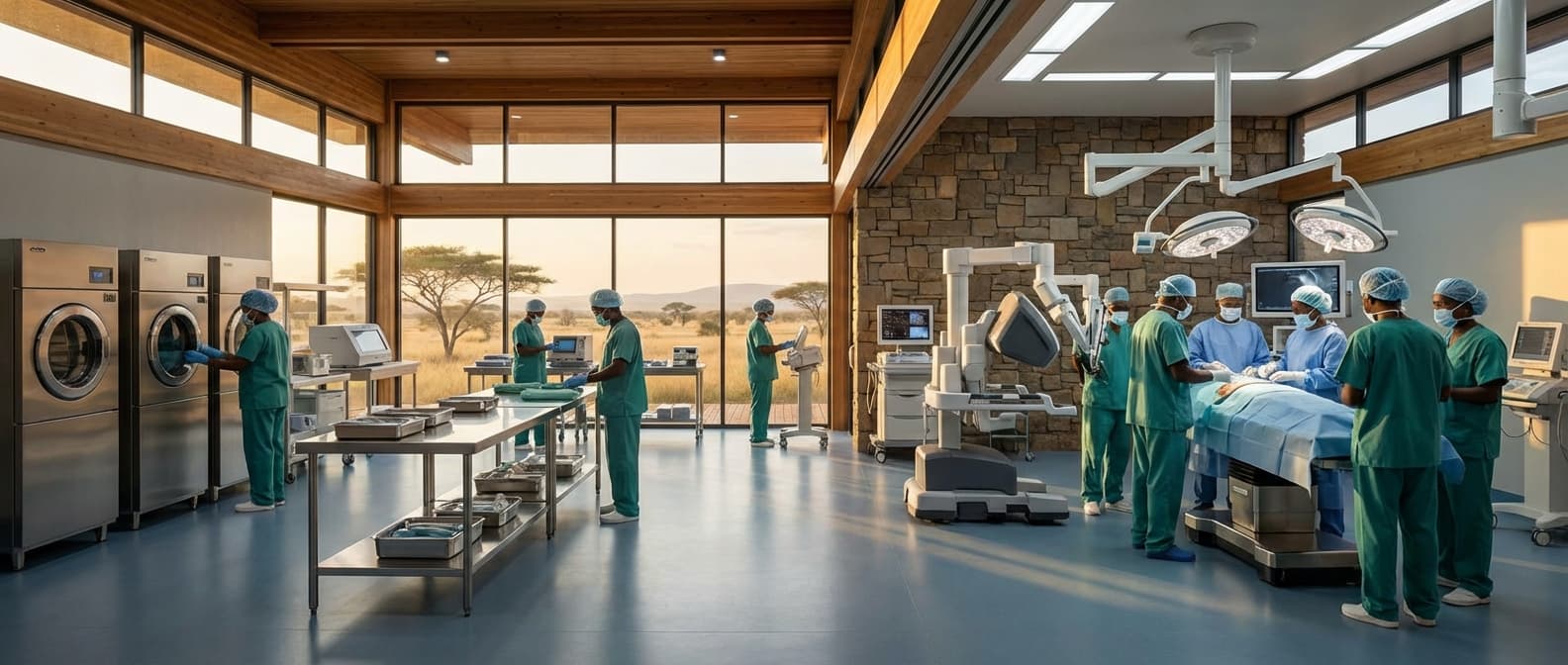
Medical Gas System Design & Installation in Somalia
Engineering Excellence & Technical Support
Medical gas pipeline systems: O2, N2O, air, vacuum High-standard technical execution following OEM protocols and local regulatory frameworks.
Critical Medical Gas Purity Standards
Ensuring medical oxygen, medical air, and nitrous oxide meet stringent international purity standards (e.g., ISO 7396-1) for patient safety and therapeutic efficacy, crucial in resource-limited settings where contamination risks are higher.
Robust System Redundancy and Backup
Designing and installing medical gas systems with built-in redundancy for critical supplies (e.g., dual oxygen cylinders, automatic manifold switchovers) to guarantee continuous availability, mitigating the impact of potential equipment failures or supply chain disruptions in Somalia.
Durable, Climate-Resilient Infrastructure
Implementing medical gas piping, outlets, and control systems engineered for durability and resilience against Somalia's challenging climate conditions, including extreme temperatures, dust, and humidity, ensuring long-term operational integrity and minimizing maintenance needs.
What Is Medical Gas System Design & Installation In Somalia?
Medical gas system design and installation in Somalia refers to the comprehensive process of planning, engineering, and constructing a safe and reliable network for the delivery of medical gases to healthcare facilities. This involves the selection and integration of appropriate medical gas outlets, pipeline systems, alarm systems, vacuum systems, and potentially oxygen concentrator systems, tailored to the specific needs and regulatory landscape of Somali healthcare infrastructure. The service ensures that critical medical gases such as medical oxygen, medical air, nitrous oxide, and medical vacuum are readily available at points of use within hospitals, clinics, and other medical settings, conforming to international standards and local safety protocols.
| Who Needs Medical Gas System Design & Installation? | Typical Use Cases | ||||||||
|---|---|---|---|---|---|---|---|---|---|
| Hospitals (public and private) | Supplying oxygen for respiratory support in general wards, ICUs, and emergency departments. | Providing medical air for ventilators and nebulizers. | Delivering nitrous oxide for anesthesia in operating rooms and procedure suites. | Facilitating surgical procedures requiring suction (medical vacuum). | Supporting neonatal care units with controlled oxygen delivery. | Emergency response and disaster preparedness scenarios. | Rehabilitation centers requiring therapeutic oxygen. | Dental clinics requiring specific gas mixtures. | Research laboratories within medical institutions requiring medical-grade gases. |
| Specialized Medical Clinics (e.g., surgical centers, maternity wards) | Urgent care facilities requiring immediate access to life-support gases. | Remote healthcare facilities lacking reliable traditional gas supply infrastructure. | Facilities undergoing renovations or expansions requiring upgrades to existing systems. | Non-governmental organizations (NGOs) establishing or improving healthcare infrastructure in underserved areas. |
Key Components of Medical Gas System Design & Installation:
- Medical Gas Pipeline Systems (MGPS): Design and installation of dedicated piping networks for each medical gas.
- Gas Outlets: Installation of standardized medical gas outlets at patient beds, operating rooms, and other critical areas.
- Alarm Systems: Integration of central and local alarm panels to monitor gas pressure, purity, and availability.
- Vacuum Systems: Design and installation of medical vacuum systems, including vacuum pumps and collection vessels.
- Oxygen Concentrators (where applicable): Integration of on-site oxygen generation systems as an alternative or supplement to bulk supply.
- Manifold Systems: Configuration of automatic or manual cylinder manifolds for backup gas supply.
- Flowmeters and Regulators: Provision and installation of accurate medical gas delivery devices.
- Ventilation and Gas Scavenging Systems: Design of systems for the safe removal of waste anesthetic gases.
- Piping Material Selection and Installation: Adherence to strict material compatibility and installation standards to prevent contamination.
- Testing and Commissioning: Rigorous testing, purging, and certification of the entire system prior to handover.
Who Needs Medical Gas System Design & Installation In Somalia?
Designing and installing reliable medical gas systems in Somalia is crucial for ensuring the delivery of safe and effective healthcare. These systems are essential for a wide range of medical procedures and patient support, directly impacting patient outcomes and the operational efficiency of healthcare facilities. The demand is driven by the need to upgrade existing infrastructure, expand healthcare services, and meet international standards for patient care. The focus is on creating robust, maintainable, and compliant systems that can withstand the unique environmental and logistical challenges present in Somalia.
| Target Customer Type | Key Departments Requiring Medical Gas Systems | Specific Needs/Applications | ||||||||||||||
|---|---|---|---|---|---|---|---|---|---|---|---|---|---|---|---|---|
| Hospitals (Public & Private) | Operating Rooms (OR) | Anesthesia, Ventilation, Surgical Tools | Intensive Care Units (ICU) | Ventilation, Oxygen Therapy, Monitoring | Emergency Rooms (ER) | Resuscitation, Oxygen Therapy | Wards/General Patient Rooms | Oxygen Therapy, Patient Comfort | Maternity Wards | Resuscitation, Assisted Breathing | Neonatal Intensive Care Units (NICU) | Specialized Ventilation, Oxygen Therapy | Pulmonary Function Labs | Diagnostic Testing | Radiology Departments | Medical Imaging Equipment (e.g., CT Scanners) |
| Clinics & Health Centers | Treatment Rooms | Minor Procedures, Oxygen Therapy | Emergency Response | Stabilization and Life Support | ||||||||||||
| Surgical Centers | Operating Suites | Anesthesia, Ventilation, Surgical Tools | ||||||||||||||
| Emergency Medical Services | Ambulances | On-site Patient Care, Ventilation, Oxygen | ||||||||||||||
| Rehabilitation Centers | Therapy Rooms | Assisted Respiration (if applicable), Specialized Therapies | ||||||||||||||
| Specialized Care Facilities | Dialysis Centers | Medical Air for Dialysis Machines | Cardiac Catheterization Labs | Cardiopulmonary Support |
Target Customers & Departments for Medical Gas Systems in Somalia
- Hospitals (Public and Private)
- Clinics and Health Centers
- Surgical Centers
- Emergency Medical Services
- Rehabilitation Centers
- Specialized Care Facilities (e.g., Dialysis Centers, Intensive Care Units)
Medical Gas System Design & Installation Process In Somalia
Designing and installing a medical gas system in Somalia involves a structured workflow that ensures safety, compliance, and functionality. This process is critical for healthcare facilities to provide reliable medical gases like oxygen, medical air, and vacuum. The workflow typically begins with an initial inquiry from a client and culminates in a fully operational system, followed by ongoing maintenance. Each stage requires careful planning, adherence to relevant standards (both international and any emerging Somali regulations), and skilled execution.
| Phase | Description | Key Activities | Considerations for Somalia |
|---|---|---|---|
| The client (hospital, clinic, etc.) expresses interest in a new medical gas system or an upgrade. This phase involves understanding their basic requirements. | Receive inquiry, schedule initial meeting, discuss project scope and objectives, gather preliminary information. | Clarity on project goals, budget constraints, existing infrastructure, and urgency. |
| A thorough evaluation of the facility to determine the specific medical gas requirements and assess the site conditions for installation. | Detailed site survey, identify gas types and quantities needed, assess existing infrastructure (power, ventilation), measure pipe routes, check structural integrity. | Accessibility of the site, availability of skilled labor, local material sourcing options, safety protocols in potentially challenging environments, power stability. |
| Developing an initial design concept and presenting a comprehensive proposal to the client, outlining scope, timeline, and cost. | Develop conceptual layout, identify main components (manifolds, regulators, alarm systems, pipework), estimate material and labor costs, prepare detailed proposal document. | Realistic timelines considering potential delays, cost-effectiveness of materials, local availability of specialized equipment, contingency planning. |
| Translating the conceptual design into detailed engineering drawings, specifications, and calculations, ensuring compliance with standards. | Create P&ID (Piping and Instrumentation Diagrams), detailed pipe routing plans, electrical schematics, valve schedules, pressure calculations, material specifications. | Adherence to international standards (e.g., NFPA 99, ISO 7396) as a benchmark, potential need for adaptation to local conditions, ensuring designs are buildable with available expertise. |
| Acquiring all necessary components, materials, and equipment for the system. | Identify suppliers, obtain quotes, place orders for piping, valves, manifolds, regulators, alarms, gas cylinders, etc., manage logistics and import procedures. | Reliable suppliers with quality certifications, managing import/customs procedures, lead times for specialized components, potential for local procurement of standard materials. |
| Obtaining necessary approvals from local authorities or relevant bodies, if applicable. | Submit design documents and applications, liaise with authorities, address any queries or requirements. | Understanding of current (or developing) Somali regulations for medical installations, engagement with relevant ministries or agencies. |
| Assembling or preparing certain components off-site to streamline on-site installation. | Pre-fabricate pipe spools, assemble valve clusters, prepare control panels. | Quality control of pre-fabricated parts, safe storage of components before transport to site. |
| The physical installation of the medical gas piping, equipment, and alarm systems at the healthcare facility. | Install main pipelines, branch lines, terminal outlets, gas outlets, regulators, manifolds, alarm panels, ensure proper welding and jointing techniques. | Skilled and certified installers, rigorous quality control during installation, adherence to safety standards, minimizing disruption to ongoing hospital operations. |
| Rigorous testing of the entire system to ensure it meets design specifications, is safe, and functions correctly. | Pressure testing, leak detection, flow rate verification, alarm system functionality checks, gas purity analysis, flushing and purging of lines. | Independent third-party validation may be crucial for confidence, documentation of all test results, ensuring all components are clean and free from contaminants. |
| Educating the facility's staff on the operation, maintenance, and emergency procedures for the new medical gas system. | Conduct training sessions for biomedical engineers, nurses, and facility managers, provide operation and maintenance manuals, official handover of the system. | Clear and concise training materials, hands-on practical sessions, ensuring staff competence in using and basic troubleshooting the system. |
| Providing ongoing support and maintenance to ensure the long-term reliability and safety of the system. | Schedule regular preventive maintenance, provide emergency repair services, supply spare parts, conduct periodic system audits. | Establishing a local service presence or partnership, availability of spare parts and technical support, long-term commitment to system upkeep. |
Medical Gas System Design & Installation Process in Somalia
- Inquiry & Initial Consultation
- Needs Assessment & Site Survey
- Conceptual Design & Proposal Development
- Detailed Design & Engineering
- Procurement & Material Sourcing
- Permitting & Regulatory Approval (if applicable)
- Pre-fabrication & Component Preparation
- On-site Installation
- Testing, Commissioning & Validation
- Training & Handover
- Post-installation Support & Maintenance
Medical Gas System Design & Installation Cost In Somalia
Designing and installing a medical gas system in Somalia involves several key factors that influence the overall cost. These factors are influenced by the specific needs of the healthcare facility, the complexity of the system, the quality of materials used, and the availability of skilled labor and specialized equipment within the country. It's crucial to understand these elements to accurately estimate pricing. The local currency for Somalia is the Somali Shilling (SOS).
| System Component / Service | Estimated Range (SOS) | Notes |
|---|---|---|
| Basic Medical Gas Outlet (per outlet) | 20,000 - 50,000 | Includes outlet, piping connection, and labor for installation. Highly variable based on location within the facility and gas type. |
| Medical Air Compressor System (small to medium facility) | 5,000,000 - 15,000,000 | Includes compressor, dryer, filters, and basic controls. Excludes bulk storage. |
| Oxygen Manifold System (cylinder banks) | 3,000,000 - 8,000,000 | For cylinder backup. Cost depends on the number of cylinders supported and safety features. |
| Oxygen Bulk Storage Tank (small to medium) | 8,000,000 - 25,000,000 | Cost varies with tank size, regulatory compliance, and installation complexity. |
| Medical Gas Piping (per meter, installed) | 15,000 - 30,000 | Includes high-purity copper piping, fittings, welding, and testing. Varies by gas type. |
| Alarm Panel (basic to advanced) | 1,000,000 - 4,000,000 | Covers system pressure monitoring and alarms for multiple gases. |
| Design & Engineering Fees (percentage of total project cost) | 5% - 10% | For professional design, site assessment, and project management. |
| Installation Labor (skilled technician/engineer per day) | 50,000 - 150,000 | Daily rates for experienced personnel. Expatriate labor will be significantly higher. |
| Logistics & Import Duties (estimated) | 10% - 25% of equipment cost | Highly dependent on origin of goods and current import regulations. |
| Small Clinic/Ward (e.g., 5-10 outlets, basic oxygen) | 20,000,000 - 50,000,000 | A simplified estimate for a smaller installation. |
| Medium Hospital Wing (e.g., 20-40 outlets, multiple gases, backup) | 80,000,000 - 200,000,000 | A more comprehensive system with redundancy. |
| Large Hospital Facility (complex system, multiple wings, bulk storage) | 250,000,000 - 700,000,000+ | Significant investment for a full-scale medical gas infrastructure. Can easily exceed this range. |
Key Pricing Factors for Medical Gas System Design & Installation in Somalia
- Facility Size and Scope: The number of medical gas outlets (oxygen, medical air, vacuum, nitrous oxide, etc.) required directly impacts material and labor costs. Larger hospitals or facilities with more specialized wards will have higher expenses.
- Type of Medical Gases: Different gases have varying requirements for purity, pressure, and delivery systems, which can affect equipment costs. For example, medical air often requires more complex compressors and purification systems than oxygen.
- System Complexity and Redundancy: The need for backup systems, manifold configurations, and advanced alarm systems to ensure continuous supply will increase complexity and cost.
- Material Quality and Standards: The use of medical-grade piping, fittings, and equipment that meet international standards (e.g., ISO, HTM) will be more expensive than lower-quality alternatives but is essential for patient safety.
- Specialized Equipment: This includes medical gas regulators, flowmeters, outlets, alarm panels, compressors, vacuum pumps, and bulk storage tanks or cylinder manifolds. The brand and specifications of this equipment will significantly influence pricing.
- Installation Labor: The cost of skilled technicians and engineers experienced in medical gas system installation is a critical factor. Availability of such expertise in Somalia may lead to higher labor rates or the need for expatriate specialists.
- Design and Engineering Fees: Professional design and engineering services are necessary to ensure compliance with regulations and optimal system performance. This includes site surveys, schematics, and project management.
- Site Conditions and Accessibility: Challenges in the installation site, such as limited access, existing infrastructure constraints, or the need for extensive modifications, can increase labor and material costs.
- Permits and Approvals: Costs associated with obtaining necessary permits and approvals from local health authorities.
- Logistics and Transportation: The cost of transporting specialized medical gas equipment and materials to Somalia, considering import duties and shipping challenges.
- Maintenance and Warranty: While not strictly installation costs, the initial contract for maintenance and warranty can be factored into the overall project budget.
Affordable Medical Gas System Design & Installation Options
Designing and installing a medical gas system for a healthcare facility can be a significant investment. However, understanding the available options, including value bundles and cost-saving strategies, can make this process more affordable and efficient. This guide explores practical approaches to ensure your facility receives a reliable and compliant medical gas system without breaking the budget.
| Value Bundle Component | Description | Cost-Saving Benefit |
|---|---|---|
| Integrated Design & Installation | A single vendor handles both the design blueprints and the physical installation of the medical gas system. | Reduces coordination overhead between separate design and installation teams, minimizing potential for errors and delays. |
| Equipment & Installation Package | Procurement of all necessary medical gas equipment (manifolds, piping, outlets, alarms) bundled with the installation services. | Leverages bulk purchasing power of the vendor, potentially securing better pricing on equipment. Streamlines procurement and delivery logistics. |
| Turnkey Solutions (Design, Equipment, Installation, Commissioning) | A comprehensive package covering the entire lifecycle from initial design to final system testing and handover. | Offers maximum convenience and accountability with a single point of contact. Predictable costs and reduced risk of unforeseen expenses. |
| Maintenance & Support Contracts | Bundled with initial installation, offering scheduled preventative maintenance and priority emergency service. | Avoids costly reactive repairs and potential downtime. Extends the lifespan of the system through regular upkeep. |
Key Considerations for Affordable Medical Gas System Design & Installation
- Understanding System Requirements: Accurately defining the gases needed, outlet types, and flow rates is crucial to avoid overspending on unnecessary capacity.
- Choosing the Right Installation Partner: Selecting experienced and reputable contractors who offer transparent pricing and value-added services.
- Exploring Value Bundles: Understanding how bundled services can offer cost efficiencies and streamlined project management.
- Implementing Cost-Saving Strategies: Identifying specific tactics to reduce upfront and long-term expenses.
- Prioritizing Compliance and Safety: Ensuring that cost-saving measures do not compromise regulatory adherence or patient safety.
Verified Providers In Somalia
In Somalia's complex healthcare landscape, identifying truly verified and trustworthy healthcare providers is paramount. Franance Health stands out as a beacon of reliability, offering a comprehensive suite of services backed by rigorous credentialing and a commitment to quality patient care. This document outlines why Franance Health's credentials make them the superior choice for your healthcare needs in Somalia.
| Credential Type | Description | Why it Matters for Patients |
|---|---|---|
| Ministry of Health Accreditation | Official endorsement from the Somali Ministry of Health, confirming adherence to national healthcare regulations and standards. | Ensures that the facility operates legally and meets minimum safety and quality benchmarks set by the government. |
| Certified Medical Professionals | Verification of licenses, certifications, and qualifications of all healthcare staff. | Guarantees that you are being treated by competent and qualified medical practitioners. |
| Adherence to International Best Practices | Implementation of internationally recognized protocols for patient care, infection control, and service delivery. | Provides assurance of a high standard of care comparable to leading healthcare systems globally. |
| Investment in Modern Medical Infrastructure | Equipped with up-to-date medical technology and facilities for diagnostics, treatment, and patient comfort. | Leads to more accurate diagnoses, effective treatments, and a safer, more comfortable patient experience. |
| Commitment to Ethical Practice and Transparency | Upholding high ethical standards in all aspects of healthcare provision, with clear communication and transparent billing. | Fosters trust and confidence, ensuring patients are treated with respect and receive clear information about their care and costs. |
Key Franance Health Credentials and Their Significance
- Ministry of Health Accreditation: Franance Health facilities and personnel are officially recognized and approved by the Somali Ministry of Health. This signifies adherence to national healthcare standards, safety protocols, and ethical practices.
- International Standards Compliance (e.g., ISO): Where applicable, Franance Health pursues and maintains certifications aligned with international quality management standards. This demonstrates a commitment to operational excellence, patient safety, and continuous improvement.
- Certified Medical Professionals: All doctors, nurses, and allied health professionals at Franance Health undergo thorough background checks and possess valid, verified licenses and certifications from recognized professional bodies.
- Advanced Medical Equipment and Technology: Franance Health invests in state-of-the-art medical equipment and technologies, ensuring accurate diagnoses and effective treatments. Their commitment to modern infrastructure is often a prerequisite for advanced accreditation.
- Robust Patient Data Security and Privacy Protocols: Franance Health implements stringent measures to protect patient information, adhering to data privacy regulations and best practices, ensuring confidentiality and trust.
- Partnerships with Reputable International Health Organizations: Collaborations with established global health entities underscore Franance Health's dedication to high standards and access to global best practices in healthcare delivery.
- Positive Patient Testimonials and Feedback: A consistent record of positive feedback and strong patient satisfaction ratings from independent surveys and reviews further validates Franance Health's commitment to quality care.
Scope Of Work For Medical Gas System Design & Installation
This Scope of Work (SOW) outlines the requirements for the design and installation of a comprehensive medical gas system. The project encompasses all phases from initial conceptualization and detailed engineering design to final system installation, testing, commissioning, and handover. Adherence to relevant industry standards and specifications is paramount to ensuring the safety, reliability, and efficacy of the medical gas system.
| Technical Deliverables | Description | Standard Specifications / Applicable Codes |
|---|---|---|
| Schematic Design Drawings | High-level representation of the medical gas system layout, including main supply lines, outlets, and control points. | NFPA 99, AS/NZS 2896, HTM 02-01 (as applicable to project location) |
| Detailed Design Drawings | Comprehensive set of blueprints and specifications for all system components, pipe routing, valve locations, alarms, and gas outlets. | NFPA 99, AS/NZS 2896, HTM 02-01 (as applicable to project location); Manufacturer's installation manuals |
| System Calculations | Calculations for pipe sizing, pressure drops, flow rates, and gas storage requirements. | NFPA 99, AS/NZS 2896, HTM 02-01 (as applicable to project location) |
| Material Specifications | Detailed list of all materials to be used, including piping, fittings, valves, regulators, alarms, outlets, and manifolds, with compliance certifications. | ASTM B88/B88M (Copper Tubing), ASTM B819 (Copper Tubing for Medical Gas), MSS SP-110 (Ball Valves), MSS SP-109 (Bronze Gate Valves), Manufacturer's product data sheets |
| Equipment Submittals | Manufacturer's data sheets, installation instructions, and performance specifications for all major equipment (e.g., medical air compressors, vacuum pumps, oxygen concentrators, manifolds). | Manufacturer's product data sheets, NFPA 99, AS/NZS 2896, HTM 02-01 (as applicable to project location) |
| Alarm System Design | Detailed design of the medical gas alarm system, including sensor locations, alarm panel specifications, and notification protocols. | NFPA 99, AS/NZS 2896, HTM 02-01 (as applicable to project location) |
| Testing and Commissioning Plan | Comprehensive plan outlining all required tests, procedures, acceptance criteria, and documentation for system validation. | NFPA 99, AS/NZS 2896, HTM 02-01 (as applicable to project location); Manufacturer's testing procedures |
| As-Built Drawings | Final drawings reflecting the exact installed configuration of the medical gas system. | As per the original design drawings with all modifications clearly indicated. |
| Operation and Maintenance Manuals | Detailed manuals for the operation, maintenance, and troubleshooting of the entire medical gas system. | Manufacturer's O&M manuals, project-specific maintenance schedules |
| Training Materials | Documentation and presentations for training hospital staff on the operation and maintenance of the system. | Project-specific training modules. |
Key Project Stages
- Design & Engineering
- Procurement & Manufacturing
- Installation & Construction
- Testing, Commissioning & Validation
- Training & Handover
Service Level Agreement For Medical Gas System Design & Installation
This Service Level Agreement (SLA) outlines the response times and uptime guarantees for the design and installation of medical gas systems provided by [Your Company Name] (hereinafter referred to as 'Provider') to [Client Name] (hereinafter referred to as 'Client'). This SLA aims to ensure the timely and reliable delivery of high-quality medical gas system solutions.
| Service Component | Response Time | Uptime Guarantee | Notes |
|---|---|---|---|
| Initial Consultation & Design Review | Within 2 business days of request | N/A (Service delivery, not operational uptime) | Includes initial site visit and preliminary discussion. |
| Submission of Preliminary Design Drawings | Within 5 business days of final client input on requirements | N/A | Subject to client providing all necessary architectural and engineering data. |
| Submission of Final Design Drawings & Specifications | Within 7 business days of client approval of preliminary design | N/A | Includes revisions based on client feedback. |
| Equipment Procurement & Delivery | As per project timeline, typically within 4-6 weeks of design approval | N/A | Lead times for specialized equipment may vary and will be communicated upfront. |
| Installation Commencement | Within 2 business days of material availability on-site | N/A | Dependent on site readiness and client coordination. |
| System Commissioning & Testing | Upon completion of installation | N/A | To be completed within 3 business days of installation completion. |
| System Uptime (Post-Commissioning & Acceptance) | During critical operational phases (e.g., scheduled procedures, patient care) | 99.9% Uptime | Excludes scheduled maintenance and non-critical system downtime. Definition of critical operational phases to be agreed upon. |
| Emergency Support (System Malfunction) | On-site response within 4 business hours during defined operational hours | N/A | Defined operational hours: Monday-Friday, 8:00 AM - 5:00 PM (Client's local time), excluding public holidays. After-hours support available with an additional fee, with response within 8 business hours. |
| Routine Maintenance & Inspection (Optional Contract) | As per agreed schedule | N/A | Details of optional maintenance contracts to be provided separately. |
Scope of Services Covered
- Initial consultation and needs assessment for medical gas system design.
- Development of detailed design plans and specifications.
- Procurement of all necessary equipment and materials.
- Installation and commissioning of the medical gas system.
- Integration with existing hospital infrastructure.
- Post-installation testing and validation.
- Documentation and handover.
Frequently Asked Questions

Ready when you are
Let's scope your Medical Gas System Design & Installation in Somalia project in Somalia.

Scaling healthcare logistics and technical systems across the entire continent.