
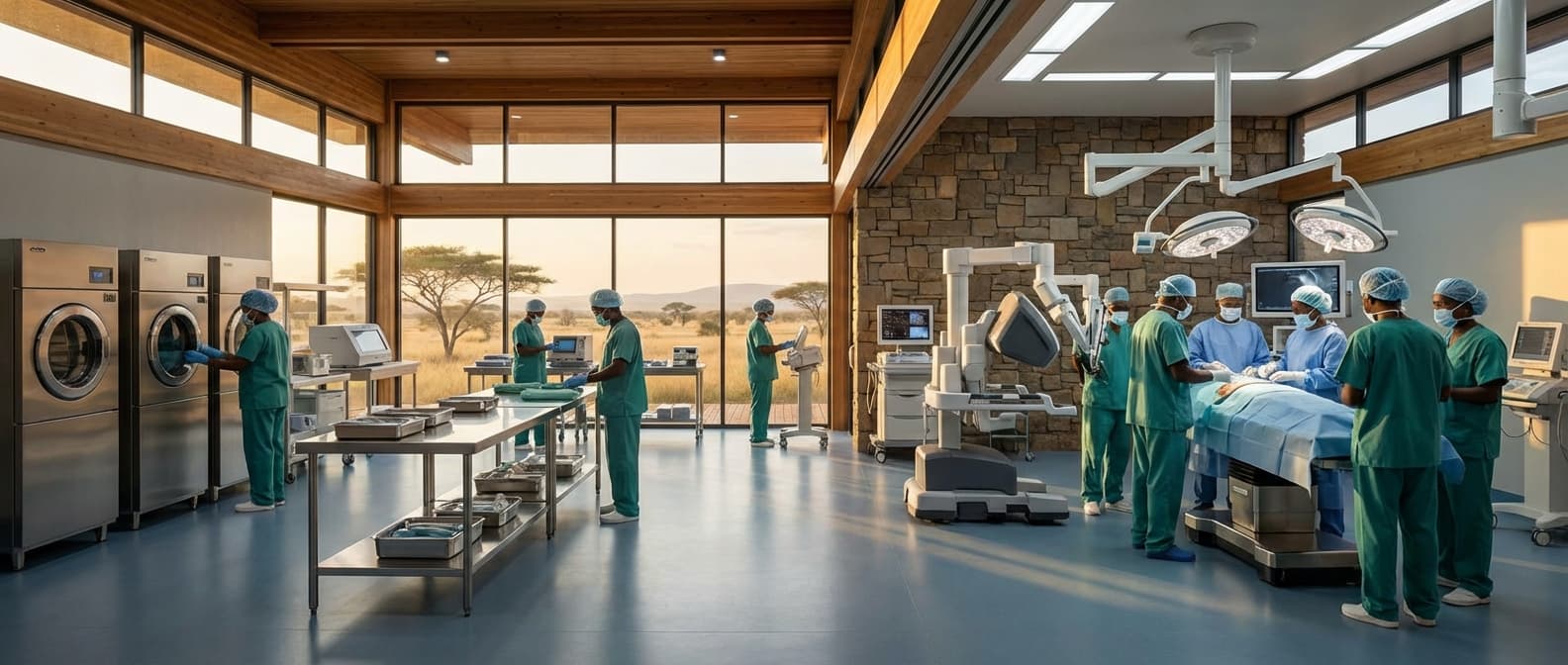
Endoscopy Reprocessing Validation in Somalia
Engineering Excellence & Technical Support
AER validation, SOP development and compliance High-standard technical execution following OEM protocols and local regulatory frameworks.
Sterilization Protocol Adherence
Implementation of rigorous, evidence-based sterilization protocols for all flexible and rigid endoscopes, ensuring compliance with international standards and minimizing the risk of cross-contamination in resource-limited settings.
Validation of Disinfection Efficacy
Conducting comprehensive validation studies of automated washer-disinfectors and manual disinfection processes, utilizing biological indicators and chemical integrators to confirm effective inactivation of high-level disinfectant-resistant microorganisms.
Documentation & Traceability Systems
Establishing robust documentation and traceability systems for all reprocessing cycles, including instrument tracking, chemical usage logs, and personnel training records, to provide auditable proof of process integrity and patient safety.
What Is Endoscopy Reprocessing Validation In Somalia?
Endoscopy reprocessing validation in Somalia refers to the systematic verification and documentation process ensuring that flexible endoscopes and their accessories are rendered safe for reuse, adhering to established decontamination standards and regulatory requirements. This service is critical for preventing the transmission of infectious agents between patients undergoing endoscopic procedures, thereby safeguarding public health and maintaining the integrity of healthcare delivery systems. The validation process confirms that the cleaning, disinfection, and/or sterilization procedures employed are effective in eliminating or reducing microbial contamination to acceptable levels.
| Who Needs Endoscopy Reprocessing Validation | Typical Use Cases | |||||
|---|---|---|---|---|---|---|
| Healthcare facilities in Somalia performing flexible endoscopy procedures, including but not limited to: | Hospitals (public and private) | Specialized diagnostic and treatment centers | Surgical clinics with endoscopic capabilities | Mobile endoscopy units | ||
| Procedures requiring validation include: | Upper gastrointestinal (GI) endoscopy (esophagogastroduodenoscopy - EGD) | Lower gastrointestinal (GI) endoscopy (colonoscopy, sigmoidoscopy) | Bronchoscopy | Cystoscopy | Laparoscopy (though often rigid endoscopes, flexible components may require similar validation principles) | ERCP (Endoscopic Retrograde Cholangiopancreatography) |
Key Components of Endoscopy Reprocessing Validation
- Verification of cleaning efficacy through visual inspection and potentially biochemical assays.
- Assessment of high-level disinfection (HLD) or sterilization process parameters (e.g., concentration, contact time, temperature) for chemical disinfectants or sterilants.
- Validation of automated endoscope reprocessors (AERs) by confirming cycle completeness and efficacy.
- Testing of washer-disinfector cycles for endoscopes.
- Monitoring of water quality used in the reprocessing cycle.
- Assessing the integrity of endoscope components and accessories post-reprocessing.
- Development and review of Standard Operating Procedures (SOPs) for reprocessing.
- Training and competency assessment of reprocessing personnel.
- Documentation of all validation activities, results, and corrective actions.
Who Needs Endoscopy Reprocessing Validation In Somalia?
Endoscopy reprocessing validation is a critical but often overlooked aspect of healthcare in many regions, including Somalia. Ensuring that endoscopes are meticulously cleaned and disinfected after each use is paramount to preventing the transmission of infections between patients and healthcare providers. Without rigorous validation processes, the effectiveness of standard reprocessing procedures remains uncertain, posing a significant risk in any healthcare setting, especially those with limited resources or established quality control frameworks. This validation provides objective evidence that the reprocessing methods employed are consistently achieving the desired level of microbial inactivation.
| Department/Unit | Specific Needs | Benefits of Validation |
|---|---|---|
| Gastroenterology Department | Reprocessing of gastroscopes, colonoscopes, duodenoscopes. | Prevents cross-contamination and ensures patient safety for diagnostic and therapeutic procedures. |
| Pulmonology Department | Reprocessing of bronchoscopes. | Minimizes the risk of hospital-acquired pneumonia and other respiratory infections. |
| Urology Department | Reprocessing of cystoscopes, ureteroscopes. | Reduces the incidence of urinary tract infections following urological procedures. |
| Infection Prevention and Control (IPC) Department | Monitoring and verification of reprocessing protocols. | Provides objective data for risk assessment, quality improvement, and compliance with best practices. |
| Operating Theatres / Surgical Units | Reprocessing of endoscopes used in minimally invasive surgery. | Ensures sterile instruments and prevents surgical site infections. |
| Central Sterile Supply Department (CSSD) | Standardization and oversight of all sterilization and disinfection processes. | Establishes a baseline for effective reprocessing of all reusable medical devices, including endoscopes. |
Target Customers and Departments for Endoscopy Reprocessing Validation in Somalia
- {"title":"Hospitals","description":"All hospitals in Somalia performing endoscopic procedures are primary targets. This includes both public and private institutions."}
- {"title":"Specialty Clinics","description":"Clinics that specialize in gastroenterology, pulmonology, urology, and other fields requiring endoscopy will benefit from validated reprocessing."}
- {"title":"Government Health Ministries and Regulatory Bodies","description":"These entities are responsible for setting healthcare standards and ensuring patient safety. Validation data can inform policy and guidelines."}
- {"title":"Non-Governmental Organizations (NGOs) and International Aid Organizations","description":"Organizations involved in supporting the Somali healthcare sector, particularly those focusing on infection control and medical equipment, are key stakeholders."}
- {"title":"Medical Equipment Suppliers and Service Providers","description":"Companies that supply and maintain endoscopic equipment can leverage validation services to offer comprehensive solutions and assurance to their clients."}
Endoscopy Reprocessing Validation Process In Somalia
The Endoscopy Reprocessing Validation Process in Somalia aims to ensure that reusable endoscopic instruments are cleaned and disinfected according to established safety standards to prevent the transmission of healthcare-associated infections. This process is critical in a resource-limited setting like Somalia, where adherence to best practices is paramount. The workflow from initial inquiry to the execution of validation involves several key stages.
| Stage | Description | Key Activities | Responsible Parties | Expected Outcome |
|---|---|---|---|---|
| Inquiry & Needs Assessment | Initial request or identification of the need for validating endoscopy reprocessing procedures. | Contacting healthcare facilities, identifying current reprocessing practices, assessing existing equipment and supplies, understanding local challenges and resources. | Ministry of Health (MoH), Healthcare Facility Management, Infection Prevention and Control (IPC) Committee. | Clear understanding of the current reprocessing status and the scope of validation required. |
| Planning & Protocol Development | Developing a comprehensive plan and standardized protocol for the validation process. | Reviewing international guidelines (e.g., WHO, CDC), adapting them to the Somali context, defining validation parameters (e.g., cleaning efficacy, disinfection effectiveness), identifying testing methods and tools, establishing timelines. | MoH IPC Department, External Consultants (if available), IPC Committee. | A clear, actionable validation protocol tailored to Somali healthcare settings. |
| Resource Mobilization | Securing the necessary financial, material, and human resources. | Budgeting for consumables, testing kits, training materials, potential equipment, and personnel time. Seeking funding from government, NGOs, and international partners. | MoH Procurement Department, Healthcare Facility Administration, Funding Agencies. | Adequate resources are available to carry out the validation process. |
| Training & Capacity Building | Educating healthcare staff on proper endoscopy reprocessing and validation procedures. | Conducting workshops on cleaning, disinfection, sterilization, and monitoring techniques. Training personnel on using validation tools and interpreting results. Focusing on practical, hands-on sessions. | IPC Trainers, Biomedical Engineers (if available), Senior Nursing Staff. | Healthcare staff are competent in performing validated reprocessing procedures. |
| Execution of Validation | Implementing the defined validation protocol at the healthcare facility level. | Observing reprocessing workflows, collecting samples for microbial testing (e.g., ATP testing for cleanliness, biological indicators for disinfection efficacy), inspecting reprocessing equipment, documenting all steps and findings. | IPC Officers, Trained Healthcare Staff, Laboratory Technicians (if available). | Objective data is collected on the efficacy of current reprocessing practices. |
| Data Analysis & Reporting | Analyzing the collected data and compiling a comprehensive report. | Interpreting test results, identifying areas of non-compliance or failure, quantifying risks. Preparing a detailed report outlining findings, conclusions, and recommendations. | IPC Committee, Data Analysts, MoH Review Team. | A clear and concise report highlighting strengths, weaknesses, and areas for improvement in endoscopy reprocessing. |
| Corrective Actions & Follow-up | Implementing recommended changes and monitoring their effectiveness. | Developing action plans based on the report's recommendations, procuring necessary supplies or equipment, retraining staff as needed. Conducting follow-up audits to ensure corrective actions are implemented and effective. | Healthcare Facility Management, IPC Committee, MoH Supervisors. | Observed improvements in reprocessing efficacy and reduction in infection risks. |
| Continuous Monitoring & Revalidation | Establishing a system for ongoing oversight and periodic re-evaluation. | Implementing routine internal audits, regular equipment maintenance, ongoing staff education. Scheduling periodic revalidation of reprocessing procedures to ensure sustained compliance and adapt to any changes. | IPC Committee, Healthcare Facility Management, MoH. | Sustained high standards of endoscopy reprocessing and prevention of healthcare-associated infections. |
Endoscopy Reprocessing Validation Workflow in Somalia
- Inquiry & Needs Assessment
- Planning & Protocol Development
- Resource Mobilization
- Training & Capacity Building
- Execution of Validation
- Data Analysis & Reporting
- Corrective Actions & Follow-up
- Continuous Monitoring & Revalidation
Endoscopy Reprocessing Validation Cost In Somalia
Endoscopy reprocessing validation is a critical component of infection control in healthcare settings, ensuring that reusable medical instruments are safely sterilized for subsequent patient use. In Somalia, the cost associated with these validation processes can fluctuate significantly due to a variety of factors. These include the availability of qualified personnel, the type of validation method employed (e.g., biological indicators, chemical indicators, process challenge devices), the specific endoscopic equipment being validated, the volume of reprocessing, and the location of the healthcare facility within Somalia. Furthermore, external factors such as import duties on testing materials, transportation costs, and the overall economic climate heavily influence pricing. Due to the nascent nature of some specialized medical services and potential supply chain challenges, local pricing can be less standardized compared to more developed healthcare markets. It is important for healthcare facilities to obtain direct quotes from local service providers or to factor in the cost of sourcing and performing these validations internally.
| Service/Item | Estimated Price Range (Somali Shilling - SOS) | Notes |
|---|---|---|
| Biological Indicator Test (per cycle) | 5,000 - 15,000 | Includes BI, incubator, and interpretation. May vary by brand and supplier. |
| Chemical Indicator Test (per cycle) | 1,000 - 3,000 | Cost per indicator strip. Higher for integrated multi-parameter indicators. |
| Process Challenge Device (PCD) Validation (initial/periodic) | 50,000 - 150,000+ | Cost of the PCD and its associated testing. Can be a significant one-time or periodic expense. |
| Full Validation Protocol (per endoscope type) | 200,000 - 750,000+ | Comprehensive validation including multiple BIs, CIs, and PCDs for a new process or equipment. Highly variable. |
| Technician Time (hourly/daily rate) | 10,000 - 30,000 (hourly) | If hiring external expertise or accounting for internal staff time. |
| Consumable Kits (bulk purchase) | Variable | Purchasing in bulk may offer discounts but requires upfront investment. |
Key Pricing Factors for Endoscopy Reprocessing Validation in Somalia
- Availability of trained and certified technicians for validation procedures.
- Cost of consumables: Biological indicators (BIs), chemical indicators (CIs), process challenge devices (PCDs).
- Type of validation required (e.g., initial validation, routine monitoring, periodic revalidation).
- Complexity and type of endoscopic equipment being validated (e.g., rigid vs. flexible endoscopes).
- Volume of reprocessing cycles requiring validation.
- Geographic location within Somalia (transportation and accessibility of services).
- Third-party service provider fees or internal operational costs.
- Import duties and taxes on validation materials.
- Currency exchange rates if materials are imported.
- Maintenance and calibration costs of validation equipment.
Affordable Endoscopy Reprocessing Validation Options
Affordable endoscopy reprocessing validation is crucial for patient safety and regulatory compliance, yet it can present significant cost challenges for healthcare facilities. Fortunately, strategic approaches like value bundles and carefully implemented cost-saving strategies can make this essential process more financially accessible without compromising quality.
| Cost-Saving Strategy | Description | Potential Impact |
|---|---|---|
| Negotiate Long-Term Contracts: | Commit to a multi-year contract for validation services. This allows providers to offer volume discounts and predictable pricing. | Lower per-validation costs, budget stability. |
| In-House vs. Outsourced Analysis: | Evaluate the cost-effectiveness of performing certain validation tests (e.g., basic leak testing) in-house versus outsourcing to specialized labs for more complex analyses (e.g., biological indicator incubation). | Reduced per-test cost for internal tasks, optimized resource allocation. |
| Standardize Validation Protocols: | Implement standardized, evidence-based protocols for reprocessing and validation across all endoscope types. This reduces variability and the need for ad-hoc, potentially more expensive, validation efforts. | Increased efficiency, reduced errors, predictable validation needs. |
| Leverage Technology: | Invest in automation for repetitive tasks like leak testing or documentation. Utilize software for efficient data management and trend analysis, which can preemptively identify issues. | Reduced labor costs, improved accuracy, proactive problem-solving. |
| Consolidate Vendors: | Whenever possible, consolidate purchases of validation equipment, consumables, and services with fewer vendors to leverage bulk purchasing power and simplify contract management. | Volume discounts, reduced administrative overhead. |
| Regular Equipment Calibration & Maintenance: | Ensure validation equipment is properly calibrated and maintained. Properly functioning equipment prevents false positives/negatives, reducing the need for repeat testing and associated costs. | Improved accuracy, reduced re-validation costs, extended equipment life. |
| Staff Training & Competency Programs: | Well-trained staff make fewer errors in reprocessing and validation, leading to fewer deviations and less need for expensive corrective actions or re-validation. | Reduced errors, improved compliance, lower risk of incidents. |
Value Bundles in Endoscopy Reprocessing Validation
- Comprehensive Service Packages: Healthcare providers can partner with reprocessing validation service providers to negotiate 'value bundles'. These bundles typically encompass a range of services under a single contract, offering discounts compared to individual service procurement. Examples include annual validation contracts, routine quality control checks, and emergency consultation services bundled together.
- Technology & Consumables Bundles: For facilities performing reprocessing in-house, vendors may offer bundles that combine the purchase of validation equipment (e.g., leak testers, endoscope brushes, cleaning brushes) with a supply of necessary consumables (e.g., detergents, high-level disinfectants, biological indicators) at a reduced overall price.
- Training & Education Bundles: Investing in staff competency is vital. Value bundles can integrate validation services with training programs for reprocessing technicians, ensuring they are up-to-date on best practices and regulatory requirements. This proactive approach can reduce errors and the need for costly re-validation.
- Software & Data Management Bundles: Reprocessing validation often requires robust record-keeping. Bundles can include validation software for tracking, reporting, and managing validation data, alongside the associated validation services. This streamlines processes and enhances compliance visibility.
Verified Providers In Somalia
In Somalia's evolving healthcare landscape, identifying trustworthy and qualified medical practitioners is paramount. Franance Health stands out as a leading platform committed to connecting individuals with verified healthcare providers, ensuring quality, safety, and reliability. Our rigorous credentialing process meticulously examines each provider's qualifications, licenses, experience, and adherence to ethical standards. This dedication to verification offers peace of mind to patients seeking specialized care, routine check-ups, or emergency medical services. By choosing Franance Health, you are selecting a partner dedicated to transparency and excellence in healthcare delivery.
| Provider Name | Specialty | Years of Experience | Verification Status | Key Services |
|---|---|---|---|---|
| Dr. Aisha Hassan | Pediatrics | 12 | Verified | Child health, Vaccinations, Developmental assessments |
| Dr. Mohamed Ali | General Surgery | 15 | Verified | Appendectomy, Hernia repair, Wound management |
| Dr. Fatimah Abdullahi | Obstetrics & Gynecology | 10 | Verified | Prenatal care, Childbirth, Family planning |
| Dr. Omar Jama | Internal Medicine | 8 | Verified | Chronic disease management, General check-ups, Diagnostics |
| Dr. Naima Farah | Dentistry | 7 | Verified | Dental cleanings, Fillings, Extractions |
Why Franance Health is Your Best Choice for Verified Providers:
- Rigorous Verification Process: We employ a multi-stage credentialing system that goes beyond basic checks, ensuring providers meet the highest standards of competence and ethical practice.
- Access to a Wide Network: Franance Health offers access to a diverse range of medical specialists and general practitioners across Somalia, catering to various healthcare needs.
- Patient-Centric Approach: Our platform prioritizes patient well-being, providing clear information about provider qualifications, services offered, and patient reviews to facilitate informed decision-making.
- Commitment to Quality: We continuously monitor and evaluate provider performance, ensuring that our network remains at the forefront of quality healthcare services.
- Enhanced Accessibility: Franance Health simplifies the process of finding and booking appointments with trusted healthcare professionals, improving access to care in underserved areas.
Scope Of Work For Endoscopy Reprocessing Validation
This Scope of Work (SOW) outlines the requirements for validating the reprocessing procedures for flexible endoscopes. The objective is to ensure that all endoscopes are reprocessed in a manner that effectively inactivates microorganisms and renders them safe for patient use. This validation process will confirm the efficacy of the cleaning and high-level disinfection (or sterilization) processes implemented within the facility.
| Parameter | Standard Specification/Acceptance Criteria | Method of Verification |
|---|---|---|
| Microbiological Efficacy (Post-Reprocessing) | Absence of detectable microorganisms or within acceptable limits as defined by relevant guidelines (e.g., AAMI ST58, CDC, WHO). | Microbiological culture and enumeration. |
| Disinfectant/Sterilant Concentration & Contact Time | Concentration of disinfectant/sterilant must be within the manufacturer's recommended range, and contact time must meet or exceed the required exposure duration for the chosen HLD agent. | Chemical indicator strips, automated reprocessor logs, manual logging of parameters. |
| Rinse Water Quality | Water used for final rinsing of endoscopes must meet the specified quality standards (e.g., filtered water, deionized water, potable water as per guidelines). | Water testing for microbial counts and chemical contaminants. |
| Drying Effectiveness | All lumens and channels of the endoscope must be thoroughly dry to prevent microbial growth. | Visual inspection, air flow testing (for automated dryers), desiccant monitoring (if applicable). |
| Cleaning Agent Effectiveness | Absence of visible organic debris and significant reduction in bioburden after the cleaning cycle. | Visual inspection, residual protein/blood testing (e.g., Pronto test). |
| Residual Chemical Levels | Residual levels of cleaning agents and disinfectants on the endoscope must be below toxicological thresholds as defined by regulatory bodies or manufacturers. | Appropriate analytical testing methods for specific chemicals. |
| Equipment Functionality & Safety | All reprocessing equipment must be functioning correctly, calibrated, and operating within safe parameters. | Equipment logs, calibration certificates, performance verification checks. |
| Documentation | All reprocessing steps and validation activities must be accurately and comprehensively documented. | Review of reprocessing logs, batch records, and validation reports. |
Technical Deliverables
- Validated Reprocessing Protocol: A documented and approved protocol detailing the step-by-step procedures for cleaning, high-level disinfection (HLD), and/or sterilization of flexible endoscopes. This protocol must include specific instructions for manual and automated reprocessing equipment, including cleaning agents, disinfectants, rinse water, and drying methods.
- Validation Report: A comprehensive report summarizing the results of the validation study. This report will include: - A detailed description of the validation methodology used. - Data from microbiological testing (e.g., total viable counts, presence/absence of specific pathogens) on endoscopes before and after reprocessing. - Results of chemical indicator testing (if applicable) for HLD/sterilization cycles. - Verification of drying effectiveness. - Assessment of residual cleaning agent or disinfectant levels. - A conclusion on the validation status of the reprocessing protocol.
- Standard Operating Procedures (SOPs): Updated or newly developed SOPs for each step of the endoscope reprocessing workflow, aligned with the validated protocol and relevant regulatory guidelines.
- Training Materials: Comprehensive training materials for reprocessing staff, covering the validated protocol, equipment operation, safety precautions, and documentation requirements.
- Equipment Calibration and Maintenance Records: Documentation demonstrating that all reprocessing equipment (e.g., automated endoscope reprocessors, drying cabinets) has been properly calibrated and maintained according to manufacturer specifications and regulatory requirements.
- Environmental Monitoring Data (if applicable): Results from environmental monitoring of the reprocessing area, if deemed necessary for the validation scope (e.g., water quality testing).
- Certificate of Conformance (if applicable): For any new or significantly modified equipment or chemicals used in the reprocessing process.
Service Level Agreement For Endoscopy Reprocessing Validation
This Service Level Agreement (SLA) outlines the response times and uptime guarantees for the Endoscopy Reprocessing Validation service. This service ensures that all critical validation parameters for endoscopes meet defined standards, minimizing the risk of infection transmission and ensuring patient safety. The scope includes the validation of automated endoscope reprocessors (AERs) and manual reprocessing procedures. This SLA is effective from the date of signing and remains in effect until superseded or terminated as per the master agreement.
| Service Component | Response Time Target (Business Hours) | Uptime Guarantee | Remedy for SLA Breach |
|---|---|---|---|
| Standard Support Request (Non-Critical Issue) | 8 Business Hours | 99.5% Uptime | Service credits equivalent to 5% of monthly service fee for each instance of response time target missed. |
| Critical Support Request (e.g., AER Failure Affecting Reprocessing Capacity) | 4 Business Hours | 99.9% Uptime | Service credits equivalent to 10% of monthly service fee for each instance of response time target missed. For each 2-hour period of unscheduled downtime exceeding 4 hours, a further credit of 2% of monthly service fee will be applied, up to a maximum of 20% per incident. |
| System Availability (Excluding Scheduled Maintenance) | N/A | 99.9% Uptime | Service credits equivalent to 5% of monthly service fee for each percentage point below the 99.9% uptime guarantee. |
| Scheduled Maintenance Window Communication | 48 Hours Advance Notice | N/A | N/A |
Key Service Definitions
- Validation Service: The provision of tools, software, and personnel necessary to perform and document the validation of endoscopy reprocessing procedures and equipment.
- Critical Validation Parameters: Measurable criteria deemed essential for effective reprocessing, including but not limited to cleaning efficacy, high-level disinfection/sterilization parameters (e.g., time, temperature, chemical concentration), and rinse water quality.
- Response Time: The maximum allowable time from the initiation of a support request or critical issue alert to the commencement of service provider intervention.
- Uptime Guarantee: The percentage of scheduled operational time during which the validation service is available and functioning as per specifications.
- Scheduled Maintenance: Planned downtime for system updates, upgrades, or preventative maintenance, communicated to the client at least 48 hours in advance.
- Emergency Maintenance: Unplanned downtime required to address critical failures or security breaches.
- Client: The healthcare facility utilizing the Endoscopy Reprocessing Validation service.
- Service Provider: The entity providing the Endoscopy Reprocessing Validation service.
Frequently Asked Questions

Ready when you are
Let's scope your Endoscopy Reprocessing Validation in Somalia project in Somalia.

Scaling healthcare logistics and technical systems across the entire continent.