
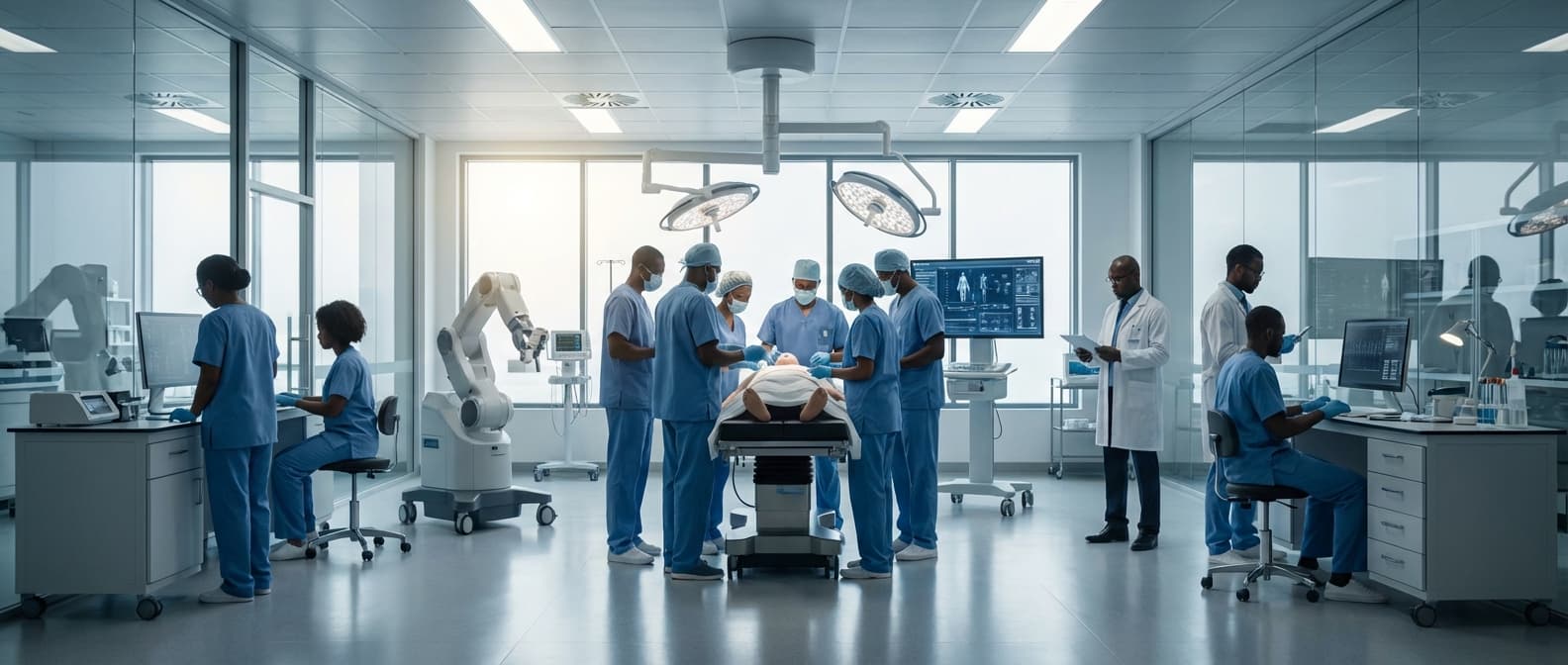
Managed Equipment Service (MES) in Somalia
Engineering Excellence & Technical Support
Long‑term equipment provision with uptime SLAs and lifecycle management. High-standard technical execution following OEM protocols and local regulatory frameworks.
Expert Medical Equipment Maintenance & Calibration
Our skilled technicians provide on-site and remote maintenance, calibration, and repair services for a wide range of critical medical equipment, ensuring optimal performance, patient safety, and extended equipment lifespan across Somalia.
Streamlined Spare Parts & Consumables Management
We manage the entire supply chain for essential spare parts and consumables, guaranteeing timely availability and reducing stockouts. This ensures uninterrupted service delivery and cost-efficiency for healthcare facilities throughout Somalia.
Comprehensive User Training & Technical Support
We offer tailored training programs for healthcare professionals on the safe and effective operation of medical equipment, coupled with responsive technical support. This empowers local staff and enhances the overall utilization and management of vital resources in Somalia.
What Is Managed Equipment Service (Mes) In Somalia?
Managed Equipment Service (MES) in Somalia refers to a comprehensive outsourcing model where a third-party provider assumes responsibility for the procurement, installation, maintenance, and operational management of critical medical equipment for healthcare facilities. This service aims to alleviate the burden of capital expenditure, technical expertise, and ongoing operational costs associated with owning and maintaining advanced medical technology, particularly in a challenging and resource-constrained environment like Somalia.
| Who Needs MES in Somalia? | Typical Use Cases |
|---|---|
| Public Hospitals and Clinics: Government-funded healthcare institutions facing budget constraints and limited in-house technical capacity. | Diagnostic Imaging Centers: Facilities requiring advanced X-ray, CT, MRI, or ultrasound equipment, demanding specialized maintenance. |
| Non-Governmental Organizations (NGOs) and Humanitarian Organizations: Groups operating healthcare programs in remote or underserved areas, needing reliable equipment without direct ownership burden. | Surgical Theaters: Ensuring the uptime and functionality of vital surgical equipment like anesthesia machines, ventilators, and surgical lighting. |
| Private Healthcare Providers: Smaller clinics or hospitals seeking to access state-of-the-art technology without significant upfront investment or the need to build a specialized maintenance department. | Intensive Care Units (ICUs): Critical care settings requiring continuous operation of life-support equipment, such as ventilators and patient monitors. |
| Tertiary Care Facilities: Specialized hospitals that rely on a broad range of advanced medical equipment for complex procedures and diagnostics. | Laboratory Services: Equipment for hematology, biochemistry, microbiology, and pathology, requiring calibration and maintenance to ensure accurate results. |
| Medical Training Institutions: Organizations that require functional and up-to-date equipment for training healthcare professionals. | Maternal and Child Health Centers: Equipment for neonatal care, delivery rooms, and essential diagnostic tools for women's health. |
MES in Somalia: Key Components
- Procurement and Acquisition: Sourcing and purchasing appropriate medical equipment based on facility needs and international standards.
- Installation and Commissioning: Professional setup, calibration, and testing of equipment to ensure optimal performance and safety.
- Preventive Maintenance: Scheduled inspections and servicing to minimize downtime and extend equipment lifespan.
- Corrective Maintenance and Repair: Rapid response to equipment malfunctions with trained technicians and readily available spare parts.
- Training and Capacity Building: Educating healthcare professionals on the proper operation and basic maintenance of equipment.
- Asset Management and Reporting: Tracking equipment inventory, utilization, and performance metrics.
- Consumables Management: In some models, management and supply of necessary consumables for equipment operation.
- Technology Upgrades: Planning and executing timely upgrades or replacements to keep facilities abreast of technological advancements.
- Service Level Agreements (SLAs): Defining performance standards, response times, and uptime guarantees.
Who Needs Managed Equipment Service (Mes) In Somalia?
Managed Equipment Service (MES) is a crucial offering for organizations in Somalia that rely heavily on specialized equipment for their operations, particularly in sectors facing resource constraints and infrastructure challenges. MES provides a comprehensive solution for acquiring, maintaining, and upgrading essential equipment, allowing clients to focus on their core missions without the burden of direct equipment ownership and management.
| Target Customer Segment | Key Departments/Functions Requiring MES |
|---|---|
| Hospitals and Healthcare Facilities | Radiology (X-ray, CT scanners, MRI), Laboratory Services (analyzers, microscopes), Operating Theatres (surgical equipment), Diagnostic Imaging, Intensive Care Units (ventilators, monitors) |
| Educational Institutions | Science and Engineering Labs (specialized equipment, simulators), IT Departments (computers, servers, networking gear), Vocational Training Workshops (machinery, tools) |
| Government Ministries and Agencies | Public Works (construction equipment, surveying tools), Health (medical equipment for public facilities), Education (equipment for schools), IT & Communications (servers, networking, communication devices) |
| NGOs and Humanitarian Aid Agencies | Medical Clinics (diagnostic and treatment equipment), Water and Sanitation Projects (pumps, purification systems), Logistics & Operations (communication devices, vehicles), Emergency Response Teams (specialized equipment) |
| Telecommunication Companies | Network Operations Centers (servers, routers, switches), Field Operations (testing equipment, diagnostic tools), Tower Maintenance (specialized lifting and access equipment) |
| Energy and Utilities Providers | Power Generation Plants (turbines, generators, control systems), Distribution Networks (monitoring equipment, maintenance tools), Water Treatment Facilities (pumps, filtration systems, control panels) |
| Large-Scale Agricultural Cooperatives and Businesses | Farming Operations (tractors, harvesters, irrigation systems), Processing Plants (food processing machinery, packaging equipment), Research & Development (laboratory equipment for soil and crop analysis) |
| Construction and Infrastructure Development Companies | Site Operations (heavy machinery, concrete mixers, excavation equipment), Surveying and Geomatics (GPS, total stations, drones), Project Management Offices (IT infrastructure, communication tools) |
Target Customers for MES in Somalia
- Hospitals and Healthcare Facilities
- Educational Institutions (Universities, Vocational Training Centers)
- Government Ministries and Agencies
- Non-Governmental Organizations (NGOs) and Humanitarian Aid Agencies
- Telecommunication Companies
- Energy and Utilities Providers
- Large-Scale Agricultural Cooperatives and Businesses
- Construction and Infrastructure Development Companies
Managed Equipment Service (Mes) Process In Somalia
The Managed Equipment Service (MES) process in Somalia is a critical pathway for healthcare facilities to acquire and maintain essential medical equipment through a service provider. This process ensures that facilities, often facing resource constraints, can access and utilize advanced medical technology without the burden of direct ownership, maintenance, and operational costs. The workflow typically begins with an inquiry from a healthcare facility and culminates in the successful execution and ongoing management of the equipment service.
| Stage | Description | Key Activities | Responsible Parties |
|---|---|---|---|
| The initial stage where a healthcare facility expresses interest in MES and outlines its equipment needs. | Facility identifies needs, contacts MES provider, provides details on desired equipment, and current infrastructure. | Healthcare Facility, MES Provider |
| The MES provider assesses the facility's needs and develops a tailored proposal for the service. | MES provider conducts site visits, analyzes needs, identifies suitable equipment, develops a detailed proposal (cost, services, timelines), and submits it. | MES Provider, Healthcare Facility (for input) |
| The healthcare facility reviews the proposal, and both parties negotiate terms and conditions. | Facility evaluates proposal against budget and needs, seeks clarification, negotiates pricing, service levels, and contract duration. Technical evaluation of proposed equipment. | Healthcare Facility, MES Provider |
| Formalization of the agreement and acquisition of the specified equipment by the MES provider. | Both parties sign the MES contract. MES provider procures, imports, and delivers the equipment. | MES Provider, Healthcare Facility (for contract approval) |
| The equipment is installed, tested, and healthcare staff are trained on its operation and basic maintenance. | Certified technicians install and commission equipment. Training sessions are conducted for medical and technical staff. User manuals and support documentation provided. | MES Provider, Healthcare Facility Staff |
| The MES provider is responsible for regular maintenance, repairs, and ensuring the equipment's optimal functioning. | Scheduled preventive maintenance, emergency repairs, supply of spare parts, technical support, and quality assurance checks. | MES Provider, Healthcare Facility (for reporting issues) |
| Regular monitoring of equipment performance and service delivery, with reports shared with the facility. | Tracking equipment uptime, service response times, maintenance records, and patient impact. Regular performance reports submitted to the facility. Feedback mechanisms established. | MES Provider, Healthcare Facility |
| At the end of the contract or as technology advances, equipment may be upgraded or replaced. | Review of technology trends, assessment of facility needs, and planning for equipment obsolescence or upgrade cycles. Renewal or renegotiation of MES contract. | MES Provider, Healthcare Facility |
Managed Equipment Service (MES) Workflow in Somalia
- Inquiry & Needs Assessment
- Proposal Development & Submission
- Evaluation & Negotiation
- Contracting & Procurement
- Equipment Installation & Training
- Ongoing Service & Maintenance
- Performance Monitoring & Reporting
- Equipment Upgrade/Replacement
Managed Equipment Service (Mes) Cost In Somalia
Managed Equipment Service (MES) in Somalia presents a complex pricing landscape, influenced by a multitude of factors. MES involves a third-party provider managing and maintaining medical equipment on behalf of a healthcare facility, often encompassing procurement, installation, training, and ongoing repairs. The cost is not standardized and can vary significantly based on the specific needs of the facility, the type and quantity of equipment, the service level agreement (SLA) terms, and the operating environment within Somalia.
| Equipment Category | Indicative Monthly MES Cost Range (USD) | Indicative Monthly MES Cost Range (Somali Shilling - Approx. at 1 USD = 570 SOS) |
|---|---|---|
| Basic Diagnostic Equipment (e.g., Stethoscopes, Blood Pressure Monitors, Basic Lab Equipment) | $200 - $800 | 114,000 SOS - 456,000 SOS |
| Patient Monitoring Systems (e.g., ECG monitors, Pulse Oximeters, Vital Signs Monitors) | $500 - $1,500 | 285,000 SOS - 855,000 SOS |
| Imaging Equipment (e.g., X-ray machines, Ultrasound machines) | $2,000 - $7,000 | 1,140,000 SOS - 3,990,000 SOS |
| Surgical Equipment (e.g., Anesthesia machines, Electrosurgical units) | $1,000 - $4,000 | 570,000 SOS - 2,280,000 SOS |
| Laboratory Analyzers (e.g., Hematology, Chemistry Analyzers) | $800 - $3,000 | 456,000 SOS - 1,710,000 SOS |
| Specialized/High-End Equipment (e.g., MRI, CT Scanners - often managed under very specific contracts) | $10,000+ (Highly Variable) | 5,700,000+ SOS (Highly Variable) |
Key Pricing Factors for MES in Somalia
- Equipment Type and Complexity: The cost of MES is directly proportional to the sophistication and volume of the medical equipment managed. High-value, complex machinery (e.g., MRI machines, CT scanners) incurs higher management fees than simpler devices (e.g., patient monitors, basic diagnostic tools).
- Number of Equipment Units: A larger fleet of equipment will naturally result in a higher overall MES cost, although economies of scale might offer slightly lower per-unit pricing for bulk contracts.
- Service Level Agreement (SLA) Details: The duration of the contract, response times for maintenance and repairs, uptime guarantees, and the scope of included services (e.g., preventive maintenance, corrective maintenance, consumables, spare parts) significantly impact pricing.
- Geographic Location within Somalia: Accessibility and security considerations for service engineers and spare parts delivery can lead to higher costs in remote or high-risk areas. Major urban centers might see slightly more competitive pricing due to better infrastructure.
- Provider's Overhead and Expertise: Established MES providers with a strong track record, skilled technicians, robust supply chains for spare parts, and comprehensive training programs will likely command higher fees.
- Risk Mitigation and Insurance: Providers may factor in the costs associated with mitigating risks inherent in the operating environment, including insurance premiums for personnel and equipment.
- Training and Capacity Building: If the MES contract includes comprehensive training for local healthcare staff on equipment operation and basic maintenance, this will be a component of the overall cost.
- Spare Parts and Consumables: The availability and cost of specific spare parts and consumables, particularly for specialized or imported equipment, will influence pricing. Providers often build in a margin for these.
- Technology Obsolescence and Upgrades: The agreement might include provisions for technology upgrades or replacements, which would factor into the long-term cost.
- Local Regulatory Compliance: Any costs associated with meeting local health regulations and standards for equipment management would be included.
Affordable Managed Equipment Service (Mes) Options
Seeking affordable Managed Equipment Service (MES) doesn't have to mean compromising on quality or functionality. By understanding value bundles and implementing smart cost-saving strategies, organizations can secure robust MES solutions that meet their needs without breaking the bank. Value bundles are pre-packaged offerings that combine various MES components and services at a reduced overall cost compared to purchasing them individually. These bundles often include hardware, software, installation, maintenance, and support, providing a comprehensive solution from a single provider.
| Cost-Saving Strategy | Description | Impact on Affordability |
|---|---|---|
| Negotiate Bundle Customization | Work with providers to tailor bundles to your specific needs, removing unnecessary components that drive up costs. | Reduces overall package price by eliminating unused services or equipment. |
| Leverage Multi-Year Contracts | Committing to longer-term contracts can often unlock significant discounts and price stability. | Secures lower rates over time and protects against inflation. |
| Explore Tiered Service Levels | Choose service plans that match your operational demands. Basic tiers may suffice for less critical equipment. | Aligns service costs with actual usage and risk profiles. |
| Consider Refurbished or Certified Pre-Owned Equipment | For certain non-critical applications, high-quality refurbished equipment can offer substantial savings. | Significantly lowers the initial capital expenditure. |
| Centralize Procurement | Consolidating MES needs with a single or limited number of vendors can lead to volume discounts and streamlined management. | Increases negotiation power and reduces administrative overhead. |
| Focus on Predictive Maintenance | Utilizing advanced analytics to predict equipment failures can prevent costly emergency repairs and extend equipment lifespan. | Minimizes unexpected expenses and downtime. |
| Review Usage Data Regularly | Periodically assess equipment utilization to identify underused assets that can be retired or reallocated. | Avoids paying for underutilized or idle equipment. |
| Partner with Vendors Offering Flexible Financing | Some MES providers offer flexible payment plans or leasing options that can improve cash flow. | Spreads costs over time, making them more manageable. |
Key Components of MES Value Bundles:
- Hardware: Typically includes essential diagnostic, therapeutic, or monitoring equipment relevant to the organization's specialty.
- Software: Often encompasses asset management systems, inventory tracking, scheduling tools, and potentially clinical integration software.
- Installation & Integration: Professional setup and seamless integration with existing IT infrastructure.
- Preventive Maintenance & Repairs: Scheduled servicing and timely repairs to minimize downtime.
- Technical Support: Access to helpdesks, troubleshooting, and expert advice.
- Training: For staff on the operation and maintenance of the equipment.
- Consumables & Accessories: Sometimes included for a defined period or usage level.
Verified Providers In Somalia
In Somalia's evolving healthcare landscape, identifying and engaging with verified healthcare providers is paramount for ensuring quality, safety, and effective medical care. Franance Health stands out as a leading force, distinguished by its rigorous credentialing process and unwavering commitment to excellence. This document outlines why Franance Health credentials represent the optimal choice for individuals and organizations seeking reliable healthcare services in Somalia.
| Benefit of Choosing Franance Health Verified Providers | Description |
|---|---|
| Enhanced Patient Safety | Reduces the risk of medical errors and malpractice by ensuring providers meet strict quality and competency benchmarks. |
| Access to Qualified Professionals | Guarantees that patients are treated by licensed, skilled, and experienced healthcare practitioners. |
| Trust and Reliability | Provides peace of mind knowing that providers have undergone a comprehensive and independent verification process. |
| Improved Health Outcomes | Leads to more accurate diagnoses, effective treatments, and better overall patient recovery and well-being. |
| Specialized Care Access | Facilitates connection with specialists who possess verified expertise in specific medical fields. |
| Transparency and Accountability | Establishes a clear framework for accountability, ensuring providers adhere to ethical and professional standards. |
Key Aspects of Franance Health's Verified Provider Credentials
- Rigorous Vetting Process: Franance Health employs a multi-stage verification system that scrutinizes the qualifications, licenses, and professional history of every healthcare provider. This includes thorough checks on educational background, professional certifications, and any disciplinary records.
- Commitment to Ethical Practice: Credentials extend beyond technical skills to encompass a provider's adherence to ethical medical standards and patient care principles. Franance Health ensures that its verified providers uphold the highest levels of integrity and professionalism.
- Continuous Professional Development: Franance Health mandates and tracks ongoing professional development for its network. This ensures that providers remain up-to-date with the latest medical advancements, technologies, and best practices, offering patients access to cutting-edge care.
- Specialization and Expertise Verification: The credentialing process meticulously verifies the specific specializations and areas of expertise of each provider, allowing patients to confidently select professionals best suited to their medical needs.
- Compliance with National and International Standards: Franance Health ensures that all its verified providers meet or exceed the regulatory requirements set by Somali health authorities and align with internationally recognized healthcare standards.
- Patient-Centric Approach: Verified providers associated with Franance Health are committed to a patient-centric approach, emphasizing clear communication, informed consent, and respectful treatment, fostering trust and positive patient outcomes.
Scope Of Work For Managed Equipment Service (Mes)
This document outlines the Scope of Work (SOW) for a Managed Equipment Service (MES) contract, detailing the technical deliverables and standard specifications required for successful implementation and ongoing operation. The MES aims to provide a comprehensive solution for managing and maintaining a defined set of equipment throughout its lifecycle, ensuring optimal performance, reliability, and cost-effectiveness.
| Deliverable Category | Specific Deliverable | Standard Specifications / Requirements | Acceptance Criteria |
|---|---|---|---|
| Equipment Management | Equipment Inventory Database | Comprehensive, accurate, and up-to-date record of all managed equipment, including model, serial number, location, purchase date, warranty information, and maintenance history. Accessible via a secure portal. | Database populated with 100% of all managed equipment. Regular audits confirm data accuracy. |
| Equipment Management | Asset Tagging and Labeling | Unique, durable, and clearly visible asset tags applied to all managed equipment. Tags must withstand environmental conditions and facilitate easy identification. | All managed equipment tagged and labeled according to agreed-upon standards. |
| Installation & Commissioning | Site Readiness Assessment | Pre-installation survey to identify any infrastructure, power, network, or environmental requirements. Report detailing findings and recommendations. | Report submitted and approved by the client before commencement of installation. |
| Installation & Commissioning | Professional Installation | Installation of equipment by certified technicians according to manufacturer specifications and industry best practices. Includes all necessary cabling, connections, and configuration. | Equipment installed and functioning as per manufacturer specifications. Successful completion of installation tests. |
| Installation & Commissioning | System Commissioning and Validation | Post-installation testing and validation to ensure all equipment functions correctly and integrates with existing systems. Includes performance tuning and baseline establishment. | Successful completion of all defined commissioning and validation test cases. Baseline performance metrics documented. |
| Maintenance & Support | Preventive Maintenance Schedule | Defined schedule of routine maintenance tasks for each equipment type, including inspections, cleaning, lubrication, calibration, and part replacement. Based on manufacturer recommendations and usage patterns. | Scheduled PMs completed within agreed-upon timeframes. Maintenance logs updated accurately. |
| Maintenance & Support | Corrective Maintenance Response Times | Guaranteed response times for corrective maintenance based on equipment criticality and issue severity (e.g., critical, high, medium, low). | All service requests acknowledged and responded to within defined SLA timeframes. |
| Maintenance & Support | Repair and Parts Replacement | Provision of qualified technicians and genuine or equivalent replacement parts to repair faulty equipment. Minimum uptime guarantees may be specified. | Faulty equipment repaired and returned to operational status within agreed timeframes. Uptime SLAs met. |
| Performance & Monitoring | Remote Monitoring System | Implementation of a system for real-time monitoring of equipment performance, status, and potential issues. Alerts generated for critical events. | Monitoring system deployed and configured. Real-time data accessible via a dashboard. |
| Performance & Monitoring | Performance Reports | Regular (e.g., monthly, quarterly) reports detailing equipment uptime, performance metrics, maintenance activities, incident summaries, and recommendations for improvement. | Reports delivered on time and containing accurate, relevant data. Client sign-off on report content. |
| Parts & Logistics | Spare Parts Inventory Management | Management of a sufficient inventory of critical spare parts to minimize downtime. Includes forecasting, procurement, and secure storage. | Critical spare parts readily available. Inventory levels maintained within agreed thresholds. |
| Software & Security | Software Update and Patch Management | Procedures for planning, testing, and deploying software updates and security patches to managed equipment in a controlled manner. | All critical and security patches applied within defined risk-based timelines. Successful patch deployment confirmed. |
| Software & Security | Security Hardening | Implementation of security best practices to protect equipment from unauthorized access and cyber threats. Includes configuration of firewalls, access controls, and encryption where applicable. | Security configurations implemented and documented. Regular security audits performed. |
| End-of-Life Management | Decommissioning Services | Safe and environmentally compliant removal of equipment at the end of its service life, including data sanitization. | Equipment safely decommissioned and removed from site. Data securely erased according to relevant standards. |
| End-of-Life Management | Disposal Services | Environmentally responsible disposal or recycling of decommissioned equipment in compliance with all local and international regulations. | Disposal certificates provided. Compliance with environmental regulations confirmed. |
| Knowledge Transfer | Technical Training | Training for client IT staff on basic operation, troubleshooting, and monitoring of managed equipment. | Training sessions delivered. Competency assessed through practical exercises or quizzes. |
| Documentation | Comprehensive Documentation | Provision of all relevant technical manuals, operating procedures, maintenance guides, and configuration details for the managed equipment. | All required documentation provided in a structured and accessible format. |
Key Technical Deliverables
- Equipment Inventory and Asset Management System
- Installation and Commissioning Services
- Preventive Maintenance Program
- Corrective Maintenance and Repair Services
- Performance Monitoring and Reporting
- Spare Parts Management and Logistics
- Software Updates and Patch Management
- Security Hardening and Vulnerability Management
- Decommissioning and Disposal Services
- Training and Knowledge Transfer
- Documentation and Technical Manuals
Service Level Agreement For Managed Equipment Service (Mes)
This Service Level Agreement (SLA) outlines the terms and conditions for the Managed Equipment Service (MES) provided by [Your Company Name] to [Client Company Name]. It defines the expected response times for incidents and the uptime guarantees for the managed equipment.
| Service Component / Equipment Type | Priority Level | Response Time Target | Resolution Time Target | Uptime Guarantee |
|---|---|---|---|---|
| Critical Equipment (e.g., Production Servers, Network Core) | 1 - Critical | 15 Minutes (Phone/Email) | 4 Hours | 99.9% |
| Critical Equipment (e.g., Production Servers, Network Core) | 2 - High | 30 Minutes (Phone/Email) | 8 Hours | 99.9% |
| Important Equipment (e.g., Database Servers, VoIP Systems) | 3 - Medium | 1 Hour (Phone/Email) | 16 Hours | 99.5% |
| Standard Equipment (e.g., Workstations, Printers) | 4 - Low | 4 Business Hours (Phone/Email) | 48 Business Hours | 99.0% |
Key Definitions
- Managed Equipment: Refers to the specific hardware and associated software designated for management under this SLA, as detailed in Appendix A.
- Incident: An event that causes or may cause an interruption to the service or a reduction in the quality of the service.
- Response Time: The maximum time allowed from the initial notification of an incident to the commencement of diagnostic and corrective actions by [Your Company Name].
- Resolution Time: The maximum time allowed from the initial notification of an incident to the restoration of the service to its agreed operational state.
- Uptime Guarantee: The percentage of time the managed equipment is available and functioning as intended.
- Downtime: The period during which the managed equipment is unavailable or not functioning as intended.
Frequently Asked Questions

Ready when you are
Let's scope your Managed Equipment Service (MES) in Somalia project in Somalia.

Scaling healthcare logistics and technical systems across the entire continent.