
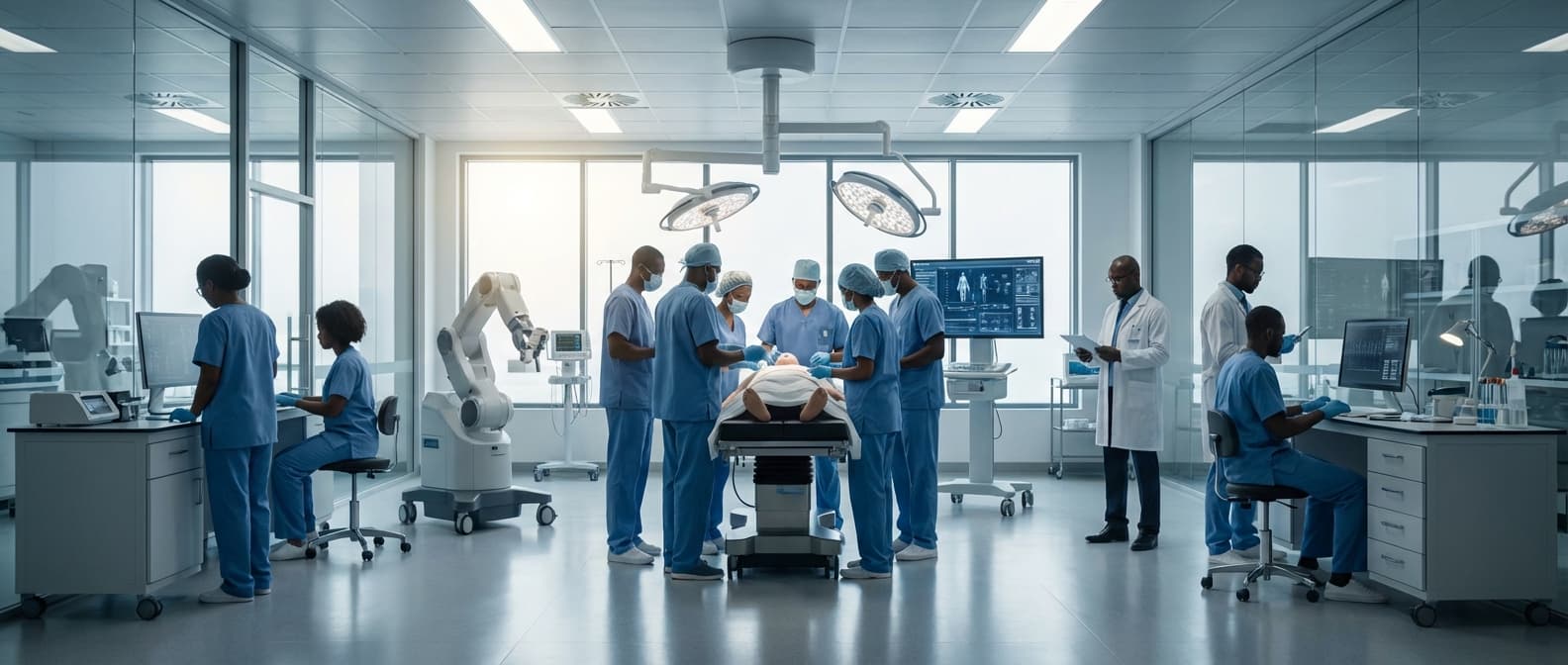
Calibration & Electrical Safety Testing in Somalia
Engineering Excellence & Technical Support
Equipment calibration and IEC safety testing High-standard technical execution following OEM protocols and local regulatory frameworks.
Ensuring Accuracy: On-Site Calibration Services for Critical Medical Equipment
We provide rapid and reliable on-site calibration for a wide range of medical devices, ensuring their accuracy and optimal performance in healthcare facilities across Somalia. Our certified technicians utilize traceable standards to maintain the integrity of diagnostic and therapeutic equipment, safeguarding patient well-being.
Mitigating Risk: Comprehensive Electrical Safety Testing for Healthcare Infrastructure
Our specialized electrical safety testing services identify and rectify potential hazards within hospital power systems, medical equipment, and portable appliances. By adhering to international safety standards, we protect patients and staff from electrical shock and fire risks, contributing to a safer healthcare environment.
Capacity Building: Training Local Technicians in Calibration & Electrical Safety
We are committed to empowering local Somali technicians through hands-on training programs in essential calibration techniques and electrical safety protocols. This initiative builds sustainable local expertise, ensuring the long-term maintenance of critical infrastructure and fostering self-reliance in the healthcare sector.
What Is Calibration & Electrical Safety Testing In Somalia?
Calibration and Electrical Safety Testing are critical metrological and safety assurance services essential for ensuring the accuracy, reliability, and safe operation of electrical equipment and medical devices within the Somali context. Calibration involves the process of comparing a measuring instrument or device against a known standard (traceable to national or international standards) to determine and document any deviations. This process aims to adjust the instrument to conform to its specified accuracy or to provide a certificate detailing its performance. Electrical Safety Testing, conversely, focuses on verifying that electrical devices meet established safety standards to prevent hazards such as electric shock, fire, or electromagnetic interference. This typically involves a series of tests to assess insulation resistance, earth continuity, leakage currents, and dielectric strength. These services are paramount in Somalia due to the nascent state of its industrial and healthcare infrastructure, where the introduction of new equipment and the maintenance of existing assets necessitate rigorous verification to ensure operational integrity and user safety, mitigating risks in environments where established regulatory oversight might be less mature.
| Service Component | Description | Purpose | Target Audience/Use Case |
|---|---|---|---|
| Calibration | Comparison of a measuring instrument against a recognized standard to identify and correct deviations. | Ensures accurate measurements, reliable data, and consistent performance of devices. | Manufacturing, healthcare (diagnostic equipment), research laboratories, quality control departments, utility companies. |
| Electrical Safety Testing | Systematic evaluation of electrical equipment to identify potential hazards and ensure compliance with safety regulations. | Prevents electrical accidents, fires, and ensures the protection of personnel and patients/users. | Hospitals and clinics (medical devices), educational institutions, commercial buildings, industrial facilities, telecommunications infrastructure. |
| Traceability | The documented link of a calibration result to recognized national or international standards. | Provides confidence in the accuracy and comparability of measurements over time and across different locations. | All entities requiring certified measurements and compliance verification. |
| Certification/Reporting | Issuance of documentation detailing the calibration results, compliance status, and any adjustments made. | Provides auditable proof of accuracy, safety compliance, and equipment maintenance. | Regulatory bodies, quality assurance departments, asset management, import/export verification. |
Key Components of Calibration & Electrical Safety Testing
- Calibration of Measurement and Diagnostic Equipment: Ensuring accuracy of instruments used in various sectors.
- Verification of Medical Device Functionality: Confirming that diagnostic and therapeutic equipment operates within specified parameters.
- Electrical Safety Audits of Facilities: Assessing the overall electrical system integrity of buildings and infrastructure.
- Testing of New Equipment Before Deployment: Validating performance and safety of newly acquired assets.
- Periodic Maintenance and Re-calibration: Maintaining ongoing accuracy and safety of existing equipment.
- Development of Traceable Calibration Standards: Establishing local benchmarks where applicable or utilizing internationally recognized standards.
Who Needs Calibration & Electrical Safety Testing In Somalia?
In Somalia, ensuring the accuracy and safety of electrical equipment is paramount for several key sectors. Regular calibration and electrical safety testing are not just regulatory requirements but crucial for maintaining operational efficiency, preventing hazardous incidents, and upholding international standards. These services are vital for a wide range of organizations that rely on precise measurements and safe electrical systems to function effectively and protect their personnel and assets.
| Target Customer/Department | Why Calibration & Electrical Safety Testing is Needed | Specific Equipment/Areas of Concern |
|---|---|---|
| Hospitals & Clinics (Medical Facilities) | Ensures accurate diagnostic readings, patient safety during procedures, and reliable operation of life-support equipment. Prevents electrical shocks and fires. | ECG machines, ventilators, defibrillators, anesthesia machines, X-ray equipment, infusion pumps, surgical tools, general electrical wiring and outlets. |
| Manufacturing & Industrial Plants | Maintains product quality and consistency, optimizes production efficiency, prevents costly equipment downtime, and ensures worker safety. | Production machinery sensors, control systems, power distribution units, welding equipment, motors, generators, electrical panels. |
| Telecommunications Companies | Guarantees signal integrity, network reliability, and efficient power management for base stations and network infrastructure. Prevents equipment damage from power surges. | Signal generators, spectrum analyzers, power meters, network monitoring equipment, UPS systems, power supplies for base stations. |
| Power Generation & Distribution Utilities | Ensures accurate measurement of electricity generated and consumed, maintains grid stability, prevents overloads, and guarantees the safety of personnel working on the grid. | Wattmeters, voltmeters, ammeters, frequency meters, protective relays, transformers, switchgear, substations, power line testing equipment. |
| Research & Development Laboratories | Crucial for the validity and reproducibility of experimental results. Ensures precise measurements for scientific accuracy. | Oscilloscopes, multimeters, signal generators, temperature sensors, pH meters, analytical balances, specialized scientific instruments. |
| Food & Beverage Processing Plants | Ensures food safety standards are met through accurate temperature and pressure monitoring. Prevents contamination and maintains product quality. Ensures safe operation of processing machinery. | Temperature probes, pressure gauges, flow meters, scales, mixers, ovens, refrigeration units, electrical control panels. |
| Educational Institutions (Science & Engineering Departments) | Provides students with reliable equipment for practical learning and research. Ensures safety in laboratories. | Physics lab equipment (e.g., voltmeters, ammeters), chemistry lab equipment, engineering workshop tools, safety testing devices for student projects. |
| Government Agencies (e.g., Standards Bureaus, Customs) | Enforces national standards, certifies imported goods, and ensures compliance with safety regulations. Protects consumers and national infrastructure. | Calibration equipment for metrology labs, testing equipment for product certification, electrical safety inspection tools. |
| International Aid & Development Organizations | Ensures the reliability and safety of equipment deployed in critical projects (e.g., healthcare, infrastructure, water supply). Protects their investments and beneficiaries. | Medical equipment for clinics, water purification system controls, power generation units for remote areas, communication devices. |
Who Needs Calibration & Electrical Safety Testing in Somalia?
- Medical Facilities
- Industrial Operations
- Telecommunications Providers
- Power Generation and Distribution Companies
- Research and Development Laboratories
- Food and Beverage Processing Plants
- Educational Institutions with Science Labs
- Government Agencies (e.g., standards bodies, customs)
- Emergency Services (e.g., hospitals, fire departments)
- International Aid and Development Organizations
Calibration & Electrical Safety Testing Process In Somalia
This document outlines the typical workflow for Calibration and Electrical Safety Testing services in Somalia, from initial inquiry to final report delivery. The process is designed to ensure that equipment is functioning accurately and safely, meeting relevant standards and regulations. While specific procedures might vary slightly between service providers, the core stages remain consistent.
| Stage | Description | Key Activities | Deliverables/Outcomes |
|---|---|---|---|
| The client initiates contact to request calibration and/or electrical safety testing services. This stage involves understanding the client's specific needs. |
|
|
| Based on the gathered requirements, the service provider prepares a detailed quotation and, upon acceptance, a formal agreement. |
|
|
| Once the agreement is in place, the practical arrangements for testing are made. |
|
|
| This is the core phase where the actual calibration and electrical safety testing is performed by qualified technicians. |
|
|
| The collected data is analyzed, and a comprehensive report is compiled, detailing the findings. |
|
|
| The final report is submitted to the client, and any necessary follow-up actions are addressed. |
|
|
Calibration & Electrical Safety Testing Process Workflow
- Inquiry & Requirements Gathering
- Quotation & Agreement
- Scheduling & Logistics
- On-site/Off-site Testing Execution
- Data Analysis & Report Generation
- Report Delivery & Follow-up
Calibration & Electrical Safety Testing Cost In Somalia
Calibration and electrical safety testing are crucial for ensuring the reliability and safety of medical equipment and other electrical devices in Somalia. The cost of these services can vary significantly due to several factors. These factors include the type and complexity of the equipment being tested, the specific calibration standards required, the location of the testing facility, the urgency of the service, and the qualifications and reputation of the testing provider. Due to the developing nature of infrastructure and the limited availability of specialized service providers in some regions of Somalia, costs can be higher compared to more established markets. It's important to note that prices are typically quoted in the local currency, the Somali Shilling (SoSh).
| Service Type | Estimated Cost Range (SoSh) | Notes |
|---|---|---|
| Basic Electrical Safety Testing (e.g., for office equipment) | 10,000 - 30,000 | Covers essential checks like insulation resistance, earth continuity, and leakage current. Price per unit. |
| Medical Equipment Safety Testing (e.g., patient monitors, infusion pumps) | 25,000 - 75,000 | More stringent requirements, often involving multiple tests. Price per unit. |
| Calibration of Basic Test & Measurement Equipment (e.g., multimeters, power supplies) | 15,000 - 40,000 | Depends on the accuracy class and number of functions to be calibrated. Price per unit. |
| Calibration of Specialized Medical Devices (e.g., ECG machines, ventilators) | 50,000 - 150,000+ | Can be significantly higher for complex and sensitive equipment. May require manufacturer-specific procedures. |
| Calibration of Industrial Equipment (e.g., sensors, controllers) | 30,000 - 100,000+ | Varies greatly based on the industrial sector and equipment complexity. |
| On-site Service Fee (per visit) | 20,000 - 50,000 | This is an additional fee for technicians traveling to a client's location. |
| Traceable Calibration Certificate (per device) | 5,000 - 15,000 | Often included, but can be an additional charge for premium documentation. |
Key Pricing Factors for Calibration & Electrical Safety Testing in Somalia
- Equipment Type & Complexity: Simple devices like multimeters will be less expensive to calibrate than complex medical imaging machines or industrial control systems.
- Calibration Standards: Adherence to international standards (e.g., ISO) or specific industry requirements can increase costs due to the need for traceable reference standards and detailed documentation.
- Location of Testing: Testing performed at a remote or less accessible location within Somalia might incur higher travel and logistics costs for the technician.
- Urgency of Service: Rush requests for calibration or testing often come with premium charges.
- Service Provider Qualifications: Highly qualified and accredited service providers with specialized equipment may command higher fees.
- Scope of Testing: The number of parameters to be calibrated or safety checks performed will directly impact the overall cost.
- Reporting & Certification: The level of detail and formality required for the calibration certificate or safety report can influence pricing.
Affordable Calibration & Electrical Safety Testing Options
Ensuring the accuracy of your equipment and the safety of your workplace is paramount, but it doesn't have to break the bank. This guide explores affordable calibration and electrical safety testing options, focusing on value bundles and cost-saving strategies to help you maintain compliance and operational integrity without excessive expenditure.
| Service Type | Typical Cost-Saving Approach | Potential Benefit |
|---|---|---|
| Multi-Instrument Calibration | Value Bundles | Discounted per-instrument rate when multiple items are calibrated simultaneously. |
| Combined Calibration & Safety Testing | Value Bundles | Package deals offering both services at a lower combined price than separate bookings. |
| Regular Calibration Schedule | Scheduled Maintenance Plans | Lower rates for predictable, recurring service; avoidance of urgent fees. |
| High Volume of Identical Items | Bulk Discounts | Reduced per-item cost for large orders. |
| Long-Term Service Commitment | Long-Term Contracts | Guaranteed pricing, priority service, and potential loyalty discounts. |
| Cost-Effective Testing Location | Off-Site vs. On-Site Evaluation | Choosing the most economical option based on shipping, downtime, and provider fees. |
Key Cost-Saving Strategies
- Value Bundles: Many calibration and testing providers offer bundled services for significant discounts. These often combine calibration of multiple instruments, or calibration with a suite of electrical safety tests, under a single, reduced price. This is ideal for organizations with a diverse range of equipment or recurring needs.
- Scheduled Maintenance Plans: Proactive scheduling of your calibration and testing needs can unlock lower rates. Providers often incentivize regular business, allowing them to optimize their schedules and pass savings onto you. This also helps prevent costly emergency call-outs.
- Off-Site vs. On-Site Services: Evaluate whether off-site calibration (sending your equipment to the provider) or on-site testing (the provider comes to you) is more cost-effective. Off-site can sometimes offer lower per-item costs due to the provider's specialized facilities, while on-site saves on shipping and minimizes equipment downtime.
- Tiered Service Levels: Look for providers offering different service tiers. A basic calibration might be sufficient for less critical equipment, while a more comprehensive service with detailed reporting and traceability might be necessary for high-stakes applications. Choosing the appropriate tier avoids overspending.
- Accreditation & Traceability: While not directly a cost-saving strategy, ensuring your provider is accredited (e.g., ISO 17025) and offers traceable calibration is crucial. Investing in genuine, compliant services prevents future costs associated with non-compliance, re-testing, or faulty equipment.
- Long-Term Contracts: For organizations with consistent needs, negotiating a long-term contract can secure preferential pricing and guaranteed service availability. This provides budget predictability and often comes with loyalty discounts.
- Preventative Maintenance Integration: Combine calibration and testing with general preventative maintenance. Addressing minor issues during a calibration visit can prevent larger, more expensive failures down the line.
- Bulk Discounts: If you have a large volume of similar instruments to calibrate or test, inquire about bulk discounts. Providers are often willing to offer reduced rates for larger service orders.
- Online Quoting & Comparison: Utilize online platforms and request quotes from multiple providers to compare pricing and service offerings. This empowers you to find the most competitive rates.
- In-House Training (Limited Scope): For very basic electrical safety checks or simple instrument calibrations that don't require advanced metrology, consider investing in in-house training for your staff. This is a higher upfront investment but can save on recurring external costs for specific tasks.
Verified Providers In Somalia
In Somalia's complex healthcare landscape, identifying verified and reliable medical providers is paramount for individuals and organizations seeking quality care. Franance Health stands out as a premier choice, distinguished by its rigorous credentialing process and unwavering commitment to excellence. This document outlines the verification standards Franance Health adheres to and the compelling reasons why they represent the best option for healthcare services in Somalia.
| Why Franance Health is the Best Choice | Key Benefits for Patients and Organizations |
|---|---|
| Uncompromising Quality Assurance: Our stringent verification process eliminates guesswork, providing assurance of high-quality care. | Access to a trusted network of medical professionals, reducing the risk of encountering unqualified or unethical practitioners. |
| Comprehensive Service Offerings: We partner with a diverse range of specialists and facilities to meet varied healthcare needs. | A single point of contact for accessing a wide spectrum of medical services, from primary care to specialized treatments. |
| Patient-Centered Approach: Franance Health prioritizes patient well-being, safety, and satisfaction. | Enhanced patient experience through reliable providers who are committed to ethical and compassionate care. |
| Local Understanding, Global Standards: We combine deep knowledge of the Somali context with adherence to international healthcare benchmarks. | Culturally sensitive healthcare delivery that respects local norms while upholding global quality standards. |
| Reliability and Trustworthiness: Our verification process builds a foundation of trust and dependability. | Peace of mind knowing that your healthcare needs are being managed by legitimate and competent professionals. |
Franance Health Verification Standards
- Licensing and Accreditation: Franance Health ensures all affiliated providers hold valid licenses and accreditations from recognized national and international health authorities. This baseline verification confirms their legal and professional standing to practice.
- Professional Qualifications: We meticulously review the educational background, specialized training, and board certifications of each healthcare professional. This guarantees they possess the necessary expertise in their respective fields.
- Experience and Track Record: Franance Health assesses the practical experience and professional history of providers, including any performance reviews or disciplinary actions. A proven track record of successful patient outcomes is a key differentiator.
- Ethical Conduct and Compliance: Providers are vetted for their adherence to ethical medical practices, patient privacy regulations (such as HIPAA or equivalent), and international standards of care. Background checks and reference verification are integral to this process.
- Infrastructure and Resources: We evaluate the facilities and equipment used by our partners to ensure they meet contemporary safety, hygiene, and technological standards required for effective healthcare delivery.
- Continuous Professional Development: Franance Health encourages and often requires its affiliated providers to engage in ongoing education and training to stay abreast of the latest medical advancements and best practices.
Scope Of Work For Calibration & Electrical Safety Testing
This document outlines the Scope of Work (SOW) for comprehensive calibration and electrical safety testing services. The objective is to ensure all specified equipment is accurately calibrated to meet manufacturer tolerances and industry standards, and that all electrical equipment is tested for safety compliance to prevent hazards. This SOW details the technical deliverables, standard specifications, and procedures to be followed.
| Service Description | Scope of Work Details | Technical Deliverables | Standard Specifications/Applicable Standards | Acceptance Criteria |
|---|---|---|---|---|
| Calibration Services | Calibration of specified measurement and test equipment (list to be provided). This includes verification of accuracy against traceable standards, adjustment to meet tolerances, and certification of the calibrated state. | Calibration Certificate for each item, detailing pre-calibration readings, post-calibration readings, uncertainties, calibration date, due date, and technician's signature. | Manufacturer's specifications, ANSI/NCSL Z540.3, ISO/IEC 17025 (if accredited). | All calibrated equipment must meet or exceed the manufacturer's specified accuracy tolerances. Uncertainty of measurement must be reported and be within acceptable limits. |
| Electrical Safety Testing (PAT - Portable Appliance Testing) | Comprehensive electrical safety testing of specified electrical equipment. This includes visual inspection, earth continuity test, insulation resistance test, and polarity testing. | Electrical Safety Test Report for each item, detailing test results, pass/fail status, and equipment identification. Labels affixed to compliant equipment indicating test date and next due date. | IEC 60950, IEC 62368-1, AS/NZS 3760 (or local equivalent regulations and standards). | All tested equipment must pass all applicable safety tests as per the relevant standards. Visual inspections must identify any apparent hazards or damage. |
| Documentation and Reporting | Generation and submission of all required documentation. This includes master equipment lists, calibration and test records, and final summary reports. | Master equipment inventory with calibration/test status. Detailed historical records of all calibration and safety test activities. Final summary report including overall findings and recommendations. | Internal quality management system (QMS) requirements, client-specific reporting templates. | All documentation must be accurate, complete, legible, and submitted within the agreed timeframe. |
| Equipment Handling and Logistics | Safe handling, transportation, and return of equipment to designated locations. Minimizing downtime by scheduling and performing services efficiently. | Confirmation of receipt and return of all equipment. Minimal disruption to client operations. | Client-specific procedures for equipment collection and return, secure transportation protocols. | All equipment returned in the same condition as received, with no damage incurred during transit or service. |
Key Objectives
- Ensure measurement accuracy and reliability through calibration.
- Verify electrical safety compliance to prevent shock and fire hazards.
- Provide documented evidence of calibration and safety test results.
- Minimize equipment downtime through efficient and effective testing.
- Support regulatory compliance and quality assurance programs.
Service Level Agreement For Calibration & Electrical Safety Testing
This Service Level Agreement (SLA) outlines the response times and uptime guarantees provided for Calibration and Electrical Safety Testing services. This agreement is between [Your Company Name] (hereinafter referred to as "Provider") and [Client Company Name] (hereinafter referred to as "Client").
| Service Type | Response Time (Business Hours) | Uptime Guarantee |
|---|---|---|
| Emergency Calibration/Testing (Critical Equipment Failure) | 2-4 Hours | N/A (Focus on rapid response to restore functionality) |
| Urgent Calibration/Testing (Scheduled Downtime Impacted) | Next Business Day | N/A (Focus on prompt scheduling) |
| Standard Calibration/Testing (Routine Maintenance) | 3-5 Business Days | N/A (Focus on efficient scheduling and turnaround) |
| Remote Support (Troubleshooting/Guidance) | 4 Business Hours | 99.5% Availability of Support Personnel during Business Hours |
| Reporting & Certificate Generation | Within 2 Business Days of Service Completion | N/A (Focus on timely delivery) |
Scope of Services
- On-site and off-site calibration of electrical test equipment.
- Electrical safety testing of medical devices and laboratory equipment.
- Issuance of calibration certificates and safety test reports.
Frequently Asked Questions

Ready when you are
Let's scope your Calibration & Electrical Safety Testing in Somalia project in Somalia.

Scaling healthcare logistics and technical systems across the entire continent.