
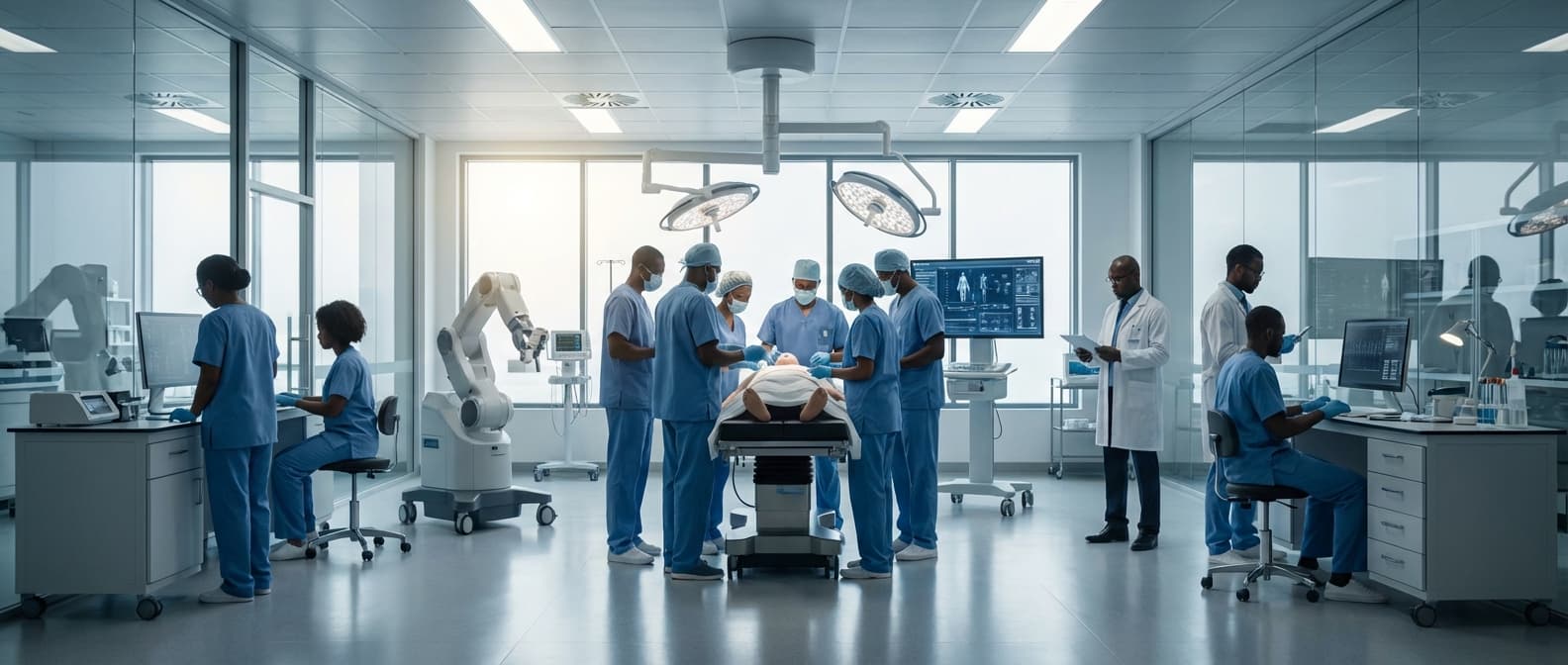
Biomedical Engineering Consulting in Somalia
Engineering Excellence & Technical Support
Equipment selection, procurement and implementation consulting High-standard technical execution following OEM protocols and local regulatory frameworks.
Advanced Diagnostics & Infrastructure Development
We leverage cutting-edge biomedical engineering principles to assess, upgrade, and implement advanced diagnostic equipment and medical infrastructure across Somalia. This includes specialized imaging systems, laboratory automation, and robust maintenance frameworks to enhance diagnostic accuracy and patient care accessibility.
Biomaterial & Prosthetics Innovation for Local Needs
Our expertise extends to the research and development of cost-effective, locally sourced biomaterials and prosthetics. We focus on creating sustainable solutions for limb loss and tissue regeneration, tailored to the specific environmental and economic conditions prevalent in Somalia, ensuring greater patient affordability and usability.
Telemedicine & Remote Healthcare Solutions
We design and deploy innovative telemedicine platforms and remote monitoring systems to bridge geographical gaps in healthcare access. Our solutions empower healthcare professionals in remote Somali communities with real-time data, remote consultations, and specialized diagnostic support, significantly improving healthcare outcomes.
What Is Biomedical Engineering Consulting In Somalia?
Biomedical Engineering Consulting in Somalia refers to the provision of specialized expertise in the design, development, implementation, maintenance, and regulation of medical devices, equipment, and systems within the Somali healthcare landscape. This service leverages the principles of engineering, medicine, and biology to address the unique challenges and opportunities present in Somalia's developing healthcare infrastructure. It encompasses a broad spectrum of activities aimed at optimizing the availability, functionality, and safety of medical technologies to improve patient care and public health outcomes.
| Who Needs Biomedical Engineering Consulting in Somalia? | Typical Use Cases |
|---|---|
| Government Ministries of Health: For national health infrastructure planning, policy development related to medical technology, and establishment of regulatory frameworks. | Developing national guidelines for medical equipment procurement and maintenance. Establishing a centralized medical equipment registry. Advising on the establishment of a national medical device regulatory authority. |
| Public and Private Hospitals: To optimize their medical technology assets, improve patient care, and enhance operational efficiency. | Conducting a comprehensive audit of existing medical equipment. Developing a preventive maintenance schedule for critical care units. Recommending upgrades or replacements for outdated diagnostic imaging equipment. Designing the technical infrastructure for a new operating theatre. |
| Clinics and Health Centers: To ensure the effective and safe use of essential medical equipment. | Assessing the need for basic diagnostic equipment. Developing protocols for the safe use of sterilization equipment. Training staff on the operation of vital signs monitors. |
| Non-Governmental Organizations (NGOs) and International Aid Agencies: For the procurement, deployment, and maintenance of medical equipment in development projects and humanitarian aid efforts. | Selecting and procuring specialized medical equipment for mobile health clinics. Establishing field maintenance workshops for donated equipment. Ensuring the sustainability of medical technology interventions in post-conflict settings. |
| Medical Device Manufacturers and Distributors: To navigate the Somali market, understand local requirements, and ensure proper product support. | Advising on market entry strategies for new medical devices. Developing local training programs for their products. Ensuring compliance with import and registration procedures. |
| Academic and Research Institutions: For setting up laboratories, acquiring specialized research equipment, and ensuring compliance with safety standards. | Designing laboratory layouts for biomedical research. Advising on the selection of advanced analytical instruments. Developing safety protocols for research equipment. |
Key Aspects of Biomedical Engineering Consulting in Somalia
- Needs Assessment and Planning: Evaluating current medical equipment inventory, identifying gaps, and developing strategic plans for technology acquisition, deployment, and lifecycle management.
- Equipment Procurement and Specification: Assisting healthcare facilities in defining technical specifications for medical devices, sourcing appropriate technologies, and ensuring compliance with international standards and local regulations.
- Installation and Commissioning: Overseeing the correct installation, calibration, and functional verification of new medical equipment to ensure optimal performance and safety.
- Maintenance and Repair Strategies: Developing robust preventive maintenance programs and troubleshooting protocols to minimize downtime and extend the operational lifespan of existing equipment.
- Training and Capacity Building: Educating healthcare professionals and technical staff on the proper operation, maintenance, and basic troubleshooting of medical devices.
- Regulatory Compliance and Standards: Advising on adherence to national and international medical device regulations, quality management systems, and safety standards.
- Infrastructure Development: Contributing to the design and development of clinical engineering departments, laboratories, and other healthcare facilities with a focus on technological integration.
- Technology Adoption and Innovation: Identifying and recommending appropriate innovative medical technologies that are sustainable and suitable for the Somali context.
- Risk Management and Safety: Implementing protocols to mitigate risks associated with medical equipment use, ensuring patient and staff safety.
- Project Management: Managing the entire lifecycle of medical technology projects, from initial planning to final implementation and ongoing support.
Who Needs Biomedical Engineering Consulting In Somalia?
Biomedical Engineering consulting in Somalia is a critical and emerging field, addressing a significant gap in healthcare infrastructure and expertise. The demand stems from the nation's ongoing efforts to rebuild and strengthen its healthcare system, improve patient care, and ensure the safe and effective use of medical technology. Consulting services are essential for navigating complex challenges, from equipment procurement and maintenance to training healthcare professionals and establishing robust regulatory frameworks. The focus is on building sustainable, accessible, and high-quality healthcare services for the Somali population.
| Target Customer/Department | Specific Needs & Services Required |
|---|---|
| Ministry of Health (MoH) | Development of national medical device policies and regulations; Strategic planning for healthcare infrastructure; National equipment needs assessments; Procurement guidelines; Capacity building for regulatory bodies; Disease surveillance and technology integration. |
| Regional Health Bureaus | Needs assessment for regional facilities; Support for decentralized procurement and maintenance strategies; Training needs analysis for local healthcare staff. |
| Central Hospital/Referral Centers | Medical equipment planning, selection, and procurement; Installation and commissioning of complex medical devices (e.g., MRI, CT scanners); Equipment maintenance and repair program development; Biomedical engineering department establishment and management; Safety and risk management assessments; Clinical engineering services; Training for hospital biomedical engineers and technicians. |
| District/Primary Healthcare Clinics | Needs assessment for basic medical equipment; Procurement of essential medical devices; Training on operation and basic maintenance of simpler equipment; Establishing referral pathways for more complex maintenance. |
| Private Hospitals and Clinics | Specialized equipment procurement and integration; Compliance with evolving healthcare standards; Optimizing equipment utilization and ROI; Advanced diagnostic and therapeutic technology implementation; Staff training on new technologies. |
| Local and International NGOs | Needs assessments for specific project areas (e.g., maternal health, emergency response); Procurement and deployment of medical equipment for humanitarian projects; Training local staff on equipment use and maintenance; Establishing sustainable equipment management systems. |
| International Development Agencies (e.g., WHO, UNICEF, World Bank) | Technical advisory services for health system strengthening projects; Support for national health technology assessments; Guidance on procurement and supply chain management; Impact evaluation of medical equipment interventions; Capacity building initiatives. |
| Medical Equipment Suppliers/Manufacturers (Local and International) | Market entry strategies; Understanding local regulatory requirements; Installation and after-sales support framework development; Training of local technical partners; Needs analysis for product adaptation. |
| Universities & Technical Colleges (Medical/Engineering Departments) | Curriculum development for biomedical engineering programs; Laboratory setup and equipment provision; Faculty training and mentorship; Internship program design and coordination. |
| Research Institutions | Guidance on acquiring and maintaining research-grade medical equipment; Integration of technology for data collection and analysis; Ethical review of technology use in research. |
Target Customers & Departments for Biomedical Engineering Consulting in Somalia
- Government Ministries and Agencies
- Public Healthcare Facilities (Hospitals, Clinics)
- Private Healthcare Providers
- Non-Governmental Organizations (NGOs)
- International Development Organizations
- Medical Equipment Suppliers and Manufacturers
- Educational and Training Institutions
- Research and Development Initiatives
Biomedical Engineering Consulting Process In Somalia
Navigating the biomedical engineering consulting process in Somalia requires a structured approach to address the unique challenges and opportunities within the country's healthcare infrastructure. This workflow outlines the typical journey from initial client inquiry to the successful execution of a consulting project, emphasizing a commitment to understanding local needs and fostering sustainable solutions.
| Phase | Key Activities | Deliverables | Somali Context Considerations |
|---|---|---|---|
| 1. Inquiry & Initial Assessment | Client Inquiry: Receive initial contact from a healthcare facility (hospital, clinic, ministry of health), NGO, or international organization. Needs Identification: Conduct preliminary discussions to understand the client's challenges, goals, and perceived needs related to biomedical equipment (e.g., procurement, maintenance, infrastructure, training, policy). Feasibility & Scope Definition: Assess the project's feasibility, identify key stakeholders, and define the preliminary scope of work and objectives. Site Visit (if feasible): Conduct an initial site visit to observe existing infrastructure, equipment, and operational workflows. This is crucial for understanding the ground reality. | Initial meeting minutes, preliminary scope document, list of key stakeholders. | Establish trust and rapport from the outset. Understand political sensitivities. Account for limited access to remote areas. Prioritize projects with high impact on patient care. Recognize potential language barriers and adapt communication strategies. |
| 2. Proposal Development & Agreement | Detailed Needs Analysis: Conduct a more in-depth assessment, often involving questionnaires, interviews with staff, and a review of existing documentation. Solution Brainstorming: Develop potential solutions aligned with the identified needs and available resources. Proposal Formulation: Prepare a comprehensive proposal detailing the understanding of the problem, proposed methodology, scope of services, timeline, budget, team composition, and expected outcomes. Contract Negotiation & Agreement: Discuss and finalize terms with the client, leading to a formal contract or Memorandum of Understanding (MOU). | Detailed needs assessment report, comprehensive project proposal, signed contract/MOU. | Ensure proposals are realistic given local infrastructure limitations and budgetary constraints. Clearly outline what is achievable. Emphasize capacity building and local ownership. Be transparent about potential challenges and mitigation strategies. Consider in-kind contributions or phased payments. |
| 3. Project Planning & Mobilization | Detailed Project Plan: Develop a granular project plan with specific tasks, milestones, responsibilities, and timelines. This includes resource allocation (personnel, equipment, budget). Team Assembly: Form the consulting team, including local expertise where possible. Logistics & Permissions: Secure necessary travel permits, visas, and local transportation. Arrange for accommodation and safety protocols. Stakeholder Engagement: Initiate formal engagement with all relevant stakeholders, including government bodies, hospital management, technical staff, and end-users. | Detailed project plan, mobilized consulting team, confirmed logistics, stakeholder engagement plan. | Navigating bureaucratic processes for permits and approvals can be time-consuming. Prioritize safety and security for the consulting team. Leverage local contacts for logistical support and understanding of cultural norms. Engage with local technical staff early for buy-in and collaboration. |
| 4. Data Collection & Analysis | Information Gathering: Collect data through site surveys, interviews, equipment audits, operational assessments, and review of existing records (maintenance logs, inventory, usage patterns). Data Verification: Validate the accuracy and completeness of collected data. Analysis: Analyze the gathered data to identify root causes of problems, quantify impact, and pinpoint areas for improvement. This may involve statistical analysis, gap analysis, and benchmarking. | Raw data, verified datasets, analytical reports, gap analysis findings. | Access to reliable historical data may be limited; focus on direct observation and interviews. Be prepared for varying levels of technical literacy among staff. Utilize simplified data collection tools if necessary. Consider informal data sources and local knowledge. |
| 5. Solution Design & Development | Develop Recommendations: Based on data analysis, formulate concrete, actionable recommendations for equipment selection, procurement strategies, maintenance systems, infrastructure upgrades, training programs, or policy development. Customization: Tailor solutions to fit the Somali context, considering local capacity, available resources, and sustainability. Prototyping/Piloting (if applicable): Develop and test pilot solutions for critical areas. | Detailed recommendations, technical specifications, proposed workflows, training modules outline. | Prioritize solutions that are low-maintenance, energy-efficient, and can be supported locally. Consider the availability of spare parts and qualified technicians. Focus on practical, implementable solutions rather than aspirational ones. Ensure solutions align with national health strategies. |
| 6. Implementation & Training | Procurement Support (if applicable): Assist in the procurement process, ensuring compliance with ethical standards and best practices. Installation & Commissioning: Oversee the installation and commissioning of new equipment. Process Implementation: Introduce and support the implementation of new maintenance systems, workflows, or policies. Capacity Building & Training: Conduct hands-on training for local healthcare professionals and technicians on equipment operation, maintenance, repair, and management. This is a critical component for sustainability. | Procurement reports, installed equipment, implemented systems, trained personnel, training materials. | Procurement processes can be complex; provide clear guidance and oversight. Focus on practical, hands-on training. Utilize local languages where appropriate. Train trainers to ensure long-term knowledge transfer. Integrate training with ongoing operational needs. Address resistance to change through effective communication and demonstration of benefits. |
| 7. Monitoring & Evaluation | Progress Tracking: Monitor the implementation progress against the project plan. Performance Measurement: Evaluate the effectiveness of implemented solutions against predefined metrics (e.g., equipment uptime, cost savings, improved patient outcomes, staff competency). Feedback Collection: Gather feedback from stakeholders on the implemented solutions and the consulting process. Adaptive Management: Make adjustments to the plan and solutions based on monitoring and evaluation findings. | Progress reports, performance evaluation reports, stakeholder feedback summaries, revised action plans. | Establish clear, measurable indicators relevant to the Somali context. Regular site visits are crucial for ongoing monitoring. Be prepared for unforeseen challenges and adapt plans accordingly. Focus on demonstrating tangible improvements and impact. |
| 8. Project Closure & Handover | Final Reporting: Prepare a comprehensive final report documenting all project activities, findings, implemented solutions, outcomes, and lessons learned. Knowledge Transfer: Ensure a smooth handover of all project-related knowledge, documentation, and responsibilities to the client. Post-Project Support (optional): Discuss potential for ongoing support or follow-up assessments. Formal Closure: Officially close the project, ensuring all contractual obligations are met. | Final project report, handover documentation, project closure certificate. | Ensure documentation is accessible and understandable. Emphasize the client's ownership and responsibility for sustained success. Plan for long-term sustainability of the implemented solutions. Foster lasting relationships with stakeholders for future collaboration. |
Biomedical Engineering Consulting Workflow in Somalia
- Phase 1: Inquiry & Initial Assessment
- Phase 2: Proposal Development & Agreement
- Phase 3: Project Planning & Mobilization
- Phase 4: Data Collection & Analysis
- Phase 5: Solution Design & Development
- Phase 6: Implementation & Training
- Phase 7: Monitoring & Evaluation
- Phase 8: Project Closure & Handover
Biomedical Engineering Consulting Cost In Somalia
Biomedical Engineering consulting costs in Somalia can vary significantly due to a range of factors. These include the complexity of the project, the experience and specialization of the consultant, the duration of the engagement, and the specific location within Somalia. The current economic climate and the demand for specialized skills also play a crucial role in pricing. Due to the nascent stage of extensive biomedical engineering infrastructure development in Somalia, consultants with international experience and specialized knowledge are often in high demand, commanding premium rates.
Pricing is typically structured on an hourly, daily, or project-based fee. Hourly rates might be used for smaller, short-term consultations, while daily rates are common for extended on-site work. Larger, more complex projects, such as hospital equipment procurement and installation, facility design, or comprehensive training programs, are often quoted as a fixed project fee.
It's important to note that the availability of local Somali Shilling (SOS) denominated pricing can be limited, with many consultants and firms opting to quote in more stable international currencies like the US Dollar (USD) and then converting to SOS at the prevailing exchange rate. This adds an element of currency fluctuation risk to local clients. However, for smaller, domestically-focused projects, SOS pricing is more likely to be encountered.
Pricing Factors:
- Consultant Experience & Specialization: Senior consultants with years of experience and specialized expertise in areas like medical device maintenance, hospital infrastructure, or specific medical technologies will charge more.
- Project Scope & Complexity: A simple equipment assessment will cost less than designing an entire hospital wing or implementing a new medical imaging system.
- Project Duration: Longer engagements naturally lead to higher overall costs, whether billed hourly, daily, or as a project fee.
- Location: While not as pronounced as in some other countries, travel and logistical costs within Somalia can impact project fees, especially for remote areas.
- Urgency & Turnaround Time: Urgent projects may incur premium charges.
- Deliverables: The specific outputs required (e.g., reports, training manuals, installation plans) will influence cost.
- Reputation & Demand: Highly reputable firms or individuals with a proven track record will command higher rates.
- Currency Fluctuations: When quoted in USD, the final SOS cost will depend on the exchange rate at the time of payment.
Cost Ranges (Illustrative - Subject to Change):
Given the unique economic landscape of Somalia, precise, universally applicable cost ranges are challenging to define. The figures below are illustrative estimates and can fluctuate significantly. It's highly recommended to obtain detailed quotes from multiple reputable consultants for any specific project. All figures are presented in Somali Shilling (SOS) and are rough estimates, often based on USD conversions. Assume an approximate exchange rate of 570 SOS to 1 USD for context, but this is highly volatile.
| Service Category | Estimated Daily Rate (SOS) | Estimated Project Fee (SOS) - Small/Medium Scope |
|---|---|---|
| Junior Consultant (Limited Experience) | 200,000 - 400,000 | 1,000,000 - 3,000,000 |
| Mid-Level Consultant (Several Years Experience) | 400,000 - 700,000 | 3,000,000 - 8,000,000 |
| Senior/Specialist Consultant (Extensive Experience, International Exposure) | 700,000 - 1,500,000+ | 8,000,000 - 25,000,000+ |
| Specialized Project (e.g., Hospital-wide IT integration, complex procurement) | N/A (Typically Project-Based) | 25,000,000 - 100,000,000+ |
Biomedical Engineering Consulting Services & Potential Cost Ranges in Somalia (Illustrative Estimates)
- Initial Equipment Assessment/Audit
- Equipment Procurement Advisory
- Medical Equipment Installation & Commissioning
- Preventive Maintenance Program Development
- Hospital Infrastructure Planning (Biomedical Aspects)
- Biomedical Engineering Department Setup/Management
- Staff Training (Equipment Operation & Maintenance)
- Regulatory Compliance & Standards Advisory
- Medical Device Safety & Risk Management
Affordable Biomedical Engineering Consulting Options
Navigating the complex landscape of biomedical engineering can be daunting for startups, established companies seeking specialized expertise, and research institutions. Fortunately, affordable consulting options exist. Understanding the structure of these services, particularly 'value bundles' and implementing strategic cost-saving measures, can unlock access to critical knowledge and support without breaking the bank. Value bundles package a defined set of services for a predetermined price, offering predictability and often a discount compared to individual service procurement. Cost-saving strategies involve smart planning, leveraging existing resources, and choosing consultants wisely.
| Cost-Saving Strategy | Description | Example Application |
|---|---|---|
| Define Project Scope Clearly | Having a well-defined scope prevents scope creep, a major cost driver. Be specific about deliverables, timelines, and expectations. | Before engaging a consultant for a regulatory submission, clearly outline all the documentation that needs to be reviewed and the specific regulations to be addressed. |
| Leverage Internal Expertise | Utilize your existing team's knowledge. Consultants can then focus on specialized areas where internal expertise is lacking. | If your team has strong engineering capabilities, focus consultant engagement on regulatory strategy or market analysis rather than core design. |
| Phased Approach | Break down large projects into smaller, manageable phases. This allows for budget allocation and evaluation at each stage. | Instead of a full product development consultancy, start with a feasibility study, then a design review phase, and finally a pre-submission consultation. |
| Seek Consultants with Niche Expertise | Instead of generalists, find consultants with deep experience in your specific technology or regulatory area. This can lead to more efficient and effective solutions. | For a novel implantable device, hire a consultant specializing in biocompatibility and ISO 10993 standards, rather than a broad medical device consultant. |
| Explore Remote Consulting | Remote collaboration can significantly reduce travel and accommodation costs, making consultants accessible regardless of location. | Conduct regular video conferences and utilize cloud-based document sharing for real-time collaboration. |
| Negotiate Terms and Payment Schedules | Don't be afraid to negotiate fees, payment terms, and milestone-based payments. This can offer financial flexibility. | Propose a payment schedule tied to the successful completion of specific project milestones rather than large upfront payments. |
| Consider Smaller, Boutique Firms | Smaller consulting firms or independent consultants often have lower overheads and can offer more competitive pricing. | Research specialized independent consultants with a strong track record in your specific field of interest. |
| Request References and Case Studies | Verify the consultant's experience and success with similar projects to ensure they can deliver value efficiently. | Ask for examples of how their previous work has directly contributed to successful product launches or regulatory approvals. |
Understanding Value Bundles
- {"title":"What are Value Bundles?","description":"Value bundles are pre-packaged sets of consulting services offered at a fixed price. They are designed to address common project needs or phases, providing clarity on scope and budget."}
- {"title":"Benefits of Value Bundles","description":"Predictable costs, streamlined procurement, access to a comprehensive service package, and often a cost advantage over à la carte services."}
- {"title":"Common Bundle Examples","description":"Examples include 'Feasibility Study Bundle' (market research, technical assessment), 'Regulatory Pathway Bundle' (FDA/CE marking strategy, documentation review), 'Prototyping Support Bundle' (design review, material selection guidance), and 'Intellectual Property Strategy Bundle' (patent landscape, freedom-to-operate analysis)."}
- {"title":"Customizing Bundles","description":"Many consultants offer flexibility to customize bundles by adding or removing specific services to fit unique project requirements."}
Verified Providers In Somalia
In Somalia, ensuring access to reliable and trustworthy healthcare providers is paramount. Franance Health stands out as a leading organization committed to connecting individuals with verified medical professionals. Their rigorous credentialing process and dedication to patient well-being make them the optimal choice for healthcare needs in the region. This document outlines the significance of verified providers and details why Franance Health's approach sets them apart.
| Franance Health's Verification Process | Key Components | Benefits for Patients |
|---|---|---|
| Rigorous Credentialing | Comprehensive checks of educational degrees, professional licenses, and work history. | Ensures practitioners meet high standards of competency and qualification. |
| Background Screening | Thorough vetting for any disciplinary actions or professional misconduct. | Protects patients from potentially harmful or unethical practitioners. |
| Skills Assessment | Evaluation of practical medical skills and knowledge relevant to their specialization. | Guarantees that providers can deliver effective and up-to-date medical interventions. |
| Continuous Monitoring | Ongoing review of provider performance and adherence to ethical guidelines. | Maintains the highest level of care and accountability over time. |
| Patient Feedback Integration | Mechanisms for collecting and acting on patient experiences and feedback. | Fosters a patient-centric approach and continuous improvement in service delivery. |
Why Verified Providers Matter in Somalia
- Patient Safety: Verified providers have met established standards of education, training, and ethical conduct, reducing the risk of medical errors and malpractice.
- Quality of Care: Credentialing ensures that practitioners possess the necessary skills and expertise to deliver effective and appropriate medical treatment.
- Trust and Confidence: Knowing that a healthcare provider has undergone a thorough verification process instills confidence and trust in patients seeking care.
- Accessibility to Competent Professionals: In areas with limited healthcare infrastructure, verification systems help identify and promote genuinely qualified individuals.
- Ethical Practice: Verified providers are typically bound by ethical codes of conduct, ensuring a commitment to patient-centered care and privacy.
Scope Of Work For Biomedical Engineering Consulting
This Scope of Work (SOW) outlines the services provided by [Consulting Firm Name] (hereinafter referred to as "Consultant") to [Client Organization Name] (hereinafter referred to as "Client") for biomedical engineering consulting. The objective of this engagement is to [briefly state the overall goal, e.g., optimize device development process, conduct regulatory compliance review, assess technology acquisition]. This SOW details the technical deliverables, standard specifications, and project timeline.
| Phase | Key Activities | Deliverables | Standard Specifications/Methodologies |
|---|---|---|---|
| Phase 1: Discovery & Assessment | Kick-off Meeting, Requirements Gathering, Current State Analysis, Technology Review | Project Charter, Needs Assessment Report, Technology Landscape Report | ISO 13485:2016, FDA Quality System Regulation (21 CFR Part 820), Usability Engineering (IEC 62366-1) |
| Phase 2: Design & Development Support | Conceptual Design Review, Risk Management Planning, Prototyping Guidance, Material Selection | Design Inputs Document, Preliminary Risk Management File, Prototype Review Report | ISO 14971:2019 (Risk Management for Medical Devices), Material Standards (ASTM Fxxx Series), Design Controls (21 CFR Part 820.30) |
| Phase 2.5: Regulatory Strategy & Compliance | Classification Determination, Pre-submission Meeting Preparation, Labeling Review, Technical Documentation Assembly | Regulatory Strategy Document, Pre-submission Meeting Brief, Draft Labeling, Technical File Outline | FDA Guidance Documents (e.g., 'Off-The-Shelf Software in Medical Devices'), MDR/IVDR Regulations (EU), GHTF/IMDRF guidance |
| Phase 3: Testing & Verification | Test Protocol Development, Verification & Validation (V&V) Planning, Biocompatibility Assessment, Performance Testing | V&V Plan, Test Protocols, Biocompatibility Test Reports, Performance Validation Report | ISO 10993 Series (Biocompatibility), IEC 60601 Series (Medical Electrical Equipment), GLP (Good Laboratory Practice) |
| Phase 4: Project Closeout & Recommendations | Final Report Compilation, Knowledge Transfer, Recommendations for Future Steps | Final Project Report, Presentation of Findings, Actionable Recommendations | Project Management Best Practices, Client-Specific Documentation Standards |
Project Objectives
- To [Specific Objective 1, e.g., identify and mitigate potential design flaws in the new diagnostic device].
- To [Specific Objective 2, e.g., develop a comprehensive regulatory submission strategy for Class II medical devices].
- To [Specific Objective 3, e.g., evaluate the feasibility and integration of a novel biosensing technology].
- To [Specific Objective 4, e.g., provide expert guidance on biocompatibility testing protocols].
Service Level Agreement For Biomedical Engineering Consulting
This Service Level Agreement (SLA) outlines the response times and uptime guarantees provided by [Your Company Name] for Biomedical Engineering Consulting services to [Client Company Name]. This SLA is an addendum to the Master Services Agreement (MSA) dated [MSA Date].
| Issue Priority | Response Time Target | Resolution Time Target (Initial Contact) | Uptime Guarantee (Consulting Availability) |
|---|---|---|---|
| Critical Issue | 1 Hour during Service Hours | 4 Business Hours (for initial diagnosis and action plan) | 99.5% (during agreed-upon project timelines) |
| High Priority Issue | 2 Business Hours during Service Hours | 8 Business Hours (for initial diagnosis and action plan) | 99.0% (during agreed-upon project timelines) |
| Medium Priority Issue | 4 Business Hours during Service Hours | 2 Business Days (for initial diagnosis and action plan) | N/A (Focus on response and resolution) |
| Low Priority Issue | 1 Business Day during Service Hours | 5 Business Days (for initial diagnosis and action plan) | N/A (Focus on response and resolution) |
Definitions
- Service Hours: 9:00 AM to 5:00 PM [Client's Time Zone], Monday through Friday, excluding public holidays.
- Business Day: Any day that is not a Saturday, Sunday, or public holiday in [Client's Time Zone].
- Critical Issue: A problem that renders a critical biomedical device or system non-operational, posing an immediate risk to patient safety or significant disruption to clinical operations.
- High Priority Issue: A problem that significantly degrades the performance of a biomedical device or system, causing inconvenience or minor disruptions to patient care or clinical operations.
- Medium Priority Issue: A problem that affects non-critical functionality of a biomedical device or system, or a request for information or standard consultation.
- Low Priority Issue: General inquiries, routine maintenance requests, or requests for future planning/advice.
- Response Time: The maximum time allowed to acknowledge a reported issue and initiate diagnosis and troubleshooting.
- Resolution Time: The target time to resolve an issue, dependent on issue complexity and availability of necessary resources.
- Uptime Guarantee: The percentage of time that critical biomedical engineering consulting services are available and operational.
Frequently Asked Questions

Ready when you are
Let's scope your Biomedical Engineering Consulting in Somalia project in Somalia.

Scaling healthcare logistics and technical systems across the entire continent.