
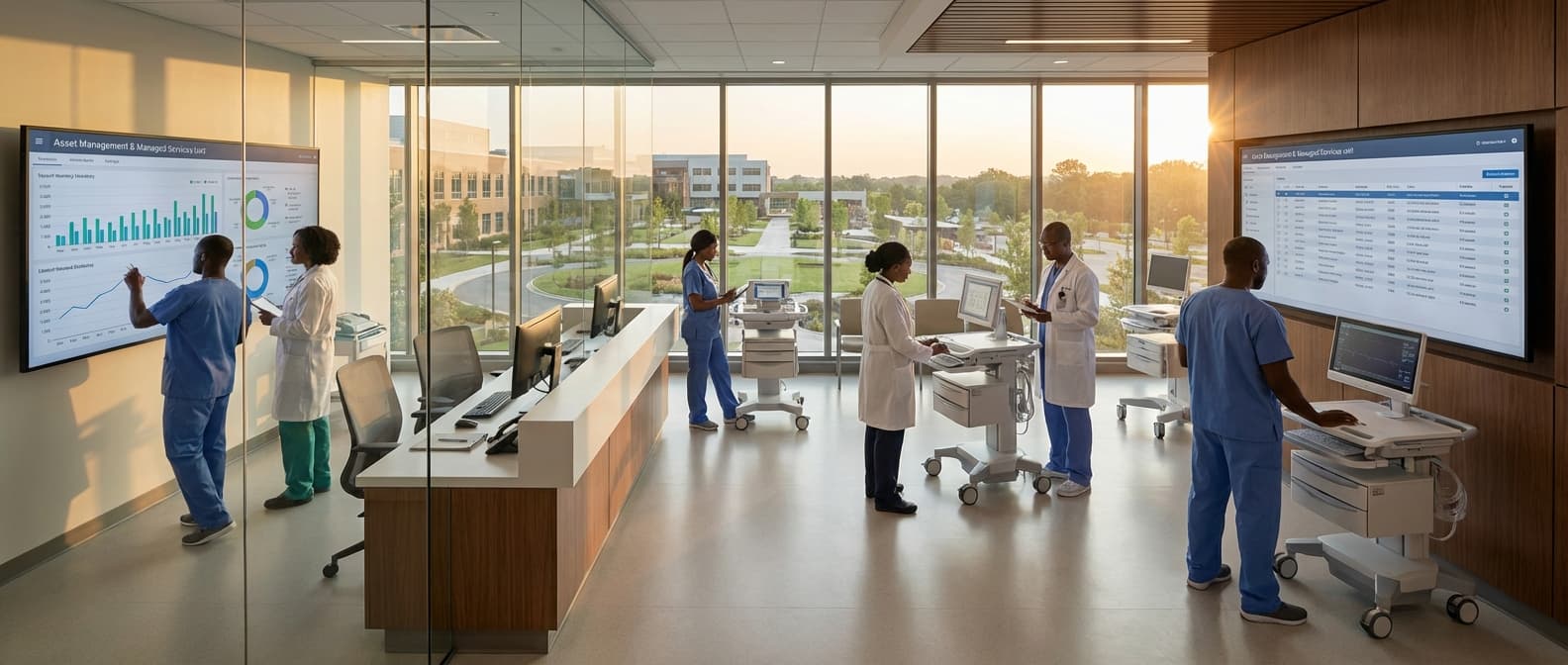
Maintenance KPI Reporting Service (Uptime/MTBF/MTTR) in Somalia
Engineering Excellence & Technical Support
Maintenance KPI Reporting Service (Uptime/MTBF/MTTR) High-standard technical execution following OEM protocols and local regulatory frameworks.
Maximizing Uptime for Critical Infrastructure
Our service empowers Somali organizations to precisely track and boost critical asset uptime. By leveraging real-time data, we provide actionable insights to minimize unplanned downtime, ensuring uninterrupted operations for essential services like power generation, water treatment, and telecommunications across Somalia.
Enhancing Reliability with Predictive Maintenance Insights
We offer advanced analytics to calculate and improve Mean Time Between Failures (MTBF) for your machinery and equipment. Through intelligent trend analysis and anomaly detection, our reporting helps predict potential failures in Somalia's challenging operational environments, allowing for proactive maintenance interventions and significant cost savings.
Accelerating Recovery Times with Optimized Repair Strategies
Our Maintenance KPI Reporting Service focuses on reducing Mean Time To Repair (MTTR) for all maintenance activities. By analyzing historical repair data and identifying bottlenecks, we help Somali businesses implement streamlined workflows, ensure timely spare part availability, and train field teams for faster, more efficient resolution of equipment issues, minimizing operational disruptions.
What Is Maintenance Kpi Reporting Service (Uptime/mtbf/mttr) In Somalia?
Maintenance KPI Reporting Service (Uptime/MTBF/MTTR) in Somalia refers to the provision of data-driven insights into the operational reliability and maintainability of physical assets and systems within the Somali context. This service quantifies the effectiveness of maintenance strategies by tracking key performance indicators (KPIs) such as Uptime, Mean Time Between Failures (MTBF), and Mean Time To Repair (MTTR). It involves the systematic collection, aggregation, analysis, and reporting of maintenance-related data to identify trends, diagnose root causes of failures, and inform decision-making for optimizing maintenance operations, resource allocation, and overall asset performance. The service is crucial for organizations operating in environments where operational continuity and asset longevity are paramount, often in challenging logistical and infrastructural landscapes.
| Stakeholder/Industry | Need for Maintenance KPI Reporting | Typical Use Cases |
|---|---|---|
| Telecommunications Companies | Ensuring network availability and minimizing service disruptions to subscribers. High uptime is critical for revenue generation and customer satisfaction. | Monitoring base station uptime, calculating MTBF for critical network components (e.g., routers, switches), and optimizing MTTR for field repair teams to restore services rapidly. |
| Energy Sector (Power Generation/Distribution) | Maintaining consistent power supply to communities and industries. Asset reliability directly impacts economic activity and public safety. | Tracking generator uptime, analyzing failure rates of transformers and transmission lines (MTBF), and reducing repair times for damaged infrastructure (MTTR). |
| Logistics and Transportation | Ensuring the timely and efficient movement of goods and people. Vehicle and fleet availability is paramount. | Monitoring fleet uptime, calculating MTBF for trucks, ships, or aircraft, and optimizing repair turnaround times for vehicles in transit or at depots (MTTR). |
| Water and Sanitation Utilities | Providing reliable access to clean water and effective waste management. Equipment failure can have significant public health consequences. | Tracking pump station uptime, analyzing failure rates of water treatment equipment (MTBF), and reducing repair times for burst pipes or pump malfunctions (MTTR). |
| Mining and Extractive Industries | Maximizing operational efficiency and production output. Downtime of heavy machinery directly impacts profitability. | Monitoring the uptime of excavators, haul trucks, and processing plant equipment, analyzing MTBF for critical components, and minimizing MTTR for repairs on heavy machinery in remote locations. |
| Healthcare Facilities | Ensuring the continuous operation of critical medical equipment and infrastructure to provide uninterrupted patient care. | Tracking the uptime of diagnostic machines (e.g., MRI, CT scanners), monitoring the reliability of power backup systems (MTBF), and minimizing repair times for essential medical devices (MTTR). |
| Government and Public Infrastructure Agencies | Maintaining essential public services and infrastructure, such as roads, bridges, and public transport systems. | Monitoring the operational status of public transport fleets, analyzing failure rates of critical road maintenance equipment (MTBF), and optimizing repair times for infrastructure damage (MTTR). |
Service Components and Objectives
- Data Acquisition and Monitoring: Establishing mechanisms for collecting operational and maintenance data from various assets, which may include sensors, manual logs, and existing enterprise systems.
- KPI Calculation and Analysis: Employing statistical methods to compute Uptime (percentage of time an asset is operational), MTBF (average time between failures of a repairable system), and MTTR (average time taken to repair a failed system).
- Trend Identification and Root Cause Analysis: Analyzing historical data to detect patterns in failures, identify recurring issues, and perform root cause analysis (RCA) to address systemic problems.
- Performance Benchmarking: Comparing current performance against historical data, industry standards (where applicable), or organizational targets.
- Reporting and Visualization: Generating clear, concise reports and dashboards that present KPI trends, failure analyses, and actionable recommendations to stakeholders.
- Optimization Recommendations: Providing data-backed suggestions for improving maintenance schedules, spare parts inventory, technician training, and preventative maintenance strategies.
- Risk Mitigation: Identifying potential risks associated with asset failures and proposing strategies to minimize downtime and associated costs.
Who Needs Maintenance Kpi Reporting Service (Uptime/mtbf/mttr) In Somalia?
In Somalia, where infrastructure development is critical and operational reliability is paramount, a Maintenance KPI Reporting Service focused on Uptime, Mean Time Between Failures (MTBF), and Mean Time To Repair (MTTR) is essential for a range of businesses and government entities. These organizations are striving to maximize operational efficiency, minimize costly downtime, and ensure the longevity of their critical assets. By providing data-driven insights into maintenance performance, such a service helps them move from reactive to proactive maintenance strategies, ultimately leading to increased productivity, cost savings, and enhanced service delivery.
| Target Customer Segment | Key Departments/Functions Benefiting |
|---|---|
| Telecommunications Companies | Network Operations Center (NOC), Field Maintenance, Asset Management, Technical Operations |
| Energy and Power Utilities | Operations & Maintenance (O&M), Generation Department, Transmission & Distribution, Asset Management |
| Water and Sanitation Authorities | Operations Department, Maintenance Teams, Infrastructure Management, Service Delivery |
| Transportation and Logistics Companies | Fleet Management, Operations, Maintenance Workshops, Logistics Planning |
| Healthcare Facilities | Facilities Management, Biomedical Engineering, Operations Management |
| Mining and Natural Resource Extraction | Operations, Maintenance & Reliability Engineering, Asset Management, Production |
| Manufacturing and Industrial Operations | Production Management, Maintenance Department, Engineering, Quality Control |
| Government Agencies (Infrastructure & Public Services) | Public Works Departments, Ministry of Transport, Ministry of Energy, Municipal Services |
| Oil and Gas Sector | Operations & Maintenance, Asset Integrity, Production Engineering, Safety and Reliability |
| Financial Institutions (with significant physical infrastructure) | Facilities Management, IT Operations (for server rooms, data centers), Branch Operations |
Target Customers and Departments in Somalia for Maintenance KPI Reporting Service
- Telecommunications Companies
- Energy and Power Utilities
- Water and Sanitation Authorities
- Transportation and Logistics Companies
- Healthcare Facilities
- Mining and Natural Resource Extraction
- Manufacturing and Industrial Operations
- Government Agencies (Infrastructure & Public Services)
- Oil and Gas Sector
- Financial Institutions (with significant physical infrastructure)
Maintenance Kpi Reporting Service (Uptime/mtbf/mttr) Process In Somalia
This document outlines the workflow for the Maintenance KPI Reporting Service (Uptime, MTBF, MTTR) in Somalia. This service provides clients with data-driven insights into their equipment's reliability and maintenance efficiency, enabling proactive decision-making and operational improvements. The process is designed to be transparent, efficient, and tailored to the unique operational environment of Somalia.
| Stage | Description | Key Activities | Deliverables/Outcomes | Responsible Parties | Timeframe (Typical) |
|---|---|---|---|---|---|
| Initial contact from a potential client seeking maintenance KPI reporting services. Understanding their specific needs, asset types, and current reporting capabilities. | Receive and acknowledge inquiry, schedule initial consultation, gather information on client's assets and existing maintenance practices, identify key reporting requirements (Uptime, MTBF, MTTR), discuss service scope and pricing. | Understanding of client's needs documented, proposal outline, preliminary pricing. | Client, Service Provider Sales/Business Development | 1-3 Business Days |
| Formalizing the service offering based on the needs assessment. This includes defining methodologies, reporting formats, and contractual terms. | Develop a detailed proposal outlining service scope, KPIs to be tracked, data collection methods, reporting frequency and format, confidentiality agreements, cost, and contract terms. Client review and negotiation, final agreement signing. | Formal Proposal, Signed Service Agreement/Contract. | Service Provider Proposal Team, Client Management | 3-7 Business Days |
| Establishing the mechanisms for collecting accurate and consistent data related to asset operation and maintenance events. | Identify data sources (e.g., SCADA systems, manual logs, CMMS), define data fields and formats, implement data collection tools or integrate with existing systems. Conduct initial data quality checks. | Data collection framework established, data integration points defined, initial data audit report. | Service Provider Technical Team, Client IT/Operations | 1-2 Weeks |
| Continuous gathering of operational and maintenance data from client assets. | Monitor data feeds, perform regular data validation and cleansing to ensure accuracy and completeness. Address any data discrepancies or missing information. | Raw operational and maintenance data, validated data sets. | Service Provider Data Analysts, Client Operations/Maintenance Staff | Continuous (Daily/Weekly/Real-time) |
| Processing validated data to calculate Uptime, MTBF, and MTTR, and analyzing trends and insights. | Apply defined formulas to calculate KPIs, perform trend analysis, identify outliers, and identify root causes of frequent failures or extended repair times. | Calculated KPI values, preliminary analysis reports, identification of potential improvement areas. | Service Provider Data Analysts/Maintenance Specialists | Per Reporting Cycle (e.g., Weekly, Monthly) |
| Compiling the calculated KPIs and analysis into a comprehensive report for the client. | Develop formatted reports (dashboards, charts, summary tables) tailored to client needs. Include commentary on performance, trends, and recommendations. Internal review of report accuracy and completeness. | Draft KPI Report, Final KPI Report. | Service Provider Reporting Team, Service Provider Management | Per Reporting Cycle |
| Presenting the findings and recommendations to the client. | Deliver the final KPI report to the client. Schedule and conduct review meetings to discuss the report, answer questions, and present actionable recommendations. | Final KPI Report delivered, meeting minutes, agreed-upon action items. | Service Provider Account Manager/Analysts, Client Management | Per Reporting Cycle (typically within 1-3 days of generation) |
| Collaborating with the client to implement recommendations and improve maintenance strategies. | Assist clients in developing action plans based on KPI insights. Provide ongoing support for the implementation of preventative maintenance, training, or process improvements. | Action plans developed, progress tracking, ongoing consultation. | Service Provider Consultants/Analysts, Client Maintenance/Management | Ongoing (As required) |
| Periodically reviewing the service effectiveness and client satisfaction. | Conduct regular service reviews with the client to gather feedback. Identify opportunities to optimize data collection, reporting, or analytical methodologies to better serve client needs. | Client feedback documented, service improvement proposals, updated service level agreements (if necessary). | Service Provider Account Manager/Management, Client Management | Quarterly/Annually |
Key Maintenance KPIs Explained:
- Uptime: The percentage of time a piece of equipment or system is operational and available for use. High uptime indicates reliability and effective maintenance.
- Mean Time Between Failures (MTBF): The average time a repairable asset operates between breakdowns. A higher MTBF signifies greater reliability.
- Mean Time To Repair (MTTR): The average time it takes to repair a failed asset. A lower MTTR indicates efficient maintenance and quicker recovery from downtime.
Maintenance Kpi Reporting Service (Uptime/mtbf/mttr) Cost In Somalia
Estimating the cost of a Maintenance KPI Reporting Service (Uptime, MTBF, MTTR) in Somalia is complex due to several influencing factors. These services are typically provided by specialized IT or operational consulting firms. The cost is not a fixed rate but rather a function of the scope, complexity, and duration of the engagement, as well as the provider's expertise and overhead. In Somalia, economic conditions, the availability of skilled professionals, and the specific infrastructure of the client also play a significant role. It's crucial to understand that reliable, publicly available pricing data for such specialized services in Somalia is scarce. Therefore, the figures presented are indicative and require thorough vendor negotiation.
| Service Component | Estimated Monthly Cost (SOS) | Estimated Monthly Cost (USD - Approximate) |
|---|---|---|
| Basic KPI Dashboard & Reporting (Limited Assets, Standard KPIs) | 3,000,000 - 7,000,000 SOS | $500 - $1,200 USD |
| Intermediate KPI Reporting & Analysis (Moderate Assets, Custom KPIs, Some Automation) | 7,000,000 - 15,000,000 SOS | $1,200 - $2,500 USD |
| Advanced KPI Management & Predictive Maintenance Insights (Extensive Assets, Complex Data Integration, AI/ML) | 15,000,000 - 30,000,000+ SOS | $2,500 - $5,000+ USD |
| On-site Consultation & Implementation Support (Per Day/Week - Exclusive of Service Fee) | 300,000 - 800,000 SOS per day | $50 - $140 USD per day |
| Data Integration & Setup Fee (One-time, Variable) | 5,000,000 - 20,000,000+ SOS | $850 - $3,400+ USD |
Key Factors Influencing Maintenance KPI Reporting Service Costs in Somalia
- Scope of Services: The breadth and depth of the reporting required (e.g., number of assets, types of KPIs, historical data analysis).
- Data Collection Complexity: The ease or difficulty of accessing and integrating data from client's systems (e.g., manual data entry vs. automated sensor integration).
- Reporting Frequency and Granularity: Daily, weekly, monthly reports, or real-time dashboards with detailed breakdowns.
- Customization Needs: The extent to which reports and dashboards need to be tailored to specific business requirements.
- Provider Expertise and Reputation: More established and experienced providers often command higher fees.
- Duration of Engagement: Short-term projects versus ongoing service contracts.
- Technology Stack: The software and tools used for data analysis and reporting.
- On-site vs. Remote Services: The need for consultants to travel to Somalia can significantly increase costs.
- Client's Infrastructure Readiness: The existing level of data management and operational maturity within the client's organization.
- Currency Fluctuations and Local Economic Conditions: The Somali Shilling (SOS) exchange rate and inflation can impact pricing.
- Security and Compliance Requirements: If specific data security or regulatory compliance is mandated.
Affordable Maintenance Kpi Reporting Service (Uptime/mtbf/mttr) Options
Our Affordable Maintenance KPI Reporting Service provides essential visibility into your asset performance, focusing on key metrics like Uptime, Mean Time Between Failures (MTBF), and Mean Time To Repair (MTTR). We offer flexible value bundles and cost-saving strategies to ensure you get the insights you need without breaking the bank. Understanding these KPIs is crucial for proactive maintenance, minimizing downtime, and optimizing operational efficiency, ultimately leading to significant cost reductions.
| Strategy | Description | Cost-Saving Benefit |
|---|---|---|
| Automated Data Collection | Leveraging existing CMMS/EAM data or implementing simple integrations to automate KPI data input, reducing manual effort and errors. | Reduces labor costs associated with manual data entry and reporting; minimizes errors leading to incorrect decisions. |
| Tiered Reporting Frequencies | Choosing reporting frequencies (daily, weekly, monthly) that align with your operational needs, avoiding unnecessary over-reporting. | Pays only for the level of detail and frequency of reporting that is truly impactful for your business. |
| Focus on Actionable Insights | Our service prioritizes delivering insights that directly lead to maintenance improvements, rather than just raw data. We help you identify the 'why' behind the numbers. | Enables targeted interventions that prevent costly breakdowns, extend asset life, and reduce unplanned downtime. |
| Scalable Service Model | Our bundles are designed to grow with your needs. Start with a core package and upgrade as your operational complexity and reporting requirements increase. | Prevents upfront investment in features you don't immediately need; allows for flexible budgeting. |
| Standardized Reporting Templates | Utilizing pre-defined, industry-standard templates for KPI reporting that can be customized for your specific context. | Reduces custom development costs and speeds up report delivery. |
| Remote Monitoring & Analysis | Our service can be delivered entirely remotely, eliminating the need for on-site consultants for routine reporting and analysis. | Significantly reduces travel and associated expenses for consultancy services. |
Value Bundles:
- {"title":"Core Insight Bundle","description":"Ideal for smaller operations or those new to KPI tracking. Includes weekly reporting on Uptime, MTBF, and MTTR, with basic trend analysis and actionable recommendations."}
- {"title":"Proactive Performance Bundle","description":"For businesses seeking deeper insights and more frequent updates. Features daily or bi-weekly reporting, advanced trend analysis, identification of recurring issues, and performance benchmarking."}
- {"title":"Comprehensive Optimization Bundle","description":"Our most robust offering, designed for organizations prioritizing maximum operational efficiency. Includes real-time or near-real-time dashboards, root cause analysis support, predictive maintenance alerts integration, and customized reporting tailored to your specific business goals."}
Verified Providers In Somalia
In Somalia's healthcare landscape, identifying verified providers is crucial for ensuring quality and trustworthy medical services. Franance Health stands out as a premier organization, upholding rigorous standards and demonstrating a deep commitment to patient well-being. Their credentialing process is designed to meticulously vet healthcare professionals and facilities, ensuring they meet international best practices and ethical guidelines. This dedication to verification not only builds trust but also guarantees that patients receive competent and compassionate care.
| Criteria | Franance Health Verification | Implication for Patients |
|---|---|---|
| Medical Qualifications & Licenses | Thoroughly verified against official registries and educational institutions. | Ensures providers possess the necessary formal training and legal authorization to practice. |
| Professional Experience & Competence | Evaluated through peer reviews, past performance assessments, and potentially practical skill evaluations. | Indicates a proven track record and the ability to effectively diagnose and treat various medical conditions. |
| Ethical Conduct & Professionalism | Background checks and adherence to a strict code of ethics are mandated. | Guarantees that providers operate with integrity, respect patient rights, and maintain confidentiality. |
| Facility Standards & Safety (where applicable) | Compliance with established safety, hygiene, and equipment maintenance standards. | Assures a safe and well-equipped environment for medical procedures and treatment. |
| Continuing Medical Education (CME) | Proof of ongoing learning and professional development is required. | Confirms that providers are up-to-date with the latest medical advancements and techniques. |
Why Franance Health Credentials Represent the Best Choice:
- Rigorous Vetting Process: Franance Health employs a multi-stage credentialing system that scrutinizes qualifications, experience, and ethical conduct of all affiliated providers.
- Commitment to Quality: Their standards align with international benchmarks, ensuring that patients have access to high-quality medical services.
- Patient Safety Focus: Verification by Franance Health is a strong indicator of a provider's dedication to patient safety protocols and best practices.
- Enhanced Trust and Reliability: Patients can be confident in the expertise and integrity of providers accredited by Franance Health.
- Continuous Monitoring: Accreditation is not a one-time event; Franance Health engages in ongoing monitoring to ensure providers consistently meet their standards.
Scope Of Work For Maintenance Kpi Reporting Service (Uptime/mtbf/mttr)
This Scope of Work (SOW) outlines the requirements for a Maintenance KPI Reporting Service focusing on Uptime, Mean Time Between Failures (MTBF), and Mean Time To Repair (MTTR). The service will involve the collection, processing, analysis, and reporting of maintenance data to provide actionable insights for improving asset reliability and operational efficiency.
| Deliverable | Description | Standard Specifications / Requirements |
|---|---|---|
| Data Collection Mechanism | Establish and maintain a robust mechanism for collecting raw maintenance data from various sources (e.g., CMMS, SCADA, manual logs). | Data must be collected in near real-time or at defined intervals. Secure data transmission protocols. Data validation and cleansing procedures. |
| Data Processing and Aggregation | Process raw data to extract relevant information for KPI calculation, including failure events, repair times, and operational status. | Standardized data schema. Automated data processing. Error handling and anomaly detection. |
| KPI Calculation Engine | Develop and implement algorithms for accurate calculation of Uptime, MTBF, and MTTR. | Adherence to industry-standard calculation methodologies. Configurable parameters for different asset types and criticality levels. |
| Reporting Dashboards | Provide interactive, user-friendly dashboards for visualizing KPI trends, performance, and anomalies. | Web-based access. Customizable views. Drill-down capabilities to detailed failure events. Real-time or near real-time updates. |
| Periodic KPI Reports | Generate regular (e.g., weekly, monthly, quarterly) comprehensive reports detailing KPI performance, root cause analysis summaries, and recommendations. | Standardized report templates. Executive summaries. Detailed data breakdowns. Trend analysis. Comparison against targets. |
| Alerts and Notifications | Implement an alert system to notify stakeholders of significant deviations in KPIs or critical failures. | Configurable alert thresholds. Multiple notification channels (email, SMS, in-app). Prioritization of alerts based on severity. |
| Data Storage and Archiving | Securely store historical maintenance data and KPI reports for future analysis and auditing. | Compliance with data retention policies. Secure cloud or on-premise storage. Disaster recovery and backup mechanisms. |
| API for Integration | Provide an Application Programming Interface (API) to allow integration with other enterprise systems (e.g., ERP, Asset Performance Management). | RESTful API. Well-documented endpoints. Secure authentication and authorization. Support for data retrieval and potentially data submission (if required). |
| Root Cause Analysis Support | Facilitate root cause analysis (RCA) by providing detailed data and insights into failure events. | Linking failure events to operational context and maintenance actions. Tools for filtering and segmenting failure data. Collaboration features for RCA teams. |
| Service Level Agreement (SLA) Metrics | Define and report on SLA metrics related to the reporting service itself (e.g., data refresh rate, report generation time, uptime of the reporting platform). | Clearly defined SLA targets. Regular reporting on SLA performance. Consequence management for SLA breaches. |
Key Performance Indicators (KPIs)
- Uptime: Percentage of time a piece of equipment or system is operational and available for use.
- Mean Time Between Failures (MTBF): Average time elapsed between a repairable component's failures, calculated as total operational time divided by the number of failures.
- Mean Time To Repair (MTTR): Average time taken to repair a failed component or system, from the moment the failure is detected to the moment it is fully operational again.
Service Level Agreement For Maintenance Kpi Reporting Service (Uptime/mtbf/mttr)
This Service Level Agreement (SLA) defines the terms and conditions for the Maintenance KPI Reporting Service, focusing on Uptime, Mean Time Between Failures (MTBF), and Mean Time To Repair (MTTR). It outlines the guaranteed response times and uptime percentages provided by the service provider to the client. This SLA is an addendum to the Master Service Agreement (MSA) between the Parties.
| Metric | SLA Guarantee | Measurement Period | Exclusions |
|---|---|---|---|
| Service Uptime | 99.9% | Monthly | Scheduled maintenance, force majeure events, Client-caused issues, third-party outages not within provider's direct control. |
| MTBF | Minimum 30 days between critical incidents | Quarterly | Scheduled maintenance, force majeure events, Client-caused issues, third-party outages not within provider's direct control. |
| MTTR | Maximum 4 hours for Critical Incidents | Per Incident | Time taken for Client to provide necessary information/access, Client-caused issues, force majeure events, third-party outages not within provider's direct control. |
| Response Time (Critical Incident) | 15 minutes | Per Incident | |
| Response Time (High Incident) | 1 hour | Per Incident | |
| Response Time (Medium Incident) | 4 business hours | Per Incident | |
| Response Time (Low Incident) | 8 business hours | Per Incident |
Key Service Metrics and Guarantees
- Uptime: The percentage of time the Maintenance KPI Reporting Service is operational and accessible to the Client. This excludes scheduled maintenance windows and events beyond the provider's reasonable control.
- Mean Time Between Failures (MTBF): The average time between the system's un-scheduled downtimes. A higher MTBF indicates greater reliability.
- Mean Time To Repair (MTTR): The average time it takes to repair a system after a failure. A lower MTTR indicates efficient recovery.
- Response Time: The maximum time allowed for the service provider to acknowledge and begin addressing a reported issue. This is categorized by severity.
Frequently Asked Questions

Ready when you are
Let's scope your Maintenance KPI Reporting Service (Uptime/MTBF/MTTR) in Somalia project in Somalia.

Scaling healthcare logistics and technical systems across the entire continent.