
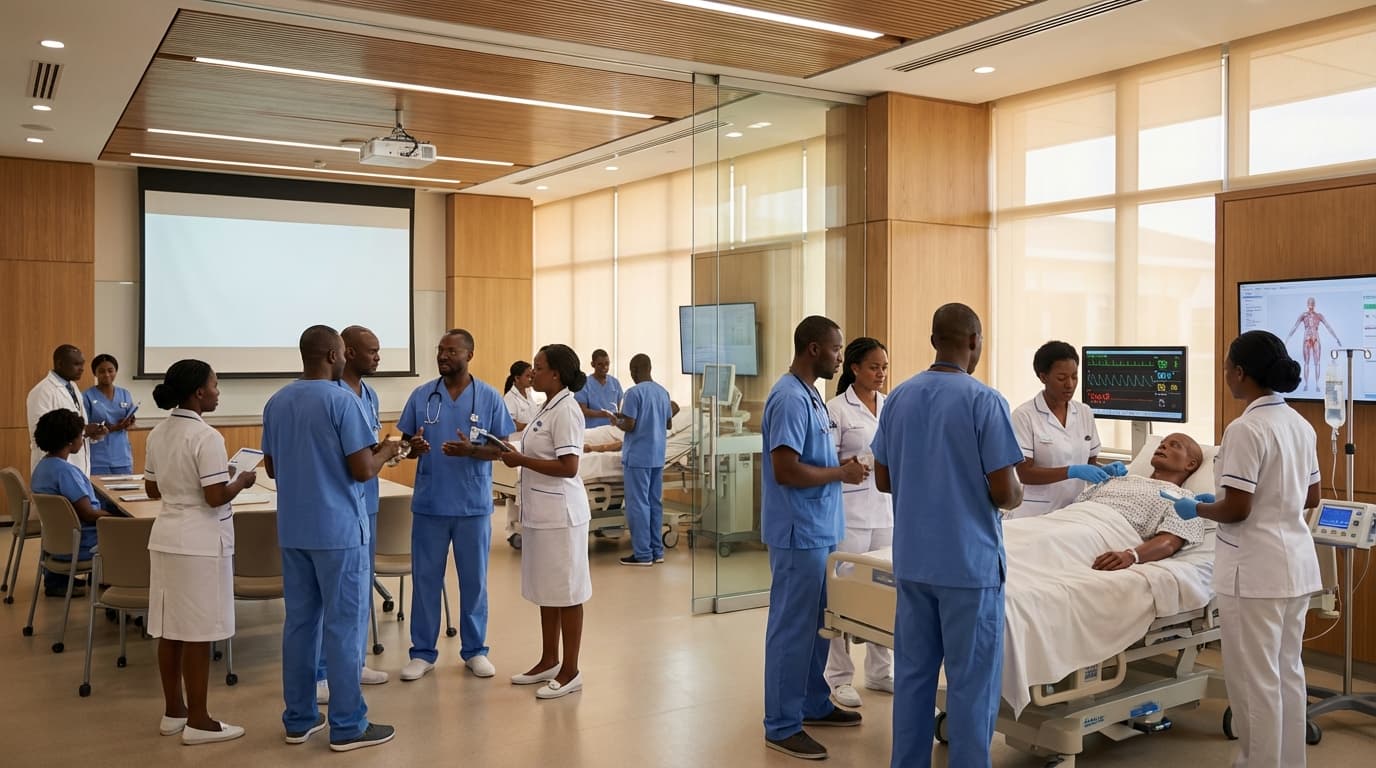
Equipment Training & Education in Sierra Leone
Engineering Excellence & Technical Support
Comprehensive equipment training and certification programs High-standard technical execution following OEM protocols and local regulatory frameworks.
Empowering Local Technicians: Hands-on Equipment Mastery
Delivering intensive, practical training programs for local technicians on the safe and efficient operation and maintenance of critical infrastructure equipment, including excavators, generators, and water purification systems. Focus on skill development to foster self-sufficiency and reduce reliance on external expertise.
Bridging the Knowledge Gap: Digital Learning Platforms for Remote Access
Implementing accessible digital learning modules and virtual reality simulations for equipment training, overcoming geographical barriers and ensuring consistent access to up-to-date technical knowledge for professionals across Sierra Leone. This includes online courses, interactive guides, and remote expert support.
Train-the-Trainer Excellence: Building Sustainable Capacity
Establishing a robust 'Train-the-Trainer' program for local educators and supervisors. This initiative equips them with the pedagogical skills and technical expertise to independently deliver high-quality equipment training, creating a sustainable model for ongoing knowledge transfer and skill enhancement within Sierra Leone's workforce.
What Is Equipment Training & Education In Sierra Leone?
Equipment training and education in Sierra Leone refers to the systematic provision of knowledge, skills, and practical experience necessary for the safe, efficient, and effective operation, maintenance, and troubleshooting of various types of equipment. This encompasses a broad spectrum of machinery, from agricultural implements and heavy construction machinery to laboratory apparatus, medical devices, and information technology hardware. The objective is to enhance human capital by equipping individuals with the competencies required to interact with and manage equipment within their respective professional domains, thereby improving productivity, safety, and the longevity of assets. The training methodologies employed can range from theoretical classroom instruction and simulator-based learning to on-the-job mentorship and hands-on practical application.
| Who Needs Equipment Training & Education? | Typical Use Cases | ||||||||||||
|---|---|---|---|---|---|---|---|---|---|---|---|---|---|
| Agricultural Workers & Farmers: Individuals operating tractors, plows, harvesters, irrigation systems, and other farm machinery. | Increasing crop yields through optimized machinery operation, reducing post-harvest losses via proper equipment handling, and ensuring farm safety. | Construction Workers & Operators: Personnel managing excavators, bulldozers, cranes, concrete mixers, and other heavy-duty construction equipment. | Facilitating infrastructure development (roads, buildings, bridges) with efficiency and safety, minimizing equipment downtime, and adhering to construction site regulations. | Healthcare Professionals: Doctors, nurses, and technicians using medical diagnostic equipment (e.g., X-ray machines, ultrasound, laboratory analyzers) and therapeutic devices. | Accurate diagnosis and treatment of diseases, ensuring patient safety during medical procedures, and maintaining the operational readiness of critical healthcare infrastructure. | Industrial & Manufacturing Personnel: Machine operators, technicians, and engineers in factories and production facilities. | Enhancing production efficiency, improving product quality, reducing manufacturing defects, and ensuring workplace safety in industrial settings. | IT Professionals & Technicians: Individuals responsible for installing, configuring, and maintaining computer hardware, servers, networking equipment, and audiovisual systems. | Ensuring reliable network connectivity, efficient data management, seamless audiovisual presentations, and timely resolution of hardware-related IT issues. | Mining & Extractive Industry Workers: Operators of drills, haul trucks, conveyor belts, and processing machinery in mining operations. | Safely and efficiently extracting natural resources, minimizing environmental impact through controlled machinery operation, and preventing accidents in hazardous environments. | Logistics & Transportation Personnel: Forklift operators, warehouse staff, and mechanics involved in handling and maintaining transport equipment. | Optimizing goods movement, ensuring efficient warehouse operations, and maintaining the safety and roadworthiness of transport fleets. |
Key Components of Equipment Training & Education
- Operational Proficiency: Training focused on the correct procedures for starting, operating, adjusting, and shutting down equipment, including understanding control interfaces and safety protocols.
- Preventive Maintenance: Education on routine checks, lubrication, cleaning, and minor repairs to avert breakdowns and extend equipment lifespan.
- Troubleshooting and Diagnostics: Instruction in identifying, diagnosing, and rectifying common faults and malfunctions.
- Safety Procedures: Comprehensive training on personal protective equipment (PPE), hazard identification, emergency response, and regulatory compliance related to equipment use.
- Technical Documentation Interpretation: Skills development in reading and understanding manuals, schematics, and technical specifications.
- Advanced Techniques: Specialized training for operating complex or highly technical equipment, often involving advanced software or diagnostic tools.
Who Needs Equipment Training & Education In Sierra Leone?
Equipment training and education are crucial for a wide range of individuals and organizations in Sierra Leone to ensure safe, efficient, and productive use of machinery and tools across various sectors. This investment leads to improved operational performance, reduced accidents, extended equipment lifespan, and enhanced workforce skills.
| Department/Sector | Key Equipment Categories | Training Focus Areas | Typical Trainees |
|---|---|---|---|
| Ministry of Works and Public Assets | Heavy Construction Equipment (Bulldozers, Graders, Rollers), Road Maintenance Machinery, Vehicles | Operation, Maintenance, Safety Procedures, Fleet Management | Operators, Mechanics, Supervisors, Fleet Managers |
| Ministry of Mines and Mineral Resources | Mining Machinery (Excavators, Loaders, Trucks, Drills), Processing Equipment, Safety Gear | Safe Operation, Daily Checks, Preventative Maintenance, Emergency Response | Mine Operators, Mechanics, Supervisors, Safety Officers |
| Ministry of Agriculture and Food Security | Tractors, Harvesters, Irrigation Systems, Threshers, Food Processing Equipment | Efficient Operation, Calibration, Basic Maintenance, Crop-Specific Techniques | Farm Operators, Technicians, Cooperative Leaders, Extension Officers |
| Ministry of Health and Sanitation | Medical Imaging Equipment, Laboratory Analyzers, Surgical Instruments, Sterilizers, Generators | Safe Use, Calibration, Routine Maintenance, Infection Control, Troubleshooting | Biomedical Technicians, Nurses, Doctors, Lab Technicians |
| Ministry of Transport and Aviation | Commercial Vehicles (Trucks, Buses), Forklifts, Loading Equipment, Airport Ground Support Equipment | Defensive Driving, Vehicle Inspection, Load Securing, Basic Mechanics, Safety Regulations | Drivers, Mechanics, Logistics Staff, Airport Ground Crew |
| Ministry of Education (Technical/Vocational) | Industrial Machinery (Lathes, Welders, Presses), Workshop Tools, IT Equipment, Laboratory Equipment | Fundamentals of Operation, Safety Standards, Hands-on Skill Development, Industry Best Practices | Students, Instructors, Technical Staff |
| Private Construction Companies | Cranes, Concrete Equipment, Scaffolding, Power Tools, Surveying Instruments | Advanced Operation Techniques, Site Safety, Equipment Inspection, Project-Specific Training | Crane Operators, Foremen, Site Engineers, Skilled Laborers |
| Mining Concessionaires | Drilling Rigs, Haul Trucks, Dump Trucks, Mobile Crushers, Conveyor Systems | Specialized Operation, High-Risk Safety Protocols, Preventative Maintenance, Productivity Optimization | Experienced Operators, Mechanical Engineers, Maintenance Supervisors |
| NGOs (e.g., WaterAid, World Vision) | Water Pumps, Generators, Solar Panels, Agricultural Tools, Basic Construction Equipment | Field Operation, Basic Troubleshooting, Community-Level Maintenance, Safety in Remote Areas | Project Staff, Community Technicians, Local Beneficiaries |
Target Customers and Departments for Equipment Training & Education in Sierra Leone
- {"title":"Government Ministries and Agencies","description":"Responsible for infrastructure development, public services, and regulatory oversight. They manage and utilize a vast array of heavy machinery, vehicles, and specialized equipment."}
- {"title":"Mining Companies","description":"A dominant sector in Sierra Leone, requiring extensive training on heavy-duty excavators, drills, haul trucks, processing equipment, and safety protocols."}
- {"title":"Agricultural Cooperatives and Large-Scale Farms","description":"Focus on training for tractors, harvesters, irrigation systems, processing machinery, and maintenance for improved yields and efficiency."}
- {"title":"Construction and Infrastructure Development Firms","description":"Require training for earthmoving equipment, cranes, concrete mixers, surveying tools, and scaffolding for building and road construction projects."}
- {"title":"Transportation and Logistics Companies","description":"Involves training for drivers, mechanics, and logistics personnel on operating and maintaining trucks, buses, forklifts, and loading/unloading equipment."}
- {"title":"Healthcare Institutions","description":"Training for biomedical technicians and healthcare professionals on operating and maintaining medical equipment such as X-ray machines, MRI scanners, laboratory equipment, and sterilizers."}
- {"title":"Educational Institutions (Technical Colleges & Universities)","description":"For students and faculty to gain theoretical and practical knowledge of various industrial and vocational equipment, preparing them for the workforce."}
- {"title":"Non-Governmental Organizations (NGOs)","description":"Organizations involved in development projects, disaster relief, and community services often require training on specialized equipment relevant to their operations (e.g., water purification systems, generators, agricultural tools)."}
- {"title":"Small and Medium Enterprises (SMEs)","description":"Across various sectors like manufacturing, workshops, and service industries, SMEs need training on tools and machinery relevant to their specific business operations."}
- {"title":"Individual Entrepreneurs and Skilled Tradespeople","description":"Mechanics, electricians, artisans, and small business owners who use specialized tools and machinery in their daily work."}
Equipment Training & Education Process In Sierra Leone
This document outlines the standard workflow for equipment training and education processes within Sierra Leone. It details the steps involved from the initial inquiry to the successful execution of training programs, ensuring efficient resource allocation and effective knowledge transfer. The process emphasizes clear communication, documented needs assessment, and standardized training delivery.
| Phase | Key Activities | Responsible Parties | Key Deliverables | Timeline (Typical) |
|---|---|---|---|---|
| Receive training request from client/department. Clarify initial scope and objectives. Schedule introductory meeting. | Requesting Entity, Training Coordinator | Initial understanding of training need, Meeting scheduled | 1-3 Days |
| Conduct detailed analysis of skill gaps, existing knowledge, target audience, and specific equipment. Identify training objectives and desired outcomes. | Training Coordinator, Subject Matter Experts (SMEs), Client Representatives | Detailed Needs Assessment Report, Defined Training Objectives | 3-7 Days |
| Develop a comprehensive proposal outlining training objectives, scope, curriculum overview, methodology, duration, proposed trainers, budget, and expected outcomes. | Training Coordinator, SMEs | Formal Training Proposal | 5-10 Days |
| Submit proposal for review and approval by relevant stakeholders. Secure necessary budget allocation for the training program. | Management, Finance Department, Requesting Entity | Approved Proposal, Allocated Budget | 7-14 Days |
| Develop detailed curriculum, training modules, presentations, hands-on exercises, assessments, and participant materials. Ensure materials are culturally relevant and in appropriate language(s). | SMEs, Curriculum Developers, Instructional Designers | Detailed Curriculum, Training Manuals, Presentations, Assessment Tools | 14-30 Days |
| Identify and select qualified trainers based on expertise and experience. Provide trainers with all necessary materials and an orientation on the training objectives and methodology. | Training Coordinator, HR Department | List of Qualified Trainers, Trainer Briefing Materials | 3-7 Days |
| Finalize training dates, venue, and equipment availability. Arrange for participant travel, accommodation, and catering if applicable. Confirm participant registration. | Training Coordinator, Logistics Department | Training Schedule, Logistics Plan, Confirmed Participant List | 5-10 Days |
| Conduct the training sessions as per the schedule. Employ effective training methodologies, including lectures, demonstrations, hands-on practice, and Q&A sessions. | Trainers, Participants | Delivered Training Sessions | Variable (based on training duration) |
| Administer pre and post-training assessments to measure knowledge acquisition. Collect feedback from participants and trainers on the training effectiveness and relevance. Conduct on-the-job observation if possible. | Trainers, Training Coordinator, Participants | Assessment Results, Participant Feedback Forms, Trainer Feedback | 2-5 Days (post-training) |
| Provide ongoing support to participants, answer queries, and offer refresher sessions if needed. Monitor the application of learned skills in the workplace. | Training Coordinator, SMEs, Support Team | Support Mechanism in Place, Follow-up Reports | Ongoing |
| Compile a final report summarizing the training program, including objectives, activities, participant attendance, assessment results, feedback, lessons learned, and recommendations for future training. Archive all relevant documentation. | Training Coordinator | Final Training Report, Archived Documentation | 7-14 Days (post-evaluation) |
Equipment Training & Education Process Workflow
- Inquiry & Initial Contact
- Needs Assessment & Requirement Gathering
- Training Proposal Development
- Approval & Budget Allocation
- Curriculum Design & Material Development
- Trainer Selection & Preparation
- Scheduling & Logistics
- Training Execution & Delivery
- Assessment & Evaluation
- Post-Training Support & Follow-up
- Documentation & Reporting
Equipment Training & Education Cost In Sierra Leone
The cost of equipment training and education in Sierra Leone is a multifaceted issue influenced by a variety of pricing factors. These factors dictate the range of expenses for individuals and organizations seeking to acquire specialized skills or knowledge related to various types of equipment. Understanding these elements is crucial for budgeting and strategic planning. Key pricing factors include the type of equipment being trained on, the complexity and duration of the training program, the expertise and reputation of the training provider, the location of the training (urban vs. rural), and the availability of training resources and materials. Specialized equipment, such as heavy machinery or advanced medical devices, naturally commands higher training costs due to the inherent complexity and the need for specialized instructors and simulators. Similarly, longer and more in-depth courses will have a higher overall price point than short introductory sessions. The reputation and accreditation of the training institution also play a significant role, with well-established and certified providers often charging a premium for their recognized quality and industry connections. Geographic location can impact costs due to logistical considerations and local market dynamics. Finally, the inclusion of hands-on practice, materials, and certification examinations will contribute to the final cost. Ranges are generally presented in the local currency, the Sierra Leonean Leone (SLL).
| Training Category | Estimated Cost Range (SLL) | Notes |
|---|---|---|
| Basic Operational Skills (e.g., standard office equipment, basic tools) | 50,000 - 250,000 | Short courses, often group-based, focusing on fundamental operations. |
| Intermediate Skills (e.g., basic automotive repair, construction tools, IT hardware) | 200,000 - 800,000 | Medium-duration courses, may include practical sessions, for semi-skilled roles. |
| Advanced Technical Skills (e.g., heavy machinery operation, specialized welding, medical equipment maintenance) | 750,000 - 3,000,000+ | In-depth training, often with extensive hands-on practice, simulators, and experienced instructors. May include international certification components. |
| Specialized Software/Digital Training (e.g., CAD/CAM, advanced data analysis software) | 300,000 - 1,500,000 | Focuses on software proficiency, can vary greatly based on software complexity and vendor. |
| Safety and Compliance Training (e.g., OSHA equivalents, hazardous materials handling) | 100,000 - 600,000 | Often mandatory for specific industries, can be standalone or integrated. |
| On-site/Corporate Training | Negotiable (often per-day or per-group rates) | Tailored programs delivered at the client's premises, costs vary significantly based on group size and training duration. |
Key Pricing Factors for Equipment Training & Education in Sierra Leone
- Type and Complexity of Equipment
- Duration and Depth of Training Program
- Provider's Reputation and Accreditation
- Location of Training Facility
- Availability of Training Resources and Materials
- Inclusion of Practical/Hands-on Sessions
- Certification and Examination Fees
Affordable Equipment Training & Education Options
Investing in proper equipment training and education is crucial for maximizing efficiency, ensuring safety, and extending the lifespan of your machinery. Fortunately, there are numerous affordable options available, and understanding value bundles and cost-saving strategies can significantly reduce your investment. This guide explores how to get the most out of your training budget without compromising on quality.
| Strategy | Description | Cost-Saving Impact |
|---|---|---|
| Value Bundles | Combining multiple training modules, courses, or including training with equipment purchases for a discounted overall price. | Significant savings compared to purchasing individual training components. |
| Volume Discounts | Negotiating lower per-person rates when enrolling a larger group of employees in a training program. | Reduced per-unit cost for training. |
| Early Bird Registration | Signing up for courses or workshops well in advance of the start date, often with a reduced fee. | Small to moderate savings. |
| Leveraging Free Resources | Utilizing manufacturer manuals, online tutorials, and industry forums for foundational knowledge before investing in formal training. | Reduces the need for basic instruction, allowing formal training to focus on advanced topics. |
| Remote/Online Training | Opting for virtual learning environments to avoid travel, accommodation, and venue costs associated with in-person training. | Substantial savings on associated travel and logistical expenses. |
| Subscription Models | Some platforms offer monthly or annual subscriptions for access to a library of training content, allowing continuous learning. | Cost-effective for ongoing training needs and for multiple users. |
| Government Grants & Subsidies | Researching and applying for available grants or subsidies aimed at workforce development and skills training. | Can cover a significant portion or even the entirety of training costs. |
| Partnerships with Training Providers | Establishing long-term relationships with training institutions to negotiate preferred rates and customized programs. | Potentially ongoing discounts and tailored solutions. |
Affordable Equipment Training & Education Options
- Online Courses & Webinars: Accessible, flexible, and often more budget-friendly than in-person sessions.
- Manufacturer-Provided Training: Many equipment manufacturers offer training programs, sometimes included with purchase or at discounted rates.
- Community Colleges & Vocational Schools: Offer practical, hands-on training for various equipment types.
- Industry Associations & Certifications: Provide specialized training and recognized credentials.
- On-the-Job Training & Mentorship: Leverage experienced staff to train newer employees.
- Train-the-Trainer Programs: Equip internal personnel to deliver training, creating long-term cost savings.
- Rental Equipment Training: Some rental companies offer basic operational training with their equipment.
Verified Providers In Sierra Leone
Navigating the healthcare landscape in Sierra Leone can be challenging, but identifying verified providers is crucial for ensuring quality and trustworthy medical services. Franance Health stands out as a premier organization in this regard. Their commitment to rigorous credentialing, ethical practices, and patient-centered care makes them a leading choice for individuals seeking reliable healthcare solutions in the region. Understanding their verification process and the value they bring is key to making informed decisions about your health.
| Key Verification Criteria | Franance Health's Approach |
|---|---|
| Medical Licensing & Certifications | Strict validation of all current and relevant professional licenses and board certifications. |
| Professional Experience & Expertise | Thorough review of medical history, specializations, and demonstrated clinical competence. |
| Adherence to Ethical Guidelines | Assessment of commitment to patient privacy, informed consent, and professional conduct. |
| Facility Standards & Equipment | Verification of infrastructure, equipment, and hygiene protocols for safe and effective care. |
| Patient Feedback & Reputation | Consideration of patient satisfaction scores and established community trust. |
Why Franance Health is the Best Choice:
- Rigorous Credentialing Process: Franance Health meticulously vets all their healthcare professionals and facilities, ensuring they meet and exceed established standards for medical expertise, licensing, and operational integrity.
- Commitment to Quality Care: Beyond basic credentials, Franance Health prioritizes providers who demonstrate a dedication to delivering high-quality, evidence-based medical treatments and exceptional patient experiences.
- Ethical Standards and Transparency: Franance Health upholds the highest ethical standards. Their transparent approach to provider selection and service delivery builds trust and confidence among patients.
- Comprehensive Service Offerings: Whether seeking primary care, specialized treatments, or emergency services, Franance Health connects you with a network of verified providers equipped to meet a wide range of healthcare needs.
- Patient Empowerment: By providing access to verified and reputable healthcare options, Franance Health empowers individuals to make informed decisions about their well-being and access the care they deserve.
Scope Of Work For Equipment Training & Education
This Scope of Work (SOW) outlines the training and education services to be provided for the specified equipment. The objective is to ensure proficient and safe operation, maintenance, and troubleshooting of the equipment by designated personnel. The SOW details the training objectives, curriculum, delivery methods, technical deliverables, and standard specifications.
| Training Module | Topics Covered | Target Audience | Duration (Hours) | Delivery Method |
|---|---|---|---|---|
| Module 1: Introduction to Equipment | Overview, purpose, system architecture, safety features, basic controls. | All Operators, Maintenance Technicians | 4 | Classroom Lecture, Demonstrations |
| Module 2: Operation & Control | Startup/shutdown procedures, parameter settings, operational modes, data logging, user interface navigation. | Operators, Supervisors | 8 | Hands-on Practice, Scenarios |
| Module 3: Routine Maintenance | Preventive maintenance schedules, lubrication, cleaning, inspection points, basic calibration. | Maintenance Technicians, Senior Operators | 12 | Hands-on Workshop, Practical Exercises |
| Module 4: Troubleshooting & Fault Diagnosis | Common error codes, diagnostic tools, symptom-based troubleshooting, basic repair procedures. | Maintenance Technicians, Lead Operators | 16 | Case Studies, Simulated Faults |
| Module 5: Advanced Features & Optimization | Specialized functions, performance tuning, integration with other systems (if applicable). | Senior Technicians, Engineers | 8 | Advanced Workshops, Q&A Sessions |
Key Training Objectives
- Develop a comprehensive understanding of the equipment's operational principles and functionalities.
- Equip personnel with the skills for safe and efficient day-to-day operation.
- Enable routine maintenance procedures to ensure optimal equipment performance and longevity.
- Provide troubleshooting expertise to identify and resolve common operational issues.
- Familiarize trainees with safety protocols and emergency procedures related to the equipment.
Service Level Agreement For Equipment Training & Education
This Service Level Agreement (SLA) outlines the performance standards and guarantees for the Equipment Training & Education services provided by [Your Company Name] (hereinafter referred to as "Provider") to [Client Company Name] (hereinafter referred to as "Client"). This SLA covers response times for support requests and uptime guarantees for access to training materials and platforms.
| Service Category | Uptime Guarantee | Planned Maintenance Window | Response Time (Business Hours) | Response Time (24/7 Support - if applicable) | Example of Severity Levels |
|---|---|---|---|---|---|
| Training Platform Access | 99.5% Uptime | Saturdays 02:00 - 06:00 UTC (4 hours/week maximum) | Within 4 business hours for standard inquiries | N/A (unless 24/7 support is contracted separately) | Severity 1: Complete platform outage. Severity 2: Significant feature malfunction. Severity 3: Minor bug or content error. |
| Technical Support for Platform | N/A (Covered by Platform Uptime) | Scheduled outside of peak training hours | Within 2 business hours for technical issues | Within 1 business hour for critical technical issues (if 24/7 support is contracted) | Severity 1: Platform inaccessible. Severity 2: Core functionality unusable. Severity 3: Non-critical technical issue. |
| Content Access & Retrieval | Covered by Training Platform Uptime | N/A | Within 8 business hours for content-related queries | N/A | Severity 1: Cannot access any training modules. Severity 2: Specific module or lesson inaccessible. Severity 3: Formatting or minor content display issue. |
| Trainer/Educator Availability (for scheduled sessions) | N/A (Schedules managed separately) | As per agreed training schedule | Within 1 business hour for urgent schedule changes or requests | N/A | Severity 1: Trainer no-show for scheduled session. Severity 2: Urgent need to reschedule a session. Severity 3: Request for additional materials. |
Key Service Definitions
- Support Request: Any formal communication initiated by the Client to the Provider requesting assistance, clarification, or issue resolution related to the training services.
- Training Platform: The online system, software, or portal used to deliver and access training content, including but not limited to e-learning modules, webinars, and simulation tools.
- Uptime: The percentage of time the Training Platform is accessible and fully functional for the Client's authorized users.
- Downtime: The percentage of time the Training Platform is inaccessible or not fully functional due to planned maintenance or unplanned outages.
- Response Time: The maximum time allowed for the Provider to acknowledge receipt of a Support Request and initiate an investigation or provide a preliminary resolution.
- Resolution Time: The maximum time allowed for the Provider to fully resolve a Support Request, dependent on the severity and complexity of the issue.
Frequently Asked Questions

Ready when you are
Let's scope your Equipment Training & Education in Sierra Leone project in Sierra Leone.

Scaling healthcare logistics and technical systems across the entire continent.