
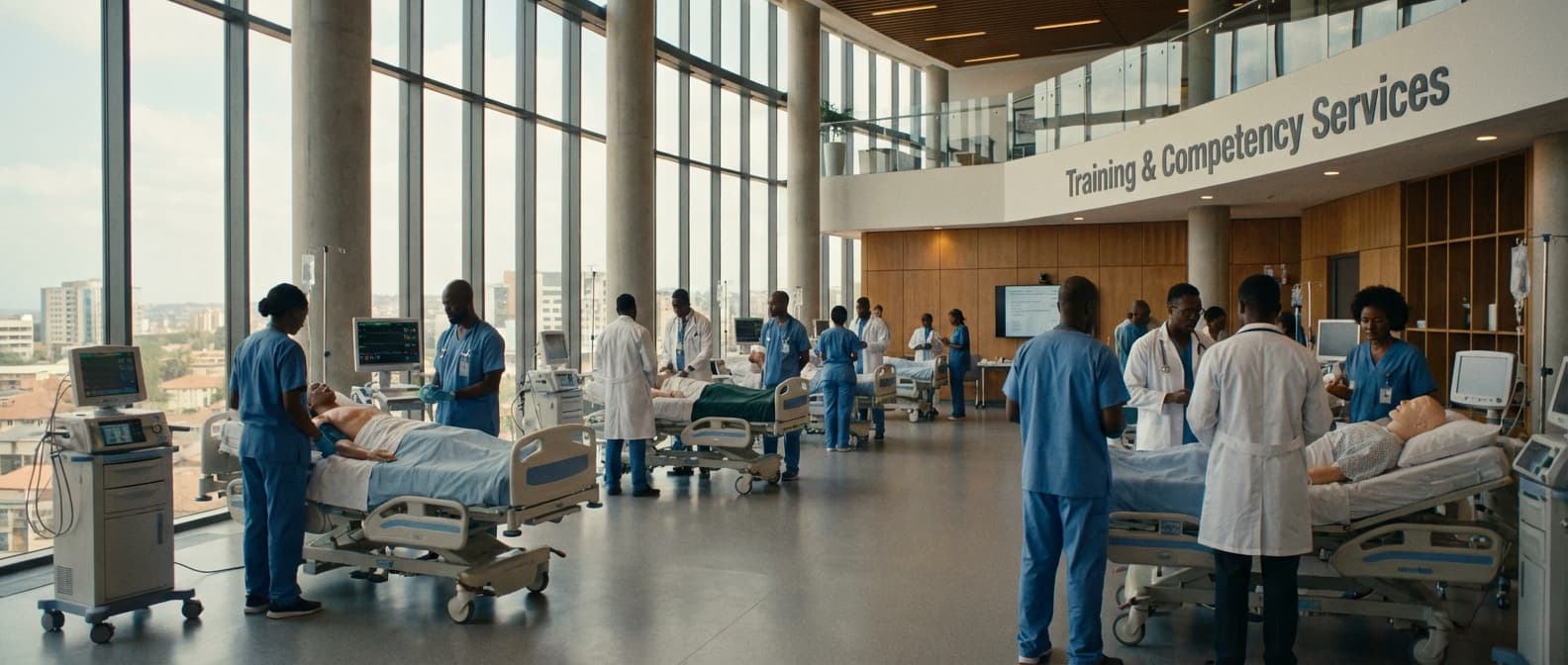
Ventilator User Training Service (Nurses) in Sierra Leone
Engineering Excellence & Technical Support
Ventilator User Training Service (Nurses) High-standard technical execution following OEM protocols and local regulatory frameworks.
Seamless Ventilator Setup & Pre-Use Checks
Master rapid and accurate ventilator setup for diverse patient needs in Sierra Leone. Learn crucial pre-use checks, alarm configuration, and patient connection protocols to ensure immediate and safe mechanical ventilation from the moment it's needed.
Intelligent Ventilator Monitoring & Parameter Adjustment
Gain expertise in real-time monitoring of key ventilation parameters (e.g., tidal volume, respiratory rate, PEEP). Understand how to interpret waveforms and adjust settings dynamically based on patient response and clinical context within Sierra Leone's healthcare environment.
Proactive Troubleshooting & Emergency Response
Develop confidence in identifying and resolving common ventilator alarms and technical issues. Learn critical troubleshooting steps and emergency protocols to maintain continuous patient support and minimize disruption during challenging situations in Sierra Leone.
What Is Ventilator User Training Service (Nurses) In Sierra Leone?
Ventilator User Training Service (Nurses) in Sierra Leone is a specialized educational program designed to equip registered nurses with the necessary knowledge and practical skills to safely and effectively operate mechanical ventilators in clinical settings. This service addresses the critical need for skilled healthcare professionals capable of managing patients requiring respiratory support, thereby improving patient outcomes and reducing morbidity and mortality associated with respiratory failure. The training focuses on the principles of mechanical ventilation, ventilator modes, patient monitoring, troubleshooting, and emergency management, tailored to the context of healthcare infrastructure and resource availability in Sierra Leone.
| Who Needs This Service | Typical Use Cases | ||||
|---|---|---|---|---|---|
| Registered Nurses working in critical care units (ICUs), emergency departments, operating rooms, and other settings where mechanical ventilation is employed. | Management of patients with acute respiratory failure due to conditions such as pneumonia, ARDS, sepsis, trauma, and post-operative complications. | Support for patients undergoing surgical procedures requiring airway management and respiratory support. | Stabilization of patients experiencing respiratory distress or arrest. | Long-term mechanical ventilation support for chronic respiratory conditions in specific healthcare facilities. | Deployment in response to public health emergencies or outbreaks requiring advanced respiratory support capacity. |
Key Components of Ventilator User Training Service (Nurses)
- Theoretical foundations of mechanical ventilation, including respiratory physiology and pathophysiology.
- Principles of ventilator operation, including set-up, calibration, and pre-use checks.
- Understanding and application of various ventilation modes (e.g., Volume Control, Pressure Control, SIMV, CPAP).
- Patient assessment and selection for mechanical ventilation.
- Setting appropriate ventilator parameters based on patient condition and clinical goals.
- Monitoring of patient response to ventilation, including physiological parameters and ventilator waveforms.
- Troubleshooting common ventilator alarms and technical issues.
- Management of ventilator-associated complications (e.g., VAP, barotrauma).
- Weaning protocols and patient extubation procedures.
- Infection control practices related to ventilator use and circuit management.
- Ethical considerations and patient advocacy in critical care ventilation.
- Emergency procedures and escalation of care.
- Hands-on practical sessions using actual ventilators and simulated scenarios.
Who Needs Ventilator User Training Service (Nurses) In Sierra Leone?
Ventilator user training services are crucial for healthcare professionals in Sierra Leone to ensure the safe and effective use of mechanical ventilators. This training empowers nurses with the knowledge and skills to operate, monitor, and troubleshoot ventilators, ultimately improving patient outcomes in critical care settings. The demand for such services is high across various healthcare facilities, particularly those equipped with or intending to acquire ventilators for managing respiratory distress.
| Customer Type | Primary Department(s) Requiring Training | Rationale for Training |
|---|---|---|
| Government Hospitals | Intensive Care Unit (ICU), Emergency Department, Respiratory Therapy Department | Essential for managing critical respiratory illnesses, post-operative care, and emergency situations. Government hospitals often serve a large patient population with limited resources, making efficient ventilator use paramount. |
| Mission Hospitals | Intensive Care Unit (ICU), High Dependency Unit (HDU), Pediatric/Neonatal Units | Often provide critical care services in underserved areas. Training ensures their nursing staff can competently manage patients requiring mechanical ventilation, particularly vulnerable populations like neonates and children. |
| Private Hospitals | Intensive Care Unit (ICU), Surgical Wards, Emergency Department | Focus on providing high-quality care. Training equips nurses to utilize advanced technology like ventilators effectively, enhancing their competitive edge and patient safety standards. |
| Tertiary/Teaching Hospitals | Intensive Care Unit (ICU), Anesthesia Department, Respiratory Medicine | Serve as referral centers for complex cases. Comprehensive training is vital for nurses to manage diverse and challenging ventilation scenarios and to contribute to the training of junior staff. |
| NGO Healthcare Facilities | Intensive Care Unit (ICU), Emergency Medicine, General Wards with critical care capacity | Often operate in challenging environments. Training ensures their nursing teams can provide essential critical care, including ventilator management, to communities they serve. |
Target Customers and Departments for Ventilator User Training Service (Nurses) in Sierra Leone
- Hospitals (Government, Mission, Private)
- Tertiary Care Centers
- University Teaching Hospitals
- District Hospitals
- Regional Hospitals
- Emergency Departments
- Intensive Care Units (ICUs)
- High Dependency Units (HDUs)
- Pediatric Intensive Care Units (PICUs)
- Neonatal Intensive Care Units (NICUs)
- COVID-19 Treatment Centers (if applicable)
- Maternal and Child Health Centers with critical care capabilities
- Non-Governmental Organization (NGO) run healthcare facilities with critical care services
- Military Hospitals (if applicable)
Ventilator User Training Service (Nurses) Process In Sierra Leone
This document outlines the workflow for the Ventilator User Training Service (Nurses) in Sierra Leone, detailing the process from initial inquiry to the successful execution of training sessions. The service aims to equip nurses with the necessary knowledge and skills to safely and effectively operate and manage ventilators in clinical settings, thereby improving patient care and outcomes.
| Stage | Activity | Responsible Party | Key Outputs | Timeline (Indicative) |
|---|---|---|---|---|
| Inquiry and Needs Assessment | Healthcare facility or Ministry of Health expresses interest. Initial contact via email, phone, or official letter. Discussion to understand training needs (number of nurses, specific ventilator models, existing skill levels, preferred dates). Site visit or remote consultation if required. | Inquiring Party, Training Service Provider (TSP) | Documented training needs, initial understanding of scope. | 1-2 Weeks |
| Proposal Development and Approval | TSP develops a detailed training proposal including curriculum, duration, trainer qualifications, equipment requirements (if TSP provides), budget, and schedule. Proposal submitted to the inquiring party for review. Feedback incorporated, negotiations if needed. Formal approval and contract/agreement signing. | Training Service Provider (TSP), Inquiring Party | Approved training proposal, signed contract/agreement. | 2-3 Weeks |
| Logistics and Planning | TSP confirms training dates, venue, and participant list with the inquiring party. Arrangements for trainers' travel and accommodation. Confirmation of available training ventilators (either provided by TSP or facility). Preparation of training materials (presentations, manuals, case studies). Communication of pre-training requirements to participants. | Training Service Provider (TSP), Inquiring Party | Confirmed schedule and venue, trained participants list, prepared training materials, logistical arrangements. | 2-4 Weeks (concurrent with proposal approval) |
| Training Delivery | Conduct theoretical sessions (e.g., ventilator principles, modes, settings, patient monitoring, troubleshooting). Hands-on practical sessions using training ventilators. Simulation exercises and case study discussions. Knowledge assessment (quizzes, exams). Skill assessment (practical demonstrations). Feedback collection from participants. | Training Service Provider (TSP) Trainers, Participating Nurses | Delivered training sessions, documented participant attendance, assessment results, participant feedback. | Varies based on curriculum (e.g., 3-5 days per cohort) |
| Post-Training Support and Evaluation | Issuance of certificates of completion. Provision of post-training support (e.g., answering queries, refresher resources). TSP collects feedback on the training effectiveness and identifies areas for improvement. Final report submitted to the inquiring party, including training outcomes, assessments, and recommendations. Follow-up evaluation (e.g., 3-6 months later) to assess sustained impact. | Training Service Provider (TSP), Inquiring Party | Certificates of completion, post-training support, final training report, evaluation findings. | Ongoing (e.g., 1-2 Weeks for initial report, follow-up evaluation later) |
Key Stages of the Ventilator User Training Service Workflow
- Inquiry and Needs Assessment
- Proposal Development and Approval
- Logistics and Planning
- Training Delivery
- Post-Training Support and Evaluation
Ventilator User Training Service (Nurses) Cost In Sierra Leone
The cost of ventilator user training services for nurses in Sierra Leone can vary significantly due to several influencing factors. These include the duration and intensity of the training, the qualifications and experience of the trainers, the location of the training (whether on-site at a hospital or a dedicated training facility), and the number of participants. Additionally, the specific curriculum covered, the provision of training materials, and whether certification is included will also impact the overall price. The training might also incorporate practical simulations and access to specialized equipment, which can add to the cost.
| Training Component | Estimated Cost Range (SLL) |
|---|---|
| Basic Ventilator Operation & Safety (1-2 Days) | 1,500,000 - 3,000,000 |
| Comprehensive Ventilator Management (3-5 Days) | 3,000,000 - 7,500,000 |
| Advanced Ventilator Support & Troubleshooting (2-3 Days) | 2,500,000 - 6,000,000 |
| On-site Training (Per Day, Group Rate) | 500,000 - 1,500,000 |
| External Trainer Fee (Per Day) | 750,000 - 2,000,000 |
| Certification Fee (Per Nurse) | 250,000 - 750,000 |
Key Pricing Factors for Ventilator User Training in Sierra Leone:
- Training Duration and Intensity
- Trainer Qualifications and Experience
- Training Location (On-site vs. Off-site)
- Number of Participants
- Curriculum Scope and Depth
- Inclusion of Training Materials
- Certification Fees
- Use of Simulation Equipment
Affordable Ventilator User Training Service (Nurses) Options
This document outlines affordable ventilator user training service options specifically designed for nurses. We aim to provide high-quality, cost-effective training solutions that enhance nurses' confidence and competence in managing ventilated patients. This section details our value bundles and cost-saving strategies to make essential training accessible and budget-friendly.
| Strategy | Description | Benefit |
|---|---|---|
| Group Discounts | Reduced per-nurse cost when multiple nurses from the same facility register for training. | Significant cost savings for departments or entire units. |
| Blended Learning Approach | Combining online self-paced modules with shorter, in-person or virtual instructor-led sessions. | Reduces travel time and costs for instructors, and allows nurses to learn at their own pace. |
| Train-the-Trainer Programs | Equipping experienced nurses within your facility to deliver foundational training to their peers. | Long-term cost reduction and in-house expertise development. |
| Subscription Models | Monthly or annual access to our training platform and resources for a fixed fee. | Predictable budgeting and continuous learning opportunities. |
| Customized Training Solutions | Tailoring content and delivery methods to your facility's specific needs and equipment. | Maximizes relevance and effectiveness, avoiding unnecessary training components. |
| Simulation-Based Training Packages | Bundling online theory with hands-on simulation sessions (either in-person or using virtual reality where applicable). | Cost-effective way to practice critical skills in a safe environment. |
Value Bundles: Comprehensive Training Packages
- {"title":"Essentials Bundle","includes":["Introduction to Mechanical Ventilation","Basic Ventilator Modes (Volume Control, Pressure Control)","Ventilator Settings & Adjustments","Common Alarms and Troubleshooting"],"description":"A foundational package covering core ventilator concepts, basic modes, and common alarm management. Ideal for newly graduated nurses or those requiring a refresher."}
- {"title":"Advanced Bundle","includes":["All Essentials Bundle modules","Advanced Ventilator Modes (APRV, BiPAP)","Ventilator Weaning Principles","Hemodynamic Monitoring in Ventilated Patients","ARDS Management Strategies"],"description":"Expands upon the Essentials Bundle with more complex modes, weaning strategies, and patient monitoring. Suitable for experienced nurses or those in critical care settings."}
- {"title":"Specialty Bundle (e.g., Neonatal/Pediatric)","includes":["Population-specific ventilator principles","Appropriate equipment and settings","Developmental considerations","Case studies and simulations relevant to the specialty"],"description":"Tailored training for specific patient populations, focusing on the unique challenges and equipment used in neonatal or pediatric intensive care."}
- {"title":"On-Demand Learning Bundle","includes":["Access to all bundle content on a subscription basis","Regularly updated content","Online forums for peer-to-peer learning"],"description":"A flexible option providing access to a library of pre-recorded modules and resources that nurses can access at their convenience."}
Verified Providers In Sierra Leone
In Sierra Leone's burgeoning healthcare landscape, identifying trustworthy and competent healthcare providers is paramount for individuals seeking quality medical services. Franance Health stands out as a leading organization committed to upholding the highest standards of healthcare delivery. This document outlines Franance Health's credentials and the compelling reasons why they represent the best choice for your health needs in Sierra Leone.
| Key Aspect | Franance Health's Commitment | Benefit to Patients |
|---|---|---|
| Medical Expertise | Employing highly qualified and experienced medical professionals with diverse specializations. | Accurate diagnoses, effective treatment plans, and access to specialized care. |
| Infrastructure | Investing in modern medical equipment and maintaining well-equipped facilities. | Enhanced diagnostic capabilities, advanced treatment options, and comfortable care environments. |
| Patient Care | Prioritizing patient comfort, clear communication, and respectful treatment. | A positive and reassuring healthcare experience, leading to better patient outcomes and satisfaction. |
| Regulatory Adherence | Strict compliance with national health regulations and standards. | Ensured safety, quality assurance, and trustworthy medical practices. |
Franance Health Credentials and Why They Represent the Best Choice:
- Accreditation and Regulatory Compliance: Franance Health rigorously adheres to all national health regulations and standards set forth by the Ministry of Health and Sanitation in Sierra Leone. Their facilities and practices undergo regular inspections and audits to ensure compliance, providing patients with peace of mind.
- Highly Qualified and Experienced Medical Professionals: The organization boasts a team of extensively trained and experienced doctors, nurses, specialists, and allied health professionals. Many of their practitioners have international training and experience, bringing a wealth of knowledge and expertise to the local context.
- State-of-the-Art Facilities and Technology: Franance Health invests in modern medical equipment and technologies, enabling accurate diagnosis and effective treatment. This commitment to advanced infrastructure ensures that patients receive care comparable to international standards.
- Comprehensive Range of Services: From primary healthcare and preventative medicine to specialized surgical procedures and critical care, Franance Health offers a comprehensive suite of medical services. This holistic approach means patients can often receive all their necessary care within a single, trusted network.
- Patient-Centered Care Philosophy: At the core of Franance Health's operations is a deep commitment to patient well-being and satisfaction. They prioritize compassionate care, clear communication, and respect for patient autonomy, ensuring a positive and supportive healthcare experience.
- Commitment to Ethical Practices: Franance Health operates with the highest ethical standards, ensuring transparency, integrity, and confidentiality in all their dealings. Patients can trust that their care will be delivered with honesty and professionalism.
- Community Engagement and Health Education: Beyond direct medical services, Franance Health actively engages with communities through health education programs and outreach initiatives. This proactive approach aims to improve overall public health and empower individuals with knowledge about their well-being.
- Strong Network of Partnerships: Franance Health collaborates with various local and international healthcare organizations, research institutions, and governmental bodies. These partnerships enhance their capacity to deliver advanced care, access specialized expertise, and contribute to the broader health ecosystem of Sierra Leone.
- Accessibility and Affordability: While maintaining high standards, Franance Health strives to make quality healthcare accessible and affordable to a wide range of the population. They explore various payment options and work towards equitable access to their services.
- Continuous Improvement and Innovation: The organization is dedicated to continuous learning, research, and the adoption of innovative healthcare solutions. This forward-thinking approach ensures that patients benefit from the latest advancements in medical science and practice.
Scope Of Work For Ventilator User Training Service (Nurses)
This Scope of Work (SOW) outlines the requirements for providing comprehensive user training services for mechanical ventilators to registered nurses (RNs) at [Client Hospital Name]. The training will focus on the safe and effective operation, monitoring, and troubleshooting of [Specific Ventilator Model(s)]. The objective is to equip RNs with the necessary knowledge and skills to manage patients requiring mechanical ventilation. The training will include both theoretical and practical components, delivered by qualified and experienced instructors.
| Deliverable | Description | Standard Specification/Format | Acceptance Criteria |
|---|---|---|---|
| Training Curriculum | Detailed outline of all training modules, learning objectives, and duration for each module. | Document (PDF/Word). Curriculum must align with manufacturer guidelines and best clinical practices. | Curriculum approved by Client Hospital's Education Department and Clinical Leadership. |
| Training Materials | Participant handouts, presentations, case studies, and quick reference guides. | Digital format (PDF) and/or printed copies. Materials to be clear, concise, accurate, and visually engaging. | Materials reviewed and approved by the Client's designated representative for accuracy and relevance. |
| Hands-on Practice Scenarios | Realistic simulation scenarios utilizing the specific ventilator model(s). | Minimum of [X] distinct scenarios covering common clinical situations (e.g., initial setup, alarm management, mode changes, weaning). Scenarios to be performed on functional ventilator units or high-fidelity simulators. | Successful completion of all required scenarios by each participant, as assessed by the instructor. |
| Competency Assessment Tool | Pre- and post-training assessments to evaluate knowledge retention and skill acquisition. | Combination of multiple-choice questions, short answer questions, and practical skills checklist. Minimum passing score of [Y]% for written assessment and 100% for critical practical skills. | Successful completion of the competency assessment by each participant. |
| Training Attendance Records | Record of all participants who attended the training sessions. | Signed attendance sheets or digital tracking system. Includes participant name, employee ID, date, and session attended. | Complete and accurate attendance records for all training sessions. |
| Instructor Qualifications and Experience | Documentation verifying the qualifications and experience of the training instructors. | CVs/Resumes of instructors highlighting relevant clinical experience (e.g., critical care RN, respiratory therapist) and experience in ventilator use and training. Proof of manufacturer-specific training for the [Specific Ventilator Model(s)]. | Instructor qualifications and experience meet or exceed the requirements outlined in this SOW and are approved by the Client. |
| Training Report | Summary report of the training conducted, including participant numbers, assessment results, and any recommendations. | Document (PDF). Report to be delivered within [Z] days of training completion. | Report accepted by the Client's designated representative. |
| On-site Support (Optional) | Post-training support provided by the instructor to address immediate questions or issues. | Defined hours/days of on-site support post-training. Availability to answer questions and provide brief refresher guidance. | Client confirmation of the effectiveness and value of the on-site support. |
Key Training Modules
- Introduction to Mechanical Ventilation: Principles, indications, and contraindications.
- Ventilator Components and User Interface: Familiarization with the ventilator hardware, control panel, and display.
- Ventilator Modes and Settings: Understanding and application of common modes (e.g., Volume Control, Pressure Control, SIMV, PSV) and their associated parameters.
- Patient-Ventilator Synchrony: Strategies for optimizing patient comfort and reducing asynchrony.
- Monitoring and Assessment: Key physiological parameters to monitor, interpretation of ventilator graphics, and patient assessment during ventilation.
- Humidification and Temperature Control: Importance and application of humidification systems.
- Alarms and Troubleshooting: Recognition of common alarms, their causes, and appropriate interventions.
- Suctioning Techniques: Safe and effective airway suctioning procedures in ventilated patients.
- Ventilator Weaning: Principles and procedures for weaning patients from mechanical ventilation.
- Infection Control and Cleaning: Protocols for cleaning and disinfection of the ventilator and circuits.
- Emergency Procedures: Response to critical ventilation-related emergencies.
- Documentation: Accurate and timely recording of ventilator settings and patient responses.
Service Level Agreement For Ventilator User Training Service (Nurses)
This Service Level Agreement (SLA) outlines the agreed-upon performance standards for the Ventilator User Training Service provided to nurses. It details response times for support requests and uptime guarantees for the training platform and associated resources.
| Service Component | Uptime Guarantee | Response Time (Acknowledgement) | Response Time (Resolution) |
|---|---|---|---|
| Online Training Platform Access | 99.5% Monthly Uptime | Within 2 business hours during business hours | Within 8 business hours for critical issues, 24 business hours for non-critical issues |
| Technical Support (Live Chat/Email) | N/A (Service availability is dependent on platform uptime) | Within 4 business hours during business hours | Within 1 business day for troubleshooting guidance, escalated for platform issues |
| Access to Training Documentation & Resources | 99.5% Monthly Uptime | N/A (Resources are part of platform uptime) | N/A (Resources are part of platform uptime) |
| On-Demand Training Modules | 99.5% Monthly Uptime | N/A (Modules are part of platform uptime) | N/A (Modules are part of platform uptime) |
Key Performance Indicators (KPIs)
- Response Times: Timeliness of acknowledgements and resolutions for support requests.
- Uptime: Availability of the training platform and related services.
- Training Material Accessibility: Ease of access to all required training modules and documentation.
Frequently Asked Questions

Ready when you are
Let's scope your Ventilator User Training Service (Nurses) in Sierra Leone project in Sierra Leone.

Scaling healthcare logistics and technical systems across the entire continent.