
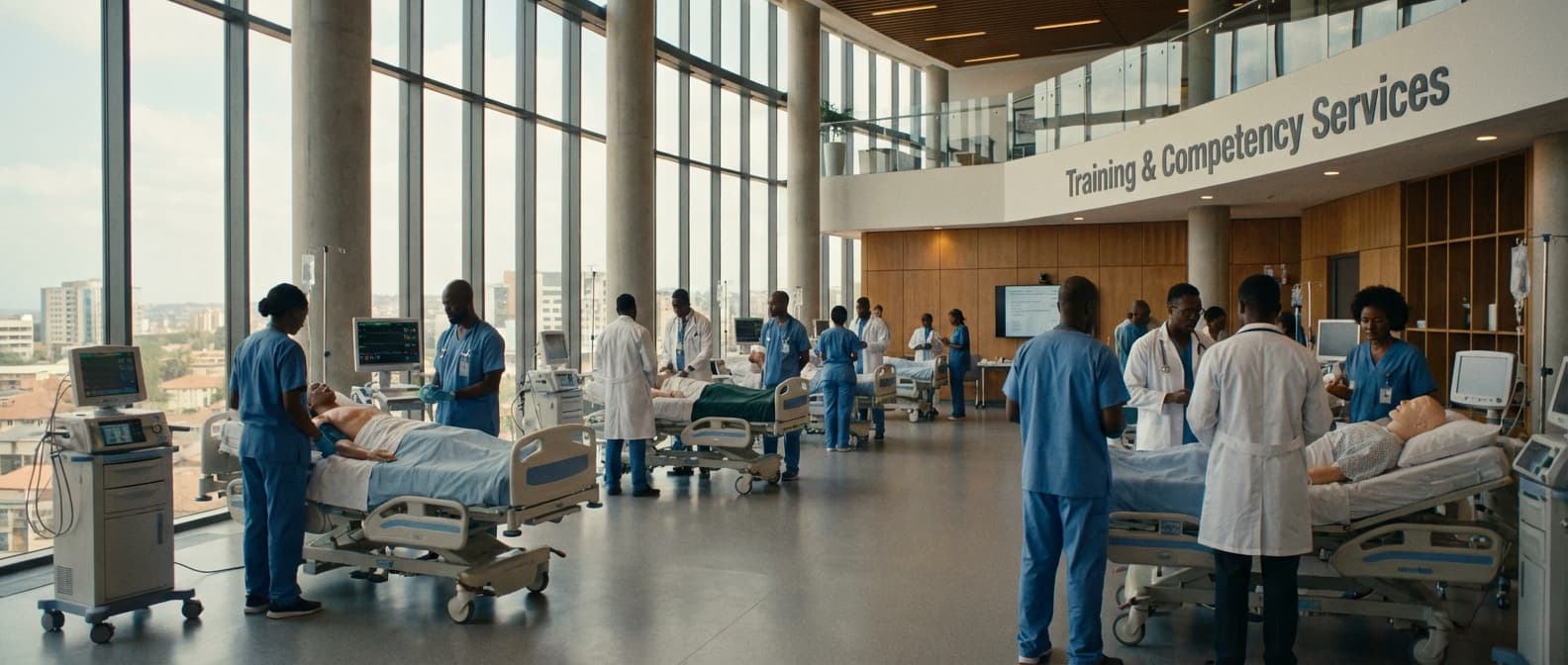
Ultrasound Application Training Service (Protocol-Based) in Sierra Leone
Engineering Excellence & Technical Support
Ultrasound Application Training Service (Protocol-Based) High-standard technical execution following OEM protocols and local regulatory frameworks.
Standardized Protocols for Diagnostic Accuracy
Empower healthcare professionals in Sierra Leone with comprehensive, protocol-based ultrasound training. Our curriculum ensures consistent, high-quality image acquisition and interpretation, leading to more accurate diagnoses and improved patient care.
Skill Enhancement & Confidence Building
Our hands-on, protocol-driven training modules are designed to build practical skills and boost confidence in ultrasonographers. Focus on common obstetric, gynecological, and abdominal applications, tailored to the specific needs of Sierra Leone.
Accessible & Sustainable Ultrasound Education
Bridging the gap in ultrasound expertise, our training service offers an accessible and sustainable model for continuous professional development across Sierra Leone, equipping local practitioners with essential diagnostic capabilities.
What Is Ultrasound Application Training Service (Protocol-based) In Sierra Leone?
Ultrasound Application Training Service (Protocol-Based) in Sierra Leone refers to specialized, structured educational programs designed to equip healthcare professionals with the knowledge and practical skills necessary to perform and interpret diagnostic ultrasound examinations according to established clinical protocols. This service emphasizes adherence to standardized procedures, ensuring consistency, accuracy, and optimal patient care in the application of ultrasound technology within the Sierra Leonean healthcare context. The training is protocol-driven, meaning it follows predefined guidelines for patient positioning, transducer manipulation, image acquisition parameters, and interpretation criteria specific to various anatomical regions and clinical indications.
| Target Audience | Needs Addressed | Typical Use Cases |
|---|---|---|
| Radiologists and Radiology Residents | Enhancing diagnostic accuracy, expanding scanning capabilities, adherence to standardized protocols for consistent reporting. | Comprehensive abdominal ultrasound, Doppler studies of major vessels, interventional ultrasound guidance, advanced obstetric and gynecological imaging. |
| Obstetricians and Gynecologists | Improving prenatal care through accurate fetal biometry and anomaly detection, early diagnosis of gynecological pathologies, safe performance of obstetric ultrasound procedures. | First, second, and third-trimester obstetric scans, pelvic ultrasound for gynecological conditions, early pregnancy assessment, point-of-care ultrasound (POCUS) in obstetrics. |
| General Practitioners and Family Physicians (with appropriate specialization) | Expanding primary care diagnostic capabilities, early identification of critical conditions, improved patient management through point-of-care ultrasound. | Basic abdominal surveys, focused assessment with sonography for trauma (FAST) scans, bladder volume assessment, basic musculoskeletal or thyroid scans. |
| Medical Officers and Clinical Assistants in resource-limited settings | Bridging diagnostic gaps, providing essential imaging services in areas with limited access to specialized radiology, enabling timely referrals. | Screening for common abdominal pathologies, basic obstetric scans for gestational age estimation, identification of free fluid. |
| Sonographers and Ultrasound Technicians | Formalizing and standardizing sonographic practice, advancing technical skills, ensuring competency in specific applications. | Specialized training in vascular ultrasound, musculoskeletal ultrasound, echocardiography (if applicable), and advanced obstetric imaging. |
Key Components of Ultrasound Application Training Service (Protocol-Based)
- Theoretical Foundation: In-depth understanding of ultrasound physics, instrumentation, artifacts, and Doppler principles.
- Anatomical Review: Comprehensive study of relevant anatomy for each targeted ultrasound application.
- Protocol-Driven Image Acquisition: Hands-on training in systematic scanning techniques, patient preparation, and standardized image capture following established protocols (e.g., obstetric, gynecological, abdominal, vascular).
- Image Interpretation Skills: Development of the ability to recognize normal and abnormal sonographic findings, differentiate pathologies, and correlate with clinical information.
- Clinical Application Integration: Understanding how ultrasound findings inform differential diagnoses and patient management pathways within local healthcare settings.
- Quality Assurance and Safety: Emphasis on ALARA (As Low As Reasonably Achievable) principles for radiation safety and image quality optimization.
- Hands-on Practice: Extensive supervised practical sessions using phantoms and, where feasible and ethical, live patient examinations.
- Case Study Analysis: Review and discussion of representative clinical cases to reinforce learning and problem-solving skills.
- Competency Assessment: Evaluation of theoretical knowledge and practical skills through written examinations, practical scans, and case reviews.
- Continuing Professional Development (CPD) Integration: Design of training modules to meet CPD requirements for medical professionals.
Who Needs Ultrasound Application Training Service (Protocol-based) In Sierra Leone?
This document outlines the critical need for Ultrasound Application Training Services (Protocol-Based) in Sierra Leone. Such training is essential for healthcare professionals to effectively utilize ultrasound technology for accurate diagnosis and improved patient care. The service focuses on standardized protocols to ensure consistency and quality across various applications.
| Target Customer Type | Specific Departments/Roles | Rationale for Training Need | Key Ultrasound Applications |
|---|---|---|---|
| Public Hospitals (National & Regional) | Radiology, Obstetrics & Gynecology, Pediatrics, Internal Medicine, Emergency Medicine | Limited access to advanced diagnostics, need for skilled personnel to interpret and operate ultrasound machines for a wide range of conditions. | Obstetric scans (antenatal, fetal well-being), gynecological scans (pelvic masses), abdominal scans (organ assessment), pediatric scans (abdominal, cardiac), emergency FAST scans, musculoskeletal assessments. |
| District/Rural Health Centers | General Practitioners, Nurses, Midwives | Bridging the diagnostic gap in remote areas, enabling early detection and referral for critical conditions, especially in maternal and child health. | Basic obstetric scans (gestational age, lie), fluid collection assessments, basic abdominal assessments, identification of gross abnormalities. |
| NGO Health Facilities | Medical Officers, Clinical Officers, Nurses, Sonographers (if available) | Providing essential diagnostic services in underserved communities, supporting specific health programs (e.g., maternal health, infectious disease screening). | Similar to public hospitals but often focused on specific program needs, e.g., point-of-care ultrasound in emergency settings, basic obstetric care. |
| Ministry of Health & Sanitation (MoHS) | Training Coordinators, Public Health Officials, Educators | Standardizing ultrasound practice across the country, ensuring quality of care, developing a sustainable pool of trained professionals, and informing public health strategies. | Development of national ultrasound guidelines, training curriculum development, assessment of existing skill levels. |
| Private Diagnostic Centers | Radiologists, Sonographers, General Practitioners | Enhancing service offerings, improving diagnostic accuracy, attracting more patients, and competing in the healthcare market. | Advanced obstetric and gynecological imaging, detailed abdominal and vascular studies, interventional ultrasound guidance, specialized musculoskeletal and small parts imaging. |
| Medical Schools & Teaching Hospitals | Medical Students, Residents, Faculty | Integrating ultrasound into medical education from early stages, producing future clinicians proficient in ultrasound, and advancing medical research. | Foundational ultrasound principles, hands-on training across all major anatomical regions, research applications of ultrasound. |
Target Customers and Departments in Sierra Leone Requiring Ultrasound Application Training
- Hospitals (Tertiary, Secondary, and Primary Care)
- District Hospitals
- Maternal and Child Health Centers
- Radiology Departments
- Obstetrics and Gynecology Departments
- Emergency Departments / Trauma Centers
- Surgical Departments
- Internal Medicine / General Practice Clinics
- Non-Governmental Organization (NGO) Health Facilities
- Ministry of Health and Sanitation Training Institutions
- Private Diagnostic Centers
- Medical Schools and Teaching Hospitals
Ultrasound Application Training Service (Protocol-based) Process In Sierra Leone
This document outlines the typical workflow for an Ultrasound Application Training Service (Protocol-Based) in Sierra Leone, detailing the process from initial inquiry to successful execution. The service focuses on training healthcare professionals to effectively utilize ultrasound equipment according to established protocols, thereby enhancing diagnostic capabilities within the country.
| Stage | Key Activities | Deliverables/Outcomes |
|---|---|---|
| Inquiry & Needs Assessment | Initial contact, understanding client requirements, defining scope, assessing existing resources and trainee levels. | Needs Assessment Report, identified training gaps. |
| Proposal Development & Customization | Designing training modules, curriculum, selecting methodologies, costing, client review and refinement. | Customized Training Proposal. |
| Agreement & Scheduling | Contract negotiation, defining terms and conditions, setting training dates and times. | Signed Agreement/Contract, Confirmed Training Schedule. |
| Pre-Training Preparations | Logistical arrangements, venue confirmation, equipment readiness, material preparation, trainee communication. | Prepared Training Environment, Training Materials, Informed Trainees. |
| Training Execution | Delivery of theoretical and practical sessions, case studies, equipment training. | Trainee knowledge acquisition, practical skill development. |
| Assessment & Evaluation | Tests (written/practical), skill demonstration, case analysis, trainee feedback. | Trainee Performance Evaluation, Feedback on Training Program. |
| Post-Training Support & Certification | Issuance of certificates, ongoing technical assistance, access to resources. | Certified Trainees, Post-Training Support Plan. |
| Feedback & Improvement | Collection and analysis of feedback, program refinement. | Program Improvement Recommendations. |
Ultrasound Application Training Service (Protocol-Based) Workflow
- 1. Inquiry & Needs Assessment: The process begins with an inquiry from a healthcare facility or organization in Sierra Leone interested in ultrasound application training. This is followed by a detailed needs assessment to understand their specific requirements, including the types of ultrasound modalities needed, the experience level of the target trainees, existing equipment, and desired learning outcomes.
- 2. Proposal Development & Customization: Based on the needs assessment, a customized training proposal is developed. This proposal outlines the training modules, curriculum, duration, venue requirements, trainer qualifications, methodology (e.g., theoretical lectures, hands-on practical sessions, case studies), and associated costs. Feedback from the client is incorporated for refinement.
- 3. Agreement & Scheduling: Once the proposal is accepted, a formal agreement or contract is established. This document details the scope of work, payment terms, cancellation policies, and responsibilities of both parties. Collaborative scheduling takes place to determine the most suitable dates and times for the training, considering the availability of trainees and trainers.
- 4. Pre-Training Preparations: This phase involves all logistical arrangements. It includes confirming the training venue, ensuring the availability and functionality of ultrasound equipment (either client-owned or provided by the service), preparing training materials (manuals, presentations, simulation phantoms), and communicating detailed pre-training instructions to the trainees (e.g., prerequisites, required documentation).
- 5. Training Execution: The core of the service involves delivering the training as per the agreed-upon curriculum and schedule. This typically includes:
- Theoretical Sessions: Covering ultrasound physics, safety, image optimization, and specific application protocols.
- Hands-on Practical Sessions: Allowing trainees to practice scanning techniques on models and, where feasible, on consenting patients under expert supervision.
- Case Study Analysis: Discussing real-world scenarios and applying learned protocols for diagnosis.
- Equipment Familiarization: Ensuring trainees are comfortable operating the specific ultrasound machines.
- 6. Assessment & Evaluation: Throughout and at the end of the training, assessments are conducted to gauge the trainees' understanding and practical skills. This may include written tests, practical scanning assessments, and case report evaluations. Trainees also provide feedback on the training program.
- 7. Post-Training Support & Certification: Upon successful completion of the training and assessments, trainees receive a certificate of completion. Post-training support may be offered, which can include remote technical assistance, follow-up Q&A sessions, or access to online resources. The service may also provide a report to the client outlining the training outcomes and trainee performance.
- 8. Feedback & Improvement: Feedback collected from trainees and clients is reviewed to identify areas for improvement in future training programs. This continuous feedback loop ensures the service remains relevant and effective.
Ultrasound Application Training Service (Protocol-based) Cost In Sierra Leone
Ultrasound application training services in Sierra Leone, particularly those following specific protocols, are vital for enhancing healthcare diagnostics and patient care. The cost of such training is influenced by a multitude of factors, making it challenging to provide a single definitive price. These factors range from the complexity and duration of the training to the expertise of the instructors and the resources provided. Local currency pricing, typically in Sierra Leonean Leone (SLL), needs to be understood in the context of these influencing elements.
| Training Type/Level | Estimated Price Range (SLL) |
|---|---|
| Basic Ultrasound Principles (e.g., 2-3 days) | 1,500,000 - 3,000,000 |
| Intermediate Ultrasound Application (e.g., Specific Modality, 5 days) | 3,000,000 - 6,000,000 |
| Advanced/Specialized Ultrasound Application (e.g., Complex Scans, 7-10 days) | 6,000,000 - 12,000,000+ |
| On-site Training (additional costs for travel, accommodation, per diem if applicable) | Variable (e.g., + 500,000 - 2,000,000 per day for instructor expenses) |
| Customized/Bespoke Training (negotiated based on scope) | Highly Variable (can exceed 15,000,000 SLL) |
Key Pricing Factors for Ultrasound Application Training in Sierra Leone:
- Scope and Specialization of Training: General ultrasound principles will be less expensive than highly specialized modules (e.g., obstetric, cardiac, abdominal, musculoskeletal). The depth of knowledge and number of specific applications covered directly impacts the cost.
- Duration of Training: The total hours or days dedicated to the training program is a primary cost driver. Longer, more comprehensive courses naturally command higher fees.
- Instructor Expertise and Qualifications: Training delivered by internationally recognized experts or highly experienced local sonographers with advanced certifications will be priced higher than training by less experienced individuals.
- Training Modalities (On-site vs. Remote): On-site training, especially if it involves travel and accommodation for instructors, will incur additional costs. Remote or online training might be more cost-effective.
- Training Facility and Resources: The cost of utilizing a well-equipped training facility with modern ultrasound machines, phantoms, and simulation tools will be factored in. If the training is conducted at the client's facility, the availability and quality of their equipment will be considered.
- Accreditation and Certification: Training programs that lead to recognized certifications (if available locally or through partnerships) will often carry a higher price tag due to the added value and standardization.
- Number of Participants: Group training can sometimes offer a lower per-person cost compared to individual training. However, very large groups might necessitate more instructors or resources, potentially increasing the overall cost.
- Customization of Curriculum: Bespoke training tailored to the specific needs and existing skill sets of a healthcare institution will generally be more expensive than a standard, off-the-shelf program.
- Training Materials and Manuals: The provision of comprehensive study materials, handbooks, and other learning resources contributes to the overall cost.
- Post-Training Support: Some training packages may include follow-up mentorship, case review sessions, or troubleshooting support, which can add to the initial investment.
- Provider's Overhead and Reputation: Established training providers with strong reputations and significant operational overheads may have higher pricing structures.
Affordable Ultrasound Application Training Service (Protocol-based) Options
Our Affordable Ultrasound Application Training Service offers protocol-based education designed to equip healthcare professionals with the essential skills for accurate and efficient diagnostic ultrasound. We understand the financial considerations of professional development, and our service is structured to provide maximum value. We offer flexible training packages and cost-saving strategies to make high-quality ultrasound education accessible to all.
| Training Option | Includes | Target Audience | Estimated Cost Range (per participant, subject to customization) | Cost-Saving Strategies |
|---|---|---|---|---|
| Foundation Package | Core Physics, Knobology, 1-2 Standard Protocols | Beginner Sonographers, Students, Medical Assistants | $400 - $800 | Early bird discounts, group registration incentives |
| Specialty Deep Dive Bundle | Advanced Protocols, Image Optimization, Case Reviews (1 Specialty) | Experienced Sonographers, Radiologists | $600 - $1,200 | Bundle multiple specialties for a lower per-specialty cost |
| Comprehensive Mastery Package | Foundation + 3+ Specialty Deep Dives | Advanced Practice Providers, Multi-disciplinary Teams | $1,500 - $3,000 | Referral bonuses for new enrollments, loyalty discounts for returning participants |
| Team Training Solutions | Customized curriculum, On-site or Virtual options, Progress tracking | Hospitals, Clinics, Diagnostic Centers | Varies (based on group size and customization) | Bulk enrollment discounts, flexible payment plans, reduced travel costs with virtual options |
Value Bundles for Comprehensive Training
- Foundation Package: Includes core ultrasound physics, knobology, and introductory protocols for a specific modality (e.g., Abdominal, OB/GYN). Ideal for beginners or those transitioning into ultrasound.
- Specialty Deep Dive Bundle: Builds upon the Foundation Package with advanced protocols and case studies for a chosen specialty. Perfect for experienced sonographers seeking to expand their expertise.
- Comprehensive Mastery Package: Combines foundational knowledge with multiple specialty deep dives, offering the most extensive training for versatile sonographers or departments requiring broad skill sets.
- Team Training Solutions: Customized bundles for departments or institutions, offering bulk discounts and tailored curriculum to meet specific organizational needs and learning objectives.
Verified Providers In Sierra Leone
Ensuring access to quality healthcare is paramount, and in Sierra Leone, identifying verified providers is crucial. Franance Health stands out as a premier choice, built on a foundation of rigorous credentialing and a commitment to exceptional patient care. This document outlines why Franance Health's verified providers represent the best option for your healthcare needs in Sierra Leone.
| Key Differentiators | Benefit to Patients | Franance Health's Assurance |
|---|---|---|
| Comprehensive Credentialing | Ensures providers possess the necessary qualifications and expertise. | All listed providers undergo a multi-stage verification process. |
| Emphasis on Professional Ethics | Guarantees respectful and patient-focused treatment. | Ethical conduct is a core component of our vetting criteria. |
| Commitment to Quality Improvement | Access to healthcare professionals dedicated to staying current with medical advancements. | We encourage and support continuous professional development. |
| Accessibility and Network Strength | Facilitates easier access to a wide range of medical services. | We maintain a robust and expanding network of verified providers. |
| Reduced Healthcare Risks | Minimizes the risk of receiving substandard or unqualified medical care. | Our verification process acts as a critical safeguard for patient safety. |
Franance Health's Commitment to Verified Providers
- Rigorous Vetting Process: Franance Health implements a stringent credentialing process for all healthcare professionals and facilities. This involves thorough background checks, verification of educational qualifications, licensing, and professional experience.
- Focus on Expertise and Experience: We prioritize providers with proven track records, specialized knowledge, and a dedication to continuous professional development. This ensures patients receive care from highly competent individuals.
- Adherence to International Standards: Franance Health aligns its credentialing with recognized international healthcare standards, guaranteeing a level of quality and safety that meets global benchmarks.
- Patient-Centric Approach: Our verified providers are not only medically skilled but also committed to providing compassionate, ethical, and patient-centered care. They prioritize open communication and patient well-being.
- Comprehensive Network: Franance Health boasts a diverse network of verified healthcare professionals and facilities across various specialties, offering a wide range of services to meet the multifaceted needs of the population.
- Trust and Reliability: By choosing a Franance Health verified provider, patients can have confidence in the quality, safety, and professionalism of the care they receive, reducing uncertainty and fostering trust in the healthcare system.
Scope Of Work For Ultrasound Application Training Service (Protocol-based)
This Scope of Work (SOW) outlines the requirements for providing Ultrasound Application Training Services, specifically focusing on a protocol-based approach. The objective is to equip trainees with the knowledge and practical skills necessary to perform ultrasound examinations according to established protocols, ensuring consistency, accuracy, and efficiency. This document details the technical deliverables and standard specifications for the training.
| Category | Technical Deliverable | Standard Specifications / Requirements |
|---|---|---|
| Curriculum Development | Protocol-Based Ultrasound Training Curriculum | Comprehensive curriculum covering theoretical principles, anatomy, pathology, and procedural techniques for specified ultrasound applications (e.g., Abdominal, Pelvic, Cardiac, Vascular, Musculoskeletal). Includes detailed learning objectives, content outlines, and assessment strategies for each module. Curriculum must be aligned with current professional guidelines and best practices. |
| Training Materials | Training Manuals & Handouts | High-quality, user-friendly training manuals, digital or print, containing all curriculum content. Handouts for key concepts, checklists, and reference guides. Materials must be accessible to trainees and updated to reflect current standards. |
| Training Materials | Presentation Slides | Professionally designed presentation slides for theoretical sessions, incorporating relevant images, diagrams, and videos. Slides must be clear, concise, and visually engaging. |
| Training Materials | Case Study Library | A curated library of diverse ultrasound cases, including normal and pathological examples, presented in various formats (e.g., static images, cine loops, annotated reports). Cases should illustrate common and challenging scenarios encountered in protocol-based examinations. |
| Training Delivery | Theoretical Training Sessions | Instructor-led lectures and discussions covering the theoretical aspects of ultrasound physics, instrumentation, and specific application protocols. Sessions should be interactive, encouraging questions and dialogue. |
| Training Delivery | Hands-on Practical Sessions | Supervised practical sessions on ultrasound phantoms and/or volunteer models. Emphasis on image acquisition, optimization, and application of specific protocols. Trainee-to-instructor ratio should not exceed X:1 to ensure adequate individual attention. |
| Training Delivery | Equipment Operation Training | Comprehensive training on the operation of standard ultrasound equipment, including transducer selection, machine controls, image settings, and troubleshooting common operational issues. Training should cover at least [Specify relevant ultrasound machine models if applicable]. |
| Training Delivery | Protocol Adherence Guidance | Dedicated sessions focusing on understanding and adhering to specific ultrasound protocols. This includes systematic image acquisition sequences, optimal scanning planes, and critical views for documentation. Emphasis on reproducibility and completeness. |
| Assessment & Evaluation | Competency Assessments | Formative and summative assessments to evaluate trainee understanding and practical skills. Methods may include written examinations, practical image critique, and direct observation of scanning performance against defined protocol checklists. |
| Assessment & Evaluation | Feedback Mechanism | Regular feedback provided to trainees on their progress during practical sessions, highlighting areas for improvement and reinforcing correct techniques. Formal evaluation reports detailing individual performance. |
| Assessment & Evaluation | Certification | Issuance of a certificate of completion upon successful attainment of defined competency levels and passing all assessments. Certification should clearly state the ultrasound applications covered and the protocol-based nature of the training. |
| Support & Resources | Post-Training Support | Access to a defined period of post-training support, which may include Q&A sessions, access to the case study library, and limited remote consultation on protocol-related queries. [Specify duration and scope of support]. |
Key Objectives of the Training Service
- To ensure trainees understand and can effectively apply standardized ultrasound protocols for various anatomical regions and clinical indications.
- To develop proficiency in operating ultrasound equipment, including image acquisition, optimization, and manipulation.
- To enhance diagnostic interpretation skills through understanding of sonographic anatomy and common pathologies.
- To promote best practices in patient care, safety, and ultrasound etiquette.
- To provide a structured learning environment with theoretical knowledge and hands-on practical sessions.
- To assess and validate the competency of trainees in performing protocol-based ultrasound examinations.
Service Level Agreement For Ultrasound Application Training Service (Protocol-based)
This Service Level Agreement (SLA) outlines the guaranteed response times and uptime for the Ultrasound Application Training Service. This protocol-based service ensures timely and reliable access to training resources.
| Metric | Target | SLA Guarantee | Definition/Notes |
|---|---|---|---|
| Severity 1 - Critical Incident (Service Unavailable) | 15 minutes | 99.9% of the time (excluding planned maintenance) | Complete service outage or critical functionality failure impacting all users. Immediate response and continuous work towards resolution. |
| Severity 2 - Major Incident (Service Degraded) | 1 hour | N/A (Focus is on resolution) | Significant degradation of service, impacting a large number of users or core functionalities. Response to initiate troubleshooting and work towards resolution. |
| Severity 3 - Minor Incident (Service Impaired) | 4 business hours | N/A (Focus is on resolution) | Minor functionality issues or performance degradations affecting a limited number of users. Response to acknowledge and schedule resolution. |
| General Inquiry/Request | 8 business hours | N/A (Focus is on acknowledgement) | Requests for information, access modifications, or non-critical feature inquiries. |
| Planned Maintenance Window | TBD (Pre-announced) | N/A (Scheduled downtime) | Scheduled maintenance activities communicated at least 7 days in advance. Typically occurs outside of core business hours. |
Key Service Metrics
- Response Time: The maximum time taken to acknowledge and begin addressing a reported issue or request.
- Uptime Guarantee: The percentage of time the Ultrasound Application Training Service is available and functional.
- Maintenance Window: Scheduled periods for system updates and maintenance, during which the service may be temporarily unavailable.
Frequently Asked Questions

Ready when you are
Let's scope your Ultrasound Application Training Service (Protocol-Based) in Sierra Leone project in Sierra Leone.

Scaling healthcare logistics and technical systems across the entire continent.