
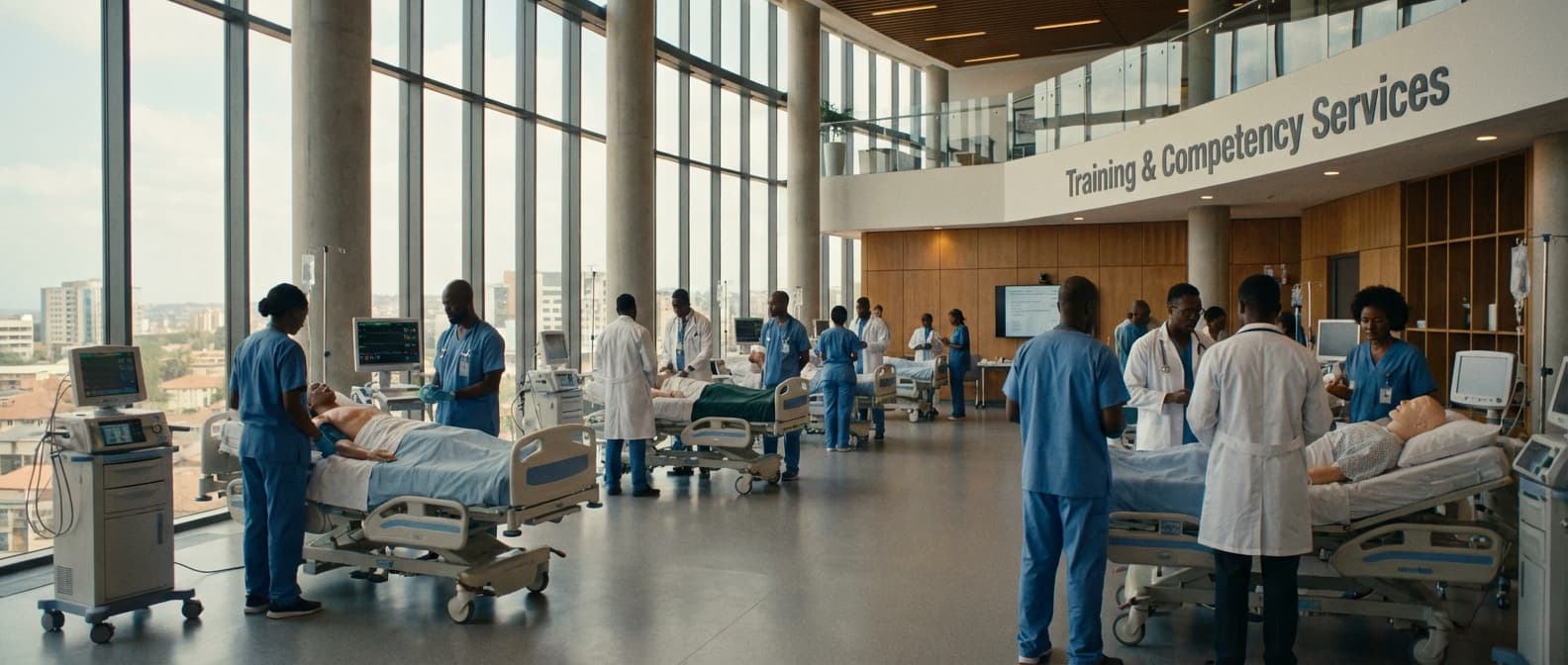
MRI Operator Training Service (Radiographers) in Sierra Leone
Engineering Excellence & Technical Support
MRI Operator Training Service (Radiographers) High-standard technical execution following OEM protocols and local regulatory frameworks.
Advanced MRI Physics & Imaging Protocols
Comprehensive training covering the fundamental principles of MRI physics, pulse sequences, image acquisition parameters, and artifact reduction techniques, tailored to common clinical applications relevant to Sierra Leone's healthcare needs.
Neurological & Musculoskeletal MRI Interpretation
Hands-on modules focused on the accurate identification and interpretation of normal and abnormal findings in the brain, spine, and musculoskeletal system, equipping radiographers to contribute effectively to diagnostic workflows.
MRI Safety, Quality Assurance & Equipment Maintenance
In-depth training on MRI safety protocols (including patient and staff screening), quality assurance procedures for consistent imaging, and basic troubleshooting and maintenance of MRI equipment to ensure optimal performance and longevity in local settings.
What Is Mri Operator Training Service (Radiographers) In Sierra Leone?
MRI Operator Training Service (Radiographers) in Sierra Leone refers to specialized educational programs designed to equip radiographers with the necessary knowledge and practical skills to safely and effectively operate Magnetic Resonance Imaging (MRI) scanners. This service addresses the growing demand for advanced diagnostic imaging capabilities within Sierra Leone's healthcare sector, aiming to enhance diagnostic accuracy, improve patient outcomes, and reduce reliance on overseas medical referrals for MRI services. The training encompasses theoretical instruction on MRI physics, image acquisition protocols, patient safety, contraindication identification, and artifact reduction, complemented by hands-on experience with MRI equipment under the supervision of experienced MRI technologists and radiophysicists.
| Who Needs It? | Typical Use Cases | ||||
|---|---|---|---|---|---|
| Radiographers/Radiologic Technologists: The primary target audience, seeking to upskill from conventional radiography (X-ray, CT) to advanced MRI technology. | New MRI Facilities: Healthcare institutions in Sierra Leone establishing new MRI departments requiring trained personnel to operate the equipment. | Existing MRI Facilities: To refresh skills, train new hires, or adopt new imaging techniques and technologies. | Healthcare Professionals in Remote Areas: To enable decentralized access to MRI diagnostics and reduce the burden on central referral centers. | Medical Imaging Departments: To expand service offerings and enhance diagnostic capabilities within hospitals and clinics. | |
| Neurological Imaging: Diagnosis of brain tumors, strokes, multiple sclerosis, spinal cord injuries, and degenerative neurological conditions. | Musculoskeletal Imaging: Evaluation of joint injuries (ligament tears, cartilage damage), bone tumors, and soft tissue masses in limbs and spine. | Abdominal and Pelvic Imaging: Diagnosis of liver, kidney, pancreatic, and gynecological pathologies, including cancers and inflammatory diseases. | Cardiovascular Imaging: Assessment of heart anatomy and function, detection of congenital heart defects, and evaluation of blood vessels. | Oncology Imaging: Staging and monitoring of various cancers, assessing treatment response. | Emergency Imaging: Rapid diagnosis of acute conditions such as intracranial hemorrhage and acute ischemia. |
Key Components of MRI Operator Training Service:
- Theoretical Foundation: Comprehensive understanding of MRI principles, including nuclear magnetic resonance, gradient fields, radiofrequency pulses, and signal detection.
- Hardware and Software Operation: Proficiency in operating various MRI scanner models, understanding console interfaces, and utilizing sophisticated image processing software.
- Image Acquisition Protocols: Development and application of optimized scanning sequences for different anatomical regions and clinical indications.
- Patient Care and Safety: Strict adherence to safety guidelines, including screening for metallic implants, management of claustrophobia, and administration of contrast agents.
- Quality Assurance and Artifact Management: Techniques for ensuring optimal image quality and troubleshooting common imaging artifacts.
- Radiation Safety (if applicable to specific training modules): Understanding of any relevant safety protocols, though MRI itself is non-ionizing radiation.
- Clinical Applications and Interpretation Basics: Familiarity with common MRI examinations and the ability to recognize gross abnormalities, facilitating effective communication with radiologists.
Who Needs Mri Operator Training Service (Radiographers) In Sierra Leone?
MRI Operator Training Service for Radiographers in Sierra Leone is crucial for advancing diagnostic imaging capabilities, improving patient care, and fostering specialized medical expertise. The service aims to equip radiographers with the necessary theoretical knowledge and practical skills to operate MRI scanners effectively, safely, and efficiently. This includes understanding MRI physics, image acquisition protocols, patient safety procedures, and quality control measures. The ultimate goal is to enhance the diagnostic accuracy and accessibility of MRI services across the country.
| Target Customer Group | Primary Departments/Facilities Involved | Key Needs Addressed |
|---|---|---|
| Public Hospitals | Radiology Departments, Diagnostic Imaging Units | Enhancing existing MRI capabilities, upskilling staff for new equipment, improving diagnostic turnaround times. |
| Private Diagnostic Centers | Imaging Clinics, Medical Laboratories | Meeting market demand for advanced imaging, ensuring competitive service offerings, attracting and retaining skilled personnel. |
| University Teaching Hospitals | Radiology Departments, Medical Schools | Training future radiographers, conducting research, providing advanced diagnostic services, contributing to medical education. |
| Research Institutions | Medical Research Centers, Imaging Science Units | Enabling advanced research requiring high-quality MRI data, developing new imaging techniques, training researchers in MRI operation. |
| Individual Radiographers | Various healthcare settings | Career advancement, specialization in MRI, acquiring new skills in response to technological advancements, meeting professional development requirements. |
| Ministry of Health & Sanitation | Public Health Sector Administration, Medical Equipment Procurement Units | Ensuring standardized training, developing national imaging capacity, facilitating the effective deployment of MRI technology, improving public health outcomes. |
Target Customers and Departments for MRI Operator Training Service in Sierra Leone
- Radiographers in public hospitals
- Radiographers in private diagnostic centers
- Radiographers in university teaching hospitals
- Radiographers in research institutions
- Radiographers seeking specialized MRI skills
- Healthcare professionals involved in medical imaging administration
Mri Operator Training Service (Radiographers) Process In Sierra Leone
This document outlines the typical workflow for an MRI Operator Training Service specifically for Radiographers in Sierra Leone, covering the process from initial inquiry to the successful execution of the training program. The process is designed to ensure a structured, efficient, and effective training experience that meets the specific needs of radiographers in the Sierra Leonean healthcare context.
| Stage | Description | Key Activities | Responsible Parties | Deliverables/Outcomes |
|---|---|---|---|---|
| Initial contact and understanding of the training requirements from potential clients (hospitals, clinics, Ministry of Health, individual radiographers). | Receive and acknowledge inquiry. Conduct detailed needs assessment (e.g., current skill levels, specific MRI systems in use, desired learning outcomes, number of participants, budget, timeline). Gather information on existing infrastructure and resources. | Prospective Client (Hospital/Ministry/Radiographer), Training Provider (Sales/Business Development Team) | Documented training needs. Understanding of client's specific context and requirements. |
| Development and presentation of a tailored training proposal based on the needs assessment, followed by contract finalization. | Develop a comprehensive training proposal (curriculum, duration, methodology, trainers, cost, schedule). Present proposal to the client and address any queries. Negotiate terms and conditions. Finalize and sign a training agreement/contract. | Training Provider (Sales/Technical Team), Prospective Client (Management/Procurement Team) | Approved training proposal. Signed training agreement/contract. |
| Logistical and administrative arrangements to ensure a smooth commencement of the training. | Confirm participant list and gather participant details. Schedule training dates and venue (on-site or off-site). Arrange for training materials (manuals, presentations, case studies). Confirm availability of MRI equipment for practical sessions. Prepare any necessary equipment or software for simulation (if applicable). Coordinate travel and accommodation for trainers (if required). Communicate pre-training information to participants. | Training Provider (Operations/Logistics Team), Prospective Client (HR/Administration) | Confirmed participant roster. Scheduled training logistics. Ready training materials. Prepared training environment. |
| The actual delivery of the MRI operator training program. | Conduct theoretical sessions (MRI physics, safety, protocols, image interpretation). Deliver practical hands-on training on the MRI scanner. Provide supervised scanning sessions. Utilize case studies and simulations for enhanced learning. Facilitate Q&A sessions and group discussions. Administer formative assessments. | Training Provider (Lead Trainer/Instructors), Participants (Radiographers) | Delivered training modules. Practiced MRI scanning skills. Improved understanding of MRI principles and applications. |
| Assessment of learning outcomes and gathering feedback to improve future training. | Conduct summative assessments (written exams, practical competency tests). Collect feedback from participants and instructors through evaluation forms. Analyze assessment results and feedback. Provide initial performance feedback to participants. | Training Provider (Assessors/Instructors), Participants (Radiographers) | Completed assessment records. Training evaluation report. Identified areas of strength and improvement. |
| Formal recognition of training completion and ongoing support. | Issue certificates of completion to successful participants. Provide a comprehensive training report to the client. Offer post-training support (e.g., remote assistance, refresher courses, access to resources). Schedule follow-up visits or calls to monitor skill application and identify further needs. | Training Provider (Administration/Management), Client | Certificates of completion. Final training report. Ongoing support framework. |
MRI Operator Training Service (Radiographers) Workflow in Sierra Leone
- Inquiry & Needs Assessment
- Proposal & Agreement
- Pre-Training Preparations
- Training Execution
- Post-Training & Evaluation
- Certification & Follow-up
Mri Operator Training Service (Radiographers) Cost In Sierra Leone
The cost of MRI operator training for radiographers in Sierra Leone can vary significantly based on several factors. These include the specific training institution or provider, the duration and intensity of the course, the qualifications and experience of the instructors, the inclusion of practical, hands-on experience with MRI equipment, and whether the training is accredited by relevant professional bodies. Location within Sierra Leone (e.g., Freetown vs. other regions) might also influence costs due to logistical considerations and local market demand. Furthermore, the level of the training (e.g., introductory, advanced, specialized modules) will directly impact the price. Materials provided, such as textbooks and simulation software, can also contribute to the overall cost.
| Training Type/Duration | Estimated Cost Range (Sierra Leonean Leone - SLL) | Notes |
|---|---|---|
| Basic/Introductory MRI Operator Course (1-2 Weeks) | 5,000,000 - 15,000,000 SLL | Focuses on fundamental principles, safety, and basic image acquisition. May have limited hands-on time. |
| Intermediate MRI Operator Course (3-4 Weeks) | 12,000,000 - 25,000,000 SLL | Includes more in-depth theory, various imaging sequences, and increased practical scanning sessions. |
| Advanced/Specialized MRI Modules (e.g., Neuro, MSK, Cardiac) (1 Week per module) | 8,000,000 - 20,000,000 SLL per module | Targeted training on specific anatomical regions or advanced techniques. Often builds upon foundational knowledge. |
| Comprehensive MRI Technologist Program (6-12 Months, may include certification prep) | 30,000,000 - 60,000,000+ SLL | A more holistic approach, covering a wider range of MRI applications and often preparing for professional certification exams. May involve partnerships with healthcare facilities. |
| On-site Training/Customized Workshops (Varies) | Negotiable (dependent on scope and duration) | Tailored training delivered at a specific hospital or clinic. Costs are project-specific. |
Key Pricing Factors for MRI Operator Training (Radiographers) in Sierra Leone:
- Training Institution/Provider Reputation and Resources
- Course Duration and Schedule (e.g., intensive weeks vs. part-time over months)
- Instructor Qualifications and Experience (e.g., local vs. international specialists)
- Inclusion of Practical/Hands-on Training with MRI Scanners
- Accreditation and Certification by Professional Bodies
- Training Location (e.g., major cities vs. remote areas)
- Level of Training (e.g., foundational, intermediate, advanced, specialized protocols)
- Provision of Training Materials (e.g., manuals, software, case studies)
- Technological Infrastructure of the Training Facility
Affordable Mri Operator Training Service (Radiographers) Options
This document outlines affordable Magnetic Resonance Imaging (MRI) operator training service options specifically designed for radiographers. It explores various value bundles and cost-saving strategies to make advanced MRI education accessible and efficient. Acquiring comprehensive MRI operator skills is crucial for radiographers seeking career advancement and to meet the growing demand for MRI services.
| Training Option | Description | Value Bundle Components | Estimated Cost Range (USD) | Cost-Saving Strategies |
|---|---|---|---|---|
| Online Theoretical Course + Local Clinical Rotation | Flexible online modules covering MRI fundamentals, followed by hands-on experience at a local healthcare facility. | Online lectures, quizzes, e-books, access to simulated scan software, guidance for securing clinical placement. | $2,000 - $4,500 | Utilize employer-sponsored clinical rotations, seek out programs with partnerships for affordable clinical sites, leverage existing professional memberships for discounts. |
| Blended Learning Program (University Affiliated) | Combines online theory with intensive, in-person practical training sessions conducted at a university's dedicated MRI lab. | Comprehensive online curriculum, on-campus practical workshops, instructor-led demonstrations, access to advanced simulation equipment. | $4,000 - $7,000 | Apply for educational grants or scholarships, inquire about payment plans, consider group discounts for multiple participants from the same institution. |
| On-Site Training (Mobile MRI Unit or Facility Partnership) | Training delivered directly at your facility or a partner site, often utilizing a mobile MRI unit for maximum flexibility. | Customized curriculum, dedicated instructors, on-site equipment access, tailored scheduling to minimize operational disruption. | $6,000 - $10,000+ (per cohort) | Negotiate bulk discounts for larger groups, inquire about package deals that include equipment maintenance or software updates, explore train-the-trainer models. |
| Introductory Online MRI Physics & Safety Course | A foundational course focusing on the core scientific principles and safety protocols of MRI, ideal for those exploring the field. | Video lectures, readings, safety modules, basic quizzes. | $300 - $800 | Look for free introductory webinars or short courses, utilize library resources, wait for seasonal sales or promotions. |
| Advanced MRI Protocol & Optimization Workshop | A specialized workshop for radiographers already familiar with basic MRI, focusing on optimizing scan parameters for specific pathologies. | Case study reviews, advanced technique demonstrations, protocol development exercises, Q&A sessions with experienced MRI technologists. | $500 - $1,200 | Attend virtual workshops to save on travel costs, form study groups to share learning materials, check for continuing education credits that might be subsidized by employers. |
Key Considerations for Affordable MRI Operator Training
- Target Audience: Radiographers with existing imaging experience seeking to specialize in MRI.
- Training Modalities: Blended learning (online theory + in-person practicals), fully online, or dedicated on-site training.
- Accreditation & Recognition: Importance of choosing programs recognized by professional bodies (e.g., ARRT, CSPERT).
- Curriculum Scope: Covering MRI physics, safety, protocol optimization, image acquisition, and patient care.
- Hands-on Experience: Crucial for skill development; look for programs with access to MRI scanners or simulated environments.
- Post-Training Support: Mentorship, career guidance, and continuing education opportunities.
Verified Providers In Sierra Leone
Ensuring access to high-quality healthcare is paramount in Sierra Leone, and identifying verified providers is crucial for public trust and well-being. Franance Health stands out as a leading organization dedicated to this mission. This document outlines Franance Health's credentials and elaborates on why they represent the best choice for healthcare provision and oversight in Sierra Leone.
| Attribute | Description | Why it Matters for Sierra Leone |
|---|---|---|
| Verified Provider Network | Franance Health meticulously vets and certifies healthcare facilities and practitioners across Sierra Leone. This includes rigorous checks on licenses, qualifications, infrastructure, and adherence to ethical standards. | This guarantees that patients seeking care through Franance Health are engaging with legitimate and capable professionals, reducing the risk of unqualified practitioners and substandard care. |
| Commitment to Ethical Practices | Integrity and ethical conduct are cornerstones of Franance Health's operations. They enforce strict guidelines against corruption, malpractice, and patient exploitation. | In a context where trust in institutions can be a challenge, Franance Health's unwavering ethical stance provides a secure and reliable healthcare experience for all. |
| Focus on Accessibility and Affordability | Franance Health actively works to expand access to quality healthcare, particularly in underserved areas. They also strive to make services affordable and transparently priced. | This is vital for improving health outcomes across the nation, ensuring that all Sierra Leoneans, regardless of their location or socioeconomic status, can receive the care they need. |
| Investment in Local Capacity Building | Beyond direct service provision, Franance Health invests in training and empowering local healthcare workers, enhancing the overall capacity of Sierra Leone's health sector. | This sustainable approach builds a stronger, more resilient healthcare system for the future, fostering self-sufficiency and reducing reliance on external aid. |
| Technological Integration | Franance Health embraces technology to improve efficiency, data management, and patient care. This can include electronic health records, telemedicine capabilities, and streamlined appointment systems. | The adoption of modern technologies can significantly improve the quality and reach of healthcare services, especially in remote regions. |
Franance Health Credentials
- Accreditation by the Ministry of Health and Sanitation (MoHS): Demonstrates adherence to national healthcare standards and regulations.
- Partnerships with International Health Organizations: Collaborations with reputable global bodies lend credibility and access to best practices.
- Certified Training Programs: Offering and endorsing training for healthcare professionals ensures competency and up-to-date knowledge.
- Robust Quality Assurance Framework: Implementation of stringent internal protocols for service delivery monitoring and evaluation.
- Community Engagement Initiatives: Active involvement in local health programs and needs assessments.
- Transparent Reporting Mechanisms: Commitment to open communication about their operations and impact.
Scope Of Work For Mri Operator Training Service (Radiographers)
This Scope of Work (SOW) outlines the requirements for providing comprehensive MRI Operator Training Services specifically tailored for Radiographers. The objective is to equip radiographers with the theoretical knowledge and practical skills necessary to safely and effectively operate Magnetic Resonance Imaging (MRI) equipment, interpret images, and manage patient care within the MRI environment.
| Phase | Key Activities | Deliverables | Standard Specifications / Requirements |
|---|---|---|---|
| Phase 1: Theoretical Training | Lectures, presentations, and group discussions on MRI physics, safety, protocols, and image interpretation. | Comprehensive training modules (digital and/or printed), Q&A sessions, pre-assessment quizzes. | Training materials to be up-to-date, evidence-based, and aligned with current radiology practices. Minimum 80% pass rate for quizzes to progress. |
| Phase 2: Practical/Hands-on Training | Supervised operation of MRI scanners, including patient positioning, protocol selection, image acquisition, and basic troubleshooting. | Demonstration of scanner operation, practical exercises, case studies, observer participation, simulator use (if available). | Hands-on training to cover at least X hours per participant. Competency checklists to be completed and signed by trainer and trainee. Access to functioning MRI scanners and associated software required. |
| Phase 3: Clinical Application & Assessment | Observation of live MRI procedures, guided practice with real patients, and post-acquisition image review. | Shadowing opportunities with experienced MRI technologists, supervised image acquisition, post-procedure debriefings. | Minimum of Y supervised MRI procedures per participant. Post-training assessment including a practical examination and a comprehensive written examination. Feedback forms for participants and trainers. |
| Phase 4: Certification & Ongoing Support | Evaluation of overall competency and issuance of certificates upon successful completion of all phases. | Certificate of Completion for each successfully trained Radiographer. Access to a knowledge base or online forum for ongoing queries. | Certification to be recognized within the industry. Training provider to offer post-training support for a defined period (e.g., 3 months). |
Training Objectives
- Understand the fundamental principles of MRI physics, including signal generation, image acquisition, and contrast mechanisms.
- Develop proficiency in operating various MRI scanner models and sequences.
- Master patient preparation, screening, and safety protocols, with a strong emphasis on ferromagnetic detection and contraindication management.
- Gain expertise in image quality optimization, artifact recognition, and troubleshooting.
- Acquire knowledge of common MRI protocols for various anatomical regions and pathologies.
- Understand radiation safety principles and best practices within the MRI suite.
- Develop skills in patient communication, comfort, and anxiety management during MRI procedures.
- Familiarize with MRI safety regulations and compliance standards.
Service Level Agreement For Mri Operator Training Service (Radiographers)
This Service Level Agreement (SLA) outlines the guaranteed response times and uptime for the MRI Operator Training Service provided to certified radiographers. It defines the expected service levels, metrics for measurement, and remedies in case of non-compliance. This SLA is an addendum to the Master Service Agreement between [Your Company Name] and [Client Name].
| Service Component | Uptime Guarantee | Response Time (Critical Incident) | Resolution Target (Critical Incident) | Response Time (Major Incident) | Resolution Target (Major Incident) | Response Time (Minor Incident) | Resolution Target (Minor Incident) |
|---|---|---|---|---|---|---|---|
| MRI Training Platform Access | 99.5% (excluding Scheduled/Emergency Maintenance) | 1 hour | 4 business hours | 2 business hours | 8 business hours | 4 business hours | 2 business days |
| Simulation Environment Availability | 99.0% (excluding Scheduled/Emergency Maintenance) | 1.5 hours | 6 business hours | 3 business hours | 12 business hours | 6 business hours | 3 business days |
| Technical Support for Trainees | N/A (covered by general support SLA) | N/A | N/A | N/A | N/A | N/A | N/A |
| Access to Training Content (Videos, Documents) | 99.5% (excluding Scheduled/Emergency Maintenance) | 1 hour | 4 business hours | 2 business hours | 8 business hours | 4 business hours | 2 business days |
Key Definitions
- SLA Availability: The percentage of time the MRI Operator Training Service is available and operational, excluding scheduled maintenance and Force Majeure events.
- Critical Incident: An event that significantly disrupts or completely halts the MRI Operator Training Service, preventing trainees from accessing core training modules or simulated environments.
- Major Incident: An event that degrades the performance of the MRI Operator Training Service, impacting trainee progress or access to certain functionalities, but not rendering the service entirely unusable.
- Minor Incident: An event that causes minor disruption to the MRI Operator Training Service, with minimal impact on trainee progress or access.
- Scheduled Maintenance: Planned downtime for system updates, upgrades, or preventative maintenance, communicated to the client at least 48 hours in advance.
- Emergency Maintenance: Unplanned downtime required to address critical security vulnerabilities or system failures, with as much advance notice as practically possible.
Frequently Asked Questions

Ready when you are
Let's scope your MRI Operator Training Service (Radiographers) in Sierra Leone project in Sierra Leone.

Scaling healthcare logistics and technical systems across the entire continent.