
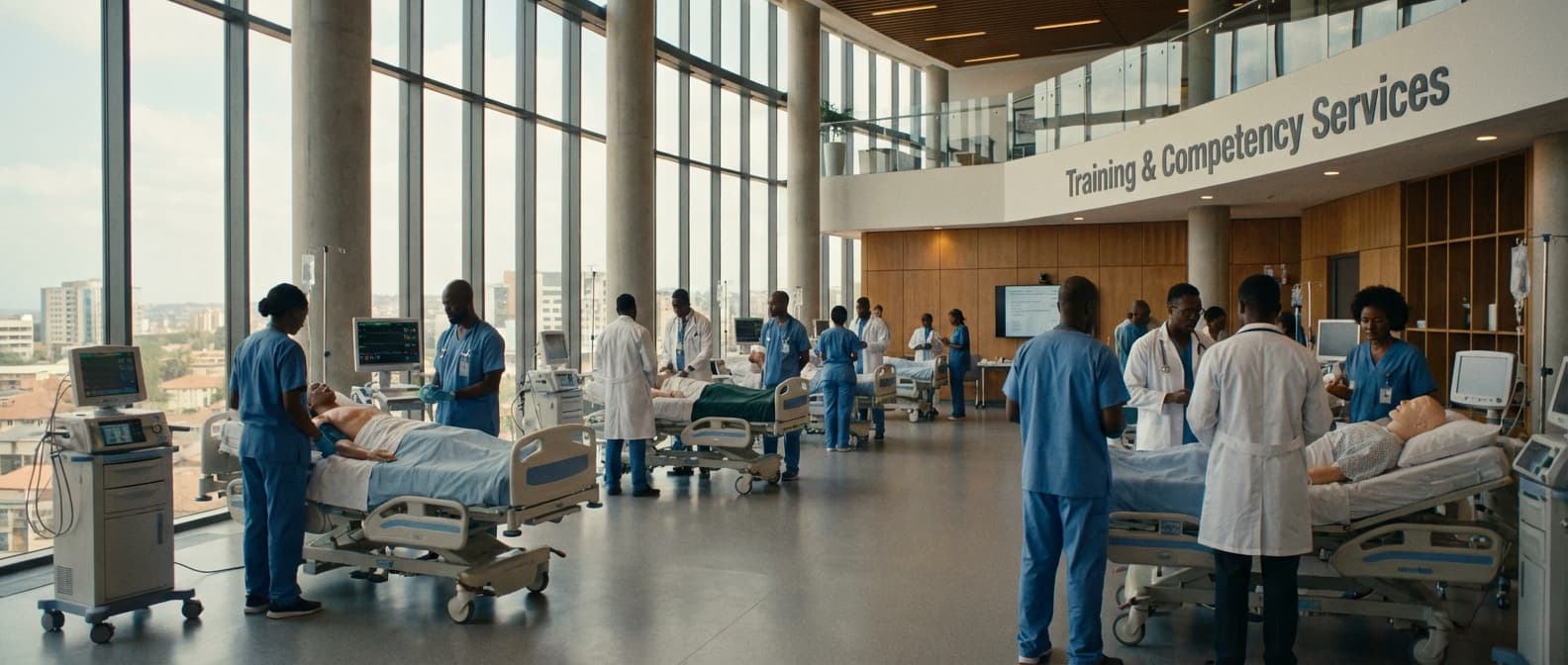
CT Operator Training Service (Radiographers) in Sierra Leone
Engineering Excellence & Technical Support
CT Operator Training Service (Radiographers) High-standard technical execution following OEM protocols and local regulatory frameworks.
Advanced Imaging Protocols
Comprehensive training on the latest CT imaging protocols, including specialized sequences for neurological, thoracic, and abdominal examinations, ensuring optimal diagnostic accuracy and patient care in Sierra Leone's healthcare landscape.
Radiation Dose Optimization
Hands-on workshops focused on ALARA (As Low As Reasonably Achievable) principles, dose reduction techniques, and quality assurance measures to safeguard both patients and staff while maintaining diagnostic image quality.
Equipment Management & Troubleshooting
Practical training modules covering routine CT scanner maintenance, artifact identification and correction, and basic troubleshooting procedures, empowering radiographers to maximize equipment uptime and ensure reliable diagnostic services.
What Is Ct Operator Training Service (Radiographers) In Sierra Leone?
CT Operator Training Service (Radiographers) in Sierra Leone refers to specialized educational programs designed to equip radiographers with the knowledge and practical skills necessary to operate Computed Tomography (CT) scanners effectively and safely within the healthcare system of Sierra Leone. This service encompasses theoretical instruction on CT physics, image acquisition protocols, patient preparation, radiation safety, and quality assurance, complemented by hands-on training on CT scanner operation, image post-processing, and artifact identification and mitigation. The objective is to enhance diagnostic accuracy, minimize radiation exposure to patients and staff, and ensure the optimal utilization of CT imaging technology.
| Target Audience | Rationale for Need | Typical Use Cases |
|---|---|---|
| Newly qualified radiographers entering CT practice in Sierra Leone. | Lack of specialized CT training in undergraduate radiography curricula within the country. | Performing routine diagnostic CT scans for various medical conditions. |
| Existing radiographers seeking to specialize in CT or update their skills. | Introduction of new CT scanner technology or upgraded systems. | Acquisition of cross-sectional images for pre-surgical planning and post-operative assessment. |
| Radiographers working in hospitals or imaging centers with CT facilities. | Enhancing diagnostic capabilities and improving patient outcomes. | Assessing trauma patients for injuries to the head, chest, abdomen, and pelvis. |
| Healthcare professionals involved in the direct or indirect use of CT imaging. | Ensuring adherence to international standards of practice and radiation safety. | Monitoring treatment response and detecting disease recurrence in oncology patients. |
| Radiographers in remote or underserved areas who may have limited access to advanced training. | Addressing the shortage of skilled CT operators in the national healthcare workforce. | Diagnosing and managing neurological conditions, such as stroke, tumors, and infections. |
Key Components of CT Operator Training Service:
- CT Physics and Principles: Understanding X-ray generation, attenuation, reconstruction algorithms, and image formation.
- CT Scanner Anatomy and Operation: Familiarization with hardware components, control console, and operational procedures.
- Patient Preparation and Positioning: Protocols for patient assessment, contraindications, contrast media administration (if applicable), and precise anatomical positioning for optimal imaging.
- Image Acquisition Protocols: Understanding and applying standardized protocols for various anatomical regions and pathologies.
- Radiation Safety and Protection: Principles of ALARA (As Low As Reasonably Achievable), dose monitoring, and compliance with national radiation safety regulations.
- Image Post-processing and Manipulation: Techniques for windowing, leveling, multiplanar reformation (MPR), and 3D reconstructions.
- Artifact Identification and Correction: Recognizing common CT artifacts and implementing strategies for their reduction or elimination.
- Quality Assurance and Control: Implementing procedures for regular equipment calibration, performance testing, and image quality assessment.
- Ethical and Legal Considerations: Adherence to patient confidentiality, informed consent, and professional conduct.
- Emergency Procedures: Protocols for managing patient emergencies during CT examinations.
Who Needs Ct Operator Training Service (Radiographers) In Sierra Leone?
Comprehensive Computed Tomography (CT) operator training is crucial for radiographers in Sierra Leone to ensure the safe, efficient, and accurate use of this advanced medical imaging technology. As CT technology becomes more accessible in the country, a skilled workforce is essential to maximize its benefits for patient care and diagnostics. This training addresses the growing need for expertise in operating CT scanners, interpreting images, and adhering to radiation safety protocols.
| Target Customer Type | Primary Department(s) | Key Needs Addressed by Training |
|---|---|---|
| Hospital Radiographers | Radiology/Medical Imaging Department | Operating CT scanners, image acquisition, patient positioning, dose optimization, basic image interpretation, PACS integration. |
| Diagnostic Imaging Centers | Radiology/Medical Imaging Department | Efficient workflow, high-quality image production, patient throughput, adherence to quality standards, advanced imaging protocols. |
| Public Hospitals (Ministry of Health) | Radiology Department, Accident & Emergency, Surgery, Internal Medicine | Standardized training across public facilities, cost-effective CT utilization, basic to intermediate diagnostic imaging, emergency imaging. |
| Private Hospitals/Clinics | Radiology Department, Various Clinical Specialties | Advanced CT techniques, specialized protocols (e.g., cardiac CT, interventional CT), competitive service offerings, patient satisfaction. |
| Tertiary/Referral Hospitals | Radiology Department, Oncology, Cardiology, Neurology, Trauma Units | Complex case interpretation, advanced imaging protocols, interdisciplinary collaboration, research imaging support. |
| NGO-supported Health Facilities | Radiology Department, General Medicine, Pediatrics | Basic CT operation and maintenance, image interpretation for common pathologies, resource-efficient practices, community outreach imaging. |
Target Customers and Departments for CT Operator Training Service (Radiographers) in Sierra Leone
- Radiographers working in hospitals and diagnostic imaging centers.
- New radiographers entering the field of medical imaging.
- Radiology departments seeking to upskill existing staff.
- Healthcare facilities planning to acquire or upgrade CT scanner technology.
- Government health initiatives focused on improving diagnostic capabilities.
- Non-governmental organizations (NGOs) involved in healthcare provision.
Ct Operator Training Service (Radiographers) Process In Sierra Leone
This document outlines the standard operating procedure for providing CT Operator Training Services for Radiographers in Sierra Leone. The process encompasses the entire lifecycle from initial inquiry to the successful execution and completion of the training program.
| Stage | Description | Key Activities | Responsible Party | Deliverables/Outcomes |
|---|---|---|---|---|
| The process begins with a potential client (e.g., a hospital, clinic, or government health institution) expressing interest in CT operator training. | Receive and acknowledge inquiry; Schedule initial consultation. | Training Provider (TP) / Service Provider | Confirmed interest, initial understanding of client's needs. |
| A thorough understanding of the client's specific training requirements, existing infrastructure, and desired outcomes is established. | Conduct detailed needs assessment (on-site or remote); Analyze skill gaps; Develop customized training proposal (curriculum, duration, resources, cost). | TP / Service Provider & Client Representative | Documented training needs; Comprehensive training proposal. |
| Formal agreement on the terms, conditions, and scope of the training service. | Review and negotiate proposal details; Finalize contract/Memorandum of Understanding (MoU); Secure necessary approvals. | TP / Service Provider & Client Representative | Signed contract/MoU. |
| All logistical and administrative aspects are addressed to ensure a smooth training execution. | Schedule training dates and venue; Confirm trainer availability; Prepare training materials (manuals, presentations, simulators); Coordinate participant registration; Ensure access to CT scanner and related equipment. | TP / Service Provider & Client Representative | Confirmed training schedule; Ready training materials; Registered participants; Accessible training facilities. |
| The core of the service where knowledge and skills are imparted to the radiographers. | Conduct theoretical lectures on CT physics, anatomy, imaging protocols, patient care, radiation safety, and quality assurance; Provide hands-on practical sessions on the CT scanner, including image acquisition, manipulation, and troubleshooting. | Certified CT Trainers (TP) | Competent radiographers with enhanced CT operating skills. |
| Measuring the effectiveness of the training and the participants' acquired knowledge and skills. | Administer written/online tests; Conduct practical skill assessments; Observe participants' performance on the CT scanner; Gather feedback on the training content and delivery. | Certified CT Trainers (TP) | Assessment scores; Practical competency reports; Participant feedback forms. |
| Formal recognition of successful completion and ongoing assistance. | Issue certificates of completion to successful participants; Provide post-training follow-up (e.g., answering queries, offering remote assistance); Potentially offer advanced or refresher courses. | TP / Service Provider | Certificates of Completion; Ongoing client satisfaction. |
| Gathering feedback to enhance future training programs. | Analyze participant and client feedback; Conduct internal review of training effectiveness; Implement improvements in curriculum, delivery methods, and resources for future training cycles. | TP / Service Provider | Revised training protocols and materials; Improved service delivery. |
CT Operator Training Service (Radiographers) Workflow in Sierra Leone
- Inquiry & Initial Contact
- Needs Assessment & Proposal Development
- Contract Negotiation & Agreement
- Pre-Training Preparations
- Training Delivery (Theoretical & Practical)
- Assessment & Evaluation
- Certification & Post-Training Support
- Feedback & Continuous Improvement
Ct Operator Training Service (Radiographers) Cost In Sierra Leone
The cost of CT operator training services for radiographers in Sierra Leone is influenced by several factors, leading to a range of pricing. These factors include the duration and intensity of the training program, the qualifications and experience of the instructors, the reputation and accreditation of the training provider, and the inclusion of specialized modules or certifications. The training might be offered as a standalone course or as part of a larger medical imaging training package. Logistical considerations, such as the location of the training facility and any necessary travel or accommodation for trainees, can also impact the overall cost. Furthermore, the specific equipment and software used during the practical training sessions can affect the expenses for the training provider. It's important to note that the availability of government subsidies or partnerships with international organizations could also influence the final price for individual trainees or institutions.
| Training Type/Level | Estimated Price Range (Sierra Leonean Leone - SLL) | Notes |
|---|---|---|
| Basic CT Operator Certification Course (e.g., 1-2 weeks) | 2,000,000 - 5,000,000 SLL | Covers fundamental principles, safety, and basic protocol operation. |
| Intermediate CT Operator Training (e.g., 2-4 weeks, with practicals) | 4,000,000 - 8,000,000 SLL | Includes more advanced protocols, image acquisition techniques, and basic artifact recognition. |
| Advanced/Specialized CT Training (e.g., specific modalities like cardiac or neuro CT) | 7,000,000 - 15,000,000+ SLL | Focuses on specialized applications and often requires prior CT experience. Price can vary significantly based on specialization. |
| In-house Training for Institutions (group rates) | Negotiable, often per-trainee rates based on program scope | May involve customized curriculum and on-site delivery. Bulk discounts are common. |
| Refresher Courses/Continuing Education | 1,500,000 - 4,000,000 SLL | Shorter duration, focusing on updates in technology, protocols, or safety. |
Key Pricing Factors for CT Operator Training in Sierra Leone:
- Training Program Duration and Intensity
- Instructor Qualifications and Experience
- Provider Reputation and Accreditation
- Inclusion of Specialized Modules/Certifications
- Training Facility Location and Resources
- Travel and Accommodation Expenses (if applicable)
- Equipment and Software Usage
- Potential for Subsidies or Partnerships
Affordable Ct Operator Training Service (Radiographers) Options
This document outlines affordable CT operator training service options for radiographers, focusing on value bundles and cost-saving strategies to make specialized CT education accessible. Our aim is to provide high-quality, comprehensive training that equips radiographers with the necessary skills and knowledge to excel in CT imaging, while minimizing financial burden. We understand the importance of continuous professional development and offer flexible solutions to meet diverse training needs and budgets.
| Training Bundle | Key Features | Target Audience | Estimated Cost Range (USD) | Cost-Saving Strategies |
|---|---|---|---|---|
| Basic CT Operator Certification Bundle | Core CT physics, fundamental protocols, patient safety, introduction to image acquisition & reconstruction. Online modules with limited simulator access. | Entry-level radiographers, new CT technologists. | $800 - $1,500 | Group discounts, early bird registration, bundled with introductory imaging courses. |
| Comprehensive CT Technologist Proficiency Bundle | In-depth CT physics, advanced protocols, contrast administration, artifact reduction, quality assurance, introduction to specialized CT (e.g., cardiac, neuro). Mix of online, in-person, and extensive simulator hours. | Radiographers seeking to specialize in CT, those preparing for CT certification exams. | $1,800 - $3,500 | Bulk training packages for departments, payment plans, access to self-paced online content for review, employer sponsorship programs. |
| Advanced CT Applications & Specialization Bundle | Focus on specific CT modalities (e.g., CT Angiography, Dual-Energy CT, Interventional CT), advanced reconstruction algorithms, advanced troubleshooting, protocol optimization. Primarily hands-on and simulator-based. | Experienced CT technologists looking to enhance skills in specific areas, supervisors, lead technologists. | $2,500 - $5,000+ | Modular pricing (pay for modules needed), train-the-trainer programs for large departments, partnership with equipment manufacturers for specialized training discounts. |
| On-Demand CT Skill Refreshers & Updates | Short, focused online modules on specific topics (e.g., new contrast agents, dose reduction techniques, specific scanner updates). | All CT operators needing to stay current with industry changes. | $100 - $300 per module | Subscription models for ongoing access to a library of refreshers, bundled with other training packages for added value. |
Key Components of Affordable CT Operator Training
- Comprehensive Curriculum: Covering fundamental CT physics, anatomy, protocol selection, image acquisition, reconstruction techniques, quality control, patient safety, and advanced applications.
- Flexible Learning Modalities: Offering a blend of online modules, in-person workshops, and hands-on simulator training to cater to different learning styles and schedules.
- Experienced Instructors: Led by certified CT technologists and radiologic technologists with extensive clinical and teaching experience.
- Accredited Continuing Education (CE) Credits: Ensuring that training meets professional development requirements.
- Post-Training Support: Including access to online resources, Q&A forums, and refresher courses.
Verified Providers In Sierra Leone
Finding verified healthcare providers is paramount for ensuring quality and safe medical care. In Sierra Leone, Franance Health stands out as a leading organization committed to credentialing and verifying healthcare professionals. Their rigorous vetting process not only identifies competent practitioners but also instills confidence in patients seeking reliable medical services. This commitment to verification makes Franance Health-credentialed providers the optimal choice for individuals and families prioritizing their health and well-being.
| Franance Health Credentials | Benefits for Patients | Key Verification Criteria |
|---|---|---|
| Certified Medical Professionals | Access to licensed and qualified doctors, nurses, and specialists. | Verification of medical degrees, licenses, and certifications from recognized institutions. |
| Specialized Expertise | Care tailored to specific health needs by verified specialists. | Assessment of specialized training, fellowships, and proven track record in various medical fields. |
| Ethical Practice Standards | Confidence in receiving care that adheres to ethical guidelines and patient rights. | Review of professional conduct, absence of disciplinary actions, and commitment to patient-centered care. |
| Continuous Professional Development | Providers committed to staying updated with the latest medical advancements and best practices. | Verification of ongoing training, participation in workshops, and adherence to continuing education requirements. |
| Patient Feedback Integration | A system that values and incorporates patient experiences to improve service delivery. | Mechanisms for collecting and reviewing patient testimonials and feedback on provider performance. |
Why Franance Health Credentials Matter
- Ensures adherence to the highest professional standards.
- Guarantees that providers possess the necessary qualifications and experience.
- Promotes patient safety through thorough background checks and competency assessments.
- Builds trust and transparency within the healthcare system.
- Facilitates access to reliable and quality medical care.
- Supports continuous professional development and ethical practice.
Scope Of Work For Ct Operator Training Service (Radiographers)
This Scope of Work (SOW) outlines the requirements for a comprehensive Computed Tomography (CT) Operator Training Service specifically designed for Radiographers. The service aims to equip radiographers with the advanced knowledge and practical skills necessary to safely, efficiently, and effectively operate CT scanners, ensuring high-quality diagnostic imaging while adhering to industry best practices and regulatory standards. The training will cover theoretical foundations, practical application, quality assurance, and patient safety protocols pertinent to CT imaging.
| Section | Description | Technical Deliverables | Standard Specifications |
|---|---|---|---|
| Comprehensive classroom-based instruction covering the fundamental principles of CT imaging, including X-ray production, detector technology, image reconstruction algorithms, contrast media principles, and radiation biology. | Training modules, lecture notes, presentations, and assessment quizzes. | Modules aligned with professional body recommendations (e.g., ARRT, UNSCEAR) and relevant regulatory guidelines. Minimum passing score of 85% for theoretical assessments. |
| Supervised hands-on sessions utilizing actual CT scanners. Emphasis on patient setup, protocol selection, scan acquisition, image manipulation, and basic troubleshooting. | Demonstration of all essential scanner functions, practical exercises with diverse phantom and simulated patient scenarios, competency checklist for each trainee. | Minimum of 40 hours of supervised practical training per trainee. Trainees must demonstrate proficiency in at least 90% of critical operational tasks as per the competency checklist. |
| Training on developing and optimizing CT protocols for specific anatomical regions and clinical indications, including advanced techniques such as dual-energy CT, iterative reconstruction, and low-dose protocols. | Protocol library development guide, case study analyses, hands-on protocol adjustment exercises. | Protocols developed to adhere to ALARA principles and optimize diagnostic image quality for specific indications as per established clinical guidelines. |
| In-depth instruction on radiation physics, biological effects, dose metrics (CTDIvol, DLP), and implementation of dose reduction strategies. Training on regulatory compliance for radiation safety. | Radiation safety training modules, dose calculation exercises, practical demonstration of dose reduction features. | Training aligned with national and international radiation protection standards (e.g., ICRP, NCRP). Trainees must understand and apply dose monitoring and reporting requirements. |
| Training on routine QA procedures, image quality assessment metrics, identification and management of common CT artifacts (e.g., beam hardening, metal artifacts, motion artifacts). | QA checklist templates, artifact identification exercises, troubleshooting guides. | QA procedures to align with manufacturer recommendations and established QA benchmarks for image quality (e.g., spatial resolution, contrast resolution, noise levels). |
| Instruction on patient communication, consent, screening for contraindications (e.g., contrast allergies, renal function), and management of potential emergency situations during CT procedures. | Patient screening forms, emergency response protocols, simulation of adverse events. | Training to meet healthcare facility policies and emergency medical service (EMS) protocols. |
| Comprehensive evaluation of theoretical knowledge and practical skills. Successful completion leads to certification. | Written examination (multiple choice, short answer), practical skills assessment, final certification document. | A passing score of 85% on the written exam and satisfactory performance on practical assessment. Certification issued upon successful completion of all training components. |
| Training on maintaining accurate patient records, scan logs, and incident reports. | Sample report templates, record-keeping best practices. | Compliance with healthcare facility record-keeping policies and relevant data privacy regulations (e.g., HIPAA, GDPR). |
Key Objectives of CT Operator Training Service
- To impart a thorough understanding of CT physics, principles, and image formation.
- To train radiographers in the safe and proficient operation of various CT scanner models and functionalities.
- To develop expertise in patient positioning, scan parameter selection, and protocol optimization for diverse clinical indications.
- To ensure competency in radiation safety principles and dose reduction techniques for both patients and staff.
- To train on quality assurance (QA) procedures and artifact recognition/correction.
- To familiarize operators with emergency procedures and equipment maintenance protocols.
- To foster critical thinking skills for troubleshooting and adapting to unique patient scenarios.
Service Level Agreement For Ct Operator Training Service (Radiographers)
This Service Level Agreement (SLA) outlines the performance standards and guarantees for the CT Operator Training Service provided to Radiographers. It defines response times for technical support and service disruptions, as well as uptime guarantees for the training platform and associated resources.
| Service Component | Metric | Guaranteed Level | Measurement Period |
|---|---|---|---|
| CT Operator Training Platform (Web Portal) | Service Uptime | 99.5% | Monthly |
| CT Operator Training Platform (Web Portal) | Data Availability | 99.9% | Monthly |
| Technical Support (Critical Issues - e.g., platform inaccessible, inability to launch training) | Response Time | 2 Business Hours | Per Incident |
| Technical Support (Non-Critical Issues - e.g., questions about course content, minor functionality bugs) | Response Time | 8 Business Hours | Per Incident |
| Scheduled Maintenance | Notification Period | 48 Business Hours | N/A |
Key Performance Indicators
- Response Time for Critical Issues: The time taken to acknowledge and begin actively working on a critical service issue.
- Response Time for Non-Critical Issues: The time taken to acknowledge and begin actively working on a non-critical service issue.
- Service Uptime: The percentage of time the CT Operator Training Service is available and accessible to users.
- Data Availability: The percentage of time the training materials and user progress data are accessible.
Frequently Asked Questions

Ready when you are
Let's scope your CT Operator Training Service (Radiographers) in Sierra Leone project in Sierra Leone.

Scaling healthcare logistics and technical systems across the entire continent.