
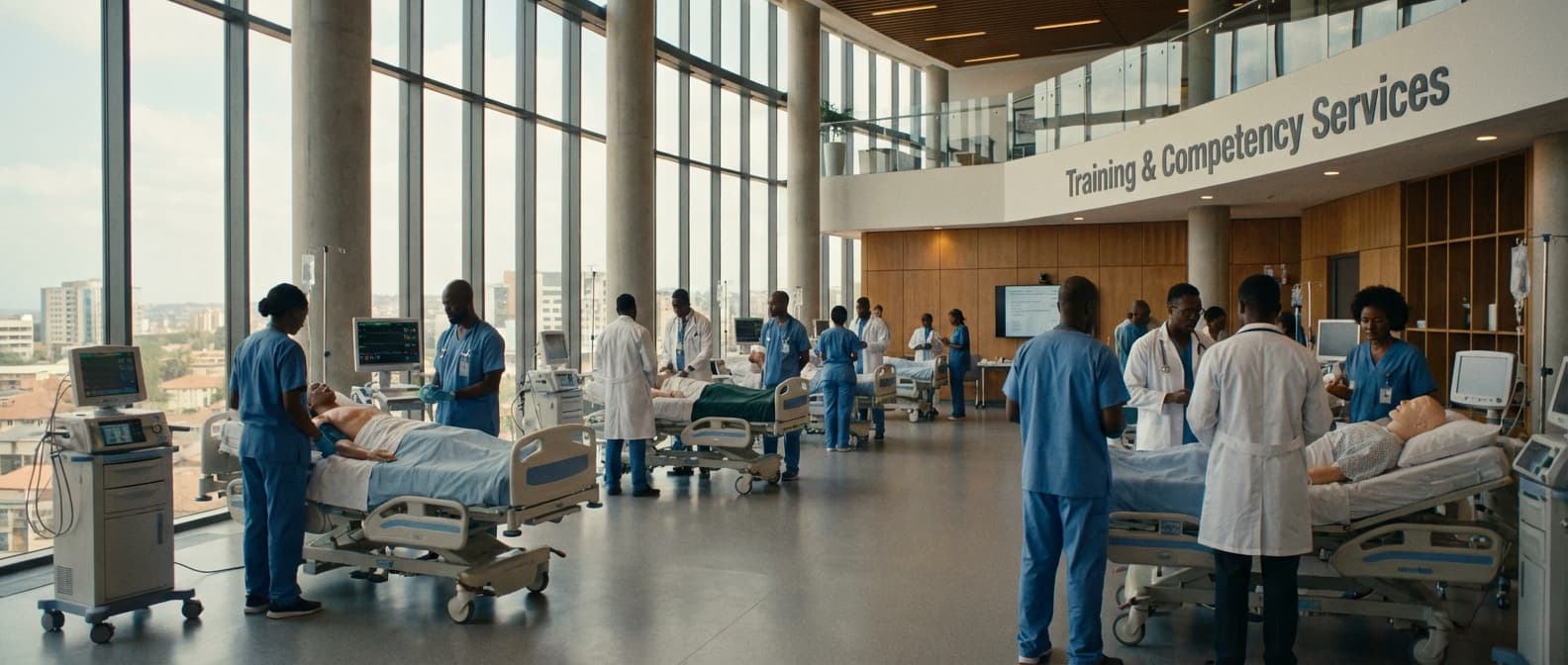
Anesthesia Workstation User Training Service in Sierra Leone
Engineering Excellence & Technical Support
Anesthesia Workstation User Training Service High-standard technical execution following OEM protocols and local regulatory frameworks.
Mastering Anesthesia Workstation Safety Protocols
Comprehensive training modules focus on critical safety features of anesthesia workstations, including pre-use checks, alarm management, gas delivery system integrity, and emergency shutdown procedures, ensuring safe patient care in Sierra Leone's healthcare settings.
Streamlining Anesthetic Workflow with Advanced Features
Learn to efficiently utilize advanced functionalities of anesthesia workstations, such as integrated ventilation modes, anesthetic vaporizers, and monitoring capabilities. Our training enhances user proficiency, leading to optimized patient management and reduced procedure times.
Essential Troubleshooting & Basic Maintenance for Anesthesia Workstations
Gain practical skills in identifying common workstation malfunctions, performing basic troubleshooting steps, and understanding routine maintenance requirements. This empowers local healthcare professionals to maximize equipment uptime and ensure reliable anesthetic delivery.
What Is Anesthesia Workstation User Training Service In Sierra Leone?
Anesthesia Workstation User Training Service in Sierra Leone refers to a specialized educational program designed to equip healthcare professionals with the knowledge and practical skills required to operate and maintain anesthesia workstations effectively and safely within the context of Sierra Leone's healthcare infrastructure. This service is critical for ensuring patient safety, optimizing resource utilization, and improving the quality of anesthetic care delivered in the country's medical facilities.
| Target Audience | Description of Need | Typical Use Cases |
|---|---|---|
| Anesthesiologists (Consultant, Resident) | Requires advanced knowledge for complex anesthetic management, critical care interventions, and supervision of junior staff. | General surgery, specialized surgeries (cardiac, neuro), obstetric anesthesia, intensive care unit (ICU) ventilation management, pain management procedures. |
| Anesthetic Nurses/Technicians | Essential for daily operation, setup, monitoring, and basic maintenance of the workstation under the supervision of an anesthesiologist. | Pre-operative preparation, intra-operative monitoring, post-operative recovery, transfer of patients with ventilated support, routine equipment checks. |
| Medical Engineers/Biomedical Technicians | Focuses on in-depth understanding of the technical specifications, repair, calibration, and preventive maintenance of anesthesia workstations. | Routine servicing and calibration, troubleshooting complex technical faults, installation of new equipment, ensuring compliance with manufacturer's specifications. |
| Hospital Administrators/Procurement Officers | Understanding of the operational requirements, maintenance needs, and training demands to inform purchasing decisions and resource allocation. | Selecting appropriate anesthesia workstation models based on local needs and resources, budgeting for training and maintenance, developing institutional policies for equipment management. |
Key Components of Anesthesia Workstation User Training
- Workstation Fundamentals: Comprehensive understanding of the physical components, pneumatic systems, gas delivery mechanisms (oxygen, nitrous oxide, medical air), and scavenging systems of various anesthesia workstation models.
- Ventilator Operation and Management: In-depth training on mechanical ventilation principles, setting appropriate ventilation modes (e.g., volume control, pressure control, SIMV), monitoring patient respiratory parameters, and managing ventilation-related complications.
- Vaporizer Calibration and Use: Proficiency in the safe and accurate use of integrated and standalone vaporizers, including understanding anesthetic agent properties, calibration procedures, and troubleshooting.
- Monitoring and Alarms: Familiarization with integrated patient monitoring capabilities (e.g., SpO2, EtCO2, NIBP, ECG, temperature), understanding alarm thresholds, and responding appropriately to critical events.
- Circuitry and Gas Flow Dynamics: Knowledge of breathing circuit configurations (e.g., Mapleson circuits, circle systems), flow control, and the detection and management of leaks or circuit malfunctions.
- Emergency Procedures and Troubleshooting: Training on recognizing and responding to equipment failures, power outages, gas supply interruptions, and other critical scenarios during anesthetic administration.
- Infection Control and Sterilization: Protocols for cleaning, disinfection, and sterilization of workstation components and accessories to prevent healthcare-associated infections.
- Preventive Maintenance and Basic Servicing: Understanding of routine checks, lubrication, filter replacement, and basic troubleshooting to ensure the reliable functioning of the workstation.
- Regulatory Compliance and Best Practices: Adherence to national and international guidelines for anesthesia practice and equipment safety.
- Hands-on Practical Sessions: Simulated scenarios and practical exercises using actual workstations in a controlled environment.
Who Needs Anesthesia Workstation User Training Service In Sierra Leone?
Anesthesia workstation user training services are critical in Sierra Leone to ensure safe and effective patient care. These services are vital for healthcare facilities that utilize modern anesthesia equipment, aiming to enhance the skills and knowledge of medical professionals involved in surgical procedures. The training focuses on the proper operation, maintenance, and troubleshooting of anesthesia workstations, ultimately contributing to improved patient outcomes and reduced medical errors.
| Department | Specific Roles/Personnel | Training Needs |
|---|---|---|
| Anesthesiology | Anesthesiologists, Certified Registered Nurse Anesthetists (CRNAs), Anesthesia Technicians | Advanced operation of ventilators, gas delivery systems, patient monitoring, drug administration, emergency management, troubleshooting. |
| Surgery | Surgeons (especially those involved in time-sensitive or complex procedures) | Understanding workstation capabilities and limitations to optimize surgical planning and patient safety during procedures. |
| Operating Room (OR) Nursing | OR Nurses, Perioperative Nurses | Familiarity with workstation setup, patient connection, basic troubleshooting, and emergency response protocols. |
| Biomedical Engineering/Technical Services | Biomedical Engineers, Medical Equipment Technicians | In-depth understanding of the workstation's mechanical and electrical components for maintenance, calibration, repair, and ensuring optimal functionality. |
| Critical Care/Intensive Care Units (ICUs) | Intensivists, ICU Nurses, Respiratory Therapists | Utilization of workstation features for prolonged mechanical ventilation, weaning protocols, and managing critically ill patients. |
| Medical Education & Training Institutions | Medical Schools, Nursing Schools, Paramedic Training Programs | Integrating workstation training into the curriculum for future healthcare professionals, ensuring they are proficient from the outset of their careers. |
Target Customers and Departments in Sierra Leone for Anesthesia Workstation User Training Services
- Hospitals (Public and Private)
- Tertiary Referral Centers
- University Teaching Hospitals
- Surgical Centers
- Field Hospitals/Mobile Clinics (for specific outreach programs)
Anesthesia Workstation User Training Service Process In Sierra Leone
This document outlines the standardized workflow for the Anesthesia Workstation User Training Service in Sierra Leone, covering the entire process from initial inquiry to successful execution. The objective is to ensure a systematic and efficient delivery of high-quality training to healthcare professionals operating anesthesia workstations, thereby enhancing patient safety and improving healthcare outcomes.
| Phase | Stage | Key Activities | Responsible Party | Deliverables/Outcomes | Timeline (Indicative) |
|---|---|---|---|---|---|
| 1.1. Inquiry Reception | Receive and log initial inquiry regarding anesthesia workstation user training. | Service Provider (SP) - Administrative Staff | Inquiry log created. | Immediate upon receipt |
| 1.2. Needs Assessment | Conduct an initial needs assessment to understand the target audience's skill level, existing knowledge, number of trainees, workstation model, and specific training requirements. | SP - Training Coordinator / Lead Trainer | Needs assessment report, identified training scope. | 1-3 working days | |
| 1.3. Information Gathering | Gather relevant information about the requesting institution (hospital, clinic, etc.), their infrastructure, and any pre-existing training protocols. | SP - Training Coordinator | Institution profile, infrastructure details. | 1-2 working days | |
| 2.1. Proposal Development | Develop a detailed training proposal outlining objectives, curriculum, methodology, duration, location, trainers, equipment requirements, and cost. | SP - Training Coordinator / Business Development | Formal training proposal. | 2-5 working days (post assessment) |
| 2.2. Proposal Review and Negotiation | Submit proposal to the requesting institution for review. Engage in discussions and negotiations to finalize terms. | SP - Business Development / Requesting Institution | Agreed-upon proposal details. | 2-7 working days | |
| 2.3. Contract/Agreement Signing | Formalize the agreement through a signed contract or Memorandum of Understanding (MOU). | SP & Requesting Institution | Signed contract/MOU. | 1-3 working days | |
| 3.1. Curriculum Finalization | Finalize the training curriculum based on the agreed-upon proposal and any specific modifications requested. | SP - Lead Trainer | Finalized training curriculum. | 2-4 working days (post agreement) |
| 3.2. Trainer Assignment | Assign qualified and experienced trainers to the training program. | SP - Training Coordinator | Assigned trainer profiles. | 1-2 working days | |
| 3.3. Logistics and Scheduling | Coordinate training dates, times, venue, and ensure all necessary logistics (travel, accommodation for trainers if applicable) are in place. | SP - Administrative Staff / Training Coordinator | Confirmed training schedule, confirmed venue. | 3-7 working days | |
| 3.4. Training Material Preparation | Develop or procure training materials, presentations, handouts, practical exercises, and assessment tools. | SP - Trainers / Training Material Developer | Comprehensive training package. | 5-10 working days | |
| 3.5. Equipment Verification | Confirm availability and functionality of anesthesia workstations and any other required training equipment at the designated training venue. | SP - Trainers / Logistics Staff & Requesting Institution | Confirmed equipment readiness. | 2-3 working days (prior to training) | |
| 4.1. Pre-Training Briefing | Conduct a pre-training briefing for trainees to outline the objectives, schedule, and expectations. | SP - Lead Trainer | Informed trainees. | Start of training |
| 4.2. Theoretical Sessions | Deliver theoretical knowledge on anesthesia workstation principles, operation, safety features, and troubleshooting. | SP - Trainers | Knowledge acquisition by trainees. | As per curriculum schedule | |
| 4.3. Practical Demonstrations and Hands-on Practice | Conduct live demonstrations and provide supervised hands-on practice sessions on the anesthesia workstations. | SP - Trainers | Skill development and proficiency. | As per curriculum schedule | |
| 4.4. Q&A and Discussion | Facilitate question-and-answer sessions and encourage discussions to address trainee queries and concerns. | SP - Trainers | Clarified understanding, addressed concerns. | Throughout training | |
| 4.5. Competency Assessment | Evaluate trainee competency through practical assessments, quizzes, or case studies to ensure understanding and skill application. | SP - Trainers | Trainee competency evaluation report. | End of training sessions | |
| 5.1. Post-Training Assessment Review | Review and analyze assessment results to identify areas of strength and areas requiring further attention. | SP - Lead Trainer / Training Coordinator | Trainee performance analysis. | 1-3 working days (post training) |
| 5.2. Certificate Issuance | Issue certificates of completion to trainees who have successfully met the competency requirements. | SP - Administrative Staff | Training certificates. | 2-5 working days (post assessment review) | |
| 5.3. Feedback Collection | Collect feedback from trainees and the requesting institution on the training program's effectiveness, content, and delivery. | SP - Training Coordinator | Training feedback forms, qualitative feedback. | End of training / within 1-2 working days | |
| 5.4. Training Report Generation | Prepare a comprehensive training report including attendance, assessment results, feedback summary, and recommendations. | SP - Training Coordinator | Final training report. | 5-7 working days (post training) | |
| 5.5. Post-Training Support (if agreed) | Provide post-training support, such as answering queries or offering refresher sessions as per the service agreement. | SP - Designated Support Staff | Continued user support. | As per agreement |
Anesthesia Workstation User Training Service Process in Sierra Leone
- Phase 1: Inquiry and Initial Assessment
- Phase 2: Proposal and Agreement
- Phase 3: Training Preparation
- Phase 4: Training Delivery
- Phase 5: Post-Training Follow-up and Evaluation
Anesthesia Workstation User Training Service Cost In Sierra Leone
The cost of anesthesia workstation user training services in Sierra Leone is influenced by several key factors. These include the duration and intensity of the training program, the experience and qualifications of the trainers, the location and accessibility of the training facility, the number of participants, and the specific anesthesia workstation models being covered. Additional costs may arise from training materials, equipment usage fees, and any necessary travel and accommodation for trainers or participants, especially if training is conducted in remote areas. The demand for specialized technical training, combined with the limited availability of highly skilled trainers in Sierra Leone, also contributes to the overall pricing. It's common for institutions to seek tailored training packages to meet their specific needs, which can impact the final cost. Costs are typically quoted in Sierra Leonean Leone (SLL).
| Training Service Component | Estimated Cost Range (SLL) | Notes |
|---|---|---|
| Basic User Training (1-2 days) | 1,500,000 - 3,000,000 | Covers fundamental operation and safety. Price per participant or group. |
| Advanced/Specialized Training (3-5 days) | 3,000,000 - 7,500,000 | In-depth troubleshooting, specific features, and maintenance. Price per participant or group. |
| On-site Training (per day, inclusive of trainer fee) | 1,000,000 - 2,500,000 | Excludes participant travel/accommodation if applicable. May have minimum day bookings. |
| Trainer Travel & Accommodation (per trainer, per day) | 500,000 - 1,500,000 | Dependent on destination and accommodation standards. Applicable for off-site training. |
| Training Materials (per participant) | 100,000 - 300,000 | Manuals, handouts, and digital resources. |
| Customized Training Package (variable) | Negotiable (based on scope) | Tailored to specific institutional needs and workstation models. |
Key Pricing Factors for Anesthesia Workstation User Training in Sierra Leone
- Training Program Duration and Intensity
- Trainer Experience and Qualifications
- Training Facility Location and Accessibility
- Number of Participants
- Specific Anesthesia Workstation Models Covered
- Training Materials
- Equipment Usage Fees
- Travel and Accommodation (if applicable)
- Customization of Training Packages
- Demand for Specialized Training and Trainer Availability
Affordable Anesthesia Workstation User Training Service Options
Our Affordable Anesthesia Workstation User Training Service is designed to equip your clinical staff with the essential knowledge and practical skills to operate your anesthesia workstations safely and efficiently. We understand the budgetary constraints healthcare facilities often face, and therefore, we offer flexible training solutions tailored to your specific needs and financial considerations. This includes value bundles that combine multiple training modules at a discounted rate and cost-saving strategies to maximize your investment.
| Value Bundle Name | Included Modules | Target Audience | Estimated Savings (%) | Pricing Tier |
|---|---|---|---|---|
| Basic Operator Certification | Workstation Overview, Gas Delivery & Vaporizers, Ventilation Modes (Basic) | New Staff, Refresher Training | 10-15% | Tier 1 (Most Affordable) |
| Advanced User Proficiency | Basic Operator Certification + Advanced Ventilation Modes, Monitoring Integration, Troubleshooting | Experienced Nurses & Anesthetists | 15-20% | Tier 2 (Balanced) |
| Comprehensive Anesthesia Team Training | Advanced User Proficiency + Emergency Scenarios, Maintenance Basics, Quality Assurance | Full Anesthesia Department, New Workstation Implementation | 20-25% | Tier 3 (Premium Value) |
| Custom Bundle | Tailored to specific needs | All | Variable (Negotiable) | Custom |
Key Training Service Features:
- Comprehensive curriculum covering all critical aspects of anesthesia workstation operation.
- Hands-on practical sessions with simulated patient scenarios.
- Experienced and certified anesthesia instructors.
- Customizable training modules to address specific workstation models and staff experience levels.
- On-site and remote training options to minimize disruption.
- Post-training support and competency assessment.
Verified Providers In Sierra Leone
In Sierra Leone, ensuring access to reliable and trustworthy healthcare is paramount. When seeking medical services, particularly those requiring specialized expertise or adherence to rigorous standards, the concept of 'Verified Providers' becomes crucial. Franance Health stands out as a leading entity in this regard, offering a network of credentialed and vetted healthcare professionals. This verification process not only guarantees a baseline of quality but also provides patients with peace of mind, knowing they are receiving care from individuals who meet stringent professional and ethical benchmarks. Understanding what constitutes a verified provider and why Franance Health's approach is superior offers a clear pathway to better health outcomes in Sierra Leone.
| Aspect of Verification | Franance Health's Approach | Benefit to Patients |
|---|---|---|
| Professional Licenses and Certifications | Thoroughly verifies all relevant medical licenses and certifications with national and international bodies. | Ensures providers possess the legally required qualifications and expertise. |
| Work Experience and Track Record | Screens past employment records and conducts reference checks to assess professional history and performance. | Minimizes the risk of engaging with underqualified or poorly performing practitioners. |
| Background Checks and Criminal Records | Conducts comprehensive background checks to ensure a safe and secure environment for patients. | Protects patients from potential harm and maintains a trustworthy healthcare system. |
| Adherence to Ethical Guidelines | Ensures all providers understand and commit to a strict code of medical ethics and patient rights. | Guarantees respectful, compassionate, and transparent patient care. |
| Specialty Competency Validation | For specialized services, confirms specific training and experience relevant to the claimed expertise. | Provides confidence that patients are receiving care from genuine specialists. |
| Patient Feedback and Performance Monitoring | Implements systems for collecting and analyzing patient feedback, and conducts ongoing performance reviews. | Drives continuous improvement in service quality and addresses any emerging concerns promptly. |
Why Franance Health's Verified Providers Represent the Best Choice:
- Rigorous Credentialing Process
- Commitment to Patient Safety
- Ethical Practice Standards
- Continuous Professional Development
- Accessibility and Trustworthiness
- Enhanced Patient Outcomes
Scope Of Work For Anesthesia Workstation User Training Service
This Scope of Work outlines the requirements for providing comprehensive Anesthesia Workstation User Training services. The training aims to ensure that medical professionals are proficient in the safe and effective operation, maintenance, and troubleshooting of the specified anesthesia workstations. This document details the technical deliverables and standard specifications for the training program.
| Category | Deliverable Description | Standard Specifications / Requirements |
|---|---|---|
| Training Program Design | Development of a comprehensive, modular training curriculum tailored to the specific anesthesia workstation model(s). | Curriculum must cover system overview, setup, pre-use checks, patient connection, ventilation modes, drug delivery, monitoring, alarm management, emergency procedures, post-use procedures, and basic troubleshooting. Content must be evidence-based and aligned with current clinical guidelines. Training materials to be provided in English. Consideration for localization if required. |
| Training Materials | Provision of high-quality, user-friendly training materials for both instructors and participants. | Materials to include: Instructor manuals, participant workbooks/handouts, presentation slides, quick reference guides, and access to relevant digital resources (e.g., online modules, videos). Materials must be visually clear, concise, and easy to understand. Digital formats preferred for accessibility and ease of distribution. |
| Training Delivery | On-site and/or remote (virtual) delivery of training sessions by certified and experienced instructors. | Instructors must possess demonstrable expertise in anesthesia principles and hands-on experience with the specific workstation model(s). Training sessions to be interactive, incorporating lectures, demonstrations, hands-on practice, case studies, and Q&A. Minimum participant-to-instructor ratio to be defined to ensure adequate supervision during practical sessions. For remote delivery, robust online platforms and interactive tools are required. |
| Hands-on Practical Sessions | Dedicated time for participants to practice operating the anesthesia workstation under direct instructor supervision. | Access to functional anesthesia workstations (either on-site or simulated) for each training group. Practical exercises to mimic real-world clinical scenarios. Emphasis on safe operation and troubleshooting of common issues. |
| Assessment and Evaluation | Development and implementation of methods to assess participant competency and evaluate the effectiveness of the training program. | Assessment methods to include: written/online quizzes, practical skill demonstrations, and post-training feedback surveys. Competency assessment to confirm users can perform critical tasks. Evaluation of training effectiveness to identify areas for program improvement. Pass/fail criteria to be clearly defined. |
| Certification | Issuance of certificates of completion to participants who successfully meet the competency requirements. | Certificates to be professionally designed, including participant name, training date, workstation model, and issuing organization. Unique identifier for each certificate for verification purposes. |
| Troubleshooting Support | Provision of post-training support for user queries and basic troubleshooting assistance. | Defined channels for post-training support (e.g., dedicated email, phone line). Response time SLAs for technical queries to be established. Support to focus on user operational issues, not hardware repair. |
| Reporting | Submission of training reports detailing program delivery, participant attendance, assessment results, and feedback. | Reports to be provided in a structured format (e.g., PDF, Excel). Summary statistics on competency achievement and areas requiring further training. Anonymized feedback analysis to be included. |
| Equipment and Logistics (On-site) | Ensuring availability of necessary training equipment and managing logistical aspects for on-site training. | Provider to supply all necessary training workstations, simulators, and consumables. Provider responsible for transportation, setup, and dismantling of equipment. Venue requirements to be agreed upon if not provided by the client. |
| Adherence to Standards | Compliance with all relevant industry standards, regulations, and best practices. | Training to align with FDA, CE, ISO, and other applicable regulatory body requirements for medical device user training. Adherence to data privacy and security regulations. |
Key Objectives
- To equip users with the knowledge and practical skills to operate the anesthesia workstation safely and efficiently during patient care.
- To ensure users understand the workstation's features, functions, and limitations.
- To provide users with the ability to perform routine checks, basic maintenance, and identify common troubleshooting scenarios.
- To promote best practices in anesthesia delivery and patient safety related to workstation usage.
- To meet regulatory and accreditation requirements for user competency.
Service Level Agreement For Anesthesia Workstation User Training Service
This Service Level Agreement (SLA) outlines the terms and conditions for the Anesthesia Workstation User Training Service provided by [Your Company Name]. It defines the expected performance standards, including response times for support requests and uptime guarantees for access to training materials and platforms.
| Service Component | Response Time Target | Uptime Guarantee |
|---|---|---|
| Digital Training Modules Access | N/A (24/7 access) | 99.5% |
| Training Support Helpdesk (Email/Ticket) | Within 4 business hours | N/A |
| Training Support Helpdesk (Phone) | Within 1 business hour during business hours | N/A |
| Scheduled Live Training Sessions | Confirmation within 2 business days | Platform availability: 99.8% |
Key Service Components
- On-demand access to digital training modules.
- Scheduled live training sessions (webinars/virtual classrooms).
- Access to a dedicated training support helpdesk.
Frequently Asked Questions

Ready when you are
Let's scope your Anesthesia Workstation User Training Service in Sierra Leone project in Sierra Leone.

Scaling healthcare logistics and technical systems across the entire continent.