
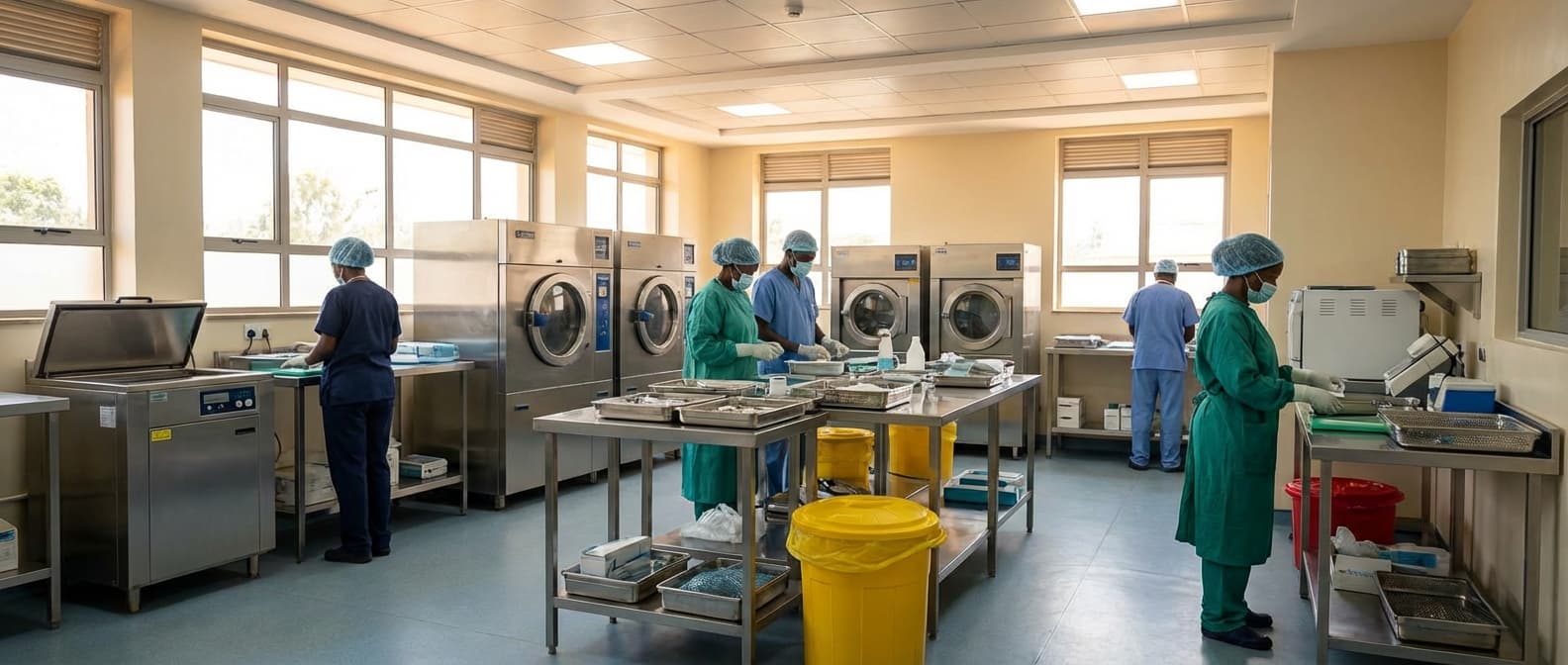
Medical Equipment Decontamination Service (Pre-Repair/Pre-Relocation) in Sierra Leone
Engineering Excellence & Technical Support
Medical Equipment Decontamination Service (Pre-Repair/Pre-Relocation) High-standard technical execution following OEM protocols and local regulatory frameworks.
Biohazard Containment & Sterilization
Our advanced decontamination protocols employ multi-stage HEPA filtration and industry-grade disinfectants to eliminate all biological hazards, ensuring equipment safety for technicians and preventing cross-contamination during pre-repair and pre-relocation processes in Sierra Leone.
Pathogen Elimination Assurance
Utilizing validated decontamination methods and meticulous visual inspections, we guarantee the eradication of all infectious agents, including notoriously resilient pathogens, safeguarding the integrity of critical medical equipment and public health in Sierra Leone.
Expedited Pre-Service Readiness
We offer rapid and efficient decontamination services, minimizing downtime for your medical equipment. Our streamlined process ensures that devices are safe and ready for repair or relocation swiftly, supporting uninterrupted healthcare delivery across Sierra Leone.
What Is Medical Equipment Decontamination Service (Pre-repair/pre-relocation) In Sierra Leone?
Medical Equipment Decontamination Service (Pre-Repair/Pre-Relocation) in Sierra Leone refers to the specialized process of rendering medical devices safe for handling by third-party personnel during repair or relocation. This involves the thorough cleaning, disinfection, and/or sterilization of equipment to eliminate or reduce the presence of biological hazards, including pathogens, bioburden, and potentially infectious materials. The objective is to mitigate occupational health risks for technicians, transport personnel, and other individuals involved in the equipment's lifecycle, ensuring compliance with infection control protocols and regulatory guidelines within the healthcare sector of Sierra Leone.
| Who Needs the Service | Typical Use Cases |
|---|---|
| Healthcare Facilities (Hospitals, Clinics, Laboratories) in Sierra Leone | Routine maintenance and repair of diagnostic imaging equipment (e.g., X-ray machines, ultrasound devices). |
| Medical Device Manufacturers and their Authorized Service Providers operating within Sierra Leone | Repair of patient monitoring systems (e.g., ECG monitors, pulse oximeters) that have been in direct contact with patients. |
| Medical Equipment Suppliers and Distributors involved in asset management or relocation within Sierra Leone | Decontamination of surgical instruments before shipment to repair centers or new operational sites. |
| Government and Non-Governmental Organizations (NGOs) managing medical infrastructure in Sierra Leone | Preparation of anesthesia machines and ventilators for relocation or decommissioning. |
| Biomedical Engineering Departments within Sierra Leonean healthcare institutions | Cleaning and disinfection of laboratory equipment (e.g., centrifuges, microscopes) that may have handled biohazardous samples. |
| Any entity responsible for the handling or servicing of medical equipment in Sierra Leone | Decontamination of endoscopes or other invasive medical devices prior to external servicing or transport. |
Key Components of Medical Equipment Decontamination Service (Pre-Repair/Pre-Relocation)
- Initial Risk Assessment: Evaluating the type of equipment, its intended use, and potential bioburden.
- Cleaning: Mechanical removal of gross contamination (e.g., visible soil, bodily fluids).
- Disinfection: Application of chemical agents or physical methods to kill or inactivate microorganisms.
- Sterilization: Elimination of all forms of microbial life, including bacterial spores, if required for specific equipment or pathogens.
- Drying: Ensuring the equipment is dry to prevent microbial growth and facilitate proper packaging.
- Packaging and Labeling: Secure containment of decontaminated equipment with clear identification of the decontamination status.
- Documentation: Maintaining records of the decontamination process, including methods, agents used, and personnel involved.
Who Needs Medical Equipment Decontamination Service (Pre-repair/pre-relocation) In Sierra Leone?
The Medical Equipment Decontamination Service (Pre-Repair/Pre-Relocation) in Sierra Leone is a crucial specialized offering designed to ensure the safety and integrity of medical devices before they undergo maintenance or are moved to a new location. This service is vital for healthcare facilities, biomedical engineering companies, and even manufacturers or distributors operating within Sierra Leone. The primary goal is to eliminate biological, chemical, or radiological contaminants that could pose a risk to technicians, patients, or the environment during these processes.
| Customer Type | Relevant Departments/Personnel | Reason for Decontamination (Pre-Repair/Pre-Relocation) |
|---|---|---|
| Hospitals (Public & Private) | Biomedical Engineering Dept., Clinical Departments (e.g., Surgery, ICU, ER, Labs), Facilities Management | Equipment used in patient care often has biological contaminants. Essential for technician safety during repair and to prevent spread during relocation. |
| Clinics & Health Centers | Nurses, Clinical Officers, Maintenance Staff (if any) | Similar to hospitals, though on a smaller scale. Ensures safety for staff performing basic maintenance or moving equipment between rooms. |
| Diagnostic Laboratories | Laboratory Technicians, Biomedical Support Staff | Equipment like centrifuges, incubators, and analysers can be contaminated with biological samples. Decontamination is critical before servicing or relocation. |
| Biomedical Engineering Companies | Field Service Technicians, Workshop Technicians | Direct exposure risk to hazardous biological or chemical agents on returned or on-site equipment. Protects personnel and prevents contamination of workshops. |
| Medical Equipment Suppliers/Distributors | Logistics, Technical Support, Returns Department | Handling returned faulty equipment, preparing for shipment to repair centers, or relocating demonstration units. Ensures safe handling and compliance. |
| Ministry of Health and Sanitation (MoHS) | Procurement, Biomedical Unit, Regional Health Offices | Managing national equipment inventory, overseeing repairs for public facilities, and facilitating large-scale equipment transfers. Ensures public health safety and compliance. |
| NGOs/Humanitarian Organizations | Program Managers, Medical Staff, Logistics/Operations | Operating clinics or hospitals in challenging environments where equipment maintenance and relocation are frequent. Safety of their personnel and continuity of care are paramount. |
Target Customers and Departments Requiring Medical Equipment Decontamination Service (Pre-Repair/Pre-Relocation) in Sierra Leone
- {"title":"Healthcare Facilities","description":"Hospitals, clinics, health centers, and diagnostic laboratories are primary users. Equipment requiring repair or relocation within these facilities often becomes contaminated with patient biological fluids (blood, bodily fluids), requiring thorough decontamination before handling."}
- {"title":"Biomedical Engineering and Repair Services","description":"Companies and departments responsible for servicing and repairing medical equipment. Technicians handling contaminated devices for repair are at direct risk. Decontamination ensures their safety and prevents cross-contamination."}
- {"title":"Medical Equipment Manufacturers and Distributors","description":"Organizations involved in the sale, installation, and initial setup of new equipment, as well as those handling returned or refurbished devices. Decontamination might be required for devices returned for warranty claims or prior to relocation to new distribution centers or client sites."}
- {"title":"Government Health Agencies and Ministries","description":"Bodies overseeing public health infrastructure may require this service for equipment managed by national or regional health programs, especially during large-scale equipment upgrades or relocations."}
- {"title":"Non-Governmental Organizations (NGOs) and Humanitarian Aid Organizations","description":"Organizations operating healthcare programs in Sierra Leone will have medical equipment that needs to be maintained and potentially moved, especially in remote or disaster-affected areas."}
Medical Equipment Decontamination Service (Pre-repair/pre-relocation) Process In Sierra Leone
This document outlines the workflow for the Medical Equipment Decontamination Service (Pre-Repair/Pre-Relocation) in Sierra Leone, ensuring safe handling of equipment before it undergoes repair or relocation. The process begins with an inquiry and concludes with the successful decontamination and certification of the equipment.
| Stage | Description | Responsible Party | Key Activities | Deliverables |
|---|---|---|---|---|
| Inquiry and Assessment | The initial contact from a client (hospital, clinic, repair facility) requesting decontamination services for medical equipment. | Client, Decontamination Service Provider | Client submits inquiry, provides equipment details (type, condition, intended purpose). Provider conducts initial risk assessment based on provided information. | Initial understanding of client needs and equipment scope. |
| Quotation and Agreement | Based on the assessment, a formal quotation is prepared and submitted to the client. | Decontamination Service Provider, Client | Provider prepares a detailed quotation including scope of work, pricing, timeline, and terms. Client reviews and approves the quotation, leading to a service agreement. | Signed Service Agreement, Approved Quotation. |
| Equipment Collection/Drop-off | Secure and documented transfer of the equipment from the client's location to the decontamination facility. | Decontamination Service Provider, Client | Scheduled collection by the provider's trained personnel with appropriate transport, or the client delivers the equipment to the facility. Detailed inventory and condition report created upon handover. | Transferred Equipment, Chain of Custody Documentation. |
| Decontamination Procedure | The core process of rendering the medical equipment safe by eliminating biological, chemical, or radiological hazards. | Decontamination Service Provider | Application of approved decontamination agents and methods specific to the equipment type and identified contaminants. This may involve cleaning, disinfection, sterilization, or specialized treatments. Strict adherence to safety protocols and standard operating procedures (SOPs). | Decontaminated Equipment. |
| Quality Control and Testing | Verification that the decontamination process has been effective and the equipment is safe for further handling. | Decontamination Service Provider | Visual inspection for residues. May include environmental monitoring (e.g., air quality checks), surface swab testing for residual contaminants, and functional checks if applicable to ensure no damage occurred during the process. | Quality Control Report, Test Results. |
| Certification and Documentation | Formal confirmation that the equipment has undergone successful decontamination and is ready for its next stage. | Decontamination Service Provider | Issuance of a Decontamination Certificate detailing the equipment, procedures performed, date, and certifying personnel. All documentation from collection to completion is compiled. | Decontamination Certificate, Comprehensive Documentation Package. |
| Equipment Return/Release | Safe and documented transfer of the decontaminated equipment back to the client or to the designated repair/relocation facility. | Decontamination Service Provider, Client | Scheduled return delivery by the provider or client collection. Final handover with signature confirming receipt of decontaminated equipment and associated documentation. | Returned Decontaminated Equipment, Signed Release Form. |
Key Stages of the Medical Equipment Decontamination Service Workflow
- Inquiry and Assessment
- Quotation and Agreement
- Equipment Collection/Drop-off
- Decontamination Procedure
- Quality Control and Testing
- Certification and Documentation
- Equipment Return/Release
Medical Equipment Decontamination Service (Pre-repair/pre-relocation) Cost In Sierra Leone
The cost of medical equipment decontamination services prior to repair or relocation in Sierra Leone is influenced by several factors. These include the type and complexity of the medical equipment, the level of contamination, the urgency of the service, the location of the equipment within Sierra Leone, and the specific decontamination protocols and materials used. Service providers often have a tiered pricing structure based on these variables. For instance, simpler, non-invasive equipment will generally cost less than complex imaging machines or surgical instruments with potentially biohazardous residues. Emergency or same-day services typically incur a premium. Geographic remoteness can also add to transportation and logistical costs. Prices are usually quoted in Sierra Leonean Leone (SLL).
| Equipment Type Category | Estimated Cost Range (SLL) | Notes |
|---|---|---|
| Small Diagnostic Tools (e.g., stethoscopes, thermometers, blood pressure monitors) | 500,000 - 1,500,000 | Assumes standard cleaning, minimal contamination. |
| Mid-Size Equipment (e.g., portable ultrasound, basic laboratory equipment) | 1,500,000 - 5,000,000 | May involve more detailed cleaning and disinfection. |
| Large/Complex Equipment (e.g., X-ray machines, CT scanners, anesthesia machines, surgical tables) | 5,000,000 - 20,000,000+ | Requires specialized knowledge, advanced techniques, and potentially longer service times. Higher risk of biohazard requires more stringent protocols. |
| Surgical Instruments (sets) | 300,000 - 1,000,000 per set | Depends on the number and type of instruments in the set. Sterilization may be included or a separate charge. |
| Emergency/Rush Service Surcharge | Additional 30% - 100% of base cost | Applied to urgent requests for immediate decontamination. |
| Travel and Logistics Fee | Variable (based on distance and accessibility) | Added for services required in remote or difficult-to-access locations. |
Key Pricing Factors for Medical Equipment Decontamination in Sierra Leone:
- Type and complexity of medical equipment
- Level and nature of contamination (e.g., routine cleaning vs. biohazard)
- Urgency of the decontamination service (standard vs. emergency)
- Geographic location of the equipment within Sierra Leone
- Specific decontamination protocols and materials employed
- Provider's overhead costs and expertise
- Volume of equipment to be decontaminated
Affordable Medical Equipment Decontamination Service (Pre-repair/pre-relocation) Options
Investing in affordable medical equipment decontamination services before repair or relocation is a crucial, often overlooked, step. It safeguards technicians, patients, and the environment from potential biohazards, prevents cross-contamination during servicing, and ensures the equipment is ready for its next phase of use. Our pre-repair/pre-relocation decontamination services offer a cost-effective solution that mitigates risks and extends equipment lifespan.
| Cost-Saving Strategy | Description | Benefit |
|---|---|---|
| Bundled Service Discounts | When you combine decontamination with your pre-scheduled repair or relocation services, we offer preferential pricing. | Reduced overall service costs by leveraging integrated logistics and personnel. |
| Volume-Based Pricing | For healthcare facilities regularly requiring decontamination for multiple equipment units, we offer tiered discounts based on volume. | Lower per-unit cost for consistent, high-volume decontamination needs. |
| Preventative Maintenance Integration | Integrating decontamination into your regular preventative maintenance schedule is often more cost-effective than addressing issues reactively. | Minimizes the risk of costly contamination-related breakdowns and extends equipment lifespan. |
| Off-Peak Scheduling Options | Scheduling decontamination services during slower periods can sometimes allow for more flexible pricing. | Potential for reduced service fees by aligning with operational workflow. |
| Partnership Programs | Long-term contracts or partnerships with healthcare providers can unlock exclusive pricing and priority service. | Guaranteed cost savings and predictable service delivery for sustained collaboration. |
Value Bundles for Medical Equipment Decontamination
- Standard Decontamination: Basic surface cleaning and disinfection to remove visible contaminants and reduce microbial load. Ideal for routine maintenance and pre-storage.
- Enhanced Decontamination: Includes Standard Decontamination plus targeted cleaning of critical components and hard-to-reach areas. Recommended for equipment with known minor contamination or prior to minor repairs.
- Comprehensive Decontamination: A deep cleaning and disinfection process covering all accessible surfaces, internal components (where applicable and safe), and sterilization of removable parts. Essential for equipment with significant contamination history or before major repairs and relocations.
- Specialized Equipment Packages: Tailored bundles for specific equipment types (e.g., endoscopes, anesthesia machines, laboratory centrifuges) that require unique decontamination protocols and validation.
Verified Providers In Sierra Leone
In Sierra Leone, ensuring you're engaging with Verified Providers is paramount for receiving quality and trustworthy services, especially in critical sectors like healthcare. Franance Health stands out as a leading example of such a verified provider, distinguished by its robust credentials and commitment to excellence. Understanding why Franance Health represents the best choice involves examining their accreditation, operational standards, and proven track record.
| Aspect | Franance Health's Commitment | Why it Matters for Patients |
|---|---|---|
| Regulatory Compliance | Adheres to all Sierra Leonean Ministry of Health and Sanitation regulations. | Guarantees that services meet legal and safety requirements, protecting patients from substandard care. |
| Staff Expertise | Employs certified and experienced medical practitioners. | Ensures patients receive diagnoses and treatments from knowledgeable and skilled professionals. |
| Quality of Care | Implements evidence-based medical practices and protocols. | Provides effective and up-to-date treatments, leading to better health outcomes. |
| Infrastructure | Utilizes modern medical equipment and well-equipped facilities. | Facilitates accurate diagnostics and efficient treatment delivery, improving the patient experience. |
| Trust and Reliability | Maintains a strong reputation built on successful patient outcomes and positive feedback. | Offers peace of mind and confidence in the quality of services received. |
Key Credentials and Reasons Franance Health is the Best Choice:
- Official Accreditation & Licensing: Franance Health holds all necessary certifications and licenses from the Ministry of Health and Sanitation in Sierra Leone, along with any other relevant national regulatory bodies. This signifies adherence to legal requirements and quality assurance standards.
- Experienced and Qualified Medical Professionals: The organization employs a team of highly trained and experienced doctors, nurses, technicians, and support staff. Their qualifications are rigorously verified, ensuring competent and compassionate care.
- Commitment to International Standards: Franance Health often aligns its practices with international healthcare best practices and protocols. This ensures that patients receive care that meets global benchmarks for safety and effectiveness.
- State-of-the-Art Facilities and Equipment: Investment in modern medical equipment and well-maintained facilities is a hallmark of verified providers. Franance Health demonstrates this commitment, enabling accurate diagnostics and effective treatment.
- Positive Patient Testimonials and Reputation: A strong reputation built on positive patient experiences and word-of-mouth is a powerful indicator of a provider's reliability. Franance Health has cultivated a track record of trust and satisfaction.
- Transparency in Operations and Pricing: Verified providers are typically transparent about their services, treatment options, and associated costs. Franance Health strives for clarity, empowering patients to make informed decisions.
- Community Engagement and Impact: Beyond direct patient care, Franance Health actively engages with the community through health education, outreach programs, and contributions to public health initiatives, demonstrating a broader commitment to well-being.
- Focus on Patient-Centered Care: The emphasis is on understanding and meeting individual patient needs. This includes effective communication, respect for patient autonomy, and a personalized approach to treatment plans.
- Robust Data Security and Privacy: In an era of digital health, protecting patient information is crucial. Franance Health implements strong data security measures to ensure the confidentiality of patient records.
Scope Of Work For Medical Equipment Decontamination Service (Pre-repair/pre-relocation)
This Scope of Work (SOW) outlines the requirements for medical equipment decontamination services to be performed prior to equipment repair or relocation. The objective is to ensure that medical equipment is rendered safe and free from biological, chemical, or radiological hazards before being handled by repair technicians or transported to a new location. This service minimizes risks to personnel, prevents cross-contamination, and facilitates efficient and safe equipment handling.
| Parameter | Standard Specification | Notes/Applicability |
|---|---|---|
| Decontamination Agent Approval | Must be hospital-grade, EPA-registered, and FDA-approved (where applicable) | Based on manufacturer's recommendations and risk assessment |
| Contact Time for Disinfectants | As per manufacturer's instructions and regulatory guidelines (e.g., CDC, FDA) | Varies based on disinfectant and target microorganisms |
| Sterilization Method | Autoclaving (steam sterilization), chemical sterilization (e.g., EtO, H2O2), or other validated methods | Determined by equipment material compatibility and reprocessing instructions |
| Water Quality for Rinsing | Sterile water or deionized water (if specified by manufacturer) | Prevents recontamination or mineral deposits |
| Drying Method | Lint-free cloths, forced air, or manufacturer-recommended drying procedures | Ensures complete removal of moisture |
| PPE for Personnel | Gloves (nitrile or equivalent), eye protection, masks, gowns, and shoe covers as required | Based on risk assessment and potential for exposure |
| Documentation Accuracy | All fields in the decontamination log must be completed accurately and legibly | Ensures traceability and compliance |
| Waste Disposal Procedures | Segregation, labeling, and disposal according to biohazardous and chemical waste protocols | Adherence to local, state, and federal regulations |
| Equipment Handling Post-Decontamination | Equipment to be handled with clean gloves and placed in a clean, protected area | Prevents recontamination before repair or relocation |
Scope of Work - Medical Equipment Decontamination Service (Pre-Repair/Pre-Relocation)
- 1. Objective: To provide comprehensive decontamination services for medical equipment prior to repair or relocation, ensuring the safety of personnel and the integrity of the equipment.
- 2. Service Location: Decontamination will be performed at the designated location of the equipment, either within the healthcare facility or at an approved off-site facility, as specified by the client.
- 3. Equipment Covered: This SOW applies to all medical equipment requiring decontamination, including but not limited to diagnostic imaging devices, surgical instruments, patient monitoring systems, laboratory equipment, and other specialized medical apparatus. A detailed equipment list will be provided by the client.
- 4. Decontamination Process:
- Assessment: Initial assessment of the equipment to identify potential contaminants and the appropriate decontamination method.
- Pre-cleaning: Removal of gross soil, debris, and visible contaminants using approved cleaning agents.
- Disinfection/Sterilization: Application of appropriate disinfection or sterilization methods based on the type of equipment and identified contaminants. This may include chemical disinfection, autoclaving, or other validated processes.
- Rinsing and Drying: Thorough rinsing of the equipment with sterile water (if applicable) and complete drying to prevent microbial growth and corrosion.
- Final Inspection: Visual inspection to confirm the effectiveness of the decontamination process.
- 5. Decontamination Agents and Methods: Only approved, hospital-grade disinfectants, sterilants, and cleaning agents will be used. The selection of agents and methods will be based on manufacturer recommendations, regulatory guidelines, and risk assessment.
- 6. Personnel Qualifications: All decontamination personnel must be trained and certified in medical equipment decontamination procedures, infection control practices, and the safe handling of hazardous materials. They will adhere to all relevant health and safety protocols.
- 7. Documentation: A detailed decontamination log will be maintained for each piece of equipment, including:
- Date and time of decontamination
- Name of technician performing the service
- Equipment identification (serial number, asset tag)
- Type of decontamination performed (disinfection, sterilization)
- Agents and methods used
- Observations and any issues encountered
- Confirmation of decontamination.
- 8. Waste Disposal: All biohazardous and chemical waste generated during the decontamination process will be disposed of in accordance with local, state, and federal regulations.
- 9. Compliance: The decontamination service will be performed in compliance with all applicable regulatory standards, including OSHA, CDC, EPA, and manufacturer guidelines.
- 10. Client Responsibilities:
- Provide clear and accurate information regarding the equipment to be decontaminated.
- Grant access to the equipment and necessary work areas.
- Inform the decontamination team of any known or suspected biohazards or chemical contaminants.
- Ensure appropriate power and water access (if required).
- 11. Service Schedule: The service will be scheduled in coordination with the client to minimize disruption to facility operations. Emergency decontamination services may be available upon request.
- **12. Technical Deliverables:
- Completed Decontamination Log for each piece of equipment.
- Certificate of Decontamination for each piece of equipment.
- Waste manifests (if applicable).
- Post-service report summarizing services rendered and any significant findings.
- 13. Standard Specifications:
- Disinfection Level: Minimum high-level disinfection or sterilization, as dictated by equipment type and intended use.
- Drying: Equipment shall be thoroughly dried using lint-free cloths or forced air to prevent microbial proliferation.
- Cross-Contamination Prevention: Strict protocols to prevent cross-contamination between equipment and work areas.
- Material Compatibility: Decontamination agents and methods must be compatible with all materials used in the construction of the medical equipment.
- Safety: All personnel will wear appropriate Personal Protective Equipment (PPE) during the decontamination process.
- Traceability: All decontamination activities will be fully traceable through the documentation provided.
- Turnaround Time: Decontamination services will be completed within a mutually agreed-upon timeframe, typically within 24-48 hours of equipment access, unless otherwise specified for complex equipment or specialized processes.
Service Level Agreement For Medical Equipment Decontamination Service (Pre-repair/pre-relocation)
This Service Level Agreement (SLA) outlines the response times and uptime guarantees for the decontamination of medical equipment by [Your Company Name] prior to repair or relocation. This SLA is between [Your Company Name] (the "Provider") and [Client Name] (the "Client").
| Service Level | Response Time (Acknowledgement & Initiation) | Completion Time (Decontamination) | Notes |
|---|---|---|---|
| Critical Equipment | Within 2 Business Hours | Within 8 Business Hours (from initiation) | Priority scheduling. Client must clearly identify equipment as 'Critical' in Service Request. |
| Standard Equipment | Within 4 Business Hours | Within 24 Business Hours (from initiation) | Scheduled based on availability and priority. |
Key Definitions
- Decontamination: The process of removing or neutralizing biological, chemical, or radiological contaminants to render medical equipment safe for handling, repair, or relocation. This includes disinfection and/or sterilization as appropriate for the equipment and identified contaminants.
- Service Request: A formal notification from the Client to the Provider requesting decontamination services for a specific piece of medical equipment.
- Response Time: The maximum time allowed for the Provider to acknowledge a Service Request and initiate the decontamination process (e.g., dispatching a technician, confirming availability).
- Completion Time: The maximum time allowed for the Provider to complete the decontamination process for a piece of medical equipment, from the initiation of the service to the final release of the equipment.
- Uptime Guarantee: Not directly applicable to decontamination as it's a service performed on demand. However, the SLA focuses on the reliability and timeliness of the decontamination service itself to minimize equipment downtime for the Client.
- Critical Equipment: Medical equipment identified by the Client as essential for patient care and whose unavailability would have an immediate and severe impact on operations.
- Standard Equipment: Medical equipment not classified as Critical Equipment.
Frequently Asked Questions

Ready when you are
Let's scope your Medical Equipment Decontamination Service (Pre-Repair/Pre-Relocation) in Sierra Leone project in Sierra Leone.

Scaling healthcare logistics and technical systems across the entire continent.