
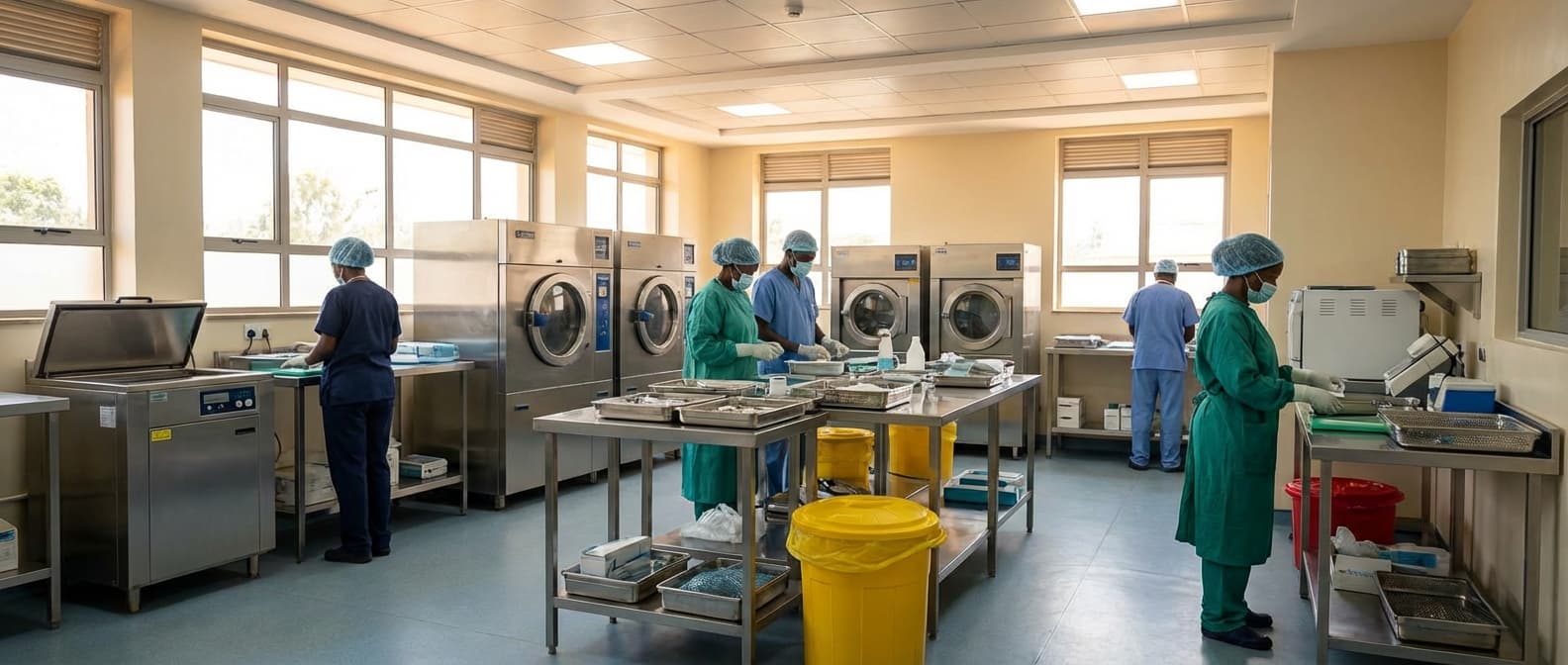
Infection-Control Readiness Support Service for Reusable Equipment in Sierra Leone
Engineering Excellence & Technical Support
Infection-Control Readiness Support Service for Reusable Equipment High-standard technical execution following OEM protocols and local regulatory frameworks.
Standardized Training Modules
Development and deployment of evidence-based, contextually relevant training modules for healthcare workers on the proper cleaning, disinfection, and sterilization of reusable medical equipment, ensuring consistent and effective infection prevention practices across all supported facilities.
Resource Optimization & Tracking
Implementation of a robust inventory management system to track availability and usage of essential cleaning and sterilization supplies, coupled with a predictive forecasting model to ensure timely replenishment and prevent stockouts, thereby maintaining operational readiness.
Equipment Auditing & Quality Assurance
Establishment of a regular auditing protocol to assess the condition and functionality of reusable medical equipment and the adherence to established infection control protocols, with data-driven feedback loops to identify areas for improvement and ensure sustained quality of care.
What Is Infection-control Readiness Support Service For Reusable Equipment In Sierra Leone?
Infection-Control Readiness Support Service (ICRSS) for Reusable Equipment in Sierra Leone is a comprehensive program designed to bolster the capacity of healthcare facilities to safely manage and sterilize reusable medical devices. This service aims to minimize the risk of healthcare-associated infections (HAIs) by ensuring that reusable equipment is processed according to established infection prevention and control (IPC) standards and guidelines. It encompasses training, provision of essential supplies and equipment, development of Standard Operating Procedures (SOPs), and ongoing monitoring and evaluation to ensure sustained compliance and readiness.
| Target Beneficiaries | Rationale for Need | Typical Use Cases |
|---|---|---|
| Public and private healthcare facilities (hospitals, clinics, health posts) in Sierra Leone. | Limited resources, insufficient training, inadequate infrastructure, and potential for interrupted supply chains can compromise safe reprocessing of reusable medical equipment, leading to increased HAI rates. This service directly addresses these vulnerabilities. | The service is critical in settings where reusable instruments are indispensable for procedures such as surgery, dentistry, wound care, and basic diagnostics. Specific use cases include:
|
| Healthcare workers involved in the direct care of patients and the reprocessing of medical equipment. | Inadequate knowledge and skills in IPC protocols can lead to improper sterilization, cross-contamination, and subsequent infections transmitted to patients and staff. Training and clear SOPs are vital for safe practice. | Facilitating the safe return of essential medical equipment to clinical use, thereby enabling the continuous provision of healthcare services. This directly impacts the quality and safety of care delivered, especially in resource-limited environments. |
| Ministry of Health and Sanitation (MoHS) and other national health authorities. | To establish and enforce national standards for IPC, reduce the burden of HAIs, improve patient outcomes, and ensure the effective and safe utilization of health resources. | Supporting national IPC programs and policies by building local capacity for the safe management of reusable medical devices, contributing to overall health system strengthening and resilience. |
Key Components of the Service:
- Assessment of current IPC practices and infrastructure related to reusable equipment.
- Development and implementation of contextually relevant SOPs for cleaning, disinfection, sterilization, and storage of reusable medical devices.
- Training of healthcare personnel (e.g., nurses, technicians, environmental health officers) on proper reprocessing techniques, including hand hygiene, personal protective equipment (PPE) use, and equipment handling.
- Provision or facilitation of access to necessary supplies and consumables (e.g., detergents, disinfectants, sterile water, packaging materials, PPE).
- Support for the procurement, maintenance, and validation of sterilization and disinfection equipment (e.g., autoclaves, washer-disinfectors).
- Establishment of robust monitoring and evaluation mechanisms to track compliance, identify gaps, and provide corrective feedback.
- Guidance on waste management associated with reusable equipment reprocessing.
- Development of a system for tracking reusable equipment throughout its lifecycle.
Who Needs Infection-control Readiness Support Service For Reusable Equipment In Sierra Leone?
This document outlines the critical need for infection-control readiness support services specifically for reusable medical equipment in Sierra Leone. The focus is on ensuring that healthcare facilities can safely and effectively reprocess and reuse essential medical devices, thereby enhancing patient safety, reducing healthcare costs, and improving the overall quality of care. The target customers are primarily healthcare facilities and organizations operating within Sierra Leone that rely on reusable medical equipment. These services are vital for preventing healthcare-associated infections (HAIs) and maintaining a robust healthcare system.
| Target Customer Type | Key Departments/Units within Facilities | Specific Needs/Challenges | Potential Impact of Support |
|---|---|---|---|
| Hospitals (All Tiers) | Central Sterile Supply Department (CSSD)/Sterilization Unit, Operating Theatres, Intensive Care Units (ICUs), Emergency Rooms, Maternity Wards, Surgical Wards, Outpatient Departments (OPDs) | Inadequate sterilization and disinfection protocols, lack of appropriate equipment and consumables, insufficient staff training, poor infrastructure for reprocessing, challenges in monitoring and quality assurance, limited access to updated guidelines. | Reduced HAIs, improved patient outcomes, increased availability of sterilized equipment, enhanced staff confidence and competence, cost savings through effective reuse, compliance with national and international standards. |
| Community Health Centers (CHCs) & MCHCs | Treatment rooms, delivery rooms, basic diagnostic areas | Limited or no formal sterilization capacity, reliance on manual cleaning methods, potential for cross-contamination, scarcity of resources and trained personnel. | Introduction of basic, safe reprocessing methods, prevention of infections in primary care settings, improved access to safe delivery services, enhanced community trust in healthcare services. |
| NGO Healthcare Providers | Various departments depending on their service focus (e.g., surgical missions, primary care clinics) | Similar challenges to government facilities, often with varying resource levels and geographical reach, need for standardized infection control practices across diverse settings. | Ensuring consistent infection control across all NGO-run facilities, supporting sustainable and safe practices, contributing to overall national HAI reduction goals. |
| Ministry of Health and Sanitation (MoHS) | Infection Prevention and Control (IPC) Unit, Procurement Department, Training and Human Resources Department, District Health Management Teams (DHMTs) | Need for national policy development and implementation, capacity building for district-level support, oversight and monitoring of IPC practices, resource allocation for IPC programs, development of training curricula. | Strengthened national IPC framework, improved oversight and regulation, standardized training programs, effective resource management for IPC, enhanced national capacity to combat HAIs. |
| Healthcare Training Institutions | Departments of nursing, medicine, public health; simulation centers | Need for integration of comprehensive reusable equipment reprocessing training into curricula, access to updated training materials and equipment for practical sessions. | Producing graduates with essential IPC knowledge and skills for reusable equipment, ensuring future healthcare workforce is adequately prepared, building a sustainable culture of infection prevention. |
Target Customers & Departments for Infection-Control Readiness Support Service for Reusable Equipment in Sierra Leone
- Hospitals (Government, Mission, Private)
- Tertiary and Secondary Healthcare Facilities
- District Hospitals
- Community Health Centers (CHCs)
- Maternal and Child Health Clinics (MCHCs)
- Non-Governmental Organizations (NGOs) providing healthcare services
- Ministry of Health and Sanitation (MoHS) at national and district levels
- Training Institutions for Healthcare Professionals
Infection-control Readiness Support Service For Reusable Equipment Process In Sierra Leone
This service aims to enhance infection control practices for reusable medical equipment in Sierra Leone by providing comprehensive support from initial inquiry to on-site execution. The workflow is designed to be systematic, ensuring all necessary steps are taken to assess needs, implement solutions, and provide ongoing support.
| Phase | Description | Key Activities |
|---|---|---|
| Inquiry | Initial contact and expression of interest. | Formal request submission, preliminary information exchange. |
| Needs Assessment | Understanding the current state of reusable equipment processing. | Site visits, staff interviews, protocol review, equipment inventory. |
| Gap Analysis | Identifying discrepancies between current practices and best practices. | Comparison with international guidelines, identification of specific deficiencies. |
| Solution Development | Designing tailored interventions and strategies. | Developing SOPs, selecting appropriate technologies, designing training modules. |
| Resource Mobilization | Securing necessary resources for implementation. | Procurement of equipment and supplies, identifying trainers, logistical planning. |
| Implementation | Putting the developed solutions into practice. | On-site training, equipment installation, SOP rollout, hands-on demonstration. |
| Monitoring and Evaluation | Assessing the effectiveness and impact of the implemented solutions. | Data collection on infection rates, process adherence checks, feedback surveys. |
| Post-Implementation Support | Ensuring long-term sustainability of improved practices. | Refresher training, remote technical assistance, periodic review visits. |
| Reporting and Knowledge Sharing | Documenting outcomes and disseminating findings. | Final project report, case studies, presentations, sharing lessons learned. |
Workflow for Infection-Control Readiness Support Service
- The process begins with an Inquiry from a healthcare facility or governing body in Sierra Leone expressing interest in improving their reusable equipment infection control practices.
- The Needs Assessment phase involves a detailed evaluation of the current state of reusable equipment processing, including existing protocols, available resources, staff training, and identified challenges. This may involve site visits, interviews, and document review.
- Following the assessment, a Gap Analysis is conducted to pinpoint specific deficiencies and areas requiring improvement. This leads to the formulation of tailored recommendations.
- The Solution Development stage involves designing a customized intervention plan. This includes identifying appropriate technologies, developing updated Standard Operating Procedures (SOPs), and creating training materials.
- In the Resource Mobilization phase, necessary equipment, supplies, and training personnel are identified and secured. This might involve procurement, logistical planning, and scheduling.
- The Implementation phase is where the developed solutions are put into practice. This includes on-site training for healthcare staff, installation of new equipment, and rollout of new SOPs.
- Monitoring and Evaluation are crucial to track the effectiveness of the implemented solutions. This involves regular checks, data collection on infection rates, and feedback mechanisms.
- The Post-Implementation Support phase ensures sustained adherence to best practices. This can include refresher training, ongoing technical assistance, and periodic reviews.
- Finally, Reporting and Knowledge Sharing consolidate the project's outcomes, lessons learned, and best practices to inform future initiatives and contribute to broader public health goals.
Infection-control Readiness Support Service For Reusable Equipment Cost In Sierra Leone
This document outlines the pricing factors and estimated cost ranges for an Infection-Control Readiness Support Service for Reusable Equipment in Sierra Leone. The service aims to ensure that medical facilities have the necessary protocols, training, and equipment to safely clean, disinfect, and sterilize reusable medical devices, thereby preventing healthcare-associated infections (HAIs). The pricing is presented in Sierra Leonean Leone (SLL).
| Service Component/Category | Estimated Cost Range (SLL) | Notes |
|---|---|---|
| Initial Needs Assessment and Protocol Development | 15,000,000 - 40,000,000 | Covers site visits, staff interviews, equipment inventory, and drafting of SOPs tailored to the facility. |
| Staff Training (per participant) | 2,500,000 - 7,500,000 | Includes training materials, facilitator fees, and practical demonstrations. Group discounts may apply. |
| Equipment Audit and Recommendations | 5,000,000 - 15,000,000 | Assessment of existing cleaning, disinfection, and sterilization equipment, with recommendations for upgrades or replacements. |
| Procurement Support (Consulting Fee) | 10,000,000 - 30,000,000 | Assistance in identifying suppliers, comparing specifications, and negotiating prices for new equipment. May be a percentage of equipment cost in some models. |
| On-site Supervision and Quality Assurance (per visit) | 7,500,000 - 20,000,000 | Periodic visits to monitor adherence to protocols, troubleshoot issues, and ensure quality of cleaning and sterilization. |
| Development of Training Materials (e.g., visual aids, manuals) | 4,000,000 - 12,000,000 | Creation of culturally appropriate and easy-to-understand educational resources. |
| Certification/Accreditation Preparation Support | 20,000,000 - 60,000,000 | Guidance through national or international accreditation processes, documentation review, and mock audits. |
| Comprehensive Package (e.g., 6-month initial support) | 70,000,000 - 200,000,000+ | A bundled offering that can include several of the above components, providing a holistic approach to readiness. |
Key Pricing Factors
- Scope of Service: The extent of support provided, including needs assessment, protocol development, training modules, equipment procurement advice, and ongoing monitoring.
- Facility Size and Complexity: The number of beds, specialized departments, and the volume of reusable equipment handled by the facility significantly influence the service's intensity.
- Current Infrastructure and Equipment: The existing state of cleaning, disinfection, and sterilization facilities and equipment will determine the level of intervention required.
- Training Needs: The number of staff requiring training and the complexity of the training modules (e.g., basic cleaning vs. advanced sterilization techniques).
- Equipment Procurement Support: Whether the service includes identification of suitable suppliers, price negotiation, and logistical support for acquiring new equipment.
- Geographic Location: Travel and logistical costs for service providers to reach remote or less accessible healthcare facilities within Sierra Leone.
- Duration of Support: Whether it's a one-time setup, a pilot program, or an ongoing maintenance and support contract.
- Certification and Accreditation Support: If the service includes assistance in meeting national or international standards for infection control.
- Reporting and Monitoring Frequency: The level of detail and frequency of reports on infection control practices and equipment performance.
- Consultant Expertise and Experience: The qualifications and track record of the infection control specialists providing the service.
Affordable Infection-control Readiness Support Service For Reusable Equipment Options
Our Affordable Infection-Control Readiness Support Service is designed to empower healthcare facilities with robust, cost-effective solutions for managing reusable medical equipment. We understand the critical need for stringent infection control while navigating budgetary constraints. Our service offers a tiered approach, focusing on preventative maintenance, comprehensive cleaning and disinfection protocols, and staff training, all while emphasizing value and long-term cost savings.
| Cost-Saving Strategy | Description | Value Proposition |
|---|---|---|
| Preventative Maintenance Scheduling | Proactive maintenance of reusable equipment to prevent breakdowns and extend lifespan, reducing costly emergency repairs and replacements. | Maximizes equipment uptime and reduces capital expenditure on new purchases. |
| Optimized Cleaning & Disinfection Protocols | Implementation of evidence-based, efficient cleaning and disinfection methods that minimize consumables (water, detergents, disinfectants) while ensuring efficacy. | Lowers operational costs associated with cleaning supplies and labor. |
| Staff Training & Competency Assessment | Empowering in-house staff with standardized training and regular competency checks, ensuring correct procedures are followed, thus reducing errors and reprocessing failures. | Minimizes risk of equipment damage due to improper handling and reduces need for external remediation. |
| Consumable Management & Bulk Purchasing | Assistance in identifying and sourcing cost-effective, high-quality cleaning and disinfection consumables, leveraging bulk purchasing power. | Achieves significant savings on recurring supply costs. |
| Technology Integration for Tracking & Compliance | Implementing affordable tracking systems to monitor equipment usage, cleaning cycles, and maintenance schedules, ensuring compliance and reducing lost or misplaced items. | Improves inventory control, reduces loss, and streamlines compliance reporting. |
| Risk Mitigation & Reduced Litigation | By ensuring robust infection control, the service significantly reduces the risk of healthcare-associated infections (HAIs), leading to fewer patient lawsuits and associated legal/settlement costs. | Protects the facility's reputation and financial stability. |
| Extended Equipment Lifespan | Proper care and maintenance through our service ensures reusable equipment lasts longer, delaying the need for capital reinvestment. | Direct reduction in capital expenditure over the long term. |
Value Bundles for Reusable Equipment Infection Control Readiness
- {"title":"Basic Readiness Bundle","description":"Ideal for facilities with established internal cleaning processes but seeking enhanced support for routine maintenance and basic training. Focuses on optimizing existing resources."}
- {"title":"Standard Readiness Bundle","description":"Includes comprehensive protocol development, advanced training modules, and regular equipment auditing. Suitable for facilities looking to standardize and elevate their infection control practices."}
- {"title":"Premium Readiness Bundle","description":"Offers end-to-end support, including outsourced specialized cleaning and disinfection, advanced tracking systems, and ongoing regulatory compliance monitoring. Designed for facilities prioritizing complete peace of mind and operational efficiency."}
Verified Providers In Sierra Leone
Finding reliable and trustworthy healthcare providers is paramount for individuals and organizations seeking quality medical services. In Sierra Leone, Franance Health has emerged as a leading name, distinguished by its commitment to excellence, ethical practices, and a comprehensive approach to patient care. This document outlines the credentials that solidify Franance Health's position as a top-tier provider and explains why they represent the best choice for healthcare needs in the region.
| Credential/Attribute | Description | Significance for Patients |
|---|---|---|
| Highly Qualified Staff | Doctors, nurses, and specialists with extensive training and experience, often with international exposure. | Ensures accurate diagnoses, effective treatments, and a high standard of care. |
| Adherence to Standards | Compliance with national and international healthcare regulations and quality benchmarks. | Guarantees safe and reliable medical services. |
| Modern Infrastructure | Investment in up-to-date medical equipment, diagnostic tools, and comfortable facilities. | Facilitates precise diagnosis and advanced treatment options, improving patient outcomes. |
| Diverse Service Portfolio | Offering a broad range of medical specialties and services under one roof. | Provides a convenient and integrated healthcare experience, meeting various needs without extensive travel. |
| Patient-Focused Care | Emphasis on empathy, clear communication, and empowering patients in their healthcare journey. | Builds trust and confidence, leading to better patient engagement and adherence to treatment plans. |
| Commitment to Community | Active involvement in public health awareness and accessible healthcare initiatives. | Demonstrates a dedication to the overall well-being of Sierra Leone. |
Franance Health's Key Credentials and Strengths
- Qualified and Experienced Medical Professionals: Franance Health employs a team of highly trained and experienced doctors, nurses, specialists, and support staff. Many of their practitioners have international experience and are up-to-date with the latest medical advancements and best practices.
- Accreditation and Compliance: Franance Health adheres to stringent national and international healthcare standards. They are committed to continuous quality improvement and regularly undergo assessments to maintain accreditations, ensuring their services meet rigorous benchmarks.
- State-of-the-Art Facilities and Technology: The organization invests in modern medical equipment and infrastructure. This commitment to advanced technology enables accurate diagnostics, effective treatments, and a comfortable patient experience.
- Comprehensive Service Offerings: Franance Health provides a wide spectrum of medical services, ranging from general consultations and preventative care to specialized treatments and emergency services. This holistic approach caters to diverse healthcare needs.
- Patient-Centric Approach: A core tenet of Franance Health is prioritizing patient well-being and satisfaction. They emphasize compassionate care, clear communication, and patient education, empowering individuals to make informed decisions about their health.
- Community Engagement and Outreach: Franance Health actively participates in community health initiatives and outreach programs. This demonstrates their dedication to improving public health beyond their immediate facilities and fostering healthier communities.
- Ethical Practices and Transparency: Upholding the highest ethical standards is fundamental to Franance Health's operations. They are transparent in their dealings, ensuring patients receive honest advice and fair treatment.
- Strong Referral Network: Franance Health has cultivated a robust network of local and international medical professionals and institutions. This allows for seamless referrals and access to specialized care when needed.
Scope Of Work For Infection-control Readiness Support Service For Reusable Equipment
This Scope of Work (SOW) outlines the services to be provided for infection-control readiness support for reusable equipment. The objective is to ensure that all reusable medical equipment is managed and processed in a manner that minimizes the risk of healthcare-associated infections (HAIs). This includes establishing and reinforcing robust infection-control protocols, providing training, and assessing current practices against established standards.
| Category | Standard Specification/Requirement | Description |
|---|---|---|
| Policy and Procedure Manual | Compliance with CDC Guidelines, AAMI Standards, and local regulatory requirements | A comprehensive manual detailing all aspects of reusable equipment reprocessing, including receiving, cleaning, disinfection, sterilization, storage, and distribution. Must be clear, concise, and easily accessible to all relevant personnel. |
| Cleaning | ANSI/AAMI ST79: Comprehensive Guide to Sterilization and Sterility Assurance in Health Care Facilities (relevant sections on cleaning) | Protocols must specify appropriate cleaning agents, water quality, temperature, contact time, and manual/mechanical cleaning methods to effectively remove organic and inorganic contaminants. |
| Disinfection | EPA-registered high-level disinfectants (HLDs) or intermediate-level disinfectants (ILDs) as appropriate for equipment type and intended use | Procedures must detail the correct concentration, contact time, temperature, and rinse procedures for all disinfectants used. Validation of disinfection efficacy against specific microorganisms is required. |
| Sterilization | ANSI/AAMI ST79, ANSI/AAMI ST41 (Ethylene Oxide Sterilization), ANSI/AAMI ST55 (Steam Sterilization) | Protocols must align with manufacturer's instructions for use (IFU) and established sterilization standards for the chosen method (e.g., steam, EtO, low-temperature sterilization). Includes parameters for temperature, pressure, time, and humidity. |
| Sterilization Monitoring | Biological indicators (BIs), Chemical indicators (CIs) - Type 4, 5, or 6 | Mandatory use of appropriate BIs for routine sterilization load monitoring and CIs for each individual load. Documentation of all monitoring results is critical. |
| Packaging and Storage | ISO 11607: Packaging for Terminally Sterilized Medical Devices | Requirements for sterile barrier systems that maintain sterility until the point of use. Storage conditions must prevent contamination, including temperature, humidity, and traffic control. |
| Personnel Training | Competency-based training programs | Training must cover all aspects of reusable equipment reprocessing, including understanding of microbiology, infection transmission, proper use of equipment and chemicals, and documentation. Competency assessments are required. |
| Documentation | HIPAA compliant, auditable records | All steps in the reprocessing cycle, including cleaning, disinfection, sterilization parameters, monitoring results, and distribution, must be meticulously documented and retained for specified periods. |
| Equipment Maintenance | Manufacturer's recommendations, regular calibration | Procedures for routine inspection, cleaning, maintenance, and calibration of all reprocessing equipment (e.g., washer-disinfectors, sterilizers) to ensure optimal performance. |
| Water Quality | AAMI TIR34: Water for Healthcare Facilities | Water used for rinsing and processing must meet specified purity standards to prevent recontamination or adverse effects on sterilization efficacy. |
Technical Deliverables
- Infection Control Policy and Procedure Manual for Reusable Equipment
- Training Materials (presentations, handouts, videos) for staff involved in reusable equipment reprocessing
- Risk Assessment Report for Reusable Equipment Processing
- Equipment Cleaning, Disinfection, and Sterilization Protocols (specific to equipment types)
- Validation and Verification Reports for Sterilization Processes
- Auditing and Monitoring Tools (checklists, observation forms)
- Recommendations for Equipment Acquisition and Maintenance from an infection control perspective
- Root Cause Analysis framework for any identified breaches in infection control
- Summary Report of findings, recommendations, and implementation plan
Service Level Agreement For Infection-control Readiness Support Service For Reusable Equipment
This Service Level Agreement (SLA) outlines the response times and uptime guarantees for the Infection-Control Readiness Support Service for Reusable Equipment. This service aims to ensure that all reusable equipment is properly cleaned, disinfected, and ready for use according to established infection control protocols. Prompt detection and resolution of issues are critical to maintaining patient safety and operational efficiency.
| Service Element | Response Time (Critical) | Response Time (High) | Response Time (Medium) | Uptime Guarantee (Service Availability) |
|---|---|---|---|---|
| Equipment Failure (Critical - immediate patient risk) | 15 minutes (Initial Acknowledgment) | 30 minutes (On-site/Remote Resolution Engagement) | N/A | 99.9% |
| Contamination Event Reported (High - potential patient risk) | 30 minutes (Initial Acknowledgment) | 1 hour (On-site/Remote Resolution Engagement) | N/A | 99.9% |
| Routine Maintenance/Troubleshooting (Medium - operational impact) | 1 hour (Initial Acknowledgment) | 4 hours (On-site/Remote Resolution Engagement) | N/A | 99.9% |
| Consultation Request (Low - informational/preventative) | N/A | N/A | 8 Business Hours (Acknowledgment) | N/A |
| Proactive Monitoring & Auditing | N/A | N/A | N/A | 99.5% (System Availability for monitoring tools) |
Key Service Components
- Proactive monitoring of equipment cleaning and disinfection processes.
- Rapid response to reported equipment failures or contamination events.
- Expert consultation on infection control best practices for reusable equipment.
- Regular auditing and reporting on infection control compliance.
- Provision of necessary consumables and technical support for infection control procedures.
Frequently Asked Questions

Ready when you are
Let's scope your Infection-Control Readiness Support Service for Reusable Equipment in Sierra Leone project in Sierra Leone.

Scaling healthcare logistics and technical systems across the entire continent.