
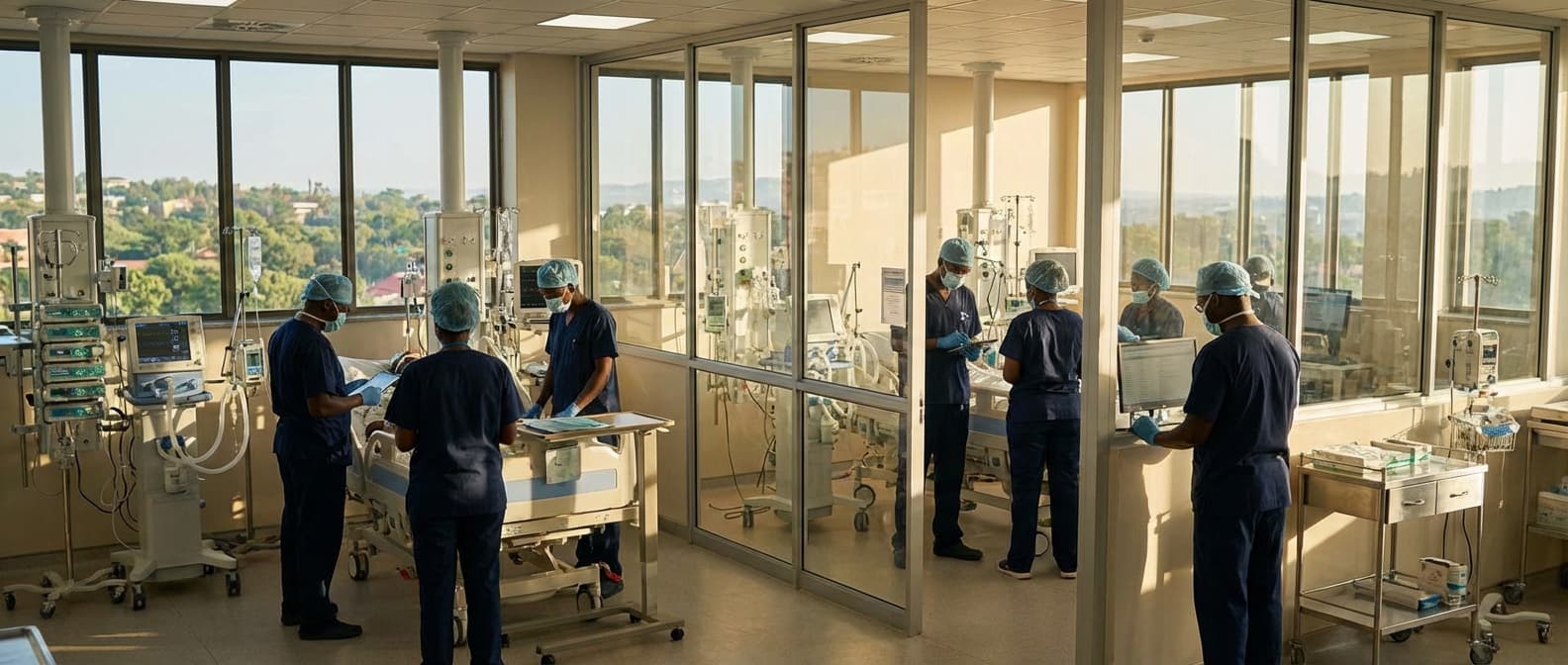
Ventilator Fleet Management & PM in Sierra Leone
Engineering Excellence & Technical Support
Preventive maintenance and fleet management for ICU ventilators High-standard technical execution following OEM protocols and local regulatory frameworks.
Predictive Maintenance Integration
Leveraging IoT sensors and real-time data analytics to forecast potential ventilator failures, enabling proactive repairs and minimizing critical downtime. This reduces the need for reactive interventions and ensures consistent availability for patients.
Real-time Asset Visibility
Implementing a centralized platform for real-time tracking and status monitoring of the entire ventilator fleet across all healthcare facilities. This ensures efficient allocation, immediate location identification during emergencies, and optimized inventory management.
Remote Diagnostics & Support
Enabling remote access for diagnostics and troubleshooting of ventilator performance issues, reducing the need for on-site technician visits and accelerating resolution times. This is particularly crucial for reaching remote or underserved areas.
What Is Ventilator Fleet Management & Pm In Sierra Leone?
Ventilator Fleet Management & Preventive Maintenance (PM) in Sierra Leone refers to the comprehensive system of planning, organizing, executing, and maintaining a fleet of mechanical ventilators within healthcare facilities. This service ensures that ventilators are readily available, optimally functional, and meet stringent performance and safety standards through proactive and reactive maintenance strategies. It encompasses the entire lifecycle of ventilator assets, from acquisition and deployment to ongoing operation, servicing, and eventual decommissioning. The primary objective is to guarantee continuous and reliable respiratory support for patients requiring mechanical ventilation, thereby improving patient outcomes and operational efficiency within the healthcare system.
| Who Needs Ventilator Fleet Management & PM? | Typical Use Cases |
|---|---|
| Ministry of Health and Sanitation (MoHS): Responsible for the overall health infrastructure and resource allocation. Requires oversight and standardization of ventilator assets across the nation. | National Emergency Response Operations: During public health emergencies (e.g., pandemics, natural disasters) requiring rapid deployment and high availability of ventilators. Resource Optimization: Identifying underutilized or overutilized assets to improve efficiency and reduce operational costs. |
| Regional and District Health Authorities: Managing healthcare facilities within their jurisdictions. Need to ensure adequate and functional ventilator stock for their populations. | Routine Clinical Care: Ensuring that critical care units, operating rooms, and emergency departments have fully operational ventilators for daily patient needs. Capital Equipment Planning: Informing future procurement decisions based on usage patterns, failure rates, and maintenance history. |
| Public and Tertiary Hospitals: Major healthcare providers with significant ventilator inventories. Require robust internal management systems. | Training and Simulation Exercises: Ensuring availability of calibrated ventilators for medical training programs and scenario-based drills. Device Lifecycle Tracking: Monitoring the performance and maintenance history of individual devices from acquisition to retirement. |
| Non-Governmental Organizations (NGOs) and International Aid Agencies: Often involved in supporting healthcare infrastructure, including the provision and maintenance of medical equipment. | Outbreak Preparedness and Response: Establishing surge capacity for ventilators in anticipation of or response to disease outbreaks. Cost-Benefit Analysis: Evaluating the economic viability of repair versus replacement of aging ventilator units. |
| Biomedical Engineering Departments/Units: The technical backbone responsible for implementing and executing the maintenance and repair aspects of the service. | Remote and Underserved Area Support: Ensuring that essential respiratory support is available in facilities with limited local technical expertise, potentially through remote monitoring and support. |
Key Components of Ventilator Fleet Management & PM
- Inventory Management: Establishing and maintaining an accurate, up-to-date record of all ventilator units, including make, model, serial number, acquisition date, location, and current operational status.
- Deployment & Allocation: Strategically distributing ventilators across healthcare facilities based on assessed needs, patient demographics, and disease prevalence, ensuring equitable access.
- Preventive Maintenance (PM) Scheduling & Execution: Implementing a systematic schedule for routine inspections, cleaning, calibration, and part replacement as per manufacturer recommendations and clinical guidelines. This mitigates the risk of unexpected failures.
- Corrective Maintenance & Repair: Establishing protocols for prompt diagnosis and repair of ventilator malfunctions when they occur, minimizing downtime and ensuring rapid return to service.
- Technical Training & Competency Assurance: Providing ongoing training for biomedical engineers, technicians, and clinical staff on the operation, troubleshooting, and basic maintenance of the ventilator fleet.
- Performance Monitoring & Data Analysis: Tracking key performance indicators (KPIs) such as uptime, mean time between failures (MTBF), repair turnaround times, and maintenance costs to identify trends and inform decision-making.
- Spare Parts Management: Ensuring the availability of critical spare parts and consumables to support timely repairs and maintenance activities.
- Regulatory Compliance & Quality Assurance: Adhering to national and international standards for medical device maintenance and safety, and implementing quality control measures throughout the service.
- End-of-Life Management: Developing strategies for the responsible disposal or refurbishment of aging or obsolete ventilator units.
Who Needs Ventilator Fleet Management & Pm In Sierra Leone?
This document outlines the critical need for comprehensive Ventilator Fleet Management and Preventive Maintenance (PM) programs in Sierra Leone. The effective operation and longevity of vital medical equipment like ventilators are paramount to providing quality healthcare, especially in resource-constrained settings. Investing in robust management and maintenance strategies ensures equipment availability, reduces costly breakdowns, and ultimately saves lives.
| Customer/Department | Key Responsibilities & Needs | Impact of Fleet Management & PM |
|---|---|---|
| Ministry of Health and Sanitation (MOHS) | Procurement, national policy, resource allocation, oversight of public health facilities. Needs a centralized view of ventilator inventory, utilization, and maintenance status for strategic planning and emergency preparedness. | Ensures equitable distribution, identifies common failure points for policy adjustments, optimizes national budget for equipment maintenance and replacement, enhances national health security. |
| Tertiary/Referral Hospitals (e.g., Connaught Hospital) | High patient volume, complex cases, specialized medical teams. Needs efficient allocation of ventilators, timely repairs, and skilled technical support to minimize downtime during critical patient care. | Maximizes availability of life-saving equipment, reduces patient mortality due to ventilator unavailability, extends equipment lifespan, improves operational efficiency of critical care units. |
| District Hospitals | Serve wider populations, often with limited specialized staff and resources. Needs reliable equipment that can be maintained with available local capacity, clear protocols for operation and basic troubleshooting. | Improves access to critical respiratory support in remote areas, reduces reliance on expensive external repairs, empowers local staff with basic maintenance knowledge, ensures continued service delivery. |
| University Teaching Hospitals | Training of medical professionals, research, advanced patient care. Needs well-maintained equipment for both patient care and as training tools, accurate data for research on ventilator performance and outcomes. | Ensures a reliable learning environment for future healthcare professionals, supports evidence-based practice and research, maintains high standards of patient care. |
| NGOs & International Aid Organizations | Often provide direct equipment and/or operational support to specific facilities or regions. Needs to demonstrate accountability for donated equipment, ensure sustainability of deployed technology, and track impact. | Ensures the long-term utility and impact of their investments, facilitates knowledge transfer for local capacity building, provides data for future funding and program development. |
| Biomedical Engineering Departments/Technicians | Responsible for the hands-on maintenance, repair, and calibration of medical equipment. Needs access to parts, manuals, training, and a structured PM schedule. | Reduces emergency repairs, improves first-time fix rates, extends equipment life, ensures patient safety through proper calibration and functioning. |
| Clinical Staff (Doctors, Nurses, Respiratory Therapists) | Direct users of ventilators, responsible for patient care. Needs readily available, functioning equipment with clear operational guidelines and immediate support for any issues. | Reduces stress and workload associated with equipment failures, allows for uninterrupted patient care, improves patient outcomes by ensuring consistent ventilation. |
Target Customers and Departments
- Government Ministry of Health and Sanitation (MOHS)
- Tertiary and Referral Hospitals
- District Hospitals
- University Teaching Hospitals
- Non-Governmental Organizations (NGOs) involved in healthcare delivery
- International Aid Organizations supporting health infrastructure
- Private Healthcare Providers (where applicable)
Ventilator Fleet Management & Pm Process In Sierra Leone
This document outlines the workflow for Ventilator Fleet Management and Preventive Maintenance (PM) processes within Sierra Leone, from initial inquiry to completed execution. It details the steps involved in ensuring the optimal functioning and longevity of the nation's ventilator fleet.
| Step | Description | Key Stakeholders | Deliverables/Outcomes | Potential Challenges |
|---|---|---|---|---|
| Healthcare facilities or relevant ministries submit requests for ventilator maintenance, repair, or new acquisitions. This can be triggered by equipment malfunction, routine PM schedules, or a need for additional capacity. | Healthcare Facility Staff, Ministry of Health (MoH) Officials, Biomedical Engineering Department | Formal Request/Work Order, Initial Equipment Status Report | Lack of standardized request forms, communication breakdowns, unclear reporting channels. |
| Biomedical engineers assess the submitted requests. This involves evaluating the urgency of repairs, the condition of existing ventilators, and the priority of PM based on manufacturer recommendations and usage. New acquisition requests are evaluated against national health priorities and budget availability. | Biomedical Engineering Department, MoH Health Planning Unit | Prioritized list of maintenance/repair needs, justification for new acquisitions, updated inventory status | Limited availability of skilled engineers for assessment, lack of comprehensive equipment data, conflicting priorities. |
| Based on the prioritized needs, resources are allocated. This includes assigning trained biomedical technicians, ordering necessary spare parts, securing consumables, and allocating transportation for mobile teams. For new acquisitions, procurement processes are initiated. | Biomedical Engineering Department Management, MoH Procurement Unit, Ministry of Finance | Assigned technician teams, ordered spare parts/consumables, confirmed transportation, initiated procurement orders | Budgetary constraints, delays in spare parts procurement, logistical challenges for transportation. |
| Detailed schedules are created for PM and repair activities, considering facility availability, technician schedules, and travel time. This stage also involves detailed planning of specific tasks for each maintenance activity. | Biomedical Engineering Department Scheduling Team, Healthcare Facility Management | Detailed maintenance schedule, technician assignment sheets, pre-visit checklists | Unforeseen facility access issues, concurrent emergencies requiring technician redeployment, poor communication of schedule changes. |
| Biomedical technicians visit healthcare facilities to perform scheduled PM or address reported malfunctions. This includes thorough diagnostics, cleaning, calibration, part replacement, and functional testing. For new acquisitions, installation and initial training are provided. | Biomedical Technicians, Healthcare Facility Clinical Staff | Completed maintenance/repair, functioning ventilators, updated equipment logs, user training (for new acquisitions) | Limited access to essential tools or testing equipment on-site, unexpected complexity of repairs, communication issues with clinical staff regarding equipment usage. |
| Technicians complete detailed reports of all work performed, including parts used, time spent, and any issues encountered. These reports are crucial for tracking equipment history, maintenance costs, and informing future planning. Records are updated in a central database. | Biomedical Technicians, Biomedical Engineering Department Administration | Completed work orders, updated maintenance logs, cost tracking data, equipment performance records | Incomplete or inaccurate reporting, delays in submitting reports, inadequate data management systems. |
| The Biomedical Engineering Department may follow up with facilities to ensure the continued optimal performance of maintained ventilators. Feedback is solicited from facilities on the quality of service. This feedback loop informs process improvements. | Biomedical Engineering Department, Healthcare Facility Management | Confirmation of sustained functionality, feedback reports for service improvement, updated performance metrics | Lack of a formal feedback mechanism, limited capacity for proactive follow-up, resistance to implementing changes based on feedback. |
Ventilator Fleet Management & PM Workflow
- Inquiry & Request Initiation
- Needs Assessment & Prioritization
- Resource Allocation
- Scheduling & Planning
- On-Site Execution
- Reporting & Documentation
- Follow-up & Feedback
Ventilator Fleet Management & Pm Cost In Sierra Leone
Managing a ventilator fleet in Sierra Leone involves significant costs, heavily influenced by local economic conditions, import duties, transportation logistics, and the specific type and condition of ventilators. Preventive maintenance (PM) is crucial to ensure the longevity and reliability of these life-saving devices. This discussion outlines key pricing factors and provides estimated cost ranges in Sierra Leonean currency (Leones - SLL).
| Service/Item | Estimated Cost Range (SLL) | Notes |
|---|---|---|
| New Ventilator Acquisition (Mid-Range) | 150,000,000 - 500,000,000+ | Varies greatly by brand, features, and import status. This is a significant capital expenditure. |
| Refurbished Ventilator Acquisition (Basic) | 50,000,000 - 150,000,000 | Can be a more cost-effective option, but condition and warranty are critical. |
| Annual Preventive Maintenance (Per Ventilator) | 5,000,000 - 15,000,000 | Covers scheduled checks, cleaning, calibration, and minor part replacements. Higher for complex models or if outsourcing. |
| Cost of Common Spare Parts (e.g., Filters, Tubing Sets) | 50,000 - 500,000 per item | Depends on the specific part and model. Bulk purchasing can reduce unit cost. |
| Emergency Repair Call-Out Fee (Local Technician) | 1,000,000 - 3,000,000 | Excludes parts. Higher if technician needs to travel long distances. |
| Biomedical Engineer Daily Rate (External) | 2,000,000 - 5,000,000 | For specialized repairs or training. Plus travel and accommodation if applicable. |
| Training for Local Technicians (Per Person, Per Course) | 3,000,000 - 10,000,000 | Depends on the complexity of the training and the expertise of the trainer. |
| Transportation Costs (Per Trip for PM/Repair) | 500,000 - 2,000,000+ | Highly dependent on distance, vehicle type, and fuel prices. |
| Import Duties & VAT (Estimated Percentage) | 15% - 40% of CIF value | Applied to new ventilators and significant spare parts imports. Can be variable. |
Key Pricing Factors for Ventilator Fleet Management & PM in Sierra Leone
- Ventilator Type and Age: New, advanced ventilators will have a significantly higher initial purchase or leasing cost compared to older, refurbished models. The complexity of the technology also dictates PM complexity and cost.
- Acquisition Method: Whether ventilators are purchased outright, leased, donated, or acquired through government tenders will impact the overall financial outlay. Lease agreements might include PM packages.
- Maintenance Contracts: Service level agreements (SLAs) with manufacturers or third-party biomedical engineering firms offer predictable PM costs but can be more expensive than ad-hoc repairs. These often include scheduled maintenance, parts, and emergency call-outs.
- Availability of Spare Parts: The ease and cost of sourcing genuine spare parts for specific ventilator models in Sierra Leone is a major determinant. Limited availability can drive up costs due to import duties, shipping, and potential delays.
- Biomedical Engineering Expertise: The availability of skilled and trained biomedical engineers locally impacts PM costs. Reliance on international experts or extensive training programs for local staff will add to expenses.
- Geographic Distribution of Fleet: A widely dispersed fleet across different regions of Sierra Leone will incur higher transportation costs for PM technicians and equipment.
- Customs Duties and Taxes: Import duties, VAT, and other taxes on new equipment, spare parts, and imported services can significantly inflate the final cost.
- Currency Exchange Rates: Fluctuations in the SLL against major currencies (USD, EUR) will affect the cost of imported components and services.
- Infrastructure and Utilities: The availability and reliability of electricity and internet (for potential remote diagnostics) at healthcare facilities can influence PM efficiency and associated costs.
- Training and Capacity Building: For in-house PM, costs associated with training local technicians on specific ventilator models are essential and need to be factored in.
Affordable Ventilator Fleet Management & Pm Options
Managing a fleet of ventilators efficiently and cost-effectively is crucial for healthcare institutions. Proactive maintenance (PM) and strategic fleet management can significantly reduce downtime, extend equipment lifespan, and optimize operational budgets. This involves understanding various service options, from basic maintenance to comprehensive management solutions, and leveraging value bundles to achieve significant cost savings.
| Value Bundle Option | Included Services | Key Cost-Saving Strategies | Ideal For |
|---|---|---|---|
| Basic PM Package | Scheduled preventive maintenance, basic calibration, reporting. | Reduced emergency repairs, extended equipment life, predictable maintenance costs. | Institutions with dedicated in-house biomedical teams needing supplemental support. |
| Comprehensive PM & Repair | Scheduled PM, all labor for corrective maintenance, access to OEM parts. | Minimized downtime, fixed repair costs, reduced supply chain risk for parts. | Hospitals seeking to offload complex repair responsibilities and ensure rapid response. |
| Full Fleet Management | All services in Comprehensive PM & Repair, plus asset tracking, inventory management, remote monitoring, and strategic planning. | Optimized fleet utilization, reduced capital expenditure on new equipment, improved workflow efficiency, enhanced regulatory compliance. | Larger healthcare systems or those aiming for complete operational efficiency and cost control over their ventilator fleet. |
| On-Demand Service & Parts | Pay-per-service for PM and repairs, separate parts purchasing. | Flexibility for low-usage fleets, direct control over spending on an as-needed basis. | Smaller clinics or specialized departments with a small, well-maintained ventilator inventory. |
Key Components of Affordable Ventilator Fleet Management & PM Options
- Preventive Maintenance (PM) Programs: Scheduled inspections, cleaning, calibration, and part replacements to identify and address potential issues before they lead to failure.
- Corrective Maintenance & Repair Services: Timely and expert repair of malfunctioning ventilators, minimizing downtime.
- Asset Tracking & Inventory Management: Real-time visibility into ventilator location, status, and usage to prevent loss and optimize deployment.
- Software Updates & Calibration Services: Ensuring ventilators are running on the latest firmware and are accurately calibrated for optimal performance.
- Training & Education: Empowering clinical staff and biomedical technicians with the knowledge to operate and perform basic maintenance on ventilators.
- Parts & Consumables Management: Strategic sourcing and inventory of essential parts and consumables to ensure availability and favorable pricing.
- Remote Monitoring & Diagnostics: Utilizing technology to monitor ventilator performance remotely, enabling early detection of issues and proactive interventions.
Verified Providers In Sierra Leone
Finding reliable and trustworthy healthcare providers is paramount in any region, and Sierra Leone is no exception. Franance Health stands out as a beacon of quality and integrity, offering a robust network of verified providers. Their rigorous credentialing process ensures that every healthcare professional listed through their platform meets the highest standards of expertise, ethics, and patient care. This commitment to verification provides patients with the confidence and peace of mind needed when seeking medical assistance. Choosing Franance Health means opting for a system that prioritizes your well-being through carefully vetted and exceptional healthcare practitioners.
| Credentialing Aspect | Franance Health's Approach | Patient Benefit |
|---|---|---|
| License and Certification Verification | Thorough checks of all medical licenses and board certifications against official registries. | Ensures providers are legally qualified and possess the necessary expertise. |
| Educational Background Validation | Confirmation of medical school attendance and completion of accredited training programs. | Guarantees a strong foundation in medical knowledge and practice. |
| Professional References and Background Checks | Contacting previous employers and conducting comprehensive background investigations. | Assesses professional conduct, reliability, and absence of disciplinary actions. |
| Commitment to Continuing Medical Education (CME) | Encouraging and verifying ongoing professional development and training. | Ensures providers stay current with the latest medical advancements and techniques. |
| Patient Feedback and Satisfaction Monitoring | Incorporating mechanisms for patient reviews and performance evaluation. | Provides insights into provider's bedside manner and patient experience, promoting accountability. |
Why Franance Health Providers Are the Best Choice:
- Unwavering Commitment to Verification: Franance Health employs a multi-stage vetting process for all its providers, ensuring qualifications, licenses, and certifications are up-to-date and legitimate.
- Emphasis on Professionalism and Ethics: Beyond technical skills, Franance Health assesses providers on their adherence to ethical medical practices and patient-centered care principles.
- Access to a Diverse Range of Specialties: Whether you need a general practitioner, a specialist, or a surgeon, Franance Health connects you with a comprehensive network of verified professionals.
- Enhanced Patient Safety: By partnering exclusively with credentialed providers, Franance Health significantly reduces the risk of medical errors and malpractice, safeguarding patient health.
- Streamlined Healthcare Access: Their platform simplifies the process of finding and connecting with the right healthcare provider, saving you valuable time and reducing stress.
Scope Of Work For Ventilator Fleet Management & Pm
This Scope of Work (SOW) outlines the requirements for a comprehensive Ventilator Fleet Management and Preventive Maintenance (PM) program. The objective is to ensure optimal functionality, reliability, and patient safety of the hospital's ventilator fleet through scheduled inspections, maintenance, calibration, and repair services.
| Section | Description | Technical Deliverables | Standard Specifications |
|---|---|---|---|
| 1.0 Fleet Inventory & Assessment | Establish a comprehensive inventory of all ventilators, including model numbers, serial numbers, purchase dates, and current location. | Master Ventilator Inventory Database (digital format). | Compliance with manufacturer's recommended PM frequency. Data accuracy >99%. |
| 2.0 Preventive Maintenance (PM) Program | Develop and execute a scheduled PM program based on manufacturer recommendations and hospital usage patterns. | Completed PM checklists for each ventilator. Detailed PM reports including parts replaced and technician notes. | PM schedule adherence >95%. Calibration according to manufacturer specifications and NIST traceable standards. |
| 3.0 Calibration & Performance Verification | Perform regular calibration and performance verification to ensure accurate and reliable operation. | Calibration certificates for all calibrated components. Performance verification reports demonstrating compliance with baseline settings. | Calibration accuracy within manufacturer tolerances. Verification against known standards and reference devices. |
| 4.0 Corrective Maintenance & Repair | Provide prompt and effective repair services for ventilators that are malfunctioning or have failed. | Repair work orders with detailed description of issue, work performed, parts used, and resolution. Downtime logs. | Response time for critical failure within 4 hours. Resolution time for common issues within 24 hours. Use of OEM or approved third-party parts. |
| 5.0 Parts Management & Inventory | Maintain an adequate inventory of critical spare parts to facilitate timely repairs and PM. | Managed spare parts inventory. Reorder point notifications for critical components. | Minimum stock levels for essential parts. Parts traceability and proper storage conditions. |
| 6.0 Documentation & Reporting | Maintain accurate and comprehensive records of all maintenance activities, repairs, and inventory. | Monthly and annual summary reports on fleet status, PM completion rates, repair trends, and downtime. Audit-ready documentation. | Reports to be submitted by the 5th business day of the following month. Data integrity and security. |
| 7.0 Training & Competency | Ensure all technicians performing maintenance are adequately trained and certified. | Training records and certifications for all assigned personnel. Competency assessments. | Technicians certified by manufacturer or recognized third-party organizations. Ongoing training for new models and software updates. |
| 8.0 Quality Assurance & Continuous Improvement | Implement a QA program to monitor and improve the effectiveness of the fleet management and PM program. | Regular QA reviews of maintenance procedures and documentation. Root cause analysis of recurring issues. Recommendations for process improvements. | Adherence to internal QA protocols. Implementation of corrective and preventive actions (CAPAs). |
| 9.0 Regulatory Compliance | Ensure all activities comply with relevant healthcare regulations and standards. | Documentation demonstrating compliance with FDA, Joint Commission, and other applicable standards. | All maintenance and repair activities to meet or exceed regulatory requirements. |
Key Objectives
- Maximize ventilator uptime and availability for patient care.
- Ensure all ventilators meet manufacturer specifications and regulatory compliance.
- Minimize unexpected equipment failures and associated patient risks.
- Optimize the lifespan of the ventilator fleet through proactive maintenance.
- Provide timely and efficient repair services for malfunctioning ventilators.
- Maintain accurate and up-to-date inventory and maintenance records.
Service Level Agreement For Ventilator Fleet Management & Pm
This Service Level Agreement (SLA) outlines the performance standards and guarantees for Ventilator Fleet Management & Preventative Maintenance (PM) services. It defines the responsibilities of both the Service Provider and the Client, with a focus on ensuring optimal ventilator uptime and responsiveness to critical service needs.
| Service Component | Target Uptime | Response Time (Critical Failure) | Response Time (Routine PM) | Resolution Time (Critical Failure) | Reporting |
|---|---|---|---|---|---|
| Ventilator Fleet Availability | 98% | 30 minutes | 72 hours | 4 business hours | Monthly |
| Preventative Maintenance | N/A (covered by fleet availability) | N/A | Scheduled within 72 hours | N/A | Included in monthly report |
| Emergency Repairs | N/A (covered by fleet availability) | Within 30 minutes | N/A | Target 4 business hours | Included in monthly report |
Key Service Level Objectives
- Uptime Guarantee: A minimum of 98% operational uptime for the managed ventilator fleet.
- Response Time for Critical Failures: Immediate acknowledgment and initiation of troubleshooting within 30 minutes of confirmed critical equipment failure notification.
- Response Time for Routine PM: Scheduling and commencement of routine preventative maintenance within 72 hours of notification or scheduled date.
- Resolution Time for Critical Failures: Aim for resolution (repair or replacement) of critical equipment failures within 4 business hours of initial response.
- Reporting Frequency: Monthly performance reports detailing uptime, PM completion rates, and response times.
Frequently Asked Questions

Ready when you are
Let's scope your Ventilator Fleet Management & PM in Sierra Leone project in Sierra Leone.

Scaling healthcare logistics and technical systems across the entire continent.