
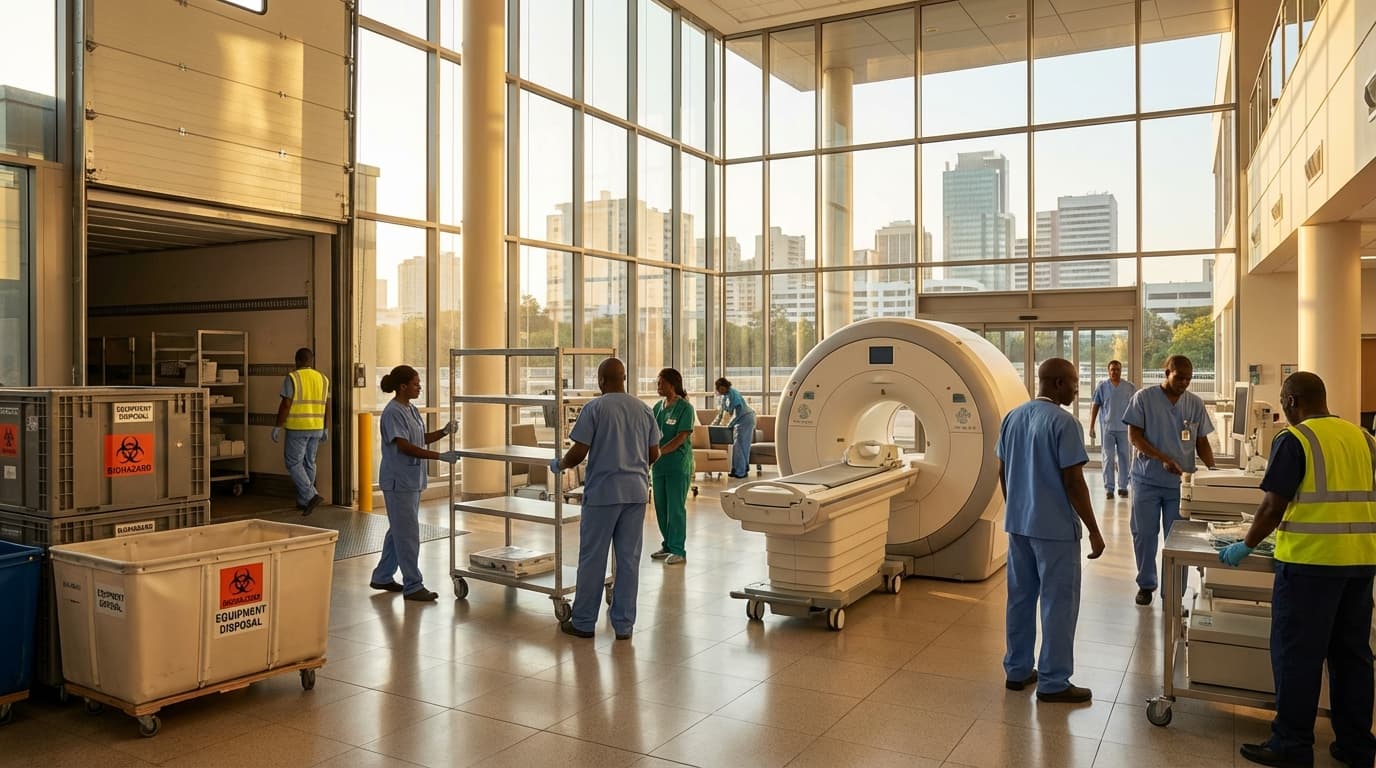
Site Restoration Service After Equipment Removal in Sierra Leone
Engineering Excellence & Technical Support
Site Restoration Service After Equipment Removal High-standard technical execution following OEM protocols and local regulatory frameworks.
Precision Demolition & Debris Management
Utilizing advanced techniques and specialized equipment, we meticulously dismantle and remove all remnants of former operational infrastructure, ensuring minimal environmental disturbance and efficient, safe disposal of all materials, including hazardous substances.
Geotechnical Stabilization & Landscaping
Implementing advanced soil stabilization methods and precise grading, we restore the landscape's integrity, prevent erosion, and create a stable, natural terrain that promotes revegetation and seamless integration with the surrounding environment.
Ecological Regeneration & Biodiversity Enhancement
Employing native species selection and strategic planting, we actively re-establish local flora, foster biodiversity, and accelerate the natural ecological recovery processes, transforming the site back into a thriving, self-sustaining ecosystem.
What Is Site Restoration Service After Equipment Removal In Sierra Leone?
Site restoration after equipment removal in Sierra Leone refers to the comprehensive process of returning a disturbed land area to its pre-disturbance or an agreed-upon functional state following the extraction or decommissioning of industrial, mining, or construction equipment. This service is critical for mitigating environmental degradation, ensuring regulatory compliance, and facilitating subsequent land use. The scope of work typically encompasses a range of activities designed to remediate physical, chemical, and biological impacts.
Key Components of Site Restoration:
- Decommissioning and Demolition: Safe dismantling and removal of retired structures, foundations, and residual equipment. This includes the management of hazardous materials that may have been used or generated during the equipment's operational life.
- Contaminant Remediation: Identification, assessment, and treatment of soil and groundwater contamination. This can involve physical removal of contaminated media, in-situ treatment technologies (e.g., bioremediation, chemical oxidation), or encapsulation.
- Regrading and Stabilization: Reshaping the land to approximate its original topography or to create a stable landform that prevents erosion. This involves earthworks, the construction of drainage controls, and the implementation of erosion protection measures.
- Revegetation and Habitat Reconstruction: Re-establishment of native or appropriate vegetation cover to promote ecological recovery, prevent erosion, and, where applicable, restore wildlife habitat. This may involve soil amendment, seeding, planting, and long-term monitoring.
- Infrastructure Removal and Restoration: Removal of underground utilities, pipelines, roads, and other infrastructure, followed by the restoration of the impacted surface. This can include backfilling excavations and re-establishing natural ground cover.
- Waste Management and Disposal: Proper handling, transportation, and disposal of all debris, hazardous materials, and excavated contaminated soil in accordance with Sierra Leonean environmental regulations.
| Typical Use Case | Specific Equipment/Activity | Primary Restoration Goal |
|---|---|---|
| Diamond Mining (Alluvial/Artisanal) | Pumps, excavators, sluice boxes, processing equipment, temporary structures | Recontouring of pits and spoil heaps, revegetation of disturbed land, stabilization of riverbanks. |
| Bauxite Mining (Surface) | Draglines, shovels, haul trucks, crushing and screening plants, conveyor systems, rail lines | Regrading of overburden dumps and mine pits, topsoil replacement, establishment of stable vegetation cover, hydrological restoration. |
| Gold Mining (Small-scale/Artisanal) | Crushers, mills, mercury amalgamation equipment, cyanide leaching pads (less common but possible), mercury contaminated soils | Removal and safe disposal of mercury-contaminated soils, stabilization of tailings, revegetation of disturbed areas. |
| Construction of Hydroelectric Dam | Heavy earthmoving equipment, concrete batching plants, crane systems, temporary housing, dewatering pumps | Restoration of borrow pits, demobilization of temporary infrastructure, revegetation of construction staging areas, stabilization of access roads. |
| Decommissioning of Oil Processing Facility | Tanks, pipelines, pumps, processing units, control systems, contaminated soil around tanks and equipment | Removal of above-ground and underground storage tanks, soil and groundwater remediation, demolition of structures, site grading and revegetation. |
Who Needs Site Restoration Service?
- Mining Companies: Following the cessation of operations at surface or underground mines, including for minerals such as diamonds, bauxite, iron ore, and gold.
- Oil and Gas Exploration and Production Companies: For sites where drilling rigs, processing facilities, or related infrastructure have been removed.
- Construction and Infrastructure Development Firms: After the completion of large-scale projects (e.g., dams, power plants, major road construction) where significant equipment and temporary structures were utilized.
- Industrial Facilities: For manufacturing plants, processing centers, and other industrial sites undergoing decommissioning and equipment removal.
- Government Agencies and Local Authorities: Responsible for overseeing land use and environmental compliance, often requiring restoration for publicly owned or leased lands.
- Real Estate Developers: When acquiring land previously used for industrial or extractive purposes.
- Environmental Consultancies and Regulators: Involved in the planning, oversight, and auditing of restoration projects.
Who Needs Site Restoration Service After Equipment Removal In Sierra Leone?
Site restoration service after equipment removal in Sierra Leone is crucial for businesses and organizations that have operated heavy machinery, industrial equipment, or infrastructure projects. The removal process often leaves behind significant environmental and physical impacts that require professional remediation. This ensures compliance with environmental regulations, prevents long-term ecological damage, and restores the site to a safe and usable condition for future purposes, whether it's returning land to its natural state, preparing for new development, or ensuring community safety.
| Target Customer/Organization | Relevant Departments |
|---|---|
| Mining Companies (e.g., diamond, bauxite, iron ore) | Environmental Management, Operations, Mine Closure Planning, Health & Safety |
| Construction Firms (e.g., road building, large-scale development) | Project Management, Environmental Health & Safety (EHS), Site Operations |
| Oil & Gas Companies | Environmental Compliance, Operations, Asset Decommissioning, HSE (Health, Safety, and Environment) |
| Manufacturing Plants & Industrial Sites | Facilities Management, Environmental Affairs, Operations, Safety Department |
| Agricultural Cooperatives or Large Estates (e.g., logging operations) | Operations Management, Land Management, Environmental Compliance |
| Government Ministries (e.g., Ministry of Mines, Ministry of Lands, Ministry of Environment) | Environmental Protection Agency, Land Use Planning Division, Regulatory Compliance Units |
| International Development Organizations (involved in infrastructure projects) | Project Management, Environmental & Social Safeguards, Operations |
Who Needs Site Restoration Service?
- Mining and Extractive Industries
- Construction and Infrastructure Development Companies
- Oil and Gas Exploration and Production Firms
- Manufacturing and Industrial Facilities
- Government Agencies overseeing land use and environmental protection
- Agricultural Operations with large-scale machinery
Site Restoration Service After Equipment Removal Process In Sierra Leone
This document outlines the comprehensive workflow for site restoration services following equipment removal in Sierra Leone. Our process is designed to be thorough, environmentally responsible, and compliant with local regulations, ensuring a seamless transition from industrial activity to a restored natural state. The workflow begins with an initial inquiry and concludes with the final handover and reporting.
| Phase | Key Activities | Deliverables | Regulatory Context (Sierra Leone) |
|---|---|---|---|
| Inquiry & Initial Assessment | Client contact, scope definition, preliminary site review. | Initial project brief, understanding of client needs. | Awareness of potential environmental sensitivities. |
| Detailed Assessment & Planning | Site survey, environmental testing, SRP development, species selection. | Site Restoration Plan (SRP), risk assessment, budget proposal. | National Environmental Policy, EIA regulations, local land use laws. |
| Regulatory Approvals & Permitting | SRP submission, permit applications, community consultation. | Approved SRP, environmental permits, community agreements. | Environmental Protection Agency (EPA) Sierra Leone, Ministry of Lands, Country Planning and the Environment (MLCPE) regulations. |
| Site Preparation & Remediation | Debris removal, soil remediation (if needed), grading. | Cleaned site, remediated soil, contoured land. | Waste management regulations, hazardous material handling protocols. |
| Restoration & Revegetation | Soil amendment, planting native species, erosion control. | Established vegetation cover, functioning erosion control. | Forestry laws, agricultural guidelines for native species. |
| Monitoring & Maintenance | Site inspections, weeding, watering, ongoing repairs. | Progress reports, maintenance logs, healthy vegetation. | Compliance with permit conditions, ongoing environmental monitoring requirements. |
| Final Inspection & Handover | Final review, report submission, site handover. | Final Restoration Report, sign-off, restored site. | Completion certificates, closure of environmental obligations. |
Site Restoration Workflow: Inquiry to Execution
- {"items":["Client submits an inquiry regarding site restoration needs after equipment removal.","Initial consultation to understand the scope of work, site location, and specific requirements.","Preliminary site visit (if feasible) or review of available site data (maps, environmental reports, equipment details).","Identification of key stakeholders and regulatory bodies in Sierra Leone.","Discussion of preliminary restoration goals and timelines."],"title":"Phase 1: Inquiry and Initial Assessment"}
- {"items":["Comprehensive site survey to assess the extent of impact from equipment removal (soil disturbance, vegetation loss, potential contamination).","Environmental sampling and testing (soil, water, if applicable) to identify any hazardous materials or contamination.","Review of existing environmental permits and regulations specific to the site and region in Sierra Leone.","Development of a detailed Site Restoration Plan (SRP), including methodologies, timelines, resource allocation, and budget.","Identification of suitable native plant species for revegetation and natural habitat restoration.","Risk assessment and development of mitigation strategies."],"title":"Phase 2: Detailed Site Assessment and Planning"}
- {"items":["Submission of the Site Restoration Plan (SRP) to relevant Sierra Leonean environmental authorities for review and approval.","Obtaining all necessary permits and clearances before commencing restoration activities.","Liaising with local communities and obtaining any required community consent or engagement."],"title":"Phase 3: Regulatory Approvals and Permitting"}
- {"items":["Demobilization of remaining equipment and infrastructure not part of the removal process.","Removal of any residual materials, debris, or waste generated from equipment removal.","Soil remediation activities, if contamination is identified (e.g., excavation, in-situ treatment).","Grading and contouring of the site to promote natural drainage and prevent erosion."],"title":"Phase 4: Site Preparation and Remediation (if necessary)"}
- {"items":["Implementation of chosen restoration techniques (e.g., soil amendment, mulching).","Procurement and planting of appropriate native species (trees, shrubs, groundcover).","Installation of erosion control measures (e.g., wattles, silt fences) as needed.","Initial watering and establishment monitoring."],"title":"Phase 5: Restoration and Revegetation"}
- {"items":["Regular site inspections to monitor plant survival rates, growth, and overall site health.","Weeding and invasive species management.","Supplemental watering and fertilization as required during the establishment phase.","Ongoing erosion control maintenance.","Periodic environmental monitoring to ensure the site is returning to a stable state."],"title":"Phase 6: Monitoring and Maintenance"}
- {"items":["Final site inspection with the client and relevant regulatory bodies.","Verification that all restoration objectives outlined in the SRP have been met.","Preparation and submission of a comprehensive Final Restoration Report, including photographic evidence, monitoring data, and a record of all activities.","Formal handover of the restored site to the client.","Close-out of contracts and final invoicing."],"title":"Phase 7: Final Inspection and Handover"}
Site Restoration Service After Equipment Removal Cost In Sierra Leone
Restoring a site after equipment removal in Sierra Leone involves various factors that influence the final cost. The scope of the restoration, the type and condition of the site, the extent of damage caused by equipment, and the specific restoration techniques employed are all critical determinants. Local currency pricing is generally quoted in Sierra Leonean Leone (SLL).
| Service Aspect | Estimated Range (SLL) | Notes |
|---|---|---|
| Initial Site Assessment & Planning | 50,000 - 200,000 | Varies with complexity and surveyor's fees. |
| Debris Removal & Haulage | 100,000 - 500,000+ | Depends on volume, weight, and distance to disposal site. |
| Soil Remediation (minor contamination) | 150,000 - 600,000+ | For localized spills. Extensive contamination will be significantly higher. |
| Soil Compaction Breaking & Leveling | 75,000 - 300,000 | Utilizing heavy machinery. |
| Topsoil Replacement/Importation | 80,000 - 400,000 per cubic meter | Cost depends on quality and availability of local vs. imported soil. |
| Seeding & Revegetation | 60,000 - 250,000 | For basic grass cover. Advanced landscaping is extra. |
| Minor Structural Repairs (e.g., foundations) | 100,000 - 700,000+ | Depends on the extent and materials needed. |
| Watercourse/Drainage Restoration | 200,000 - 1,000,000+ | Can be highly variable based on engineering needs. |
| Project Management & Supervision | 10% - 20% of total project cost | Standard contractor fee. |
Key Pricing Factors for Site Restoration in Sierra Leone:
- Site Size and Complexity: Larger and more complex sites (e.g., industrial areas with extensive infrastructure) will naturally incur higher restoration costs than smaller, simpler ones.
- Type of Equipment Removed: The size, weight, and installation method of the removed equipment can dictate the level of ground disturbance and the subsequent restoration needs.
- Extent of Damage: Significant damage to soil, vegetation, existing structures, or underground utilities will require more extensive and costly repair work.
- Soil Type and Condition: The soil composition and its susceptibility to erosion or contamination will affect the choice and cost of remediation and revegetation methods.
- Vegetation Restoration Needs: The cost will vary depending on whether simple re-seeding is sufficient or if mature tree planting or specialized landscaping is required.
- Debris Removal and Disposal: The volume and type of debris generated by equipment removal, along with disposal fees, will contribute to the overall cost.
- Remediation Requirements: If the site is contaminated (e.g., with oil, chemicals), specialized remediation processes will be necessary, significantly increasing costs.
- Accessibility of the Site: Difficult-to-access locations can lead to higher labor and equipment transportation costs.
- Labor Costs: The availability and prevailing wages for skilled and unskilled labor in the specific region of Sierra Leone will play a role.
- Materials and Equipment: The cost of imported or locally sourced materials (e.g., topsoil, seeds, fertilizers, concrete) and specialized restoration equipment will be factored in.
- Permits and Approvals: Any required environmental permits or local authority approvals can add to the administrative costs.
- Contractor's Overhead and Profit: Standard business costs and profit margins of the restoration service provider are included in the quotation.
Affordable Site Restoration Service After Equipment Removal Options
When heavy equipment is removed from a site, it often leaves behind significant damage. This can include compacted soil, debris, uneven terrain, and even environmental contamination. Our affordable site restoration service specializes in bringing your property back to its original condition, or even better. We offer flexible solutions tailored to your budget, focusing on value bundles and cost-saving strategies to ensure you get the best possible outcome without breaking the bank.
| Value Bundle Name | Description | Included Services | Cost-Saving Benefit | Ideal For |
|---|---|---|---|---|
| Basic Restore | Our most budget-friendly option focusing on essential remediation. | Debris removal, basic grading, light soil aeration. | Lower upfront cost, addresses immediate needs. | Sites with minimal damage, quick turnaround requirements. |
| Standard Restore | A comprehensive package for typical equipment removal aftermath. | Debris removal, detailed grading, soil de-compaction, initial seeding. | Balanced cost and effectiveness, good for general restoration. | Most common site restoration scenarios. |
| Premium Restore | Our most complete solution for comprehensive site recovery and enhancement. | All Standard Restore services, plus soil amendment, advanced erosion control, specialized vegetation planting. | Long-term sustainability, improved land quality, potential for increased property value. | Sites requiring significant remediation, long-term land use plans, environmentally sensitive areas. |
| Customizable Restore | Tailored packages to meet specific site challenges and budget constraints. | Select services from our full offering based on your unique needs. | Maximum flexibility, pay only for what you need. | Unique or complex site conditions, specific budget targets. |
Understanding Site Restoration Needs
- Soil Compaction & Remediation: Heavy equipment compacts soil, hindering drainage and plant growth. We offer aeration, de-compaction, and soil amendment services.
- Debris Removal: Leftover materials from construction or operation need to be cleared efficiently and responsibly.
- Grading & Leveling: Uneven surfaces caused by equipment tracks or removal operations are corrected for safe and functional land use.
- Vegetation Re-establishment: Seeding, sodding, and planting to restore greenery and prevent erosion.
- Environmental Clean-up (if applicable): Addressing any spills or contamination issues that may have occurred during equipment use or removal.
- Fencing & Barrier Repair: Restoring or replacing any damaged perimeter security or safety features.
Verified Providers In Sierra Leone
In Sierra Leone's evolving healthcare landscape, identifying trusted and verified medical providers is paramount for ensuring quality care. Franance Health stands out as a beacon of reliability, offering a comprehensive network of credentialed professionals and facilities. This commitment to verification not only assures patients of the highest standards but also simplifies the process of finding appropriate medical assistance. Franance Health's rigorous vetting process, which includes thorough background checks, validation of licenses and certifications, and continuous performance reviews, distinguishes them from other providers. This meticulous approach guarantees that every healthcare professional and institution within their network adheres to stringent quality and ethical guidelines, making them the unequivocally best choice for healthcare needs in Sierra Leone.
| Provider Type | Franance Health Verification Assurance | Benefits for Patients |
|---|---|---|
| Hospitals | All listed hospitals undergo comprehensive operational and clinical audits, verifying adherence to national and international healthcare standards. | Access to well-equipped facilities, qualified medical staff, and a commitment to patient safety. |
| Clinics | Clinics are assessed for their range of services, equipment, and the qualifications of their medical personnel. | Reliable primary and specialized care from vetted practitioners in accessible locations. |
| Specialist Doctors | Individual doctors' qualifications, specializations, and medical licenses are meticulously verified. | Confidence in receiving expert care from highly trained and accredited medical professionals. |
| Diagnostic Centers | Centers are checked for the accuracy and reliability of their diagnostic equipment and the expertise of their technicians. | Accurate and timely diagnostic results from trusted facilities. |
Why Franance Health is the Best Choice:
- Rigorous Credentialing Process
- Validation of Licenses and Certifications
- Continuous Performance Monitoring
- Commitment to Highest Quality Standards
- Network of Trusted Healthcare Professionals
- Ensured Ethical Practices
- Simplified Access to Quality Care
Scope Of Work For Site Restoration Service After Equipment Removal
This Scope of Work (SOW) details the services required for site restoration following the removal of specified equipment. The objective is to return the site to a safe, functional, and environmentally sound condition, meeting all applicable regulatory standards and client requirements. This SOW outlines the tasks, deliverables, and standard specifications for the restoration process.
| Phase | Task Description | Technical Deliverables | Standard Specifications | |
|---|---|---|---|---|
| Conduct a detailed site survey to identify the extent of disturbance, existing conditions, and potential environmental concerns (e.g., soil contamination, hazardous materials). | Pre-Restoration Site Assessment Report (including photographs, measurements, and initial findings). | ASTM E1527-13 (Standard Practice for Environmental Site Assessments: Phase I Environmental Site Assessment Process) - if applicable. | Client-approved baseline condition report. |
| Secure the site perimeter. Establish work zones. Mobilize personnel and equipment. Implement dust and erosion control measures. | Site Safety Plan. Erosion and Sediment Control Plan. Waste Management Plan. | OSHA (Occupational Safety and Health Administration) safety standards. Local environmental regulations for dust and erosion control. Client's site-specific safety requirements. | |
| Provide support during equipment removal, such as clearing access routes, managing debris, and ensuring containment of any spills or leaks. | Daily progress reports. Spill containment records. | Manufacturer's recommended removal procedures. Client's equipment removal plan. Hazardous waste handling protocols (if applicable). | |
| Address any identified soil, groundwater, or surface water contamination. This may include excavation, treatment, or disposal of contaminated materials. | Soil/Water Sampling and Analysis Reports. Remediation Action Plan (RAP). Excavation volume reports. Waste manifests. | EPA (Environmental Protection Agency) regulations (e.g., RCRA for hazardous waste). State and local environmental standards for soil and water quality. Approved remediation technologies. | |
| Restore the topography to its original or agreed-upon grade. Compact fill material as needed. Install specified ground cover (e.g., topsoil, gravel, asphalt, concrete). | Final grading plan verification. Compaction test results. As-built drawings of resurfaced areas. | Local building codes and grading ordinances. Compaction standards (e.g., AASHTO T 99/180). Client-specified material specifications for topsoil, gravel, asphalt, concrete. | |
| Re-vegetate disturbed areas with appropriate native or approved plant species. Apply mulch and other necessary soil amendments. | Seeding/Planting Plan. Material submittals for seed, sod, mulch. As-built planting records. | Local native plant lists. USDA plant hardiness zones. Approved soil amendment specifications. Erosion control best practices. | |
| Conduct a final walk-through with the client to confirm completion and quality of work. Remove all equipment and temporary structures. | Final Inspection Report. Punch list close-out documentation. Certificate of Completion. | Client's acceptance criteria. All previously referenced standards and specifications. | |
| Submit all final reports, documentation, and invoices. Archive project records. | Final Project Report (including all deliverables, waste manifests, testing results, and as-built drawings). Final Invoice. | Client's contract requirements for project closeout and record retention. |
Key Objectives
- Safe and complete removal of specified equipment.
- Site remediation to address any contamination resulting from equipment presence or removal.
- Restoration of disturbed areas to a pre-existing or agreed-upon condition.
- Compliance with all relevant environmental, health, and safety regulations.
- Minimization of environmental impact during restoration activities.
- Timely completion of all restoration tasks.
Service Level Agreement For Site Restoration Service After Equipment Removal
This Service Level Agreement (SLA) outlines the response times and uptime guarantees for the site restoration service provided after the removal of equipment. This SLA is intended to ensure a prompt and effective restoration of the site to its agreed-upon pre-removal condition.
| Service Level | Description | Target Response Time | Uptime Guarantee (if applicable) | Notes |
|---|---|---|---|---|
| Standard Site Restoration | Routine restoration of areas affected by standard equipment removal, as per agreed-upon specifications. | Within 24 Business Hours of Service Request receipt. | N/A (Restoration is a project, not an ongoing service with uptime). | Requires clear scope of work defined prior to removal. |
| Urgent Site Restoration (e.g., safety hazard, critical pathway) | Restoration required due to immediate safety concerns or blockage of critical operational pathways. | Within 4 Business Hours of Service Request receipt. | N/A | May incur additional charges as defined in the Master Service Agreement. Client must clearly identify urgency. |
| Complex Site Restoration (e.g., significant structural damage, specialized materials) | Restoration requiring specialized skills, equipment, or materials due to the nature of the damage or site. | Within 48 Business Hours for initial assessment and plan, with a defined project timeline to follow. | N/A | Project timeline for completion will be mutually agreed upon after the initial assessment. |
Definitions
- Equipment Removal: The process of physically removing designated equipment from the client's premises.
- Site Restoration: The process of returning the site to its agreed-upon condition following equipment removal, as specified in the initial agreement or contract. This may include, but is not limited to, repairing any damage, cleaning, resurfacing, or reinstatement of features.
- Service Request: A formal notification from the client to the service provider requesting site restoration.
- Response Time: The maximum allowable time between the initiation of a Service Request and the commencement of work by the service provider.
- Uptime Guarantee: A commitment to maintain a certain level of availability or operability of the restored site, where applicable and defined.
- Downtime: Any period where the site is not restored to its agreed-upon condition and is therefore unavailable or unusable for its intended purpose, due to issues related to the restoration process itself.
- Business Hours: Typically Monday to Friday, 9:00 AM to 5:00 PM local time, excluding public holidays. Specific Business Hours may be detailed in the Master Service Agreement.
Frequently Asked Questions

Ready when you are
Let's scope your Site Restoration Service After Equipment Removal in Sierra Leone project in Sierra Leone.

Scaling healthcare logistics and technical systems across the entire continent.