
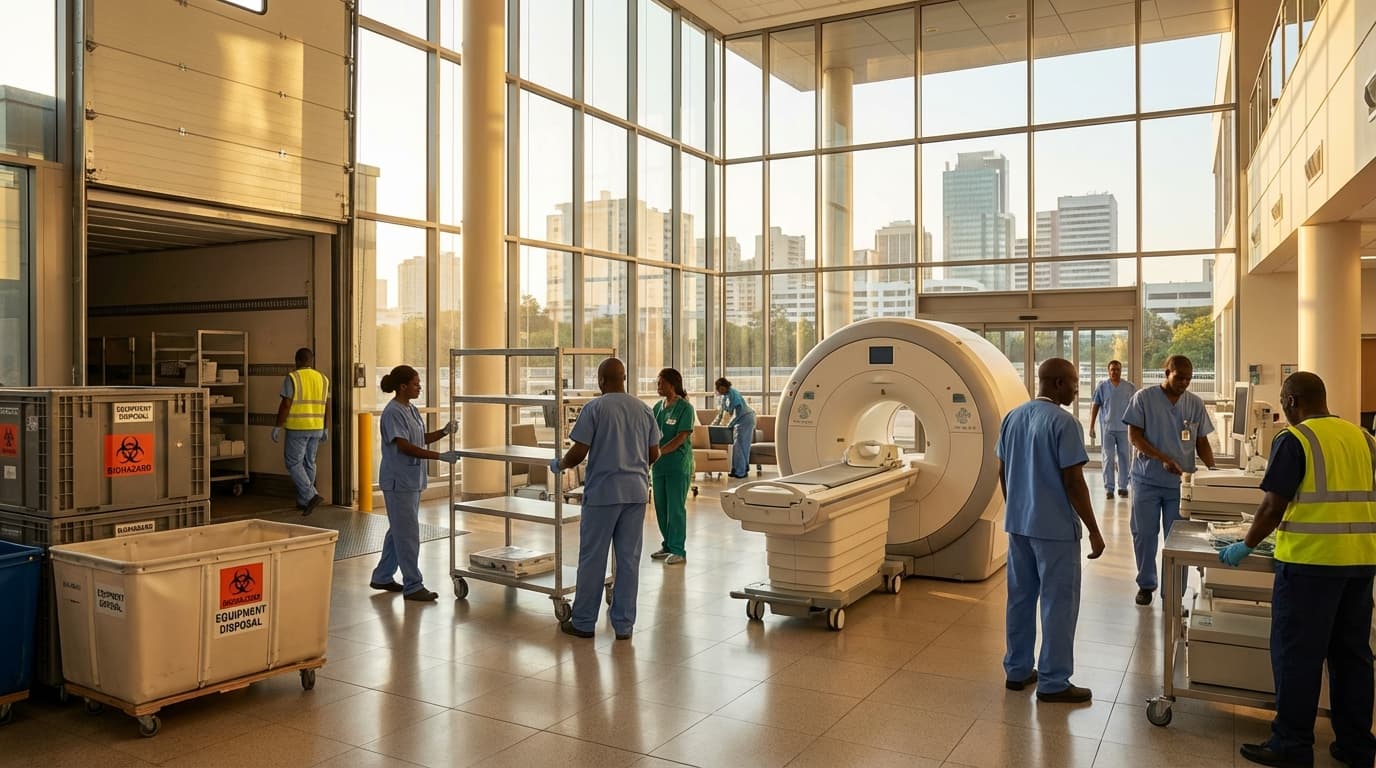
Decommissioning Service for Medical Devices in Sierra Leone
Engineering Excellence & Technical Support
Decommissioning Service for Medical Devices High-standard technical execution following OEM protocols and local regulatory frameworks.
Safe and Compliant Decommissioning
Expertly manage the secure and compliant end-of-life process for all medical devices, adhering to international safety standards and Sierra Leone's regulatory frameworks to prevent data breaches and environmental hazards.
Environmental Responsibility
Prioritize eco-friendly disposal and recycling of medical equipment, minimizing environmental impact and promoting sustainable practices through certified waste management partners.
Data Security and Privacy
Implement robust data sanitization procedures for all devices storing patient information, ensuring complete data destruction and compliance with privacy regulations, safeguarding sensitive medical records.
What Is Decommissioning Service For Medical Devices In Sierra Leone?
Decommissioning service for medical devices in Sierra Leone refers to the systematic and controlled process of retiring a medical device from active use. This involves rendering the device permanently inoperable, ensuring the secure and compliant erasure of all sensitive data, and facilitating its responsible disposal or repurposing. The primary objectives are to prevent unauthorized access to patient information, mitigate risks associated with obsolete or malfunctioning equipment, and ensure adherence to regulatory requirements and environmental standards. The process is essential for maintaining data privacy, safeguarding patient confidentiality, and upholding the integrity of healthcare information systems.
| Who Needs Decommissioning Services? | Typical Use Cases | ||||||
|---|---|---|---|---|---|---|---|
| Healthcare facilities (hospitals, clinics, diagnostic centers) in Sierra Leone that are upgrading or replacing existing medical equipment. | End-of-life equipment retirement where devices have reached their operational lifespan or are no longer supported by manufacturers. | Devices that have been heavily damaged, contaminated, or are beyond repair. | Organizations undergoing a transition to new healthcare IT systems or data management strategies. | Medical devices that have been subject to recalls or are deemed unsafe for continued use. | Consolidation or closure of healthcare facilities, necessitating the decommissioning of all associated medical equipment. | Periodic review and decommissioning of legacy equipment to optimize operational efficiency and reduce maintenance costs. | Compliance with data privacy regulations such as those pertaining to electronic health records (EHRs) and patient data security. |
Key Components of Medical Device Decommissioning Services
- Data Sanitization and Destruction: Secure erasure or physical destruction of all stored data, including patient health information (PHI), device settings, and logs, in accordance with relevant data protection regulations.
- Functional Invalidation: Rendering the device permanently inoperable to prevent any future use, whether intentional or accidental. This may involve physical alteration or component removal.
- Inventory Management and Tracking: Maintaining detailed records of decommissioned devices, including serial numbers, model information, disposal methods, and dates, for audit and compliance purposes.
- Environmental Compliance and Disposal: Ensuring the device is disposed of in an environmentally responsible manner, adhering to local and international regulations for hazardous waste management, particularly for devices containing certain materials.
- Asset Retirement and Reporting: Formal documentation of the decommissioning process, including certificates of data destruction and disposal, for organizational records and regulatory submissions.
- Dismantling and Recycling: Where applicable and feasible, the controlled dismantling of devices for component reuse, recycling, or proper disposal of constituent materials.
Who Needs Decommissioning Service For Medical Devices In Sierra Leone?
Decommissioning medical devices is a critical yet often overlooked service in Sierra Leone. This process ensures the safe and compliant disposal of outdated, damaged, or replaced medical equipment, protecting patient data, preventing environmental contamination, and adhering to regulatory standards. It's a vital step for healthcare facilities and organizations dealing with the lifecycle of medical technology.
| Target Customer | Relevant Departments/Roles | Reasons for Decommissioning Need |
|---|---|---|
| Hospitals (Public & Private) | Biomedical Engineering Department, Facilities Management, IT Department (for networked devices), Procurement Department, Chief Medical Officer | Equipment obsolescence, repair cost exceeding value, upgrade to newer technology, compliance with safety standards, data security (for devices with stored patient information), environmental disposal regulations. |
| Clinics and Health Centers | Clinic Administrator/Manager, Head Nurse, Local Health Officer | Similar to hospitals but on a smaller scale; aging equipment, limited budgets for repairs, upgrades for improved service delivery. |
| Government Health Ministries and Agencies | Directorate of Health Services, Procurement and Logistics Unit, Environmental Health Department | Nationwide equipment replacement programs, donation surplus, decommissioning of equipment from closed facilities, public health infrastructure upgrades. |
| NGOs and Charities | Program Manager, Operations Manager, Logistics Coordinator | Project closure requiring equipment disposal, upgrade of field equipment, compliance with donor requirements for asset management. |
| Research and Educational Institutions | Department Heads (Medicine, Nursing, etc.), Laboratory Technicians, Procurement Officer, IT Department | Outdated research equipment, replacement for teaching purposes, lab upgrades, data privacy from research devices. |
| Medical Equipment Suppliers/Manufacturers | Service Department, Sales Department (for trade-ins), Logistics Department | Managing returned or traded-in equipment, end-of-life support for their products, ensuring responsible disposal of their brand's devices. |
Who Needs Decommissioning Service for Medical Devices in Sierra Leone?
- {"title":"Hospitals and Healthcare Facilities","description":"These are the primary users of medical devices and therefore the most frequent needers of decommissioning. This includes both public and private sector hospitals."}
- {"title":"Clinics and Health Centers","description":"Smaller healthcare providers that may have older equipment or upgrade their diagnostic and treatment tools."}
- {"title":"Government Health Ministries and Agencies","description":"Responsible for overseeing public health infrastructure, they often manage the disposal of equipment from government-run facilities or for national health initiatives."}
- {"title":"Non-Governmental Organizations (NGOs) and Charities","description":"Organizations involved in providing healthcare services, often donating or upgrading equipment in their operational areas."}
- {"title":"Research and Educational Institutions with Medical Programs","description":"Universities and colleges with medical, nursing, or allied health programs that utilize and eventually retire medical equipment."}
- {"title":"Medical Equipment Suppliers and Manufacturers","description":"Those who may be involved in buy-back programs, trade-ins, or are responsible for the end-of-life management of their products."}
Decommissioning Service For Medical Devices Process In Sierra Leone
This document outlines the standard decommissioning service workflow for medical devices in Sierra Leone, from initial inquiry to final execution and certification. The process is designed to ensure safe, compliant, and environmentally responsible disposal or repurposing of medical equipment.
| Phase | Step | Description | Responsible Party | Key Deliverables/Outcomes |
|---|---|---|---|---|
| Phase 1: Inquiry and Assessment | 1.1 Initial Contact | The client (hospital, clinic, government agency) contacts the decommissioning service provider with a request for medical device decommissioning. This can be via phone, email, or a dedicated inquiry form. | Client, Service Provider | Acknowledged inquiry, preliminary understanding of scope. |
| 1.2 Information Gathering | Service provider requests detailed information about the devices to be decommissioned: type, quantity, age, condition, location, any specific manufacturer instructions, and any sensitive data stored on the device. | Service Provider, Client | List of devices, specifications, initial site information. | |
| 1.3 Site Visit (Optional but Recommended) | A site visit may be conducted to visually inspect the devices, assess access and logistical challenges, and confirm the information provided by the client. | Service Provider | On-site assessment report, refined understanding of complexity. | |
| Phase 2: Planning and Quotation | 2.1 Risk Assessment | Identify potential risks associated with decommissioning (e.g., hazardous materials, data security, infection control) and develop mitigation strategies. | Service Provider | Risk assessment report. |
| 2.2 Method Development | Determine the most appropriate decommissioning methods based on device type, regulations, and client requirements (e.g., data wiping, physical destruction, component removal for recycling/resale). | Service Provider | Decommissioning methodology outline. | |
| 2.3 Quotation Preparation | Based on the scope, complexity, required resources, and disposal methods, a detailed quotation is prepared, including costs for labor, materials, transportation, and disposal. | Service Provider | Formal quotation. | |
| 2.4 Client Approval | The client reviews and approves the quotation and the proposed decommissioning plan. | Client, Service Provider | Signed quotation/contract. | |
| Phase 3: Pre-Decommissioning Preparations | 3.1 Scheduling | Agree on a mutually convenient date and time for the decommissioning activities, considering the client's operational schedule. | Service Provider, Client | Scheduled decommissioning date. |
| 3.2 Resource Allocation | Assign trained personnel, necessary tools, equipment, safety gear, and transportation. | Service Provider | Mobilized team and equipment. | |
| 3.3 Site Preparation | Ensure the designated decommissioning area is prepared, safe, and has adequate ventilation and waste containment facilities. | Client, Service Provider | Ready decommissioning site. | |
| 3.4 Data Security Measures | If applicable, implement pre-decommissioning steps for data sanitization or destruction according to established protocols. | Service Provider | Data security protocols in place. | |
| Phase 4: Decommissioning Execution | 4.1 Device Identification and Verification | Verify the list of devices to be decommissioned against the approved plan. | Service Provider | Verified device manifest. |
| 4.2 Decontamination (if necessary) | Perform thorough cleaning and decontamination of devices, especially those that may have come into contact with biohazardous materials. | Service Provider | Decontaminated devices. | |
| 4.3 Data Wiping/Destruction | Execute secure data erasure or physical destruction of storage media on devices as per agreed-upon standards (e.g., NIST 800-88). | Service Provider | Data securely removed/destroyed. | |
| 4.4 Physical Decommissioning | Disassemble, dismantle, or disable devices according to the defined methodology. This might involve removal of specific components. | Service Provider | Dismantled/disabled devices. | |
| 4.5 Segregation of Materials | Separate materials for recycling, reuse, hazardous waste, and general waste. | Service Provider | Segregated waste streams. | |
| Phase 5: Waste Management and Disposal/Repurposing | 5.1 Transportation | Safely transport decommissioned devices and segregated waste materials to designated disposal or recycling facilities. | Service Provider | Devices and waste transported. |
| 5.2 Environmental Disposal | Dispose of hazardous waste according to Sierra Leone's environmental regulations and international best practices. | Service Provider | Environmentally compliant disposal. | |
| 5.3 Recycling and Reuse | Facilitate the recycling of non-hazardous materials and the assessment of devices for potential refurbishment and reuse where appropriate and permitted. | Service Provider | Materials recycled/devices repurposed. | |
| Phase 6: Documentation and Certification | 6.1 Record Keeping | Maintain detailed records of all decommissioning activities, including the type and quantity of devices, methods used, waste streams generated, and disposal locations. | Service Provider | Comprehensive decommissioning records. |
| 6.2 Certificate of Decommissioning | Issue a formal Certificate of Decommissioning to the client, confirming the safe and compliant removal of the specified medical devices. This certificate may include details of data destruction and waste disposal. | Service Provider | Certificate of Decommissioning. | |
| 6.3 Waste Manifests/Receipts | Provide proof of disposal or recycling from accredited facilities. | Service Provider | Proof of disposal/recycling. | |
| Phase 7: Post-Service Follow-up | 7.1 Feedback Collection | Solicit feedback from the client on the service provided to identify areas for improvement. | Service Provider | Client feedback report. |
| 7.2 Archiving | Archive all decommissioning records for a specified period as per regulatory requirements. | Service Provider | Archived records. |
Decommissioning Service Workflow for Medical Devices in Sierra Leone
- Phase 1: Inquiry and Assessment
- Phase 2: Planning and Quotation
- Phase 3: Pre-Decommissioning Preparations
- Phase 4: Decommissioning Execution
- Phase 5: Waste Management and Disposal/Repurposing
- Phase 6: Documentation and Certification
- Phase 7: Post-Service Follow-up
Decommissioning Service For Medical Devices Cost In Sierra Leone
Decommissioning medical devices in Sierra Leone involves a structured process to ensure safe disposal, data sanitization, and environmental compliance. The costs associated with these services are influenced by several key factors, leading to a range of pricing in the local currency, the Sierra Leonean Leone (SLL). These factors include the type and complexity of the medical device, the quantity requiring decommissioning, the required level of data sanitization, the location of the facility, and the specific service provider's expertise and overheads.
| Device Category | Estimated Cost Range (SLL) |
|---|---|
| Small Diagnostic/Monitoring Devices (e.g., BP monitors, ECG machines) | 500,000 - 1,500,000 |
| Mid-range Imaging/Surgical Equipment (e.g., X-ray units, basic ultrasound) | 2,000,000 - 7,000,000 |
| Complex/Large Imaging Equipment (e.g., MRI, CT scanners, linear accelerators) | 10,000,000 - 50,000,000+ |
| Laboratory Equipment (e.g., centrifuges, autoclaves) | 700,000 - 3,000,000 |
| Sterilization Equipment (e.g., autoclaves, washer-disinfectors) | 1,500,000 - 5,000,000 |
| Ancillary/Support Equipment (e.g., hospital beds, trolleys - non-electronic) | 100,000 - 500,000 (per unit) |
| Data Sanitization Services (additional for electronic devices) | 200,000 - 1,000,000 (per device, depending on complexity) |
| Environmental Disposal Surcharge (for hazardous components) | Variable (often a percentage or flat fee based on material type) |
Key Pricing Factors for Medical Device Decommissioning in Sierra Leone:
- Device Type and Complexity: Sophisticated imaging equipment (e.g., MRI, CT scanners) or complex surgical robots will incur higher costs due to specialized handling, deconstruction, and disposal requirements compared to simpler devices like basic patient monitors or examination tables.
- Volume of Devices: Larger quantities of devices often allow for economies of scale, potentially reducing the per-unit cost, although the overall project cost will be higher.
- Data Sanitization Requirements: Devices storing patient data (e.g., electronic health records systems, imaging devices) require secure data erasure or destruction. The level of sanitization (e.g., basic wiping vs. physical destruction) will impact the cost.
- Transportation and Logistics: The distance from the facility to the decommissioning site or licensed disposal facility, and the logistical challenges involved (e.g., accessibility, need for specialized transport), contribute to the overall cost.
- Environmental Disposal Fees: Costs associated with the environmentally sound disposal of hazardous materials (e.g., refrigerants in older equipment, electronic components) are factored in. This includes fees for licensed recycling or hazardous waste management facilities.
- Certifications and Documentation: The need for detailed reports, certificates of destruction, or compliance documentation can add to the service fee.
- Service Provider Expertise and Reputation: Established providers with specialized knowledge, trained personnel, and necessary certifications may charge a premium for their services.
- Urgency of Service: Expedited decommissioning services might command higher prices.
- Location of Facility: Decommissioning services in more remote or less accessible areas of Sierra Leone might incur higher transportation and operational costs.
Affordable Decommissioning Service For Medical Devices Options
Decommissioning medical devices is a critical but often overlooked aspect of healthcare operations. Ensuring secure data destruction, proper disposal, and environmental compliance can be costly. However, with strategic planning and the right service provider, significant cost savings are achievable. This document outlines affordable decommissioning service options, explains the value of 'value bundles,' and details effective cost-saving strategies.
| Service Offering | Description | Value Proposition | Cost-Saving Strategy |
|---|---|---|---|
| Basic Decommissioning | Includes secure data wiping or destruction, and environmentally responsible disposal of non-functional devices. | Ensures regulatory compliance and prevents data breaches. | Standard service for essential compliance needs. |
| Value Bundle: Standard + Resale Assessment | Basic decommissioning plus an assessment of functional devices for resale or donation. The provider handles initial testing and certification. | Recoups some costs through resale of working equipment, extending device lifecycle. | Reduces overall disposal costs by generating revenue from usable assets. |
| Value Bundle: Comprehensive + Recycling Management | Includes data sanitization, environmentally responsible disposal, and management of recycling streams for components. May also include asset tracking and reporting. | Maximizes resource recovery, minimizes landfill waste, and provides detailed audit trails. | Leverages economies of scale for bulk recycling and component harvesting, potentially leading to rebates or reduced disposal fees. |
| On-Demand Service | Decommissioning services provided as needed, often for smaller quantities or specific devices. | Flexibility for fluctuating needs, avoids long-term contracts. | Pay-as-you-go model, suitable for organizations with unpredictable decommissioning cycles. |
| Scheduled Maintenance/Bulk Discounts | Regularly scheduled decommissioning services for predictable device turnover, or discounts for large volumes. | Predictable budgeting and potential for lower per-unit costs. | Negotiate volume discounts and benefit from streamlined logistics for bulk pickups. |
| Certified Data Destruction | Specialized services focusing on secure and verifiable data erasure or physical destruction of storage media, often with certification. | Guarantees compliance with the highest data security standards. | Essential for sensitive data; costs are justified by risk mitigation. Compare certification levels and pricing from different providers. |
Key Considerations for Affordable Medical Device Decommissioning
- Compliance with HIPAA and data privacy regulations (e.g., HIPAA, GDPR).
- Environmental regulations for medical waste disposal (e.g., EPA, local ordinances).
- Secure data sanitization or physical destruction of storage media.
- Resale or recycling of functional or valuable equipment.
- Accurate inventory management and tracking of devices.
- Timely and efficient service to minimize operational downtime.
- Transportation and logistics for device removal.
- Documentation and certificates of destruction/disposal.
Verified Providers In Sierra Leone
In Sierra Leone's healthcare landscape, discerning the most reliable and effective service providers is paramount. Franance Health stands out as a beacon of quality, offering a comprehensive suite of services backed by stringent credentials. Their commitment to excellence, patient-centered care, and adherence to international standards makes them the premier choice for healthcare needs in the region. This document outlines why Franance Health is a verified provider and the key factors that solidify their position as the best option.
| Credential/Feature | Description | Impact on Patient Care |
|---|---|---|
| National Ministry of Health Accreditation | Official recognition by Sierra Leone's Ministry of Health, signifying compliance with national healthcare regulations and standards. | Ensures adherence to local health policies and accessibility for all citizens. |
| International Quality Standards (e.g., ISO certification) | Adherence to globally recognized benchmarks for quality management systems, patient safety, and operational efficiency. | Guarantees consistent, high-quality care and minimizes risks to patients. |
| Partnerships with Reputable International Health Organizations | Collaborations with leading global health bodies, facilitating knowledge exchange, access to best practices, and advanced medical expertise. | Brings world-class medical knowledge and treatment protocols to Sierra Leone. |
| Highly Trained and Licensed Medical Staff | Verification of all medical professionals' qualifications, licenses, and continuous professional development. | Ensures patients receive care from competent and up-to-date practitioners. |
| Advanced Medical Equipment and Diagnostics | Investment in modern diagnostic tools and treatment machinery, maintained to international standards. | Enables accurate diagnoses and effective, up-to-date treatment options. |
| Robust Patient Data Security and Privacy Policies | Implementation of stringent measures to protect patient information, adhering to data protection regulations. | Builds trust and ensures the confidentiality of sensitive medical records. |
| Transparent Pricing and Billing Practices | Clear and straightforward communication regarding service costs and billing procedures. | Promotes financial clarity and avoids unexpected expenses for patients. |
Why Franance Health is the Best Choice:
- Accreditation and Certifications: Franance Health holds numerous accreditations and certifications from reputable national and international health organizations. These endorsements signify adherence to rigorous quality, safety, and operational standards.
- Highly Qualified Medical Professionals: The team at Franance Health comprises experienced and board-certified physicians, specialists, nurses, and support staff. Continuous training and professional development ensure they are at the forefront of medical advancements.
- State-of-the-Art Facilities and Technology: Franance Health invests in modern medical equipment and technologies, enabling accurate diagnostics, effective treatments, and improved patient outcomes. Their facilities are designed for patient comfort and safety.
- Patient-Centric Approach: Prioritizing patient well-being, Franance Health offers personalized care plans, clear communication, and a compassionate environment. They empower patients to be active participants in their healthcare journey.
- Comprehensive Service Offerings: From general consultations to specialized treatments and emergency care, Franance Health provides a wide spectrum of medical services catering to diverse healthcare needs.
- Commitment to Ethical Practices: Upholding the highest ethical standards in healthcare delivery, Franance Health ensures transparency, privacy, and integrity in all their operations.
- Community Engagement and Public Health Initiatives: Beyond clinical services, Franance Health actively engages with the community through health education programs and initiatives, contributing to the overall public health improvement in Sierra Leone.
Scope Of Work For Decommissioning Service For Medical Devices
This Scope of Work (SOW) outlines the requirements for the decommissioning of medical devices. It specifies the technical deliverables and standard specifications to ensure a safe, compliant, and environmentally responsible process. The service provider will be responsible for the complete lifecycle of decommissioning, from asset identification and data sanitization to final disposal or recycling.
| Stage | Description | Technical Deliverables | Standard Specifications/Compliance |
|---|---|---|---|
| Asset Identification and Verification | Accurate identification and inventory of all medical devices to be decommissioned. | Detailed asset inventory list (make, model, serial number, asset tag, location). | Compliance with organizational asset management policies. Verification against existing asset registers. |
| Data Sanitization and Destruction | Secure erasure or physical destruction of all sensitive data stored on medical devices. | Certificate of Data Destruction (CoDD) for each device, detailing method used (e.g., DoD 5220.22-M, NIST 800-88). | Adherence to relevant data privacy regulations (e.g., HIPAA, GDPR). Use of certified data erasure software or physical shredding. |
| Physical Decommissioning | Safe disconnection, dismantling (if necessary), and removal of medical devices from the facility. | Decommissioning logs detailing procedures performed. Proof of safe disconnection from power and other utilities. | Compliance with electrical safety standards. Use of trained personnel. Minimization of disruption to facility operations. |
| Environmental Compliance and Waste Management | Responsible disposal or recycling of all components and materials in accordance with environmental regulations. | Waste manifests and certificates of disposal/recycling. Records of hazardous waste handling. | Compliance with EPA regulations, local environmental laws. Prioritization of recycling and reuse. Licensed waste disposal facilities. |
| Documentation and Reporting | Comprehensive documentation of the entire decommissioning process and final reporting. | Final Decommissioning Report including all certificates, logs, and inventory reconciliation. Project closure documentation. | Adherence to organizational record-keeping policies. Clear and auditable trail of all activities. |
Key Decommissioning Stages and Requirements
- Asset Identification and Verification
- Data Sanitization and Destruction
- Physical Decommissioning
- Environmental Compliance and Waste Management
- Documentation and Reporting
Service Level Agreement For Decommissioning Service For Medical Devices
This Service Level Agreement (SLA) outlines the response times and uptime guarantees for the Decommissioning Service for Medical Devices provided by [Your Company Name] to [Client Company Name]. This SLA is an appendix to the Master Services Agreement (MSA) dated [MSA Date].
| Service Component | Description | Response Time (Business Hours) | Uptime Guarantee | Measurement Method |
|---|---|---|---|---|
| Decommissioning Request Acknowledgement | Confirmation of receipt of a decommissioning request via the agreed-upon communication channel (e.g., email, ticketing system). | 1 Business Hour | N/A | Automated system confirmation or manual email/ticket response timestamp. |
| Initial Site Assessment / Planning | On-site or remote assessment to understand the scope of work, identify device inventory, and develop a decommissioning plan. | 4 Business Hours (for initial scheduling of assessment) | N/A | Scheduled assessment date and time documented in the project plan. |
| Service Availability for Scheduled Decommissioning | The availability of the decommissioning team and necessary equipment to perform scheduled decommissioning activities during agreed-upon service windows. | N/A | 99.5% Uptime | Monitoring of scheduled service windows. Calculated as (Total Scheduled Service Hours - Downtime Hours) / Total Scheduled Service Hours * 100. |
| Data Sanitization Verification | Providing confirmation and documentation that data sanitization has been performed according to agreed-upon standards (e.g., NIST 800-88). | 2 Business Days (post-decommissioning completion) | N/A | Receipt of signed data sanitization certificates/reports. |
| Device Disposal/Transfer Confirmation | Providing documentation confirming the secure disposal or transfer of decommissioned devices. | 5 Business Days (post-decommissioning completion) | N/A | Receipt of disposal certificates, chain of custody forms, or transfer manifests. |
| Emergency Decommissioning Request | Response to urgent decommissioning requests requiring immediate attention due to critical system failures or regulatory mandates. | 2 Business Hours (for initial assessment and planning) | N/A | Timestamp of acknowledgement and initiation of assessment/planning. |
| Support for Decommissioning Documentation | Response to inquiries or requests for clarification regarding decommissioning documentation. | 8 Business Hours | N/A | Timestamp of response via agreed-upon communication channel. |
Key Service Objectives
- To ensure timely and secure decommissioning of medical devices according to industry best practices and regulatory requirements.
- To minimize downtime and disruption to [Client Company Name]'s operations.
- To provide clear and measurable performance standards for the decommissioning service.
Frequently Asked Questions

Ready when you are
Let's scope your Decommissioning Service for Medical Devices in Sierra Leone project in Sierra Leone.

Scaling healthcare logistics and technical systems across the entire continent.