
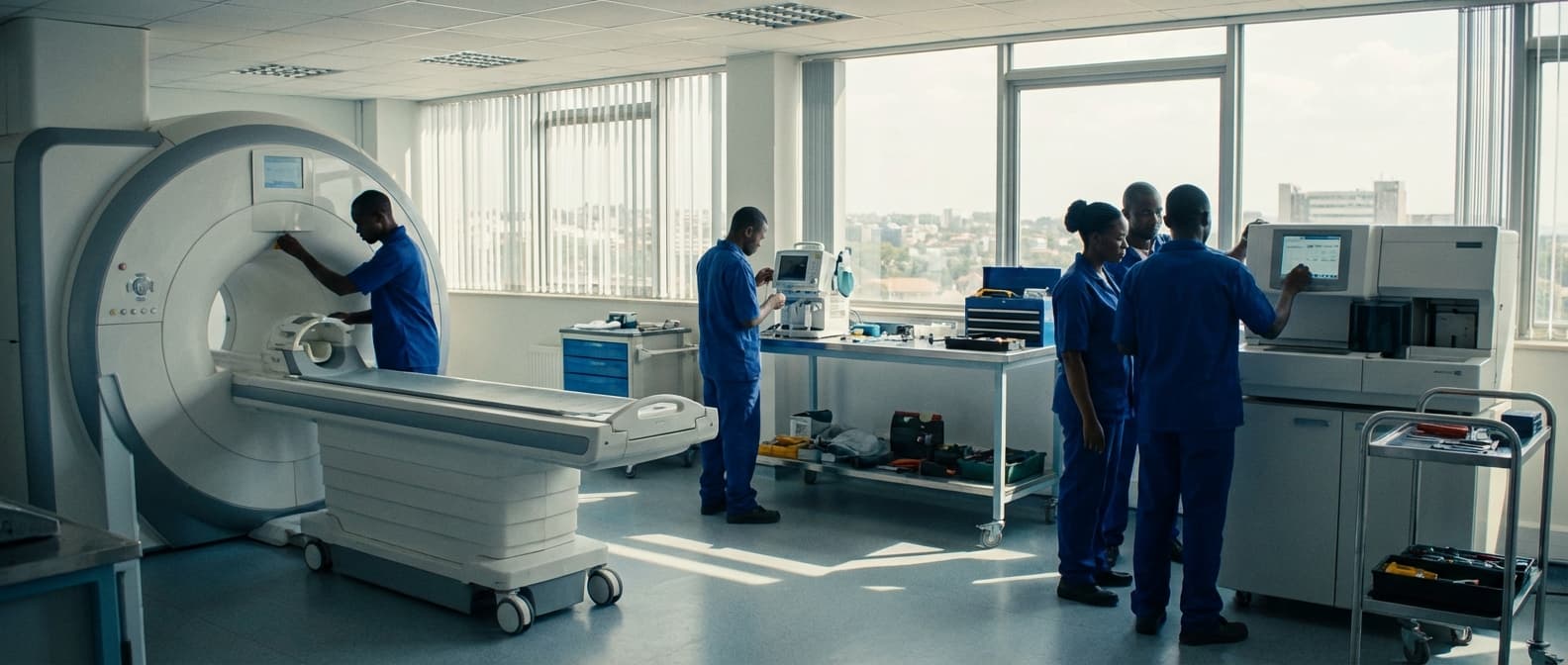
Uptime, Downtime & Root-Cause Analysis Reporting Service in Sierra Leone
Engineering Excellence & Technical Support
Uptime, Downtime & Root-Cause Analysis Reporting Service High-standard technical execution following OEM protocols and local regulatory frameworks.
Real-Time Uptime & Performance Monitoring
Proactive, 24/7 monitoring of critical IT infrastructure and services across Sierra Leone. Our service provides instant alerts for any deviation from expected performance, ensuring immediate visibility into system health and potential issues.
Automated Downtime Detection & Reporting
Leveraging sophisticated algorithms to automatically detect and log all downtime events. Comprehensive reports are generated, detailing the duration, affected services, and timestamps, providing irrefutable data for SLA compliance and operational review.
AI-Powered Root-Cause Analysis (RCA)
Utilizing advanced AI to swiftly pinpoint the underlying cause of incidents. Our service correlates logs, events, and performance metrics to deliver precise RCA reports, enabling faster resolution and preventing recurrence of issues within Sierra Leone's digital landscape.
What Is Uptime, Downtime & Root-cause Analysis Reporting Service In Sierra Leone?
In Sierra Leone, Uptime, Downtime & Root-Cause Analysis Reporting Service refers to a specialized offering designed to monitor, document, and investigate the operational availability and unavailability of critical IT systems, infrastructure, and services. This service aims to provide organizations with actionable insights into performance issues, identify the underlying causes of service disruptions, and facilitate proactive measures to enhance system reliability and resilience. It is crucial for maintaining business continuity and mitigating financial losses associated with unplanned outages.
| Who Needs This Service? | Typical Use Cases | ||||||||
|---|---|---|---|---|---|---|---|---|---|
| Organizations with Critical IT Infrastructure: Businesses in Sierra Leone that rely heavily on IT systems for their core operations, such as financial institutions, telecommunications providers, government agencies, healthcare facilities, and e-commerce platforms. | Financial Sector: Monitoring banking systems, payment gateways, and trading platforms to ensure continuous availability and prevent transaction failures. | Telecommunications Companies: Ensuring uninterrupted network services (voice, data, internet) for subscribers, minimizing customer dissatisfaction and revenue loss. | E-commerce Businesses: Maintaining website and order processing system availability to prevent lost sales and damage to brand reputation. | Government and Public Services: Guaranteeing the uptime of essential services like digital identification, public health portals, and emergency communication systems. | Healthcare Providers: Ensuring the availability of electronic health records (EHRs), diagnostic systems, and patient management software for uninterrupted patient care. | Technology Service Providers: Companies offering managed IT services, cloud hosting, or software-as-a-service (SaaS) in Sierra Leone, demonstrating reliability to their clients. | Manufacturing and Logistics: Ensuring the uptime of operational technology (OT) systems, supply chain management software, and enterprise resource planning (ERP) systems. | IT Operations and Support Teams: Internal IT departments tasked with maintaining system stability, diagnosing issues, and implementing improvements. | Data Centers and Cloud Providers: Guaranteeing high availability for hosted services and infrastructure. |
Service Components and Objectives
- Uptime Monitoring: Continuous, real-time observation of system availability, performance metrics (e.g., response times, latency, throughput), and service health indicators.
- Downtime Event Logging: Comprehensive recording of all unplanned service interruptions, including timestamps, affected systems/services, duration, and initial impact assessment.
- Root-Cause Analysis (RCA): A systematic investigation process to identify the fundamental reasons behind downtime events. This typically involves analyzing logs, configuration changes, network traffic, hardware diagnostics, and human factors.
- Reporting and Documentation: Generation of structured reports detailing uptime statistics, downtime incidents, RCA findings, and recommended remediation actions.
- SLA Compliance Verification: Validation of service level agreements (SLAs) against actual performance data, highlighting deviations and potential breaches.
- Proactive Risk Identification: Utilizing historical data and RCA insights to identify potential future failure points and vulnerabilities within the IT ecosystem.
- Actionable Recommendations: Providing concrete, technically sound suggestions for system improvements, process enhancements, and preventive maintenance to minimize future downtime.
Who Needs Uptime, Downtime & Root-cause Analysis Reporting Service In Sierra Leone?
In Sierra Leone, businesses and organizations across various sectors rely on robust uptime, downtime, and root-cause analysis (RCA) reporting services to maintain operational efficiency, minimize financial losses, and ensure customer satisfaction. These services are crucial for identifying and resolving issues that impact service availability, enabling proactive problem-solving and continuous improvement.
| Department | Key Responsibilities & Uptime/Downtime Concerns | Root-Cause Analysis Focus |
|---|---|---|
| IT Operations / Infrastructure Management | Maintaining server uptime, network connectivity, data center stability, application availability. | Hardware failures, network congestion, software bugs, configuration errors, power outages. |
| Network Operations Center (NOC) | 24/7 monitoring of network performance, detecting and responding to outages, ensuring service continuity. | Link failures, router/switch malfunctions, ISP issues, denial-of-service (DoS) attacks. |
| Customer Support / Service Delivery | Addressing customer complaints related to service interruptions, ensuring service level agreement (SLA) adherence. | Underlying infrastructure issues, application performance degradation, communication failures. |
| Application Development & Maintenance | Ensuring applications are performant, stable, and available to end-users. | Code defects, database issues, API failures, integration problems, resource exhaustion. |
| Security Operations Center (SOC) | Monitoring for security threats that could lead to downtime, investigating security incidents. | Malware infections, unauthorized access, system breaches, cyberattacks leading to service disruption. |
| Business Continuity & Disaster Recovery | Planning for and executing recovery strategies in the event of major outages or disasters. | Evaluating the impact of outages, identifying recovery bottlenecks, assessing effectiveness of DR plans. |
Target Customers & Departments in Sierra Leone
- {"customer":"Telecommunications Companies","description":"Crucial for monitoring network uptime, identifying service disruptions, and pinpointing the root cause of outages impacting mobile, internet, and fixed-line services."}
- {"customer":"Financial Institutions (Banks, Microfinance)","description":"Essential for ensuring the availability of critical banking systems, ATMs, online platforms, and payment gateways to prevent financial losses and maintain customer trust."}
- {"customer":"Government Agencies & Public Services","description":"Vital for maintaining the stability and accessibility of essential public services, including e-government portals, public utilities management, and emergency response systems."}
- {"customer":"Internet Service Providers (ISPs)","description":"Key for monitoring internet connectivity, diagnosing performance issues, and ensuring reliable service delivery to residential and business customers."}
- {"customer":"E-commerce Platforms & Online Retailers","description":"Imperative for ensuring website and app uptime, preventing lost sales due to technical glitches, and maintaining a seamless online shopping experience."}
- {"customer":"Healthcare Providers (Hospitals, Clinics)","description":"Critical for the reliable operation of electronic health records (EHRs), diagnostic equipment, and communication systems to ensure patient care continuity."}
- {"customer":"Mining and Extractive Industries","description":"Important for monitoring operational technology (OT) systems, control rooms, and communication networks to prevent production stoppages and ensure safety."}
- {"customer":"Logistics and Transportation Companies","description":"Necessary for the uptime of tracking systems, dispatch software, and communication channels to ensure efficient and timely delivery of goods."}
- {"customer":"Energy and Utilities Companies","description":"Crucial for monitoring the stability of power grids, water supply systems, and operational control systems to prevent service interruptions."}
- {"customer":"Technology and IT Service Providers","description":"Essential for their own service delivery, as well as for their clients, to demonstrate service level agreements (SLAs) and ensure system reliability."}
Uptime, Downtime & Root-cause Analysis Reporting Service Process In Sierra Leone
This document outlines the workflow for the Uptime, Downtime & Root-Cause Analysis (RCA) Reporting Service in Sierra Leone. This service is designed to comprehensively track, analyze, and report on system availability and any disruptions experienced by clients. The process ensures a structured approach from initial inquiry to the final delivery of detailed reports, facilitating continuous service improvement and issue resolution.
| Phase | Stage | Description | Key Activities | Responsible Party/Department | Deliverables/Outcomes |
|---|---|---|---|---|---|
| 1 | Inquiry & Initial Consultation | Understanding client needs and service scope. | Receive inquiry from potential client; Conduct needs assessment meeting; Discuss service scope, SLAs, and pricing; Provide service proposal. | Client; Sales/Business Development Team | Service Proposal; Signed Agreement (if applicable) |
| 1 | Onboarding & Setup | Integrating client systems into the monitoring infrastructure. | Client system access provisioning; Installation and configuration of monitoring agents/tools; User account creation for client portal; Initial system baseline establishment. | Client IT Team; Technical Operations Team | Operational Monitoring System; Client Access Credentials |
| 2 | Continuous Uptime Monitoring | Real-time tracking of system availability. | Proactive monitoring of servers, applications, network devices, and services; Collection of uptime metrics (e.g., 99.9%, 99.99%); Alerting on deviations from agreed SLAs. | Technical Operations Team (Monitoring Specialists) | Real-time Uptime Data; Proactive Alerts |
| 2 | Downtime Event Detection | Identifying and capturing any disruptions to service. | Automated detection of service outages, performance degradations, or critical errors; Manual reporting of incidents by clients or internal teams. | Technical Operations Team; Client Users | Downtime Incident Alerts; Incident Tickets |
| 3 | Initial Incident Triage & Classification | Prioritizing and categorizing detected incidents. | Severity assessment of the incident; Categorization (e.g., hardware failure, software bug, network issue); Initial impact assessment. | Technical Operations Team (Incident Managers) | Prioritized Incident List; Incident Classification |
| 3 | Preliminary Downtime Reporting | Providing immediate notification of an ongoing or recent outage. | Issuing brief initial notification to the client regarding the detected downtime; Including basic details like affected service, estimated start time, and initial observed impact. | Technical Operations Team (Incident Managers) | Initial Downtime Notification |
| 4 | Root-Cause Analysis (RCA) | Investigating the fundamental reasons behind the downtime. | Gathering logs, error messages, and configuration data; Interviewing relevant personnel; Performing diagnostic tests; Identifying the primary and contributing factors to the incident. | Technical Operations Team (RCA Specialists); Relevant System Administrators | Detailed RCA Investigation Findings |
| 5 | Comprehensive Downtime & RCA Report Generation | Creating a detailed report documenting the incident and its cause. | Compiling all collected data; Documenting the timeline of the incident; Articulating the identified root cause(s); Describing the immediate resolution steps taken; Identifying preventative measures. | Technical Operations Team (Reporting Specialists) | Comprehensive Downtime & RCA Report |
| 5 | Action Plan Development | Defining steps to prevent recurrence and improve system resilience. | Collaborating with the client to agree on corrective and preventative actions; Outlining specific tasks, responsibilities, and timelines for implementation. | Technical Operations Team; Client IT Team | Agreed Action Plan |
| 5 | Report Presentation & Review | Communicating findings and recommendations to the client. | Presenting the comprehensive report to the client; Discussing the RCA findings and action plan; Answering client queries. | Account Management Team; Technical Operations Team | Client Understanding and Agreement on Actions |
| 6 | Action Plan Implementation & Tracking | Ensuring recommended actions are executed. | Monitoring the progress of agreed-upon actions; Providing regular updates to the client on implementation status. | Client IT Team; Technical Operations Team (Support) | Implemented Corrective and Preventative Measures |
| 6 | Service Closure & Performance Review | Formally closing the incident and evaluating the overall service. | Confirming successful implementation of corrective actions; Obtaining client sign-off; Conducting an internal post-incident review to identify process improvements; Archiving incident data. | Technical Operations Team; Account Management Team | Closed Incident Record; Service Improvement Recommendations |
Uptime, Downtime & Root-Cause Analysis Reporting Service Workflow in Sierra Leone
- Phase 1: Inquiry & Onboarding
- Phase 2: Monitoring & Data Collection
- Phase 3: Incident Detection & Initial Reporting
- Phase 4: Root-Cause Analysis (RCA)
- Phase 5: Reporting & Action Planning
- Phase 6: Closure & Review
Uptime, Downtime & Root-cause Analysis Reporting Service Cost In Sierra Leone
Reporting on uptime, downtime, and performing root-cause analysis (RCA) is crucial for businesses in Sierra Leone to ensure operational efficiency and minimize disruptions. The cost of such a service is influenced by several factors, leading to a range of pricing in the local currency, the Sierra Leonean Leone (SLL).
| Service Tier/Complexity | Description | Estimated Monthly Cost (SLL) |
|---|---|---|
| Basic Monitoring & Reporting | Automated uptime/downtime tracking for essential systems, with standard monthly reports. Limited RCA. | 2,000,000 - 5,000,000 SLL |
| Standard Monitoring & RCA | Comprehensive monitoring of multiple systems, weekly/bi-weekly reports, and basic root-cause analysis for common incidents. | 5,000,000 - 15,000,000 SLL |
| Advanced Monitoring & In-depth RCA | Continuous monitoring, detailed daily/real-time reporting, in-depth root-cause analysis for complex and critical incidents, and proactive recommendations. | 15,000,000 - 40,000,000+ SLL |
| On-Demand/Project-Based RCA | For specific incidents requiring immediate, deep-dive analysis, often charged per incident or per hour/day. | Negotiable per incident/project (can range from 1,000,000 SLL for simple cases to 10,000,000+ SLL for complex investigations). |
Key Pricing Factors for Uptime, Downtime, and Root-Cause Analysis Reporting Services in Sierra Leone:
- Scope of Services: This includes the number of systems or applications monitored, the complexity of the infrastructure, and the depth of analysis required. Basic monitoring will be cheaper than comprehensive, in-depth RCA.
- Frequency and Granularity of Reporting: Daily, weekly, monthly reports, or real-time alerts will impact cost. The level of detail within reports (e.g., specific error codes, timestamps, affected users) also matters.
- Tools and Technology: The sophistication of the monitoring and RCA tools used by the service provider. Proprietary or advanced tools often come with higher licensing and implementation costs.
- Service Level Agreements (SLAs): The guaranteed uptime and response times for issue resolution will influence pricing. Higher SLAs generally command higher costs.
- Expertise and Experience of Analysts: The skill level, certifications, and experience of the individuals performing the RCA. Specialized knowledge in areas like cybersecurity, networking, or specific software will increase rates.
- Incident Volume and Complexity: If a business experiences frequent or complex outages, the ongoing effort and resources required for RCA will naturally be higher.
- Integration with Existing Systems: The effort needed to integrate the reporting service with a client's existing IT infrastructure and ticketing systems.
- Customization: The extent to which reports and analyses need to be tailored to a client's specific business needs and KPIs.
- Support and Consultation: Whether the service includes proactive recommendations, consultative support, or just raw reporting.
- Provider Type: Whether the service is provided by a large international IT firm with a local presence, a specialized local IT consultancy, or freelance IT professionals.
Affordable Uptime, Downtime & Root-cause Analysis Reporting Service Options
In today's digital landscape, maintaining application uptime and quickly diagnosing downtime are critical for business continuity and customer satisfaction. Our Uptime, Downtime, and Root-Cause Analysis (RCA) Reporting Service offers comprehensive solutions to monitor your systems, identify issues, and provide actionable insights. We understand that budget constraints are a reality for many organizations, which is why we offer flexible value bundles and cost-saving strategies to ensure you get the most effective monitoring and reporting without breaking the bank.
| Service Component | Basic Plan | Standard Plan | Premium Plan | Cost-Saving Benefit |
|---|---|---|---|---|
| Uptime Monitoring | Core Uptime Checks | Enhanced Uptime Checks + Alerting | Real-time Uptime + Performance Metrics | Bundled Discount, Volume Pricing |
| Downtime Reporting | Basic Downtime Alerts | Detailed Downtime Logs + Impact Analysis | Comprehensive Downtime Forensics + Trend Analysis | Bundled Discount, Long-Term Commitment |
| Root-Cause Analysis (RCA) | Automated Initial RCA Suggestions | Guided RCA with Diagnostic Tools | Advanced AI-driven RCA + Expert Review Options | Self-Service Options, Tiered Plans |
| Reporting Frequency | Weekly Summaries | Daily Summaries + On-Demand | Real-time Dashboards + Customizable Reports | Customizable Reporting Frequency |
| Data Retention | 30 Days | 90 Days | 1 Year + Archive Options | Data Retention Tiers |
Value Bundles & Cost-Saving Strategies
- Tiered Subscription Plans: Our services are structured into tiered plans (e.g., Basic, Standard, Premium) to cater to different needs and budgets. Basic plans offer essential uptime monitoring and basic downtime alerts, while Premium plans include advanced RCA, historical trend analysis, and custom reporting.
- Bundled Services Discounts: Purchase Uptime Monitoring, Downtime Analysis, and RCA Reporting as a bundled package to receive a significant discount compared to subscribing to each service individually.
- Long-Term Commitment Savings: Opt for annual or multi-year contracts to unlock substantial cost reductions. This provides predictable budgeting for you and a stable client base for us, allowing for greater efficiency and lower per-unit costs.
- Volume-Based Pricing: For organizations with a large number of applications or servers to monitor, we offer volume-based discounts, further reducing the per-instance cost.
- Self-Service Options: For tech-savvy teams, our platform offers robust self-service features for configuring monitoring, generating reports, and performing initial RCA. This can reduce the need for direct support, lowering costs.
- Customizable Reporting Frequency: Adjust the frequency of your reports (e.g., daily, weekly, monthly) to match your operational needs. Less frequent reporting can sometimes translate to lower costs, especially for less critical systems.
- Focus on Critical Assets: Prioritize monitoring and in-depth RCA for your most critical applications and infrastructure. We can help you identify these and tailor a solution that provides comprehensive coverage where it matters most, optimizing your investment.
- Data Retention Tiers: Choose data retention periods that align with your compliance and analytical needs. Shorter retention periods can reduce storage costs and potentially subscription fees.
- Proactive Monitoring Enhancements: Investing in advanced proactive monitoring can prevent major downtime events, ultimately saving you more on emergency response and lost revenue. Our bundled RCA services help identify patterns that lead to these issues.
- Educational Resources & Training: We provide documentation, webinars, and training to empower your team to effectively use our tools and interpret reports. This reduces reliance on external consultants and accelerates your team's ability to resolve issues.
Verified Providers In Sierra Leone
In Sierra Leone's burgeoning healthcare sector, identifying verified and trustworthy providers is paramount for ensuring quality care. Franance Health stands out as a leader in this regard, boasting a robust credentialing process that assures patients of their commitment to excellence. This verification process not only guarantees that practitioners meet stringent professional standards but also signifies a dedication to ethical practices and continuous improvement. Choosing Franance Health means opting for a network of healthcare professionals who have undergone rigorous vetting, offering peace of mind and confidence in the services received. Their dedication to transparency and patient safety makes them the definitive best choice for healthcare in Sierra Leone.
| Credentialing Aspect | Franance Health's Standard | Patient Benefit |
|---|---|---|
| Professional Licensure & Certification | Mandatory verification of current and valid licenses/certifications for all practitioners. | Assurance that providers are legally qualified and meet educational requirements. |
| Work Experience & Competency | Thorough review of past employment history and documented clinical experience. | Confidence in the practical skills and experience of healthcare professionals. |
| Background Checks & Ethics | Comprehensive checks for any disciplinary actions or malpractice claims. | Ensures a commitment to ethical conduct and patient well-being. |
| Continuing Medical Education (CME) | Requirement for practitioners to maintain updated knowledge and skills through accredited CME programs. | Access to healthcare professionals who are up-to-date with the latest medical advancements. |
| Peer Review & Performance Monitoring | Inclusion in systems that allow for ongoing performance evaluation and peer feedback. | Continuous quality assurance and improvement of healthcare services. |
Why Franance Health is the Best Choice:
- Rigorous credentialing process ensuring adherence to professional standards.
- Commitment to ethical practices and patient safety.
- Vetted network of highly qualified healthcare professionals.
- Transparency in service provision and practitioner qualifications.
- Dedication to continuous improvement in healthcare delivery.
Scope Of Work For Uptime, Downtime & Root-cause Analysis Reporting Service
This Scope of Work (SOW) outlines the services to be provided for Uptime, Downtime & Root-Cause Analysis (RCA) Reporting. The objective is to deliver comprehensive and actionable reports that identify system availability, pinpoint instances of downtime, and meticulously investigate the underlying causes of these disruptions. The service will provide technical deliverables and adhere to standard specifications to ensure clarity, consistency, and effectiveness in reporting.
| Technical Deliverable | Description | Standard Specifications | Frequency |
|---|---|---|---|
| Uptime/Downtime Report | Detailed reporting of system availability, including total uptime, total downtime, and duration of each downtime event for specified systems. | Includes metrics like % Uptime, % Downtime, Mean Time Between Failures (MTBF), Mean Time To Repair (MTTR). Data presented in graphical and tabular formats. Clear identification of affected services and components. | Daily, Weekly, Monthly |
| Downtime Incident Log | A comprehensive log of all recorded downtime incidents. | Each entry includes: Incident ID, Timestamp of Start, Timestamp of End, Duration, Affected Systems/Services, Severity Level, Initial Impact Assessment, Status (e.g., Investigating, Resolved, Closed). | Real-time, Aggregated Weekly |
| Root-Cause Analysis (RCA) Report | In-depth investigation into the underlying causes of significant downtime events. | Each report includes: Incident Summary, Timeline of Events, Root Cause(s) (using methodologies like 5 Whys, Fishbone Diagram), Contributing Factors, Impact Assessment, Resolution Steps Taken, Preventive Actions Recommended, Ownership of Actions, Target Dates for Action Completion. | Per significant incident (defined threshold) |
| Performance & Availability Dashboard | A visual representation of key uptime, downtime, and incident trends. | Interactive dashboard displaying historical uptime/downtime percentages, incident counts by severity, common root causes, and MTBF/MTTR trends. Accessible via a secure web portal. | Real-time updates, Historical data available |
| Preventive Action Tracking Report | Monitoring the progress and effectiveness of implemented preventive actions. | Lists all identified preventive actions, responsible parties, target completion dates, current status, and validation of effectiveness. Highlights any overdue actions. | Monthly |
Key Objectives
- Accurately track and report system uptime and downtime metrics.
- Identify the root cause of all significant downtime events.
- Provide actionable recommendations to prevent future occurrences.
- Maintain a historical record of incidents and their resolutions.
- Ensure reporting standards are met for internal and external stakeholders.
Service Level Agreement For Uptime, Downtime & Root-cause Analysis Reporting Service
This Service Level Agreement (SLA) outlines the guaranteed uptime, acceptable downtime, and the process for reporting and analyzing root causes for the Uptime, Downtime & Root-Cause Analysis Reporting Service (hereinafter referred to as 'the Service').
| Service Component | Guaranteed Uptime | Maximum Permitted Downtime (Monthly) | Response Time for Critical Incidents | RCA Reporting Timeframe (Post-Resolution) |
|---|---|---|---|---|
| Core Reporting Functionality | 99.95% | Approximately 21.9 minutes | 15 minutes | 24 business hours |
| Data Ingestion & Processing | 99.90% | Approximately 43.8 minutes | 30 minutes | 48 business hours |
| User Interface (UI) Access | 99.98% | Approximately 8.76 minutes | 10 minutes | 12 business hours |
Definitions
- Uptime: The percentage of time the Service is operational and accessible to the customer.
- Downtime: The percentage of time the Service is unavailable or not accessible to the customer.
- Scheduled Downtime: Planned interruptions to the Service for maintenance, upgrades, or other proactive measures, which will be communicated in advance.
- Unscheduled Downtime: Unplanned interruptions to the Service caused by unforeseen issues, including but not limited to hardware failures, software bugs, or external network problems.
- Root Cause Analysis (RCA): A systematic process to identify the fundamental reasons for an incident or problem, aiming to prevent recurrence.
- Incident: Any event that causes or may cause an interruption to the Service or degradation of Service quality.
- Customer: The entity or individual subscribing to the Service.
Frequently Asked Questions

Ready when you are
Let's scope your Uptime, Downtime & Root-Cause Analysis Reporting Service in Sierra Leone project in Sierra Leone.

Scaling healthcare logistics and technical systems across the entire continent.