
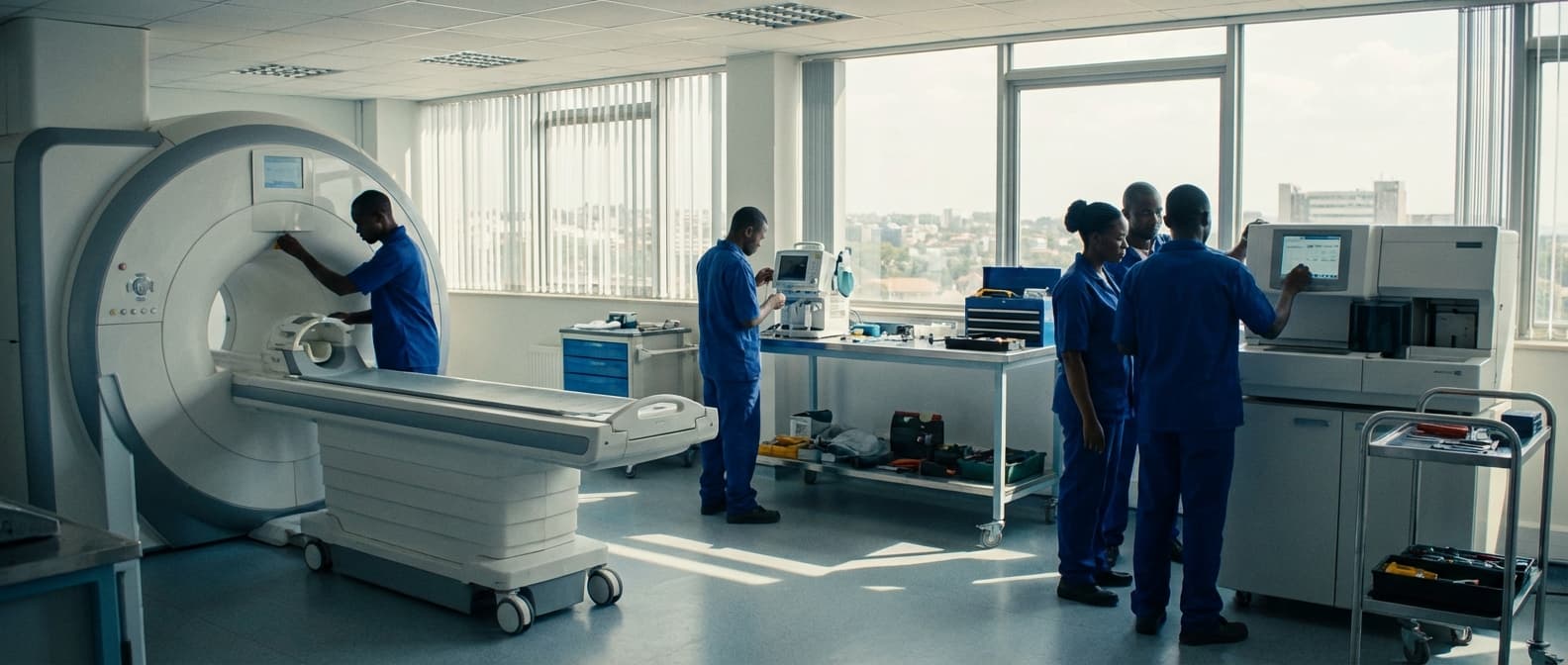
Planned Shutdown Coordination Service for Critical Equipment in Sierra Leone
Engineering Excellence & Technical Support
Planned Shutdown Coordination Service for Critical Equipment High-standard technical execution following OEM protocols and local regulatory frameworks.
Optimized Shutdown Scheduling for Enhanced Uptime
Leveraging advanced scheduling algorithms and real-time equipment health data, our service precisely identifies optimal shutdown windows for critical assets in Sierra Leone. This minimizes production disruption and ensures minimal impact on operational timelines, maximizing overall equipment effectiveness and revenue generation.
Proactive Risk Mitigation and Safety Assurance
Our comprehensive risk assessment framework meticulously analyzes potential hazards associated with planned shutdowns of critical equipment. We implement robust safety protocols, detailed contingency plans, and ensure adherence to international safety standards, safeguarding personnel and preventing unforeseen incidents throughout the shutdown process.
Streamlined Resource Allocation for Efficient Execution
We orchestrate the precise allocation of skilled personnel, specialized tools, and necessary materials required for critical equipment maintenance during planned shutdowns in Sierra Leone. This ensures efficient execution, reduces idle time, and controls costs, delivering a cost-effective and timely resolution to maintenance requirements.
What Is Planned Shutdown Coordination Service For Critical Equipment In Sierra Leone?
The Planned Shutdown Coordination Service for Critical Equipment in Sierra Leone is a specialized operational and maintenance management function. It encompasses the strategic planning, scheduling, execution, and post-shutdown review of intentionally interrupted operational cycles for vital infrastructure and industrial assets. This service is designed to minimize disruption to essential services and economic activities by ensuring that scheduled downtime for maintenance, upgrades, or decommissioning of critical equipment is conducted efficiently, safely, and with maximum stakeholder awareness. The core objective is to transition from reactive, often unplanned outages to a proactive, controlled state, thereby enhancing equipment reliability, lifespan, and overall system resilience within Sierra Leone's operational landscape.
| Who Needs the Service | Typical Use Cases | Examples of Critical Equipment |
|---|---|---|
| Energy Sector Operators: (e.g., Electricity Generation and Distribution Companies, Oil and Gas Refineries/Terminals) | Major overhauls of turbines, transformers, and pipeline systems. Installation of new generation units or grid upgrades. Decommissioning of aging infrastructure. | Power plant generators (hydro, thermal, solar), high-voltage transmission lines and substations, oil and gas processing units, storage tanks, and loading/unloading facilities. |
| Water and Sanitation Authorities: | Rehabilitation of water treatment plants, replacement of pumping stations, pipeline network repairs and upgrades, dam inspections and maintenance. | Water treatment facilities, raw water intake structures, primary and secondary pumping stations, distribution pipelines, sewage treatment plants. |
| Telecommunications Providers: | Upgrades to core network infrastructure, fiber optic cable deployments requiring service interruption, cell tower maintenance and upgrades. | Core network switches and routers, base transceiver stations (BTS), submarine cable landing stations, satellite ground stations. |
| Mining and Heavy Industry Companies: | Maintenance and repair of large-scale processing equipment (crushers, mills, conveyors), smelter relining, major equipment replacements. | Crushing and grinding circuits, conveyor belt systems, smelting furnaces, chemical processing units, large excavators and haul trucks. |
| Port and Maritime Authorities: | Maintenance of port cranes, dredging operations requiring temporary closure of berths, infrastructure repairs. | Container handling cranes, bulk cargo loaders/unloaders, tugboats, ferry terminals, navigation aids. |
| Transportation Infrastructure Operators: (e.g., Road and Bridge Authorities, Airport Management) | Bridge structural integrity assessments and repairs, runway resurfacing requiring airport closure, tunnel maintenance. | Major bridge structures, airport runways and taxiways, railway signaling systems, tunnel ventilation and lighting systems. |
Key Aspects of Planned Shutdown Coordination Service
- Strategic Planning & Scheduling: Development of multi-year and annual shutdown calendars, prioritizing activities based on asset criticality, regulatory requirements, and operational impact. This includes detailed work breakdown structures, resource allocation (personnel, materials, specialized tools), and risk assessment.
- Scope Definition & Management: Clearly defining the objectives, boundaries, and deliverables of each shutdown. This involves meticulous identification of all maintenance tasks, inspections, testing, and any associated capital upgrade or decommissioning activities.
- Permit-to-Work System Integration: Ensuring all activities within the shutdown zone adhere to stringent safety protocols and permit-to-work requirements, managing isolation and de-isolation procedures for all energy sources and hazardous materials.
- Stakeholder Communication & Liaison: Proactive engagement with all relevant parties, including government agencies, regulatory bodies, operational departments, suppliers, contractors, and potentially the public, to communicate shutdown schedules, impacts, and progress.
- Execution Oversight & Control: Real-time monitoring of shutdown progress against the established schedule, managing deviations, and implementing corrective actions. This includes ensuring adherence to safety procedures and quality standards during all performed works.
- Post-Shutdown Verification & Handover: Conducting rigorous testing and commissioning of equipment after maintenance or upgrades. Formal handover of the asset back to operational status, with comprehensive documentation of all works performed, tests conducted, and any outstanding issues.
- Performance Analysis & Lessons Learned: Post-shutdown review to evaluate efficiency, cost-effectiveness, safety performance, and adherence to schedule. Identification of areas for improvement in future shutdown planning and execution.
Who Needs Planned Shutdown Coordination Service For Critical Equipment In Sierra Leone?
Planned Shutdown Coordination Services are essential for ensuring the smooth, safe, and efficient execution of planned maintenance and upgrades for critical equipment in Sierra Leone. These services are designed to minimize disruption to operations, reduce downtime costs, and enhance safety protocols during essential periods of inactivity for vital machinery and infrastructure.
| Industry/Sector | Critical Equipment Examples | Key Departments Involved |
|---|---|---|
| Mining | Crushers, conveyors, processing plants, heavy-duty vehicles, power generation units | Operations, Maintenance, Engineering, Safety, Logistics, Planning |
| Energy (Power Generation & Distribution) | Turbines, generators, transformers, substations, transmission lines, fuel handling systems | Operations & Maintenance, Engineering, Grid Control, Safety, Planning, Procurement |
| Telecommunications | Base stations, data centers, switching centers, fiber optic networks, power backup systems | Network Operations, Field Operations, Engineering, IT Infrastructure, Planning, Security |
| Water and Sanitation | Pumping stations, treatment plants, filtration systems, distribution networks, sewage processing equipment | Operations & Maintenance, Engineering, Water Quality Control, Planning, Field Services |
| Transportation (Ports & Airports) | Cargo handling equipment (cranes, loaders), baggage systems, runway lighting, air traffic control systems, port infrastructure | Operations, Maintenance, Engineering, Safety, Security, Logistics, Terminal Management |
| Manufacturing and Processing | Production lines, heavy machinery, processing vats, packaging equipment, boilers, industrial furnaces | Production, Maintenance, Engineering, Quality Assurance, Safety, Planning |
| Healthcare (Hospitals & Large Clinics) | Medical imaging equipment (MRI, CT scanners), laboratory equipment, power generators, HVAC systems, critical life support systems | Biomedical Engineering, Facilities Management, Operations, IT, Safety, Planning |
| Government & Public Infrastructure | Road maintenance equipment, public utility infrastructure, municipal service equipment | Public Works, Municipal Services, Planning, Engineering, Safety |
Target Customers and Departments in Sierra Leone Requiring Planned Shutdown Coordination Services
- Industries reliant on continuous operations
- Organizations with aging or critical infrastructure
- Businesses facing stringent regulatory compliance
- Companies aiming to optimize maintenance costs and efficiency
Planned Shutdown Coordination Service For Critical Equipment Process In Sierra Leone
This document outlines the workflow for the Planned Shutdown Coordination Service for Critical Equipment in Sierra Leone. This service ensures efficient and safe scheduled downtime for essential machinery, minimizing disruption and maximizing operational uptime. The process begins with an inquiry from a client and concludes with a comprehensive post-shutdown report.
| Stage | Description | Key Activities | Responsible Parties | Deliverables |
|---|---|---|---|---|
| Inquiry & Initial Assessment | The client initiates contact regarding a planned shutdown for specific critical equipment. | Receive client request, understand equipment involved, initial impact assessment, preliminary site visit (if required). | Client, Service Provider (Coordination Team) | Acknowledgement of inquiry, preliminary feasibility assessment. |
| Scope Definition & Planning | Detailed planning and defining the precise scope of work for the shutdown. | Jointly define shutdown duration, specific maintenance tasks, safety protocols, risk assessment, develop detailed work plans and schedules, identify critical dependencies. | Client (Operations, Maintenance, Safety), Service Provider (Coordination Team, Technical Specialists) | Detailed Shutdown Plan, Risk Register, Safety Plan, Approved Schedule. |
| Resource Mobilization | Gathering all necessary personnel, equipment, and materials for the shutdown. | Procure specialized tools and equipment, engage and brief skilled technicians, secure necessary permits and approvals, arrange logistics (transport, accommodation). | Service Provider (Procurement, Logistics, Technical Teams), Client (Approvals) | Mobilized personnel, secured equipment and materials, confirmed permits. |
| Pre-Shutdown Preparations | Final checks and preparations before the actual shutdown commencement. | Site readiness checks, pre-shutdown safety briefings, communication checks, isolation procedures confirmation, equipment pre-inspection. | Service Provider (Coordination Team, Safety Officers), Client (Operations, Security) | Pre-shutdown checklist completion, signed safety permits. |
| Execution of Shutdown & Maintenance | The actual downtime period where maintenance and repair activities are performed. | Implement shutdown procedures, perform scheduled maintenance and repairs, adhere strictly to safety protocols, manage on-site logistics, real-time progress monitoring and reporting. | Service Provider (Technical Teams, Supervisors), Client (Observer, Approval) | Completion of maintenance tasks, executed safety procedures. |
| Post-Shutdown Testing & Verification | Ensuring the equipment is fully functional and safe before recommissioning. | Conduct functional tests, performance verification, safety checks, obtain client sign-off on completed work. | Service Provider (Technical Teams, Quality Control), Client (Operations, Maintenance) | Test reports, verification sign-off. |
| Documentation & Reporting | Compiling all relevant information and reports from the shutdown. | Prepare detailed shutdown report (tasks completed, issues encountered, time taken), gather all test results and certifications, document any deviations from the plan. | Service Provider (Coordination Team, Technical Writers) | Comprehensive Shutdown Report, lesson learned document. |
| Closure & Feedback | Formal closure of the shutdown project and gathering client feedback. | Final project review meeting, invoice processing, gather client feedback on service quality and effectiveness. | Service Provider (Project Management, Finance), Client (Management) | Project closure sign-off, client feedback summary. |
Workflow Stages
- Inquiry & Initial Assessment
- Scope Definition & Planning
- Resource Mobilization
- Pre-Shutdown Preparations
- Execution of Shutdown & Maintenance
- Post-Shutdown Testing & Verification
- Documentation & Reporting
- Closure & Feedback
Planned Shutdown Coordination Service For Critical Equipment Cost In Sierra Leone
Coordinating planned shutdowns for critical equipment in Sierra Leone involves a range of costs influenced by several key factors. These factors determine the overall price for a service designed to minimize downtime, ensure safety, and facilitate efficient maintenance or upgrades. The objective is to provide a comprehensive service that manages all aspects of the shutdown, from initial planning and scheduling to execution and post-shutdown verification. The pricing is highly dependent on the complexity of the equipment, the duration of the shutdown, the required expertise, and the logistical challenges specific to Sierra Leone's infrastructure.
| Service Component | Estimated Price Range (Sierra Leonean Leone - SLL) | Notes |
|---|---|---|
| Initial Consultation & Scope Definition | 500,000 - 2,000,000 SLL | Covers initial site visits, detailed assessment, and proposal development. |
| Project Planning & Scheduling | 1,500,000 - 7,500,000 SLL | Depends on complexity, duration, and number of stakeholders. Includes risk assessment. |
| Skilled Manpower (per person, per day) | 150,000 - 500,000 SLL | Varies significantly based on specialization (e.g., technician vs. senior engineer). Excludes per diems. |
| Safety Officer/Supervisor (per day) | 100,000 - 300,000 SLL | Essential for compliance and risk mitigation. |
| Logistics & Transportation (per project) | 1,000,000 - 15,000,000+ SLL | Highly variable based on location, remoteness, and equipment size. |
| Specialized Tooling & Equipment Rental (per day/week) | 200,000 - 1,000,000+ SLL | Dependent on specific technical needs. |
| Permits & Regulatory Fees | 250,000 - 1,000,000 SLL | Varies by type of equipment and local authority. |
| On-Site Supervision & Coordination (per day) | 200,000 - 600,000 SLL | Covers the overall management of the shutdown activities. |
| Reporting & Documentation | 500,000 - 3,000,000 SLL | Includes detailed progress reports, incident logs, and final shutdown report. |
| Contingency/Emergency Support (percentage of total) | 5% - 15% | Allocated for unforeseen issues and rapid response. |
| Total Project Cost (Small-Medium Scale Shutdown) | 10,000,000 - 50,000,000+ SLL | Indicative for a moderately complex shutdown of a few days to a week. |
| Total Project Cost (Large-Scale/Complex Shutdown) | 50,000,000 - 250,000,000+ SLL | For highly critical, large-scale operations over extended periods. |
Key Pricing Factors for Planned Shutdown Coordination Services in Sierra Leone:
- Scope and Complexity of Equipment: The type, size, and criticality of the equipment (e.g., power generators, industrial machinery, communication towers, refinery units) significantly impact costs. More complex systems require specialized knowledge and more extensive planning.
- Duration of Shutdown: Longer shutdown periods necessitate more resources, extended personnel presence, and potentially higher rental costs for temporary facilities or equipment.
- Level of Expertise and Specialization Required: The need for highly specialized engineers, technicians, or project managers with specific certifications or experience in particular industries will drive up costs.
- Safety and Environmental Compliance Requirements: Adherence to stringent safety protocols and environmental regulations, often involving specific training, equipment, and monitoring, adds to the service cost.
- Logistical Challenges (Location, Accessibility, Transportation): Difficult-to-reach locations, remote areas, and the need for specialized transportation for personnel and equipment in Sierra Leone can increase operational expenses.
- Manpower and Resource Allocation: The number of personnel required (project managers, engineers, technicians, safety officers, support staff) and their skill levels directly influence labor costs.
- Equipment and Tooling: Costs associated with specialized tools, testing equipment, and any necessary rental equipment for the shutdown activities.
- Risk Management and Contingency Planning: The extent of risk assessment, mitigation strategies, and contingency plans developed by the service provider.
- Permits and Regulatory Approvals: Fees associated with obtaining necessary permits and approvals from local authorities in Sierra Leone.
- Communication and Reporting: Costs for robust communication systems and detailed reporting throughout the shutdown process.
- Travel and Accommodation: Expenses for personnel travel, accommodation, and per diems, especially for projects in remote areas.
- Emergency Response Planning: The inclusion of robust emergency response plans and the associated resources.
Affordable Planned Shutdown Coordination Service For Critical Equipment Options
Our Affordable Planned Shutdown Coordination Service is designed to minimize downtime and maximize operational efficiency for your critical equipment. We understand that planned shutdowns are essential for maintenance, upgrades, and safety, but can be costly if not managed effectively. Our service provides expert planning, meticulous execution, and transparent communication to ensure your shutdowns are completed on time and within budget. We offer flexible value bundles tailored to your specific needs, incorporating cost-saving strategies that directly benefit your bottom line. By leveraging our expertise, you can reduce unexpected costs, minimize production losses, and extend the lifespan of your valuable assets.
| Cost-Saving Strategy | Description | Benefit |
|---|---|---|
| Optimized Scheduling & Sequencing | Leveraging industry best practices and our expertise to create the most efficient shutdown timeline, minimizing idle time between tasks and avoiding conflicts. | Reduced labor costs, shorter downtime duration, faster return to production. |
| Resource & Vendor Consolidation | Identifying opportunities to combine service requests and negotiate bulk rates with trusted vendors. Centralized management of all external resources. | Lower material and contractor costs, reduced administrative overhead. |
| Preventative & Predictive Maintenance Integration | Incorporating proactive maintenance activities during the planned shutdown to address potential failures before they occur, preventing unplanned downtime later. | Avoidance of costly emergency repairs, extended equipment lifespan, reduced unexpected shutdown costs. |
| Risk Mitigation & Contingency Planning | Thorough identification of potential risks and development of robust contingency plans to address unforeseen issues swiftly and effectively. | Minimized impact of unexpected events, reduced cost of delays and rework. |
| Supply Chain Optimization | Ensuring all necessary parts and materials are available on-site at the right time through strategic procurement and inventory management. | Elimination of delays caused by missing components, reduced expedited shipping costs. |
| Knowledge Transfer & Training | Providing on-site support and training to your internal teams to enhance their shutdown coordination capabilities for future events. | Increased self-sufficiency, reduced reliance on external services over time, improved internal efficiency. |
Value Bundles:
- {"title":"Essential Shutdown Management","description":"Covers core planning, scheduling, resource allocation, and on-site supervision for routine shutdowns. Ideal for organizations with established shutdown procedures."}
- {"title":"Proactive Maintenance Integration","description":"Includes Essential Management plus integration with your existing preventative maintenance schedules and predictive analytics for optimized task sequencing and identification of potential issues before they cause delays."}
- {"title":"Comprehensive Asset Lifecycle Support","description":"Our premium bundle offers end-to-end support, from initial shutdown planning and risk assessment to post-shutdown performance analysis and recommendations for future improvements. Includes specialized contractor management and supply chain optimization."}
- {"title":"Customizable Solutions","description":"We work with you to create a bespoke package of services that precisely matches your operational requirements and budget constraints."}
Verified Providers In Sierra Leone
In Sierra Leone's evolving healthcare landscape, identifying trustworthy and competent healthcare providers is paramount. Franance Health stands out as a beacon of excellence, distinguished by its rigorous credentialing process and unwavering commitment to quality patient care. This document outlines why Franance Health's verified providers represent the best choice for individuals seeking reliable and ethical medical services in Sierra Leone.
| Credentialing Aspect | Franance Health's Standard | Patient Benefit |
|---|---|---|
| Licensing and Registration | Mandatory verification of current and valid medical licenses with relevant Sierra Leonean regulatory bodies. | Ensures providers are legally authorized to practice medicine, guaranteeing compliance with national healthcare regulations. |
| Educational Background | Thorough review of academic qualifications, including degrees and certifications from recognized institutions. | Confirms that providers possess the foundational knowledge and training required for their respective medical fields. |
| Professional Experience | Verification of prior work history and practical experience in their areas of specialization. | Guarantees that providers have hands-on experience and a proven track record in delivering patient care. |
| Reputation and Reference Checks | Where applicable, discreet checks with previous employers or professional colleagues. | Offers an additional layer of assurance regarding a provider's professional conduct and patient interaction. |
| Ethical Conduct Assessment | Evaluation of adherence to a strict code of ethics and professional conduct standards. | Promotes a safe and respectful healthcare environment, prioritizing patient rights and confidentiality. |
| Continuing Professional Development | Encouragement and documentation of ongoing training and skill enhancement. | Ensures providers remain up-to-date with the latest medical advancements and best practices. |
Why Franance Health's Verified Providers Are the Best Choice:
- Rigorous Vetting and Credentialing: Franance Health employs a multi-faceted approach to verify the qualifications, licenses, and experience of every healthcare professional on its platform. This ensures that all listed providers meet the highest standards of medical practice.
- Commitment to Ethical Standards: Beyond technical proficiency, Franance Health emphasizes ethical conduct and patient-centered care. Providers are assessed for their adherence to professional ethics and their dedication to patient well-being and privacy.
- Comprehensive Service Coverage: Franance Health's network encompasses a wide range of medical specialties, from general practice and pediatrics to specialized fields. This comprehensive coverage ensures that patients can find the appropriate care for their diverse health needs.
- Accessibility and Convenience: The platform is designed for ease of use, allowing patients to search for verified providers by specialty, location, and availability, streamlining the process of accessing medical consultations.
- Patient Trust and Confidence: By presenting only credentialed and vetted providers, Franance Health builds a foundation of trust, assuring patients that they are receiving care from qualified and reliable medical professionals.
- Continuous Quality Improvement: Franance Health is dedicated to ongoing monitoring and feedback mechanisms to ensure the continued high performance and ethical practice of its verified providers.
Scope Of Work For Planned Shutdown Coordination Service For Critical Equipment
This Scope of Work (SOW) outlines the services required for the Planned Shutdown Coordination Service for Critical Equipment. The objective is to ensure a safe, efficient, and timely execution of planned shutdowns, minimizing downtime and operational impact. This SOW details the responsibilities of the service provider, technical deliverables, and relevant standard specifications. This service is crucial for maintaining the integrity and performance of vital industrial assets through scheduled maintenance, overhauls, and upgrades.
| Deliverable ID | Deliverable Name | Description | Format | Frequency | Associated Standards/Specifications |
|---|---|---|---|---|---|
| TD-001 | Planned Shutdown Schedule | A detailed Gantt chart or project timeline outlining all phases, activities, durations, dependencies, and responsible parties for the planned shutdown. | Digital (e.g., MS Project file, PDF) | Pre-shutdown, with updates as needed | PMBOK (Project Management Body of Knowledge), company-specific scheduling tools |
| TD-002 | Shutdown Execution Plan | A comprehensive document detailing the scope of work, objectives, critical path activities, resource allocation, contingency plans, and risk management strategies for the shutdown. | Digital (e.g., Word, PDF) | Pre-shutdown | Company HSE policies, relevant industry best practices for shutdown planning |
| TD-003 | Work Permits and Procedures | All required work permits (e.g., hot work, confined space, LOTO) and detailed step-by-step procedures for each maintenance/inspection task. | Digital (e.g., PDF, system-generated) | As required during planning and execution | Company Permit-to-Work system, OSHA standards, API Recommended Practices |
| TD-004 | Safety Management Plan | A detailed plan outlining safety protocols, emergency response procedures, hazard identification and control measures, and roles/responsibilities for ensuring a safe shutdown. | Digital (e.g., PDF) | Pre-shutdown | Company HSE policies, OSHA 29 CFR 1910, ISO 45001 |
| TD-005 | Resource and Material List | A comprehensive list of all personnel, specialized tools, equipment, spare parts, and consumables required for the shutdown, including quantities and specifications. | Digital (e.g., Excel, PDF) | Pre-shutdown | Manufacturer specifications, company inventory management system |
| TD-006 | Daily Progress Reports | Brief daily updates on the status of shutdown activities, highlighting completed tasks, upcoming tasks, any encountered issues, and proposed resolutions. | Digital (e.g., Email, system report) | Daily | Company reporting templates |
| TD-007 | Shutdown Completion Report | A final report summarizing all executed activities, deviations from the plan, actual costs incurred, lessons learned, recommendations for future shutdowns, and equipment handover documentation. | Digital (e.g., PDF, Word) | Post-shutdown | Company reporting templates, relevant industry standards for equipment documentation |
| TD-008 | As-Built Documentation (if applicable) | Updated drawings, schematics, and technical documentation reflecting any modifications or changes made to the critical equipment during the shutdown. | Digital (e.g., CAD files, PDF) | Post-shutdown (if applicable) | Company drawing standards, ASME standards, ISO standards |
Key Responsibilities of the Service Provider
- Develop and maintain a comprehensive planned shutdown schedule, integrating all relevant maintenance, inspection, and upgrade activities.
- Coordinate all activities and stakeholders involved in the planned shutdown, including internal teams, external contractors, and equipment vendors.
- Conduct pre-shutdown planning meetings to define scope, objectives, resource requirements, and risk assessments.
- Develop detailed shutdown procedures, work permits, and safety protocols in accordance with established standards.
- Procure and manage necessary materials, tools, and equipment for the shutdown.
- Oversee the execution of shutdown activities, ensuring adherence to schedule, budget, and safety regulations.
- Manage and coordinate on-site logistics, including personnel movement, material handling, and waste disposal.
- Implement and enforce strict safety procedures and conduct regular safety audits.
- Monitor the progress of shutdown activities, identify and resolve any deviations or issues promptly.
- Facilitate communication among all stakeholders throughout the shutdown process.
- Conduct post-shutdown reviews to identify lessons learned and areas for improvement.
- Prepare and submit detailed shutdown reports, including a summary of activities, deviations, costs, and recommendations.
- Ensure all work complies with relevant industry standards, codes, and regulations.
Service Level Agreement For Planned Shutdown Coordination Service For Critical Equipment
This Service Level Agreement (SLA) outlines the terms and conditions for the Planned Shutdown Coordination Service for Critical Equipment. It defines response times for service requests related to planned shutdowns and specifies uptime guarantees for the coordination platform and associated communication channels.
| Service Component | Metric | Target | Measurement Period |
|---|---|---|---|
| Planned Shutdown Coordination Platform Availability | Uptime Guarantee | 99.8% | Monthly |
| Communication Channel Availability (e.g., notification system) | Uptime Guarantee | 99.9% | Monthly |
| Initial Response to Critical Shutdown Planning Inquiry | Response Time | Within 2 business hours | During business hours |
| Response to Urgent Shutdown Planning Changes/Requests | Response Time | Within 1 business hour | During business hours |
| Notification of Scheduled Downtime for Maintenance of Coordination Platform | Advance Notice | Minimum 48 hours | Per scheduled maintenance event |
Scope of Service
- Coordination of planned shutdown schedules for critical equipment.
- Facilitation of communication between relevant stakeholders (operations, maintenance, engineering, vendors).
- Management of shutdown documentation and approvals.
- Provision of a centralized platform for real-time updates and status tracking.
- Post-shutdown review and reporting assistance.
Frequently Asked Questions

Ready when you are
Let's scope your Planned Shutdown Coordination Service for Critical Equipment in Sierra Leone project in Sierra Leone.

Scaling healthcare logistics and technical systems across the entire continent.