
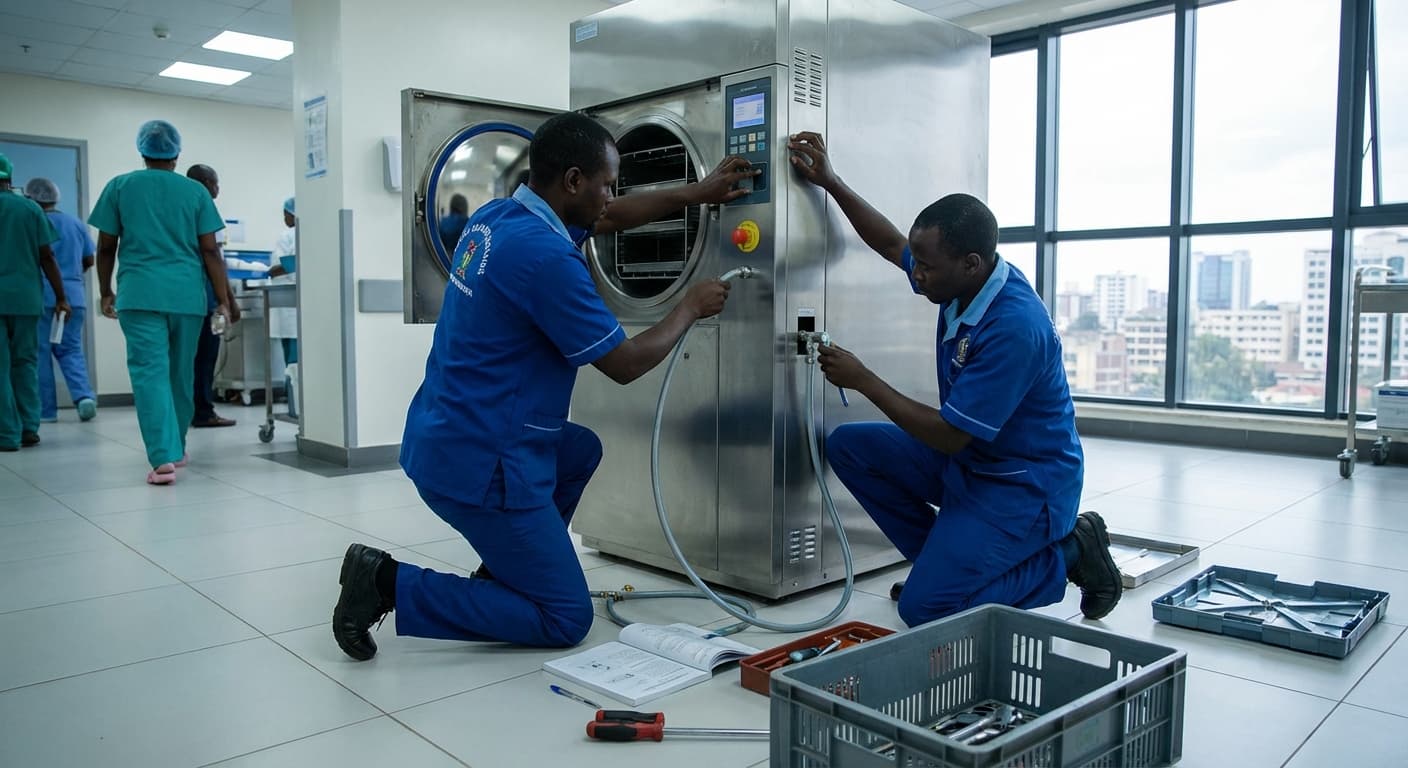
Autoclave & Sterilizer Installation Service in Sierra Leone
Engineering Excellence & Technical Support
Autoclave & Sterilizer Installation Service High-standard technical execution following OEM protocols and local regulatory frameworks.
Precision Sterilization Chamber Installation
Expert installation of high-pressure steam autoclaves and sterilizers, ensuring optimal chamber integrity, uniform steam distribution, and precise temperature/pressure control critical for effective bioburden reduction in Sierra Leone's healthcare and research facilities.
Advanced Plumbing & Steam System Integration
Seamless integration of dedicated steam lines, water supply, and condensate drainage systems, adhering to strict safety protocols and international standards. Our service guarantees efficient steam generation and minimal heat loss for reliable sterilization cycles.
Robust Electrical & Control System Setup
Professional installation and configuration of electrical power connections and sophisticated control systems. We ensure accurate sensor calibration, programmable logic controller (PLC) integration, and safety interlocks for safe, repeatable, and verifiable sterilization processes tailored to Sierra Leone's infrastructure.
What Is Autoclave & Sterilizer Installation Service In Sierra Leone?
Autoclave and sterilizer installation service in Sierra Leone refers to the professional provision of setting up, configuring, and commissioning sterilization equipment, primarily autoclaves (steam sterilizers) and other forms of medical and laboratory sterilizers, within facilities across the nation. This service ensures that these critical devices are installed correctly according to manufacturer specifications, regulatory standards, and operational requirements, thereby guaranteeing effective sterilization cycles and preventing the transmission of pathogens. The service encompasses a range of technical activities from site assessment and infrastructure preparation to the final validation and user training.
| Who Needs It? | Typical Use Cases | |||||
|---|---|---|---|---|---|---|
| Hospitals and Clinics: Across all departments, including surgical suites, dental clinics, emergency rooms, and central sterile supply departments (CSSDs) for the sterilization of surgical instruments, medical devices, and dressings. | Laboratories (Medical, Research, and Industrial): For the sterilization of laboratory glassware, culture media, contaminated waste, and reusable equipment to prevent cross-contamination and ensure experimental integrity. | Dental Practices: Sterilization of dental instruments, handpieces, and other reusable items to prevent the transmission of infections. | Veterinary Clinics and Animal Research Facilities: Sterilization of surgical instruments and equipment used in animal care and research. | Dialysis Centers: Sterilization of dialysis machines, dialyzers (if reusable), and associated tubing. | Pharmaceutical and Biotechnology Companies: For sterilization of equipment and consumables in manufacturing processes, quality control laboratories, and R&D facilities. | Outbreak Response and Public Health Initiatives: Installation of emergency sterilization units in remote or disaster-affected areas to maintain hygiene standards. |
| Sterilization of Surgical Instruments: Autoclaves are fundamental for rendering reusable surgical tools sterile, eliminating all viable microorganisms, including spores. | Disinfection of Medical Devices: Sterilization of endoscopes, catheters, syringes, and other medical equipment that comes into contact with patient tissues or sterile body sites. | Laboratory Waste Decontamination: Rendering infectious biological waste safe for disposal by eliminating pathogens. | Sterilization of Culture Media: Preventing contamination in microbiological and cell culture experiments. | Sterilization of Dental Instruments: Ensuring the safety of dental procedures by eliminating pathogens from reusable instruments. | Preparation of Sterile Water and Solutions: Certain autoclaves can be used for sterilizing water and saline solutions for medical or laboratory use. | Validation of Sterility Assurance: Installation services often include the initial validation, which is a critical step in proving the efficacy of the sterilization process for regulatory compliance. |
Key Components of Autoclave & Sterilizer Installation Service:
- Site Assessment and Planning: Evaluating the proposed installation location for adequate space, ventilation, power supply (voltage, phase, amperage), water supply (quality and pressure), drainage, and structural integrity. Planning for the logistical movement of the equipment to the site.
- Infrastructure Preparation: Modifying or installing necessary utility connections (electrical, plumbing, steam, compressed air, gas), ensuring compliance with local building codes and safety regulations. This may include fabricating mounting brackets or specialized platforms.
- Equipment Unpacking and Positioning: Careful removal of the sterilizer from its packaging, inspection for transit damage, and precise placement in the designated operational area.
- Utility Connections and Integration: Connecting the sterilizer to the prepared utility lines. This involves ensuring secure, leak-proof connections and proper integration with building management systems if applicable.
- Electrical and Control System Wiring: Connecting the sterilizer to the power supply and configuring its control panel, safety interlocks, and any integrated data logging or communication systems.
- Water and Steam System Setup: For steam autoclaves, connecting to a suitable steam generator or source and ensuring the correct functioning of steam traps, regulators, and distribution lines. For other sterilizers, connecting to appropriate water sources and drainage.
- Calibration and Functional Testing: Performing initial functional tests to verify all components are operating as intended. This includes leak testing, pressure checks, temperature monitoring, and cycle initiation.
- Performance Qualification (PQ) and Validation: Conducting a series of test cycles using biological and chemical indicators to scientifically demonstrate that the sterilizer achieves and maintains the required sterilization parameters (e.g., temperature, pressure, time, saturation) to achieve the desired Sterility Assurance Level (SAL).
- User Training: Providing comprehensive training to facility personnel on the safe and effective operation, routine maintenance, troubleshooting, and documentation procedures for the newly installed sterilizer.
- Documentation and Handover: Providing all necessary documentation, including installation reports, validation certificates, operation manuals, maintenance schedules, and warranty information.
Who Needs Autoclave & Sterilizer Installation Service In Sierra Leone?
The installation of autoclaves and sterilizers is a critical service for any organization in Sierra Leone that handles infectious materials, requires sterile equipment for patient care, or needs to ensure the safety of its workforce and the public. These devices are essential for preventing the spread of diseases and maintaining high standards of hygiene and safety. Our expert installation services ensure that these vital pieces of equipment are set up correctly, calibrated accurately, and ready for immediate and effective use, providing peace of mind and operational reliability.
| Department/Sector | Primary Need for Autoclave/Sterilizer | Key Equipment Types |
|---|---|---|
| Inpatient Care (Wards) | Sterilization of surgical instruments, dressings, linens, and patient care equipment. | Steam autoclaves (Class B, S), instrument sterilizers. |
| Operating Theatres/Surgical Units | High-level sterilization of all surgical instruments, trays, and drapes to prevent surgical site infections. | High-capacity steam autoclaves, flash sterilizers, instrument washers/disinfectors. |
| Outpatient Departments/Clinics | Sterilization of instruments used for examinations, minor procedures, and wound care. | Benchtop autoclaves, small instrument sterilizers. |
| Laboratories (Medical/Pathology) | Sterilization of glassware, media, culture plates, biohazardous waste, and instruments. | Laboratory autoclaves, biohazard cabinets (for pre-sterilization handling). |
| Dental Clinics | Sterilization of dental instruments (handpieces, explorers, probes, mirrors) to prevent cross-contamination. | Dental autoclaves (usually Class B), ultrasonic cleaners, instrument pouches. |
| Emergency Departments | Rapid and reliable sterilization of emergency medical equipment and instruments. | Compact, fast-cycling autoclaves, instrument sterilizers. |
| Maternity Wards | Sterilization of instruments and equipment used during childbirth and postpartum care. | Steam autoclaves, smaller instrument sterilizers. |
| Sterile Processing Departments (SPDs) | Centralized hub for the cleaning, disinfection, sterilization, and storage of reusable medical devices. | Large-scale steam autoclaves, washer-disinfectors, sterile storage cabinets. |
| Research Laboratories | Sterilization of media, reagents, labware, and disposal of biological waste. | Laboratory autoclaves, specialized sterilizers for specific research needs. |
| Barber Shops/Tattoo Parlors/Beauty Salons | Sterilization of tools (razors, scissors, tweezers, needles, tattoo equipment) to prevent the transmission of bloodborne pathogens. | Small autoclaves, UV sterilizers, dry heat sterilizers (less common for porous materials). |
| Veterinary Clinics | Sterilization of surgical instruments, diagnostic equipment, and materials. | Veterinary-specific autoclaves, instrument sterilizers. |
Target Customers for Autoclave & Sterilizer Installation in Sierra Leone
- Hospitals and Clinics
- Laboratories (Medical, Research, Industrial)
- Dental Practices
- Veterinary Clinics
- Barber Shops and Tattoo Parlors
- Beauty Salons and Spas
- Educational Institutions (Medical schools, Nursing schools, Science departments)
- Non-Governmental Organizations (NGOs) involved in healthcare
- Government Health Facilities
- Food and Beverage Manufacturing Plants (for sterilization of equipment)
- Research Institutes
- Pharmaceutical Companies
Autoclave & Sterilizer Installation Service Process In Sierra Leone
This document outlines the standard workflow for Autoclave & Sterilizer Installation Services in Sierra Leone, from the initial client inquiry to the successful execution of the installation. The process is designed to ensure clarity, efficiency, and client satisfaction.
| Stage | Description | Key Activities | Responsible Parties | Estimated Timeline |
|---|---|---|---|---|
| Client expresses interest in autoclave/sterilizer installation. This stage involves understanding the client's needs and providing preliminary information. | Receive client inquiry (phone, email, website). Discuss equipment type, intended use, and general requirements. Provide initial product/service information and pricing overview. Answer basic client questions. | Client, Sales/Consultation Team | 1-3 Business Days |
| A detailed assessment of the client's facility is conducted to determine installation requirements and provide a formal quotation. | Schedule and conduct a physical site visit. Assess space availability, power supply, water and drainage, ventilation, and any specific site modifications needed. Document findings. Prepare a detailed quotation including equipment, installation labor, materials, and any additional services. | Technical Team/Installation Supervisor, Client | 3-7 Business Days (post-initial consultation) |
| Upon acceptance of the quotation, formalize the order and schedule the installation dates. | Client formally accepts the quotation and provides purchase order. Confirm equipment availability and lead times. Schedule the installation date(s) with the client, taking into account their operational needs. Confirm delivery logistics. | Sales/Admin Team, Client, Logistics Team | 2-5 Business Days (post-quotation acceptance) |
| The autoclave/sterilizer is delivered to the site, and necessary preparations are made before installation begins. | Coordinate and oversee equipment delivery to the client's premises. Inspect equipment for any shipping damage. Ensure all required tools, materials, and accessories are on-site. Verify that the installation site meets pre-installation requirements (e.g., power, water access). | Logistics Team, Installation Team, Client | 1-2 Business Days (prior to installation) |
| The physical installation of the autoclave/sterilizer is carried out by the technical team. | Unpack and position the equipment. Connect to power, water, and drainage as per manufacturer specifications and site assessment. Install any necessary accessories or ventilation systems. Ensure safe and secure installation. | Installation Team (Certified Technicians) | 1-5 Business Days (depending on complexity) |
| The installed equipment undergoes rigorous testing to ensure it functions correctly and meets performance standards. | Perform functional tests (e.g., cycle tests, temperature and pressure verification). Calibrate the unit. Verify all safety features are operational. Document test results. Ensure compliance with relevant industry standards. | Installation Team, Quality Assurance/Testing Specialist | 1-2 Business Days (concurrent with or post-installation) |
| The client's personnel are trained on the operation and basic maintenance of the new equipment. | Provide comprehensive training on equipment operation, daily checks, basic troubleshooting, and safety procedures. Hand over user manuals and warranty information. Obtain client sign-off on successful installation and training. | Installation Team/Trainer, Client Personnel | 0.5-1 Business Day (post-testing) |
| Ongoing support is provided, and all relevant documentation is finalized and submitted. | Provide a warranty period and contact information for support. Submit final installation report, test results, and as-built drawings (if applicable) to the client and internal records. Schedule planned preventative maintenance if requested. | Support Team, Administration, Client | Ongoing |
Autoclave & Sterilizer Installation Service Workflow in Sierra Leone
- Inquiry & Initial Consultation
- Site Assessment & Quotation
- Order Confirmation & Scheduling
- Equipment Delivery & Pre-Installation Checks
- Installation Execution
- Testing & Commissioning
- Client Training & Handover
- Post-Installation Support & Documentation
Autoclave & Sterilizer Installation Service Cost In Sierra Leone
The cost of autoclave and sterilizer installation services in Sierra Leone can vary significantly based on several factors. These include the type and size of the equipment, the complexity of the installation, the location within Sierra Leone, and the specific service provider chosen. A basic installation of a smaller, portable unit might be considerably less expensive than a complex, built-in system requiring significant plumbing, electrical, and ventilation modifications. Furthermore, accessibility to the installation site, the need for specialized tools or expertise, and any required permits or certifications can all impact the final price. It's crucial to obtain detailed quotes from multiple reputable service providers to ensure competitive pricing and a thorough understanding of what is included in the service.
| Service Component/Equipment Type | Estimated Cost Range (SLE - Sierra Leonean Leone) | Notes |
|---|---|---|
| Basic Installation (Small/Portable Unit) | 1,500 - 4,000 | Primarily for smaller, self-contained units requiring minimal setup. |
| Standard Installation (Medium-Sized Unit) | 3,000 - 8,000 | Includes moderate plumbing and electrical adjustments for mid-range autoclaves/sterilizers. |
| Complex Installation (Large/Built-in Unit) | 7,000 - 20,000+ | For large-scale, integrated systems requiring significant site modifications, specialized utilities. |
| Site Survey/Consultation | 200 - 700 | Often a separate fee or included in a comprehensive quote. |
| Ancillary Services (Calibration, Training) | 500 - 2,000 (per service) | Can be bundled or charged individually. |
| Transportation/Logistics (Remote Areas) | Variable (adds 10-30% or more) | Dependent on distance and accessibility. |
Key Pricing Factors for Autoclave & Sterilizer Installation in Sierra Leone
- Equipment Type and Size: Larger, more sophisticated sterilizers (e.g., high-capacity autoclaves for hospitals) will incur higher installation costs than smaller, benchtop models for laboratories or clinics.
- Installation Complexity: Basic plug-and-play setups are cheaper. Installations requiring extensive plumbing, electrical wiring upgrades, ventilation systems, or structural modifications will be more expensive.
- Location: Installation costs can differ between major cities (e.g., Freetown) and more remote or less accessible areas due to transportation and labor availability.
- Service Provider Reputation and Expertise: Highly experienced and reputable companies might charge a premium for their specialized knowledge and reliability.
- Ancillary Services: Costs may increase if the installation includes additional services such as initial calibration, staff training on operation and maintenance, or system testing and validation.
- Site Preparation: The condition of the intended installation site (e.g., existing electrical capacity, water supply, space) can influence the cost of necessary preparatory work.
- Permits and Certifications: If local regulations require specific permits or certifications for the installation, these associated fees will add to the overall cost.
Affordable Autoclave & Sterilizer Installation Service Options
Investing in a reliable autoclave or sterilizer is crucial for many businesses and healthcare facilities. Our installation service ensures your equipment is set up correctly, safely, and efficiently. We understand that budget is a significant consideration, so we offer a range of affordable options, including value bundles and strategic cost-saving approaches to make professional installation accessible. This guide outlines how you can get the best value for your autoclave and sterilizer installation.
| Service Option | Description | Key Benefits | Estimated Cost Range (USD) | Ideal For |
|---|---|---|---|---|
| Standard Installation | Basic setup of your autoclave/sterilizer, including necessary plumbing, electrical connections, and initial testing. | Essential safety and functionality check, professional setup. | $300 - $700 | Standard-sized units, straightforward installation sites. |
| Value Bundle: Installation + Initial Training | Includes standard installation plus a comprehensive training session for your staff on operation, basic maintenance, and troubleshooting. | Cost-effective package, empowers your team, reduces operational errors. | $450 - $900 | New users, facilities prioritizing staff competency, maximizing ROI. |
| Value Bundle: Installation + Extended Warranty Support | Combines standard installation with an extended warranty on the installation workmanship, offering additional peace of mind. | Long-term protection, assurance of quality installation. | $500 - $1000 | Facilities with critical sterilization needs, those seeking long-term investment security. |
| Custom Installation Package | Tailored to your specific needs, including complex plumbing, ventilation requirements, or integration with existing systems. | Handles unique challenges, ensures optimal performance in any environment. | Quote-Based (Varies Widely) | Large or specialized units, complex facility layouts, unique operational requirements. |
Why Choose Professional Installation?
- Ensures proper and safe operation of your equipment.
- Minimizes risk of damage to the autoclave/sterilizer and your facility.
- Maximizes equipment lifespan and efficiency.
- Compliance with safety regulations and manufacturer warranties.
- Peace of mind knowing your critical sterilization processes are handled by experts.
Verified Providers In Sierra Leone
In Sierra Leone's evolving healthcare landscape, identifying trustworthy and qualified medical providers is paramount for ensuring quality patient care. Franance Health stands out as a premier organization dedicated to credentialing and promoting healthcare professionals who meet rigorous standards. This commitment translates into a network of verified providers who offer the highest level of expertise, ethical practice, and patient-centered services. Choosing a Franance Health credentialed provider means opting for assurance, competence, and a commitment to excellence in healthcare.
| Provider Type | Key Franance Health Credentialing Factor | Benefit to Patients |
|---|---|---|
| Physicians | Medical School Accreditation, Board Certification, Residency Completion | Access to highly trained specialists with proven expertise in their fields. |
| Nurses | Nursing School Accreditation, Professional Licensing, Clinical Competency Assessment | Trustworthy and skilled nursing care, ensuring proper patient management and support. |
| Specialists (e.g., Surgeons, Cardiologists) | Advanced Degrees, Fellowship Training, Peer Review | Specialized knowledge and experience for complex medical conditions. |
| Allied Health Professionals (e.g., Pharmacists, Lab Technicians) | Relevant Certifications, Practical Experience, Regulatory Compliance | Accurate diagnoses and safe medication management. |
Why Franance Health Credentialed Providers are the Best Choice:
- Rigorous Vetting Process: Franance Health employs a comprehensive and stringent credentialing process that scrutinizes educational background, professional experience, licensing, and any disciplinary actions. This ensures only highly qualified individuals become part of their network.
- Commitment to Ethical Standards: Beyond technical skills, Franance Health emphasizes ethical conduct and patient advocacy, ensuring providers adhere to the highest moral and professional principles.
- Access to Expertise: The network comprises specialists and general practitioners who have demonstrated a high level of competence and continuous professional development.
- Enhanced Patient Safety: By verifying credentials, Franance Health significantly contributes to improved patient safety by reducing the risk of unqualified individuals providing care.
- Building Trust and Confidence: Patients can have greater confidence in their healthcare decisions when selecting providers associated with a reputable credentialing body like Franance Health.
- Facilitating Quality Healthcare Access: Franance Health plays a crucial role in making quality healthcare more accessible and reliable across Sierra Leone.
- Continuous Monitoring: The credentialing process is not a one-time event. Franance Health often includes mechanisms for ongoing monitoring of its credentialed providers to maintain standards.
Scope Of Work For Autoclave & Sterilizer Installation Service
This Scope of Work (SOW) outlines the requirements for the professional installation of an autoclave and sterilizer unit. It defines the technical deliverables, standard specifications, and responsibilities to ensure a safe, efficient, and compliant installation.
| Technical Deliverable | Standard Specification | Verification Method |
|---|---|---|
| Installed Autoclave/Sterilizer Unit | Unit is securely installed, level, and stable, meeting all manufacturer's dimensional and clearance requirements. | Visual inspection, measurement check. |
| Completed Utility Connections (Electrical, Water, Drainage, Ventilation) | All connections are professionally made, adhere to relevant local codes (e.g., NEC, plumbing codes), and meet manufacturer's specifications. No visible leaks or defects. | Visual inspection, pressure testing (where applicable), functional testing. |
| Functional System Operation | Unit successfully completes at least two (2) full sterilization cycles without error codes or malfunctions. | Operational testing by technician and authorized personnel. |
| Performance Parameter Verification | Temperature, pressure, and cycle times are within +/- 2% of manufacturer's specified parameters for each cycle type. | Data logging from unit's control system, independent temperature/pressure sensors (if required). |
| Safety Feature Functionality | All safety interlocks, door seals, and emergency stop mechanisms operate correctly and reliably. | Manual testing of each safety feature. |
| Installation Report | A comprehensive report detailing the installation process, utility connections, test results, and any encountered issues or deviations. Includes photographs. | Review of submitted documentation. |
| Operator Training Session | A documented training session covering basic operation, safety, and routine checks, with attendance signed by trainees. | Review of training log. |
| Cleaned Installation Site | Site is free of debris, packaging materials, and tools; returned to its pre-installation condition. | Visual inspection. |
Key Components of the Scope of Work
- 1. Project Understanding & Site Assessment:
- Review of manufacturer's installation manuals and site-specific requirements.- Pre-installation site visit to verify clearances, utility availability (power, water, drainage, ventilation), structural integrity, and accessibility.- Identification of any potential site-specific challenges or modifications required.- Confirmation of all necessary permits and approvals.- 2. Unpacking and Positioning:
- Careful unpacking of the autoclave/sterilizer unit and all associated components.- Safe transportation of the unit from the delivery point to its final installed location.- Precise positioning of the unit according to manufacturer's specifications and site layout.- 3. Utility Connections:
- **Electrical:** Connection to the designated power supply, ensuring compliance with local electrical codes and manufacturer's voltage/amperage requirements. Includes proper grounding and surge protection.- **Water:** Connection to the potable water supply, including necessary filtration and pressure regulation as per manufacturer's recommendations. For steam sterilizers, connection to a steam source if applicable.- **Drainage:** Connection to the appropriate sanitary drain system, ensuring proper slope and trap installation to prevent backflow and odor.- **Ventilation:** Installation of any required exhaust or ventilation systems to manage steam, heat, or other byproducts.- 4. Mounting and Securing:
- Secure mounting of the unit to the floor or wall as per manufacturer's instructions and site conditions.- Ensuring the unit is level and stable.- 5. Ancillary Equipment Installation:
- Installation of any provided accessories, such as shelves, racks, water treatment systems, or external printers.- 6. System Testing and Commissioning:
- **Pre-Operational Checks:** Verification of all connections, clearances, and settings.- **Functional Testing:** Running the unit through its operational cycles (e.g., sterilization cycles, validation cycles) to ensure all functions operate as intended.- **Performance Verification:** Measuring key parameters (temperature, pressure, time) to ensure they meet manufacturer's specifications and relevant standards.- **Leak Testing:** Checking for any water, steam, or air leaks.- **Safety Feature Testing:** Verifying the proper operation of all safety interlocks and emergency shutdown mechanisms.- 7. Documentation and Training:
- Provision of all relevant documentation, including installation reports, test results, and manufacturer's operating manuals.- Basic operational training for designated personnel on unit use, basic maintenance, and emergency procedures.- 8. Site Cleanup:
- Removal of all packaging materials, debris, and tools from the installation site.- Restoration of the installation area to a clean and orderly condition.
Service Level Agreement For Autoclave & Sterilizer Installation Service
This Service Level Agreement (SLA) outlines the standards of service for Autoclave and Sterilizer Installation Services provided by [Your Company Name]. It defines response times for critical issues and uptime guarantees for the installed equipment during the warranty period.
| Service Level | Description | Target Response Time (Business Hours) | Uptime Guarantee (during Warranty Period) | Escalation Procedure |
|---|---|---|---|---|
| Critical Equipment Failure | Complete loss of functionality, rendering the autoclave/sterilizer unusable. | 2 Business Hours | 99.5% | Immediate phone support, followed by technician dispatch within 4 Business Hours if remote resolution is not possible. |
| Major Equipment Malfunction | Significant reduction in performance or inability to complete primary functions, impacting workflow. | 4 Business Hours | 99.0% | Phone support within 4 Business Hours, followed by technician dispatch within 8 Business Hours if remote resolution is not possible. |
| Minor Equipment Issue/Performance Degradation | Reduced efficiency, minor error codes, or non-critical operational issues that do not halt primary functions. | 8 Business Hours | 98.0% | Email or phone support for remote troubleshooting within 8 Business Hours. Technician dispatch scheduled for the next available slot, typically within 2-3 Business Days. |
| Planned Maintenance & Updates | Scheduled downtime for routine maintenance, software updates, or agreed-upon preventative measures. | N/A (Pre-scheduled with client) | N/A (Not counted towards uptime guarantee) | Notified at least 7 days in advance with proposed dates and times. |
Key Service Level Objectives
- Response Time: This refers to the time taken from when a critical issue is reported by the client to when [Your Company Name] initiates active troubleshooting or dispatches a technician.
- Uptime Guarantee: This refers to the percentage of time the installed autoclave or sterilizer is functional and operational for its intended purpose, excluding scheduled maintenance and planned downtime.
- Warranty Period: The period during which this SLA is active, typically coinciding with the manufacturer's warranty for the installed equipment.
Frequently Asked Questions

Ready when you are
Let's scope your Autoclave & Sterilizer Installation Service in Sierra Leone project in Sierra Leone.

Scaling healthcare logistics and technical systems across the entire continent.