
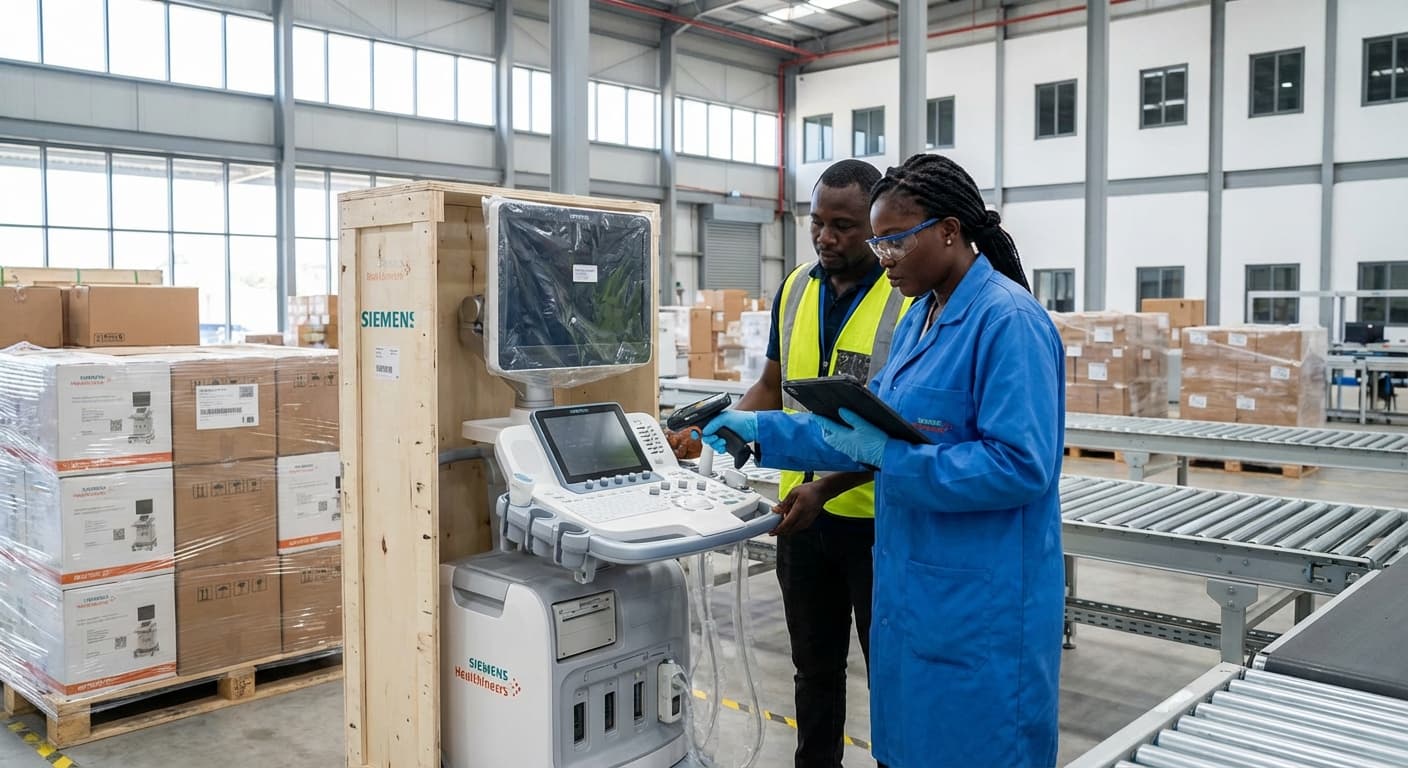
Warehouse Receiving Inspection Service (Medical Equipment) in Sierra Leone
Engineering Excellence & Technical Support
Warehouse Receiving Inspection Service (Medical Equipment) High-standard technical execution following OEM protocols and local regulatory frameworks.
Rigorous Compliance Verification
Ensures all incoming medical equipment strictly adheres to Sierra Leone's Ministry of Health and Sanitation regulations, international standards (e.g., ISO 13485), and specific donor/project requirements. We meticulously review accompanying documentation, certificates of origin, and conformity certificates to prevent the introduction of non-compliant or counterfeit devices.
Environmental Integrity Assurance
Monitors and records crucial environmental conditions during the receiving process. This includes temperature and humidity checks of the receiving area and packaging, vital for maintaining the efficacy and safety of temperature-sensitive medical equipment and preventing degradation or spoilage before deployment.
Precise Inventory & Traceability
Implements advanced barcode scanning and unique identifier (UDI) verification for every piece of equipment. This guarantees accurate inventory management, immediate identification of discrepancies, and robust traceability from receipt to final destination, crucial for recall management and supply chain integrity in healthcare.
What Is Warehouse Receiving Inspection Service (Medical Equipment) In Sierra Leone?
Warehouse Receiving Inspection Service (Medical Equipment) in Sierra Leone refers to a specialized quality assurance process conducted upon the arrival of medical equipment at designated storage facilities within the country. This service ensures that all received medical equipment meets predetermined specifications, regulatory requirements, and is free from damage or defects before being accepted into inventory and subsequently distributed for use. It is a critical component of the medical supply chain management, aiming to uphold the integrity and efficacy of medical devices crucial for patient care.
| Who Needs This Service? | Typical Use Cases | ||||||||||
|---|---|---|---|---|---|---|---|---|---|---|---|
| Ministry of Health and Sanitation (MoHS): For all procured medical equipment intended for public health facilities, ensuring quality and accountability in public spending. | Hospitals and Healthcare Facilities (Public and Private): To ensure the quality and functionality of medical equipment purchased through various channels, including direct procurement, donor funding, or third-party suppliers. | Non-Governmental Organizations (NGOs) and International Aid Agencies: When importing and distributing medical equipment for health programs and humanitarian initiatives. | Medical Equipment Suppliers and Distributors: As a mandatory step in their internal quality control processes before delivering equipment to end-users, and often as a requirement by their clients. | Logistics and Warehousing Companies: Managing the storage and distribution of medical equipment on behalf of other entities. | Regulatory Bodies: To ensure that imported and distributed medical equipment adheres to national safety and efficacy standards. | Procurement Agencies: Overseeing the quality of goods procured on behalf of the government or other organizations. | Receiving Imported Medical Equipment: Regardless of the source (international procurement, donations, etc.) to verify its condition and compliance upon arrival in Sierra Leone. | Verifying Donor-Funded Equipment: Ensuring that donated medical equipment meets the intended specifications and is suitable for use in the local context. | Establishing New Healthcare Facilities or Upgrading Existing Ones: To guarantee the quality and readiness of newly acquired medical equipment. | Routine Stock Replenishment: Inspecting incoming shipments of essential medical supplies and equipment to maintain operational readiness. | Responding to Health Emergencies: Expedited inspection of critical medical equipment procured during outbreaks or disasters to ensure rapid deployment of functional devices. |
Key Aspects of Warehouse Receiving Inspection Service (Medical Equipment) in Sierra Leone
- Visual Inspection: Comprehensive examination for external damage, missing components, incorrect labeling, and evidence of tampering. This includes verifying packaging integrity and environmental protection measures.
- Documentation Verification: Cross-referencing received items against purchase orders, invoices, shipping manifests, and certificates of origin. This ensures accuracy in quantity, model numbers, serial numbers, and manufacturer details.
- Compliance Checks: Verification against relevant national and international standards (e.g., WHO prequalification, CE marking, FDA approval where applicable) and specific Ministry of Health and Sanitation (MoHS) regulations. This includes checking for valid registration, import permits, and compliance with local electrical and safety standards.
- Functional Testing (where applicable): Basic operational checks to confirm immediate functionality without extensive clinical use. This may include powering on devices, checking display interfaces, and confirming primary operational modes.
- Lot/Batch Number and Expiry Date Verification: Ensuring that received items correspond to specified lot/batch numbers and that expiry dates are within acceptable parameters for storage and utilization, adhering to MoHS guidelines.
- Environmental Condition Assessment: Evaluating the condition of the storage environment during receipt, including temperature, humidity, and cleanliness, to ensure no adverse impact on the equipment's condition during transit.
- Non-Conformance Reporting: Detailed documentation and reporting of any discrepancies, damages, or non-compliance issues identified during the inspection process. This includes photographic evidence and recommendations for corrective actions.
- Acceptance or Rejection: Formal decision-making based on inspection findings, leading to the acceptance of compliant goods into inventory or the rejection and initiation of return/replacement procedures for non-compliant items.
Who Needs Warehouse Receiving Inspection Service (Medical Equipment) In Sierra Leone?
Warehouse Receiving Inspection Service for Medical Equipment in Sierra Leone is crucial for ensuring the quality, safety, and compliance of vital medical supplies entering the country. This service plays a critical role in safeguarding public health by preventing the distribution of faulty, damaged, or substandard equipment.
| Target Customer | Relevant Departments/Roles | Key Needs Addressed by Inspection Service |
|---|---|---|
| Hospitals and Clinics (Public and Private) | Procurement Department, Biomedical Engineering Department, Pharmacy Department, Quality Assurance Department, Clinical Directors | Verification of equipment functionality, ensuring patient safety, compliance with purchase orders, identifying manufacturing defects, verifying calibration status, confirming inclusion of accessories and manuals. |
| Government Ministries and Agencies (e.g., Ministry of Health and Sanitation) | Procurement Unit, Pharmaceutical Services Directorate, Public Health Directorate, Regulatory Affairs Unit | Ensuring adherence to national standards and regulations, preventing waste of public funds due to faulty equipment, maintaining national medical equipment inventory integrity, safeguarding public health outcomes, compliance with international procurement guidelines. |
| Non-Governmental Organizations (NGOs) and Charities | Logistics and Supply Chain Department, Program Managers, Finance Department, Medical Coordinators | Ensuring donated or purchased equipment is fit for purpose, maximizing the impact of aid by providing reliable medical tools, preventing costly repairs or replacements of damaged goods, ensuring transparency and accountability of funds spent on equipment. |
| International Aid Organizations | Logistics and Procurement Teams, Health Program Managers, Monitoring and Evaluation (M&E) Officers | Verifying that procured or donated equipment meets international quality standards, ensuring that aid effectively reaches intended beneficiaries with functional equipment, fulfilling donor reporting requirements for equipment quality, mitigating risks associated with equipment failure in critical humanitarian contexts. |
| Medical Equipment Suppliers and Distributors | Quality Control Department, Warehouse Management, Sales and Technical Support Teams | Confirming that incoming shipments match orders and are free from transit damage, ensuring that distributed equipment is in optimal condition, reducing customer complaints and returns, maintaining reputation for quality, facilitating efficient inventory management and restocking. |
| Research and Diagnostic Laboratories | Laboratory Manager, Procurement Officer, Quality Assurance Officer | Ensuring accuracy and reliability of diagnostic results, verifying the proper functioning of specialized laboratory equipment, confirming completeness of essential components and calibration certificates, preventing delays in research or diagnostic processes due to equipment issues. |
| Public Health Institutions | National Disease Surveillance Unit, Public Health Laboratory Services, Reproductive Health Department | Maintaining the integrity of equipment used for public health initiatives, ensuring the availability of functional tools for disease prevention and control, supporting national health security, verifying the quality of equipment for critical public health programs. |
Who Needs Warehouse Receiving Inspection Service (Medical Equipment) in Sierra Leone?
- Hospitals and Clinics (Public and Private)
- Government Ministries and Agencies
- Non-Governmental Organizations (NGOs) and Charities
- International Aid Organizations
- Medical Equipment Suppliers and Distributors
- Research and Diagnostic Laboratories
- Public Health Institutions
Warehouse Receiving Inspection Service (Medical Equipment) Process In Sierra Leone
This document outlines the comprehensive workflow for a Warehouse Receiving Inspection Service of Medical Equipment in Sierra Leone, from the initial client inquiry to the final execution of the inspection. The process ensures that all received medical equipment meets specified quality, safety, and regulatory standards before being accepted into a warehouse facility. This service is critical for maintaining the integrity of medical supplies, preventing the introduction of substandard or counterfeit products, and ensuring patient safety. The workflow is designed to be transparent, efficient, and compliant with relevant national and international guidelines.
| Phase | Step | Description | Key Activities | Deliverables/Outcomes | Responsible Parties |
|---|---|---|---|---|---|
| Inquiry & Scoping |
| Client expresses interest in the receiving inspection service for medical equipment. | Contacting the inspection service provider, providing basic information about the equipment and scope of need. | Initial contact, understanding of client's basic requirements. | Client, Inspection Service Provider (Sales/Inquiry Team) |
| Inquiry & Scoping |
| Detailed understanding of the client's specific needs, type of medical equipment, quantity, and inspection criteria. | Meetings, calls, or questionnaires to gather detailed information on equipment types (e.g., diagnostic, therapeutic, surgical), regulatory requirements (e.g., Ministry of Health and Sanitation - MoHS, FDA Sierra Leone if applicable), quality standards (e.g., WHO GMP, ISO), and any specific client preferences. | Defined scope of work, list of equipment to be inspected, agreed-upon inspection criteria. | Inspection Service Provider (Technical Team, Sales), Client |
| Proposal & Agreement |
| Creation of a detailed proposal outlining the service, scope, methodology, timelines, and costs. | Technical team defines inspection protocols based on MoHS regulations, international standards, and client requirements. Sales team compiles the proposal, including personnel, equipment, and pricing. | Formal proposal document submitted to the client. | Inspection Service Provider (Sales, Technical Team) |
| Proposal & Agreement |
| Client reviews the proposal, asks clarifying questions, and negotiates terms. | Client internal review, feedback sessions with the inspection service provider, potential adjustments to scope or cost. | Agreement on terms, scope, cost, and schedule. | Client, Inspection Service Provider (Sales) |
| Proposal & Agreement |
| Formalization of the service agreement. | Both parties sign the contract, legally binding them to the agreed-upon terms and conditions. | Signed contract. | Client, Inspection Service Provider (Legal/Management) |
| Pre-Inspection Preparation |
| Assigning qualified inspectors and providing them with project-specific information. | Selecting inspectors with relevant expertise in medical equipment. Conducting a pre-inspection briefing covering the scope, client's requirements, regulatory context, and potential risks. | Assigned inspection team, detailed project brief. | Inspection Service Provider (Operations Management, Technical Lead) |
| Pre-Inspection Preparation |
| Gathering relevant standards, regulations, and client-provided documentation. | Collecting copies of MoHS regulations, relevant ISO standards, WHO guidelines, and any specific quality control documents provided by the client or manufacturer. | Set of relevant standards and documents for reference. | Inspection Service Provider (Technical Lead, Inspectors) |
| Pre-Inspection Preparation |
| Coordinating with the client to ensure smooth access to the warehouse and necessary facilities. | Confirming warehouse location, operating hours, and any specific access requirements. Arranging transportation for the inspection team. | Confirmed logistics and site access plan. | Inspection Service Provider (Operations), Client |
| On-Site Inspection Execution |
| Inspection team arrives at the warehouse and meets with the client's representative. | Introduction to the client's on-site contact, review of the day's schedule, and confirmation of the equipment to be inspected. | Successful commencement of on-site inspection. | Inspection Team, Client Representative |
| On-Site Inspection Execution |
| Visual and functional examination of the medical equipment. | Checking for damage, correct model/serial numbers, completeness of accessories, packaging integrity, labeling (including expiry dates for consumables), and conformity to specifications. For certain equipment, functional testing may be performed. | Detailed observations of equipment condition and conformity. | Inspection Team |
| On-Site Inspection Execution |
| Verification of accompanying documentation. | Checking for manufacturer's certificates of origin, quality control certificates, user manuals, maintenance records, and any regulatory compliance documents required by Sierra Leone. | Verification of essential documentation for each equipment item. | Inspection Team |
| On-Site Inspection Execution |
| Taking samples or performing tests based on the scope. | For specific equipment or if required by standards, samples may be taken for laboratory analysis, or basic functional tests performed on-site to verify performance. | Collected samples or test results. | Inspection Team |
| On-Site Inspection Execution |
| Documenting any deviations from the agreed-upon standards or specifications. | Clearly recording any defects, damages, missing parts, incorrect labeling, or non-compliance with regulatory requirements. | List of identified non-conformities. | Inspection Team |
| On-Site Inspection Execution |
| Discussing preliminary findings with the client's representative. | Presenting a summary of observations, including any major non-conformities, before leaving the site. | Mutual understanding of preliminary findings. | Inspection Team, Client Representative |
| Reporting & Documentation |
| Developing a comprehensive inspection report. | Compiling all observations, evidence (photos, videos), test results, and non-conformities into a structured report following the agreed format. | Draft inspection report. | Inspection Team, Technical Lead |
| Reporting & Documentation |
| Internal review of the draft report for accuracy and completeness. | Technical lead and management review the report to ensure it meets quality standards and accurately reflects the inspection findings. | Approved draft inspection report. | Inspection Service Provider (Technical Lead, Quality Assurance) |
| Reporting & Documentation |
| Submitting the final inspection report to the client. | Electronically or physically delivering the report to the designated contact person at the client's organization. | Final, official inspection report. | Inspection Service Provider (Operations, Project Manager) |
| Post-Inspection Actions |
| Client reviews the report and decides on further actions. | Client evaluates the findings, particularly any non-conformities, and determines whether to accept, reject, or request corrective actions for the equipment. | Client's decision and communication of next steps. | Client |
| Post-Inspection Actions |
| Conducting re-inspections for non-conforming items. | If the client requests, or if it's part of the agreement, re-inspecting equipment after corrective actions have been taken by the supplier or client. | Confirmation of corrective action effectiveness. | Inspection Team |
| Post-Inspection Actions |
| Finalizing all project documentation and closing the service. | Archiving all inspection records, reports, and correspondence. Invoicing for services rendered. | Completed project file, final invoice. | Inspection Service Provider (Finance, Administration), Client |
Warehouse Receiving Inspection Service (Medical Equipment) Workflow in Sierra Leone
- Inquiry & Scoping
- Proposal & Agreement
- Pre-Inspection Preparation
- On-Site Inspection Execution
- Reporting & Documentation
- Post-Inspection Actions
Warehouse Receiving Inspection Service (Medical Equipment) Cost In Sierra Leone
The cost of warehouse receiving inspection services for medical equipment in Sierra Leone is influenced by a variety of factors, making it difficult to provide a single, definitive price. These services are crucial for ensuring the quality, safety, and functionality of medical devices before they enter the supply chain or are used in healthcare settings. Understanding the pricing dynamics is essential for budgeting and procurement. The local currency is the Sierra Leonean Leone (SLL).
| Service Type/Complexity | Estimated Cost Range (SLL per inspection/item) | Notes |
|---|---|---|
| Basic Visual & Documentation Check (per unit) | 50,000 - 150,000 SLL | For simple, non-complex equipment. Verifies external condition and documentation matching. |
| Standard Inspection (per unit) | 100,000 - 300,000 SLL | Includes visual check, documentation verification, and basic accessory check for moderately complex equipment. |
| Detailed Inspection with Basic Functionality Test (per unit) | 250,000 - 700,000 SLL | For more complex equipment requiring a simple operational check to confirm basic function. |
| Specialized Inspection (per unit) | 500,000 - 2,000,000+ SLL | For highly complex or specialized medical devices requiring specific testing, calibration, or expertise. Cost is highly variable. |
| Bulk Inspection (per shipment/pallet) | Negotiable (often a percentage of shipment value or a fixed daily rate) | For large volumes of similar items. Rates will be significantly lower per unit than individual inspections. Daily rates for inspection teams can range from 1,000,000 SLL to 5,000,000+ SLL depending on team size and expertise. |
| Expedited Service Fee | Add 20-50% to base cost | For urgent inspection requirements. |
| Report Generation & Certification | Included in most quotes, but significant customization may incur extra fees | Standard reports are usually part of the service. Elaborate reporting may be an additional charge. |
Key Pricing Factors for Warehouse Receiving Inspection Services (Medical Equipment) in Sierra Leone:
- Scope of Inspection: The complexity and depth of the inspection are primary cost drivers. This includes checking for physical damage, verifying serial numbers and model numbers against documentation, assessing packaging integrity, and confirming the presence of all accessories and manuals.
- Type and Quantity of Equipment: Larger, more complex, or a higher volume of medical equipment will naturally incur higher inspection costs due to the increased time and expertise required.
- Specialized Equipment Needs: Certain medical equipment may require specialized tools, calibrated testing devices, or highly trained technicians for proper inspection. This can significantly increase the service cost.
- Regulatory Compliance: If the inspection needs to verify compliance with specific national or international medical device regulations (e.g., Sierra Leone's Pharmacy Board regulations, WHO guidelines), it will add to the complexity and cost.
- Testing Requirements: Basic visual and documentation checks are less expensive than functional testing, performance validation, or calibration checks, which require specialized equipment and expertise.
- Location of Warehouse: Accessibility and logistical challenges associated with the warehouse location can impact travel time and associated costs for the inspection team.
- Service Provider's Reputation and Expertise: Established and reputable inspection firms with a proven track record and certified inspectors may command higher fees due to their reliability and quality of service.
- Urgency of Service: Rush or expedited inspection services typically come with a premium price tag.
- Reporting and Documentation: The level of detail and format of the inspection report required can also influence cost. Comprehensive reports with detailed findings, photographs, and recommendations will be more expensive.
- Insurance and Liability: The inspection provider's insurance coverage and liability provisions can be factored into their pricing.
- Market Demand and Competition: The level of competition among inspection service providers in Sierra Leone can influence price ranges. Higher demand can lead to increased prices.
Affordable Warehouse Receiving Inspection Service (Medical Equipment) Options
Seeking an affordable warehouse receiving inspection service for medical equipment doesn't mean compromising on quality or thoroughness. Several options focus on providing essential inspection services while optimizing costs. This guide explores value bundles and cost-saving strategies to help you secure the best service for your needs.
| Cost-Saving Strategy | Description | Potential Benefit |
|---|---|---|
| Pre-Defined Inspection Checklists | Work with the provider to create standardized checklists based on your most common medical equipment. This reduces custom inspection time and associated costs. | Faster inspection times, consistent quality, predictable pricing. |
| Off-Peak Scheduling | If your receiving schedule is flexible, inquire about discounted rates for inspections conducted during non-peak hours or days. | Lower hourly rates, reduced overall service cost. |
| Self-Service Documentation (with guidance) | For simpler equipment, some providers might offer reduced rates if you can provide initial data or photos, which they then verify. This requires a clear understanding of their requirements. | Lower per-inspection fee, greater control over initial data. |
| Remote Audit Capabilities | For less critical equipment, explore if remote audits using video conferencing and pre-submitted documentation can supplement or partially replace on-site inspections. | Reduced travel costs for inspectors, faster turnaround for certain checks. |
| Consolidated Reporting | Request aggregated reports for multiple deliveries within a specific period instead of individual reports for each shipment. This can streamline your internal review process and potentially reduce administrative fees. | Efficient data management, potentially lower reporting fees. |
| Long-Term Contracts | Committing to a longer-term contract (e.g., 1-3 years) can often secure more favorable pricing per inspection. | Guaranteed rates, significant overall cost savings. |
| Focus on Essential Checks | Prioritize the most critical inspection points for your medical equipment. Avoid paying for extensive testing if basic visual verification and documentation review meet your regulatory and operational needs. | Reduced inspection time and cost, tailored service. |
Understanding Value Bundles
- {"title":"Tiered Service Packages","description":"Providers often offer different levels of inspection, from basic visual checks to comprehensive functional testing. Lower tiers are typically more affordable, focusing on critical aspects like damage assessment and documentation verification."}
- {"title":"Volume Discounts","description":"The more inspections you require, the lower the per-unit cost often becomes. Negotiate discounts based on your projected inspection volume throughout the year."}
- {"title":"Subscription Models","description":"Some services offer monthly or annual subscriptions that include a set number of inspections at a discounted rate, providing predictable budgeting and potentially lower per-inspection costs."}
- {"title":"Bundled Services","description":"Look for packages that combine receiving inspection with other related services like basic inventory management, labeling, or quality control checks. This can offer a more comprehensive solution at a better overall price than sourcing services individually."}
- {"title":"Digital Reporting Included","description":"Ensure your chosen bundle includes detailed digital reports with photos and checklists. This eliminates the cost and time of manual reporting and streamlines your documentation process."}
Verified Providers In Sierra Leone
Ensuring access to quality healthcare in Sierra Leone is paramount, and identifying verified providers is crucial for individuals seeking reliable medical services. Franance Health stands out as a leading organization in this regard, not only due to its robust credentialing processes but also its commitment to patient-centered care and accessibility. This document outlines why Franance Health represents the best choice for healthcare in Sierra Leone, focusing on their verified providers and the benefits they offer.
| Aspect | Franance Health Verification | Benefit to Patients |
|---|---|---|
| Professional Qualifications | Verified medical licenses, degrees, and certifications. | Ensures practitioners possess the necessary knowledge and skills. |
| Experience | Background checks and sometimes evidence of clinical experience. | Reduces risk and increases confidence in the provider's abilities. |
| Ethical Conduct | Adherence to professional codes of conduct and patient rights. | Guarantees respectful, honest, and ethical treatment. |
| Patient Satisfaction | Feedback mechanisms and performance monitoring. | Drives continuous improvement in service quality and patient experience. |
| Network Coverage | Strategic placement of providers across diverse regions. | Increases accessibility to quality healthcare for more people. |
Why Franance Health Providers are the Best Choice:
- Rigorous Vetting and Credentialing: Franance Health employs a comprehensive vetting process for all its affiliated healthcare professionals. This includes verifying medical licenses, educational qualifications, professional certifications, and a thorough background check to ensure all practitioners meet the highest standards of competence and ethical conduct.
- Commitment to Quality and Patient Safety: Beyond basic credentials, Franance Health actively monitors the performance of its providers. This ongoing assessment, coupled with a strong emphasis on patient feedback and adherence to best practices, guarantees a high level of care and prioritizes patient safety above all else.
- Accessibility and Affordability: Franance Health is dedicated to making quality healthcare accessible to a wider population in Sierra Leone. They work to establish a network of providers in diverse locations and explore cost-effective solutions to reduce financial barriers to essential medical services.
- Comprehensive Range of Services: The network of Franance Health verified providers offers a broad spectrum of medical specialties and services, catering to various healthcare needs. This includes general practice, pediatrics, obstetrics and gynecology, surgery, diagnostics, and specialized treatments, ensuring that patients can find comprehensive care within their network.
- Patient-Centered Approach: Franance Health emphasizes a patient-centered approach, encouraging empathy, clear communication, and respect for patient autonomy. Verified providers are trained to actively listen to patient concerns, explain diagnoses and treatment options clearly, and involve patients in their healthcare decisions.
- Integration of Technology: Where possible, Franance Health encourages the adoption of technology to improve efficiency and patient experience. This can include appointment scheduling systems, electronic health records, and telemedicine options, making healthcare more convenient and accessible.
- Community Engagement and Health Education: Franance Health actively engages with communities to promote health awareness and preventative care. Verified providers often participate in outreach programs and provide valuable health education, empowering individuals to make informed decisions about their well-being.
- Trust and Reliability: By consistently upholding high standards and prioritizing patient outcomes, Franance Health has built a reputation for trust and reliability within Sierra Leone. Choosing a Franance Health verified provider means choosing a healthcare professional who is demonstrably qualified and committed to delivering excellent care.
Scope Of Work For Warehouse Receiving Inspection Service (Medical Equipment)
This Scope of Work outlines the requirements for a Warehouse Receiving Inspection Service for medical equipment. The service aims to ensure that all received medical equipment meets predefined quality, safety, and documentation standards before being accepted into inventory. This document details the technical deliverables and standard specifications that will be adhered to during the inspection process.
| Inspection Area | Standard Specification | Inspection Procedure | Acceptance Criteria |
|---|---|---|---|
| Physical Condition | No visible damage, dents, scratches, or signs of tampering. Equipment surfaces must be clean and free from debris. | Visual inspection of all exterior surfaces, packaging, and handling points. Check for any signs of physical compromise. | Equipment is free from visible damage and appears to be in pristine condition as per manufacturer's specifications. |
| Packaging Integrity | Original manufacturer's packaging, sealed, and undamaged. Protective materials (e.g., bubble wrap, foam) should be intact. | Examine packaging for tears, punctures, water damage, or evidence of tampering. Verify seals are unbroken. | Packaging is intact, sealed, and provides adequate protection for the equipment. |
| Quantity Verification | Accurate count of items received matching the purchase order (PO) and packing slip. | Count all individual units and compare against the PO and packing slip. Note any discrepancies. | Received quantity matches the PO and packing slip exactly. |
| Model and Serial Number Verification | Model and serial numbers on the equipment match those on the PO and packing slip. Numbers must be legible and clearly marked. | Visually inspect and record the model and serial numbers from the equipment label(s) and cross-reference with documentation. | Model and serial numbers are present, legible, and match all documentation. |
| Documentation Review | Inclusion of all required documents: User manuals, warranty information, calibration certificates (if applicable), certificates of conformity, and relevant regulatory compliance documents. | Verify the presence and completeness of all specified documentation. Check for accuracy and validity of certificates. | all required documentation is present, accurate, and complete according to PO and manufacturer requirements. |
| Accessories and Components | All specified accessories, power cords, cables, and essential components are present and correct as per the PO and manufacturer's list. | Visually inspect and count all included accessories. Compare against the PO and packing list. | All specified accessories and components are present and match the order. |
| Product Labeling and Markings | Legible and correct labeling including manufacturer name, model number, serial number, safety certifications (e.g., CE, UL), and any other required markings. | Inspect all labels for clarity, accuracy, and presence of required markings. Ensure compliance with relevant standards. | All labeling and markings are accurate, legible, and compliant with regulations. |
| Expiration Dates (if applicable) | For consumable or time-sensitive medical equipment, verify expiration dates are within acceptable parameters as defined by the organization. | Inspect packaging or equipment for expiration dates. Record dates and compare against predefined acceptable thresholds. | Expiration dates are valid and meet organizational requirements. |
| Batch/Lot Numbers (if applicable) | Verification of batch or lot numbers for traceability and recall purposes. | Record batch/lot numbers from the equipment or packaging. | Batch/lot numbers are recorded for traceability. |
Key Technical Deliverables
- Detailed Inspection Reports for each received shipment.
- Non-Conformance Reports (NCRs) for any identified issues.
- Status Updates on inspection progress.
- Final Acceptance/Rejection Recommendations.
- Digital photographic evidence of inspection findings.
Service Level Agreement For Warehouse Receiving Inspection Service (Medical Equipment)
This Service Level Agreement (SLA) outlines the response times and uptime guarantees for the Warehouse Receiving Inspection Service specifically for Medical Equipment. This SLA is an addendum to the Master Service Agreement (MSA) between [Your Company Name] (hereinafter "Provider") and [Client Company Name] (hereinafter "Client").
| Service Component | Response Time Guarantee | Uptime Guarantee | Notes |
|---|---|---|---|
| Acknowledgement of Receipt (Notification of delivery arrival) | Within 2 business hours of delivery confirmation from carrier. | 99.5% during standard business hours (defined as Monday-Friday, 9:00 AM - 5:00 PM [Client's Time Zone], excluding public holidays). | Applies to scheduled deliveries during standard business hours. After-hours deliveries will be acknowledged by the start of the next business day. |
| Completion of Initial Inspection and Documentation | Within 8 business hours of acknowledgement of receipt for standard shipments (up to 50 line items). For shipments exceeding 50 line items, an estimated completion time will be provided within 4 business hours of acknowledgement. | 98.5% during standard business hours. | Complex or highly specialized equipment may require extended inspection times, to be communicated proactively. |
| Reporting of Inspection Results (Standard Report) | Within 1 business hour of inspection completion. | 99.5% during standard business hours. | Reports will be delivered electronically via [Specify reporting method, e.g., email, client portal]. |
| Escalation of Critical Issues (e.g., significant damage, major quantity discrepancies) | Within 30 minutes of identification during the inspection. | 100% during standard business hours. | Escalation will be made to the designated Client contact via phone and email. |
| System Availability for Reporting Portal (if applicable) | N/A (See Uptime Guarantee) | 99.9% | Applies to the availability of the Provider's reporting portal for accessing inspection results. |
Scope of Service
- Receipt and initial logging of incoming medical equipment shipments.
- Visual inspection for damage, quantity verification against shipping documents, and identification.
- Basic functionality check (if applicable and pre-defined).
- Documentation of inspection results and reporting to the Client.
- Segregation of compliant and non-compliant items.
- Escalation of significant discrepancies or damage to designated Client contact.
Frequently Asked Questions

Ready when you are
Let's scope your Warehouse Receiving Inspection Service (Medical Equipment) in Sierra Leone project in Sierra Leone.

Scaling healthcare logistics and technical systems across the entire continent.