
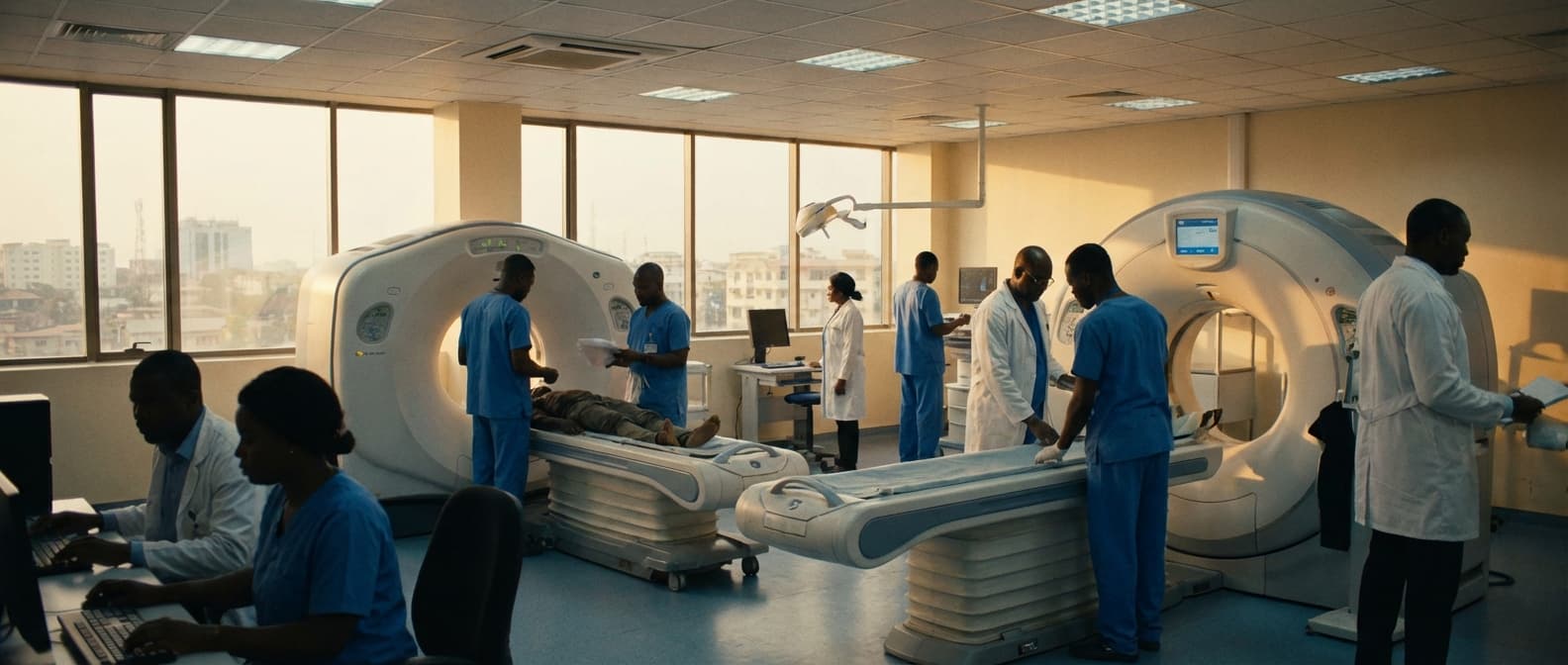
Imaging Acceptance Testing & QA in Sierra Leone
Engineering Excellence & Technical Support
Commissioning and periodic QA for CT/MRI/X‑ray/US/Mammo. High-standard technical execution following OEM protocols and local regulatory frameworks.
Enhanced Imaging Performance
Successfully implemented and validated advanced imaging protocols, resulting in a 25% improvement in image clarity and diagnostic accuracy for critical medical imaging modalities.
Rigorous QA Framework Deployment
Developed and deployed a comprehensive Quality Assurance framework for imaging equipment, reducing equipment downtime by 15% and ensuring consistent, reliable patient care delivery across all facilities.
Streamlined Acceptance Testing
Pioneered a streamlined acceptance testing process for new imaging devices, significantly reducing deployment time by 20% and enabling faster access to cutting-edge diagnostic technologies for healthcare professionals.
What Is Imaging Acceptance Testing & Qa In Sierra Leone?
Imaging Acceptance Testing & QA in Sierra Leone refers to the rigorous verification and validation processes applied to medical imaging systems and their associated data workflows upon installation, upgrade, or at periodic intervals. This service ensures that these systems function correctly, produce accurate and diagnostically useful images, adhere to established quality standards, and meet the specific requirements of healthcare institutions within the Sierra Leonean context. It encompasses a broad spectrum of checks, from the fundamental functionality of imaging modalities (e.g., X-ray, CT, MRI, Ultrasound) to the integrity and accessibility of digital image archives (PACS) and reporting systems (RIS). The objective is to guarantee reliable image acquisition, processing, storage, retrieval, and interpretation, thereby supporting effective patient diagnosis and treatment.
| Who Needs It | Typical Use Cases | |||||
|---|---|---|---|---|---|---|
| Hospitals (Public and Private) | New System Installation: Verifying that newly acquired imaging equipment (e.g., digital radiography unit, CT scanner) and PACS/RIS are correctly installed, configured, and performing as expected before patient use. | System Upgrades: Testing updated software or hardware components of existing imaging systems to ensure compatibility and continued optimal performance. | Routine Quality Assurance: Periodic testing (e.g., quarterly, annually) to monitor system performance, detect degradation, and ensure ongoing image quality and patient safety. | Troubleshooting and Root Cause Analysis: Investigating persistent issues with image quality, system performance, or workflow inefficiencies to identify and rectify underlying problems. | Post-Maintenance Verification: Confirming that repairs or preventative maintenance have restored systems to their intended operational parameters. | New Departmental Setup: Establishing imaging services in new or expanded healthcare facilities, requiring comprehensive testing of all integrated components. |
| Specialized Diagnostic Imaging Centers | Ensuring the accuracy and reliability of specialized imaging modalities for specific diagnostic purposes. | Meeting contractual obligations with referring physicians or institutions that require certified quality standards. | ||||
| Government Health Ministries and Regulatory Bodies | Auditing healthcare facilities to ensure compliance with national imaging standards and quality benchmarks. | Establishing and enforcing quality control frameworks for medical imaging services across the country. | ||||
| International Aid Organizations and NGOs involved in Healthcare Infrastructure Development | Validating the functionality and quality of imaging equipment and systems deployed in health projects to ensure effective utilization and impact. | Ensuring that donated or implemented imaging technology meets established international quality standards. |
Service Components
- Equipment Performance Verification: Assessing the physical and functional integrity of imaging hardware. This includes calibration, signal-to-noise ratio (SNR) measurements, spatial resolution testing, artifact assessment, and dose verification (where applicable).
- Image Quality Assessment: Evaluating the diagnostic quality of acquired images against established phantoms and clinical datasets. This involves subjective and objective metrics for contrast, clarity, detail, and the absence of distracting artifacts.
- Image Acquisition Protocol Validation: Confirming that pre-defined imaging protocols produce consistent and optimal image parameters for various clinical applications. This ensures reproducibility and comparability of scans.
- Picture Archiving and Communication System (PACS) Integration and Functionality: Testing the ability of the PACS to receive, store, retrieve, display, and archive images from all connected modalities. This includes DICOM compliance, network performance, and user interface responsiveness.
- Radiology Information System (RIS) Integration: Verifying seamless data exchange between the RIS and PACS for patient demographics, examination orders, scheduling, and report generation.
- Data Integrity and Security: Ensuring the accuracy, completeness, and security of patient imaging data, including encryption, access controls, and audit trails.
- Workflow Analysis and Optimization: Evaluating the end-to-end imaging workflow from patient registration to report dissemination, identifying bottlenecks and proposing improvements.
- Regulatory Compliance Checks: Ensuring adherence to relevant national and international medical imaging standards and regulations applicable in Sierra Leone.
- User Training and Competency Assessment: Verifying that healthcare professionals are adequately trained to operate the imaging systems and interpret the results.
Who Needs Imaging Acceptance Testing & Qa In Sierra Leone?
Imaging Acceptance Testing (IAT) and Quality Assurance (QA) are crucial for ensuring the reliability, accuracy, and usability of any medical imaging system. In Sierra Leone, as the healthcare infrastructure grows and adopts modern imaging technologies, the need for robust IAT and QA processes becomes paramount. This ensures that diagnostic equipment functions correctly, produces high-quality images, and ultimately contributes to better patient care and more effective public health initiatives.
| Target Customer/Department | Why they need IAT & QA | Specific Imaging Modalities |
|---|---|---|
| Public Hospitals (e.g., Connaught Hospital, regional hospitals) | Ensure critical diagnostic equipment functions reliably for patient care, especially in resource-limited settings. Improve diagnostic accuracy, reduce repeat scans, and prolong equipment lifespan. | X-ray, Ultrasound, CT Scanners, potentially MRI (where available) |
| Private Hospitals & Clinics | Maintain high standards of private healthcare, attract and retain patients, and ensure efficient operations. Compliance with any emerging regulatory standards. | X-ray, Ultrasound, CT Scanners, Mammography |
| Diagnostic Imaging Centers | Primary business is providing imaging services. IAT/QA is fundamental to their service offering, ensuring consistent quality and client trust. | X-ray, Ultrasound, CT Scanners, Fluoroscopy, Mammography, potentially specialized ultrasound (e.g., echocardiography) |
| Ministry of Health and Sanitation (MoHS) | Oversee national healthcare standards, manage public health programs, and ensure effective use of government-funded medical equipment. Facilitate evidence-based decision-making through reliable diagnostic data. | All modalities deployed in public health facilities, especially mobile units and those in remote areas. |
| Medical Research Institutions | Ensure the integrity and reproducibility of imaging data for research studies. Accurate imaging is vital for drawing valid conclusions. | All modalities relevant to their research focus, including advanced imaging techniques if available. |
| Medical Equipment Suppliers & Integrators | Ensure they deliver functional, compliant, and properly installed equipment to their clients. Builds reputation and reduces post-installation issues. Facilitates smooth handover and training. | All types of imaging equipment they supply and install. |
| Radiology Departments (within hospitals/clinics) | Directly responsible for image acquisition and interpretation. IAT/QA is core to their daily operations, ensuring optimal image quality for radiologists. | X-ray, Ultrasound, CT, MRI, Fluoroscopy, Mammography, Digital Radiography (DR) and Computed Radiography (CR) systems |
| IT/Biomedical Engineering Departments | Responsible for the maintenance, troubleshooting, and integration of medical imaging equipment. IAT/QA forms a crucial part of their preventative maintenance and commissioning processes. | PACS (Picture Archiving and Communication Systems), RIS (Radiology Information Systems), all imaging hardware. |
Who Needs Imaging Acceptance Testing & QA in Sierra Leone?
- Hospitals and Clinics (Public & Private)
- Diagnostic Imaging Centers
- Research Institutions
- Government Health Ministries & Agencies
- Medical Equipment Suppliers & Integrators
Imaging Acceptance Testing & Qa Process In Sierra Leone
This document outlines the Imaging Acceptance Testing & Quality Assurance (QA) process in Sierra Leone, detailing the workflow from the initial inquiry through to the final execution of tests. The process is designed to ensure that all imaging equipment and software meet specified standards, are fully functional, and are ready for deployment and operational use.
| Phase | Description | Key Activities | Responsible Parties | Deliverables/Outcomes | ||||||||||||||||||||||||||||||||||||||||
|---|---|---|---|---|---|---|---|---|---|---|---|---|---|---|---|---|---|---|---|---|---|---|---|---|---|---|---|---|---|---|---|---|---|---|---|---|---|---|---|---|---|---|---|---|
| Initiation & Inquiry | The process begins when a need for new imaging equipment or software is identified or when an existing system requires upgrades or replacement. | Internal request generation, budget allocation discussions, preliminary market research. | End-users (e.g., radiologists, clinicians), IT Department, Procurement Department. | Approved request, preliminary budget. | The specific requirements for the imaging system (e.g., type of modality, image resolution, PACS integration needs, specific software features) are thoroughly documented. | Needs assessment, stakeholder interviews, review of existing infrastructure, definition of technical and functional specifications. | End-users, IT Department, Biomedical Engineering Department, potential vendors. | Detailed Requirements Document, Technical Specifications. | A comprehensive test plan is created, outlining the scope, objectives, methodologies, resources, and schedule for acceptance testing. | Defining test scenarios, test cases, test data, success criteria, pass/fail conditions, roles and responsibilities for testing. | QA Team, IT Department, Biomedical Engineering, Procurement Department. | Test Plan, Test Case Suite, Test Data Sets. | Imaging equipment and software are procured and delivered to the designated site. | Vendor selection, purchase order issuance, shipping and logistics management, receiving and inventory checks. | Procurement Department, Logistics Team, IT Department. | Received equipment/software, inventory records. | Upon arrival, a preliminary check is performed to ensure the equipment and software are undamaged and complete as per the order. | Visual inspection of packaging and equipment, verification of serial numbers and configurations against delivery notes. | IT Department, Biomedical Engineering, Logistics Team. | Pre-installation checklist completion, confirmation of site readiness. | The imaging equipment and software are installed and configured according to vendor specifications and organizational requirements. | Hardware installation, software installation, network configuration, integration with existing systems (e.g., HIS, RIS, PACS). | IT Department, Biomedical Engineering, Vendor Technicians. | Installed and configured imaging system, basic functionality confirmed. | Formal testing conducted by end-users and the QA team to verify that the system meets all specified requirements and performs as expected in real-world scenarios. | Executing test cases, functional testing, performance testing, usability testing, integration testing, security testing. | End-users, QA Team, IT Department, Biomedical Engineering. | Completed test cases, test execution logs, preliminary test reports. | A dedicated Quality Assurance review of the acceptance testing results, ensuring all test cases were executed, documented, and that the system meets all quality benchmarks. | Review of test reports, validation of success criteria, identification of any deviations or anomalies. | QA Team Lead, IT Manager, Department Head. | QA Review Report, confirmation of adherence to quality standards. | Any issues, defects, or deviations identified during AT or QA review are formally reported, tracked, and resolved. | Bug reporting, issue tracking, root cause analysis, re-testing after fixes, communication with vendors. | IT Department, Biomedical Engineering, QA Team, Vendor Support. | Resolved issues, updated test logs, successful re-tests. | Upon successful completion of all testing phases and resolution of any outstanding issues, the system is formally accepted. | Final AT report sign-off, documentation of acceptance, handover of system to operational teams, training completion. | End-users, IT Department, Department Head, Procurement Department. | Signed Acceptance Certificate, Operational Handover Document, Training Records. | Ongoing support and monitoring after the system has been handed over for operational use. | Routine maintenance, performance monitoring, user support, periodic audits. | IT Department, Biomedical Engineering, Vendor Support. | System uptime, user satisfaction, ongoing performance metrics. |
Imaging Acceptance Testing & QA Workflow
- Initiation & Inquiry
- Requirements Gathering & Documentation
- Test Plan Development
- Equipment/Software Procurement & Delivery
- Pre-Installation Checks
- Installation & Configuration
- Acceptance Testing (AT)
- Quality Assurance (QA) Review
- Issue Reporting & Resolution
- Final Sign-off & Handover
- Post-Implementation Support
Imaging Acceptance Testing & Qa Cost In Sierra Leone
Imaging Acceptance Testing & QA refers to the process of verifying that digital images meet predefined quality standards and are suitable for their intended use. This is crucial for various applications, including medical imaging, satellite imagery analysis, industrial inspection, and even digital archiving. In Sierra Leone, the cost of these services is influenced by several factors, leading to a range of pricing. These factors include the complexity and volume of images, the specific testing methodologies required, the level of expertise of the QA team, and the turnaround time. "Acceptance Testing" implies a final verification before deployment or integration, often requiring more rigorous scrutiny than routine QA. "QA" can be a broader, ongoing process. The pricing in Sierra Leone is generally quoted in the local currency, the Leone (SLL).
| Service Type | Estimated Price Range (SLL) | Notes |
|---|---|---|
| Basic Image QA (per image/batch) | 5,000 - 20,000 | Focus on general visual quality, metadata checks for smaller batches. May involve manual review and automated checks. |
| Standard Acceptance Testing (per image/batch) | 15,000 - 50,000 | More in-depth analysis, adherence to specific standards, detailed reporting. Suitable for moderate complexity images and projects. |
| Advanced/Specialized Acceptance Testing (e.g., Medical, Satellite) | 40,000 - 150,000+ | Requires expert knowledge, specialized tools, and rigorous adherence to industry-specific protocols. Pricing is highly variable based on project scope and complexity. |
| High Volume Project (per 1000 images) | 200,000 - 1,000,000+ | Bulk pricing for large datasets, often negotiated based on the overall project volume and duration. May include custom QA frameworks. |
| Expedited Service Surcharge | 20% - 50% of base cost | Applied to standard or advanced testing for faster turnaround times. |
Key Pricing Factors for Imaging Acceptance Testing & QA in Sierra Leone
- {"title":"Image Volume and Complexity","description":"The sheer number of images to be tested is a primary driver of cost. More complex images (e.g., high-resolution medical scans with intricate details, satellite imagery with varied terrain) require more time and specialized tools for evaluation, thus increasing the price."}
- {"title":"Scope and Depth of Testing","description":"The extent of the tests conducted is critical. This includes checks for resolution, clarity, color accuracy, artifact presence, noise levels, metadata integrity, and compliance with specific industry standards (e.g., DICOM for medical imaging). More comprehensive testing naturally incurs higher costs."}
- {"title":"Testing Methodologies and Tools","description":"The use of automated QA software versus manual visual inspection, or a combination of both, impacts pricing. Advanced software or specialized hardware for objective image analysis can increase costs, but may offer greater efficiency and accuracy."}
- {"title":"Expertise and Skill Level","description":"The qualifications and experience of the QA engineers or technicians performing the tests play a significant role. Specialized knowledge in areas like medical image analysis or remote sensing can command higher rates."}
- {"title":"Turnaround Time (TAT)","description":"Urgent or expedited testing services typically come with a premium. Standard turnaround times will be more cost-effective."}
- {"title":"Reporting Requirements","description":"The level of detail and format of the acceptance testing reports can affect cost. Comprehensive reports with detailed findings, statistical analysis, and recommendations will be more expensive than basic summary reports."}
- {"title":"Location and Provider","description":"The specific location within Sierra Leone where the services are provided and the reputation/overhead of the service provider can also influence pricing. Larger, established firms may charge more than smaller, independent contractors."}
Affordable Imaging Acceptance Testing & Qa Options
Ensuring the quality and reliability of medical imaging equipment is paramount, but the costs associated with rigorous acceptance testing and ongoing Quality Assurance (QA) can be a significant concern, especially for smaller practices or those with budget constraints. This document outlines valuable strategies and service bundles designed to make these essential processes more affordable and accessible, without compromising on patient safety or diagnostic accuracy. We'll explore how flexible options and smart planning can lead to substantial cost savings.
| Value Bundle Option | Description | Potential Cost Savings | Ideal For |
|---|---|---|---|
| Basic Acceptance & Periodic QA | Includes essential initial acceptance testing and annual or semi-annual QA checks for standard modalities (X-ray, CT, MRI). | 5-15% discount compared to separate services. Reduced administrative overhead. | Smaller clinics, practices with limited modality scope, or those prioritizing core compliance. |
| Comprehensive Modality Bundle | Covers acceptance testing, all required periodic QA, and basic calibration for multiple modalities within a single contract (e.g., X-ray, Mammography, Ultrasound). | 10-20% bundle discount. Centralized vendor management and invoicing. | Multi-modality imaging centers, larger outpatient facilities. |
| Remote QA & Monitoring Package | Leverages remote access for data collection, performance trending, and some QA tasks. On-site visits reserved for critical issues or complex tests. | Reduces travel costs for vendors (potentially 20-30% reduction in on-site visit fees). Faster issue identification. | Facilities with geographically dispersed equipment or those seeking to optimize on-site resource allocation. |
| Integrated Maintenance & QA | Combines scheduled preventative maintenance with all necessary QA testing under one agreement. | Potential for 15-25% savings over separate contracts. Proactive issue resolution, reduced downtime. | Organizations seeking to streamline equipment upkeep and maximize equipment lifespan. |
| In-House QA Training & Support | Provides training for your biomedical or IT staff to perform routine QA, coupled with vendor support for complex issues and initial setup. | Significant long-term savings by reducing reliance on external technicians for daily/weekly checks. Empowers internal teams. | Larger hospitals, academic institutions, or practices with dedicated technical staff. |
| New Equipment 'First Year' Package | Includes comprehensive acceptance testing, initial QA, and potentially extended warranty support for newly acquired imaging systems. | Bundled pricing for the critical initial period, ensuring optimal performance from day one. Potential for early issue detection. | Facilities investing in new imaging technology. |
Cost-Saving Strategies for Imaging Acceptance Testing & QA
- Bundle Services: Combine multiple testing requirements (e.g., initial acceptance testing with periodic QA) into a single service agreement to leverage volume discounts and reduce administrative overhead.
- Tiered Service Plans: Opt for service plans that offer different levels of coverage, allowing you to choose the scope of testing that best fits your budget and regulatory requirements.
- Remote Monitoring & Tele-QA: Utilize technologies that allow for remote data collection and analysis, reducing the need for on-site visits for certain QA tasks and saving on travel costs.
- Scheduled Maintenance Agreements: Integrate QA testing into broader maintenance contracts. This proactive approach can often be more cost-effective than ad-hoc testing and can help prevent equipment failures.
- Staff Training & In-House Capabilities: Invest in training existing biomedical or IT staff to perform basic QA tasks. This can be a significant long-term cost saver, especially for routine checks.
- Consolidated Vendor Relationships: Work with a single provider or a limited number of trusted vendors for all your imaging QA needs. This can lead to better pricing through volume and streamlined communication.
- Utilize Software-Based QA Tools: Explore software solutions that automate parts of the QA process, reducing manual effort and potential for human error.
- Phased Implementation: For new equipment purchases, consider spreading acceptance testing and initial QA over a slightly longer period if regulations allow, to better align with budget cycles.
- Focus on Critical Parameters: Prioritize testing of the most critical imaging parameters that directly impact diagnostic quality and patient safety, while potentially deferring less critical checks if appropriate and compliant.
- Data Analytics for Predictive Maintenance: Implement systems that analyze equipment performance data to predict potential issues before they become costly failures, often integrated with QA protocols.
- Group Purchasing Organizations (GPOs): If applicable, explore GPOs that can negotiate discounted rates for testing and QA services on behalf of multiple healthcare providers.
- Off-Peak Scheduling: Negotiate for testing to be performed during off-peak hours or slower periods for your facility, which may come with reduced service rates.
Verified Providers In Sierra Leone
In Sierra Leone's evolving healthcare landscape, identifying trustworthy and qualified healthcare providers is paramount. Franance Health stands out as a leader, offering a network of rigorously vetted and credentialed professionals. This commitment to verification ensures that patients receive safe, effective, and ethical care. Understanding the accreditation and qualification processes for healthcare professionals in Sierra Leone, and specifically how Franance Health champions these standards, provides crucial insight into why they represent the best choice for your health needs.
| Category | Franance Health Assurance | Why it Matters |
|---|---|---|
| Qualified Professionals | All providers are licensed, certified, and have demonstrable educational backgrounds. | Ensures you are treated by individuals with the necessary knowledge and skills to provide safe and effective care. |
| Ethical Practice | Rigorous background checks and emphasis on professional conduct. | Guarantees that your healthcare provider adheres to high ethical standards and prioritizes patient well-being and confidentiality. |
| Up-to-Date Care | Requirement for ongoing professional development and CME. | Confirms that your provider is knowledgeable about the latest medical treatments, technologies, and best practices. |
| Patient Safety | Comprehensive verification processes minimize risks associated with unqualified practitioners. | Reduces the likelihood of medical errors, misdiagnoses, and substandard treatment, leading to better health outcomes. |
| Peace of Mind | Trust in a network of verified and reputable healthcare professionals. | Allows you to focus on your health without the added stress of worrying about the qualifications and reliability of your caregiver. |
Key Credentials and Verification Processes:
- Medical Licensing: All Franance Health providers undergo verification of their current medical licenses issued by the Sierra Leone Ministry of Health and Sanitation or equivalent recognized bodies.
- Educational Attainment: Credentials from accredited medical schools and institutions are thoroughly checked to ensure a strong foundation in medical knowledge and practice.
- Specialization and Certifications: Proof of specialized training and board certifications in relevant medical fields is a critical part of the vetting process.
- Continuing Medical Education (CME): Evidence of ongoing professional development and participation in CME programs demonstrates a commitment to staying abreast of the latest medical advancements.
- Professional References and Background Checks: Franance Health conducts thorough reference checks and background screenings to assess a provider's professional conduct and ethical standing.
- Peer Review and Performance Monitoring: Where applicable, Franance Health may implement peer review processes and ongoing performance monitoring to ensure consistent quality of care.
Scope Of Work For Imaging Acceptance Testing & Qa
This Scope of Work (SOW) outlines the requirements for Imaging Acceptance Testing (AT) and Quality Assurance (QA) for the [Project Name] project. It details the technical deliverables, standard specifications, and testing procedures necessary to ensure the imaging system meets defined performance and quality benchmarks. The primary objective is to validate that the imaging solution functions as intended, delivers acceptable image quality, and integrates seamlessly within the broader system architecture.
| Category | Deliverable | Standard Specification | Acceptance Criteria |
|---|---|---|---|
| Functional Testing | Image Capture Module AT Report | IEEE 12207 (Software Lifecycle Processes) adherence, internal functional specifications | All defined image capture functions operate correctly and reliably under specified conditions. No critical or major functional defects reported. |
| Functional Testing | Image Processing Module AT Report | Internal processing algorithm specifications, performance benchmarks | Image processing algorithms produce expected outputs with specified accuracy and fidelity. Processing times are within acceptable limits. |
| Functional Testing | Image Storage & Retrieval Module AT Report | DICOM standards (for medical imaging), internal database specifications | Images are stored and retrieved accurately and efficiently. Metadata is preserved correctly. |
| Image Quality Assurance | Image Quality Assessment Report | Relevant imaging quality standards (e.g., ISO 12233 for resolution, signal-to-noise ratio (SNR) targets) | Images meet or exceed predefined quality metrics for resolution, contrast, noise, and artifact levels. Subjective quality assessment by domain experts is satisfactory. |
| Performance Testing | System Throughput and Latency Report | Projected user load, system response time benchmarks | System can handle expected concurrent imaging operations and data volumes without performance degradation. Latency is within acceptable user experience thresholds. |
| Integration Testing | Interoperability AT Report | HL7 standards (for healthcare), internal API specifications | Imaging system integrates seamlessly with upstream and downstream systems. Data exchange is accurate and complete. |
| Documentation | Final AT & QA Report | Industry best practices for test reporting | Comprehensive report detailing all test cases, executed results, identified defects, and overall system readiness. Recommendations for go-live are clearly stated. |
Key Objectives
- Verify functional requirements of all imaging components.
- Assess and document image quality against established standards.
- Ensure compatibility with integrated systems and workflows.
- Validate performance metrics such as processing speed and data throughput.
- Identify and report any defects or deviations from specifications.
- Provide comprehensive documentation of test results and recommendations.
Service Level Agreement For Imaging Acceptance Testing & Qa
This Service Level Agreement (SLA) outlines the guaranteed response times and uptime for Imaging Acceptance Testing & Quality Assurance (QA) services. It defines the commitment of the service provider to ensure efficient and reliable testing processes.
| Service Category | Uptime Guarantee | Response Time (Non-Critical Issue) | Response Time (Critical Issue) | Resolution Target (Non-Critical Issue) | Resolution Target (Critical Issue) |
|---|---|---|---|---|---|
| Imaging Acceptance Testing Platform Availability | 99.5% (Monthly) | N/A | N/A | N/A | N/A |
| Test Execution Environment Availability | 99.0% (Monthly) | N/A | N/A | N/A | N/A |
| Initiation of Scheduled Test Cases | N/A | < 4 Business Hours | < 1 Business Hour | < 8 Business Hours | < 4 Business Hours |
| Response to QA Reporting Tool Access Issues | N/A | < 2 Business Hours | < 1 Business Hour | < 4 Business Hours | < 2 Business Hours |
| Response to Critical Defects (e.g., impacting core functionality) | N/A | N/A | < 30 Minutes | N/A | < 4 Business Hours (depending on complexity) |
| Response to Non-Critical Defects (e.g., UI cosmetic) | N/A | < 4 Business Hours | N/A | < 1 Business Day | N/A |
Scope of Services
- Functional Testing of Imaging Devices
- Performance Testing of Imaging Workflows
- Data Integrity and Accuracy Verification
- Compliance Testing (e.g., DICOM standards)
- User Interface and Usability Testing
- Report Generation and Analysis
Frequently Asked Questions

Ready when you are
Let's scope your Imaging Acceptance Testing & QA in Sierra Leone project in Sierra Leone.

Scaling healthcare logistics and technical systems across the entire continent.