
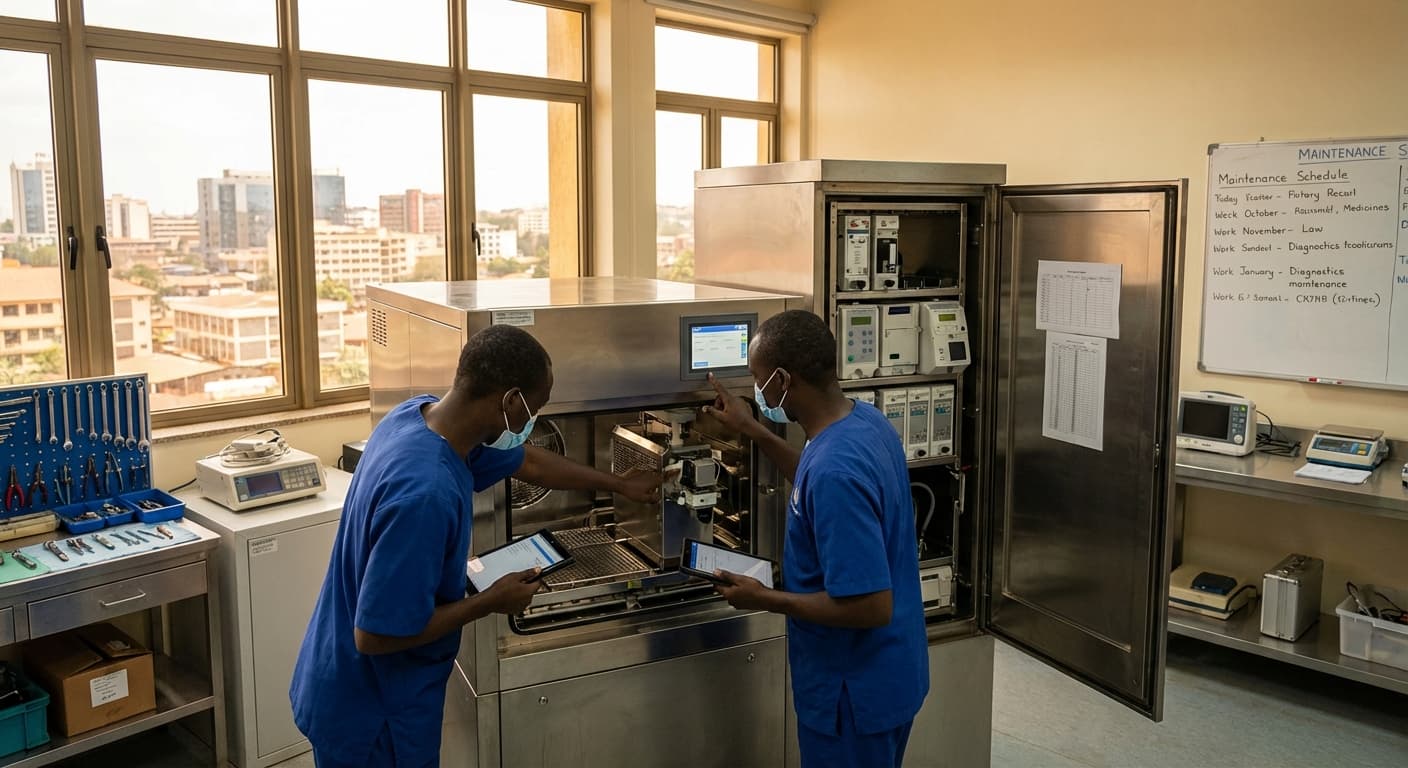
Total Cost of Ownership (TCO) & Lifecycle Budgeting Service in Sierra Leone
Engineering Excellence & Technical Support
Total Cost of Ownership (TCO) & Lifecycle Budgeting Service High-standard technical execution following OEM protocols and local regulatory frameworks.
Optimized Asset Lifecycles for Reduced Operational Expenses
Our TCO & Lifecycle Budgeting service analyzes the entire lifespan of your critical assets, from acquisition to disposal. We identify opportunities to optimize maintenance schedules, predict and mitigate failure risks through predictive analytics, and recommend cost-effective upgrade or replacement strategies. This ensures your operational expenditures in Sierra Leone are minimized while maximizing asset uptime and performance, directly impacting your bottom line.
Strategic Capital Investment Planning & Risk Mitigation
We empower organizations in Sierra Leone to make informed capital investment decisions. Our TCO modeling quantifies the true cost of ownership for proposed projects, factoring in not only upfront purchase price but also ongoing operational, maintenance, and potential end-of-life costs. This allows for robust risk assessment and the development of contingency plans, ensuring your long-term financial health and avoiding unexpected budget overruns in challenging environments.
Enhanced Procurement & Vendor Performance Management
Leveraging our TCO & Lifecycle Budgeting expertise, we assist in developing data-driven procurement strategies for goods and services in Sierra Leone. By thoroughly evaluating vendor proposals based on total cost of ownership rather than just initial price, we help you secure better long-term value. Our service also provides frameworks for ongoing vendor performance monitoring, ensuring contractual obligations are met and contributing to a more sustainable and predictable operational budget.
What Is Total Cost Of Ownership (Tco) & Lifecycle Budgeting Service In Sierra Leone?
Total Cost of Ownership (TCO) and Lifecycle Budgeting (LCB) services in Sierra Leone represent a strategic financial and asset management discipline. TCO encompasses all direct and indirect costs associated with acquiring, operating, maintaining, and ultimately disposing of an asset, system, or project over its entire lifespan. LCB is the process of developing financial plans that account for these TCO elements across the lifecycle, enabling more informed decision-making, risk mitigation, and optimized resource allocation within an organization or project context. These services are crucial for ensuring long-term financial sustainability and operational efficiency, particularly in environments with evolving economic conditions and resource constraints as often observed in Sierra Leone.
| Who Needs TCO & Lifecycle Budgeting Services in Sierra Leone? | Typical Use Cases | ||||||||
|---|---|---|---|---|---|---|---|---|---|
| Government Agencies and Public Sector Entities: For infrastructure projects (roads, power generation, water systems), public transportation, and IT systems. Crucial for ensuring long-term public service delivery and fiscal responsibility. | Infrastructure Development: Planning and budgeting for the construction and ongoing maintenance of roads, bridges, and utilities, considering their 30-50 year lifespans. | Mining and Extractive Industries: Assessing the full cost of equipment, exploration, extraction, and eventual site rehabilitation. Critical due to high capital intensity and long operational horizons. | Telecommunications Companies: Evaluating the TCO of network infrastructure, including base stations, fiber optics, and switching equipment, over their useful lives. | Energy and Utilities Sector: Managing the lifecycle costs of power plants, distribution networks, and renewable energy installations, from procurement to decommissioning. | Manufacturing and Industrial Enterprises: Optimizing the cost of production machinery, supply chain logistics, and factory operations. | Large-Scale Agricultural Projects: Budgeting for equipment, land development, water management systems, and crop cycles over multiple seasons. | Financial Institutions and Development Banks: When assessing the viability and financial risk of projects seeking funding, to understand the long-term cost implications for borrowers. | Non-Governmental Organizations (NGOs) and International Aid Agencies: For projects involving the procurement and deployment of long-term assets like medical equipment, vehicles, or water pumps, ensuring sustainability beyond initial funding. | Real Estate Developers and Property Management Firms: Evaluating the full cost of building ownership, including construction, maintenance, utilities, and eventual renovation or demolition. |
What TCO & Lifecycle Budgeting Services Involve:
- Initial Acquisition Costs: Includes purchase price, taxes, import duties, shipping, and installation.
- Operating Costs: Encompasses energy consumption, consumables, routine maintenance, software licenses, and personnel directly involved in operation.
- Maintenance and Repair Costs: Covers planned preventative maintenance, unscheduled repairs, spare parts, and associated labor.
- Upgrade and Enhancement Costs: Addresses the financial implications of technological advancements, performance improvements, and feature additions over time.
- Downtime and Productivity Loss: Quantifies the economic impact of asset unavailability due to maintenance, breakdowns, or obsolescence.
- Decommissioning and Disposal Costs: Includes dismantling, removal, environmental remediation, and waste management at the end of the asset's life.
- Training and Support Costs: Accounts for educating personnel on the use and maintenance of the asset or system.
- Financing Costs: Considers interest expenses, loan repayments, and any other costs associated with capital procurement.
- Risk Assessment and Contingency Planning: Identifies potential cost overruns and develops strategies to mitigate them.
- Scenario Analysis and Sensitivity Testing: Evaluates how variations in key cost drivers might impact the overall TCO.
Who Needs Total Cost Of Ownership (Tco) & Lifecycle Budgeting Service In Sierra Leone?
In Sierra Leone, businesses and organizations are increasingly recognizing the strategic importance of understanding the true cost of their assets and projects throughout their entire lifespan. Total Cost of Ownership (TCO) and Lifecycle Budgeting services are crucial for making informed financial decisions, optimizing resource allocation, and achieving long-term financial sustainability. These services help in moving beyond initial purchase prices to account for all direct and indirect costs associated with acquiring, operating, maintaining, and disposing of an asset or project. This comprehensive approach prevents budget overruns, identifies cost-saving opportunities, and enhances overall operational efficiency.
| Target Customer/Organization Type | Key Departments Benefiting | Primary Needs Addressed |
|---|---|---|
| Large Corporations (e.g., Mining, Telecommunications, Energy, Manufacturing) | Finance & Accounting, Procurement, Operations, Asset Management, Capital Projects | Optimizing large-scale investments, managing operational expenses of critical infrastructure, forecasting long-term capital needs, ensuring asset longevity and reliability. |
| Government Ministries & Agencies (e.g., Ministry of Finance, Ministry of Works & Public Assets, Ministry of Health, Ministry of Education) | Budgeting & Planning, Procurement, Asset Management, Project Management, Treasury | Ensuring public funds are used efficiently for infrastructure and service delivery, strategic planning for public assets, managing large-scale procurement decisions, long-term financial sustainability of public services. |
| Financial Institutions (Banks, Insurance Companies) | Asset Management, IT Department, Operations, Risk Management, Finance | Managing IT infrastructure costs, optimizing branch networks, financial planning for investments in technology and property, assessing the total cost of risk mitigation strategies. |
| Non-Governmental Organizations (NGOs) & International Development Agencies | Finance & Administration, Program Management, Procurement, Monitoring & Evaluation | Maximizing the impact of donor funds, ensuring project sustainability beyond initial funding, transparent financial reporting, cost-effective delivery of programs and services. |
| Small and Medium Enterprises (SMEs) | Finance & Accounting, Operations, Management | Making informed decisions on equipment purchases, understanding the true cost of operating a business, planning for future growth and investment, avoiding unexpected expenses that can threaten viability. |
| Real Estate Developers & Property Management Companies | Finance, Asset Management, Property Management, Development | Calculating the profitability of projects over their lifespan, optimizing maintenance budgets, assessing the long-term costs of property ownership and operation, strategic capital planning for property portfolios. |
Who Needs TCO & Lifecycle Budgeting Services in Sierra Leone?
- Businesses seeking to optimize their capital expenditure and operational expenditure.
- Organizations aiming to improve financial planning and forecasting accuracy.
- Entities looking to enhance asset management and reduce unexpected costs.
- Government agencies and parastatals responsible for public infrastructure and services.
- Non-governmental organizations (NGOs) managing donor funds and project sustainability.
- New ventures and startups planning for long-term financial viability.
- Companies undergoing significant upgrades, replacements, or expansions of their asset base.
- Consulting firms offering financial and operational advisory services.
Total Cost Of Ownership (Tco) & Lifecycle Budgeting Service Process In Sierra Leone
This document outlines the typical workflow for a Total Cost of Ownership (TCO) & Lifecycle Budgeting service process, from initial inquiry to final execution, specifically tailored for the context of Sierra Leone. The process emphasizes thorough analysis, client collaboration, and actionable recommendations to ensure optimal financial management throughout the entire lifecycle of an asset or project.
| Stage | Description | Key Activities in Sierra Leone Context | Deliverables | Duration Estimate |
|---|---|---|---|---|
| Inquiry & Initial Consultation | Client expresses interest and seeks information about TCO & Lifecycle Budgeting services. This stage involves understanding the client's general needs and service offerings. | Initial meetings (in-person or virtual) to understand the client's organization, potential assets/projects for analysis, and their primary concerns. Discussing the benefits of TCO and lifecycle budgeting in the Sierra Leonean economic environment. | Initial understanding of client needs, a preliminary service proposal outline. | 1-3 days |
| Scope Definition & Needs Assessment | Clearly defining the boundaries of the TCO analysis and the specific requirements of the client. This ensures focus and alignment. | Detailed discussions to identify specific assets, systems, or projects to be analyzed. Understanding the client's existing financial reporting, operational processes, and future strategic goals. Identifying key stakeholders within the client's organization. | Formalized scope of work document, detailed requirements checklist, stakeholder identification report. | 2-5 days |
| Data Collection & Analysis | Gathering all relevant financial, operational, and technical data pertaining to the defined scope. This is a critical and often time-consuming phase. | Collecting historical cost data (acquisition, operation, maintenance, disposal). Gathering data on expected usage, performance metrics, inflation rates, currency fluctuations (USD vs. Leone), potential import duties, local taxes, and availability of spare parts and local maintenance expertise in Sierra Leone. Conducting site visits to verify operational conditions. | Comprehensive data repository (spreadsheets, databases), initial data validation reports, identified data gaps. | 7-21 days (highly variable based on data availability and complexity) |
| TCO Modeling & Lifecycle Budget Development | Developing robust models to forecast all costs associated with an asset or project over its entire lifespan and creating a detailed lifecycle budget. | Building financial models incorporating direct and indirect costs, considering local economic factors like fluctuating commodity prices for maintenance, labor costs (skilled vs. unskilled in Sierra Leone), energy costs (electricity reliability and alternative sources like generators), and estimated end-of-life disposal or resale values within the Sierra Leonean market. Discounting future costs to present value using appropriate rates relevant to the Sierra Leonean financial market. | TCO model(s), detailed lifecycle budget, sensitivity analysis reports, risk assessment. | 5-10 days |
| Reporting & Recommendation Presentation | Communicating the findings of the TCO analysis and lifecycle budget to the client, along with actionable recommendations. | Preparing a clear and concise report detailing the TCO, lifecycle budget, key cost drivers, and assumptions. Presenting findings to client stakeholders, explaining the implications for budgeting and investment decisions. Providing specific, practical recommendations tailored to the Sierra Leonean context, such as recommending local sourcing for maintenance where feasible, or planning for currency depreciation impacts. | Final TCO & Lifecycle Budgeting Report, Executive Summary, Presentation slides. | 3-7 days |
| Implementation Support & Monitoring | Assisting the client in implementing the recommendations and establishing mechanisms for ongoing monitoring of costs. | Guiding the client in integrating the lifecycle budget into their financial planning and procurement processes. Developing dashboards or reports for tracking actual costs against the budgeted lifecycle costs. Providing training to client personnel on TCO principles and monitoring techniques. Advising on strategies to mitigate identified risks in the Sierra Leonean context (e.g., supply chain disruptions, political instability impacting costs). | Implementation plan, monitoring framework, training materials, initial monitoring reports. | Ongoing (as per agreement) |
| Post-Implementation Review & Refinement | Periodically reviewing the performance against the lifecycle budget and refining the models and strategies based on actual outcomes. | Conducting periodic reviews (e.g., quarterly, annually) to assess the accuracy of the TCO model and the effectiveness of implemented strategies. Updating cost data, recalibrating assumptions, and adjusting future forecasts based on real-world performance and changing economic conditions in Sierra Leone. Providing updated recommendations for continuous improvement. | Performance review reports, updated TCO models and lifecycle budgets, refined recommendations. | Periodic (e.g., annually or bi-annually) |
Key Stages in TCO & Lifecycle Budgeting Service Workflow
- Inquiry & Initial Consultation
- Scope Definition & Needs Assessment
- Data Collection & Analysis
- TCO Modeling & Lifecycle Budget Development
- Reporting & Recommendation Presentation
- Implementation Support & Monitoring
- Post-Implementation Review & Refinement
Total Cost Of Ownership (Tco) & Lifecycle Budgeting Service Cost In Sierra Leone
The Total Cost of Ownership (TCO) and Lifecycle Budgeting service in Sierra Leone involves a comprehensive assessment of all expenses associated with an asset or project over its entire lifespan. This includes initial acquisition costs, operational expenditures, maintenance, upgrades, and eventual disposal. Pricing for these services is highly variable, influenced by several key factors. Understanding these elements is crucial for businesses and organizations to accurately budget and make informed investment decisions in Sierra Leone. The service aims to provide a holistic financial picture, moving beyond simple purchase prices to reveal the true economic impact of an asset over time. This is particularly valuable in a market like Sierra Leone, where resource constraints and the long-term viability of investments are critical considerations.
| Service Component/Scope | Estimated Range (Sierra Leonean Leone - SLL) | Notes |
|---|---|---|
| Basic TCO Assessment (e.g., single asset, limited scope, 5-year lifecycle) | 5,000,000 - 15,000,000 SLL | Covers initial purchase, basic operational, and maintenance costs. |
| Standard TCO Analysis (e.g., multiple assets, 10-year lifecycle, moderate complexity) | 15,000,000 - 35,000,000 SLL | Includes a more detailed breakdown of operational, maintenance, and potential upgrade costs. |
| Comprehensive TCO & Lifecycle Budgeting (e.g., major project, long-term lifecycle, high complexity, risk assessment) | 35,000,000 - 75,000,000+ SLL | Involves in-depth analysis, scenario planning, disposal costs, and detailed risk mitigation strategies. |
| Hourly Consultancy Rate (for ad-hoc advice or specific data validation) | 500,000 - 1,500,000 SLL per hour | Varies based on the consultant's expertise and the complexity of the task. |
| Development of Custom TCO Models/Tools | 20,000,000 - 60,000,000+ SLL | One-time cost for creating bespoke analytical frameworks. |
Key Pricing Factors for TCO & Lifecycle Budgeting Services in Sierra Leone
- Complexity of the Project/Asset: Larger, more intricate projects or assets with numerous components and dependencies will naturally incur higher TCO analysis costs due to the extensive data collection and modeling required.
- Scope of the Analysis: The depth and breadth of the TCO calculation are critical. A basic assessment focusing on a few key cost drivers will be less expensive than a comprehensive study encompassing every conceivable expense, including indirect costs and risk assessments.
- Data Availability and Quality: The ease of accessing reliable and accurate historical and projected cost data significantly impacts pricing. If significant data gathering or validation efforts are needed, costs will rise.
- Expertise and Experience of the Consultant/Firm: Specialized knowledge in TCO methodologies, industry-specific cost drivers, and local market conditions commands higher fees. Established firms with proven track records in Sierra Leone will likely charge more.
- Duration of the Lifecycle Considered: Analyzing a shorter lifecycle (e.g., 5 years) will be less intensive and therefore cheaper than a longer-term assessment (e.g., 20+ years), which requires more sophisticated forecasting and consideration of obsolescence and technological advancements.
- Reporting Requirements and Deliverables: The format and detail of the final report, including the need for presentations, interactive dashboards, or detailed case studies, will influence the overall cost.
- Geographic Scope within Sierra Leone: While less of a factor for pure desktop analysis, if the service requires on-site inspections or data collection across different regions of Sierra Leone, travel and logistical costs will be factored in.
- Risk Assessment and Sensitivity Analysis: Incorporating detailed risk assessments, scenario planning, and sensitivity analysis to understand the impact of external factors will add to the service cost due to the additional analytical rigor involved.
- Technology and Tools Used: The sophistication of the software and tools employed for data analysis, modeling, and reporting can also influence pricing.
Affordable Total Cost Of Ownership (Tco) & Lifecycle Budgeting Service Options
Our Affordable Total Cost of Ownership (TCO) & Lifecycle Budgeting Service Options are designed to provide your organization with comprehensive financial planning and cost optimization across the entire lifespan of your assets and projects. We understand that upfront acquisition cost is only one piece of the puzzle; true financial prudence lies in managing all expenses from procurement through disposal. Our service empowers you to make informed decisions, mitigate financial risks, and achieve significant cost savings through strategic value bundling and proven cost-saving strategies. We offer tailored solutions to fit your specific needs and budget, ensuring you receive maximum value and a clear path to financial sustainability.
| Service Feature | Essentials Bundle | Pro Bundle | Enterprise Bundle |
|---|---|---|---|
| Core TCO Analysis | ✓ | ✓ | ✓ |
| Initial Lifecycle Cost Projection | ✓ | ✓ | ✓ |
| Basic Budgeting Templates | ✓ | ✓ | ✓ |
| Risk Assessment | ○ | ✓ | ✓ |
| Scenario Planning | ○ | ✓ | ✓ |
| Comparative Analysis of Alternatives | ○ | ✓ | ✓ |
| Lifecycle Budgeting Workshops | ○ | ✓ | ✓ |
| Full Lifecycle Cost Modeling | ○ | ○ | ✓ |
| Predictive Maintenance Cost Optimization | ○ | ○ | ✓ |
| Energy Efficiency Integration | ○ | ○ | ✓ |
| Strategic Sourcing Support | ○ | ○ | ✓ |
| Vendor Negotiation Support | ○ | ○ | ✓ |
| End-of-Life Optimization | ○ | ○ | ✓ |
| Ongoing TCO Performance Monitoring | ○ | ○ | ✓ |
Our Value Bundles & Cost-Saving Strategies
- Strategic Value Bundles:
- Essentials Bundle: Includes core TCO analysis for key assets, initial lifecycle cost projection, and basic budgeting templates. Ideal for organizations starting their TCO journey.
- Pro Bundle: Expands on Essentials with detailed risk assessment, scenario planning, comparative analysis of alternatives, and customized lifecycle budgeting workshops. Suitable for organizations with moderate TCO complexity.
- Enterprise Bundle: Offers a comprehensive suite including full lifecycle cost modeling, predictive maintenance cost optimization, strategic sourcing for lifecycle support, vendor negotiation support, and ongoing TCO performance monitoring. Designed for organizations with complex asset portfolios and strategic financial objectives.
- Cost-Saving Strategies Integrated into Our Services:
- Predictive Maintenance Optimization: Leveraging data analytics to forecast maintenance needs, shifting from reactive to proactive maintenance to reduce downtime and costly emergency repairs.
- Energy Efficiency Integration: Incorporating energy consumption costs into TCO calculations and identifying opportunities for energy-efficient upgrades or operational changes.
- Strategic Sourcing & Vendor Management: Negotiating favorable long-term contracts for parts, services, and support to lock in predictable costs and leverage bulk purchasing power.
- Extended Asset Lifespan Strategies: Developing maintenance and upgrade plans to maximize the useful life of assets, delaying or avoiding capital replacement expenditures.
- End-of-Life Optimization: Planning for disposal, recycling, or resale to maximize residual value and minimize environmental and disposal costs.
- Technology Refresh Planning: Strategic planning for technology upgrades to avoid obsolescence while balancing upfront investment against the cost of maintaining outdated systems.
- Training & Skill Development: Ensuring your internal teams have the knowledge to contribute to ongoing TCO management, fostering a culture of cost-consciousness.
- Data-Driven Decision Making: Providing clear, actionable insights based on robust data analysis to support informed budgeting and investment decisions.
Verified Providers In Sierra Leone
Navigating healthcare options in Sierra Leone can be a challenge, but identifying verified providers is crucial for ensuring quality and trustworthy medical services. Franance Health stands out as a leading entity in this landscape, offering a comprehensive network of credentialed healthcare professionals and facilities. This section will delve into why Franance Health's credentials signify a commitment to excellence and why they represent the best choice for your healthcare needs in Sierra Leone.
| Credential Aspect | Franance Health Assurance | Benefit to Patient |
|---|---|---|
| Medical Licensing | Verification of current and valid medical licenses. | Ensures providers are legally qualified to practice medicine. |
| Educational Background | Thorough review of academic and professional qualifications. | Guarantees that providers have received appropriate training. |
| Professional Affiliations | Confirmation of membership in recognized medical associations. | Indicates adherence to professional standards and ethical guidelines. |
| Reputation and Performance | Assessment of patient feedback and professional standing. | Highlights providers known for excellent patient care and outcomes. |
| Specialty Competence | Verification of specific training and experience in chosen specialties. | Ensures access to highly skilled specialists for targeted treatments. |
Why Franance Health Credentials Matter
- Rigorous Vetting Process: Franance Health employs a stringent verification process for all its partner providers. This includes checking medical licenses, educational qualifications, professional affiliations, and adherence to ethical standards.
- Commitment to Quality: Their credentials are a testament to a deep-seated commitment to providing high-quality healthcare. Only providers who meet and exceed established benchmarks in patient care, safety, and service delivery are included in their network.
- Patient Safety and Trust: By partnering with credentialed providers, Franance Health prioritizes patient safety and fosters a sense of trust. You can be confident that you are receiving care from qualified and reputable professionals.
- Access to Specialized Care: Franance Health's network extends across various medical specialties. Their verified providers ensure you have access to the right expertise for your specific health concerns, from general practitioners to specialists.
- Transparency and Accountability: The credentialing process instills a sense of accountability within the healthcare network. Patients can expect transparency in services and a clear recourse for any concerns.
- Continuous Professional Development: Franance Health often encourages or requires its network providers to engage in continuous professional development, ensuring they stay updated with the latest medical advancements and best practices.
Scope Of Work For Total Cost Of Ownership (Tco) & Lifecycle Budgeting Service
This Scope of Work (SOW) outlines the services to be provided for a comprehensive Total Cost of Ownership (TCO) and Lifecycle Budgeting analysis. The objective is to establish a robust framework for understanding, predicting, and managing all costs associated with an asset or system throughout its entire lifespan, from acquisition to disposal. This analysis will inform strategic decision-making, financial planning, and operational efficiency. The service includes defining TCO components, developing lifecycle budget models, performing cost estimations, and providing recommendations for cost optimization.
| Phase | Activity | Description | Standard Specifications/Methodology |
|---|---|---|---|
| Define Project Scope & Objectives | Clearly define the asset/system under analysis, the TCO/lifecycle period, and key objectives of the study (e.g., cost reduction, investment justification). | Collaborative workshops, stakeholder interviews, review of existing documentation. |
| Identify Stakeholders | Identify all relevant stakeholders across departments (e.g., Finance, Operations, Procurement, Maintenance, IT). | Stakeholder mapping and engagement plan. |
| Define TCO Categories | Establish a comprehensive set of TCO categories relevant to the asset/system (e.g., Acquisition, Installation, Operation, Maintenance, Support, Training, End-of-Life). | Industry best practices, established TCO models (e.g., IT TCO, facilities TCO), customization based on asset type. |
| Define Lifecycle Stages | Define the distinct stages of the asset/system's lifecycle (e.g., Planning, Design, Procurement, Implementation, Operation, Maintenance, Retirement, Disposal). | Standard lifecycle models, project-specific definitions. |
| Gather Historical Cost Data | Collect all available historical cost data related to the asset/system across defined TCO categories and lifecycle stages. | Review financial records, purchase orders, maintenance logs, operational reports, vendor invoices. |
| Identify and Collect Future Cost Drivers | Identify factors that will influence future costs (e.g., inflation, technological advancements, regulatory changes, service level agreements, usage patterns). | Market research, expert interviews, trend analysis. |
| Validate Data Accuracy | Ensure the accuracy, completeness, and consistency of collected data. | Cross-referencing data sources, outlier analysis, stakeholder verification. |
| Design the Budgeting Model Structure | Develop a dynamic and flexible budgeting model that maps costs to specific lifecycle stages and TCO categories. | Spreadsheet-based models (Excel, Google Sheets) or specialized budgeting software. Customizable templates. |
| Incorporate Cost Forecasting Methods | Integrate appropriate cost forecasting techniques (e.g., trend analysis, regression analysis, expert judgment, parametric estimating) for future costs. | As per industry standards for financial forecasting. |
| Develop Scenario Analysis Capabilities | Build in functionality to analyze different scenarios (e.g., best-case, worst-case, most likely) and their impact on lifecycle costs. | Scenario modeling within the budget tool. |
| Calculate Total Cost of Ownership | Quantify the total cost of the asset/system over its defined lifecycle period based on the developed model. | Summation of all cost components across TCO categories and lifecycle stages. |
| Perform Lifecycle Budget Projections | Generate projected budgets for each lifecycle stage, considering operational, maintenance, and future investment needs. | Time-series forecasting and allocation of costs. |
| Conduct Sensitivity Analysis | Assess the impact of changes in key cost drivers on the overall TCO and lifecycle budget. | Varying input parameters and observing output changes. |
| Develop Detailed Cost Breakdown Report | Present a granular breakdown of all identified costs, categorized by TCO components and lifecycle stages. | Tabular and graphical representations of cost data. |
| Prepare TCO and Lifecycle Budgeting Reports | Synthesize findings into comprehensive reports, including key cost drivers, total lifecycle costs, and projected budgets. | Executive summaries, detailed findings, methodologies used, assumptions made. |
| Formulate Cost Optimization Recommendations | Identify opportunities for cost reduction and efficiency improvements throughout the asset/system's lifecycle. | Actionable recommendations, prioritized by impact and feasibility. |
| Present Findings and Recommendations | Deliver a final presentation to stakeholders summarizing the TCO analysis, lifecycle budgets, and proposed optimizations. | Clear, concise, and visually engaging presentation slides. |
| Provide Training and Documentation | Ensure stakeholders understand the TCO framework, budgeting model, and reporting outputs. Provide relevant documentation for ongoing use. | User manuals, training sessions, Q&A support. |
Key Deliverables
- TCO Framework Definition Document
- Lifecycle Budgeting Model (spreadsheet/software)
- Detailed Cost Breakdown Report
- TCO Analysis Report
- Lifecycle Budgeting Report
- Cost Optimization Recommendations
- Final Presentation and Knowledge Transfer
Service Level Agreement For Total Cost Of Ownership (Tco) & Lifecycle Budgeting Service
This Service Level Agreement (SLA) outlines the response times and uptime guarantees for the Total Cost of Ownership (TCO) & Lifecycle Budgeting Service. This service is designed to provide clients with comprehensive support for understanding, managing, and optimizing their IT and operational expenditures throughout their entire lifecycle.
| Issue Severity | Definition | Target Response Time (Initial Acknowledgement) | Target Resolution Time (Best Effort) |
|---|---|---|---|
| Critical | Service is unavailable or core functionalities are completely inaccessible, preventing any TCO/Lifecycle Budgeting activities. Significant data integrity risk or security breach related to the service. | 2 Business Hours | 8 Business Hours |
| High Priority | Significant degradation of service performance impacting core functionalities, or non-critical functionalities are unavailable. Workarounds exist but are inefficient. | 4 Business Hours | 2 Business Days |
| Normal | Minor functional issues, user interface problems, or general inquiries that do not impede core operations. Feature requests. | 1 Business Day | 3-5 Business Days (depending on complexity and release schedule) |
Service Level Objectives (SLOs)
- Uptime Guarantee: The TCO & Lifecycle Budgeting Service is guaranteed to be available 99.8% of the time, calculated on a monthly basis.
- Response Times for Critical Issues: Issues that prevent core TCO & Lifecycle Budgeting functionalities from being used, or significantly degrade performance impacting critical decision-making, will receive an initial response within 2 business hours.
- Response Times for High-Priority Issues: Issues that impact non-critical functionalities or cause inconvenience but do not prevent core operations will receive an initial response within 4 business hours.
- Response Times for Normal Issues: General inquiries, feature requests, or minor issues will receive an initial response within 1 business day.
- Resolution Times: While definitive resolution times are dependent on the complexity of the issue, the service aims to resolve critical issues within 8 business hours and high-priority issues within 2 business days. Normal issues will be addressed based on their impact and resource availability.
Frequently Asked Questions

Ready when you are
Let's scope your Total Cost of Ownership (TCO) & Lifecycle Budgeting Service in Sierra Leone project in Sierra Leone.

Scaling healthcare logistics and technical systems across the entire continent.