
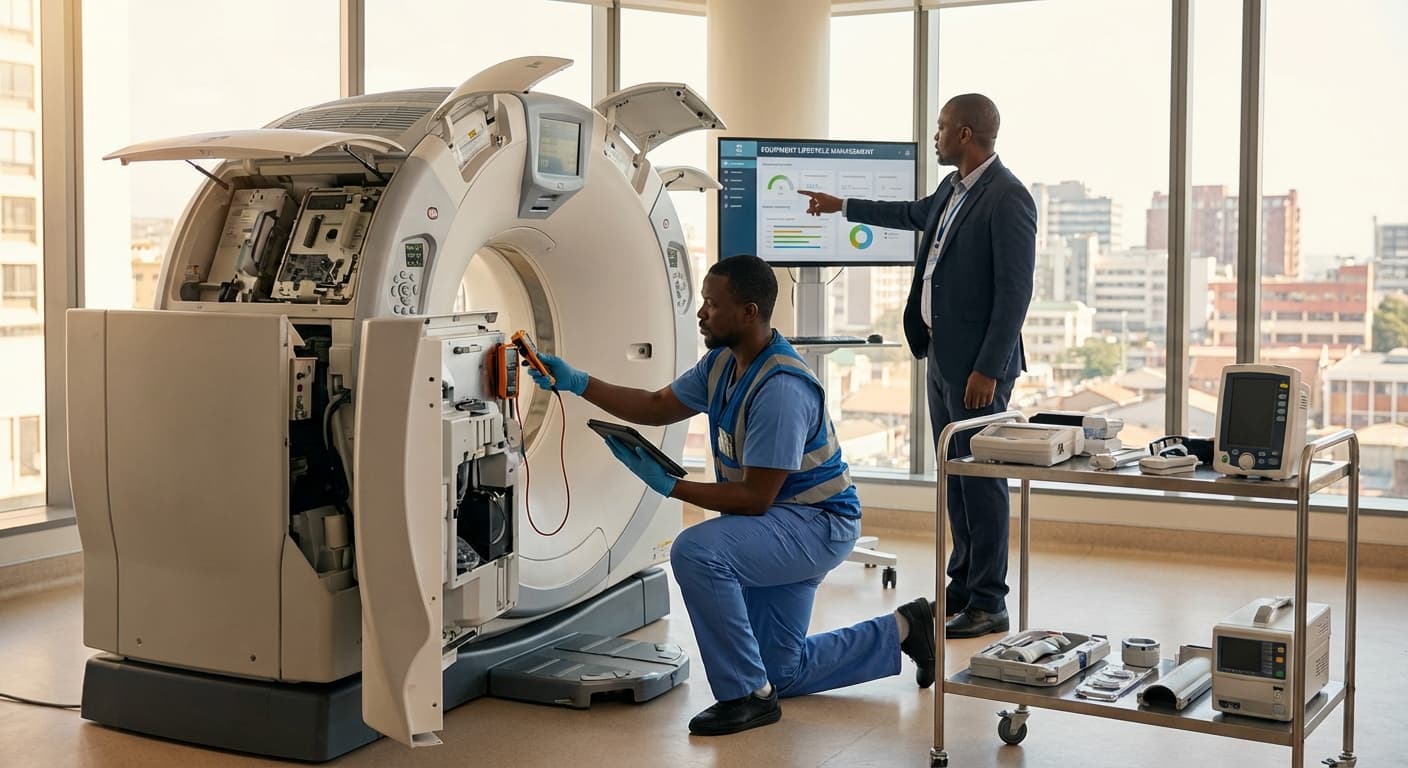
Equipment Replacement Planning & Obsolescence Strategy Service in Sierra Leone
Engineering Excellence & Technical Support
Equipment Replacement Planning & Obsolescence Strategy Service High-standard technical execution following OEM protocols and local regulatory frameworks.
Proactive Obsolescence Forecasting
Leveraging advanced analytics and historical data, our service precisely forecasts equipment obsolescence timelines. This allows Sierra Leonean industries to anticipate and mitigate the risks associated with outdated technology, ensuring continuous operational efficiency and avoiding costly emergency replacements.
Optimized Replacement Budgeting
We develop data-driven replacement strategies that align with your budgetary constraints. By identifying critical assets and prioritizing replacements based on impact and lifespan, we help Sierra Leonean businesses achieve maximum return on investment and avoid overspending on unnecessary upgrades.
Enhanced Supply Chain Resilience
Our service integrates with global supply chain intelligence to identify potential disruptions and secure critical spare parts and replacement equipment well in advance. This strengthens the resilience of Sierra Leone's industrial infrastructure against unforeseen events and ensures uninterrupted operations.
What Is Equipment Replacement Planning & Obsolescence Strategy Service In Sierra Leone?
Equipment Replacement Planning (ERP) and Obsolescence Strategy Service in Sierra Leone refers to a structured approach to managing the lifecycle of physical assets within organizations. It encompasses the proactive identification of equipment nearing the end of its useful life or becoming technologically obsolete, and the development of strategic plans for its replacement or disposal. This service aims to optimize operational efficiency, minimize downtime, mitigate risks associated with aging infrastructure, and ensure compliance with evolving technological standards and regulatory requirements. It is a critical component of asset management and financial planning, particularly in sectors reliant on sophisticated or rapidly evolving machinery and technology.
| Who Needs This Service | Typical Use Cases in Sierra Leone | |||||
|---|---|---|---|---|---|---|
| Public Sector Organizations (Government Ministries, Agencies, State-Owned Enterprises): Especially those managing critical infrastructure, public services, and large fleets of vehicles or equipment. | Public health infrastructure (e.g., medical imaging equipment, laboratory apparatus, hospital vehicles). | Transportation and logistics networks (e.g., road maintenance equipment, public transport fleets, port machinery). | Utilities (e.g., water treatment plants, power generation facilities, telecommunication infrastructure). | Educational institutions (e.g., research laboratories, IT infrastructure, specialized training equipment). | ||
| Private Sector Enterprises: Particularly those with significant capital investments in physical assets. | Mining and Extractive Industries: Heavy machinery, processing equipment, exploration technology. | Manufacturing and Industrial Facilities: Production lines, assembly equipment, material handling systems. | Telecommunications Providers: Network infrastructure, switching equipment, transmission hardware. | Financial Institutions: Data centers, IT hardware, security systems. | Agribusiness: Mechanized farming equipment, processing machinery, cold chain logistics. | Construction Companies: Earthmoving equipment, cranes, specialized construction tools. |
| Non-Governmental Organizations (NGOs) and International Development Agencies: Managing assets in project-specific contexts or for long-term service delivery. | Logistics and fleet management for humanitarian aid delivery. | Medical equipment for health programs in remote areas. | Educational technology for schools and vocational training centers. |
Key Components of the Service
- Asset Inventory and Condition Assessment
- Lifespan Prediction and Remaining Useful Life (RUL) Analysis
- Technology Trend Analysis and Obsolescence Forecasting
- Risk Assessment (e.g., safety, operational, security, regulatory)
- Total Cost of Ownership (TCO) Analysis for replacement options
- Development of Replacement Scenarios (e.g., phased, immediate, upgrade)
- Budgeting and Financial Planning for capital expenditure
- Procurement Strategy for new equipment
- Decommissioning and Disposal Planning (including environmental and data security considerations)
- Maintenance Optimization and extending RUL where feasible
- Documentation and Record-Keeping
Who Needs Equipment Replacement Planning & Obsolescence Strategy Service In Sierra Leone?
Equipment Replacement Planning & Obsolescence Strategy services are crucial for organizations in Sierra Leone facing the challenges of aging infrastructure, technological advancements, and the need for operational efficiency. These services help businesses proactively manage the lifecycle of their assets, mitigate risks associated with outdated equipment, and ensure continuous business operations. By understanding the total cost of ownership and predicting future needs, organizations can make informed decisions about when and how to replace or upgrade their equipment, thereby optimizing capital expenditure and minimizing downtime.
| Target Sector | Key Departments Involved | Typical Equipment Concerns |
|---|---|---|
| Mining & Heavy Industry | Operations, Maintenance, Engineering, Procurement | Excavators, haul trucks, processing machinery, conveyors, safety equipment |
| Telecommunications | Network Operations, IT, Engineering, Procurement | Base stations, switches, routers, fiber optic cables, customer premises equipment |
| Power & Utilities | Operations, Maintenance, Engineering, Planning | Turbines, transformers, transmission lines, control systems, water treatment equipment |
| Finance & Banking | IT, Operations, Security, Procurement | Servers, ATMs, network infrastructure, specialized financial terminals, data center equipment |
| Government (Infrastructure) | Public Works, Transport, Planning, Procurement | Road construction equipment, vehicles, bridges, water systems, IT infrastructure |
| Healthcare | Medical Staff, Biomedical Engineering, IT, Procurement | MRI machines, X-ray machines, patient monitors, surgical equipment, IT systems |
Target Customers & Departments in Sierra Leone
- Large Industrial Operations: Companies in sectors like mining, manufacturing, agriculture, and energy often possess extensive and complex machinery that requires rigorous planning for replacement and obsolescence management.
- Telecommunications Providers: Given the rapid pace of technological change in the telecom sector, these companies need robust strategies to manage the lifecycle of their network infrastructure, base stations, and user equipment.
- Power & Utilities Companies: Managing the aging infrastructure of power grids, generation plants, and water treatment facilities is critical for reliable service delivery. Obsolescence strategies are vital to prevent system failures.
- Financial Institutions & Banks: With an increasing reliance on IT infrastructure, ATMs, servers, and specialized banking equipment, these institutions require foresight to manage technological obsolescence and ensure data security.
- Government & Public Sector Agencies: Departments responsible for infrastructure (transport, public works), defense, healthcare (medical equipment), and public administration often manage large fleets of vehicles, specialized machinery, and IT systems that need strategic replacement.
- Logistics & Transportation Companies: Managing fleets of trucks, buses, ships, and associated operational equipment necessitates a clear replacement and maintenance strategy to ensure efficiency and safety.
- Healthcare Providers (Hospitals & Clinics): Advanced medical equipment has a finite lifespan and requires specialized planning for replacement to maintain quality of care and comply with evolving medical standards.
- Construction & Mining Companies: Heavy-duty machinery and specialized tools are expensive assets that require strategic planning for maintenance, repair, and eventual replacement to maximize operational uptime and safety.
- Information Technology (IT) Departments: Across all sectors, IT departments are responsible for managing servers, networking equipment, end-user devices, and software, all of which are subject to rapid obsolescence.
- Operations & Maintenance (O&M) Departments: Directly responsible for the upkeep and functionality of physical assets, O&M teams benefit immensely from strategic planning to ensure equipment availability and minimize costly emergency repairs.
- Procurement & Supply Chain Departments: These departments are instrumental in executing replacement strategies, sourcing new equipment, and managing vendor relationships, requiring clear obsolescence roadmaps.
- Finance & Capital Planning Departments: Responsible for budgeting and capital allocation, these departments need the insights provided by replacement planning and obsolescence strategies to make sound financial decisions.
- Engineering & Technical Departments: These departments provide the technical expertise to assess equipment condition, identify obsolescence risks, and recommend appropriate replacement or upgrade paths.
Equipment Replacement Planning & Obsolescence Strategy Service Process In Sierra Leone
Our Equipment Replacement Planning & Obsolescence Strategy Service in Sierra Leone is designed to proactively manage your critical assets, ensuring optimal performance, minimizing downtime, and mitigating the risks associated with aging or obsolete equipment. The process is structured to be comprehensive and client-centric, guiding you from initial interest to the successful implementation of replacement strategies.
| Phase | Key Activities | Deliverables | Typical Timeline |
|---|---|---|---|
| Initial contact, understanding needs, stakeholder identification | Meeting minutes, preliminary scope outline | 1-3 Business Days |
| Defining scope, creating tailored proposal | Detailed Service Proposal | 3-7 Business Days |
| On-site inspections, performance tests, data gathering | Equipment Inventory, Condition Report | 1-4 Weeks (depending on scale) |
| Analyzing data, identifying risks, predicting obsolescence | Obsolescence Risk Report, Forecasted Lifecycles | 1-2 Weeks |
| Formulating recommended strategies and options | Draft Replacement Strategies | 1-2 Weeks |
| Cost-benefit analysis, ROI, TCO calculations | Business Cases, Financial Impact Reports | 1-2 Weeks |
| Presenting strategies, gathering feedback, obtaining sign-off | Approved Replacement Strategy Document | 1-2 Weeks |
| Assisting with procurement, developing project plans | Procurement Support Documents, Implementation Plan | 2-4 Weeks (can overlap with procurement) |
| Overseeing procurement, installation, commissioning | Installed & Commissioned Equipment, Project Reports | Variable (dependent on project scope and equipment) |
| Assessing outcomes, establishing monitoring, continuous improvement | Post-Implementation Review Report, Performance Metrics | Ongoing (initial review within 1-2 months of execution) |
Service Workflow from Inquiry to Execution:
- {"title":"1. Initial Inquiry & Needs Assessment","description":"The process begins with you contacting us to express interest in our Equipment Replacement Planning & Obsolescence Strategy Service. We will schedule an initial consultation to understand your current equipment landscape, operational needs, business objectives, and any immediate concerns regarding equipment lifecycle management. This phase focuses on gathering high-level information and identifying key stakeholders."}
- {"title":"2. Scoping & Proposal Development","description":"Based on the initial assessment, we will define the scope of work for your specific needs. This may involve a detailed inventory of your existing equipment, condition assessments, performance analysis, and a review of maintenance records. We will then develop a tailored proposal outlining the methodology, deliverables, timeline, and investment for our services. This proposal will be presented for your review and approval."}
- {"title":"3. Detailed Equipment Audit & Data Collection","description":"Upon agreement, we conduct an in-depth audit of your specified equipment. This involves physical inspections, performance testing, gathering technical specifications, reviewing maintenance histories, and understanding operational criticality. We also collect data on manufacturer support, parts availability, and current market trends for replacement options. Data integrity and accuracy are paramount in this stage."}
- {"title":"4. Obsolescence Risk Assessment & Forecasting","description":"Using the collected data, we perform a comprehensive obsolescence risk assessment for each piece of equipment. This involves analyzing factors such as age, technological advancements, manufacturer support status, parts availability, and estimated remaining useful life. We then forecast potential obsolescence points and associated risks, including increased maintenance costs, downtime, and safety concerns."}
- {"title":"5. Replacement Strategy Development","description":"We develop strategic recommendations for equipment replacement. This includes identifying equipment that requires immediate replacement, phased replacement plans, and proactive strategies for equipment nearing obsolescence. Options may include direct replacements, upgrades, refurbishment, or alternative technologies. The strategy will be aligned with your operational continuity, budget, and future growth plans."}
- {"title":"6. Business Case & Financial Analysis","description":"For each proposed replacement, we develop a robust business case. This includes a detailed financial analysis, considering the total cost of ownership (TCO) for existing vs. new equipment, return on investment (ROI) calculations, potential cost savings from reduced downtime and maintenance, and the financial implications of inaction. We will present clear financial justifications to support your decision-making."}
- {"title":"7. Strategy Review & Approval","description":"The developed equipment replacement strategies, including the business cases and financial analyses, are presented to your key stakeholders. We facilitate discussions, answer questions, and incorporate your feedback to ensure the strategy meets your organizational goals. Final approval of the recommended strategies is obtained in this phase."}
- {"title":"8. Procurement & Implementation Planning","description":"Once strategies are approved, we assist in the procurement process. This may involve developing tender documents, evaluating supplier proposals, and negotiating contracts. We also create detailed implementation plans, outlining project timelines, resource allocation, logistical arrangements, and change management procedures for the introduction of new equipment."}
- {"title":"9. Execution & Project Management","description":"This is the execution phase where the approved replacement strategies are implemented. We oversee the procurement, installation, commissioning, and decommissioning of equipment as per the plan. Our project management ensures that all activities are conducted efficiently, safely, and within the agreed timelines and budget. We manage vendor coordination and address any on-site challenges."}
- {"title":"10. Post-Implementation Review & Monitoring","description":"Following successful execution, we conduct a post-implementation review to assess the effectiveness of the replacement strategy. This includes evaluating performance against set objectives, validating cost savings, and gathering feedback. We also establish ongoing monitoring mechanisms to track the performance of new equipment and identify future replacement needs, ensuring a continuous improvement cycle."}
Equipment Replacement Planning & Obsolescence Strategy Service Cost In Sierra Leone
Planning for equipment replacement and developing an obsolescence strategy is a critical service for businesses in Sierra Leone to ensure operational efficiency, mitigate risks, and optimize capital expenditure. The cost of such a service is influenced by several factors, reflecting the complexity of the organization, the scope of the assessment, and the expertise required.
Key Pricing Factors:
- Scope of Services: This is the most significant driver. A comprehensive service might involve a full audit of all equipment, detailed lifecycle analysis, risk assessment for each asset, development of replacement schedules, vendor research, and the creation of a long-term obsolescence management roadmap. A more limited scope could focus on a specific critical asset class or a shorter-term replacement plan.
- Complexity and Size of the Organization: Larger organizations with extensive and diverse equipment fleets will naturally incur higher costs due to the increased volume of assets to assess and the complexity of their interdependencies. The number of departments, operational sites, and the variety of equipment types all contribute to this.
- Data Availability and Quality: The ease of accessing accurate and complete data on existing equipment (purchase dates, maintenance records, performance metrics, cost of ownership, supplier information) significantly impacts the time and effort required. If data is fragmented or of poor quality, more extensive data gathering and validation will be necessary, increasing costs.
- Level of Detail and Sophistication: The depth of analysis required. This could range from basic replacement scheduling based on average lifespans to advanced predictive maintenance integration, total cost of ownership (TCO) modeling, and scenario planning for technological advancements.
- Expertise and Experience of the Service Provider: Consultants with specialized knowledge in asset management, supply chain, and risk assessment, particularly those with experience in the Sierra Leonean context, will command higher fees. This includes their understanding of local market conditions, available technologies, and regulatory environments.
- Duration of the Project: Longer-term engagements for ongoing monitoring and strategy refinement will naturally be more expensive than a one-off assessment.
- On-site vs. Remote Services: While much of the analysis can be done remotely, on-site visits for equipment inspection, stakeholder interviews, and data verification will add travel and accommodation costs.
- Deliverables: The nature and extent of the final reports, presentations, and implementation blueprints will also influence pricing. Comprehensive, actionable strategies with detailed implementation plans will cost more than high-level summaries.
Estimated Cost Ranges in Sierra Leonean Leone (SLL):
Given the local economic conditions and the specialized nature of this service, it's important to note that these are estimates and can vary significantly. Pricing is often project-based rather than a fixed hourly rate for complex strategic services.
- Small to Medium-Sized Businesses (SMBs) with limited equipment scope (e.g., IT equipment, core machinery):
* **Basic Assessment & Short-Term Plan:** SLL 15,000,000 - SLL 40,000,000
* **Moderate Scope & Lifecycle Planning:** SLL 40,000,000 - SLL 80,000,000
- Larger Enterprises with diverse and extensive equipment portfolios (e.g., mining, manufacturing, telecommunications, logistics):
* **Comprehensive Audit, Risk Assessment & Long-Term Strategy:** SLL 80,000,000 - SLL 250,000,000+
* **Advanced TCO Modeling, Predictive Analytics Integration & Ongoing Support:** SLL 250,000,000 - SLL 750,000,000+ (potentially higher for very large, complex, multi-site operations requiring extensive ongoing strategic input).
It is highly recommended for businesses in Sierra Leone to solicit detailed proposals from multiple service providers, clearly outlining their specific needs and requirements, to obtain accurate and competitive quotes for equipment replacement planning and obsolescence strategy services.
| Business Size/Scope | Service Level | Estimated Cost Range (SLL) |
|---|---|---|
| Small to Medium Businesses (SMBs) - Limited Equipment | Basic Assessment & Short-Term Plan | 15,000,000 - 40,000,000 |
| Small to Medium Businesses (SMBs) - Limited Equipment | Moderate Scope & Lifecycle Planning | 40,000,000 - 80,000,000 |
| Larger Enterprises - Diverse & Extensive Equipment | Comprehensive Audit, Risk Assessment & Long-Term Strategy | 80,000,000 - 250,000,000+ |
| Larger Enterprises - Diverse & Extensive Equipment | Advanced TCO Modeling, Predictive Analytics & Ongoing Support | 250,000,000 - 750,000,000+ |
Factors Influencing Equipment Replacement Planning & Obsolescence Strategy Service Costs in Sierra Leone
- Scope of Services
- Complexity and Size of the Organization
- Data Availability and Quality
- Level of Detail and Sophistication
- Expertise and Experience of the Service Provider
- Duration of the Project
- On-site vs. Remote Services
- Deliverables
Affordable Equipment Replacement Planning & Obsolescence Strategy Service Options
Our Affordable Equipment Replacement Planning & Obsolescence Strategy Service is designed to help businesses proactively manage their asset lifecycle, minimize disruptive downtime, and optimize capital expenditures. We offer flexible value bundles and implement cost-saving strategies to ensure you get the most out of your investments.
| Cost-Saving Strategy | Description | Impact on Investment |
|---|---|---|
| Proactive Replacement Scheduling | Replacing equipment before failure minimizes emergency repair costs and lost productivity. | Reduced unplanned capital expenditure, improved operational efficiency. |
| Extended Equipment Lifespan Optimization | Implementing optimal maintenance and upgrade strategies to maximize the useful life of existing assets. | Delayed capital expenditure, increased ROI on current assets. |
| Bulk Purchasing & Negotiation | Leveraging planned replacements to negotiate better pricing and terms with suppliers. | Lower acquisition costs for new equipment. |
| Consolidated Replacement Cycles | Aligning replacement schedules for similar equipment to achieve economies of scale. | Reduced procurement overhead and potential for volume discounts. |
| Obsolescence Risk Mitigation | Identifying and planning for end-of-life equipment to avoid costly disruptions and ensure availability of replacements. | Minimized business interruption, predictable capital planning. |
| Lease vs. Buy Analysis | Evaluating the financial benefits of leasing versus purchasing equipment based on usage and lifecycle. | Optimized cash flow and total cost of ownership. |
Service Value Bundles
- {"title":"Essential Planning Package","description":"For businesses needing a foundational approach to equipment management. Includes basic risk assessment and a 3-year replacement roadmap."}
- {"title":"Strategic Advantage Package","description":"A comprehensive solution for proactive obsolescence management. Encompasses advanced risk profiling, multi-year forecasting, and budget optimization."}
- {"title":"Total Lifecycle Management Package","description":"Our premium offering for end-to-end asset lifecycle control. Includes all Strategic Advantage features plus vendor negotiation support and alternative sourcing strategies."}
Verified Providers In Sierra Leone
In Sierra Leone, ensuring access to reliable and high-quality healthcare is paramount. The landscape of healthcare providers is varied, and understanding which organizations meet stringent standards is crucial for both individuals and the broader health sector. This document highlights the importance of 'Verified Providers' and specifically examines the credentials of Franance Health, positioning them as a leading choice.
| Franance Health Credential | Significance for Patients | Why it Represents the Best Choice |
|---|---|---|
| Fully Licensed and Accredited by the Ministry of Health and Sanitation (MoHS) | Guarantees adherence to national health standards and legal requirements, ensuring legitimate and safe medical practice. | Provides a fundamental layer of trust and assurance that Franance Health operates within the legal framework and meets the minimum required standards for healthcare provision. |
| Experienced and Certified Medical Professionals | Ensures patients receive care from skilled and knowledgeable doctors, nurses, and specialists who are up-to-date with modern medical practices. | Directly translates to better diagnostic accuracy, more effective treatment plans, and improved patient outcomes, minimizing risks associated with unqualified practitioners. |
| Investment in Modern Medical Technology and Equipment | Allows for more accurate diagnoses, less invasive procedures, and a higher standard of care, comparable to international facilities. | Offers patients access to cutting-edge diagnostic and therapeutic tools, leading to more efficient and effective management of various health conditions, often resulting in faster recovery times. |
| Commitment to Patient-Centered Care and Ethical Standards | Ensures a respectful, transparent, and supportive healthcare experience, prioritizing patient well-being and autonomy. | Builds strong patient-provider relationships based on trust and empathy, leading to higher patient satisfaction and adherence to treatment plans. Franance Health prioritizes the dignity and rights of every individual. |
| Partnerships with International Health Organizations and Networks | Facilitates access to global best practices, continuous professional development for staff, and potentially specialized medical knowledge or referral pathways. | Elevates the standard of care by integrating global knowledge and expertise, ensuring that patients benefit from the latest advancements and recommendations in healthcare, even within Sierra Leone. |
What Makes a Provider 'Verified' in Sierra Leone?
- Regulatory Compliance: Adherence to all national health regulations and licensing requirements set by the Ministry of Health and Sanitation.
- Quality Assurance Standards: Implementation of robust internal quality control mechanisms and adherence to international best practices in healthcare delivery.
- Professional Qualifications: Employment of adequately trained, certified, and licensed healthcare professionals.
- Infrastructure and Equipment: Maintenance of a safe, clean, and well-equipped facilities suitable for the services offered.
- Patient Safety Protocols: Strict adherence to protocols designed to ensure patient safety and prevent adverse events.
- Ethical Practices: Commitment to ethical conduct, patient confidentiality, and transparent billing practices.
Scope Of Work For Equipment Replacement Planning & Obsolescence Strategy Service
This Scope of Work (SOW) outlines the services for Equipment Replacement Planning and Obsolescence Strategy. The objective is to develop a comprehensive strategy for managing the lifecycle of critical equipment, ensuring operational continuity, and mitigating risks associated with obsolescence. This service will involve assessing current equipment, identifying future needs, forecasting obsolescence, and recommending proactive replacement and upgrade plans. The technical deliverables will provide actionable insights and documented plans for effective equipment lifecycle management.
| Deliverable Name | Description | Format | Key Information |
|---|---|---|---|
| Equipment Inventory Database | A structured database detailing all critical equipment. | Excel/CSV/Database File | Asset ID, Manufacturer, Model, Serial Number, Purchase Date, Installation Date, Last Maintenance Date, Current Condition Rating, Expected Lifespan, Criticality Rating |
| Obsolescence Risk Register | A register identifying equipment at risk of obsolescence and associated risks. | Excel/CSV | Asset ID, Obsolescence Risk Level (High, Medium, Low), Reason for Risk (e.g., End-of-Life Support, No Spare Parts), Estimated Obsolescence Date, Potential Impact |
| Lifecycle Cost Analysis Report | Analysis of current and projected costs for equipment ownership and replacement. | PDF Document | Current TCO breakdown, projected replacement costs, ROI calculations, cost-benefit analysis of different replacement scenarios |
| Replacement & Obsolescence Strategy Document | The primary document outlining the recommended strategy and roadmap. | PDF Document | Executive Summary, Current State Assessment, Future State Vision, Prioritized Replacement Plan (Phased Approach), Obsolescence Mitigation Tactics, Technology Recommendations, Budgetary Estimates, Risk Mitigation Strategies |
| Business Case for Key Investments | Detailed justification for significant equipment replacement or upgrade projects. | PDF Document | Problem Statement, Proposed Solution, Technical Specifications, Financial Justification (ROI, NPV), Risk Assessment, Implementation Timeline, Stakeholder Alignment |
| Implementation Roadmap | A detailed plan for executing the recommended strategies. | PDF Document/Project Management Tool Export | Phased milestones, specific actions, responsibilities, timelines, required resources, interdependencies |
| Training Materials & Session Summary | Documentation and notes from knowledge transfer sessions. | PDF/Presentation Slides, Meeting Minutes | Key concepts covered, process flows, Q&A summary, next steps for adoption |
Key Activities and Technical Deliverables
- Equipment Inventory and Assessment: Comprehensive cataloging of all relevant equipment, including specifications, purchase dates, maintenance history, and current condition.
- Obsolescence Risk Assessment: Identification of equipment at risk of obsolescence based on manufacturer support, availability of spare parts, and technological advancements.
- Lifecycle Cost Analysis: Evaluation of total cost of ownership for existing equipment, including maintenance, repair, and operational costs, and projection for replacement options.
- Technology Forecasting: Research and analysis of emerging technologies and their potential impact on existing and future equipment needs.
- Replacement Strategy Development: Creation of a prioritized roadmap for equipment replacement, considering operational impact, budget, and lead times.
- Obsolescence Mitigation Plan: Strategies to manage critical equipment nearing obsolescence, including extended support, alternative sourcing, or early replacement.
- Business Case for Investment: Detailed justification for proposed equipment replacements and upgrades, including ROI calculations and risk reduction benefits.
- Implementation Roadmap: A phased plan for executing the recommended replacement and upgrade strategies.
- Training and Knowledge Transfer: Documentation and training sessions for internal teams on the developed strategies and processes.
- Final Report and Recommendations: A consolidated document summarizing findings, strategies, and actionable recommendations.
Service Level Agreement For Equipment Replacement Planning & Obsolescence Strategy Service
This Service Level Agreement (SLA) outlines the response times and uptime guarantees for the Equipment Replacement Planning & Obsolescence Strategy Service. This service focuses on proactive planning to ensure continued operational efficiency and mitigate risks associated with aging and obsolete equipment.
The following sections detail the agreed-upon service levels for key aspects of this offering.
| Service Component | Response Time Target | Uptime Guarantee |
|---|---|---|
| Initial Consultation & Strategy Development | Within 2 business days of request | N/A (Project-based) |
| Obsolete Equipment Identification Alert | Within 1 business day of identification by the system/analyst | N/A (Proactive notification) |
| Review of Proposed Replacement Plan | Within 3 business days of plan submission | N/A (Project-based) |
| Urgent Obsolescence Risk Assessment (Critical Equipment) | Within 4 business hours of critical alert | N/A (Emergency response) |
| Access to Obsolescence Tracking Portal/Dashboard | N/A | 99.5% Availability during business hours (Mon-Fri, 08:00 - 18:00 local time) |
| Support for Strategy Updates & Revisions | Within 2 business days of request for minor updates; 5 business days for major revisions | N/A (Project-based) |
| Ad-hoc Query/Clarification Support | Within 1 business day of query | N/A (Asynchronous communication) |
Service Scope & Objectives
- Proactive identification of equipment nearing end-of-life or obsolescence.
- Development and refinement of strategic replacement plans.
- Analysis and mitigation of risks associated with obsolete technology.
- Recommendations for cost-effective upgrade and replacement strategies.
- Assistance in developing long-term capital expenditure forecasts for equipment.
- Provision of market intelligence on emerging technologies and their lifecycle.
- Support in defining obsolescence thresholds and triggers.
- Regular reviews and updates to replacement and obsolescence strategies.
Frequently Asked Questions

Ready when you are
Let's scope your Equipment Replacement Planning & Obsolescence Strategy Service in Sierra Leone project in Sierra Leone.

Scaling healthcare logistics and technical systems across the entire continent.