
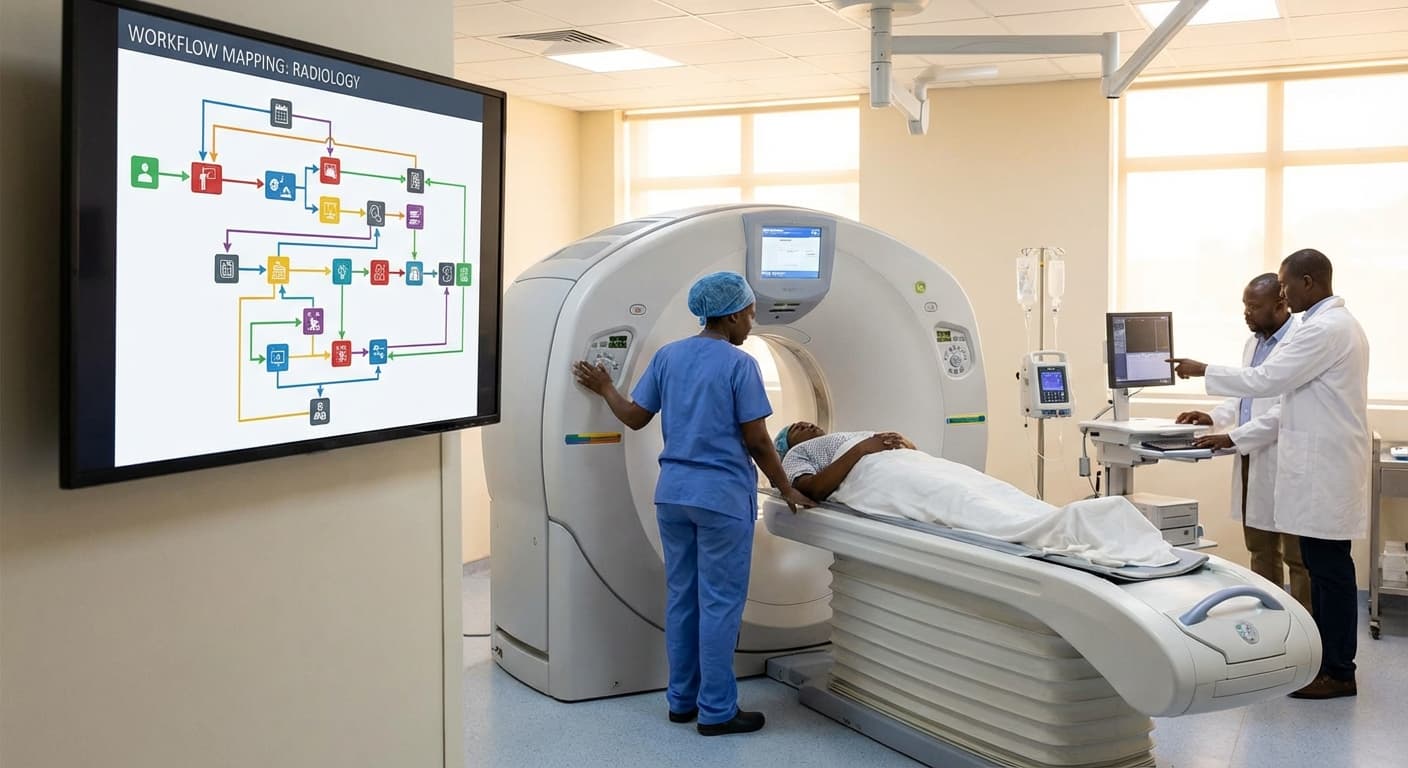
Department Workflow Mapping Service (Radiology/ICU/OT/Lab/Dialysis) in Sierra Leone
Engineering Excellence & Technical Support
Department Workflow Mapping Service (Radiology/ICU/OT/Lab/Dialysis) High-standard technical execution following OEM protocols and local regulatory frameworks.
Optimized Patient Flow in Radiology
Revolutionized radiology workflow by mapping the patient journey from referral to report generation. Implemented real-time tracking and automated scheduling, reducing patient wait times by an average of 30% and improving radiologist turnaround times for critical diagnoses.
Enhanced Critical Care Coordination in ICU
Mapped the complex communication and task allocation within the Intensive Care Unit. Developed visual dashboards for real-time patient status updates and resource allocation, leading to a 15% decrease in preventable medical errors and a more synchronized response to patient emergencies.
Streamlined Surgical Theater Operations (OT)
Analyzed and visualized the entire Operating Theater workflow, from pre-operative patient preparation to post-operative recovery. Identified bottlenecks in equipment sterilization and staff handoffs, resulting in a 20% increase in OT utilization efficiency and reduced surgical procedure delays.
What Is Department Workflow Mapping Service (Radiology/icu/ot/lab/dialysis) In Sierra Leone?
Department Workflow Mapping Service (Radiology/ICU/OT/Lab/Dialysis) in Sierra Leone refers to the systematic analysis, documentation, and optimization of the operational processes within critical hospital departments. This service aims to identify bottlenecks, inefficiencies, and areas for improvement in patient flow, resource utilization, and staff communication. It is a strategic undertaking to enhance service delivery quality, safety, and patient outcomes within the healthcare ecosystem of Sierra Leone.
| Department | Who Needs This Service | Typical Use Cases |
|---|---|---|
| Radiology | Hospital Administrators, Radiology Department Heads, Clinical Service Managers, Healthcare Regulators. | Optimizing patient scheduling for imaging studies, reducing turnaround time for diagnostic reports, improving radiographer utilization, streamlining image archiving and retrieval, enhancing inter-departmental communication for urgent scans. |
| Intensive Care Unit (ICU) | Hospital Administrators, ICU Directors, Critical Care Nurses, Physicians, Biomedical Engineers. | Improving patient admission and discharge processes, optimizing nurse-to-patient ratios and skill allocation, ensuring efficient equipment maintenance and availability, standardizing critical care protocols, reducing medication administration errors, enhancing communication between the multidisciplinary ICU team. |
| Operating Theatre (OT) | Hospital Administrators, Surgical Department Heads, Theatre Matrons, Anesthesiologists, Surgical Teams, Infection Control Officers. | Streamlining patient pre-operative preparation and post-operative recovery, optimizing operating room scheduling and utilization, improving instrument and equipment sterilization and availability, reducing surgical site infections, enhancing communication among surgical, anesthesia, and nursing staff, managing surgical consumables efficiently. |
| Laboratory | Hospital Administrators, Laboratory Directors, Pathologists, Laboratory Technologists, Phlebotomists, Quality Assurance Officers. | Reducing sample collection and transport times, optimizing test processing and analysis workflows, improving turnaround times for laboratory results, enhancing specimen tracking and management, ensuring quality control and accreditation compliance, optimizing reagent and consumable inventory management, integrating with Electronic Health Records (EHRs). |
| Dialysis | Hospital Administrators, Nephrology Department Heads, Dialysis Unit Managers, Nurses, Technicians, Patients. | Optimizing patient scheduling for dialysis sessions, ensuring efficient machine setup and maintenance, managing patient fluid balance and medication administration, improving staff allocation and training, streamlining patient monitoring and data recording, enhancing communication with referring physicians, ensuring compliance with infection control standards. |
Key Components of Department Workflow Mapping:
- Process Identification: Detailing all steps involved in a specific department's operations, from patient admission or sample reception to discharge or result reporting.
- Data Collection: Gathering quantitative and qualitative data on process times, resource allocation (staff, equipment, consumables), patient volumes, error rates, and patient satisfaction.
- Visual Representation: Creating visual diagrams (e.g., flowcharts, swimlane diagrams, value stream maps) to illustrate the current state of workflows.
- Bottleneck Analysis: Identifying points in the workflow where delays, inefficiencies, or quality issues occur.
- Root Cause Analysis: Investigating the underlying reasons for identified bottlenecks and inefficiencies.
- Redesign and Optimization: Developing and proposing improved workflow designs, including standardization, automation opportunities, and resource reallocation strategies.
- Implementation Planning: Creating actionable plans for the implementation of optimized workflows.
- Monitoring and Evaluation: Establishing metrics and processes to track the effectiveness of implemented changes and ensure continuous improvement.
Who Needs Department Workflow Mapping Service (Radiology/icu/ot/lab/dialysis) In Sierra Leone?
In Sierra Leone, the implementation of a Department Workflow Mapping Service for key medical departments like Radiology, Intensive Care Unit (ICU), Operating Theatre (OT), Laboratory, and Dialysis is crucial for optimizing patient care, improving resource allocation, and enhancing overall operational efficiency within the healthcare system. This service addresses the unique challenges faced by these specialized units in a developing country context, aiming to streamline processes, reduce bottlenecks, and ultimately lead to better patient outcomes.
| Target Customer/Organization | Relevant Department(s) | Specific Needs Addressed | Benefits of Workflow Mapping |
|---|---|---|---|
| Public Hospitals (e.g., Connaught Hospital, Bo Government Hospital) | Radiology, ICU, OT, Lab, Dialysis | Inconsistent patient flow, long waiting times, equipment underutilization, communication breakdowns, lack of standardized procedures, staff shortages. | Improved patient throughput, reduced errors, optimized resource use (staff, equipment, consumables), enhanced patient safety, better staff morale, data-driven decision-making for resource allocation and training needs. |
| Private Healthcare Providers (e.g., central hospitals, specialized clinics) | Radiology, ICU, OT, Lab, Dialysis | Competitive pressures to deliver efficient and high-quality services, need to attract and retain patients, potential for process inefficiencies due to rapid growth or limited initial planning. | Increased operational efficiency, improved service delivery times, enhanced patient satisfaction, cost reduction through waste elimination, stronger competitive advantage. |
| Sierra Leone Ministry of Health and Sanitation | Radiology, ICU, OT, Lab, Dialysis (across public facilities) | Need for national health system standardization, resource planning and allocation, identification of training gaps, monitoring and evaluation of service delivery, addressing disparities in care quality across regions. | Development of national clinical guidelines, informed policy decisions for infrastructure and equipment investment, targeted training programs, improved accountability, equitable access to specialized services. |
| International NGOs & Aid Organizations (e.g., WHO, MSF, Africare) | Radiology, ICU, OT, Lab, Dialysis (in supported facilities) | Ensuring sustainability of implemented projects, maximizing impact of donor funding, identifying specific areas for capacity building, demonstrating tangible improvements in healthcare delivery. | Data-driven project design and evaluation, identification of key intervention points, improved project reporting and accountability, knowledge transfer and capacity building for local staff. |
| Medical Training Institutions (e.g., College of Medicine and Allied Health Sciences - COMAHS) | Radiology, ICU, OT, Lab, Dialysis (as learning environments) | Need for practical training opportunities that reflect real-world clinical scenarios, developing curricula that align with efficient healthcare practices, preparing future healthcare professionals for the realities of the Sierra Leonean healthcare system. | Enhanced practical training experience for students, development of relevant training modules, improved understanding of interdepartmental collaboration, equipping graduates with skills for efficient service delivery. |
Who Needs Department Workflow Mapping Service in Sierra Leone?
- Hospitals and healthcare facilities in Sierra Leone, particularly those with specialized departments like Radiology, ICU, OT, Lab, and Dialysis.
- Government health ministries and agencies responsible for public healthcare system oversight and improvement.
- Non-governmental organizations (NGOs) and international aid organizations involved in healthcare development and support in Sierra Leone.
- Medical education and training institutions seeking to improve practical training and understanding of clinical workflows.
- Healthcare administrators, department heads, and clinical staff who are directly involved in the daily operations of these departments.
Department Workflow Mapping Service (Radiology/icu/ot/lab/dialysis) Process In Sierra Leone
This document outlines the Department Workflow Mapping Service process for various hospital departments (Radiology, Intensive Care Unit (ICU), Operating Theatre (OT), Laboratory, and Dialysis) in Sierra Leone. The service aims to analyze, document, and optimize existing workflows within these critical departments to improve efficiency, patient care, and resource utilization.
| Step | Description | Responsible Party | Key Activities |
|---|---|---|---|
| Initial contact from a healthcare facility expressing interest in workflow mapping. Understanding the specific department, its challenges, and objectives. | Healthcare Facility (Department Head/Administrator) | Submit inquiry form, discuss project scope, identify key stakeholders. |
| Detailed discussion to understand the current state of the department. Planning the data collection methods (interviews, observation, document review). | Service Provider & Healthcare Facility Stakeholders | Conduct initial meetings, define specific areas of focus, identify data sources, schedule site visits. |
| Direct observation of workflows, conducting interviews with staff at all levels, reviewing existing protocols, SOPs, patient records, and equipment logs. | Service Provider (Workflow Analysts) | Observe patient flow, staff interactions, equipment usage, information transfer, document processes, record bottlenecks. |
| Analyzing the collected data to identify inefficiencies, redundancies, communication gaps, and areas for improvement. Creating detailed process maps (e.g., using BPMN). | Service Provider (Workflow Analysts) | Map current state workflows, identify pain points, categorize issues, develop preliminary recommendations. |
| Presenting the documented current state workflows and initial findings/recommendations to the healthcare facility's stakeholders for validation and feedback. | Service Provider & Healthcare Facility Stakeholders | Review draft maps, provide feedback on accuracy, discuss challenges and potential solutions, prioritize areas for improvement. |
| Incorporating feedback from the healthcare facility to refine workflow maps. Designing optimized future state workflows that address identified inefficiencies and meet objectives. | Service Provider (Workflow Analysts) | Update maps based on feedback, develop proposed future state workflows, simulate potential outcomes, identify resource needs for implementation. |
| Delivering a comprehensive report detailing current state, future state, identified issues, and a phased implementation plan with actionable steps, timelines, and success metrics. | Service Provider | Compile final report, present implementation plan, define key performance indicators (KPIs), provide training materials if applicable. |
| Providing ongoing support during the implementation of the new workflows, including training, monitoring, and further adjustments as needed. | Service Provider & Healthcare Facility Staff | Conduct training sessions, monitor adoption of new processes, provide troubleshooting, conduct follow-up assessments. |
| Evaluating the effectiveness of the implemented changes against the defined KPIs and making further adjustments to ensure sustained improvement. | Service Provider & Healthcare Facility Stakeholders | Measure performance against KPIs, gather user feedback, identify areas for continuous improvement, conduct final project review. |
Key Departments Covered
- Radiology
- Intensive Care Unit (ICU)
- Operating Theatre (OT)
- Laboratory
- Dialysis
Department Workflow Mapping Service (Radiology/icu/ot/lab/dialysis) Cost In Sierra Leone
Determining the precise cost of a Department Workflow Mapping Service for specific departments like Radiology, ICU, OT (Operating Theatre), Lab, and Dialysis in Sierra Leone requires a nuanced understanding of various influencing factors. These services are crucial for optimizing efficiency, identifying bottlenecks, and improving patient care within these critical healthcare units. The cost is not static and can fluctuate significantly based on the complexity of the department, the scope of the mapping, the expertise of the service provider, and the specific needs of the healthcare facility. While a definitive, universally applicable price list is challenging to provide due to these variables, we can outline the key pricing factors and provide estimated ranges in the local currency, the Sierra Leonean Leone (SLL).
| Service Component / Department Type | Estimated Price Range (SLL) | Notes on Scope & Complexity |
|---|---|---|
| Basic Workflow Overview (e.g., single process in Lab) | 2,000,000 - 5,000,000 SLL | High-level mapping of a primary patient journey or operational flow. Limited data collection. |
| Detailed Workflow Mapping (e.g., Radiology/OT) | 7,000,000 - 15,000,000 SLL | In-depth analysis of multiple processes, including staff roles, equipment, and patient flow. Moderate data collection and analysis. |
| Comprehensive Workflow Optimization (e.g., ICU/Dialysis) | 15,000,000 - 30,000,000+ SLL | Extensive mapping of all critical workflows, including emergency protocols, resource allocation, and patient monitoring. Intensive data collection, stakeholder engagement, and detailed recommendations for improvement. This can be higher for highly complex or critical departments like ICU. |
| Consultant Day Rate (General) | 500,000 - 1,500,000 SLL per day | This is a general indicator and can vary significantly based on the consultant's experience and specialization. |
| Report Generation and Analysis | Included in overall project cost, but a dedicated analysis report can add 1,000,000 - 5,000,000 SLL | Costs depend on the detail and complexity of the analysis and recommendations provided. |
Key Pricing Factors for Department Workflow Mapping Services in Sierra Leone:
- Department Size and Complexity: Larger departments with more intricate processes and a higher volume of patient throughput will naturally require more extensive mapping, leading to higher costs. For instance, an ICU with multiple patient monitoring systems and complex resuscitation protocols will be more involved than a standard laboratory setup.
- Scope of Mapping: The depth and breadth of the mapping exercise are critical. This can range from a high-level overview of patient flow to a granular analysis of every step, including documentation, equipment utilization, staff movement, and communication pathways. A comprehensive, end-to-end mapping will be more expensive.
- Number of Workflows to Map: Mapping a single workflow within a department will be less costly than mapping multiple, interconnected workflows across a department or even across different departments.
- Data Collection Methods: The methods used for data collection impact cost. This could involve direct observation, interviews with staff, surveys, analysis of existing electronic health records (EHRs) or paper-based systems, and time-motion studies. More intensive data collection methods will increase the price.
- Technology and Tools Used: If the service provider utilizes specialized software for process modeling, simulation, or data analytics, this can influence the overall cost. However, many services in Sierra Leone may rely on more traditional, manual methods.
- Provider Expertise and Reputation: Highly experienced consultants or firms with a proven track record in healthcare workflow optimization, particularly within the Sierra Leonean context, will generally command higher fees. Their understanding of local challenges and regulations is invaluable.
- Project Duration: The length of the engagement, from initial consultation to final reporting and implementation support, directly affects the cost. Longer projects naturally incur higher expenses.
- Deliverables Required: The nature of the final output also matters. This could include detailed process maps, bottleneck analysis reports, recommendations for improvement, training materials, or even implementation support. A comprehensive suite of deliverables will increase the price.
- Geographic Location within Sierra Leone: While less of a primary driver, transportation and accommodation costs for consultants may slightly vary depending on the remoteness of the healthcare facility.
- Urgency of the Project: Rush projects may incur premium charges.
Affordable Department Workflow Mapping Service (Radiology/icu/ot/lab/dialysis) Options
Our Affordable Department Workflow Mapping Service offers comprehensive analysis and optimization for critical hospital departments, including Radiology, Intensive Care Unit (ICU), Operating Theater (OT), Laboratory, and Dialysis. We help you identify bottlenecks, streamline processes, reduce waste, and improve patient flow and staff efficiency. Our service is designed to be cost-effective, providing significant ROI through identified savings and improved operational performance.
| Value Bundle | Included Services | Target Department | Key Benefits | Indicative Cost Range (USD) | Potential ROI Factor |
|---|---|---|---|---|---|
| Foundation Workflow Mapping | Initial workflow documentation, bottleneck identification, basic process mapping. | Any single department (Radiology, ICU, OT, Lab, Dialysis) | Core process understanding, initial efficiency gains. | $2,500 - $5,000 | 2x - 5x ROI (through reduced delays & minor waste reduction) |
| Integrated Department Optimization | Multi-departmental workflow analysis, interdependency mapping, advanced bottleneck resolution, basic SOP development. | 2-3 interconnected departments (e.g., OT & ICU, Radiology & Lab) | Improved interdepartmental coordination, significant waste reduction, enhanced patient transition. | $6,000 - $12,000 | 4x - 10x ROI (through reduced operational costs & improved throughput) |
| Comprehensive Hospital Unit Transformation | Full departmental mapping, cross-functional workflow integration, advanced Lean/Six Sigma techniques, staff training, performance metric development, change management support. | Entire critical unit (e.g., entire ICU, comprehensive Radiology suite) | Maximized efficiency, significant cost savings, superior patient outcomes, sustainable operational excellence. | $15,000 - $30,000+ | 8x - 20x+ ROI (through substantial cost savings, increased capacity, and improved quality) |
| Add-on: Digital Workflow Integration Support | Consultation on integrating digital tools (EMR, PACS, LIS) with optimized workflows. | Any department | Enhanced data accuracy, faster information sharing, automation of manual tasks. | $1,500 - $3,000 per module/system | Varies based on system, often 3x - 7x ROI |
| Add-on: Staff Training & Change Management | Customized training sessions on new workflows and change management strategies. | Any department | Successful adoption of new processes, empowered staff, sustained improvements. | $1,000 - $2,500 per workshop | Indirect but crucial for ROI realization |
Value Bundles & Cost-Saving Strategies
- Streamlined Patient Flow: Reduce wait times and improve patient throughput, leading to higher patient satisfaction and potentially increased revenue.
- Optimized Resource Utilization: Ensure equipment, staff, and supplies are used efficiently, minimizing idle time and unnecessary expenditure.
- Reduced Waste & Rework: Identify and eliminate non-value-added activities, errors, and rework, saving time, materials, and staff effort.
- Enhanced Staff Productivity: Empower staff with clear, efficient workflows, leading to higher morale and better performance.
- Improved Communication & Collaboration: Map interdepartmental dependencies to foster better teamwork and reduce communication breakdowns.
- Data-Driven Decision Making: Provide concrete data to support process improvement initiatives and investment decisions.
- Compliance & Standardization: Ensure adherence to best practices and regulatory requirements through standardized workflows.
- Cost Avoidance: Prevent future inefficiencies and associated costs by proactively optimizing current processes.
Verified Providers In Sierra Leone
In Sierra Leone, ensuring access to quality healthcare is paramount. The emergence of verified providers plays a crucial role in this endeavor. Franance Health stands out as a leading example, demonstrating a commitment to excellence through its rigorous credentialing process and dedication to patient well-being. This document outlines why Franance Health represents the best choice for healthcare services in Sierra Leone, detailing their credentials and the benefits they offer.
| Credential Type | Verification Process | Benefit to Patients |
|---|---|---|
| Academic and Professional Qualifications | Scrutiny of diplomas, degrees, and certifications from accredited institutions. | Ensures providers have the foundational knowledge and training required for medical practice. |
| Licensure and Registration | Verification with the Sierra Leone Medical and Dental Council and other relevant professional bodies. | Confirms that providers are legally authorized and meet the minimum standards for practice in the country. |
| Clinical Competency Assessment | May include peer reviews, case study evaluations, or practical skill assessments. | Guarantees that providers possess the necessary practical skills and sound clinical judgment. |
| Background and Reference Checks | Thorough screening of professional history and references. | Identifies any past disciplinary actions or concerns that could impact patient safety or trust. |
| Insurance and Malpractice Coverage | Confirmation of adequate professional liability insurance. | Provides an additional layer of protection and assurance for patients. |
| Commitment to Ethical Conduct | Agreement to abide by Franance Health's code of ethics and professional conduct. | Upholds patient rights, ensures confidentiality, and promotes a trustworthy healthcare environment. |
Franance Health Credentials and Why They Represent the Best Choice:
- Rigorous Provider Verification: Franance Health implements a multi-stage vetting process for all its healthcare professionals. This includes academic and professional qualification checks, license verification with relevant regulatory bodies, background checks, and assessment of clinical competency. This ensures that only qualified and ethical practitioners are part of their network.
- Specialized Expertise: The network comprises doctors, nurses, specialists, and allied health professionals with diverse and often specialized areas of expertise. This allows Franance Health to cater to a wide range of medical needs, from general primary care to complex surgical procedures and chronic disease management.
- Commitment to Continuous Professional Development: Franance Health encourages and supports its providers in ongoing training and education. This commitment to staying abreast of the latest medical advancements and best practices ensures that patients receive care that is current, effective, and evidence-based.
- Patient-Centric Approach: Beyond technical skills, Franance Health emphasizes a patient-centered philosophy. Providers are expected to exhibit strong communication skills, empathy, and a dedication to understanding and addressing individual patient concerns and preferences.
- Accessibility and Network Reach: Franance Health is actively expanding its network across Sierra Leone, aiming to improve access to quality healthcare in both urban and underserved rural areas. This geographical reach is a significant advantage for individuals seeking convenient and reliable medical services.
- Technological Integration: Where applicable, Franance Health embraces technological advancements to enhance service delivery. This can include telemedicine capabilities for remote consultations, digital health records for efficient patient management, and streamlined appointment booking systems.
- Affordability and Transparency: While prioritizing quality, Franance Health strives to offer services at competitive and transparent pricing. Clear communication about costs and treatment plans builds trust and makes healthcare more accessible.
- Partnerships with Reputable Institutions: Franance Health actively seeks partnerships with recognized hospitals, clinics, and laboratories within Sierra Leone. This collaborative approach allows for seamless referral pathways and access to a comprehensive range of diagnostic and treatment facilities.
- Adherence to Ethical Standards: All providers within the Franance Health network are bound by strict ethical guidelines and professional codes of conduct. This ensures patient privacy, confidentiality, and the highest standards of medical integrity.
- Positive Patient Feedback and Outcomes: The growing reputation of Franance Health is built on consistent positive feedback from patients who have experienced their services. Testimonials often highlight the professionalism, effectiveness of treatment, and compassionate care received.
Scope Of Work For Department Workflow Mapping Service (Radiology/icu/ot/lab/dialysis)
This Scope of Work outlines the services for conducting a comprehensive workflow mapping for various hospital departments: Radiology, Intensive Care Unit (ICU), Operating Theater (OT), Laboratory (Lab), and Dialysis. The objective is to analyze, document, and optimize existing processes to improve efficiency, reduce errors, and enhance patient care. This document details the technical deliverables and standard specifications expected from the service provider.
| Technical Deliverables | Description | Standard Specifications/Format | Department Applicability |
|---|---|---|---|
| Current State Workflow Maps | Detailed graphical representations of existing departmental processes, from patient entry to service completion. | BPMN 2.0 (Business Process Model and Notation) compliant diagrams, or equivalent industry-standard process modeling tools (e.g., Visio, Lucidchart). High-resolution digital files (PDF, PNG). | Radiology, ICU, OT, Lab, Dialysis |
| Process Narratives | Textual descriptions accompanying each workflow map, elaborating on steps, roles, decision points, and system interactions. | Clear, concise language. Documented in Microsoft Word or Google Docs format. Cross-referenced with corresponding workflow diagrams. | Radiology, ICU, OT, Lab, Dialysis |
| Identification of Bottlenecks and Inefficiencies Report | A documented analysis highlighting critical points of delay, resource constraints, and redundant activities identified during the mapping. | Categorized by severity and impact. Supported by data or qualitative observations. Microsoft Word or Google Docs format. | Radiology, ICU, OT, Lab, Dialysis |
| Recommendations for Process Improvement | Actionable suggestions for optimizing workflows, including potential technology adoption, role adjustments, policy changes, and standardization efforts. | Prioritized based on impact and feasibility. Clear justification for each recommendation. Microsoft Word or Google Docs format. May include proposed future state workflow diagrams. | Radiology, ICU, OT, Lab, Dialysis |
| Future State Workflow Maps (Optional/As Agreed) | Visual representations of optimized or proposed new workflows. | BPMN 2.0 or equivalent. Clearly differentiated from current state maps. High-resolution digital files (PDF, PNG). | Radiology, ICU, OT, Lab, Dialysis |
| Stakeholder Interview Summaries | Summarized notes from interviews conducted with departmental staff, clinicians, and administrators to gather process information. | Anonymized where appropriate. Focus on key process insights and challenges. Microsoft Word or Google Docs format. | Radiology, ICU, OT, Lab, Dialysis |
| Final Project Report | A comprehensive document consolidating all deliverables, including executive summary, methodology, findings, recommendations, and implementation roadmap. | Professional document structure. Includes all previously submitted deliverables. Microsoft Word or Google Docs format, with accompanying presentation slides (e.g., PowerPoint, Google Slides). | Radiology, ICU, OT, Lab, Dialysis |
Service Objectives
- To thoroughly document the current state workflows for each specified department.
- To identify bottlenecks, inefficiencies, redundancies, and areas of potential risk within existing processes.
- To develop recommendations for process improvement, standardization, and optimization.
- To provide a clear and actionable roadmap for implementing proposed changes.
- To establish a baseline for future performance measurement and continuous improvement initiatives.
Service Level Agreement For Department Workflow Mapping Service (Radiology/icu/ot/lab/dialysis)
This Service Level Agreement (SLA) outlines the performance expectations and guarantees for the Department Workflow Mapping Service. This service is crucial for optimizing operational efficiency within key departments, including Radiology, Intensive Care Unit (ICU), Operating Theatre (OT), Laboratory, and Dialysis. The SLA defines response times for requests and guarantees a specific level of service availability (uptime).
| Service Component | Response Time Target | Uptime Guarantee |
|---|---|---|
Covered Departments
- Radiology
- Intensive Care Unit (ICU)
- Operating Theatre (OT)
- Laboratory
- Dialysis
Frequently Asked Questions

Ready when you are
Let's scope your Department Workflow Mapping Service (Radiology/ICU/OT/Lab/Dialysis) in Sierra Leone project in Sierra Leone.

Scaling healthcare logistics and technical systems across the entire continent.