
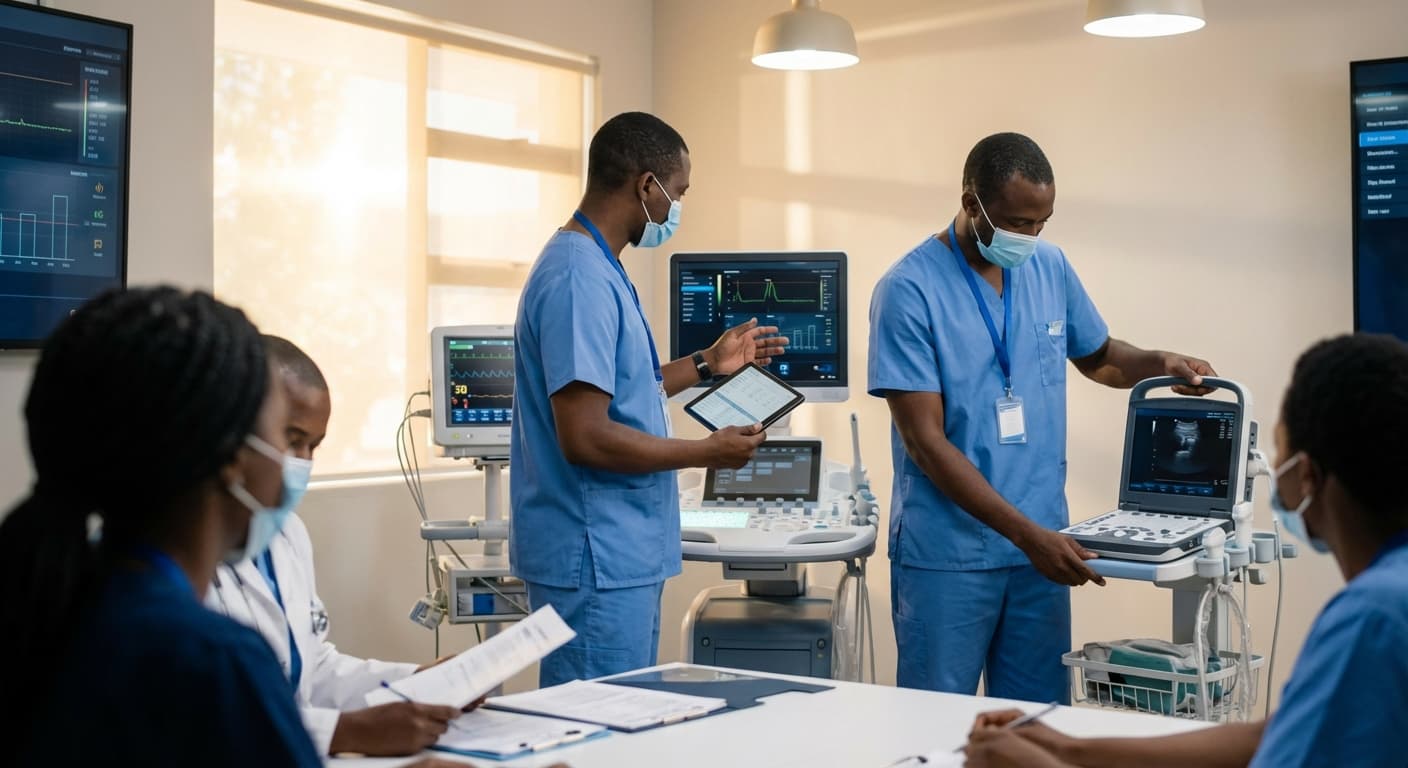
Clinical Needs Assessment for Medical Equipment in Sierra Leone
Engineering Excellence & Technical Support
Clinical Needs Assessment for Medical Equipment High-standard technical execution following OEM protocols and local regulatory frameworks.
Bridging the Gap: Equipment Availability Mapping
Leveraging geospatial data and on-the-ground surveys to create detailed maps of existing medical equipment across Sierra Leone. This visualizes not only what is present but also identifies critical 'equipment deserts' in underserved regions, informing targeted procurement and distribution strategies.
Prioritizing Impact: Needs-Based Equipment Prioritization Framework
Developing a data-driven framework that prioritizes medical equipment based on the prevalence of specific diseases, existing healthcare infrastructure capacity, and the potential for positive patient outcomes. This ensures that limited resources are allocated to the equipment that will save the most lives and improve the most health.
Ensuring Longevity: Maintenance & Training Capacity Assessment
Conducting thorough assessments of local technical capacity for equipment maintenance and repair, alongside identifying training needs for healthcare professionals in the operation and basic upkeep of new equipment. This proactive approach minimizes downtime and maximizes the lifespan of vital medical assets, promoting sustainable healthcare delivery.
What Is Clinical Needs Assessment For Medical Equipment In Sierra Leone?
A Clinical Needs Assessment for Medical Equipment in Sierra Leone is a systematic, evidence-based process designed to identify, prioritize, and quantify the medical equipment requirements of healthcare facilities and systems within the country. It involves a comprehensive evaluation of existing infrastructure, clinical services, patient demographics, disease burden, and national health priorities to ensure that available and future medical equipment directly addresses the most pressing healthcare needs. The primary objective is to optimize resource allocation, enhance clinical service delivery, improve patient outcomes, and support the development of a resilient and effective healthcare system in Sierra Leone.
| Who Needs This Service? | Typical Use Cases |
|---|---|
| Ministry of Health and Sanitation (MOHS), Sierra Leone: For strategic planning, national health sector reform, and evidence-based allocation of government healthcare budgets. | Developing a national medical equipment strategy and procurement plan. Defining essential medical equipment lists for different levels of care (primary, secondary, tertiary). Justifying budget requests for medical equipment procurement and maintenance to national and international donors. |
| International Development Partners and Donors (e.g., WHO, UNICEF, World Bank, bilateral aid agencies): To inform their funding decisions and ensure that their investments in the healthcare sector are aligned with the country's actual needs and priorities. | Assessing the impact and sustainability of proposed equipment donations or grants. Designing targeted health system strengthening projects. Verifying the effective use of previously provided funding for medical equipment. |
| Healthcare Facility Administrators and Clinicians (e.g., Hospital Directors, Chief Medical Officers, Department Heads): To advocate for specific equipment needs within their institutions and to improve the quality and scope of services offered. | Justifying the need for new diagnostic imaging equipment to improve cancer screening. Identifying essential surgical instruments required to perform life-saving procedures. Requesting upgraded laboratory equipment for more accurate disease diagnosis. |
| Biomedical Engineering Departments and Maintenance Units: To understand the current equipment landscape and to plan for the support and maintenance of both existing and new equipment. | Developing a national capacity-building plan for biomedical technicians. Forecasting spare parts and consumables requirements. Establishing robust preventative maintenance programs. |
| Non-Governmental Organizations (NGOs) and Faith-Based Organizations (FBOs) involved in healthcare delivery: To ensure their interventions are targeted and sustainable and align with national health priorities. | Planning equipment procurement for specific health programs (e.g., maternal and child health, infectious disease control). Assessing the feasibility of establishing new clinics or expanding services. |
Key Components of a Clinical Needs Assessment for Medical Equipment:
- Facility Assessment: Evaluating the current state of infrastructure, including power supply, water availability, physical space, and maintenance capabilities of existing healthcare facilities (hospitals, health centers, clinics).
- Service Delivery Gap Analysis: Identifying the range and quality of clinical services currently offered and comparing them against essential service packages and international standards. This includes assessing existing diagnostic, therapeutic, and rehabilitative capabilities.
- Equipment Inventory and Condition Assessment: Cataloging all existing medical equipment, including its type, quantity, age, operational status, maintenance history, and utilization rates. This also involves assessing the suitability of current equipment for intended clinical applications.
- Clinical Workflow and Human Resource Analysis: Understanding the current clinical pathways, patient flow, and the availability of trained personnel (doctors, nurses, technicians, biomedical engineers) to operate and maintain the equipment.
- Disease Burden and Epidemiological Data Review: Analyzing national and local epidemiological data to understand the prevalence of diseases, injury patterns, and the specific diagnostic and treatment needs they generate.
- Technology Assessment and Suitability: Evaluating the appropriateness of potential new or replacement equipment considering factors such as cost, local repair and maintenance capacity, training requirements, consumables availability, and compatibility with existing systems.
- Prioritization Framework Development: Establishing clear criteria for prioritizing equipment needs based on impact on patient mortality/morbidity, essential service provision, cost-effectiveness, and alignment with national health strategies.
- Stakeholder Consultation: Engaging with a wide range of stakeholders, including Ministry of Health officials, healthcare providers, biomedical engineers, patient advocacy groups, and international partners, to gather input and ensure buy-in.
- Budgetary and Funding Strategy: Estimating the total cost of recommended equipment, including procurement, installation, training, maintenance, and consumables, and identifying potential funding sources.
Who Needs Clinical Needs Assessment For Medical Equipment In Sierra Leone?
A robust clinical needs assessment for medical equipment in Sierra Leone is crucial for a wide range of healthcare providers and institutions. This process ensures that limited resources are allocated effectively to acquire equipment that directly addresses patient care needs, aligns with existing infrastructure, and is sustainable in the local context. Without a proper assessment, there's a significant risk of procuring outdated, unsuitable, or unmaintainable equipment, leading to wasted expenditure and unmet healthcare demands. This assessment is not a one-size-fits-all solution but rather a tailored approach that considers the specific challenges and priorities of different healthcare settings within the country.
| Target Customer/Institution | Key Departments/Units Involved | Specific Needs Considerations |
|---|---|---|
| Government Hospitals (Tertiary, Secondary, Primary) | Emergency Department, Surgery, Pediatrics, Obstetrics & Gynecology, Internal Medicine, Radiology, Intensive Care Unit (ICU), Laboratory, Pharmacy | Scalability, advanced diagnostic and therapeutic equipment, maintenance capacity, training for diverse medical staff, essential life support systems. |
| Mission Hospitals | General Medicine, Surgery, Maternity, Pediatrics, Outpatient Clinics, Basic Laboratory | Cost-effectiveness, durability, ease of use and maintenance, training for local healthcare workers, equipment for common prevalent diseases. |
| Private Healthcare Facilities | Specialty Clinics (e.g., Cardiology, Dermatology), Diagnostic Imaging, Outpatient Services, Minor Surgery | Advanced diagnostic tools, patient comfort and experience, specialized treatment modalities, efficient workflow, competitive technology adoption. |
| NGO Clinics | Primary Healthcare, Maternal and Child Health, Disease-Specific Programs (e.g., TB, Malaria, HIV) | Basic diagnostic and treatment equipment, portable and low-maintenance options, equipment for outreach programs, training for community health workers. |
| Community Health Centers | Primary Care, Basic Diagnostics, Antenatal Care, Immunization | Essential diagnostic tools (e.g., vital signs monitors, basic lab tests), equipment for safe delivery, cold chain equipment for vaccines, durable and easy-to-operate equipment. |
| Specialized Treatment Centers (e.g., Tuberculosis, Malaria, HIV/AIDS) | Diagnostic Laboratories, Treatment Rooms, Patient Monitoring Units | Specific diagnostic assays and equipment (e.g., microscopy, rapid diagnostic tests, PCR machines), specialized treatment delivery systems, patient monitoring for therapeutic efficacy. |
| Diagnostic Laboratories | Hematology, Biochemistry, Microbiology, Immunology, Molecular Diagnostics | Automated analyzers, microscopes, incubators, centrifuges, reagents, quality control equipment, specialized kits for prevalent diseases. |
| Medical Training Institutions | Anatomy Labs, Physiology Labs, Pathology Labs, Simulation Centers, Clinical Skills Training Rooms | Anatomical models, simulation mannequins, basic laboratory equipment for practical demonstrations, audio-visual aids, specialized training equipment mirroring clinical settings. |
Target Customers and Departments Requiring Clinical Needs Assessment:
- Government Hospitals (Tertiary, Secondary, Primary)
- Mission Hospitals
- Private Healthcare Facilities
- Non-Governmental Organization (NGO) Clinics
- Community Health Centers
- Specialized Treatment Centers (e.g., Tuberculosis, Malaria, HIV/AIDS)
- Diagnostic Laboratories
- Medical Training Institutions
Clinical Needs Assessment For Medical Equipment Process In Sierra Leone
This document outlines the workflow for conducting a clinical needs assessment for medical equipment in Sierra Leone, from the initial inquiry to the final execution of procurement and installation. The process is designed to ensure that essential medical equipment is identified, prioritized, and acquired in a manner that aligns with the country's healthcare priorities and resource availability. This systematic approach aims to maximize the impact of investments in medical technology and improve healthcare outcomes for the population.
| Stage | Key Activities | Responsible Parties | Deliverables | Timeline (Indicative) |
|---|---|---|---|---|
| Inquiry & Scoping | Receive and acknowledge an inquiry regarding a specific healthcare need or facility requiring medical equipment. Define the scope of the assessment, including geographical area, specific departments, or types of equipment. Initial stakeholder identification. | Ministry of Health and Sanitation (MoHS), Healthcare Facility Management, NGOs, International Partners | Scoping document, list of initial stakeholders | 1-2 weeks |
| Data Collection & Analysis | Conduct site visits, interviews with healthcare professionals, review existing equipment inventories, analyze patient demographics and disease prevalence, assess infrastructure and maintenance capacity. Gather data on current equipment status, gaps, and future needs. | Clinical Needs Assessment Team (MoHS, Technicians, Clinicians), Consultants | Needs assessment report, data on equipment gaps and priorities, infrastructure assessment report | 4-8 weeks |
| Prioritization & Recommendation | Analyze collected data to identify essential equipment based on clinical impact, cost-effectiveness, sustainability, and alignment with national health strategies. Develop a prioritized list of recommended medical equipment with technical specifications. | Clinical Needs Assessment Team, MoHS Technical Working Group | Prioritized equipment list, detailed technical specifications | 2-3 weeks |
| Validation & Approval | Present the prioritized list and recommendations to relevant stakeholders (MoHS leadership, hospital boards, funding agencies) for review, feedback, and formal approval. Ensure buy-in and consensus on the proposed equipment. | MoHS Leadership, Hospital Management, Funding Agencies, Stakeholder Consultations | Approved equipment list and specifications, formal endorsement | 2-4 weeks |
| Procurement Planning | Develop a detailed procurement plan, including budget allocation, tendering processes, vendor selection criteria, and logistical arrangements for delivery. Consider local capacity for maintenance and spare parts. | MoHS Procurement Unit, Finance Department, Project Management Team | Procurement plan, tender documents, budget breakdown | 3-6 weeks |
| Equipment Acquisition | Execute the procurement process, including advertising tenders, evaluating bids, awarding contracts, and managing the purchase and delivery of approved medical equipment. | MoHS Procurement Unit, Selected Vendors | Procured medical equipment, delivery manifests | 12-24 weeks (depending on equipment complexity and availability) |
| Installation & Training | Oversee the installation and commissioning of new equipment. Provide comprehensive training to healthcare professionals and technical staff on the operation, maintenance, and troubleshooting of the equipment. | MoHS Biomedical Engineering Department, Vendors, Training Specialists | Installed and functional equipment, trained personnel, training manuals | 4-8 weeks |
| Monitoring & Evaluation | Establish a system for ongoing monitoring of equipment utilization, performance, and maintenance. Conduct post-installation evaluations to assess impact on clinical services and patient outcomes. Plan for future replacement and upgrade needs. | MoHS Biomedical Engineering Department, Hospital Management, M&E Unit | Equipment utilization reports, performance reports, impact assessment reports, maintenance logs | Ongoing |
Workflow Stages
- Inquiry & Scoping
- Data Collection & Analysis
- Prioritization & Recommendation
- Validation & Approval
- Procurement Planning
- Equipment Acquisition
- Installation & Training
- Monitoring & Evaluation
Clinical Needs Assessment For Medical Equipment Cost In Sierra Leone
This clinical needs assessment focuses on understanding the cost of essential medical equipment in Sierra Leone. Accurate pricing is crucial for effective resource allocation, procurement strategies, and ensuring the availability of critical healthcare tools. Several factors influence the price of medical equipment within the country, including import duties and taxes, transportation and logistics, supplier markups, local market demand, currency exchange rates, and the availability of maintenance and support services. The reported price ranges in Sierra Leonean Leone (SLL) below are indicative and can vary significantly based on brand, model, new vs. refurbished status, and the specific supplier. It is vital for healthcare facilities and procurement officers to conduct detailed market research and obtain multiple quotes for any planned acquisitions.
| Medical Equipment Category | Estimated Price Range (SLL) | Notes |
|---|---|---|
| Basic Diagnostic Tools (e.g., Stethoscope, Sphygmomanometer, Thermometer) | 150,000 - 750,000 | Prices vary by brand (e.g., Littmann vs. generic). |
| Weighing Scales (Adult & Pediatric) | 200,000 - 1,000,000 | Digital scales are generally more expensive. |
| Microscopes (Basic Lab) | 1,500,000 - 5,000,000 | Binocular microscopes with basic illumination. |
| Centrifuges (Benchtop) | 2,000,000 - 7,000,000 | For basic hematology and biochemistry. |
| Autoclaves (Small/Medium Capacity) | 3,000,000 - 10,000,000 | Steam sterilizers for clinics and smaller hospitals. |
| Patient Monitors (Basic) | 5,000,000 - 15,000,000 | Monitoring vital signs like ECG, NIBP, SpO2. |
| Infusion Pumps | 4,000,000 - 12,000,000 | For precise fluid delivery. |
| Syringe Pumps | 3,500,000 - 10,000,000 | For accurate medication administration. |
| Oxygen Concentrators (Portable) | 5,000,000 - 15,000,000 | For home or clinic use. |
| Defibrillators (Manual/AED) | 8,000,000 - 25,000,000 | Public access AEDs are generally less expensive. |
| X-ray Machines (Portable/Basic Fixed) | 30,000,000 - 150,000,000+ | Significant price variation based on brand, power, and features. This is a substantial investment. |
| Ultrasound Machines (Basic Portable) | 15,000,000 - 60,000,000 | For obstetric, abdominal, and general imaging. |
| Anesthesia Machines (Basic) | 40,000,000 - 100,000,000+ | Requires skilled operators and maintenance. |
| Surgical Instruments (Basic Sets) | 500,000 - 5,000,000 | Per set; depends on specialization (e.g., general surgery, obstetrics). |
| Hospital Beds (Manual) | 800,000 - 3,000,000 | Basic manual adjustment beds. |
| Laboratory Analyzers (Semi-automated) | 10,000,000 - 50,000,000 | For hematology, biochemistry, or immunoassay. |
Key Pricing Factors for Medical Equipment in Sierra Leone
- Import Duties and Taxes: Significant levies are applied to imported goods, directly increasing the final cost.
- Transportation and Logistics: The cost of shipping, customs clearance, and local distribution within Sierra Leone adds to the price.
- Supplier Markups: Both local and international suppliers incorporate their profit margins.
- Local Market Demand: Higher demand for certain equipment can lead to inflated prices.
- Currency Exchange Rates: Fluctuations in the SLL against major international currencies (USD, EUR) impact the cost of imported equipment.
- Maintenance and Support: The availability and cost of after-sales service, spare parts, and trained technicians influence long-term affordability.
- Brand and Quality: Reputable international brands often command higher prices due to perceived reliability and performance.
- New vs. Refurbished: Refurbished equipment can offer a more budget-friendly option but may come with warranty limitations.
- Technology and Features: Advanced features and newer technologies generally increase the price.
Affordable Clinical Needs Assessment For Medical Equipment Options
Conducting a thorough clinical needs assessment for medical equipment is crucial for optimizing patient care and managing resources effectively. This assessment goes beyond simply identifying desired equipment; it involves understanding the clinical workflows, patient demographics, and the specific diagnostic and therapeutic needs of a healthcare facility. The goal is to ensure that acquired equipment is not only clinically appropriate but also aligns with budget constraints and offers long-term value. Leveraging "value bundles" and implementing strategic cost-saving measures can significantly enhance the affordability and impact of these essential investments.
| Cost-Saving Strategy | Description | Impact on Affordability |
|---|---|---|
| Value Bundles | Purchasing medical equipment as part of a package deal that often includes installation, training, maintenance, and sometimes even consumables. Manufacturers offer these bundles to encourage bulk purchases and provide a predictable cost structure. | Reduces upfront costs through negotiated package pricing, minimizes unexpected expenses, and streamlines procurement by dealing with a single vendor. Facilitates better budget forecasting. |
| Leasing vs. Purchasing | Evaluating whether leasing equipment (offering lower upfront costs and flexibility for upgrades) or purchasing (leading to ownership and potential long-term savings) is more financially advantageous based on equipment lifespan and technological obsolescence. | Leasing offers lower initial capital outlay, freeing up budget for other needs. Purchasing can be more cost-effective for equipment with a long useful life if maintenance and upgrade costs are manageable. |
| Refurbished & Pre-owned Equipment | Acquiring high-quality, certified refurbished medical equipment from reputable vendors. This option can offer significant cost savings compared to purchasing new equipment, while still meeting clinical standards. | Substantially reduces the capital expenditure, making advanced technology accessible to facilities with tighter budgets. Requires careful vendor selection and verification of quality. |
| Phased Implementation | Instead of acquiring all desired equipment at once, implement new technologies in phases based on clinical priority and budget availability. This allows for learning and adaptation before wider rollout. | Spreads the financial burden over time, making larger investments more manageable. Allows for optimization of utilization and avoids overstocking. |
| Negotiating Service Contracts | Carefully reviewing and negotiating terms, scope, and pricing of maintenance and service contracts. Consider multi-year contracts for potential discounts or bundling with equipment purchase. | Secures predictable operational costs for equipment upkeep, preventing unexpected repair expenses. Can lead to significant long-term savings if negotiated effectively. |
| Group Purchasing Organizations (GPOs) | Participating in GPOs, which leverage the collective purchasing power of multiple healthcare organizations to negotiate discounted prices on medical equipment and supplies. | Achieves economies of scale, resulting in lower prices than individual facilities could negotiate on their own. Expands access to a wider range of products at competitive rates. |
| Technology Assessment & Standardization | Conducting thorough assessments to avoid redundant or underutilized equipment. Standardizing on a few key manufacturers or models can simplify training, maintenance, and parts inventory. | Reduces overall equipment acquisition costs by eliminating unnecessary purchases. Streamlines training and maintenance, lowering operational expenses. |
Key Components of a Clinical Needs Assessment
- Clinical Workflow Analysis: Mapping existing patient journeys and identifying bottlenecks or inefficiencies that can be addressed by new technology.
- Patient Demographics & Service Demand: Understanding the current and projected patient population and the types of services required.
- Clinical Outcome Goals: Defining measurable improvements in patient outcomes that the equipment is intended to achieve.
- Interoperability Requirements: Ensuring new equipment integrates seamlessly with existing IT infrastructure and electronic health records (EHRs).
- Staff Training & Support Needs: Assessing the level of training and ongoing support required for effective equipment utilization.
- Infrastructure & Space Assessment: Verifying that existing facilities can accommodate the physical and technical requirements of new equipment.
- Maintenance & Serviceability: Evaluating the reliability, availability of spare parts, and cost of maintenance contracts.
Verified Providers In Sierra Leone
In Sierra Leone's rapidly developing healthcare landscape, identifying trusted and qualified medical professionals is paramount for ensuring quality patient care. Franance Health stands out as a beacon of reliability, meticulously vetting its network of providers to guarantee adherence to the highest standards. This commitment to verification not only builds trust with patients but also elevates the overall quality of healthcare services accessible in the region. By choosing Franance Health, individuals gain access to a curated selection of verified healthcare professionals, offering peace of mind and confidence in their medical journey.
| Credential Type | Verification Method | Franance Health Assurance |
|---|---|---|
| Medical Licenses | Verification with Sierra Leone Medical and Dental Council | Ensures providers are legally authorized to practice. |
| Educational Qualifications | Cross-referencing with recognized medical institutions | Confirms academic credentials and areas of study. |
| Professional Certifications | Validation with relevant professional bodies and boards | Guarantees specialization and advanced training. |
| Clinical Experience | Reference checks and peer reviews | Assesses practical skills and patient care history. |
| Ethical Conduct | Background checks and adherence to professional codes of conduct | Promotes integrity and trustworthy healthcare delivery. |
Why Franance Health Providers are the Best Choice in Sierra Leone:
- Rigorous Credentialing Process: Franance Health employs a multi-stage vetting system that scrutinizes medical licenses, educational backgrounds, certifications, and professional references.
- Commitment to Excellence: We partner with healthcare providers who demonstrate a consistent dedication to patient well-being, ethical practices, and continuous professional development.
- Specialized Expertise: Our network encompasses a diverse range of medical specialties, ensuring access to highly skilled professionals for a variety of healthcare needs.
- Patient-Centric Approach: Verified Franance Health providers are known for their empathetic communication, personalized treatment plans, and focus on patient comfort and understanding.
- Accessibility and Convenience: Through our platform, patients can easily find and connect with verified healthcare professionals across Sierra Leone, streamlining the process of seeking medical attention.
- Upholding International Standards: Franance Health ensures its providers meet or exceed recognized national and international healthcare benchmarks.
Scope Of Work For Clinical Needs Assessment For Medical Equipment
This Scope of Work (SOW) outlines the requirements for conducting a comprehensive clinical needs assessment for medical equipment. The objective is to identify, evaluate, and prioritize medical equipment necessary to meet current and future clinical demands, ensuring optimal patient care, operational efficiency, and adherence to regulatory standards. This SOW details the technical deliverables and standard specifications expected from the assessment.
| Category | Standard Specification Requirement | Description | Verification Method |
|---|---|---|---|
| Clinical Performance | Demonstrated efficacy and safety | Equipment must meet or exceed established clinical performance standards for its intended use. Evidence of clinical validation, peer-reviewed studies, and regulatory approvals (e.g., FDA, CE Mark) is required. | Review of manufacturer documentation, independent clinical studies, regulatory submission records. |
| Safety and Compliance | Adherence to international and national safety standards | Equipment must comply with relevant safety standards (e.g., IEC 60601 series for medical electrical equipment) and local regulations. This includes electrical safety, biocompatibility, and radiation safety where applicable. | Certification marks, manufacturer test reports, site inspections. |
| Usability and Ergonomics | Intuitive user interface and ergonomic design | Equipment should be easy to operate by trained clinical staff with minimal training time. User interface should be clear, intuitive, and responsive. Ergonomic design to minimize user fatigue and risk of injury. | User feedback during trials, ergonomic assessments, review of user manuals. |
| Interoperability and Connectivity | Seamless integration with existing systems | Equipment must be capable of seamless integration with existing hospital IT infrastructure, including Electronic Health Records (EHR), Picture Archiving and Communication Systems (PACS), Laboratory Information Systems (LIS), and other relevant systems. Support for standard protocols (e.g., HL7, DICOM) is essential. | Technical specifications review, compatibility testing, site integration plan. |
| Reliability and Durability | High mean time between failures (MTBF) and robust construction | Equipment should be reliable, with a high MTBF and designed for the intended clinical environment. Robust construction to withstand frequent use and cleaning protocols. | Manufacturer's reliability data, warranty terms, service history of similar equipment. |
| Maintainability and Serviceability | Ease of maintenance and availability of service | Equipment should be designed for easy maintenance and repair. Availability of qualified service technicians, spare parts, and comprehensive service manuals is crucial. Consider vendor support response times and service level agreements (SLAs). | Review of service contracts, availability of spare parts, vendor support information, technician training requirements. |
| Total Cost of Ownership (TCO) | Consideration of acquisition, operation, and maintenance costs | The assessment must consider not only the initial acquisition cost but also the ongoing operational costs (consumables, power consumption) and maintenance costs over the expected lifespan of the equipment. | Life cycle cost analysis, review of consumables, energy efficiency ratings, projected service costs. |
| Scalability and Future-Proofing | Adaptability to future needs and technological advancements | Equipment should have a degree of scalability or upgradability to accommodate future clinical demands or technological advancements, where feasible, to extend its useful life. | Manufacturer's upgrade paths, modular design, flexibility for future software updates. |
| Environmental Impact | Energy efficiency and waste reduction | Consideration of energy efficiency to reduce operational costs and environmental footprint. Also, consideration for disposal and recycling of end-of-life equipment. | Energy Star ratings, disposal/recycling policies of manufacturer, material composition. |
Key Activities and Deliverables
- Phase 1: Planning and Data Collection
- Objective: To establish the framework for the needs assessment and gather foundational data.
- Activities:
- Define the scope of departments and clinical areas to be assessed.- Identify key stakeholders (clinicians, administrators, IT, biomedical engineering, procurement).- Develop assessment tools (questionnaires, interview guides, site visit checklists).- Collect data on existing equipment (inventory, age, maintenance history, utilization).- Gather data on current clinical workflows, patient demographics, and service lines.- Research current and emerging medical technologies and best practices.- Deliverables:
- Project plan with timeline and resource allocation.- Stakeholder engagement plan.- Data collection templates (questionnaires, interview guides).- Initial inventory of existing medical equipment.- Report on current clinical workflows and service line demands.- Phase 2: Needs Analysis and Gap Identification
- Objective: To analyze collected data and identify current and future equipment needs and gaps.
- Activities:
- Analyze existing equipment performance and suitability for current needs.- Evaluate equipment utilization rates and identify under/over-utilization.- Assess the impact of technological advancements and changing clinical practices.- Identify gaps in current equipment provision relative to clinical service requirements.- Project future equipment needs based on strategic growth, new services, and patient volume projections.- Identify potential risks associated with outdated or insufficient equipment.- Deliverables:
- Detailed analysis of existing equipment's performance and suitability.- Report on equipment utilization and identified inefficiencies.- Gap analysis report identifying discrepancies between current equipment and clinical needs.- Forecast of future medical equipment requirements (short, medium, and long term).- Phase 3: Prioritization and Recommendation
- Objective: To prioritize identified needs and develop actionable recommendations for equipment acquisition.
- Activities:
- Develop a prioritization matrix based on clinical impact, patient safety, cost-effectiveness, regulatory compliance, and strategic alignment.- Define criteria for new equipment (e.g., clinical efficacy, safety features, interoperability, ease of use, maintenance requirements, total cost of ownership).- Research potential equipment solutions and technologies.- Develop preliminary cost estimates for prioritized equipment.- Formulate recommendations for equipment procurement, upgrades, or replacement.- Consider integration with existing IT infrastructure (EHR, PACS, etc.).- Deliverables:
- Prioritized list of medical equipment needs with justification.- Recommended technical specifications for prioritized equipment.- Preliminary cost estimates and ROI analysis for key equipment.- Recommendations for procurement strategy and phasing.- Phase 4: Reporting and Validation
- Objective: To consolidate findings and recommendations into a comprehensive report and validate with stakeholders.
- Activities:
- Compile all findings and recommendations into a final report.- Conduct validation sessions with stakeholders to review and refine recommendations.- Develop an executive summary for senior management.- Present the final report and recommendations.- Deliverables:
- Comprehensive Clinical Needs Assessment Report, including all phases' findings.- Executive Summary for decision-makers.- Presentation slides for stakeholder review and approval.
Service Level Agreement For Clinical Needs Assessment For Medical Equipment
This Service Level Agreement (SLA) outlines the performance standards for the Clinical Needs Assessment service provided by [Provider Name] for medical equipment. It defines the expected response times for service requests and the guaranteed uptime for the assessment platform and related services.
| Service Component | Priority Level | Response Time Target | Uptime Guarantee |
|---|---|---|---|
| Initial acknowledgement of Service Request for Clinical Needs Assessment | High (Urgent Clinical Impact) | 1 Business Hour | N/A |
| Initial acknowledgement of Service Request for Clinical Needs Assessment | Medium (Standard Clinical Need) | 4 Business Hours | N/A |
| Initial acknowledgement of Service Request for Clinical Needs Assessment | Low (Future Planning/Consultation) | 8 Business Hours | N/A |
| Clinical Needs Assessment Platform Access | All | N/A | 99.5% (excluding Scheduled Maintenance) |
| Data Storage and Retrieval for Assessments | All | N/A | 99.5% (excluding Scheduled Maintenance) |
| Support for Assessment Tool Functionality | High (Critical Functionality Impaired) | 2 Business Hours | N/A |
| Support for Assessment Tool Functionality | Medium (Non-Critical Functionality Impaired) | 6 Business Hours | N/A |
Key Definitions
- Clinical Needs Assessment: The process of evaluating the clinical requirements for specific medical equipment, including functional specifications, workflow integration, and user interface considerations.
- Service Request: A formal request submitted by [Client Name] to [Provider Name] for a Clinical Needs Assessment, typically initiated via the designated portal or communication channel.
- Response Time: The maximum time allowed for [Provider Name] to acknowledge and begin addressing a Service Request.
- Uptime: The percentage of time the Clinical Needs Assessment platform and associated services are available and operational for use by [Client Name].
- Downtime: The percentage of time the Clinical Needs Assessment platform and associated services are unavailable or non-operational.
- Scheduled Maintenance: Pre-announced periods of downtime for system updates, upgrades, or routine maintenance, communicated to [Client Name] with advance notice.
- Force Majeure: Events beyond the reasonable control of [Provider Name] that prevent the fulfillment of this SLA, including but not limited to natural disasters, acts of war, or widespread network failures.
Frequently Asked Questions

Ready when you are
Let's scope your Clinical Needs Assessment for Medical Equipment in Sierra Leone project in Sierra Leone.

Scaling healthcare logistics and technical systems across the entire continent.