
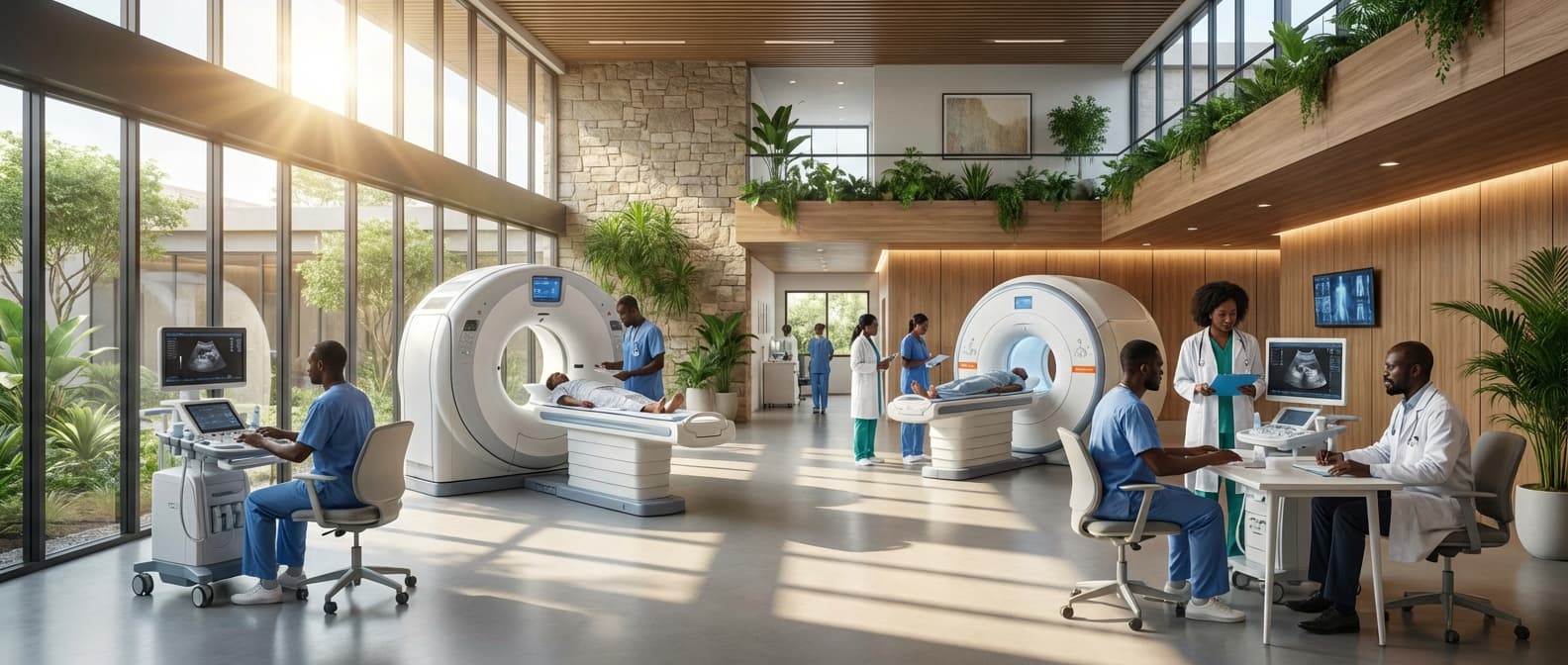
Diagnostic Imaging in Sierra Leone
Engineering Excellence & Technical Support
High-resolution imaging systems including CT scanners, MRI, X-ray, and ultrasound technology for accurate clinical diagnosis. High-standard technical execution following OEM protocols and local regulatory frameworks.
Mobile X-ray Units for Remote Access
Deployment of portable, battery-powered X-ray units to rural and underserved areas, enabling basic diagnostic imaging capabilities where fixed facilities are inaccessible. This significantly reduces travel time and costs for patients seeking essential diagnoses, particularly for common fractures and chest ailments.
Ultrasound Training and Equipment for Maternal Health
Providing specialized training for healthcare professionals in obstetric and gynecological ultrasound, coupled with the distribution of high-quality portable ultrasound machines. This empowers local clinics to perform crucial prenatal screenings, identify high-risk pregnancies, and improve maternal and infant health outcomes.
Digital Pathology Slide Scanners for Centralized Analysis
Implementation of digital slide scanners in regional health centers, allowing for the digitization and remote transmission of pathology slides. This enables expert pathologists in central locations to review and diagnose complex cases, improving turnaround times and ensuring consistent, high-quality diagnostic support across the country.
What Is Diagnostic Imaging In Sierra Leone?
Diagnostic imaging in Sierra Leone refers to the utilization of medical imaging technologies to visualize the internal structures of the human body for the purpose of diagnosis, monitoring, and treatment guidance. These non-invasive or minimally invasive procedures generate detailed anatomical and physiological information, aiding clinicians in identifying abnormalities, determining the extent of disease, and evaluating treatment efficacy. The service is essential across various medical specialties, playing a crucial role in modern healthcare delivery within the Sierra Leonean context, despite potential limitations in access and infrastructure.
| Service Component | Description | Key Stakeholders | Challenges in Sierra Leone |
|---|---|---|---|
| Image Acquisition | The process of using imaging equipment (e.g., X-ray machine, ultrasound transducer) to capture images of internal body structures. | Radiographers, Sonographers, Technicians | Limited availability of equipment, maintenance issues, power supply instability, lack of trained personnel. |
| Image Interpretation | The analysis of acquired images by a medical professional (typically a radiologist) to identify abnormalities and formulate a diagnosis. | Radiologists, Physicians | Severe shortage of radiologists, reliance on general practitioners for interpretation in some cases, geographical disparity in access to specialists. |
| Report Generation | The documented findings of the image interpretation, communicated to the referring clinician. | Radiologists, Clerical Staff | Delays in reporting, potential for loss of physical reports, limited digital reporting capabilities. |
| Equipment Maintenance and Support | Ensuring imaging equipment is functional, calibrated, and repaired as needed. | Biomedical Engineers, Technicians, Manufacturers/Suppliers | Lack of local expertise for advanced repairs, difficulty in sourcing spare parts, high cost of maintenance contracts. |
| Training and Capacity Building | Educating and upskilling healthcare professionals in the operation, maintenance, and interpretation of diagnostic imaging equipment. | Training Institutions, Senior Clinicians, International Organizations | Limited local training programs, brain drain of skilled professionals, insufficient funding for continuous education. |
Diagnostic Imaging in Sierra Leone: Key Aspects
- Definition: The application of imaging technologies (e.g., X-ray, ultrasound, CT) to create internal body views for medical diagnosis and management.
- Scope of Involvement: Encompasses image acquisition, interpretation by qualified radiologists or trained medical professionals, and integration of findings into patient care pathways.
- Beneficiaries: Patients presenting with a wide range of medical conditions, requiring detailed internal visualization for accurate diagnosis and treatment planning.
- Primary Modalities: While access varies, common modalities include X-ray radiography and diagnostic ultrasound. Advanced modalities like CT and MRI may be available in select tertiary care facilities or through specialized outreach programs.
- Infrastructure and Accessibility: Services are predominantly concentrated in urban centers and larger hospitals, with limited availability in rural and remote areas, impacting equitable access.
- Human Resources: Relies on the availability of trained radiographers, sonographers, radiologists, and supporting technical staff, which can be a significant challenge.
- Technological Limitations: The age and maintenance status of equipment, as well as the availability of consumables and spare parts, can affect service delivery.
- Data Management: Challenges exist in digital archiving, Picture Archiving and Communication Systems (PACS), and secure data transmission, often relying on analog methods or manual record-keeping.
- Cost and Funding: The cost of equipment, maintenance, and specialized personnel can be a barrier, necessitating reliance on government funding, donor support, and patient fees.
- Integration with Public Health: Diagnostic imaging plays a role in public health initiatives, such as screening programs and outbreak investigations.
Who Needs Diagnostic Imaging In Sierra Leone?
Diagnostic imaging plays a crucial role in modern healthcare, enabling the early and accurate diagnosis of a wide range of conditions. In Sierra Leone, where healthcare resources can be stretched, understanding who needs these services and where they are best utilized is paramount for effective resource allocation and improved patient outcomes. This analysis focuses on identifying key target customer groups and the departments within healthcare facilities that would benefit most from accessible and functional diagnostic imaging services.
| Department/Unit | Primary Imaging Modalities Needed | Key Diagnostic Applications |
|---|---|---|
| Emergency Department | X-ray, Ultrasound, CT Scan | Trauma assessment (fractures, internal bleeding), acute abdominal conditions (appendicitis, obstruction), head injuries, chest pain (pneumonia, pneumothorax). |
| Surgical Wards (General Surgery, Orthopedics, etc.) | X-ray, Ultrasound, CT Scan | Pre-operative planning, post-operative assessment, fracture management, diagnosis of surgical emergencies. |
| Internal Medicine/General Wards | X-ray, Ultrasound | Diagnosis of pneumonia, tuberculosis, fluid collections, urinary tract issues, gastrointestinal problems. |
| Maternal and Child Health (MCH) Clinics / Obstetrics & Gynecology | Ultrasound | Antenatal care, monitoring fetal growth, identifying pregnancy complications, gynecological assessments. |
| Pediatrics | X-ray, Ultrasound | Diagnosis of childhood fractures, abdominal pain, respiratory infections, congenital abnormalities. |
| Outpatient Clinics (General Practice) | X-ray (referral based) | Initial assessment of musculoskeletal pain, suspected respiratory issues, leading to further specialist referral if imaging is indicated. |
Target Customers for Diagnostic Imaging in Sierra Leone
- {"title":"Patients with Suspected Fractures or Trauma","description":"Individuals presenting with injuries, pain, or deformities suggestive of bone fractures, dislocations, or internal injuries, particularly those from accidents, falls, or assaults. X-rays are essential for diagnosis and treatment planning."}
- {"title":"Patients with Respiratory Illnesses","description":"Individuals experiencing symptoms like persistent cough, shortness of breath, chest pain, or fever, which could indicate pneumonia, tuberculosis, lung cancer, or other pulmonary conditions. Chest X-rays and CT scans are vital for diagnosis."}
- {"title":"Patients with Abdominal Pain or Symptoms","description":"Individuals presenting with acute or chronic abdominal pain, bloating, nausea, vomiting, or changes in bowel habits. Ultrasound and CT scans are crucial for diagnosing conditions like appendicitis, gallstones, kidney stones, intestinal obstructions, and tumors."}
- {"title":"Patients with Neurological Symptoms","description":"Individuals experiencing headaches, seizures, weakness, numbness, or vision changes that may point to stroke, brain tumors, or other central nervous system issues. CT scans and MRIs (if available) are critical for diagnosis and management."}
- {"title":"Pregnant Women with Complications","description":"Women experiencing high-risk pregnancies, bleeding, or other concerns requiring monitoring of fetal development, placental position, or potential complications. Ultrasound is a primary imaging modality."}
- {"title":"Patients Undergoing Surgical Procedures","description":"Individuals requiring pre-operative assessment to identify anatomical structures, guide surgical approaches, or confirm the extent of a disease. Post-operative imaging may be needed to assess surgical outcomes or complications."}
- {"title":"Patients with Suspected Infections (Deep-Seated)","description":"Individuals with infections that may not be readily apparent on physical examination, such as abscesses in soft tissues, organs, or bones. Ultrasound, CT, and X-rays can help locate and characterize these infections."}
- {"title":"Patients Requiring Follow-up Care and Monitoring","description":"Individuals with chronic conditions (e.g., cancer, heart disease) or those recovering from surgery or serious illness who need regular imaging to track disease progression, treatment effectiveness, or identify recurrence."}
Diagnostic Imaging Process In Sierra Leone
Diagnostic imaging in Sierra Leone, while facing resource constraints, follows a general workflow aimed at providing essential diagnostic information for patient care. This process typically begins with a clinical inquiry from a healthcare provider and culminates in the interpretation and reporting of imaging findings. The exact steps and their efficiency can vary significantly based on the availability of equipment, trained personnel, and infrastructure at different healthcare facilities across the country.
| Step | Description | Key Actors Involved | Challenges/Considerations |
|---|---|---|---|
| A healthcare provider (doctor, nurse practitioner) suspects a condition requiring diagnostic imaging based on patient symptoms and clinical examination. | Clinician (Doctor, Nurse Practitioner) | Accurate clinical history is crucial for appropriate imaging selection. Limited access to specialists for initial consultation can be a challenge. |
| The clinician completes an imaging request form detailing the clinical indication and specific imaging modality needed (e.g., X-ray, Ultrasound). The patient is then scheduled for the procedure. | Clinician, Radiology Department Staff/Technician | Availability of specific imaging modalities can be limited. Scheduling can be challenging due to high patient volumes and limited operating hours for equipment. |
| Depending on the imaging modality, the patient may need specific preparations, such as fasting (for CT/MRI if available), avoiding certain clothing, or having contrast agents administered (less common due to cost and availability). | Radiology Technician/Nurse, Patient | Patient education on preparation can be inconsistent. Availability and cost of contrast agents are significant barriers. |
| A trained radiographer or technician operates the imaging equipment to capture the necessary images of the patient's body part of interest. | Radiographer/Radiology Technician | Maintenance and functionality of imaging equipment are critical. Shortage of trained radiographers is a major hurdle. Power outages can disrupt procedures. |
| Analog images (X-rays) are developed, or digital images are processed. Images are then typically stored either physically (films) or digitally (PACS if available). | Radiographer/Radiology Technician, Radiology Department Staff | Lack of digital infrastructure (PACS) leads to reliance on physical films, which can be lost or degrade. Maintaining digital storage and backups is challenging. |
| A radiologist reviews the acquired images to identify any abnormalities, diagnose conditions, and assess their severity. | Radiologist | Severe shortage of qualified radiologists. Many imaging studies may be interpreted by general practitioners or referred to specialists abroad, leading to delays. |
| The radiologist dictates or writes a detailed report of their findings, which is then provided to the referring clinician. | Radiologist, Medical Secretary (if available), Courier (for physical reports) | Timely generation and delivery of reports are crucial. Challenges include communication breakdowns, transcription errors, and physical delivery logistics. |
| The referring clinician uses the imaging report in conjunction with other clinical information to make a definitive diagnosis and plan appropriate patient treatment or management. | Clinician | Effective integration of imaging findings into overall patient care. The capacity of the healthcare system to act on the diagnostic information is paramount. |
Diagnostic Imaging Workflow in Sierra Leone
- Patient Referral and Inquiry
- Imaging Request and Scheduling
- Patient Preparation
- Image Acquisition
- Image Processing and Storage
- Radiologist Interpretation
- Report Generation and Dissemination
- Follow-up and Treatment Planning
Diagnostic Imaging Cost In Sierra Leone
Diagnostic imaging plays a crucial role in modern healthcare, enabling accurate diagnosis and guiding treatment. In Sierra Leone, the cost of these essential services can vary significantly due to several factors. Understanding these pricing dynamics is vital for patients, healthcare providers, and policymakers. The availability of advanced technology, the location of the facility, the expertise of the radiologist, and the specific type of imaging required all contribute to the final price. Public healthcare facilities generally offer lower prices or are subsidized, while private institutions, which often boast newer equipment and more specialized services, tend to be more expensive. The scarcity of certain specialized imaging modalities can also drive up costs in areas where they are less common. Furthermore, the cost of imported equipment, maintenance, and skilled personnel all feed into the overall pricing structure. While a comprehensive, up-to-the-minute price list is difficult to maintain due to fluctuations, this overview provides insight into the general cost landscape of diagnostic imaging in Sierra Leone.
| Imaging Modality | Estimated Price Range (Sierra Leonean Leone - SLL) | Notes |
|---|---|---|
| X-ray (e.g., Chest X-ray, Limb X-ray) | 50,000 - 200,000 | Most common and generally affordable. Prices can vary slightly between public and private facilities. |
| Ultrasound (e.g., Abdominal, Pelvic, Obstetric) | 100,000 - 300,000 | Widely available. Prices are influenced by the number of areas scanned and the complexity of the examination. |
| CT Scan (Computed Tomography) | 400,000 - 1,500,000+ | More expensive due to specialized equipment. Prices can increase significantly with contrast agents or specific protocols. |
| MRI Scan (Magnetic Resonance Imaging) | 800,000 - 3,000,000+ | Typically the most expensive modality. Limited availability, particularly outside major cities. Prices are highly dependent on the body part scanned and the use of contrast. |
Key Factors Influencing Diagnostic Imaging Costs in Sierra Leone
- Facility Type (Public vs. Private)
- Geographic Location (Urban vs. Rural)
- Type of Imaging Modality (X-ray, Ultrasound, CT, MRI)
- Complexity and Scope of the Scan
- Radiologist's Expertise and Specialization
- Availability of Advanced Technology and Equipment
- Maintenance and Operational Costs of Equipment
- Import Costs of Equipment and Supplies
- Personnel Training and Salaries
- Government Subsidies or Insurance Coverage (if applicable)
Affordable Diagnostic Imaging Options
Diagnostic imaging plays a crucial role in healthcare, but the costs can be a significant concern for many. Fortunately, there are several ways to access affordable diagnostic imaging without compromising the quality of care. Understanding value bundles and employing smart cost-saving strategies can make a substantial difference.
| Strategy | Description | How it Saves Money |
|---|---|---|
| Shop Around and Compare Prices | Don't assume all imaging centers or hospitals charge the same. Prices for the same procedure can vary significantly based on location and provider. | Obtain price quotes from multiple facilities for your specific imaging needs. Even a small difference per scan can add up. |
| Utilize Free Imaging Comparison Tools | Many insurance companies and independent websites offer tools that allow you to compare prices for diagnostic imaging services in your area. These tools can be invaluable for finding the most affordable options. | These tools leverage aggregated pricing data to help you identify lower-cost providers. |
| Inquire About Cash Discounts | If you are paying out-of-pocket or have a high deductible, some imaging centers offer discounted prices for patients who pay in full at the time of service. | This can lead to significant savings compared to paying through insurance with deductibles and co-pays. |
| Ask About Generic or Alternative Imaging Options | In some cases, a less expensive imaging modality might be sufficient for diagnosis. Discuss with your doctor if there are alternative, more cost-effective imaging options that could achieve the same diagnostic outcome. | Avoiding more advanced or specialized imaging when it's not medically necessary. |
| Check Your Insurance Coverage Carefully | Understand your insurance plan's benefits, deductibles, co-pays, and co-insurance for diagnostic imaging. Also, be aware of in-network versus out-of-network provider costs. | Ensures you are using in-network providers and understand your financial responsibility, preventing unexpected bills. |
| Explore Independent Imaging Centers | Independent imaging centers are often less expensive than hospital-based facilities for the same services, as they typically have lower overhead costs. | These centers can offer competitive pricing while maintaining high-quality imaging technology and board-certified radiologists. |
| Consider Imaging Centers Focused on Value | Some imaging centers are specifically focused on providing high-quality, affordable diagnostic imaging. Look for facilities that are transparent about their pricing and offer bundled services. | These centers often have streamlined operations and prioritize cost-effectiveness for patients. |
| Discuss Your Financial Concerns with Your Provider | Don't hesitate to have an open conversation with your doctor and the imaging facility about your financial concerns. They may be able to suggest the most cost-effective imaging plan or connect you with financial assistance programs. | Providers may be able to order the most appropriate and affordable test, and facilities may offer payment plans or have financial aid options. |
Understanding Value Bundles and Cost-Saving Strategies for Affordable Diagnostic Imaging
- {"title":"What are Value Bundles in Diagnostic Imaging?","description":"Value bundles are pre-negotiated packages of diagnostic imaging services offered by healthcare providers or insurance companies. These bundles often group related imaging tests together or offer a discounted price for a set of procedures that are commonly performed in conjunction with each other. The goal is to provide transparency in pricing and encourage the use of cost-effective care pathways."}
- {"title":"Benefits of Value Bundles:","description":"Value bundles can lead to predictable costs, potentially lower out-of-pocket expenses, and encourage coordination of care among different imaging specialists."}
- {"title":"Cost-Saving Strategies to Consider:","description":"Beyond value bundles, several proactive strategies can help reduce the cost of diagnostic imaging:"}
Verified Providers In Sierra Leone
In Sierra Leone's evolving healthcare landscape, identifying reliable and credentialed healthcare providers is paramount for ensuring quality care. Franance Health stands out as a leading organization with a robust commitment to verifiable credentials, making them a superior choice for individuals and organizations seeking trusted medical services. This document outlines the significance of verified providers and highlights why Franance Health's stringent credentialing processes and commitment to excellence position them as the best choice in Sierra Leone.
| Franance Health Credentialing Pillars | Description | Benefit to Patients |
|---|---|---|
| Licensure Verification | Confirmation of active and valid medical licenses with relevant regulatory bodies in Sierra Leone and internationally. | Ensures providers are legally authorized to practice medicine. |
| Educational and Training Validation | Thorough review of degrees, diplomas, and residency/fellowship completion certificates from accredited institutions. | Guarantees that providers have received foundational and specialized medical education. |
| Professional Certification Review | Verification of specialized certifications and accreditations from recognized professional organizations and boards. | Confirms expertise in specific medical fields and adherence to professional standards. |
| Background Checks and Reference Checks | Comprehensive assessment of professional history, ethical conduct, and peer reviews. | Ensures providers have a strong track record and are of good character. |
| Continuous Professional Development (CPD) Monitoring | Tracking of ongoing education, workshops, and conferences attended by providers. | Ensures providers remain current with the latest medical knowledge and techniques. |
| Sanction and Disciplinary Action Screening | Checks against any disciplinary actions or sanctions by medical boards or regulatory agencies. | Protects patients from practitioners with a history of malpractice or misconduct. |
Why Franance Health is the Best Choice for Verified Providers in Sierra Leone
- Rigorous Verification Process: Franance Health employs a comprehensive and multi-layered credentialing process that goes beyond basic checks. This includes verifying medical licenses, educational qualifications, professional certifications, and any relevant board accreditations.
- Commitment to Continuous Professional Development: We ensure that our affiliated providers are actively engaged in ongoing training and education, keeping them abreast of the latest medical advancements, best practices, and technological innovations.
- Patient-Centric Approach: Franance Health prioritizes patient safety and well-being. Our verification ensures that providers adhere to ethical standards and are dedicated to delivering compassionate and effective care.
- Transparency and Accountability: We maintain a transparent system where patients and stakeholders can have confidence in the qualifications of our healthcare professionals. Franance Health fosters an environment of accountability, ensuring that providers meet and exceed expected standards.
- Holistic Healthcare Network: Our network encompasses a diverse range of specialists and general practitioners, all meticulously vetted. This allows us to offer a comprehensive suite of healthcare services, meeting a wide spectrum of medical needs.
- Empowering Patients with Information: By choosing Franance Health, individuals gain access to a network of providers they can trust. This empowers patients to make informed decisions about their healthcare, knowing they are receiving care from qualified professionals.
- Alignment with International Healthcare Standards: Franance Health's credentialing protocols are designed to align with recognized international healthcare standards, ensuring a high level of medical expertise and service delivery.
- Dedicated to Improving Healthcare Access and Quality: Our mission is to elevate the standard of healthcare in Sierra Leone. By focusing on verified providers, we contribute to building a more robust and reliable healthcare system for all.
Scope Of Work For Diagnostic Imaging
This Scope of Work (SOW) outlines the requirements for providing comprehensive diagnostic imaging services, including technical deliverables and standard specifications. The objective is to ensure high-quality, timely, and accurate imaging interpretations to support patient care and clinical decision-making.
| Service Area | Technical Deliverables | Standard Specifications | Reporting Timeline |
|---|---|---|---|
| Radiology | Digital X-ray images (DICOM format), Fluoroscopic recordings | Minimum 300 dpi resolution, PACS integration, adherence to ALARA principles, standard anatomical views | Routine: within 24 hours; STAT: within 1 hour |
| Computed Tomography (CT) | Axial, sagittal, and coronal reformatted images, Multiplanar reconstructions (MPR), 3D reconstructions (optional, upon request) | Slice thickness as per clinical protocol (e.g., <1mm for specific studies), DICOM format, PACS integration, contrast protocols adherence | Routine: within 24 hours; STAT: within 1 hour |
| Magnetic Resonance Imaging (MRI) | Multi-sequence image sets, specialized sequences (e.g., diffusion, perfusion), post-processing if required | Optimal signal-to-noise ratio (SNR), minimal artifacts, DICOM format, PACS integration, adherence to safety guidelines | Routine: within 24-48 hours; STAT: within 2-4 hours |
| Ultrasound | Static images, cine clips, Doppler studies | High-resolution imaging, accurate measurements, color Doppler capabilities, DICOM format (where applicable), PACS integration | Routine: within 24 hours; STAT: within 2 hours |
| Nuclear Medicine | 2D and 3D SPECT/PET images, quantitative analysis reports | Appropriate radiopharmaceutical administration, scan time optimization, image reconstruction protocols, DICOM format, PACS integration | Routine: within 24-48 hours; STAT: within 4-8 hours |
| Mammography | Full-field digital mammography (FFDM) images, tomosynthesis images | High resolution, CAD (Computer-Aided Detection) integration, DICOM format, PACS integration, adherence to MQSA standards | Routine: within 48 hours; STAT: within 12 hours |
| Interventional Radiology | Pre- and post-procedure images, procedural documentation images | Real-time imaging quality, adequate contrast enhancement, DICOM format, PACS integration | As per procedure completion and clinical urgency |
Key Service Areas
- Radiology (X-ray, Fluoroscopy)
- Computed Tomography (CT)
- Magnetic Resonance Imaging (MRI)
- Ultrasound (Diagnostic and Interventional)
- Nuclear Medicine (including PET/CT)
- Mammography
- Interventional Radiology Procedures
Service Level Agreement For Diagnostic Imaging
This Service Level Agreement (SLA) outlines the performance standards and commitments for Diagnostic Imaging services provided by [Provider Name] to [Client Name]. It covers key metrics such as response times for critical requests and system uptime guarantees, ensuring efficient and reliable access to imaging services.
| Metric | Service Level Objective (SLO) | Measurement Period | Remedy/Penalty |
|---|---|---|---|
| System Uptime | 99.5% | Monthly | 10% service credit for every 0.5% decrease below 99.5% uptime. |
| Critical Imaging Request Initiation | Within 30 minutes of request receipt | Daily | Acknowledgement of delay and expedited processing. For repeated failures, a performance review meeting will be scheduled. |
| Critical Imaging Report Availability | Within 2 hours of study completion | Daily | Notification of delay and priority reporting. For repeated failures, a performance review meeting will be scheduled. |
| Routine Imaging Request Initiation | Within 60 minutes of request receipt | Daily | Acknowledgement of delay and expedited processing. |
| Routine Imaging Report Availability | Within 24 hours of study completion | Daily | Notification of delay and priority reporting. |
| System Incident Acknowledgement | Within 15 minutes for Critical Incidents, 60 minutes for High Incidents | Real-time | Service credit of $50 per critical incident not acknowledged within the specified time, capped at $500 per month. $25 per high incident, capped at $250 per month. |
| System Issue Resolution (Critical) | Within 4 business hours | Real-time | Service credit of $100 per critical incident not resolved within the specified time, capped at $1000 per month. |
| System Issue Resolution (High) | Within 12 business hours | Real-time | Service credit of $50 per high incident not resolved within the specified time, capped at $500 per month. |
Key Performance Indicators (KPIs)
- Uptime Guarantee: The diagnostic imaging system shall be available and operational for at least 99.5% of scheduled operating hours.
- Response Time for Critical Imaging Requests: Urgent imaging requests will be initiated and reported on within a specified timeframe.
- Response Time for Routine Imaging Requests: Standard imaging requests will be initiated and reported on within a specified timeframe.
- System Availability: Refers to the percentage of time the diagnostic imaging system is accessible and functional for users.
- Incident Response Time: The time taken by the provider to acknowledge and begin working on a reported system issue.
- Issue Resolution Time: The time taken to resolve a reported system issue, categorized by severity.
Frequently Asked Questions

Ready when you are
Let's scope your Diagnostic Imaging in Sierra Leone project in Sierra Leone.

Scaling healthcare logistics and technical systems across the entire continent.