
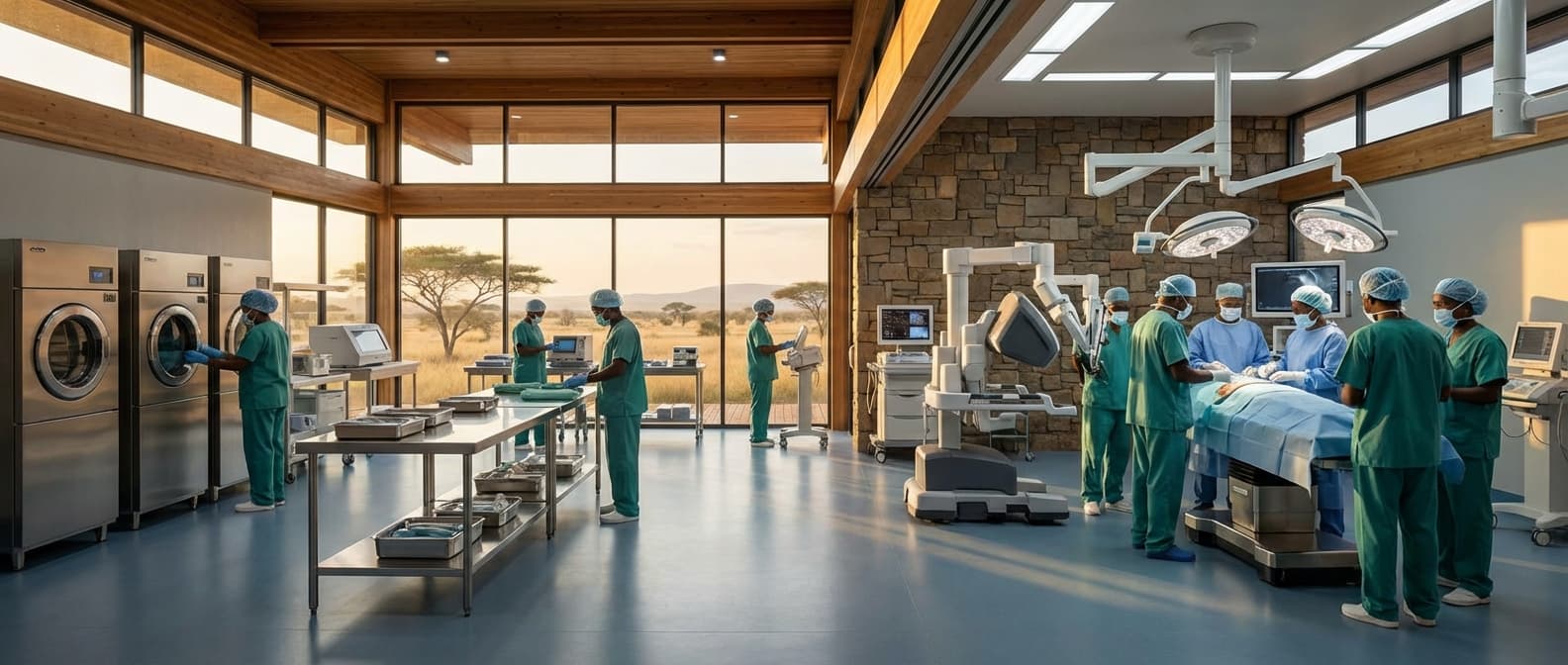
CSSD Design & Validation in Sierra Leone
Engineering Excellence & Technical Support
CSSD workflow design, validation and process development High-standard technical execution following OEM protocols and local regulatory frameworks.
Sterilization Validation Expertise
Leveraging advanced analytical techniques and regulatory knowledge to rigorously validate sterilization processes (e.g., autoclaving, ethylene oxide) for medical devices and instruments, ensuring patient safety and compliance with international standards in Sierra Leone's healthcare facilities.
CSSD Facility Design & Optimization
Designing and re-engineering Central Sterile Supply Department (CSSD) layouts and workflows to meet the unique challenges of Sierra Leone, focusing on efficient space utilization, infection control protocols, and the optimal integration of sterilization equipment for enhanced operational throughput.
Capacity Building & Training Programs
Developing and delivering tailored training modules for CSSD technicians and managers in Sierra Leone on best practices in sterilization, decontamination, and equipment maintenance, fostering local expertise and improving the overall quality of sterile services.
What Is Cssd Design & Validation In Sierra Leone?
Central Sterile Supply Department (CSSD) design and validation in Sierra Leone is a critical process focused on establishing and ensuring the efficacy of facilities responsible for the decontamination, sterilization, and sterile storage of reusable medical devices. This service is paramount for preventing healthcare-associated infections (HAIs) and upholding patient safety within the Sierra Leonean healthcare system. The design phase involves meticulous planning of the CSSD's physical layout, workflow, equipment selection, and environmental controls to optimize efficiency, minimize cross-contamination, and comply with national and international standards. Validation is the subsequent, rigorous process of objectively verifying that the designed system, equipment, and processes consistently achieve the intended results according to pre-determined specifications and regulatory requirements. This includes equipment qualification (IQ, OQ, PQ), process validation, and environmental monitoring. The ultimate goal is to guarantee that all instruments and supplies processed by the CSSD are safe and sterile for patient use, thereby mitigating infection risks in surgical, diagnostic, and therapeutic procedures.
| Typical Use Case | Description | CSSD Design Considerations | Validation Activities |
|---|---|---|---|
| New Hospital Construction/Expansion | Establishing a new healthcare facility or significantly expanding an existing one necessitates a compliant and efficient CSSD from inception. | Optimized workflow (dirty to clean to sterile), appropriate room sizes, air pressure differentials, material flow, waste management, and selection of appropriate sterilization technologies (e.g., autoclaves, low-temperature sterilizers). | Installation Qualification (IQ), Operational Qualification (OQ), Performance Qualification (PQ) of all equipment; validation of sterilization cycles; environmental monitoring (air quality, temperature, humidity); workflow validation. |
| Renovation or Upgrading of Existing CSSD | Modernizing an outdated CSSD to meet current standards, improve efficiency, or accommodate new technologies. | Assessing existing infrastructure for compliance, identifying bottlenecks, integrating new equipment, ensuring proper ventilation and infection control measures. | Re-validation of existing equipment (if modified or moved), IQ/OQ/PQ for new equipment, process validation for updated workflows, validation of any new sterilization cycles. |
| Introduction of New Sterilization Technology | Implementing novel sterilization methods or equipment not previously utilized by the facility. | Understanding the specific requirements of the new technology (e.g., chemical compatibility, cycle parameters, maintenance needs), ensuring adequate training for staff. | Rigorous IQ/OQ/PQ of the new equipment, comprehensive validation of the specific sterilization cycle parameters against manufacturer and regulatory guidelines, biological and chemical indicator testing. |
| Regulatory Compliance and Audits | Ensuring the CSSD meets national health regulations and international best practices, often triggered by internal or external audits. | Adherence to all relevant national guidelines (e.g., Ministry of Health standards) and international standards (e.g., ISO 13485, AAMI ST series). | Review of all existing validation documentation, re-validation of critical equipment and processes if deficiencies are identified, environmental monitoring verification, staff competency assessment. |
| Infection Control Outbreak Investigation | When HAIs are suspected to be linked to inadequately sterilized equipment, a review and potential re-validation of the CSSD processes is required. | Examining workflow for potential breaches, reviewing equipment maintenance and calibration records, assessing staff training and adherence to protocols. | Targeted re-validation of specific equipment or sterilization cycles implicated in the outbreak, comprehensive review of all validation documentation, increased frequency of monitoring. |
Key Stakeholders Requiring CSSD Design & Validation Services in Sierra Leone
- Public Hospitals (Tertiary, Secondary, and Primary care facilities)
- Private Healthcare Providers (Clinics, Hospitals, and Specialized Centers)
- Non-Governmental Organization (NGO) Health Facilities
- Government Ministries of Health and Sanitation (MoHS)
- International Health Organizations and Aid Agencies
- Medical Device Manufacturers and Suppliers (for installation and commissioning of equipment)
- Healthcare Regulatory Bodies and Standards Organizations
Who Needs Cssd Design & Validation In Sierra Leone?
CSSD (Central Sterile Supply Department) design and validation are critical for ensuring the safety and efficiency of healthcare facilities. In Sierra Leone, where healthcare infrastructure is undergoing development, the need for properly designed and validated CSSDs is paramount to prevent healthcare-associated infections (HAIs) and optimize resource utilization. This service is essential for any healthcare institution aiming to provide high-quality, sterile medical instruments and equipment to its patients.
| Customer Type | Key Departments Benefiting from CSSD Design & Validation | Specific Needs/Justification |
|---|---|---|
| Government Hospitals | Operating Theatres, Emergency Rooms, Outpatient Departments, Maternity Wards, Intensive Care Units (ICUs) | High volume of surgical procedures, diverse patient needs, strict infection control protocols, ensuring public health standards. |
| Missionary Hospitals | Surgical Units, General Wards, Specialized Clinics (e.g., eye, dental) | Serving underserved communities, often acting as referral centers, requiring reliable and safe sterile supplies for a wide range of medical interventions. |
| Private Hospitals & Clinics | All departments performing procedures requiring sterile instruments, including general surgery, orthopedics, gynecology, dentistry, endoscopy suites | Maintaining reputation for quality care, attracting patients seeking advanced medical services, meeting regulatory requirements for private healthcare providers. |
| Surgical Centers | Operating Rooms, Recovery Rooms | Focus on elective and minor surgical procedures, requiring efficient turnaround of sterile instruments for optimal patient throughput. |
| Outpatient Clinics with Minor Procedure Rooms | Minor procedure rooms (e.g., for wound care, biopsies, minor excisions), Emergency departments | Ensuring aseptic techniques for procedures performed outside of the main operating theatre, preventing infections in routine treatments. |
| Diagnostic and Imaging Centers | Centers performing procedures like biopsies, endoscopies (if applicable), or requiring sterile instruments for sample collection | While not primarily surgical, certain diagnostic procedures necessitate sterile instruments to avoid contamination and ensure accurate results. |
Target Customers and Departments in Sierra Leone Requiring CSSD Design & Validation
- Government Hospitals
- Missionary Hospitals
- Private Hospitals & Clinics
- Surgical Centers
- Outpatient Clinics with Minor Procedure Rooms
- Diagnostic and Imaging Centers (requiring sterile instruments)
Cssd Design & Validation Process In Sierra Leone
This document outlines the comprehensive workflow for the design and validation of Central Sterile Services Departments (CSSDs) in Sierra Leone. It details the process from initial client inquiry to the final execution and validation, ensuring adherence to international standards and local requirements.
| Phase | Key Activities | Deliverables | Responsible Parties | Timeline (Illustrative) |
|---|---|---|---|---|
| Receive client inquiry, understand preliminary needs, discuss project scope and objectives, provide initial information on CSSD design and validation. | Project brief, initial proposal, meeting minutes. | Client, Project Manager, CSSD Consultant. | 1-2 Weeks |
| Conduct detailed site assessment (space, utilities, existing infrastructure), gather specific requirements (patient volume, types of procedures), assess regulatory compliance needs. | Needs assessment report, site survey report, preliminary space allocation plan. | CSSD Consultant, Architect, Biomedical Engineer, Client Representatives. | 2-4 Weeks |
| Develop preliminary layout and workflow diagrams, define functional zones (decontamination, packaging, sterilization, storage), outline equipment requirements, create initial cost estimates. | Conceptual design drawings, workflow diagrams, preliminary equipment list, indicative budget. | CSSD Consultant, Architect, Project Manager. | 4-6 Weeks |
| Develop detailed architectural, mechanical, electrical, and plumbing (MEP) designs, finalize equipment specifications, prepare tender documents, obtain necessary permits. | Detailed design drawings (architectural, MEP), equipment specifications, tender documents, approved permits. | Architect, MEP Engineers, CSSD Consultant, Procurement Specialist. | 8-12 Weeks |
| Source and select equipment based on specifications, tender evaluation, contract negotiation, purchase order issuance, coordinate delivery schedules. | Procurement plan, selected equipment vendors, signed contracts, equipment delivery schedule. | Procurement Specialist, CSSD Consultant, Biomedical Engineer, Client. | 12-24 Weeks (dependent on equipment lead times) |
| Site preparation, construction of physical space, installation of MEP systems, installation of CSSD equipment, adherence to design specifications and safety standards. | Completed CSSD facility, installed MEP systems, installed equipment, construction progress reports. | Contractor, Site Supervisor, MEP Engineers, Equipment Suppliers, CSSD Consultant. | 24-48 Weeks (highly variable) |
| Pre-operational checks, functional testing of all equipment and systems, verification of utility supplies (water, power, ventilation), calibration of instruments. | Commissioning reports, functional test results, calibration certificates. | Biomedical Engineer, Equipment Suppliers, CSSD Consultant. | 4-6 Weeks |
| Process validation (cleaning, disinfection, sterilization cycles), equipment performance qualification (IQ, OQ, PQ), microbial challenge testing, development of Standard Operating Procedures (SOPs), documentation review. | Validation protocols, validation reports (IQ, OQ, PQ), SOPs, Quality Assurance reports. | CSSD Consultant, Validation Specialist, Microbiologist, Quality Assurance Manager. | 6-10 Weeks |
| Comprehensive training for CSSD staff on equipment operation, infection control protocols, SOPs, and maintenance. Official handover of the facility and all documentation to the client. | Training materials, training attendance records, handover documentation, operational manuals. | CSSD Consultant, Training Specialist, Client Representatives. | 2-3 Weeks |
| Establish routine monitoring of CSSD processes, implement preventative maintenance schedules for equipment, periodic quality audits, continuous improvement initiatives. | Monitoring reports, maintenance logs, audit findings, improvement plans. | CSSD Staff, Biomedical Engineer, Facility Management, Ministry of Health. | Ongoing |
CSSD Design & Validation Process Workflow
- Inquiry & Initial Consultation
- Needs Assessment & Site Survey
- Conceptual Design & Planning
- Detailed Design & Engineering
- Procurement & Equipment Selection
- Construction & Installation
- Commissioning & Testing
- Validation & Quality Assurance
- Training & Handover
- Ongoing Monitoring & Maintenance
Cssd Design & Validation Cost In Sierra Leone
Designing and validating a Central Sterile Supply Department (CSSD) in Sierra Leone involves a multifaceted cost structure, heavily influenced by local economic conditions, the scale of the facility, and the specific requirements of the healthcare institution. The pricing factors are diverse, ranging from the initial design consultancy fees to the ongoing costs of validation and maintenance. It's crucial to understand that these costs are often presented in Sierra Leonean Leone (SLL) to reflect the realities of local procurement and labor. Estimating exact ranges can be challenging due to currency fluctuations, the availability of specialized services and equipment, and the negotiation process with suppliers and contractors. However, a comprehensive understanding of the contributing factors allows for a more informed budgeting process.
| Cost Category | Estimated Range (SLL) | Notes |
|---|---|---|
| Design & Consultancy Fees | 15,000,000 - 75,000,000+ | Varies based on firm's experience, scope of work, and project complexity. May include architectural, engineering, and CSSD specialist fees. |
| Equipment Procurement (Core Items) | 150,000,000 - 1,000,000,000+ | This is the most variable component. Includes sterilizers (autoclaves, low-temp), washer-disinfectors, drying cabinets, and basic instrumentation. Prices depend heavily on brand, capacity, and technology. |
| Infrastructure Modifications/New Construction | 50,000,000 - 500,000,000+ | Includes plumbing, electrical, HVAC, and specialized ventilation. Higher end for new builds or extensive renovations. |
| Validation & Testing Services | 10,000,000 - 50,000,000 | Costs for initial validation of sterilizers, washer-disinfectors, and processes by accredited third parties. This is typically an ongoing cost. |
| Staff Training | 5,000,000 - 25,000,000 | Covers training on equipment operation, maintenance, infection control, and documentation. |
| Ancillary Equipment & Consumables (Initial Stock) | 20,000,000 - 100,000,000 | Includes packaging materials, detergents, indicators, and basic surgical instruments for reprocessing. |
| Regulatory Approvals & Permits | 2,000,000 - 10,000,000 | Fees for various permits and licenses from Ministry of Health and Sanitation and other relevant bodies. |
| Contingency (10-15%) | As per above calculations | Essential for managing unexpected costs and price fluctuations. |
| Total Estimated Project Cost (Indicative) | 250,000,000 - 2,000,000,000+ | This is a broad estimate. The final cost is highly dependent on the specific project scope and choices. Significant variations will occur based on the size of the hospital and the level of technology adopted. |
Key Pricing Factors for CSSD Design & Validation in Sierra Leone
- Scope and Size of the CSSD: Larger facilities with higher patient throughput will naturally incur higher costs for design, equipment, and validation.
- Complexity of Services Offered: The range of sterilization methods (steam, low-temperature, etc.) and the complexity of instruments to be processed will influence equipment choices and validation protocols.
- New Construction vs. Renovation: Building a new CSSD is generally more expensive than retrofitting an existing space.
- Equipment Procurement: This is a significant cost driver, including sterilizers, washer-disinfectors, drying cabinets, packaging equipment, and storage solutions. Availability and import duties for specialized medical equipment can vary.
- Infrastructure Requirements: Costs associated with plumbing, electrical supply, ventilation (HVAC), and medical gas systems specifically designed for CSSD operations.
- Consultancy and Design Fees: Fees for architects, engineers, and CSSD specialists who will plan the layout, workflow, and technical specifications.
- Validation and Testing Services: Costs for accredited third-party validation of equipment and processes to ensure compliance with international standards (e.g., ISO, AAMI).
- Training of Staff: Costs associated with training CSSD personnel on the operation, maintenance, and validation procedures.
- Regulatory Approvals and Permits: Fees associated with obtaining necessary licenses and permits from local health authorities.
- Contingency Planning: Allocating funds for unforeseen expenses and potential cost overruns.
- Local Labor Costs: The cost of skilled and unskilled labor for construction, installation, and maintenance.
- Material and Building Costs: Fluctuations in the price of construction materials, which can be influenced by import costs and local supply chains.
- Technology Integration: The incorporation of advanced tracking systems (e.g., RFID) or automated processes will add to the initial investment.
Affordable Cssd Design & Validation Options
Designing and validating a Central Sterile Supply Department (CSSD) is crucial for infection control, but it can be a significant investment. This document outlines affordable design and validation options, focusing on value bundles and cost-saving strategies. We aim to provide practical solutions for facilities looking to optimize their CSSD operations without compromising safety or compliance. By understanding the core components of CSSD design and validation, and exploring bundled services, organizations can achieve their goals efficiently and cost-effectively. This approach prioritizes essential elements while offering flexibility to adapt to specific institutional needs and budget constraints. Our goal is to empower you with knowledge to make informed decisions about your CSSD investment.
| Value Bundle/Strategy | Description | Potential Cost Savings | Key Benefits |
|---|---|---|---|
| Design & Engineering Consultation Bundle | Includes initial space assessment, workflow analysis, and preliminary design concepts from experienced CSSD consultants. Often offered at a fixed package price. | Reduces the risk of costly design rework, avoids overspending on unnecessary features, and optimizes space utilization from the outset. | Ensures a functionally efficient and compliant design, leverages expert knowledge, and provides a clear roadmap for implementation. |
| Validation Services Package | A bundled offering for routine validation testing (e.g., washer-disinfector performance, sterilizer efficacy, environmental monitoring). May include testing, reporting, and recommendations. | Often more cost-effective than individual service calls. Reduces administrative burden of managing multiple vendors. Ensures timely compliance. | Guarantees regulatory compliance, maintains equipment performance, builds confidence in sterilization processes, and supports patient safety. |
| Equipment Procurement & Installation Package | Negotiating bulk discounts or bundled deals with equipment manufacturers or suppliers for multiple units (e.g., washer-disinfectors, sterilizers, instrument trays). | Lower per-unit cost due to volume purchasing. Reduced installation coordination fees. | Streamlined procurement process, guaranteed compatibility, and potentially integrated warranty and service plans. |
| Staff Training & Competency Assessment Program | A comprehensive training program covering CSSD procedures, equipment operation, and infection control principles. May include initial training and ongoing competency checks. | Reduces errors and rework, minimizes equipment damage, and improves staff efficiency. Avoids costs associated with preventable adverse events. | Ensures a competent and confident workforce, promotes adherence to protocols, and contributes to a safer patient environment. |
| Integrated Asset Management Solution | Bundled software and services for tracking instruments, equipment, and sterilization cycles. Can include RFID or barcode technology. | Reduces instrument loss and reprocessing errors. Optimizes inventory and workflow. Minimizes delays and associated patient care impacts. | Enhanced traceability, improved efficiency, data-driven decision-making, and better inventory control. |
Key Considerations for Affordable CSSD Design & Validation
- Phased Implementation: Break down the project into manageable stages. Prioritize critical areas first and scale up as budget allows.
- Modular Design: Utilize pre-fabricated or modular CSSD units that can be adapted and expanded, reducing construction time and costs.
- Standardization: Employ standardized workflows, equipment, and cleaning agents to streamline training, maintenance, and purchasing.
- Space Optimization: Efficient layout design can maximize existing space, reducing the need for costly new construction or expansion.
- Technology Integration: Select appropriate technology that balances initial cost with long-term efficiency gains (e.g., automated washer-disinfectors, tracking systems).
- Training & Education: Invest in comprehensive staff training on best practices and equipment operation to minimize errors and extend equipment lifespan.
- Outsourced Validation Services: Consider engaging specialized third-party providers for validation services to leverage expertise and potentially reduce in-house equipment and training costs.
- Preventative Maintenance Programs: Robust preventative maintenance schedules can avert costly breakdowns and extend the life of critical equipment.
Verified Providers In Sierra Leone
In Sierra Leone, navigating the healthcare landscape and identifying reliable and qualified providers is paramount for individuals seeking quality medical care. Franance Health stands out as a premier choice due to its rigorous credentialing process and commitment to excellence. This document outlines what makes Franance Health a trusted name and why their verified providers represent the best option for your healthcare needs.
| Franance Health Credentialing Aspect | Significance for Patients | Examples of Verification |
|---|---|---|
| Medical License and Registration | Ensures providers are legally authorized to practice medicine and meet minimum educational and experiential standards. | Verification of current, valid medical licenses from the Sierra Leone Medical and Dental Council and relevant international bodies. |
| Educational Background and Training | Confirms that providers have received comprehensive medical education and specialized training in their respective fields. | Scrutiny of medical degrees, postgraduate qualifications, and completion certificates from accredited institutions. |
| Professional Experience and Competence | Guarantees that providers possess practical experience and have a proven track record of successful patient care. | Review of employment history, reference checks from previous institutions, and peer reviews. |
| Board Certification and Specializations | Identifies specialists who have met advanced standards of knowledge and skill in a particular medical area. | Confirmation of board certifications from recognized national and international specialty boards. |
| Criminal Background Checks | Ensures the safety and well-being of patients by screening for any history of misconduct. | Thorough background checks conducted through official channels. |
| Malpractice and Disciplinary History | Protects patients by identifying providers who have a clean record and have not been subject to significant disciplinary actions. | Checks with regulatory bodies and insurance providers for any history of malpractice claims or disciplinary proceedings. |
Why Franance Health Providers are the Best Choice:
- Unwavering Commitment to Quality:
- Rigorous Credentialing and Verification:
- Patient-Centered Approach:
- Access to Diverse Specializations:
- Ethical Practices and Transparency:
- Continuous Professional Development:
- Strong Community Trust:
Scope Of Work For Cssd Design & Validation
This Scope of Work (SOW) outlines the requirements for the design and validation of a Central Sterile Supply Department (CSSD). It details the technical deliverables, standard specifications, and key activities to ensure a functional, safe, and compliant CSSD facility.
| Technical Deliverable | Description | Associated Standard Specifications |
|---|---|---|
| CSSD Design Report | Comprehensive document detailing the proposed layout, workflow, equipment placement, and functional zones of the CSSD. | ISO 13485, HTM 01-01, AS/NZS 4187, Local Health Authority Guidelines |
| Architectural & Mechanical Drawings | Detailed drawings including floor plans, elevations, section views, HVAC schematics, plumbing, and electrical layouts. | Local Building Codes, ASHRAE Standards, SMACNA Guidelines |
| Equipment Specifications Sheets | Detailed technical specifications for all proposed CSSD equipment, including sterilizers, washer-disinfectors, ultrasonic cleaners, sealing machines, etc. | Manufacturer's Specifications, CE Marking, FDA Approval (where applicable), IEC Standards |
| Validation Master Plan (VMP) | An overarching document outlining the strategy for all validation activities within the CSSD. | ISPE Good Practice Guides, FDA Guidelines |
| Installation Qualification (IQ) Protocol | Protocol to verify that the CSSD equipment has been installed correctly according to manufacturer specifications and design requirements. | Manufacturer's Installation Manuals, Design Drawings |
| Operational Qualification (OQ) Protocol | Protocol to verify that the CSSD equipment operates according to its intended design specifications across the defined operating ranges. | Manufacturer's Operating Manuals, Process Parameters |
| Performance Qualification (PQ) Protocol | Protocol to verify that the CSSD processes consistently produce sterile products that meet predetermined specifications, often using biological indicators. | ANSI/AAMI ST55, EN 285, EN ISO 11135, Manufacturer's PQ Procedures |
| Validation Reports (IQ/OQ/PQ) | Formal reports documenting the execution and results of each qualification phase, including any deviations and resolutions. | ISPE Good Practice Guides, Regulatory Requirements |
| Training Manuals & Records | Documentation for staff training on CSSD procedures, equipment operation, and infection control protocols, along with attendance records. | Manufacturer's Training Materials, Hospital Policies |
Key Activities
- Needs Assessment and Requirements Gathering
- Conceptual Design and Space Planning
- Detailed Design and Engineering Drawings
- Equipment Selection and Specification
- Workflow Analysis and Optimization
- Validation Protocol Development
- Installation and Commissioning Support
- Performance Qualification (PQ) Testing
- Training and Handover
Service Level Agreement For Cssd Design & Validation
This Service Level Agreement (SLA) outlines the design and validation services provided by [Your Company Name] for Central Sterile Supply Departments (CSSD) and the associated response times and uptime guarantees. This SLA is effective as of [Effective Date] and remains valid until [End Date] unless terminated earlier according to the terms of the Master Services Agreement.
| Service Component | Response Time (Business Hours) | Uptime Guarantee |
|---|---|---|
| Initial Consultation & Requirement Gathering (Design) | 4 Business Hours | N/A (One-time service) |
| Design Concept Presentation & Review | 2 Business Days | N/A (One-time service) |
| Detailed Design Documentation Delivery | As per Project Schedule | N/A (One-time service) |
| Critical Issue (Design Document Accessibility) | 2 Business Hours | 99.5% |
| Major Issue (Design Document Accessibility) | 4 Business Hours | 99.5% |
| Minor Issue (Design Document Accessibility) | 8 Business Hours | 99.5% |
| Validation Protocol Development | As per Project Schedule | N/A (One-time service) |
| Validation Execution Support (Remote) | 4 Business Hours | N/A (On-demand service) |
| Validation Report Generation | As per Project Schedule | N/A (One-time service) |
| Critical Issue (Validation Support/Data Access) | 2 Business Hours | 99.5% |
| Major Issue (Validation Support/Data Access) | 4 Business Hours | 99.5% |
| Minor Issue (Validation Support/Data Access) | 8 Business Hours | 99.5% |
Definitions
- CSSD: Central Sterile Supply Department, a department within a healthcare facility responsible for the decontamination, sterilization, and sterile storage of reusable medical devices.
- Design Services: Includes the development of CSSD layouts, workflow optimization, equipment selection, and regulatory compliance planning.
- Validation Services: Includes the verification and documentation that the designed CSSD and its processes consistently meet specified requirements, including sterilization efficacy and operational efficiency.
- Response Time: The maximum time allowed for [Your Company Name] to acknowledge and begin addressing a reported issue or request.
- Uptime Guarantee: The percentage of time that the provided design and validation documentation is accessible and functional for the client's use, excluding scheduled maintenance.
- Business Hours: Monday to Friday, 9:00 AM to 5:00 PM [Time Zone], excluding public holidays.
- Critical Issue: An issue that renders the CSSD design unusable or significantly impedes the validation process, preventing essential operations.
- Major Issue: An issue that impairs the functionality of the CSSD design or validation process but does not completely prevent operations.
- Minor Issue: An issue that is an inconvenience or affects non-essential functionality of the CSSD design or validation process.
Frequently Asked Questions

Ready when you are
Let's scope your CSSD Design & Validation in Sierra Leone project in Sierra Leone.

Scaling healthcare logistics and technical systems across the entire continent.