
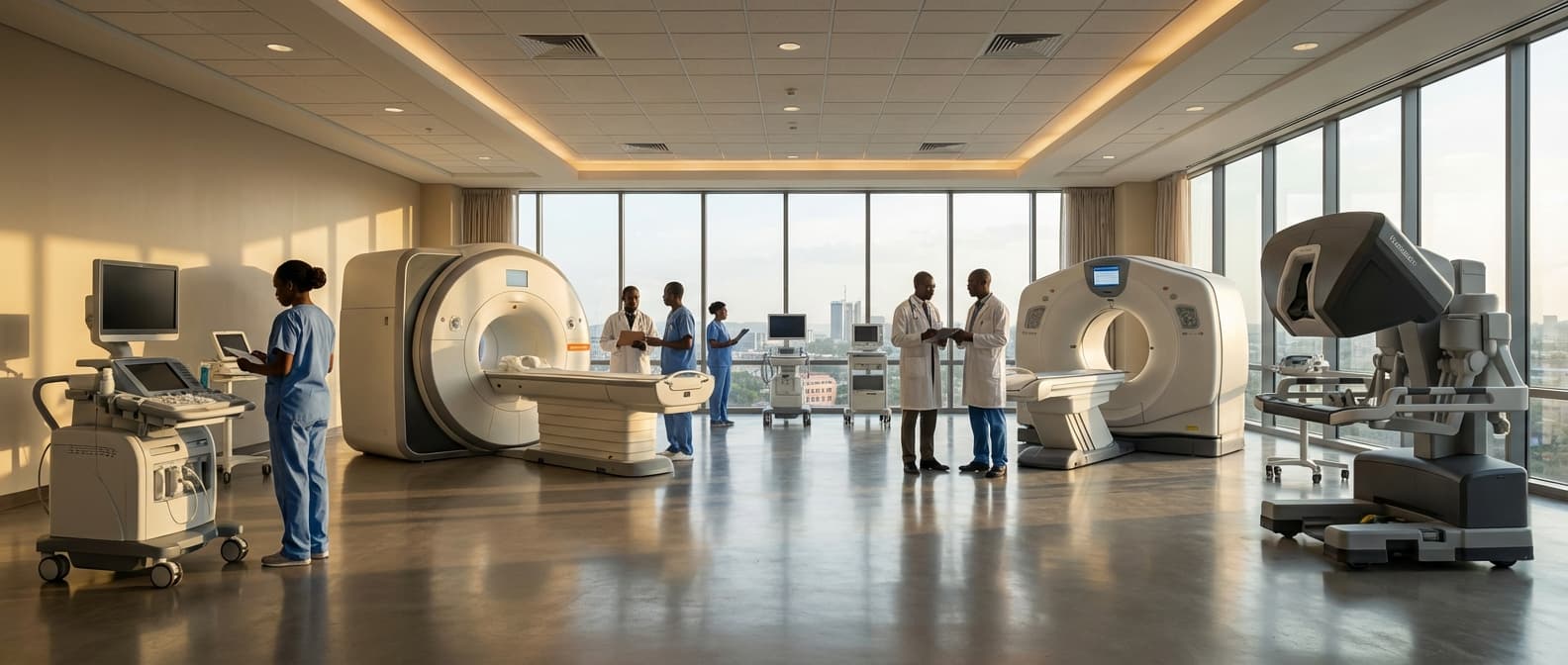
Renal Solutions in Sierra Leone
Engineering Excellence & Technical Support
Complete dialysis systems and renal care equipment designed to deliver safe, effective, and patient-centered kidney treatment. High-standard technical execution following OEM protocols and local regulatory frameworks.
State-of-the-Art Dialysis Centers
Equipped with the latest hemodialysis machines and advanced water treatment systems, ensuring safe and effective treatment for chronic kidney disease patients across Sierra Leone.
Comprehensive Medical Training Programs
Offering specialized training for local healthcare professionals in nephrology, dialysis operation, and patient care, building sustainable expertise within Sierra Leone.
Remote Patient Monitoring and Telehealth
Leveraging technology to remotely monitor patients' vital signs and treatment adherence, extending expert care to underserved and remote communities.
What Is Renal Solutions In Sierra Leone?
Renal Solutions in Sierra Leone refers to the provision of services and interventions aimed at diagnosing, treating, and managing kidney diseases (renal diseases) within the country. This encompasses a spectrum of activities from early detection and primary prevention to advanced renal replacement therapies. The objective is to mitigate the burden of renal pathology on individuals and the public health system, improving patient outcomes and quality of life. Given the increasing prevalence of non-communicable diseases and the limited healthcare infrastructure in Sierra Leone, specialized renal care is crucial.
| Target Population | Typical Use Cases | Specific Need Addressed |
|---|---|---|
| Individuals with uncontrolled hypertension | Routine screening for proteinuria and elevated creatinine, initiation of antihypertensive therapy to protect renal function. | Prevention of hypertensive nephropathy. |
| Individuals with uncontrolled diabetes mellitus | Annual screening for microalbuminuria and macroalbuminuria, optimal glycemic control, and management of associated risk factors. | Prevention and management of diabetic nephropathy. |
| Patients presenting with symptoms of acute kidney injury (e.g., decreased urine output, edema, confusion) | Rapid assessment and management of the underlying cause (e.g., dehydration, infection, nephrotoxic drug exposure), fluid and electrolyte balance, and potential need for dialysis. | Reversal of acute renal dysfunction and prevention of chronic kidney disease progression. |
| Patients diagnosed with Chronic Kidney Disease (CKD) Stages 3-5 | Regular monitoring of GFR, management of anemia, hyperkalemia, metabolic acidosis, and preparation for renal replacement therapy. | Slowing CKD progression, managing complications, and ensuring timely access to RRT. |
| Individuals with a family history of kidney disease | Genetic counseling and targeted screening for early signs of renal pathology. | Early detection and intervention in at-risk populations. |
| Patients experiencing adverse drug reactions suspected to be nephrotoxic | Discontinuation of offending agents, renal function monitoring, and supportive care. | Mitigation of drug-induced kidney injury. |
| Patients requiring advanced renal support in critical care settings | Intermittent or continuous renal replacement therapy (e.g., CRRT) for severe AKI with uremic complications or fluid overload. | Life support in acute renal failure. |
Key Components of Renal Solutions in Sierra Leone
- Diagnostic Services: Including urinalysis, blood tests (serum creatinine, urea, electrolytes, eGFR estimation), and renal imaging (ultrasound).
- Medical Management: Pharmacological and non-pharmacological interventions for hypertension, diabetes mellitus, glomerulonephritis, and other renal conditions.
- Chronic Kidney Disease (CKD) Care: Monitoring disease progression, managing complications (anemia, bone disease, fluid overload), and patient education.
- Acute Kidney Injury (AKI) Management: Prompt recognition and management of reversible causes of AKI.
- Renal Replacement Therapy (RRT): Though currently limited in availability and accessibility, this includes hemodialysis and, in the future, potentially peritoneal dialysis and transplantation.
- Patient Education and Support: Empowering patients with knowledge about their condition, lifestyle modifications, and adherence to treatment.
- Capacity Building: Training healthcare professionals in nephrology and renal care.
- Public Health Awareness: Campaigns to educate the general population on risk factors for kidney disease and the importance of early screening.
Who Needs Renal Solutions In Sierra Leone?
Sierra Leone's healthcare system faces significant challenges in managing kidney-related diseases. Renal solutions are crucial for a growing number of individuals and institutions grappling with acute kidney injury (AKI), chronic kidney disease (CKD), and end-stage renal disease (ESRD). This document outlines the primary target customers and the key departments within organizations that would benefit from and require comprehensive renal solutions in Sierra Leone.
| Target Customer/Department | Specific Needs & Roles | Why Renal Solutions are Crucial |
|---|---|---|
| Individuals with Kidney Disease | Patients diagnosed with AKI, CKD, or ESRD. This includes those requiring dialysis, kidney transplants, or ongoing management of their condition. | Access to life-saving treatments like dialysis, proper medical management, and potential for improved quality of life and survival rates. |
| Hospitals (Government & Private) | Nephrology Departments: Require specialized equipment for diagnosis and treatment, trained medical personnel, and a consistent supply of consumables for dialysis (dialyzers, tubing, fluids). | To establish or enhance existing nephrology services, provide critical care for kidney patients, and manage a rising caseload of kidney-related illnesses. |
| Hospitals (Government & Private) | Intensive Care Units (ICUs): Often deal with patients experiencing AKI as a complication of other severe illnesses. Need rapid diagnostic tools and potentially portable dialysis machines for critical patients. | To effectively manage critically ill patients with AKI, a common and often fatal complication, improving patient outcomes. |
| Hospitals (Government & Private) | Emergency Departments: Encounter patients presenting with acute renal failure due to various causes (dehydration, infections, toxins). Need immediate diagnostic capabilities and stabilization protocols. | To provide timely assessment and initial management of acute renal emergencies, preventing progression to more severe stages. |
| District & Regional Health Centers | These facilities often serve as the first point of contact for many patients. While full-fledged renal units may not be feasible, they require basic diagnostic tools for early detection and referral pathways. | To facilitate early detection of kidney problems, enabling timely referrals to specialized centers and improving overall community health awareness. |
| Ministry of Health and Sanitation (MoHS) | Responsible for national health policy, resource allocation, and public health programs. Needs data on kidney disease prevalence, infrastructure development plans, and procurement strategies for essential renal equipment and medications. | To develop and implement national strategies for kidney disease prevention and management, ensure equitable access to renal care, and address the growing burden of ESRD on the national healthcare system. |
| Non-Governmental Organizations (NGOs) & International Aid Agencies | Often involved in providing medical aid, establishing health infrastructure, and supporting specialized treatment programs. Require partnerships for equipment donations, training programs, and sustainable operational support for renal services. | To augment government efforts by providing funding, expertise, and resources to expand access to renal care, particularly in underserved areas, and support training of healthcare professionals. |
| Medical Training Institutions & Universities | Need access to modern renal diagnostic and treatment equipment for training future nephrologists, nurses, and technicians. This includes simulation tools and learning resources. | To educate and train a skilled workforce capable of providing advanced renal care, ensuring the long-term sustainability of specialized services in Sierra Leone. |
| Pharmaceutical Suppliers & Medical Device Distributors | Require a stable market and demand for renal-specific drugs, dialysis consumables, and medical equipment. Need to understand import regulations and local healthcare needs. | To provide a reliable supply chain of essential renal medications, consumables, and equipment to meet the demands of healthcare facilities and patients. |
Target Customers & Departments for Renal Solutions in Sierra Leone
- Individuals requiring kidney care
- Healthcare facilities and institutions
- Government and public health bodies
- Non-governmental organizations (NGOs)
Renal Solutions Process In Sierra Leone
This document outlines the typical workflow for Renal Solutions processes in Sierra Leone, from initial inquiry to the successful execution of services. Renal Solutions refers to a set of services and processes aimed at addressing kidney-related health issues, which can include diagnostics, treatment, medication management, and patient support within the Sierra Leonean healthcare context.
| Stage | Key Activities | Responsible Party/Department | Expected Outcome |
|---|---|---|---|
| Inquiry & Initial Contact | Patient/referral received, initial details recorded. | Reception/Administrative Staff, Referring Clinic | Patient contact established, basic information gathered. |
| Information Gathering & Assessment | Medical history taken, symptoms documented, physical examination. | Nurses, Medical Assistants, Nephrologists (initial assessment) | Comprehensive understanding of patient's condition. |
| Diagnostic Evaluation | Blood tests, urine tests, imaging ordered and conducted. | Laboratory Technicians, Radiologists, Nurses | Objective data on kidney function and health. |
| Diagnosis & Treatment Planning | Test results analyzed, diagnosis confirmed, treatment strategy devised. | Nephrologists, Consulting Physicians | Clear diagnosis and tailored treatment plan. |
| Service Provision & Execution | Medications administered, dialysis sessions conducted, lifestyle advice given. | Nurses, Pharmacists, Dietitians, Physicians | Implementation of prescribed treatments and interventions. |
| Monitoring & Follow-up | Regular check-ups, vital signs monitoring, re-assessment of condition. | Nurses, Nephrologists | Tracking patient progress, identifying complications, adjusting treatment. |
| Patient Discharge & Ongoing Care | Discharge instructions provided, follow-up appointments scheduled, primary care liaison. | Physicians, Case Managers | Seamless transition to home care and continued management. |
| Record Keeping & Data Management | All patient data documented, stored securely, and utilized for analysis. | Medical Records Department, IT Support | Accurate and accessible patient history, facilitates continuity of care and reporting. |
Renal Solutions Process Workflow
- Inquiry & Initial Contact: The process begins when a patient, caregiver, or referring healthcare professional makes contact with Renal Solutions. This can be through a direct phone call, email, referral from a clinic/hospital, or an in-person visit.
- Information Gathering & Assessment: Upon initial contact, a comprehensive assessment is conducted. This involves collecting patient history, current symptoms, existing medical conditions, and previous test results. For new patients, a detailed medical and renal history is taken.
- Diagnostic Evaluation: Based on the initial assessment, specific diagnostic tests are ordered. This may include blood tests (e.g., creatinine, urea, electrolytes, complete blood count), urine tests (e.g., urinalysis, protein/creatinine ratio), and imaging (e.g., renal ultrasound).
- Diagnosis & Treatment Planning: The results of the diagnostic tests are reviewed by nephrologists or qualified medical professionals. A definitive diagnosis is made, and a personalized treatment plan is developed. This plan will consider the severity of the kidney condition, the patient's overall health, and available resources.
- Referral & Consultation (if necessary): If the condition is complex or requires specialized care beyond the scope of initial assessment, the patient may be referred to a specialist nephrologist or a higher-level facility for further consultation.
- Service Provision & Execution: This is the core of the process where the planned treatments are implemented. This can encompass a range of services:
- Medication Management: Prescribing and dispensing appropriate medications, along with patient education on dosage and side effects.
- Dialysis Services: If dialysis is required, this involves scheduling, preparation, and administration of hemodialysis or peritoneal dialysis sessions.
- Lifestyle Modifications: Providing guidance on diet, fluid intake, and exercise tailored to the patient's renal condition.
- Surgical Interventions (if applicable): Arranging for and coordinating any necessary surgical procedures, such as kidney biopsies or insertion of dialysis access.
- Education & Support: Offering comprehensive education to patients and their families about their condition, treatment options, and self-management strategies. This also includes emotional and psychological support.
- Monitoring & Follow-up: Regular monitoring of the patient's progress is crucial. This involves scheduled follow-up appointments, repeat diagnostic tests, and adjustments to the treatment plan as needed.
- Patient Discharge & Ongoing Care Coordination: Once the immediate treatment phase is complete or the patient's condition is stabilized, they are discharged with clear instructions for ongoing self-care. Coordination with primary healthcare providers is essential for long-term management.
- Record Keeping & Data Management: Throughout the entire process, thorough and accurate medical records are maintained. This includes patient demographics, assessment findings, test results, treatment plans, and progress notes. Data management is vital for quality improvement and research.
Renal Solutions Cost In Sierra Leone
The cost of renal solutions in Sierra Leone can vary significantly based on several factors, including the type of solution (e.g., hemodialysis, peritoneal dialysis), the brand, the volume required, and the specific healthcare facility or supplier. Due to the country's economic landscape, imported medical supplies often carry higher price tags. Availability and import duties also play a crucial role in determining the final cost. It's important to note that reliable, publicly available pricing data for specific medical consumables in Sierra Leone can be challenging to obtain. The figures presented below are indicative and should be confirmed with local healthcare providers or suppliers.
| Renal Solution Type (Indicative) | Estimated Price Range (Leones - SLL) |
|---|---|
| Standard Hemodialysis Dialysate Concentrate (per liter) | 80 - 150 SLL |
| Pre-mixed Hemodialysis Dialysate Solution (per liter) | 100 - 180 SLL |
| Peritoneal Dialysis Solution (e.g., 2L bag - standard concentration) | 200 - 350 SLL |
| Specialty Dialysis Solutions (e.g., higher glucose concentrations) | 300 - 500+ SLL |
| Sterile Water for Dialysis (per liter) | 50 - 90 SLL |
Key Pricing Factors for Renal Solutions in Sierra Leone
- Type of Renal Solution (Hemodialysis vs. Peritoneal Dialysis)
- Brand and Manufacturer
- Volume and Concentration
- Import Duties and Taxes
- Supplier and Retailer Markup
- Availability and Supply Chain Efficiency
- Healthcare Facility Overhead (for in-hospital use)
Affordable Renal Solutions Options
Exploring affordable renal solutions involves understanding how to maximize value and minimize costs. This often comes down to strategic planning, choosing the right services, and leveraging available resources. Value bundles and smart cost-saving strategies are key components in managing renal care expenses effectively.
| Value Bundle Type | Description | Potential Cost Savings | Considerations |
|---|---|---|---|
| Integrated Care Programs | Bundles services like physician visits, lab work, imaging, and sometimes dietitian consultations for chronic kidney disease management under a single, often predictable cost structure. | Reduced administrative fees, streamlined billing, potentially lower overall cost for comprehensive care. | Ensure the bundle covers all necessary services. May require staying within a specific network of providers. |
| Dialysis Facility Packages | Some dialysis centers offer packages that include the treatment sessions, necessary supplies, and basic lab monitoring. May also include transportation assistance. | Bulk purchasing power of the facility can translate to lower per-session costs. Predictable monthly expenses. | Understand what is explicitly included and excluded. Compare package details across different facilities. |
| Medication & Education Bundles | Combines prescription medications with educational resources, support groups, or coaching services to improve adherence and outcomes. | Improved medication adherence can lead to better health outcomes, potentially reducing future healthcare costs. Some programs offer discounted medication pricing. | Focuses on holistic patient management. Effectiveness depends on patient engagement. |
| Preventive Health & Wellness Bundles | Offers a combination of screenings, lifestyle coaching (diet, exercise), and primary care visits focused on preventing or slowing the progression of kidney disease. | Early intervention and prevention are significantly less expensive than treating advanced disease. Reduces the likelihood of costly complications. | Primarily for individuals at risk for kidney disease or in early stages. Requires commitment to lifestyle changes. |
Key Cost-Saving Strategies for Renal Care
- Understand Your Insurance Coverage: Thoroughly review your health insurance plan to understand deductibles, co-pays, out-of-pocket maximums, and covered services for renal conditions. Knowing this upfront can prevent unexpected bills.
- Generic Medications: Whenever possible, opt for generic versions of prescribed medications. They are typically much cheaper than brand-name alternatives and often have the same active ingredients and efficacy.
- Preventive Care and Early Detection: Addressing kidney health proactively can prevent more serious and costly complications down the line. Regular check-ups and managing underlying conditions like diabetes and hypertension are crucial.
- Home Dialysis Options: If medically feasible, home dialysis (peritoneal dialysis or home hemodialysis) can often be more cost-effective than in-center treatments due to reduced facility fees and greater flexibility.
- Medication Management Programs: Inquire about patient assistance programs offered by pharmaceutical companies or non-profit organizations. These can significantly reduce the cost of expensive renal medications.
- Dietary and Lifestyle Modifications: A kidney-friendly diet can help manage the progression of kidney disease and reduce the need for certain medications or interventions. Working with a registered dietitian is highly recommended.
- Second Opinions and Provider Comparisons: For major procedures or treatment plans, seeking a second opinion can sometimes reveal more cost-effective options. Comparing prices for services at different healthcare facilities can also yield savings.
- Telehealth and Remote Monitoring: Utilizing telehealth services for routine check-ups or follow-ups can save on travel time and costs. Remote monitoring devices can help track vital signs and kidney function without frequent in-person visits.
- Patient Advocacy and Support Groups: Connecting with patient advocacy groups can provide valuable information on navigating the healthcare system, accessing resources, and understanding rights, which can indirectly lead to cost savings.
Verified Providers In Sierra Leone
When seeking healthcare in Sierra Leone, particularly for specialized or critical services, identifying verified and reputable providers is paramount. Franance Health stands out as a leading example of such an organization, distinguished by its rigorous credentialing process and commitment to quality patient care. This dedication ensures that patients receive services from highly qualified and ethical professionals, offering peace of mind and superior health outcomes.
| Credential Area | Verification Method | Importance for Patients |
|---|---|---|
| Academic Qualifications (Degrees, Diplomas) | Verification with issuing institutions (e.g., universities, medical schools) | Ensures foundational medical knowledge and training. |
| Medical Licenses | Confirmation with the Sierra Leone Medical and Dental Council or equivalent regulatory body | Guarantees legal authorization to practice medicine. |
| Professional Certifications/Specializations | Cross-referencing with relevant professional bodies and examination boards | Confirms expertise in specific medical fields. |
| Continuing Professional Development (CPD) | Review of attendance records and participation in workshops/seminars | Demonstrates commitment to staying current with medical advancements. |
| Ethical Conduct and Disciplinary Records | Background checks and inquiry with relevant professional disciplinary committees | Ensures patient safety and professional integrity. |
| Experience and Clinical Competence | Peer reviews and potentially practical assessments (for certain specialties) | Assesses practical application of knowledge and skill. |
Why Franance Health Represents the Best Choice:
- Rigorous Credentialing Process: Franance Health employs a multi-stage vetting system for all its affiliated healthcare professionals. This includes verification of academic qualifications, medical licenses, professional certifications, and a thorough background check. This ensures that only competent and ethical practitioners are part of their network.
- Commitment to Quality and Standards: Adherence to international healthcare standards and best practices is a cornerstone of Franance Health's operations. They actively promote continuous professional development among their providers, keeping them abreast of the latest medical advancements and treatment protocols.
- Patient-Centric Approach: Franance Health prioritizes patient well-being and satisfaction. Their providers are trained not only in clinical excellence but also in effective communication, empathy, and cultural sensitivity, ensuring a positive and supportive patient experience.
- Access to Specialized Services: Franance Health networks with a diverse range of specialists, offering access to a broad spectrum of medical expertise that might otherwise be difficult to find. This is crucial for complex medical conditions requiring tailored treatments.
- Trust and Transparency: The organization fosters an environment of trust through transparent operational practices. Patients can feel confident knowing they are being treated by professionals who have met stringent verification criteria, backed by a reputable health network.
Scope Of Work For Renal Solutions
This Scope of Work (SOW) outlines the technical deliverables and standard specifications for the Renal Solutions project. The project aims to develop and implement a comprehensive software solution for managing renal patient data, treatment plans, and administrative workflows. This document details the specific technical outputs expected and the quality standards they must adhere to.
| Deliverable | Description | Standard Specifications/Requirements |
|---|---|---|
| Software Architecture Design Document | High-level and detailed architectural blueprint of the Renal Solutions system. | Must adhere to industry best practices for scalability, maintainability, and security. Documented using UML diagrams and clear textual descriptions. Includes technology stack, design patterns, and data flow diagrams. |
| UI/UX Design Mockups | Visual representations of the user interface and user workflows. | Must be intuitive, user-friendly, and compliant with accessibility standards (e.g., WCAG 2.1). Provided in interactive formats (e.g., Figma, Adobe XD) and static image formats. |
| Database Schema and Design Documentation | Structure of the database, including tables, relationships, data types, and constraints. | Relational database model preferred (e.g., PostgreSQL, MySQL). Schema designed for optimal performance and data integrity. Documented using ER diagrams and SQL DDL scripts. Includes data dictionary. |
| Backend API Specifications | Detailed documentation of all APIs exposed by the backend services. | RESTful API design principles. Documented using OpenAPI (Swagger) specification. Includes endpoints, request/response formats, authentication mechanisms, and error codes. |
| Frontend Application Codebase | The complete source code for the user-facing web application. | Developed using a modern JavaScript framework (e.g., React, Angular, Vue.js). Code must be well-commented, follow established coding standards (e.g., ESLint), and be version-controlled (e.g., Git). Responsive design for various screen sizes. |
| Backend Service Codebase | The complete source code for the server-side logic and APIs. | Developed using a robust backend language/framework (e.g., Python/Django, Node.js/Express, Java/Spring Boot). Code must be modular, testable, and secure. Version-controlled (e.g., Git). |
| Integration Modules | Code and configurations for integrating with external systems. | APIs (REST, SOAP) or other standard integration protocols. Secure data exchange mechanisms. Thorough documentation of integration points and data mapping. |
| Test Plans and Test Cases | Comprehensive strategies and specific scenarios for testing the application. | Unit tests, integration tests, system tests, and user acceptance test (UAT) plans. Test cases must cover functional, non-functional (performance, security), and edge cases. Automated testing is highly encouraged. Traceability to requirements. |
| Deployment Scripts and Procedures | Automated scripts for deploying the application to various environments. | Containerization (e.g., Docker) and orchestration (e.g., Kubernetes) preferred. Includes CI/CD pipeline configurations. Clear step-by-step deployment procedures documented. |
| User Manuals and Technical Documentation | Guides for end-users and comprehensive documentation for developers and administrators. | User manuals should be easy to understand and task-oriented. Technical documentation should cover installation, configuration, architecture, API usage, and troubleshooting. Formats: PDF, Markdown, Wiki. |
| Performance Monitoring and Logging Framework | Tools and configurations for monitoring system performance and logging events. | Utilize established logging frameworks (e.g., ELK Stack, Splunk). Implement health checks and performance metrics (CPU, memory, response times). Alerts for critical issues. |
| Security Audit Report | Report detailing the results of a comprehensive security audit. | Penetration testing, vulnerability scans, and code reviews. Report must identify vulnerabilities and provide recommendations for remediation. Adherence to HIPAA and other relevant data privacy regulations. |
Key Technical Deliverables
- Software Architecture Design Document
- User Interface (UI) and User Experience (UX) Design Mockups
- Database Schema and Design Documentation
- Backend API Specifications
- Frontend Application Codebase
- Backend Service Codebase
- Integration Modules for External Systems (e.g., EHR, Lab Systems)
- Test Plans and Test Cases (Unit, Integration, System, User Acceptance)
- Deployment Scripts and Procedures
- User Manuals and Technical Documentation
- Performance Monitoring and Logging Framework
- Security Audit Report
Service Level Agreement For Renal Solutions
This Service Level Agreement (SLA) outlines the performance standards and commitments for Renal Solutions' services. It defines the expected response times for support requests and the guaranteed uptime for our platform and related services.
| Severity Level | Description | Target Response Time |
|---|---|---|
| Critical (P1) | System-wide outage or critical functionality failure impacting a significant portion of users. | 15 minutes |
| High (P2) | Major functional impairment or degraded performance affecting a significant number of users. | 1 hour |
| Medium (P3) | Minor functional issue or performance degradation impacting a limited number of users, or a workaround exists. | 4 business hours |
| Low (P4) | General inquiries, feature requests, or cosmetic issues with no impact on functionality. | 8 business hours |
Key Service Level Objectives
- Uptime Guarantee: Renal Solutions guarantees a minimum of 99.9% uptime for its core platform services over a calendar month.
- Response Times: Support requests will be addressed within the defined response times based on their severity level.
- Maintenance Windows: Scheduled maintenance will be communicated in advance and conducted during off-peak hours whenever possible.
- Exclusions: This SLA excludes downtime caused by factors outside of Renal Solutions' reasonable control, including but not limited to force majeure events, customer-caused issues, and third-party service provider outages.
- Service Credits: In the event of failing to meet the defined uptime guarantee, service credits may be issued to affected customers.
Frequently Asked Questions

Ready when you are
Let's scope your Renal Solutions in Sierra Leone project in Sierra Leone.

Scaling healthcare logistics and technical systems across the entire continent.