
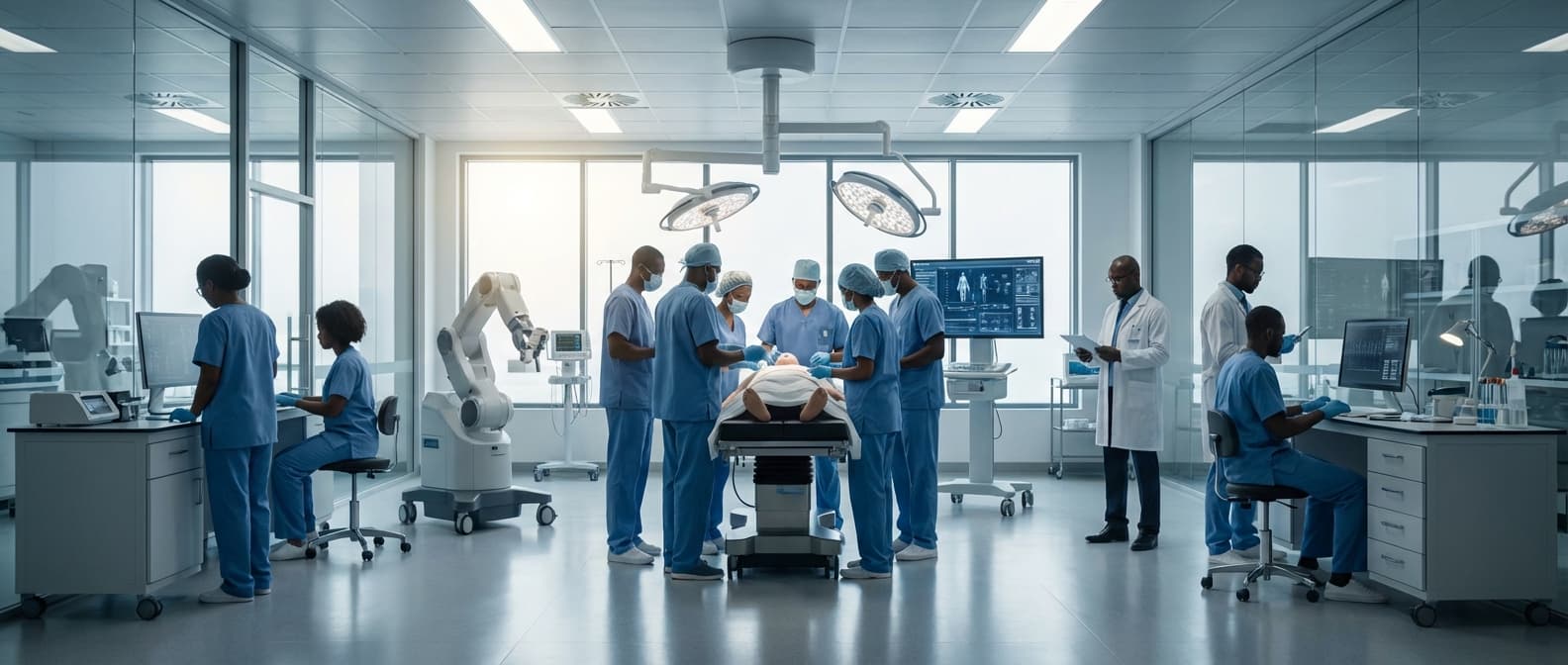
Biomedical Engineering Consulting in Sierra Leone
Engineering Excellence & Technical Support
Equipment selection, procurement and implementation consulting High-standard technical execution following OEM protocols and local regulatory frameworks.
Optimizing Healthcare Infrastructure
Leveraging cutting-edge biomedical engineering principles to assess, design, and implement upgrades for critical healthcare facilities in Sierra Leone. This includes improving sterilization protocols, enhancing imaging technology infrastructure, and ensuring the efficient deployment of medical equipment to meet evolving patient care needs and maximize resource utilization.
Ensuring Medical Device Reliability & Safety
Developing and implementing comprehensive preventative maintenance programs and robust calibration protocols for vital medical equipment. Our expertise ensures the sustained operational integrity, accuracy, and safety of devices, minimizing downtime and safeguarding patient well-being in resource-constrained environments.
Empowering Local Biomedical Workforce
Designing and delivering specialized training modules for local technicians and healthcare professionals in Sierra Leone. We focus on building sustainable capacity in biomedical equipment management, repair, and safe operation, fostering self-sufficiency and long-term healthcare system resilience.
What Is Biomedical Engineering Consulting In Sierra Leone?
Biomedical Engineering Consulting in Sierra Leone involves the provision of expert advisory services and technical solutions by qualified biomedical engineers to various stakeholders within the healthcare sector and related industries. This service bridges the gap between advanced medical technology and the practical realities of healthcare delivery, aiming to optimize the performance, safety, and cost-effectiveness of medical devices, equipment, and healthcare facilities. The scope typically encompasses the entire lifecycle of medical technology, from procurement and installation to maintenance, calibration, and decommissioning. Consultants play a crucial role in ensuring that healthcare institutions in Sierra Leone have access to appropriate, functional, and sustainable biomedical technology, thereby enhancing the quality of patient care and operational efficiency.
| Stakeholder Group | Need for Biomedical Engineering Consulting | Typical Use Cases |
|---|---|---|
| Public Hospitals and Ministry of Health: | To ensure efficient and effective deployment, utilization, and maintenance of medical equipment across the national healthcare system, particularly in resource-constrained settings. To support policy development and infrastructure planning. | Development of national medical equipment procurement guidelines; Needs assessment for rural health centers; Establishing centralized maintenance programs; Training of biomedical technicians; Developing standards for medical device safety. |
| Private Hospitals and Clinics: | To optimize investment in medical technology, enhance service quality, ensure compliance with emerging regulatory requirements, and maintain a competitive edge. | Selection and procurement of specialized diagnostic and therapeutic equipment (e.g., MRI, CT scanners); Implementation of laboratory automation systems; Establishing efficient equipment maintenance contracts; Advising on facility design for new clinics. |
| Non-Governmental Organizations (NGOs) and International Aid Agencies: | To ensure that donated or procured medical equipment is appropriate for local needs, properly installed, maintained, and integrated into existing healthcare infrastructure, maximizing the impact of aid. | Needs assessment for humanitarian medical missions; Developing sustainable equipment support models for remote health posts; Training local healthcare workers on equipment use and basic maintenance; Evaluating the effectiveness of medical aid projects. |
| Medical Device Manufacturers and Distributors: | To facilitate market entry, ensure proper product support and training in the local context, and provide feedback on product performance and local market needs. | Establishing after-sales service networks; Providing technical training for local partners and users; Adapting product documentation for local language and context; Conducting post-market surveillance. |
| Academic and Research Institutions: | To advise on the selection and integration of research-grade medical equipment, ensure laboratory safety, and develop curriculum for biomedical engineering education. | Setting up specialized research laboratories; Advising on the acquisition of advanced scientific instruments; Ensuring compliance with laboratory safety standards; Contributing to the development of local biomedical engineering training programs. |
Key Aspects of Biomedical Engineering Consulting in Sierra Leone
- Needs Assessment and Planning: Identifying the specific biomedical equipment and infrastructure requirements of healthcare facilities based on their service offerings, patient demographics, and budget constraints. This includes strategic planning for technology acquisition and integration.
- Procurement and Selection: Assisting in the evaluation, selection, and procurement of medical devices and equipment. This involves developing technical specifications, reviewing vendor proposals, and ensuring compliance with regulatory standards.
- Installation, Commissioning, and Training: Overseeing the correct installation and commissioning of new medical equipment. Providing comprehensive training to clinical and technical staff on the operation, maintenance, and safety protocols of these devices.
- Maintenance and Repair Management: Developing and implementing robust preventive maintenance programs. Advising on the establishment of in-house repair capabilities or the selection and management of third-party service providers.
- Asset Management and Lifecycle Planning: Creating systems for tracking and managing the entire lifecycle of medical equipment, including inventory control, condition assessment, and end-of-life planning for disposal or replacement.
- Quality Assurance and Regulatory Compliance: Ensuring that medical devices and facilities meet national and international safety and performance standards. Advising on compliance with relevant health regulations and guidelines.
- Infrastructure Development and Safety: Providing expertise on the design and modification of healthcare facilities to accommodate medical equipment, ensure patient and staff safety (e.g., electrical safety, radiation shielding), and optimize workflow.
- Technology Evaluation and Adoption: Assessing emerging biomedical technologies for their suitability and applicability within the Sierra Leonean context, considering factors such as cost, sustainability, and local capacity.
- Risk Management and Patient Safety: Identifying potential risks associated with medical equipment use and developing strategies for mitigation to enhance patient safety.
Who Needs Biomedical Engineering Consulting In Sierra Leone?
Biomedical engineering consulting is crucial for advancing healthcare infrastructure and capabilities in Sierra Leone. The expertise provided by such consultants can address critical needs in medical equipment management, healthcare facility design, technology implementation, and regulatory compliance. This leads to improved patient care, operational efficiency, and the adoption of modern medical practices.
| Customer Type | Key Departments/Needs Addressed |
|---|---|
| Hospitals (Government, Private, Mission-based) | Clinical Engineering/Biomedical Department: Equipment maintenance, repair, calibration, lifecycle management, procurement advice, safety audits. Procurement Department: Needs assessment, specification development, vendor evaluation, tender processes. Facilities Management: Design and renovation of clinical spaces, infection control infrastructure. IT Department: Integration of medical devices with hospital information systems. Clinical Departments (e.g., Surgery, Radiology, ICU): Equipment selection, utilization optimization, training on new technologies. Quality Assurance/Patient Safety: Risk management related to medical devices, incident investigation. Administration/Management: Strategic planning for technology adoption, budget allocation for equipment. |
| Clinics and Health Centers | Operations Management: Basic equipment maintenance, needs assessment for essential medical devices, training on simple equipment operation. Staff Training: Ensuring safe and effective use of available medical equipment. Resource Management: Guidance on procuring and maintaining cost-effective medical technology. |
| Ministry of Health and Sanitation | Medical Equipment Policy and Planning: National standards for equipment, procurement guidelines, infrastructure development plans. Regulatory Affairs: Licensing, accreditation, and quality control for medical devices and healthcare facilities. Public Health Programs: Support for equipping and maintaining facilities for specific disease programs (e.g., maternal health, infectious diseases). Health Sector Reform: Strategic advice on integrating technology into national health strategies. Training and Capacity Building: Developing national programs for biomedical technicians. |
| Medical Training Institutions (Universities, Technical Colleges) | Curriculum Development: Input on biomedical engineering and technology programs. Laboratory Setup and Equipment: Advising on equipping practical training facilities. Faculty Development: Supporting the training of instructors in medical technology. Research and Development: Facilitating research projects related to healthcare technology. |
| Non-Governmental Organizations (NGOs) in Health | Project Implementation: Designing and equipping health facilities for specific projects. Equipment Donation Management: Assessing, installing, and maintaining donated medical equipment. Community Health Programs: Providing technical support for medical devices used in outreach services. Sustainability Planning: Ensuring long-term maintenance and usability of medical equipment. |
| International Development Agencies (e.g., WHO, USAID, World Bank) | Project Design and Evaluation: Technical expertise for health infrastructure and technology projects. Needs Assessments: Identifying critical gaps in medical equipment and services. Capacity Building Initiatives: Supporting the development of local expertise in biomedical engineering. Policy Advice: Contributing to national health sector strategies and reforms. |
| Medical Equipment Suppliers and Distributors | Technical Support and Training: Providing advanced technical training to local engineers and technicians. After-Sales Service: Developing robust service and maintenance contracts. Product Development and Adaptation: Feedback on product suitability for the Sierra Leonean context. Regulatory Compliance: Assisting with import and registration processes for medical devices. |
Target Customers and Departments for Biomedical Engineering Consulting in Sierra Leone
- Hospitals (Government, Private, Mission-based)
- Clinics and Health Centers
- Ministry of Health and Sanitation
- Medical Training Institutions
- Non-Governmental Organizations (NGOs) in Health
- International Development Agencies
- Medical Equipment Suppliers and Distributors
Biomedical Engineering Consulting Process In Sierra Leone
This document outlines the typical workflow for biomedical engineering consulting services in Sierra Leone, from the initial client inquiry to the successful execution of a project. The process is designed to be structured, transparent, and client-centric, ensuring that the unique needs and challenges within the Sierra Leonean healthcare landscape are effectively addressed.
| Phase | Key Activities | Client Involvement | Typical Deliverables |
|---|---|---|---|
| Inquiry & Needs Assessment | Initial contact, problem identification, preliminary discussions. | Expressing needs, providing initial information, attending discussions. | Understanding of project scope and objectives. |
| Proposal Development & Agreement | On-site assessment (if needed), SOW definition, proposal creation, negotiation, contract signing. | Providing access for assessment, reviewing proposals, negotiating terms, signing contract. | Signed contract, detailed Scope of Work. |
| Project Planning & Mobilization | Kick-off meeting, detailed planning, resource allocation, site preparation. | Participating in kick-off, providing site access, confirming resources. | Project plan, communication protocols, confirmed team and resources. |
| Execution & Implementation | Performing technical services (installation, maintenance, training), reporting progress. | Facilitating access, providing feedback, participating in training, reviewing progress reports. | Installed equipment, completed repairs, trained staff, project reports. |
| Project Completion & Handover | Testing, validation, client acceptance, documentation, final training, closure report. | Participating in testing, formal acceptance of deliverables, reviewing documentation. | Accepted deliverables, comprehensive documentation, final project report. |
| Post-Project Support & Evaluation | Ongoing support, performance review, client feedback. | Providing feedback, participating in evaluations, seeking further support if needed. | Satisfied client, potential for future engagement, lessons learned. |
Biomedical Engineering Consulting Process in Sierra Leone
- 1. Initial Inquiry & Needs Assessment:
- Client Contact: A potential client (e.g., hospital, clinic, government health agency, NGO) initiates contact, typically via email, phone, or a formal request. This might be driven by a need for new equipment, maintenance issues, infrastructure upgrades, training, or strategic planning.
- Information Gathering: The consulting firm requests preliminary information about the client's organization, location, specific challenges, and desired outcomes.
- Preliminary Discussion: An initial meeting (virtual or in-person) is scheduled to understand the scope of the problem, the client's expectations, and any existing constraints (budget, timeline, existing infrastructure).
- 2. Proposal Development & Agreement:
- Detailed Assessment (if required): For complex projects, an on-site visit to the client's facility may be necessary to conduct a thorough assessment of the current situation, inventory existing equipment, evaluate infrastructure, and interview key personnel.
- Scope of Work Definition: Based on the assessment, a detailed Scope of Work (SOW) is developed, clearly outlining the services to be provided, deliverables, timelines, and key performance indicators.
- Technical & Financial Proposal: A comprehensive proposal is prepared, including the SOW, methodology, proposed solutions, team composition (including local expertise where applicable), estimated costs, payment terms, and any assumptions or exclusions.
- Client Review & Negotiation: The client reviews the proposal. Feedback is incorporated, and negotiations on scope, cost, and timeline may occur.
- Contract Signing: Upon agreement, a formal contract is signed, legally binding both parties to the terms and conditions.
- 3. Project Planning & Mobilization:
- Project Kick-off Meeting: A formal kick-off meeting is held with the client and the consulting team to confirm understanding of the SOW, establish communication channels, define roles and responsibilities, and set up project management tools.
- Detailed Project Plan: A granular project plan is developed, breaking down the SOW into specific tasks, assigning resources, setting milestones, and identifying potential risks.
- Resource Allocation: Consultants are assigned to specific tasks. If external expertise or equipment is needed, procurement or engagement processes begin.
- Site Preparation (if applicable): Any necessary site preparation at the client's facility is coordinated.
- 4. Execution & Implementation:
- Service Delivery: The consulting team carries out the agreed-upon activities, which can include:
- **Equipment Procurement & Installation:** Sourcing, purchasing, shipping, installation, and calibration of biomedical equipment.- **Maintenance & Repair:** Diagnosing and fixing issues with existing equipment, establishing preventive maintenance programs.- **Training & Capacity Building:** Conducting workshops, hands-on training sessions for clinical and technical staff on equipment operation, maintenance, and safety.- **Infrastructure Assessment & Upgrade:** Evaluating electrical, plumbing, or HVAC systems supporting medical equipment and recommending/implementing upgrades.- **Policy & Procedure Development:** Creating or refining standard operating procedures (SOPs) for equipment management, maintenance, and safety.- **Feasibility Studies & Strategic Planning:** Assessing the viability of new medical technologies or services and developing long-term strategies.- Regular Progress Reporting: The consulting team provides regular progress updates to the client, highlighting achievements, challenges, and upcoming activities.
- Quality Assurance: Continuous quality checks are performed to ensure that deliverables meet the defined standards and client expectations.
- Risk Management: Potential risks are identified and mitigated throughout the execution phase.
- 5. Project Completion & Handover:
- Testing & Validation: All installed equipment or implemented solutions undergo rigorous testing and validation to ensure functionality and performance.
- Client Acceptance: The client formally reviews and accepts the completed work and deliverables.
- Documentation & Training: Comprehensive documentation (manuals, reports, training materials) is provided to the client. Final training sessions are conducted.
- Project Closure Report: A final report is submitted, summarizing the project, its outcomes, lessons learned, and any recommendations for future improvements.
- Handover of Responsibilities: If applicable, responsibilities for ongoing maintenance or operations are formally handed over to the client's internal team.
- 6. Post-Project Support & Evaluation:
- Follow-up & Support: Depending on the contract, post-project support, troubleshooting, or warranty services may be offered.
- Performance Evaluation: The client and consulting firm may conduct a joint evaluation of the project's success against the initial objectives.
- Future Opportunities: This phase can also identify opportunities for future collaboration or further projects.
- Client Feedback: Gathering feedback from the client is crucial for continuous improvement of consulting services.
Biomedical Engineering Consulting Cost In Sierra Leone
Biomedical Engineering consulting costs in Sierra Leone can vary significantly based on several factors, reflecting the specific needs of a project, the expertise of the consultant, and the overall economic landscape of the country. These costs are typically quoted in Sierra Leonean Leone (SLL). While precise, standardized pricing is difficult to establish due to the nascent nature of the specialized consulting market, general trends and influencing factors can be outlined.
| Service/Engagement Type | Estimated Cost Range (SLL per hour) | Estimated Cost Range (SLL per day) | Notes |
|---|---|---|---|
| General Advisory & Needs Assessment | 500,000 - 1,500,000 | 2,000,000 - 6,000,000 | For initial consultations, feasibility studies, and high-level guidance. |
| Technical Consultation & Problem Solving | 750,000 - 2,000,000 | 3,000,000 - 8,000,000 | Focus on specific technical issues with existing equipment or systems. |
| Medical Equipment Planning & Procurement Support | 1,000,000 - 2,500,000 | 4,000,000 - 10,000,000 | Involves specifications, vendor evaluation, and negotiation support. |
| Regulatory Compliance & Documentation | 800,000 - 2,000,000 | 3,500,000 - 9,000,000 | Assisting with adherence to national and international medical device regulations. |
| Project Management (Biomedical Focus) | 1,200,000 - 3,000,000 | 5,000,000 - 12,000,000 | Overseeing the implementation of biomedical projects. |
| Training & Capacity Building | 600,000 - 1,800,000 | 2,500,000 - 7,000,000 | For training healthcare staff on equipment use, maintenance, or safety. |
| Specialized Expertise (e.g., Imaging, IT Integration) | 1,500,000 - 3,500,000+ | 6,000,000 - 14,000,000+ | Highly niche areas may command premium rates. Project-based fees are common for extensive work. |
Factors Influencing Biomedical Engineering Consulting Costs in Sierra Leone
- Project Scope and Complexity: Larger, more complex projects requiring intricate design, analysis, or implementation will naturally incur higher costs than smaller, advisory roles.
- Consultant's Experience and Specialization: Highly experienced biomedical engineers with specialized knowledge in areas like medical device maintenance, regulatory compliance, hospital infrastructure planning, or clinical engineering will command higher fees.
- Duration of Engagement: The length of time a consultant is required for a project directly impacts the total cost. This can be on a per-hour, per-day, or project-based fee structure.
- Travel and Accommodation: If the consultant needs to travel within Sierra Leone to different health facilities or to and from international locations, these expenses will be factored into the overall cost.
- Report Generation and Deliverables: The extent and detail of reports, presentations, training materials, and other deliverables expected from the consultant will influence pricing.
- Urgency of the Project: Rush projects may incur premium fees due to the compressed timelines and the need for immediate resource allocation.
- Geographic Location within Sierra Leone: While less of a primary driver for specialized consulting, accessibility and logistical challenges in remote areas might add to indirect costs.
- Market Demand and Availability: As a developing market, the availability of highly specialized biomedical engineering consultants in Sierra Leone might be limited, potentially leading to higher rates due to demand.
Affordable Biomedical Engineering Consulting Options
Biomedical engineering consulting can be a crucial resource for medical device companies, from startups to established players. However, the cost can be a significant barrier. This guide explores affordable options by focusing on value bundles and cost-saving strategies, ensuring you get expert guidance without breaking the bank. We'll cover different approaches to engaging consultants, leveraging their expertise efficiently, and understanding how to structure engagements for maximum value.
| Value Bundle Option | Description | Potential Cost Savings | Best For |
|---|---|---|---|
| "Seed" Startup Package | A focused set of services for early-stage companies, often including initial regulatory pathway assessment, basic design control guidance, and feasibility studies. | Lower overall project cost due to limited scope. Predictable pricing for early budgeting. | Startups with limited funding, seeking foundational guidance. |
| "Regulatory Readiness" Bundle | Comprehensive support for navigating specific regulatory requirements (e.g., FDA 510(k) preparation, CE Mark documentation, quality system implementation). | Streamlined process, reduced risk of delays and rejections. Potentially fewer billable hours due to focused expertise. | Companies preparing for regulatory submissions or audits. |
| "Design Validation & Verification" Package | Services dedicated to planning, executing, and documenting V&V testing, including protocol development and report generation. | Ensures robust testing, reducing the need for costly re-testing. Consultant expertise can optimize test efficiency. | Companies in late-stage development or needing to validate design effectiveness. |
| "Lean Project" Retainer | A small, consistent monthly retainer for on-call advisory services, limited hours for specific tasks, or a dedicated point of contact for ongoing questions. | Predictable monthly cost. Avoids the overhead of hiring full-time staff. Prevents minor issues from escalating into larger, more expensive problems. | Companies with ongoing needs for expert advice but not full-time capacity. |
| "Task-Specific" Project | Engaging consultants for clearly defined, discrete tasks (e.g., a single risk analysis, a specific biocompatibility assessment, an IP landscape review). | Pay only for the specific expertise needed. Avoids commitment to larger, open-ended engagements. | Companies needing a solution for a single, well-defined problem. |
Key Considerations for Affordable Biomedical Engineering Consulting
- Define your project scope precisely: A clear understanding of your needs prevents scope creep and unnecessary expenses.
- Prioritize essential services: Focus on the critical areas where external expertise is truly needed.
- Explore different consultant engagement models: Hourly, project-based, or retainer models each offer different cost advantages.
- Consider niche or specialized consultants: They may offer deeper expertise at a more competitive rate than generalists.
- Leverage existing internal resources: Identify tasks that your in-house team can handle to reduce external consultant hours.
- Seek recommendations and testimonials: Reputable consultants often have proven track records and satisfied clients.
- Negotiate terms and payment schedules: Open communication about budget constraints can lead to flexible arrangements.
- Utilize virtual consulting: Remote collaboration can significantly reduce travel and accommodation costs.
Verified Providers In Sierra Leone
In Sierra Leone, identifying trustworthy healthcare providers is paramount for individuals seeking quality medical care. Franance Health stands out as a beacon of reliability, distinguished by its rigorous credentialing process and unwavering commitment to patient well-being. This commitment translates into a network of healthcare professionals and facilities that adhere to the highest standards of practice, ensuring that patients receive safe, effective, and compassionate care. When considering healthcare options in Sierra Leone, understanding what makes a provider 'verified' is crucial, and Franance Health's approach offers a clear benchmark for excellence.
| Credentialing Aspect | Franance Health Standard | Benefit to Patients |
|---|---|---|
| Medical Licensing | Up-to-date and valid registration with the Sierra Leone Medical and Dental Council. | Ensures providers are legally qualified to practice medicine. |
| Educational Qualifications | Verification of degrees and diplomas from recognized institutions. | Confirms a strong foundation in medical knowledge and training. |
| Professional Certifications | Validation of specialized certifications relevant to their practice area. | Indicates expertise in specific medical fields. |
| Facility Standards | Adherence to national and international guidelines for healthcare facility safety and hygiene. | Minimizes risks of infection and ensures a safe treatment environment. |
| Medical Equipment | Availability and proper maintenance of essential medical equipment. | Ensures access to necessary diagnostic and treatment tools. |
| Patient Experience | Commitment to patient-centered care and positive feedback. | Promotes a supportive and respectful healthcare journey. |
Why Franance Health Credentials Matter:
- Rigorous Vetting Process: Franance Health employs a multi-faceted vetting process for all its accredited providers. This includes verification of medical licenses, educational qualifications, professional certifications, and a thorough background check.
- Commitment to Quality Standards: Accredited Franance Health providers must meet and maintain specific quality benchmarks related to patient safety, infection control, facility infrastructure, and medical equipment standards.
- Ongoing Performance Monitoring: Unlike one-time credentialing, Franance Health engages in continuous monitoring of its providers' performance. This includes patient feedback mechanisms, peer reviews, and adherence to evolving medical best practices.
- Patient Advocacy and Support: Franance Health acts as a patient advocate, ensuring that accredited providers uphold ethical standards and patient rights. This provides an added layer of assurance for individuals seeking care.
- Access to Specialized Care: By partnering with a network of verified providers, Franance Health facilitates access to a wide range of medical specialities, ensuring that patients can find the right expertise for their specific needs.
Scope Of Work For Biomedical Engineering Consulting
This Scope of Work (SOW) outlines the consulting services to be provided by [Consulting Firm Name] to [Client Name] in the field of Biomedical Engineering. The objective is to leverage [Consulting Firm Name]'s expertise to [briefly state the overarching goal, e.g., optimize product development, enhance regulatory compliance, assess market viability]. This SOW details the technical deliverables, standard specifications to be adhered to, and the associated project phases.
| Deliverable ID | Deliverable Name | Description | Standard Specifications / References | Format |
|---|---|---|---|---|
| TECH-DEL-001 | Biomedical Product Feasibility Study Report | Comprehensive analysis of market need, technical feasibility, regulatory landscape, and preliminary risk assessment for a new biomedical product concept. | ISO 13485:2016 (Quality Management Systems for Medical Devices), FDA Guidance Documents (relevant sections), Market Research Reports. | PDF Report, Presentation Deck |
| TECH-DEL-002 | Technical Design Specification Document | Detailed documentation of the product's technical requirements, including functional specifications, performance criteria, materials, and preliminary schematics. | IEC 60601 series (Medical electrical equipment), ANSI/AAMI standards (relevant sections), Internal client design control procedures. | Word Document, CAD Files (if applicable) |
| TECH-DEL-003 | Risk Management Plan and Report | Identification, evaluation, and control of potential risks associated with the medical device throughout its lifecycle, in accordance with recognized standards. | ISO 14971:2019 (Application of risk management to medical devices), FDA's guidance on risk management. | Word Document |
| TECH-DEL-004 | Usability Engineering File | Documentation of the user interface design, formative and summative usability testing, and user-centered design processes. | IEC 62366-1:2015 (Application of usability engineering to medical devices), FDA Guidance on Human Factors. | Word Document, Video Recordings (of testing) |
| TECH-DEL-005 | Regulatory Strategy Document | Outline of the proposed regulatory pathway, classification, required submissions, and relevant international regulations. | FDA 21 CFR Part 820 (Quality System Regulation), MDR (EU 2017/745), country-specific medical device regulations. | PDF Report |
| TECH-DEL-006 | Verification and Validation (V&V) Protocols | Detailed protocols for testing to confirm that the product meets its design specifications (verification) and that it meets user needs and intended uses (validation). | Internal V&V protocols, client-approved test plans, relevant ISO and ANSI/AAMI standards. | Word Document |
| TECH-DEL-007 | V&V Test Reports | Summarized results and analysis of completed V&V testing, including any identified deviations or non-conformances. | Internal V&V reporting templates, client-approved test results. | Word Document |
| TECH-DEL-008 | Technical File/Design Dossier Compilation Support | Assistance in organizing and compiling the necessary technical documentation for regulatory submissions. | Applicable regulatory body submission guidelines (e.g., FDA 510(k) submission requirements, CE marking technical documentation requirements). | Organized digital folder structure, review of compiled documents |
| TECH-DEL-009 | Post-Market Surveillance Plan Outline | Conceptual framework for monitoring the performance and safety of the device after it has been released to the market. | ISO 13485:2016, FDA guidance on post-market surveillance. | Word Document |
| TECH-DEL-010 | Final Project Report and Knowledge Transfer | Comprehensive summary of the project, key findings, recommendations, and transfer of knowledge to the client's team. | Client-approved report template, presentation format. | PDF Report, Presentation Deck |
Project Phases and Activities
- Phase 1: Discovery and Assessment
- Phase 2: Design and Development Support
- Phase 3: Regulatory and Compliance Review
- Phase 4: Testing and Validation
- Phase 5: Project Closeout and Knowledge Transfer
Service Level Agreement For Biomedical Engineering Consulting
This Service Level Agreement (SLA) outlines the guaranteed response times and uptime for biomedical engineering consulting services provided by [Your Company Name] to [Client Name]. This SLA is an addendum to the Master Services Agreement (MSA) between the parties.
| Incident Priority | Response Time (Business Hours) | Target Resolution Time (Business Hours) | Uptime Guarantee |
|---|---|---|---|
| Critical Incident | 1 Hour | 4 Hours (initial diagnosis and plan; full resolution may vary based on complexity) | 99.5% Availability (for scheduled consultations and remote support) |
| High-Priority Incident | 2 Hours | 8 Business Hours (initial diagnosis and plan; full resolution may vary based on complexity) | 99.5% Availability (for scheduled consultations and remote support) |
| Medium-Priority Incident | 4 Business Hours | 2 Business Days | N/A (service is generally available on demand within scheduled times) |
| Low-Priority Incident | 8 Business Hours | 5 Business Days | N/A (service is generally available on demand within scheduled times) |
Definitions
- Business Hours: Monday through Friday, 9:00 AM to 5:00 PM (Client's Time Zone), excluding public holidays.
- Critical Incident: A service disruption that significantly impacts the client's ability to operate, perform essential functions, or comply with regulatory requirements. This includes, but is not limited to, complete failure of a critical medical device, absence of essential engineering support during a regulatory inspection, or failure of a critical system requiring immediate intervention.
- High-Priority Incident: An issue that impairs the functionality of a significant portion of the client's operations but does not cause a complete shutdown. Examples include a single critical medical device malfunction affecting a specific department, or a complex documentation issue impacting a specific project.
- Medium-Priority Incident: An issue that affects a limited part of the client's operations or is a request for information/guidance that is not time-sensitive. Examples include a minor device performance degradation, a request for routine calibration advice, or a general inquiry about regulatory updates.
- Low-Priority Incident: A non-urgent request or general inquiry that does not impact current operations. Examples include requests for information on future technologies, scheduling of non-urgent consultations, or requests for educational materials.
- Response Time: The maximum time within which [Your Company Name] will acknowledge receipt of a reported incident or request and begin investigation or provide initial guidance.
- Resolution Time: The maximum time within which [Your Company Name] will aim to resolve an incident or complete a request. (Note: Resolution time for complex issues may be estimated and communicated separately).
- Uptime Guarantee: The percentage of time that the agreed-upon consulting services are available and accessible to the client.
Frequently Asked Questions

Ready when you are
Let's scope your Biomedical Engineering Consulting in Sierra Leone project in Sierra Leone.

Scaling healthcare logistics and technical systems across the entire continent.