
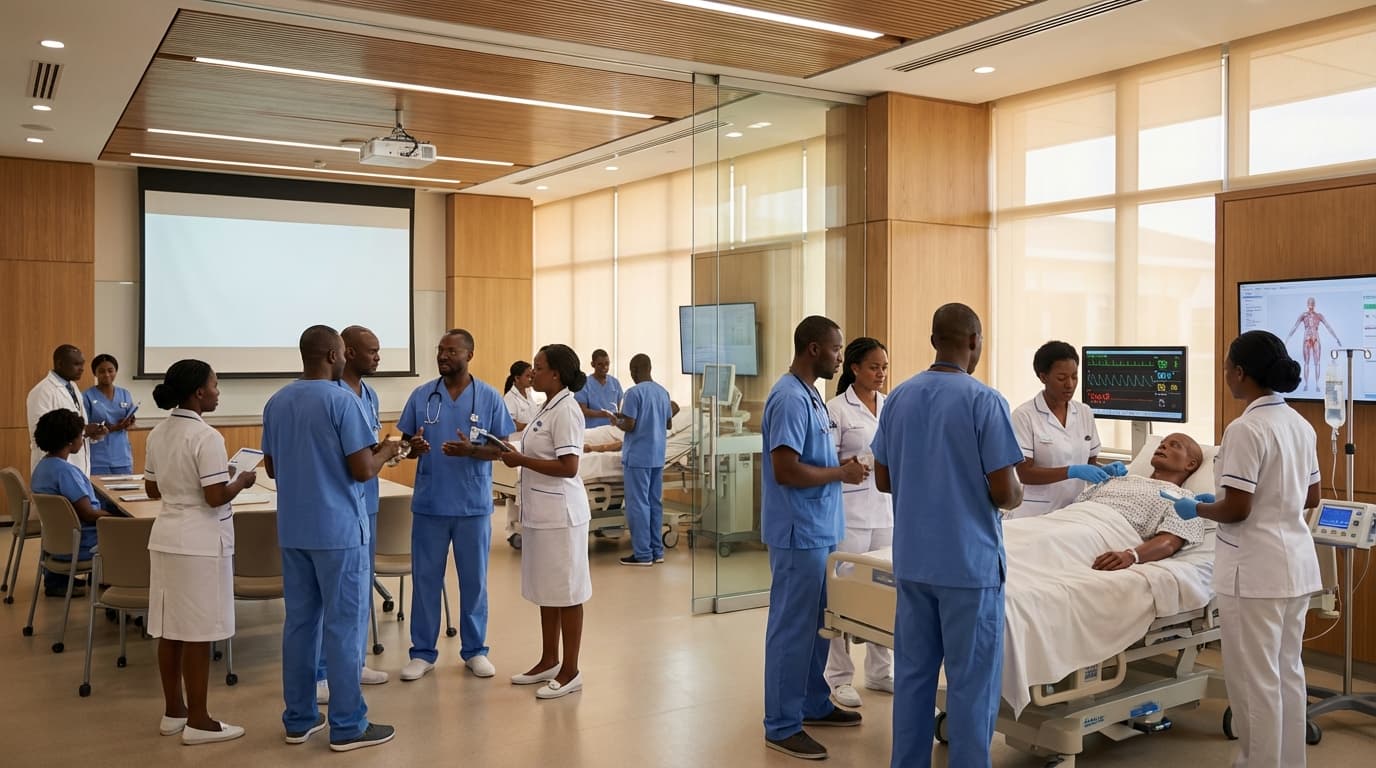
Equipment Training & Education in Seychelles
Engineering Excellence & Technical Support
Comprehensive equipment training and certification programs High-standard technical execution following OEM protocols and local regulatory frameworks.
Advanced Machinery Simulation Lab
Establish a state-of-the-art simulation lab featuring virtual reality (VR) and augmented reality (AR) modules for hands-on training on critical equipment like heavy machinery, marine engines, and specialized industrial tools. This allows for safe, cost-effective, and repeatable training scenarios replicating real-world operational challenges.
Modular E-Learning Platform for Skill Progression
Develop a comprehensive, cloud-based e-learning platform offering modular courses tailored to different equipment types and skill levels. This platform will incorporate interactive quizzes, video tutorials, downloadable manuals, and progress tracking, enabling continuous learning and certification for a diverse workforce across tourism, fisheries, and infrastructure sectors.
On-Site, Train-the-Trainer Workshops
Implement targeted 'train-the-trainer' programs conducted by certified technical instructors. These workshops will equip local supervisors and experienced technicians with the pedagogical skills and up-to-date knowledge to effectively train their own teams, fostering a sustainable in-country capacity for equipment operation and maintenance best practices.
What Is Equipment Training & Education In Seychelles?
Equipment training and education in Seychelles refers to the structured process of imparting knowledge and practical skills to individuals for the safe, efficient, and effective operation, maintenance, and troubleshooting of specific machinery, tools, and systems. This service is critical for ensuring workplace safety, optimizing productivity, minimizing equipment downtime, and complying with regulatory standards. It encompasses a range of learning methodologies, from theoretical instruction and hands-on practice to simulations and on-the-job coaching, tailored to the complexity of the equipment and the experience level of the trainees. The objective is to develop competency in users, operators, technicians, and maintenance personnel, thereby enhancing their ability to interact with and manage equipment throughout its lifecycle.
| Who Needs Equipment Training & Education? | Typical Use Cases in Seychelles | ||||||||
|---|---|---|---|---|---|---|---|---|---|
| Industrial Workers: Operators of manufacturing machinery, construction equipment, and processing plant systems. | Construction Sites: Training on excavators, cranes, concrete mixers, scaffolding, and power tools. Ensuring compliance with building codes and safety regulations. | Hospitality Sector: Staff operating kitchen appliances (commercial ovens, dishwashers), laundry equipment, HVAC systems, and audiovisual equipment in hotels and resorts. | Marine and Fisheries Sector: Personnel trained on fishing vessels, boat engines, navigation systems, refrigeration units, and processing machinery for seafood. | Agricultural Workers: Operators of tractors, harvesters, irrigation systems, and processing equipment for agricultural produce. | Healthcare Professionals: Training on medical imaging devices (MRI, CT scanners), laboratory equipment, surgical instruments, and patient monitoring systems. | IT and Office Personnel: Users of advanced printers, copiers, network infrastructure, and specialized software applications. | Energy and Utilities Sector: Technicians and operators of power generation equipment, water treatment plants, and distribution network infrastructure. | Tourism and Transportation: Drivers and maintenance staff for buses, taxis, rental vehicles, and related transportation infrastructure. | Service Technicians: Individuals responsible for installing, maintaining, and repairing a wide range of equipment across various sectors. |
Key Components of Equipment Training & Education in Seychelles:
- Operator Training: Focuses on the fundamental operation of equipment, including startup procedures, control functions, safe operating parameters, and emergency shutdowns. This is essential for personnel directly using machinery.
- Maintenance Training: Covers routine servicing, preventive maintenance schedules, diagnostic procedures, component identification, and minor repair techniques. This is crucial for technicians and engineers responsible for equipment upkeep.
- Safety Training: Emphasizes hazard identification, risk assessment, personal protective equipment (PPE) usage, lockout/tagout procedures, and emergency response protocols related to specific equipment.
- Troubleshooting and Repair Training: Delves into diagnosing common faults, interpreting error codes, using specialized diagnostic tools, and performing complex repairs. This is targeted at skilled technicians and engineers.
- Specialized Systems Training: Addresses advanced features, software interfaces, and integrated systems associated with sophisticated equipment, often requiring in-depth understanding.
- Refresher Training: Periodic sessions designed to reinforce existing knowledge, introduce updates or modifications, and address any degradation in operator or technician proficiency.
Who Needs Equipment Training & Education In Seychelles?
In Seychelles, comprehensive equipment training and education are vital for a diverse range of individuals and organizations to ensure safe, efficient, and compliant operation of various machinery and systems. This is crucial across numerous sectors to minimize accidents, maximize productivity, prolong equipment lifespan, and adhere to industry standards and regulations.
| Sector/Industry | Key Departments/Roles | Types of Equipment |
|---|---|---|
| Tourism & Hospitality | Housekeeping, Maintenance, Kitchen Staff, Tour Guides | Cleaning machinery, kitchen appliances, audio-visual equipment, vehicles (golf carts, minibuses), water sports equipment |
| Maritime & Fisheries | Deck Crew, Engineers, Fishermen, Port Operations | Fishing nets, winches, engines, navigation systems, safety equipment, cranes, forklifts |
| Construction | Operators, Supervisors, Engineers, Laborers | Excavators, bulldozers, cranes, concrete mixers, power tools, scaffolding, welding equipment |
| Agriculture | Farmers, Farm Managers, Technicians | Tractors, harvesters, irrigation pumps, processing machinery, sprayers |
| Healthcare | Nurses, Doctors, Lab Technicians, Biomedical Engineers | X-ray machines, MRI scanners, laboratory analyzers, surgical instruments, patient monitoring systems |
| Government & Public Services | Public Works, Waste Management, Fire Services, Police | Street sweepers, waste compactors, fire engines, specialized vehicles, communication equipment |
| Industrial & Manufacturing | Production Line Workers, Maintenance Technicians, Quality Control | Assembly lines, CNC machines, packaging equipment, welding machines, material handling systems |
| Transportation & Logistics | Drivers, Warehouse Staff, Fleet Managers | Trucks, forklifts, pallet jacks, loading docks, cargo handling equipment |
| Energy & Utilities | Plant Operators, Maintenance Crews, Technicians | Generators, pumps, control systems, switchgear, piping systems |
Target Customers & Departments for Equipment Training & Education in Seychelles:
- Tourism & Hospitality Sector: Essential for staff operating and maintaining equipment in hotels, resorts, restaurants, and tour operations.
- Maritime & Fisheries Sector: Crucial for seafarers, fishermen, port authorities, and boat operators handling marine vessels and fishing gear.
- Construction & Infrastructure Development: Vital for workers, supervisors, and engineers involved in operating heavy machinery, tools, and construction equipment.
- Agriculture & Agribusiness: Necessary for farmers, farm managers, and technicians utilizing agricultural machinery, processing equipment, and irrigation systems.
- Healthcare Sector: Important for medical professionals and technicians trained on the safe and effective use of specialized medical equipment and diagnostic tools.
- Government & Public Services: Essential for employees in departments responsible for public infrastructure, utilities, emergency services, and transportation.
- Industrial & Manufacturing Operations: Critical for factory workers, technicians, and engineers operating production machinery, processing equipment, and specialized industrial tools.
- Transportation & Logistics: Necessary for drivers, mechanics, and warehouse staff operating vehicles, material handling equipment, and loading/unloading systems.
- Energy & Utilities: Vital for personnel managing and maintaining power generation equipment, water treatment facilities, and distribution networks.
- Small & Medium Enterprises (SMEs): Important for business owners and employees who use specialized equipment in their daily operations to ensure efficiency and safety.
- Educational Institutions & Training Providers: For instructors and students in vocational schools, colleges, and training centers offering courses related to equipment operation and maintenance.
- Individuals seeking professional development: For those looking to acquire new skills or enhance existing ones for career advancement in equipment-intensive industries.
Equipment Training & Education Process In Seychelles
The Equipment Training & Education Process in Seychelles encompasses a structured workflow designed to ensure individuals and organizations acquire the necessary knowledge and skills to operate specific equipment safely and efficiently. This process typically begins with an initial inquiry and culminates in the successful completion of training and provision of educational resources. The workflow is crucial for maintaining operational standards, enhancing safety, and maximizing the lifespan and effectiveness of valuable equipment across various sectors in Seychelles, including tourism, fisheries, construction, and healthcare.
| Stage | Description | Key Activities | Responsible Parties | Outputs/Deliverables |
|---|---|---|---|---|
| Inquiry & Needs Assessment | Initial contact from a client or organization expressing interest in training for specific equipment. | Client identifies training needs, specifies equipment, number of trainees, desired outcomes, and preferred timelines. | Prospective Client, Training Provider (Internal or External) | Clear understanding of training requirements, equipment specifications, and client objectives. |
| Proposal & Quotation | The training provider develops a tailored proposal based on the assessed needs. | Detailed breakdown of training modules, duration, methodology, trainer qualifications, costs, and terms. | Training Provider | Formal Proposal document, Quotation, Agreement/Contract. |
| Training Plan Development | Once the proposal is accepted, a detailed training plan is created. | Curriculum design, learning objectives, content outline, practical exercises, assessment methods, and safety protocols. | Training Provider (Instructional Designers, Subject Matter Experts) | Comprehensive Training Curriculum, Lesson Plans, Training Materials Outline. |
| Resource & Schedule Confirmation | Logistics and scheduling are finalized to ensure smooth execution. | Booking training venues, confirming availability of trainers, scheduling equipment for practical sessions, coordinating trainee attendance, and confirming any necessary travel or accommodation. | Training Provider, Client (for trainee coordination) | Confirmed Training Schedule, Venue Confirmation, Trainer Assignment, Equipment Availability Confirmation. |
| Training Delivery & Execution | The actual training sessions are conducted. | Theoretical instruction (lectures, presentations, e-learning modules) combined with practical, hands-on sessions, demonstrations, and simulations. | Certified Trainers, Trainees | Delivered training content, hands-on practice sessions, engagement with training materials. |
| Assessment & Evaluation | The effectiveness of the training is measured. | Quizzes, written exams, practical skill assessments, observational evaluations, and feedback surveys from trainees. | Trainers, Training Provider's Assessment Team | Assessment Scores, Performance Evaluation Reports, Trainee Feedback Summaries. |
| Certification & Documentation | Formal recognition of successful completion of the training. | Issuance of certificates of completion, training records, and detailed reports on trainee performance. | Training Provider | Certificates of Competency/Completion, Training Records, Final Training Report. |
| Post-Training Support & Follow-up | Ongoing assistance and reinforcement of learning. | Providing access to resources, answering queries, conducting refresher courses, or offering advanced training based on evolving needs. | Training Provider, Client | Technical support, access to online resources, follow-up consultations, updated training materials. |
Key Stages of the Equipment Training & Education Process:
- Inquiry & Needs Assessment
- Proposal & Quotation
- Training Plan Development
- Resource & Schedule Confirmation
- Training Delivery & Execution
- Assessment & Evaluation
- Certification & Documentation
- Post-Training Support & Follow-up
Equipment Training & Education Cost In Seychelles
The cost of equipment training and education in Seychelles can vary significantly based on several factors. These include the type and complexity of the equipment, the duration and depth of the training, the qualifications and experience of the trainers, the location and facilities used, and the number of participants. Local businesses and educational institutions offer a range of programs, from introductory sessions to advanced certification courses. The Seychellois Rupee (SCR) is the local currency. Pricing is generally presented in SCR, although some international training providers might quote in USD or EUR, which will then need to be converted. Factors influencing cost are key to understanding the pricing ranges.
| Training Category | Typical Duration | Estimated Price Range (SCR) | Notes |
|---|---|---|---|
| Basic Equipment Operation (e.g., office equipment, light machinery) | Half-day to 1 day | 500 - 2,500 | Often provided by suppliers or as part of equipment purchase. May include hands-on practice. |
| Intermediate Technical Skills (e.g., basic IT hardware, specific software, construction tools) | 1-3 days | 2,000 - 8,000 | Offered by vocational schools, specialized training centers, or industry experts. |
| Advanced/Specialized Equipment Training (e.g., medical devices, industrial automation, marine navigation) | 3 days to 2 weeks | 7,000 - 25,000+ | Requires highly qualified trainers and specialized facilities. Often includes theoretical and practical components. |
| Certification Courses (leading to industry-recognized credentials) | Varies (weeks to months) | 10,000 - 50,000+ | Includes examination fees, comprehensive curriculum, and often requires pre-requisite knowledge. |
| Customized Corporate Training | Varies | Negotiable (per day/course) | Price depends on the scope, complexity, and customization required. Usually quoted after a needs assessment. |
Key Pricing Factors for Equipment Training & Education in Seychelles
- Type and Complexity of Equipment: Training on specialized industrial machinery, advanced medical equipment, or sophisticated IT systems will naturally be more expensive than basic operational training for common tools.
- Duration and Depth of Training: A one-day introductory workshop will be considerably cheaper than a multi-week, in-depth certification program.
- Trainer Qualifications and Experience: Highly experienced and certified trainers, especially those with international recognition, command higher fees.
- Training Location and Facilities: On-site training at a company's premises might have different costs compared to training at a dedicated educational institution or a rented venue.
- Number of Participants: Group discounts are common. The cost per participant often decreases as the group size increases.
- Certification and Assessment: Courses leading to recognized certifications typically involve higher costs due to examination and accreditation fees.
- Training Materials and Resources: The provision of detailed manuals, software, simulators, or practical equipment for hands-on sessions adds to the overall cost.
- Customization of Training: Tailored training programs designed to meet specific organizational needs may incur additional development costs.
Affordable Equipment Training & Education Options
Investing in proper equipment training and education is crucial for safety, efficiency, and productivity. Fortunately, there are numerous affordable options available, and by understanding value bundles and implementing smart cost-saving strategies, organizations can maximize their return on investment. This guide explores these avenues to help you access high-quality training without breaking the bank.
| Strategy | Description | Cost-Saving Benefit |
|---|---|---|
| Value Bundles | Combining multiple training modules, certifications, or training sessions into a single package at a discounted price. This could include basic operation, advanced maintenance, and safety protocols for a specific piece of equipment. | Reduces the per-unit cost of training and encourages comprehensive skill development. |
| Bulk Discounts | Negotiating lower prices for training when multiple employees or courses are purchased simultaneously. Many providers offer tiered pricing based on volume. | Significant savings when training a team or a large cohort of employees. |
| Subscription Models | Paying a recurring fee (monthly or annual) for access to a library of online courses or continuous learning resources. This is ideal for ongoing training needs. | Predictable costs and unlimited access to a wide range of training materials, preventing ad-hoc, expensive purchases. |
| Early Bird Registration | Registering for workshops or courses well in advance of the start date to receive discounted rates. | Saves money by planning training ahead of time. |
| Off-Peak Training Scheduling | Conducting training during slower business periods or at off-peak times, which can sometimes lead to lower venue or instructor fees. | Reduces overhead costs associated with training delivery. |
| Leveraging Free Resources | Utilizing free webinars, manufacturer documentation, safety videos, and online forums for basic knowledge and supplementary learning. | Minimizes expenditure on introductory or easily accessible information. |
| Group Discounts for Smaller Businesses | Pooling resources with other small businesses to achieve bulk discounts on training programs. | Enables smaller organizations to access training at more competitive rates. |
| Certification Bundles | Purchasing training that leads to multiple recognized certifications at a bundled price, rather than acquiring each separately. | Streamlines the certification process and reduces overall costs for accreditation. |
Types of Affordable Equipment Training & Education
- Online Courses and Webinars: Flexible, self-paced, and often significantly cheaper than in-person sessions. Platforms like Coursera, Udemy, LinkedIn Learning, and specialized industry providers offer a vast array of courses.
- Manufacturer-Provided Training: Many equipment manufacturers offer basic training as part of a purchase agreement or at a reduced cost for their clients. Inquire about available resources.
- Community Colleges and Vocational Schools: Offer foundational courses in various equipment operation and maintenance, often at accessible tuition rates.
- Apprenticeship Programs: Combines on-the-job training with classroom instruction, providing a cost-effective way to develop skilled workers.
- Internal Training Programs: Developing in-house expertise allows for customized training tailored to specific equipment and operational needs, reducing external costs over time.
- Train-the-Trainer Programs: Equips internal staff with the skills to deliver training to others, creating a sustainable and cost-efficient training infrastructure.
- Government and Non-Profit Initiatives: Look for grants, subsidies, or free training programs offered by government agencies or non-profit organizations focused on workforce development.
Verified Providers In Seychelles
Navigating the healthcare landscape in Seychelles, especially when seeking specialized or premium services, requires trust and confidence in the providers you choose. Franance Health has emerged as a leading name, distinguishing itself through a rigorous credentialing process that ensures patients receive the highest standard of care. This commitment to verification isn't just a formality; it's a cornerstone of their patient-centric approach, offering peace of mind and demonstrable quality.
| Provider Type | Franance Health Verification Includes | Why This Matters for Patients |
|---|---|---|
| General Practitioners | Valid medical license, board certification (where applicable), peer reviews, background checks. | Ensures a solid foundation of medical knowledge and a trustworthy primary care physician. |
| Specialists (e.g., Surgeons, Cardiologists, Oncologists) | Specialty board certification, fellowship training, extensive clinical experience, publication record (if applicable), patient satisfaction scores. | Guarantees access to highly specialized knowledge and advanced techniques for complex conditions. |
| Diagnostic Imaging Centers | Accreditation by recognized bodies, certified technologists, advanced equipment maintenance protocols, quality control measures. | Provides accurate and reliable diagnostic results, crucial for effective treatment planning. |
| Rehabilitation Services | Licensed therapists, relevant certifications, proven treatment methodologies, positive patient outcomes. | Ensures effective recovery and support for regaining health and mobility. |
What Franance Health Credentials Mean for You:
- Rigorous Vetting of Medical Professionals: Franance Health meticulously examines the qualifications, experience, and professional standing of every healthcare provider within their network. This includes verifying medical licenses, certifications, and specialist accreditations.
- Commitment to Patient Safety and Quality: Their credentialing process prioritizes patient safety and the delivery of high-quality medical outcomes. This means working with providers who adhere to best practices and maintain excellent track records.
- Access to Specialized Expertise: By partnering with verified specialists, Franance Health ensures that you have access to the most skilled professionals for your specific health needs, whether it's complex surgery, advanced diagnostics, or niche medical treatments.
- Ethical Practice and Professional Integrity: Franance Health is dedicated to upholding the highest ethical standards in healthcare. Their verified providers are expected to demonstrate professionalism, integrity, and a patient-first philosophy.
- Streamlined Access to Premium Healthcare: The assurance of verified providers simplifies your decision-making process, allowing you to focus on your health with the confidence that you are receiving care from reputable and highly qualified individuals.
Scope Of Work For Equipment Training & Education
This Scope of Work (SOW) outlines the requirements for providing comprehensive equipment training and education to designated personnel. The objective is to ensure users are proficient in the safe, efficient, and effective operation, maintenance, and troubleshooting of the specified equipment. This SOW details the technical deliverables, standard specifications for the training program, and outlines the expected outcomes.
| Deliverable | Description | Standard Specifications | Acceptance Criteria |
|---|---|---|---|
| Training Curriculum Development | Creation of detailed training materials, including lesson plans, presentations, and practical exercises. | Modules must cover operation, safety, maintenance, and troubleshooting. Content to be reviewed and approved by Client. Format: Digital (PDF, PPT) and printed copies. | Curriculum reviewed and approved by the Client representative prior to delivery. Content accuracy and relevance verified. |
| Training Delivery (On-Site/Remote) | Conducting interactive training sessions for designated personnel. | Training sessions to be conducted by certified and experienced instructors. Maximum class size per instructor to be defined. Methodology: Instructor-led, hands-on, and/or virtual simulation as appropriate. | Scheduled training sessions completed on time. Positive trainee feedback collected via post-training evaluation forms. Attendance records maintained. |
| Training Materials | Provision of all necessary training documentation to participants. | Includes participant manuals, quick reference guides, safety checklists, and troubleshooting flowcharts. Language: English (or specified language). | All materials distributed to trainees prior to or at the commencement of training. Materials are clear, concise, and aligned with the curriculum. |
| Competency Assessment | Evaluation of trainee understanding and practical application of learned skills. | Includes written tests, practical demonstrations, and hands-on exercises. Pass/fail criteria to be clearly defined per assessment. | Successful completion of assessments by a minimum of [e.g., 90%] of trainees. Individual assessment results documented. |
| Training Certification | Issuance of certificates to trainees who successfully complete the training program. | Certificates to include trainee name, equipment trained on, date of training, and issuing authority. Format: Digital and/or printed. | Certificates issued within [e.g., 5] business days of successful competency assessment. |
| Post-Training Support | Provision of limited support after the training sessions to address emergent questions. | Includes a defined period for email or phone support. Response time SLA: [e.g., within 24 hours]. | Support requests addressed within the agreed-upon response time. Resolution of inquiries documented. |
| Training Report | Summary report detailing training activities, attendance, assessment results, and feedback. | Report to include statistics on trainee performance, identified areas for improvement, and recommendations for future training. Format: Digital (PDF). | Report submitted to the Client within [e.g., 7] business days of training completion. Report content is accurate and comprehensive. |
Key Training Objectives
- Develop and deliver standardized training modules for the identified equipment.
- Ensure trainees achieve a demonstrable level of competency in equipment operation.
- Provide comprehensive understanding of safety protocols and emergency procedures related to the equipment.
- Equip trainees with the knowledge and skills for routine maintenance and basic troubleshooting.
- Facilitate knowledge transfer that promotes long-term equipment reliability and user independence.
Service Level Agreement For Equipment Training & Education
This Service Level Agreement (SLA) outlines the performance standards for training and educational services provided for the designated equipment. It defines response times for support requests and uptime guarantees for the delivery of educational materials and platforms.
| Service Component | Response Time Target | Uptime Guarantee |
|---|---|---|
| Technical Support for Training Platform Access Issues | 4 Business Hours | 99.5% (Monthly) |
| Content/Curriculum Inquiries (clarification, basic troubleshooting) | 8 Business Hours | N/A (Content availability is generally constant unless undergoing updates) |
| Request for Training Schedule Changes/Rescheduling | 2 Business Days | N/A |
| Access to Digital Training Materials (e.g., e-learning modules, documentation) | Immediate (upon authentication) | 99.8% (Monthly) |
| Live Virtual Training Session Availability (if applicable) | Pre-scheduled sessions | 99.0% (for scheduled session duration) |
Key Service Metrics
- Response Time: The maximum time allowed to acknowledge and begin addressing a support request.
- Resolution Time: The maximum time allowed to fully resolve a support request (where feasible and dependent on external factors).
- Uptime Guarantee: The percentage of time that the training platform and digital educational resources are available and operational.
- Availability: The expected operational status of the training platform and access to educational materials.
Frequently Asked Questions

Ready when you are
Let's scope your Equipment Training & Education in Seychelles project in Seychelles.

Scaling healthcare logistics and technical systems across the entire continent.