
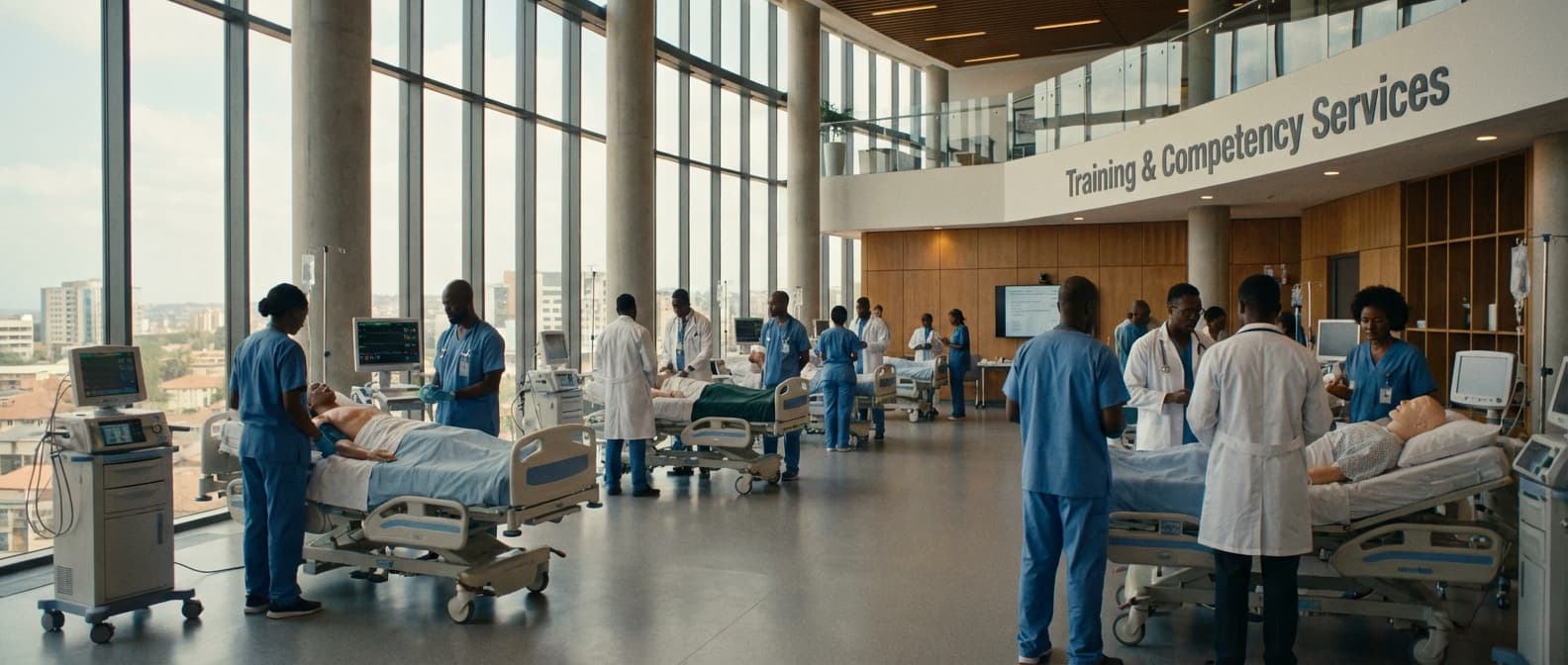
Ventilator User Training Service (Nurses) in Seychelles
Engineering Excellence & Technical Support
Ventilator User Training Service (Nurses) High-standard technical execution following OEM protocols and local regulatory frameworks.
Mastering Ventilation Modes for Diverse Patient Needs
Gain expert proficiency in selecting and configuring essential ventilator modes (e.g., AC/VC, SIMV, PSV) tailored to various patient conditions and clinical scenarios encountered in Seychelles' healthcare settings. Understand the physiological impact and optimal parameter adjustments for each mode.
Proactive Alarm Management and Troubleshooting
Develop advanced skills in interpreting and responding to ventilator alarms promptly and effectively. Learn common causes of alarms, systematic troubleshooting techniques, and best practices for ensuring patient safety and optimal ventilation in critical care situations.
Evidence-Based Weaning Protocols and Patient Transition
Acquire comprehensive knowledge of current evidence-based weaning strategies and protocols. Learn to assess patient readiness, implement appropriate weaning techniques (e.g., SBT, T-piece trials), and manage the transition to spontaneous breathing, contributing to reduced ventilation duration and improved patient outcomes.
What Is Ventilator User Training Service (Nurses) In Seychelles?
The Ventilator User Training Service (Nurses) in Seychelles is a specialized educational program designed to equip registered nurses with the knowledge and practical skills required for the safe and effective operation of mechanical ventilators. This service ensures that nursing personnel can accurately set up, monitor, troubleshoot, and manage patients requiring ventilatory support, adhering to established clinical protocols and best practices. The training emphasizes understanding ventilator principles, patient-ventilator synchrony, alarm management, secretion clearance, and weaning strategies, crucial for patient outcomes and reducing iatrogenic complications.
| Target Audience | Necessity | Typical Use Cases |
|---|---|---|
| Registered Nurses working in critical care units (ICU, HDU) | Essential for providing competent care to critically ill patients requiring respiratory support. Minimizes risk of adverse events and optimizes patient recovery. | Management of patients with acute respiratory distress syndrome (ARDS), severe pneumonia, post-operative respiratory failure, chronic obstructive pulmonary disease (COPD) exacerbations, and other conditions necessitating mechanical ventilation. |
| Registered Nurses in emergency departments or operating rooms | Required for initial stabilization and management of patients with acute respiratory compromise before transfer to higher levels of care. | Immediate management of patients presenting with respiratory failure, post-anesthesia respiratory complications, or trauma requiring ventilatory support. |
| Registered Nurses in specialized wards with ventilated patients (e.g., post-cardiac surgery) | Ensures continued safe management and monitoring of patients transitioning from critical care. | Ongoing care for patients requiring prolonged mechanical ventilation or step-down care from ICU. |
| Newly qualified Registered Nurses or those transitioning to critical care roles | Provides foundational skills and knowledge to safely manage ventilated patients. | Onboarding and skill development for nurses entering critical care environments. |
Key Components of Ventilator User Training for Nurses
- Principles of mechanical ventilation (modes, parameters, waveform analysis)
- Ventilator setup and circuit management
- Patient assessment and monitoring during ventilation
- Alarm identification and response protocols
- Oxygenation and ventilation adjustments
- Suctioning techniques and airway management
- Sedation and analgesia management in ventilated patients
- Weaning from mechanical ventilation
- Troubleshooting common ventilator issues
- Infection prevention and control related to mechanical ventilation
- Documentation requirements
Who Needs Ventilator User Training Service (Nurses) In Seychelles?
This document outlines the target customers and departments within Seychelles for Ventilator User Training Services specifically designed for nurses. The training aims to equip nurses with the necessary skills and knowledge to safely and effectively operate and manage mechanical ventilators in various clinical settings. By ensuring nurses are proficient in ventilator use, patient outcomes can be improved, and the burden on specialized respiratory therapy staff can be alleviated where appropriate.
| Department | Facility Type | Primary Need for Training | Specific Roles/Units |
|---|---|---|---|
| Intensive Care Unit (ICU) | Public Hospitals (e.g., Victoria Hospital) | Critical care management of critically ill patients requiring mechanical ventilation. | ICU Nurses |
| High Dependency Unit (HDU) / Step-down ICU | Public Hospitals (e.g., Victoria Hospital) | Monitoring and management of patients transitioning from mechanical ventilation or requiring less intensive support. | HDU/Step-down Nurses |
| Surgical Wards | Public Hospitals (e.g., Victoria Hospital) | Post-operative care for patients who may require short-term or intermittent mechanical ventilation. | Post-Anesthesia Care Unit (PACU) Nurses, Surgical Ward Nurses |
| Emergency Department (ED) | Public Hospitals (e.g., Victoria Hospital) | Initial management and stabilization of patients with respiratory distress requiring ventilatory support. | ED Nurses |
| Medical Wards (for specific conditions) | Public Hospitals (e.g., Victoria Hospital) | Management of patients with chronic respiratory conditions (e.g., COPD exacerbations) or acute respiratory infections requiring non-invasive ventilation or short-term invasive ventilation. | Medical Ward Nurses |
| Maternity/Neonatal Units | Public Hospitals (e.g., Victoria Hospital) | Management of neonates requiring respiratory support, including mechanical ventilation. | Neonatal Nurses |
| Rehabilitation Centers | Public and Private Facilities | Long-term ventilator management for patients with chronic respiratory failure or neuromuscular conditions. | Rehabilitation Nurses |
| Private Clinics/Hospitals (with critical care capabilities) | Private Healthcare Providers | Providing critical care services, including ventilator management, to a broader patient population. | Nurses in private critical care units |
Target Customers and Departments for Ventilator User Training Service (Nurses) in Seychelles
- Registered Nurses
- Enrolled Nurses
- Senior Staff Nurses
- Nurse Managers
- Nurse Educators
Ventilator User Training Service (Nurses) Process In Seychelles
This document outlines the workflow for the Ventilator User Training Service for nurses in Seychelles, detailing the process from initial inquiry to the successful execution of the training. The service aims to equip nurses with the necessary skills and knowledge to safely and effectively operate and manage ventilators, crucial for critical care in healthcare facilities.
| Phase | Stage | Key Activities | Responsible Parties | Key Deliverables/Outcomes | Timeline (Indicative) |
|---|---|---|---|---|---|
| Phase 1: Inquiry and Needs Assessment | Initial Inquiry | Healthcare facility expresses interest in ventilator user training for nurses. Submission of a formal request outlining the number of nurses, specific ventilator models to be covered, and preferred training dates. | Healthcare Facility (Nurses/Training Department), Ministry of Health (Training Coordinator) | Inquiry acknowledgement, preliminary understanding of training needs. | 1-2 business days |
| Needs Assessment & Scope Definition | Conduct a detailed needs assessment to understand the current skill level of nurses, available equipment, and specific training objectives. Define the scope of training, including theoretical content, practical sessions, and assessment methods. Identify any pre-requisite knowledge or skills required. | Ministry of Health (Training Coordinator/Subject Matter Experts), Healthcare Facility Management | Training needs assessment report, defined training objectives and scope, agreed-upon training modules. | 3-5 business days | |
| Phase 2: Training Design and Planning | Curriculum Development | Develop or adapt a comprehensive training curriculum based on the defined objectives. This includes creating presentation materials, practical skill checklists, case studies, and assessment tools. Ensure alignment with international best practices and local guidelines. | Ministry of Health (Subject Matter Experts), External Training Providers (if applicable) | Approved training curriculum, training materials (presentations, manuals, handouts). | 7-10 business days |
| Logistics and Scheduling | Finalize training dates, venue, and required equipment (ventilators, manikins, simulation tools). Coordinate with the healthcare facility for participant availability and access to the training environment. Arrange for trainers and support staff. | Ministry of Health (Training Coordinator), Healthcare Facility Management | Confirmed training schedule, booked venue, secured equipment, assigned trainers. | 3-5 business days | |
| Participant Registration | Healthcare facility nominates and registers nurses for the training. Collect participant details (name, designation, department, contact information). | Healthcare Facility (Nurses/Training Department) | List of registered participants. | 2-3 business days (prior to training) | |
| Phase 3: Training Delivery | Theoretical Sessions | Deliver lectures and presentations covering ventilator principles, modes of operation, patient monitoring, troubleshooting, and safety protocols. Utilize interactive methods and Q&A sessions. | Certified Trainers | Enhanced theoretical understanding of ventilator operation. | As per training schedule (e.g., 1-2 days) |
| Practical/Hands-on Sessions | Provide hands-on experience with actual ventilators and simulation equipment. Nurses practice setting up, adjusting, and managing ventilators under supervised conditions. Focus on critical skills and emergency scenarios. | Certified Trainers, Clinical Instructors | Proficiency in practical ventilator management skills. | As per training schedule (e.g., 2-3 days) | |
| Assessment of Learning | Evaluate participant learning through written tests, practical skill assessments (observed checklists), and scenario-based evaluations. Provide immediate feedback to participants. | Certified Trainers, Clinical Instructors | Assessment results, identification of areas for improvement. | Integrated throughout training, with a formal assessment at the end | |
| Phase 4: Post-Training Support and Evaluation | Certification | Upon successful completion of the training and assessments, issue certificates of completion to all participants. | Ministry of Health (Training Coordinator) | Certificates of completion for trained nurses. | 5-7 business days post-training |
| Feedback Collection | Gather feedback from participants and their supervisors on the training's effectiveness, relevance, and delivery. Identify areas for future improvement of the training program. | Ministry of Health (Training Coordinator), Participants, Supervisors | Training evaluation report, recommendations for program enhancement. | 1-2 business days post-training | |
| Follow-up and Refresher Training (Optional) | Establish a system for ongoing support and identify the need for refresher training or advanced modules based on feedback and evolving clinical needs. Monitor the application of learned skills in practice. | Ministry of Health (Training Coordinator), Healthcare Facilities | Sustained competency in ventilator management, identification of future training needs. | Ongoing |
Ventilator User Training Service (Nurses) Workflow in Seychelles
- Phase 1: Inquiry and Needs Assessment
- Phase 2: Training Design and Planning
- Phase 3: Training Delivery
- Phase 4: Post-Training Support and Evaluation
Ventilator User Training Service (Nurses) Cost In Seychelles
Providing ventilator user training services for nurses in Seychelles is crucial for ensuring effective patient care and emergency preparedness. The cost of such training can vary significantly due to several key pricing factors. These factors influence the overall investment required by healthcare facilities or individual nurses seeking to acquire or enhance their skills in operating and managing mechanical ventilators. Understanding these elements helps in budgeting and selecting appropriate training programs. The local currency for transactions in Seychelles is the Seychellois Rupee (SCR).
| Training Type/Scope | Estimated Price Range (SCR) | Description |
|---|---|---|
| Introductory / Basic Ventilator Awareness (Half-day) | 1,500 - 3,000 SCR | Covers fundamental principles of mechanical ventilation, basic settings, and alarm management. Suitable for nurses new to critical care environments or as a refresher. |
| Standard Ventilator User Training (1-2 Days) | 3,000 - 7,000 SCR | Comprehensive training on common ventilation modes (e.g., AC, SIMV, Pressure Support), patient assessment for ventilation, troubleshooting common issues, and weaning principles. Includes hands-on practice. |
| Advanced Ventilator Management (2-3 Days) | 6,000 - 12,000+ SCR | Focuses on complex modes (e.g., APRV, PAV), advanced troubleshooting, non-invasive ventilation (NIV), managing difficult airways, and ventilating specific patient populations (pediatrics, neonates). May include simulation labs. |
| Refresher / Skills Update (Half-day to 1 Day) | 1,000 - 4,000 SCR | Designed for nurses who have prior training but need to update their skills or refresh their knowledge on current best practices and equipment updates. Often tailored to specific hospital equipment. |
| On-site Custom Training (Per Session/Day) | 4,000 - 10,000+ SCR (plus expenses) | Tailored training delivered at a specific hospital, covering their existing ventilator models and protocols. Cost is highly variable based on duration, content, and number of participants. Travel and accommodation expenses for trainers may be additional. |
Key Pricing Factors for Ventilator User Training (Nurses) in Seychelles:
- Trainer Expertise and Qualifications: Highly experienced and certified respiratory therapists or medical educators with specialized knowledge in critical care ventilation will command higher fees.
- Training Duration and Depth: The length of the training program, ranging from introductory sessions to comprehensive, multi-day courses covering advanced ventilation modes, will directly impact the cost.
- Training Modality: Whether the training is conducted in-person at a facility, virtually via online platforms, or through a blended learning approach will affect resource allocation and pricing.
- Location and Logistics (for in-person training): If training requires travel for the instructor to different hospitals or clinics within Seychelles, associated travel, accommodation, and per diem expenses will be factored in.
- Equipment Availability for Hands-on Practice: Access to functional ventilators and simulation equipment for practical sessions is essential. If the training provider needs to supply or rent this equipment, it will add to the cost.
- Curriculum Development and Customization: The complexity of the training materials, including theoretical modules, practical guides, and case studies, and any need for customization to a specific hospital's protocols, will influence pricing.
- Certification and Assessment: The inclusion of formal assessments, examinations, and the issuance of certificates upon successful completion often adds to the overall training cost.
- Group Size and Per-Participant Cost: Training provided to larger groups might have a lower per-participant cost due to economies of scale, while individual or small-group training will likely be more expensive on a per-person basis.
- Provider Reputation and Accreditation: Well-established training institutions or those with recognized accreditations might charge a premium for their perceived quality and credibility.
Affordable Ventilator User Training Service (Nurses) Options
This document outlines affordable ventilator user training service options specifically designed for nurses. We focus on delivering high-quality, cost-effective training that empowers nurses to confidently operate and manage ventilators, ultimately improving patient care and reducing institutional costs. We will explore various training models and strategies to achieve this.
| Training Model | Description | Key Value Bundle Components | Cost-Saving Strategies | Ideal For |
|---|---|---|---|---|
| Online On-Demand Modules | Self-paced, web-based training accessible anytime, anywhere. Covers foundational knowledge, basic operation, and common troubleshooting. | Interactive video lectures, quizzes, downloadable manuals, certificate of completion. | Eliminates travel, accommodation, and instructor fees. Scalable to large numbers. Reduced facility time. | New hires, refresher training, institutions with distributed nursing staff. |
| Blended Learning (Online + Simulation) | Combines online modules with hands-on simulation sessions using mannequins or virtual reality. | Online modules, dedicated simulation lab access, certified simulation instructors, scenario-based practice. | Reduces instructor-to-student ratio for practical sessions. More efficient use of simulation equipment. Minimizes risk in a controlled environment. | Nurses requiring practical skills validation, advanced users, critical care units. |
| Train-the-Trainer Program | Empowers experienced nurses within an institution to train their colleagues, creating an internal expertise hub. | Intensive instructor training, curriculum development support, ongoing mentor access, certification for internal trainers. | Significantly reduces external training costs long-term. Fosters a culture of continuous learning. Tailored training to specific institutional equipment and protocols. | Larger hospitals/healthcare systems, institutions with a commitment to internal professional development. |
| Group On-Site Workshops (Customized) | Instructor-led training delivered at the institution's facility, tailored to specific ventilator models and institutional protocols. | On-site instructor, customized curriculum, hands-on practice with available equipment, Q&A sessions, group discounts. | Reduced travel for nurses. Training can be scheduled to minimize disruption to patient care. Cost-effective for larger groups compared to individual external training. | Institutions with specific equipment needs, new ventilator acquisitions, or when a cohort of nurses requires simultaneous training. |
| Subscription-Based Access (Annual/Multi-Year) | Continuous access to a library of online training materials, including updates and new modules, for a recurring fee. | Unlimited access to all online courses, regular content updates, advanced analytics on user progress, potential for specialized modules. | Predictable budgeting. Ensures staff are always up-to-date with the latest guidelines and equipment. Eliminates per-user training costs for ongoing education. | Healthcare systems seeking a long-term, scalable training solution for all nursing staff. |
Key Value Propositions for Affordable Ventilator Training for Nurses
- Enhanced Patient Safety: Properly trained nurses minimize ventilator-related complications.
- Reduced Staffing Costs: Competent nurses require less direct supervision.
- Improved Operational Efficiency: Faster setup and troubleshooting reduce downtime.
- Increased Staff Morale & Retention: Investing in professional development boosts job satisfaction.
- Compliance & Accreditation Readiness: Meeting regulatory requirements.
- Potential for Reduced Complication Costs: Preventing adverse events saves on treatment expenses.
Verified Providers In Seychelles
In the Seychelles, ensuring access to reliable and qualified healthcare providers is paramount. Franance Health stands out as a leading platform that meticulously vets and verifies healthcare professionals, guaranteeing a high standard of care for all users. This commitment to credential verification is not just a procedural step; it's a cornerstone of their service, building trust and confidence in the healthcare ecosystem.
| Verification Aspect | Franance Health's Commitment | Benefit to Patients in Seychelles |
|---|---|---|
| Medical Licenses and Registrations | Franance Health verifies that all listed providers hold current and valid medical licenses issued by relevant authorities in Seychelles and/or their country of origin. | Ensures providers are legally authorized to practice medicine, guaranteeing adherence to local healthcare regulations. |
| Educational Qualifications | The platform confirms the authenticity of medical degrees, diplomas, and specialized training certificates from accredited institutions. | Assures patients are receiving care from appropriately educated and trained medical professionals. |
| Professional Experience and Background Checks | Franance Health may conduct checks on professional history, including any disciplinary actions or malpractice claims, to ensure a clean record. | Provides an added layer of assurance regarding the provider's professional integrity and past performance. |
| Specialty Certifications | For specialists, Franance Health verifies their board certifications and accreditations in their respective fields. | Allows patients to confidently select specialists with proven expertise in their specific medical needs. |
| Ongoing Compliance Monitoring | While not always a public-facing element, Franance Health aims to stay informed about any changes in provider credentials and regulatory updates. | Helps maintain the integrity of the platform and ensures continued assurance of provider quality over time. |
Why Franance Health Credentials Matter in Seychelles:
- Rigorous Verification Process: Franance Health employs a multi-layered approach to authenticate the qualifications, licenses, and professional history of every provider listed on their platform. This includes cross-referencing with official regulatory bodies and educational institutions.
- Enhanced Patient Safety: By confirming that all providers meet stringent standards, Franance Health significantly minimizes the risk of patients encountering unqualified or fraudulent practitioners.
- Access to Top-Tier Professionals: The verification process ensures that patients have access to experienced and reputable healthcare professionals who are dedicated to delivering exceptional care.
- Transparency and Trust: Franance Health's commitment to transparency in their verification process empowers patients with the knowledge that they are engaging with legitimate and competent healthcare providers.
- Streamlined Healthcare Navigation: For individuals in Seychelles seeking medical services, Franance Health simplifies the process of finding reliable care, saving valuable time and reducing stress.
Scope Of Work For Ventilator User Training Service (Nurses)
This Scope of Work (SOW) outlines the requirements for providing comprehensive ventilator user training services specifically tailored for nursing staff. The objective is to ensure nurses are proficient in the safe and effective operation, monitoring, and troubleshooting of mechanical ventilators, ultimately enhancing patient care and safety. The training will encompass both theoretical knowledge and practical, hands-on application of ventilator functionalities. Standard specifications for technical deliverables and training materials are detailed below.
| Training Module | Learning Objectives | Content Focus | Delivery Method | Duration (Approx.) |
|---|---|---|---|---|
| Ventilator Fundamentals | Understand basic principles of mechanical ventilation; Identify key ventilator components and their functions. | Definition of mechanical ventilation, pressure vs. volume control, basic waveform interpretation, common ventilator parts (ET tube, circuit, humidifiers). | Lecture, PowerPoint presentation, interactive Q&A | 2 hours |
| Ventilator Modes and Settings | Describe common ventilation modes; Select appropriate initial settings based on patient condition; Understand the impact of different settings on patient physiology. | AC/VC, PC-CMV, SIMV, PSV, BiPAP/CPAP; Tidal volume, respiratory rate, PEEP, FiO2, flow rate, I:E ratio; Patient-ventilator synchrony. | Lecture, demonstration on actual or simulator ventilator, case studies | 3 hours |
| Patient Monitoring and Assessment | Interpret ventilator graphics and alarms; Recognize signs of ventilator-induced complications; Perform routine patient assessments. | Pressure waveforms, flow waveforms, volume loops; Alarm troubleshooting (high pressure, low volume, apnea); Patient assessment (lung sounds, chest excursion, hemodynamics). | Simulation exercises, video analysis, group discussion | 2.5 hours |
| Ventilator Management and Troubleshooting | Identify and manage common ventilator-related issues; Understand weaning parameters and procedures; Recognize potential complications. | Securing the ET tube, circuit management, secretion management; Ventilator dyssynchrony, accidental extubation, pneumothorax, VAP prevention; Weaning readiness assessment, SBT protocols. | Hands-on practice with ventilator scenarios (simulator or actual), role-playing | 3 hours |
| Special Populations and Advanced Topics | Adapt ventilation strategies for specific patient populations; Understand advanced ventilation concepts. | Pediatric and neonatal ventilation, ARDS management, non-invasive ventilation principles (if applicable). | Lecture, case study analysis, expert panel Q&A | 1.5 hours |
| Competency Assessment | Demonstrate proficiency in all learned skills. | Written quiz covering theoretical knowledge; Practical skills assessment on ventilator operation and troubleshooting. | Written exam and practical skills demonstration | 1.5 hours |
Technical Deliverables
- Comprehensive Training Manuals (digital and/or print)
- Interactive Training Modules (e.g., e-learning, simulation)
- Case Study Scenarios for practical application
- Competency Assessment Tools (quizzes, practical skill checklists)
- Certificate of Completion for all participants
- Post-training support resources (FAQs, contact information for expert assistance)
Service Level Agreement For Ventilator User Training Service (Nurses)
This Service Level Agreement (SLA) outlines the guaranteed response times and uptime for the Ventilator User Training Service provided to nurses. It defines the expected performance levels and remedies for any deviations.
| Service Component | Response Time Guarantee | Uptime Guarantee |
|---|---|---|
| Live Training Sessions (Scheduling) | Confirmation of scheduled session within 2 business days of request. | N/A (Scheduled events are managed separately). |
| Live Training Sessions (Technical Support during session) | Immediate acknowledgment and initiation of troubleshooting during the live session. | 99.5% availability of the live training platform during scheduled session times. |
| On-Demand Video Modules | Access to module within 1 business day of request/enrollment. | 99.9% availability of the on-demand training platform. |
| Q&A Support Sessions (Submission) | Acknowledgment of submitted question within 4 business hours. | N/A (Availability of submission portal is covered by platform uptime). |
| Q&A Support Sessions (Response) | Answer provided to submitted questions within 1 business day. | N/A |
| Knowledge Base Access | Instantaneous access. | 99.9% availability of the knowledge base platform. |
Key Service Components
- Live Training Sessions
- On-Demand Video Modules
- Q&A Support Sessions
- Knowledge Base Access
Frequently Asked Questions

Ready when you are
Let's scope your Ventilator User Training Service (Nurses) in Seychelles project in Seychelles.

Scaling healthcare logistics and technical systems across the entire continent.