
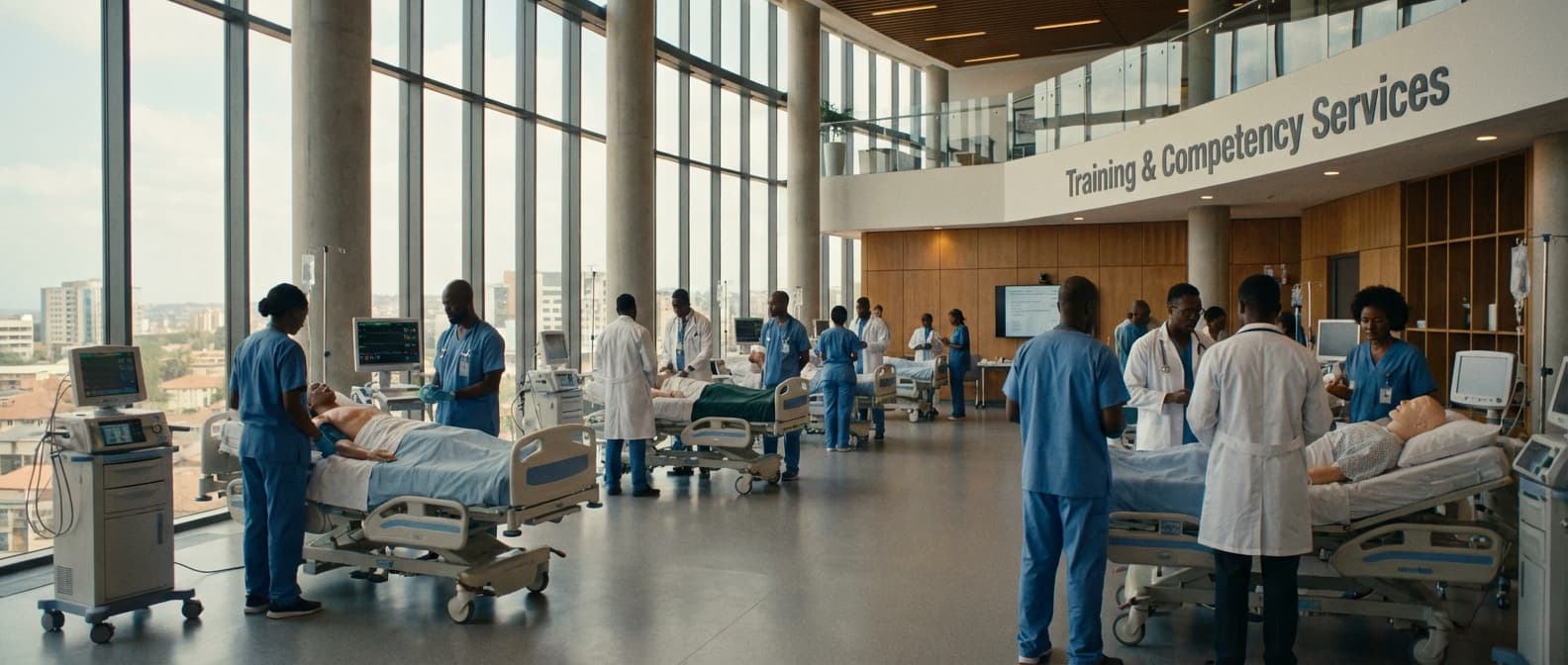
Anesthesia Workstation User Training Service in Seychelles
Engineering Excellence & Technical Support
Anesthesia Workstation User Training Service High-standard technical execution following OEM protocols and local regulatory frameworks.
Advanced Monitoring Integration
Master the seamless integration of your Anesthesia Workstation with state-of-the-art patient monitoring systems. Our training covers real-time data interpretation, alarm management, and waveform analysis to enhance patient safety and clinical decision-making in Seychelles' unique healthcare environment.
Ventilator Mode Optimization
Gain expert proficiency in navigating and optimizing the diverse range of ventilator modes offered by your Anesthesia Workstation. Learn to select appropriate modes, adjust parameters, and troubleshoot common ventilation challenges for patients undergoing surgery in diverse clinical settings across Seychelles.
Anesthetic Agent Delivery Mastery
Achieve precise control over anesthetic gas delivery. Our comprehensive training focuses on accurate agent selection, flow control, vaporiser calibration, and closed-loop anesthesia techniques, ensuring optimal patient sedation and recovery within the protocols and resources available in Seychelles.
What Is Anesthesia Workstation User Training Service In Seychelles?
The Anesthesia Workstation User Training Service in Seychelles is a specialized educational program designed to impart comprehensive knowledge and practical skills required for the safe and effective operation of anesthesia workstations. This service is crucial for medical professionals tasked with administering anesthesia, ensuring patient safety, and optimizing the use of sophisticated medical equipment within healthcare facilities. The training encompasses theoretical understanding of workstation components, physiological principles underlying anesthesia delivery, and hands-on proficiency in system setup, monitoring, drug administration, ventilation modes, troubleshooting, and emergency procedures. Emphasis is placed on adhering to established clinical protocols and best practices specific to the Seychelles healthcare context.
| Target Audience | Rationale for Training | Typical Use Cases |
|---|---|---|
| Anesthesiologists | Ensuring proficient and safe administration of anesthesia, utilization of advanced features, and adherence to protocols. | Routine surgical procedures, complex surgeries requiring advanced monitoring and ventilation, emergency airway management. |
| Anesthesia Assistants/Technicians | Assisting anesthesiologists with workstation setup, patient monitoring, and basic troubleshooting, ensuring equipment readiness. | Pre-operative workstation setup and checks, intra-operative assistance with monitoring and gas delivery, post-operative equipment management. |
| Intensivists and Critical Care Physicians | Applying advanced ventilation strategies and monitoring capabilities for critically ill patients. | Mechanical ventilation support in the ICU, management of patients with respiratory failure, advanced hemodynamic monitoring. |
| Healthcare Facility Biomedical Engineers/Technicians | Understanding user-level functionalities for diagnostic purposes, basic troubleshooting, and facilitating specialized maintenance. | Pre-purchase evaluation of workstations, initial installation and configuration, routine equipment checks, liaison during complex repairs. |
| Medical Training Institutions (Clinical Simulation Centers) | Providing standardized and high-fidelity training for future anesthesia professionals. | Undergraduate and postgraduate medical education, continuous professional development programs, competency assessment. |
Key Components of Anesthesia Workstation User Training Service:
- Workstation Hardware and Software Familiarization: Detailed understanding of the physical components, user interface, and integrated software functionalities.
- Principles of Anesthesia Delivery: Review of gas delivery systems, vaporizers, ventilators, and gas scavenging.
- Patient Monitoring Integration: Training on connecting and interpreting data from various monitoring modules (e.g., ECG, SpO2, EtCO2, NIBP).
- Ventilation Management: In-depth instruction on mechanical ventilation modes, parameters, and patient lung mechanics.
- Pharmacology and Drug Administration: Safe and accurate delivery of anesthetic agents and adjuncts through the workstation.
- Troubleshooting and Alarm Management: Identification, interpretation, and resolution of common workstation alarms and malfunctions.
- Emergency Procedures: Simulation of critical events and appropriate workstation responses.
- Maintenance and Sterilization Protocols: Understanding basic user-level maintenance and hygiene requirements.
- Regulatory Compliance and Safety Standards: Adherence to local and international guidelines for anesthesia equipment use.
- Hands-on Simulation and Practical Exercises: Supervised practice sessions on functional or simulated anesthesia workstations.
Who Needs Anesthesia Workstation User Training Service In Seychelles?
Anesthesia workstation user training services are crucial for ensuring safe and effective patient care in Seychelles. These services are designed to equip healthcare professionals with the knowledge and skills necessary to operate sophisticated anesthesia delivery systems and monitoring equipment. The primary goal is to minimize risks, optimize patient outcomes, and adhere to international best practices in anesthesia delivery.
| Department | Role of Personnel Requiring Training | Specific Training Needs |
|---|---|---|
| Anesthesiology Department | Anesthesiologists, Anesthetic Technicians | In-depth understanding of workstation features, ventilation modes, gas delivery, agent monitoring, waveform analysis, troubleshooting, emergency procedures, and integration with other monitoring devices. |
| Surgical Departments | Surgeons (for understanding peri-operative anesthetic management) | Basic understanding of anesthesia delivery and monitoring to facilitate communication with the anesthesia team and ensure patient safety during procedures. |
| Intensive Care Unit (ICU) | Intensivists, ICU Nurses | Training on ventilation settings, monitoring capabilities, and integration of the workstation with ICU ventilators and monitoring systems for critically ill patients. |
| Operating Room (OR) Nursing Staff | OR Nurses, Charge Nurses | Familiarity with the setup, basic operation, and troubleshooting of anesthesia workstations, ensuring efficient workflow and patient safety during the peri-operative period. |
| Biomedical Engineering Department | Biomedical Engineers, Technicians | Training on maintenance, calibration, preventive maintenance, and basic troubleshooting of anesthesia workstations to ensure equipment reliability and safety. |
| Procurement and Logistics Departments | Procurement Officers, Logistics Managers | Understanding of the technical specifications and functionalities of different anesthesia workstations to make informed purchasing decisions and ensure proper handling and storage. |
Target Customers and Departments in Seychelles
- {"title":"Hospitals and Healthcare Facilities","description":"All public and private hospitals, as well as specialized surgical centers, that utilize anesthesia workstations."}
- {"title":"Medical Training Institutions","description":"Universities and colleges offering medical and nursing programs with a focus on anesthesiology and critical care."}
- {"title":"Government Health Ministries/Departments","description":"Organizations responsible for setting healthcare standards, procurement of medical equipment, and professional development of healthcare workers."}
Anesthesia Workstation User Training Service Process In Seychelles
This document outlines the typical workflow for an Anesthesia Workstation User Training Service in Seychelles, from the initial inquiry to the successful execution of the training. The process is designed to ensure that healthcare professionals receive comprehensive and effective training on the safe and optimal use of anesthesia workstations.
| Phase | Stage | Key Activities | Responsible Parties | Deliverables |
|---|---|---|---|---|
| Phase 1: Initiation | Inquiry & Initial Contact | Healthcare facility (hospital, clinic) expresses interest in anesthesia workstation user training. Initial discussions to understand basic needs and scope. | Prospective Client (Hospital/Clinic), Service Provider (Training Company/Manufacturer) | Initial understanding of training requirements, confirmation of service availability. |
| Phase 1: Initiation | Needs Assessment & Proposal Development | Detailed assessment of client's existing equipment, user experience levels, specific anesthesia practices, and desired learning outcomes. Development of a tailored training proposal outlining curriculum, duration, methodology, costs, and proposed dates. | Service Provider, Prospective Client | Detailed training proposal, quotation, draft training schedule. |
| Phase 2: Planning | Contracting & Agreement | Review and signing of the training service agreement. Formalizing terms, conditions, payment schedules, and responsibilities. | Prospective Client, Service Provider | Signed training contract. |
| Phase 2: Planning | Scheduling & Logistics | Finalizing training dates, times, and location. Arranging travel and accommodation for trainers (if necessary). Confirming availability of anesthesia workstations for hands-on practice. Coordinating with the client for participant registration. | Service Provider, Prospective Client | Confirmed training schedule, logistical arrangements confirmed. |
| Phase 2: Planning | Training Material Preparation | Development or customization of training modules, presentations, user manuals, case studies, and assessment tools relevant to the specific anesthesia workstations and the participants' needs. | Service Provider | Training curriculum, presentation slides, handouts, assessment questionnaires. |
| Phase 3: Execution | On-Site Training Delivery | Delivery of theoretical sessions (lectures, discussions) and practical hands-on sessions using anesthesia workstations. Focus on core functionalities, safety features, troubleshooting, and emergency procedures. Includes interactive exercises and Q&A. | Service Provider (Trainers), Participants | Successful completion of training modules, demonstration of competency. |
| Phase 3: Execution | Competency Assessment | Evaluation of participants' understanding and practical skills through quizzes, practical demonstrations, or scenario-based assessments. | Service Provider | Assessment results for each participant. |
| Phase 4: Closure & Follow-up | Post-Training Support | Provision of ongoing support, such as answering queries via email or phone, access to online resources, or refresher sessions if required. | Service Provider | Technical support, FAQs, online resources. |
| Phase 4: Closure & Follow-up | Training Evaluation & Feedback | Collection of feedback from participants and the client regarding the training content, delivery, trainers, and overall experience. Analysis of feedback for service improvement. | Service Provider, Participants, Prospective Client | Participant feedback forms, client satisfaction report. |
| Phase 4: Closure & Follow-up | Certification & Follow-up | Issuance of certificates of completion to participants who successfully complete the training and assessments. Follow-up communication to ensure continued effective use of the workstation and identify any further training needs. | Service Provider | Certificates of attendance/completion, post-training follow-up report. |
Anesthesia Workstation User Training Service Process in Seychelles
- Inquiry & Initial Contact
- Needs Assessment & Proposal Development
- Scheduling & Logistics
- Training Material Preparation
- On-Site Training Execution
- Post-Training Support & Evaluation
- Certification & Follow-up
Anesthesia Workstation User Training Service Cost In Seychelles
The cost of Anesthesia Workstation User Training services in Seychelles is influenced by several key factors, impacting the overall pricing. These factors include the duration of the training, the complexity of the anesthesia workstation being covered, the number of participants, the qualifications and experience of the trainers, and whether the training is conducted on-site at a healthcare facility or at a dedicated training center. Additional considerations can include the need for specialized equipment for hands-on practice, training materials provided, and any travel or accommodation expenses for trainers if the training is not local. The scope of the training, from basic operation to advanced troubleshooting and maintenance, also significantly affects the cost. While specific price lists are not readily available publicly, general ranges can be estimated based on industry standards and the local economic context of Seychelles.
| Service Component | Estimated Cost Range (SCR) | Notes |
|---|---|---|
| Basic User Training (1-2 days, single workstation model) | 10,000 - 25,000 | Covers fundamental operation, safety features, and routine checks. Assumes a small group. |
| Intermediate User Training (2-3 days, multiple models or advanced features) | 20,000 - 40,000 | Includes more in-depth usage, common troubleshooting, and potentially some parameter adjustments. May involve simulators. |
| Advanced User/Clinical Application Training (3+ days, complex workstations) | 35,000 - 70,000+ | Focuses on specific clinical applications, complex procedures, advanced troubleshooting, and possibly basic maintenance. Often tailored to specific hospital needs. |
| On-site Training (Additional per day, for travel/logistics) | 2,000 - 5,000 | Covers the provider's on-site expenses and logistical arrangements, beyond the core training fee. |
| Per Participant Fee (for large groups, added to base cost) | 500 - 1,500 | Applicable when the number of participants exceeds the initial group size considered in the base quote. |
| Customized Training Modules | Custom Quote Required | For highly specialized needs, specific equipment integration, or unique protocols. |
Factors Influencing Anesthesia Workstation User Training Costs in Seychelles
- Training Duration (hours/days)
- Anesthesia Workstation Model Complexity
- Number of Participants
- Trainer Qualifications & Experience
- Training Location (On-site vs. Off-site)
- Need for Specialized Equipment/Simulators
- Training Material Inclusions
- Travel & Accommodation Expenses (if applicable)
- Training Scope (Basic operation, advanced features, troubleshooting, maintenance)
- Provider's Overhead & Profit Margin
Affordable Anesthesia Workstation User Training Service Options
Providing accessible and effective user training for affordable anesthesia workstations is crucial for ensuring patient safety and maximizing the utility of these cost-effective solutions. This service focuses on empowering healthcare professionals with the knowledge and skills to operate these machines confidently and efficiently. We offer flexible training options designed to cater to diverse institutional needs and budgets, emphasizing value bundles and strategic cost-saving measures.
| Value Bundle Name | Included Services | Target Audience | Key Benefits | Estimated Cost Savings |
|---|---|---|---|---|
| Essential Operator Package | Core curriculum on workstation operation, basic troubleshooting, and safety protocols. Includes one on-site or virtual training session per 10 users. | New users, basic operational needs. | Foundational knowledge, rapid user adoption, reduced initial errors. | 15-20% reduction in training-related travel and time away from clinical duties compared to individual sessions. |
| Advanced Proficiency Bundle | Includes Essential Operator Package plus advanced feature utilization, common maintenance tasks, and hands-on simulation exercises. Offers two training sessions. | Experienced users, those performing advanced procedures, or technicians. | Maximized workstation potential, improved efficiency, reduced need for external technical support for minor issues. | 20-25% reduction in downtime due to user error and minor technical issues, potential for extended equipment lifespan. |
| Train-the-Trainer Program | Equips designated staff members with the knowledge and materials to conduct internal training. Includes comprehensive instructor guides and curriculum. | Larger institutions, those with high staff turnover, or desire for ongoing internal training. | Scalable training capacity, consistent internal knowledge base, long-term cost-effectiveness. | Significant long-term savings by eliminating recurring external training fees for new hires. |
| Customized Solution | Bespoke training program designed based on specific institutional requirements, existing skill sets, and workstation integration. Flexible session formats and content. | Institutions with unique workflows, specialized needs, or integration challenges. | Optimal relevance and impact, addresses specific pain points, highest return on training investment. | Variable, but aims to provide the most cost-effective solution for specific challenges, potentially preventing costly mistakes or inefficiencies. |
Key Components of Our Affordable Anesthesia Workstation User Training Service
- Comprehensive Curriculum Development: Tailored training modules covering basic operation, advanced features, troubleshooting, and maintenance specific to the affordable workstation model.
- Flexible Delivery Methods: On-site training for hands-on experience, remote/virtual sessions for wider reach and reduced travel costs, and blended learning approaches.
- Certified Instructors: Experienced professionals with deep knowledge of anesthesia equipment and best practices in patient care.
- Customizable Training Plans: Adaptable programs to meet the specific skill levels and learning objectives of different user groups (e.g., anesthesiologists, nurse anesthetists, technicians).
- Ongoing Support and Refresher Courses: Post-training resources, Q&A sessions, and periodic refresher training to maintain proficiency and address evolving needs.
- Emphasis on Safety and Compliance: Training integrates protocols for safe operation, emergency procedures, and relevant regulatory standards.
Verified Providers In Seychelles
In the vibrant landscape of Seychelles' healthcare sector, discerning patients seek assurance of quality and trust. Franance Health has emerged as a leading name, distinguished by its unwavering commitment to rigorous credentialing and the provision of exceptional medical services. This document outlines the verified credentials of Franance Health and elaborates on why they represent the optimal choice for healthcare in Seychelles.
| Credential Type | Description | Verification Standard |
|---|---|---|
| Medical Staff Qualifications | All physicians and specialists hold recognized medical degrees, board certifications, and have valid practicing licenses. | International and Seychellois Medical Boards |
| Facility Standards | Our clinics and hospitals meet or exceed international standards for hygiene, safety, and equipment maintenance. | International Healthcare Accreditation Bodies & Local Health Regulations |
| Ethical Practices | Adherence to a strict code of medical ethics, patient confidentiality, and informed consent protocols. | Professional Medical Ethics Guidelines & Data Protection Laws |
| Patient Satisfaction | Regular feedback mechanisms and a focus on achieving high patient satisfaction scores. | Internal Audits & Patient Feedback Surveys |
| Specialized Services | Demonstrated expertise and resources for specific medical specialties offered. | Professional Association Memberships & Peer Review |
Franance Health's Verified Credentials & Advantages
- Accreditation & Certifications: Franance Health adheres to stringent international and local accreditation standards, ensuring a consistent level of high-quality care and patient safety. Our facilities and operational processes are regularly audited by reputable bodies.
- Highly Qualified Medical Professionals: We employ a team of board-certified physicians, specialists, and nurses who have undergone extensive training and possess diverse international experience. Their expertise spans a wide range of medical disciplines.
- Advanced Medical Technology: Franance Health invests in state-of-the-art diagnostic and treatment equipment, ensuring accurate diagnoses and effective interventions. This commitment to technology allows us to offer cutting-edge medical solutions.
- Patient-Centric Approach: Our philosophy centers on putting the patient first. This includes personalized treatment plans, transparent communication, and a supportive environment that prioritizes comfort and well-being.
- Comprehensive Service Offering: From routine check-ups and specialized consultations to advanced surgical procedures and rehabilitation, Franance Health provides a holistic spectrum of medical services designed to meet the diverse needs of the Seychellois population and visitors.
- Commitment to Continuous Improvement: We are dedicated to ongoing professional development for our staff and the regular evaluation of our services. This ensures we remain at the forefront of medical advancements and best practices.
- Strong Local Partnerships: Franance Health actively collaborates with local health authorities and other healthcare providers in Seychelles to ensure seamless patient care and contribute to the overall health infrastructure of the islands.
Scope Of Work For Anesthesia Workstation User Training Service
This Scope of Work (SOW) outlines the requirements for providing comprehensive user training services for the Anesthesia Workstation. The objective is to ensure all designated users acquire the necessary knowledge and skills to operate the Anesthesia Workstation safely, effectively, and efficiently, adhering to established clinical protocols and manufacturer guidelines. This SOW details the technical deliverables, standard specifications, and the overall structure of the training program.
| Category | Specification | Description |
|---|---|---|
| Training Methodology | Blended Learning Approach | Combination of theoretical instruction (lectures, presentations) and practical hands-on sessions using the Anesthesia Workstation simulators or actual equipment. |
| Training Content | Comprehensive Coverage | Includes system overview, user interface navigation, patient monitoring, ventilation modes, drug delivery systems, alarms and troubleshooting, safety features, and post-procedure shutdown. |
| Training Duration | Variable based on user role | Defined modules for different user groups (e.g., Anesthesiologists, Anesthesia Technicians, Nurses) with specific time allocations for each. |
| Participant-to-Instructor Ratio | Max 8:1 for practical sessions | Ensures adequate individual attention and hands-on practice for each participant during practical training. |
| Training Environment | Controlled and Equipped | Access to a dedicated training room with the Anesthesia Workstation, projectors, whiteboards, and adequate space for practical exercises. |
| Assessment Methods | Formative and Summative | Quizzes, practical skill demonstrations, case-based scenarios, and final competency assessment. |
| Post-Training Support | Defined Period | Includes access to FAQs, troubleshooting guides, and a dedicated support contact for a specified duration (e.g., 30 days) post-training. |
| Language | English | All training materials and instruction will be delivered in English, unless otherwise specified and agreed upon. |
| Compliance | Adherence to Standards | Training will align with relevant medical device training regulations, hospital policies, and manufacturer guidelines. |
Technical Deliverables
- Training Curriculum and Materials
- Instructor Qualifications and Experience Documentation
- Training Session Agendas and Schedules
- Participant Training Records and Assessments
- Post-Training Support Plan
- Training Completion Certificates
- Feedback Forms and Analysis Report
Service Level Agreement For Anesthesia Workstation User Training Service
This Service Level Agreement (SLA) outlines the terms and conditions for the Anesthesia Workstation User Training Service provided by [Your Company Name] to [Client Name]. It details the expected response times for support requests and the guaranteed uptime for the training platform and associated resources. This SLA aims to ensure a reliable and effective training experience for users of the Anesthesia Workstation.
| Service Component | Response Time Target (Business Hours) | Uptime Guarantee | Definition/Notes |
|---|---|---|---|
| Anesthesia Workstation Training Platform (Web Access) | 2 business hours for initial acknowledgment, 8 business hours for resolution of non-critical issues. | 99.5% uptime (excluding scheduled maintenance) | The online portal and associated learning management system (LMS) where training materials are accessed and progress is tracked. |
| Technical Support (Live Assistance) | 1 business hour for acknowledgment of urgent issues (e.g., platform inaccessibility). | N/A (Support is reactive) | Direct assistance from trained support personnel for troubleshooting and guidance. |
| Training Content Access (Modules, Videos, Documents) | 2 business hours for restoration of access if an outage is confirmed. | 99.5% uptime (ensuring all content is accessible) | Availability of all learning materials required for effective training. |
| Simulation Environment Access (if applicable) | 4 business hours for restoration of access if an outage is confirmed. | 99.0% uptime (recognizing potential complexity of simulation environments) | The interactive simulation tool used for hands-on practice. |
| Scheduled Maintenance | N/A | N/A | Planned periods for system updates and improvements. Customers will be notified at least 48 hours in advance. Maintenance will be scheduled during off-peak hours whenever possible (e.g., weekends, late nights). |
Key Performance Indicators (KPIs) and Guarantees
- Response Times: The time taken by [Your Company Name]'s support team to acknowledge and begin addressing a reported issue or request.
- Uptime Guarantee: The percentage of time the Anesthesia Workstation User Training platform and its essential components are accessible and functional.
- Training Material Availability: The accessibility of all necessary training modules, documentation, and simulation environments.
- Support Channels: The designated methods through which users can request support and receive assistance.
Frequently Asked Questions

Ready when you are
Let's scope your Anesthesia Workstation User Training Service in Seychelles project in Seychelles.

Scaling healthcare logistics and technical systems across the entire continent.