
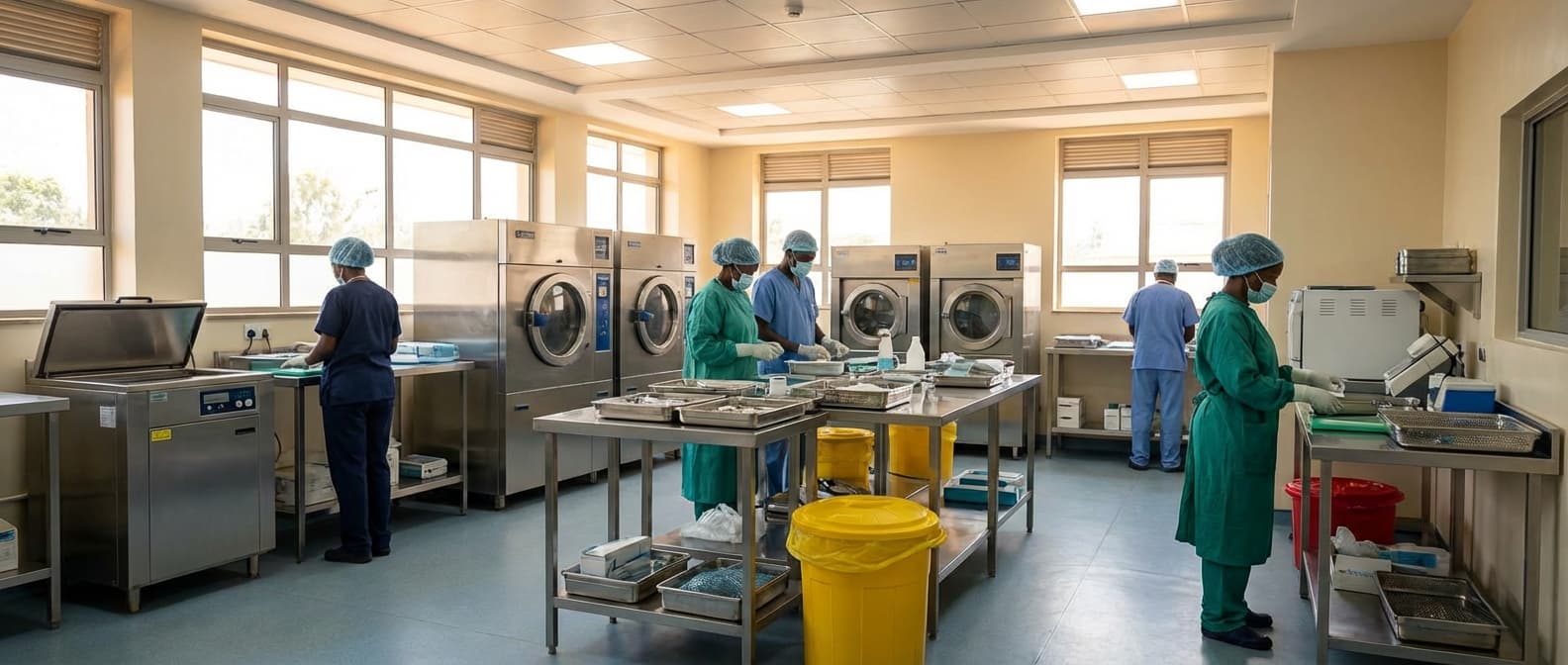
Medical Equipment Decontamination Service (Pre-Repair/Pre-Relocation) in Seychelles
Engineering Excellence & Technical Support
Medical Equipment Decontamination Service (Pre-Repair/Pre-Relocation) High-standard technical execution following OEM protocols and local regulatory frameworks.
Advanced Bio-Decontamination Protocols
Leveraging Seychelles' pristine environment as inspiration, we employ state-of-the-art, eco-friendly bio-decontamination techniques to eliminate all biological contaminants from your medical equipment. This ensures a safe environment for your technicians and prevents cross-contamination during repairs or relocation.
Pre-Repair/Relocation Risk Mitigation
Our rigorous decontamination process acts as a critical first step, significantly reducing biohazardous risks associated with handling potentially contaminated medical devices. This safeguards your repair teams and logistical staff, minimizing exposure and ensuring compliance with health and safety regulations in Seychelles.
Facilitating Seamless Equipment Transitions
We provide comprehensive decontamination services tailored for medical equipment awaiting repair or relocation within Seychelles. Our efficient, certified processes ensure your valuable assets are clean, safe, and compliant, enabling smoother transitions and minimizing downtime for your healthcare facilities.
What Is Medical Equipment Decontamination Service (Pre-repair/pre-relocation) In Seychelles?
Medical Equipment Decontamination Service (Pre-Repair/Pre-Relocation) in Seychelles refers to the specialized process of cleaning, disinfecting, and/or sterilizing medical devices prior to their transfer to a repair facility or a new operational location within the country. This service is critical for preventing the transmission of infectious agents and ensuring the safety of all personnel involved in subsequent handling, maintenance, or use of the equipment. The scope of decontamination can range from basic disinfection to high-level disinfection or sterilization, depending on the type of equipment, its intended use, and the level of bioburden expected.
| Who Needs the Service | Typical Use Cases | |||
|---|---|---|---|---|
| Hospitals and Clinics (Public & Private) | Preparing surgical instruments for off-site repair. | Moving imaging equipment (e.g., X-ray, CT scanners) between departments or to a new facility. | Decontaminating patient monitoring systems prior to relocation within a healthcare facility. | Preparing diagnostic laboratory equipment for recalibration or servicing. |
| Medical Equipment Manufacturers & Distributors | Receiving returned equipment for repair or refurbishment that has been in use. | Ensuring equipment is decontaminated before shipping to customers after servicing. | ||
| Specialized Repair & Maintenance Companies | Accepting medical devices from healthcare facilities for repair, ensuring their staff are not exposed to pathogens. | Handling equipment that may have come into contact with blood, bodily fluids, or infectious materials. | ||
| Ambulance Services & Emergency Medical Responders | Decontaminating portable medical devices (e.g., defibrillators, ventilators) before they are sent for maintenance or replacement. | |||
| Government Health Agencies & Regulatory Bodies | Overseeing or contracting decontamination services for public health initiatives or equipment management. |
Key Aspects of Medical Equipment Decontamination Service (Pre-Repair/Pre-Relocation)
- Purpose: To mitigate the risk of cross-contamination and occupational exposure to biological hazards.
- Scope: May include manual cleaning, automated washing, disinfection (low, intermediate, or high-level), and sterilization (e.g., autoclaving, ethylene oxide, hydrogen peroxide plasma).
- Verification: Often involves validation of cleaning efficacy and confirmation of the decontamination process.
- Documentation: Comprehensive records are maintained, detailing the procedures performed, chemicals used, and personnel involved.
Who Needs Medical Equipment Decontamination Service (Pre-repair/pre-relocation) In Seychelles?
Medical equipment decontamination service plays a crucial role in ensuring the safety and longevity of medical devices, especially when they are being prepared for repair or relocation within Seychelles. This specialized service addresses the potential biohazards and contaminants that can accumulate on medical equipment, safeguarding both technicians and the integrity of the equipment itself. The need for this service spans across various healthcare settings and specialized departments, highlighting its broad applicability and importance in maintaining a sterile and efficient healthcare environment.
| Department | Specific Equipment Examples | Rationale for Decontamination (Pre-Repair/Pre-Relocation) |
|---|---|---|
| Surgery/Operating Rooms | Surgical instruments, endoscopes, anesthesia machines, lasers, electrosurgical units | Removal of blood, tissue, and other biological fluids to prevent cross-contamination for technicians and during reassembly/testing. Ensures sterility for subsequent use after repair. |
| Intensive Care Units (ICU)/Critical Care | Ventilators, patient monitors, infusion pumps, dialysis machines, defibrillators | Eliminates residual bodily fluids, disinfectants, and potential pathogens. Crucial for technician safety and preventing spread of infection during transport and servicing. |
| Emergency Department (ED) | Stretchers, diagnostic imaging equipment (portable X-ray), resuscitation equipment | High volume of diverse patient conditions necessitates thorough decontamination to protect repair staff and prevent the spread of highly transmissible agents. |
| Radiology/Imaging Departments | X-ray machines, CT scanners, MRI machines, ultrasound probes, mammography units | Minimizes exposure to potential biological contaminants on probes or surfaces, especially important for mobile or shared equipment undergoing repairs or relocation. Prevents cross-contamination. |
| Laboratories (Pathology, Microbiology, Biochemistry) | Centrifuges, microscopes, incubators, analyzers, specimen transport equipment | Crucial for preventing contamination of reagents and samples, and for the safety of lab technicians and repair personnel handling potentially infectious materials. |
| Sterilization and CSSD (Central Sterile Supply Department) | Autoclaves, instrument washers, sterilizers | While their primary function is sterilization, equipment undergoing repair or relocation may require pre-decontamination to remove gross contaminants before entering the CSSD workflow or being handled by external technicians. |
| Outpatient Clinics/General Practice | Diagnostic devices (e.g., ECG machines, spirometers), minor surgical equipment | Ensures that equipment brought in for repair or moved to a new location is free from residual patient contaminants, protecting service providers and patients. |
| Rehabilitation and Physiotherapy | Therapeutic exercise equipment, ultrasound therapy units, electrical stimulation devices | Removal of sweat, skin cells, and residual topical agents is important for hygiene and to prevent irritation or allergic reactions for repair technicians. |
Target Customers and Departments Requiring Medical Equipment Decontamination Service (Pre-Repair/Pre-Relocation) in Seychelles
- Hospitals (Public and Private)
- Clinics and Health Centers
- Diagnostic Laboratories
- Surgical Centers
- Dental Practices
- Veterinary Clinics (for shared equipment or specialized needs)
- Medical Equipment Repair and Maintenance Companies
- Medical Equipment Relocation Services
- Research Institutions with medical equipment
Medical Equipment Decontamination Service (Pre-repair/pre-relocation) Process In Seychelles
This document outlines the standard workflow for Medical Equipment Decontamination Services in Seychelles, specifically for pre-repair and pre-relocation scenarios. The process ensures that medical equipment is rendered safe for handling by third-party technicians or during transportation, minimizing the risk of cross-contamination and protecting personnel.
| Stage | Description | Key Activities | Responsible Party/Parties | Notes |
|---|---|---|---|---|
| Inquiry and Initial Consultation | The process begins with a client (hospital, clinic, or equipment manufacturer) contacting the decontamination service provider with a request for their services. | Client expresses need for decontamination (pre-repair/relocation). Provider acknowledges inquiry and schedules initial discussion. Clarification of equipment type, quantity, and urgency. | Client (e.g., Biomedical Department, Procurement), Decontamination Service Provider (e.g., Sales/Customer Service) | Clear communication of the purpose (repair/relocation) is crucial. |
| Site Assessment and Quotation | A thorough assessment of the equipment and its location is conducted to determine the scope of work, required resources, and associated costs. | Site visit (if necessary) to inspect equipment and environment. Identification of specific decontamination agents and methods. Assessment of safety protocols and waste disposal requirements. Preparation of a detailed quotation and service agreement. | Decontamination Service Provider, Client (for site access and information) | Consideration for specialized equipment requiring specific protocols. |
| Scheduling and Planning | Once the quotation is accepted, the service is scheduled, and a detailed plan is developed for execution. | Agreement on dates and times for decontamination. Logistics planning (transport of personnel, equipment, and consumables). Communication of schedule to all relevant parties. Risk assessment and safety plan finalization. | Decontamination Service Provider, Client (to facilitate access and inform relevant departments) | Flexibility may be required based on operational needs of the facility. |
| Pre-Decontamination Preparation | The decontamination team prepares the site and the equipment for the cleaning process. | Setting up the decontamination area (if applicable). Ensuring availability of necessary personal protective equipment (PPE). Gathering of appropriate, approved decontamination agents and cleaning supplies. Initial visual inspection and documentation of equipment condition (e.g., photos). | Decontamination Service Provider | Strict adherence to infection control protocols is paramount. |
| Decontamination Execution | The actual decontamination of the medical equipment is performed according to established protocols and best practices. | Application of approved chemical disinfectants or sterilization methods. Cleaning of all accessible surfaces, components, and accessories. Adherence to contact times for disinfectants. Proper ventilation and containment measures. | Decontamination Service Provider | Use of validated and approved decontamination agents suitable for the specific equipment materials. |
| Post-Decontamination Verification and Documentation | The effectiveness of the decontamination process is verified, and all actions are documented. | Visual inspection for cleanliness. (Optional) Microbiological swabbing or testing (depending on service level and equipment criticality). Completion of decontamination logs and certificates. Recording of any observations or issues encountered. | Decontamination Service Provider | Documentation serves as proof of service and for regulatory compliance. |
| Equipment Handover/Release | The decontaminated equipment is released back to the client or prepared for onward transfer. | Formal handover of decontaminated equipment to the client's representative. Provision of decontamination certificates and reports. Ensuring safe handling and transport arrangements are in place. | Decontamination Service Provider, Client (Biomedical Engineer, Logistics) | Confirmation of receipt by the client is essential. |
Key Stages of Medical Equipment Decontamination Service (Pre-Repair/Pre-Relocation)
- Inquiry and Initial Consultation
- Site Assessment and Quotation
- Scheduling and Planning
- Pre-Decontamination Preparation
- Decontamination Execution
- Post-Decontamination Verification and Documentation
- Equipment Handover/Release
Medical Equipment Decontamination Service (Pre-repair/pre-relocation) Cost In Seychelles
The cost of medical equipment decontamination services in Seychelles, particularly for pre-repair or pre-relocation purposes, is influenced by several key factors. These services are crucial for preventing the spread of infectious agents and ensuring the safety of technicians and the environment. While specific pricing structures can vary between service providers, understanding these elements will help in estimating potential expenses.
Key Pricing Factors:
- Type and Size of Equipment: Larger and more complex medical devices, such as MRI machines, CT scanners, or large surgical tables, will naturally require more time, specialized equipment, and potentially a larger volume of cleaning agents, thus incurring higher costs than smaller items like stethoscopes or blood pressure monitors.
- Level of Contamination: The degree of suspected or known contamination significantly impacts the decontamination process. Equipment known to have been in contact with highly infectious agents (e.g., during outbreaks or with specific patient populations) will necessitate more rigorous and prolonged decontamination protocols, often involving specialized disinfectants and containment measures, leading to increased costs.
- Decontamination Method Used: Different methods have varying costs. Standard surface disinfection using approved agents is generally less expensive than high-level disinfection or sterilization techniques that may require specific equipment (e.g., autoclaves, chemical sterilants) or longer exposure times.
- On-site vs. Off-site Service: Performing decontamination at the client's location might involve travel time and logistics for the service provider, potentially increasing the overall cost. If the equipment needs to be transported to a specialized decontamination facility, transport costs will be added.
- Urgency and Turnaround Time: Emergency decontamination services or requests for expedited turnaround times will likely command a premium due to the immediate resource allocation and potential disruption to the service provider's regular schedule.
- Service Provider's Expertise and Certifications: Companies with specialized training, certifications, and a proven track record in medical equipment decontamination may charge more for their expertise and the assurance of quality and safety they provide.
- Consumables and Disposal: The cost of disinfectants, cleaning agents, personal protective equipment (PPE) for technicians, and the safe disposal of contaminated waste are all factored into the service fee.
- Additional Services: Some providers might offer bundled services, such as minor equipment checks or basic servicing alongside decontamination, which would naturally increase the overall price.
Estimated Cost Ranges (in Seychellois Rupees - SCR):
Given the specialized nature of these services and the potentially limited number of dedicated providers in Seychelles, precise publicly available pricing is scarce. However, based on typical industry practices and the factors mentioned above, we can provide estimated ranges.
For basic decontamination of smaller, less complex equipment (e.g., diagnostic tools, non-invasive monitoring devices), the cost could range from SCR 500 to SCR 2,000 per item. This might include surface cleaning with approved disinfectants.
For moderately complex equipment or those with a higher suspected level of contamination (e.g., ultrasound probes, flexible endoscopes needing high-level disinfection), the cost could be in the range of SCR 2,000 to SCR 7,000 per item. This would encompass more thorough cleaning protocols and specialized disinfectants.
Decontamination of larger, more complex, or critically sensitive equipment (e.g., surgical tools requiring sterilization, large imaging equipment) could range from SCR 7,000 to SCR 20,000 or more per item. These costs would reflect the extensive procedures, specialized technology, and potential need for off-site processing.
Important Note: These figures are estimates. It is highly recommended to obtain detailed quotes from multiple reputable service providers in Seychelles to get accurate pricing tailored to your specific equipment and needs. Inquiries should clearly specify the type of equipment, its intended use, and the reason for decontamination (pre-repair/relocation).
| Equipment Complexity/Contamination Level | Estimated Cost Range (SCR) |
|---|---|
| Small, Basic Equipment (e.g., diagnostic tools) | SCR 500 - SCR 2,000 per item |
| Moderate Equipment (e.g., ultrasound probes, endoscopes) | SCR 2,000 - SCR 7,000 per item |
| Large, Complex, or Critically Sensitive Equipment | SCR 7,000 - SCR 20,000+ per item |
Factors Influencing Medical Equipment Decontamination Costs in Seychelles
- Type and Size of Equipment
- Level of Contamination
- Decontamination Method Employed
- On-site vs. Off-site Service
- Urgency and Required Turnaround Time
- Service Provider's Expertise and Certifications
- Cost of Consumables and Waste Disposal
- Inclusion of Additional Services
Affordable Medical Equipment Decontamination Service (Pre-repair/pre-relocation) Options
Maintaining the hygiene and safety of medical equipment is crucial, especially before it undergoes repair or relocation. Our affordable decontamination services ensure that your valuable assets are clean, sterile, and ready for their next phase, minimizing risks and extending their lifespan. We offer flexible value bundles and cost-saving strategies to meet diverse needs and budgets.
| Strategy | Description | Benefit |
|---|---|---|
| Volume Discounts | Reduces per-unit cost when decontaminating multiple pieces of equipment simultaneously. | Significant savings for larger clinics, hospitals, or inventory management. |
| Scheduled Service Agreements | Pre-arranged contracts for regular decontamination services, offering consistent pricing and priority scheduling. | Predictable budgeting, guaranteed availability, and reduced emergency service fees. |
| Tiered Service Levels | Choose the level of decontamination that precisely matches your needs, avoiding overspending on unnecessary services. | Cost-effectiveness by paying only for the required level of cleaning and sterilization. |
| Off-Peak Scheduling | Flexible scheduling during non-peak hours or days can sometimes incur lower service rates. | Potential for direct cost reduction on services. |
| Bundled Repair & Decontamination | Integrate decontamination services with your repair provider for streamlined logistics and potential package discounts. | Efficiency gains and potential cost savings through bundled service offerings. |
Value Bundles for Medical Equipment Decontamination
- {"title":"Basic Decontamination Package","description":"Ideal for routine cleaning and surface disinfection. Includes external wipe-down with hospital-grade disinfectants and basic visual inspection for damage."}
- {"title":"Standard Repair Prep Bundle","description":"Includes Basic Decontamination plus targeted cleaning of accessible internal components (e.g., ports, filters) and bioburden testing on key surfaces. Perfect for equipment awaiting scheduled repairs."}
- {"title":"Relocation Ready Service","description":"Comprehensive decontamination for equipment being moved. Features full exterior and interior cleaning, disinfection, sterilization of detachable parts, and secure packaging preparation. Ensures safe transit and immediate usability at the new location."}
- {"title":"High-Risk Equipment Protocol","description":"Designed for equipment that has handled infectious materials or requires specialized handling. Includes advanced disinfection, autoclaving of compatible parts (where applicable), and comprehensive biohazard waste disposal."}
Verified Providers In Seychelles
In the vibrant and growing landscape of healthcare in Seychelles, discerning patients seek reliable and high-quality medical services. This often leads to the crucial question: "How do I find verified providers?" In this regard, Franance Health stands out as a beacon of trust and excellence. Their rigorous credentialing process ensures that all partnered healthcare professionals and facilities meet the highest international standards of expertise, ethics, and patient care. Choosing a Franance Health verified provider means opting for a commitment to your well-being, backed by transparent qualifications and a dedication to medical integrity. This verification is not merely a formality; it represents a deep-seated promise of quality and safety that sets them apart as the best choice for your healthcare needs in Seychelles.
| Credential Aspect | Franance Health Verification Standard | Patient Benefit |
|---|---|---|
| Medical Licensing & Registration | Up-to-date and valid local and international licenses verified. | Ensures providers are legally qualified to practice medicine. |
| Educational Background & Specializations | Accredited medical degrees and recognized specialist training confirmed. | Guarantees expertise in chosen medical fields. |
| Professional Experience & Track Record | Minimum required years of practice and positive professional history assessed. | Indicates proven competence and practical skill. |
| Ethical Conduct & Professionalism | Adherence to a strict code of medical ethics and patient rights policies. | Promotes respectful and trustworthy patient-provider interactions. |
| Continuing Medical Education (CME) | Proof of ongoing learning and updating of medical knowledge. | Ensures providers are current with the latest medical advancements. |
Why Franance Health Credentials Matter:
- Rigorous Verification Process: Franance Health employs a multi-faceted vetting system that examines educational background, licensing, certifications, and professional experience of all healthcare providers.
- Commitment to International Standards: All verified providers adhere to globally recognized medical best practices and ethical guidelines.
- Patient Safety and Trust: The verification process is designed to ensure the highest level of patient safety and build unwavering trust in the healthcare services received.
- Access to Top-Tier Professionals: Partnering with Franance Health guarantees access to a network of highly skilled and reputable doctors, specialists, and medical facilities in Seychelles.
- Transparency and Accountability: Franance Health maintains a commitment to transparency, allowing patients to be confident in the qualifications of their chosen healthcare provider.
Scope Of Work For Medical Equipment Decontamination Service (Pre-repair/pre-relocation)
This Scope of Work (SOW) outlines the requirements for providing professional decontamination services for medical equipment prior to repair or relocation. The objective is to ensure that all medical equipment is free from biological, chemical, and radiological hazards, thereby protecting personnel involved in repair, maintenance, and transportation, as well as preventing the spread of infection to new environments. This SOW details the technical deliverables, standard specifications, and general requirements for the decontamination process.
| Section | Description | Technical Deliverables | Standard Specifications |
|---|---|---|---|
| 1.0 Pre-Decontamination Assessment | Initial inspection and identification of the medical equipment to be decontaminated. Includes assessing the type of equipment, its intended use, potential contaminants, and any visible damage. | Equipment identification log, detailed report of assessment findings, categorization of contamination risk. | Visual inspection checklist, classification of bioburden levels (low, medium, high), identification of known or suspected hazardous materials (e.g., bloodborne pathogens, chemical residues, radioactive isotopes). |
| 2.0 Decontamination Procedures | Application of approved cleaning, disinfection, and sterilization methods to eliminate or reduce biological, chemical, and radiological hazards to safe levels. | Validated decontamination protocols for each equipment type, documentation of cleaning agents and methods used, proof of efficacy (if applicable). | Use of EPA-registered disinfectants appropriate for the identified bioburden and equipment materials. Adherence to manufacturer's cleaning and disinfection recommendations. For radiological decontamination, use of approved methods and monitoring by certified personnel. Use of appropriate Personal Protective Equipment (PPE) for all personnel. |
| 3.0 Validation and Verification | Testing and confirmation that decontamination has been successfully achieved, meeting established safety standards. | Post-decontamination verification reports, environmental monitoring data (if required), certification of decontamination. | Visual inspection for residual contaminants. Use of rapid test kits or ATP testing to verify surface cleanliness (for biological decontamination). Radiation survey meters calibrated and operated by qualified personnel for radiological decontamination. Verification that equipment is free from visible or detectable hazards. |
| 4.0 Packaging and Labeling | Appropriate packaging of decontaminated equipment to maintain its integrity and prevent re-contamination during transport. Clear labeling indicating decontamination status. | Decontaminated equipment secured in appropriate protective packaging, clear and visible 'Decontaminated' labels, hazard communication labels (if applicable). | Use of impermeable, sealed packaging materials suitable for the equipment size and fragility. Labels must be clearly legible and affixed to easily visible surfaces. Labels should include date of decontamination, name/signature of personnel performing decontamination, and confirmation of successful decontamination. |
| 5.0 Documentation and Reporting | Comprehensive record-keeping of all decontamination activities, including procedures, materials used, personnel involved, and validation results. | Decontamination Certificate for each piece of equipment, detailed service report, chain-of-custody documentation. | Certificate must include equipment identification (model, serial number), date and time of decontamination, method(s) used, list of cleaning/disinfection agents, validation results, name/signature of decontaminating personnel. Service report should summarize all activities and findings. Chain-of-custody forms to track equipment from point of decontamination to handover. |
| 6.0 Personnel Qualifications and Training | Ensuring that all personnel involved in decontamination services are adequately trained and qualified. | Records of personnel training and certifications, proof of competency in handling hazardous materials and operating decontamination equipment. | Training in infection control principles, safe handling of biohazardous materials, chemical safety, radiation safety (if applicable), use of PPE, and specific decontamination protocols for various medical equipment types. Relevant certifications (e.g., Certified Healthcare Environmental Services Professional - CHESP, or equivalent). |
| 7.0 Waste Management | Proper handling and disposal of all contaminated materials and waste generated during the decontamination process. | Documentation of waste disposal, compliance with hazardous waste regulations. | Segregation and disposal of contaminated waste in accordance with local, state, and federal regulations for medical waste, chemical waste, and radioactive waste. Use of licensed waste disposal contractors. |
Key Objectives
- To render medical equipment safe for handling by repair technicians and relocation personnel.
- To mitigate the risk of cross-contamination and healthcare-associated infections (HAIs).
- To comply with relevant regulatory standards and guidelines for biohazardous waste and equipment handling.
- To provide clear documentation of decontamination procedures and outcomes.
Service Level Agreement For Medical Equipment Decontamination Service (Pre-repair/pre-relocation)
This Service Level Agreement (SLA) outlines the guaranteed response times and uptime for the Medical Equipment Decontamination Service (Pre-Repair/Pre-Relocation). This service ensures that medical equipment is thoroughly decontaminated to a safe standard before undergoing repair or relocation, minimizing risks to personnel and the integrity of the equipment.
| Service Metric | Definition | Target | Measurement Unit |
|---|---|---|---|
| Initial Response Time (Critical Equipment) | Time from service request confirmation to initial acknowledgement and dispatch of decontamination team. | 30 minutes | Minutes |
| On-Site Arrival Time (Critical Equipment) | Time from service request confirmation to decontamination team's arrival at the designated location. | 2 hours | Hours |
| Initial Response Time (Standard Equipment) | Time from service request confirmation to initial acknowledgement and dispatch of decontamination team. | 1 hour | Hour |
| On-Site Arrival Time (Standard Equipment) | Time from service request confirmation to decontamination team's arrival at the designated location. | 4 hours | Hours |
| Decontamination Service Uptime | Percentage of scheduled operating hours during which the decontamination service is operational and available for use, excluding scheduled maintenance and force majeure events. | 99.5% | Percentage |
| Decontamination Completion Time | Average time taken to complete the decontamination process for standard equipment types, from arrival on-site to clearance. | 4 hours | Hours |
Key Service Components
- Scope of Service: Decontamination of specified medical equipment prior to repair or relocation.
- Service Hours: 24/7/365 availability for critical decontamination requests.
- Response Time: Defined intervals for initial acknowledgement and on-site arrival.
- Uptime Guarantee: Percentage of time decontamination services are expected to be available and fully functional.
- Exclusions: Situations or equipment types not covered by this SLA.
- Reporting: Regular reports on service performance against agreed metrics.
Frequently Asked Questions

Ready when you are
Let's scope your Medical Equipment Decontamination Service (Pre-Repair/Pre-Relocation) in Seychelles project in Seychelles.

Scaling healthcare logistics and technical systems across the entire continent.