
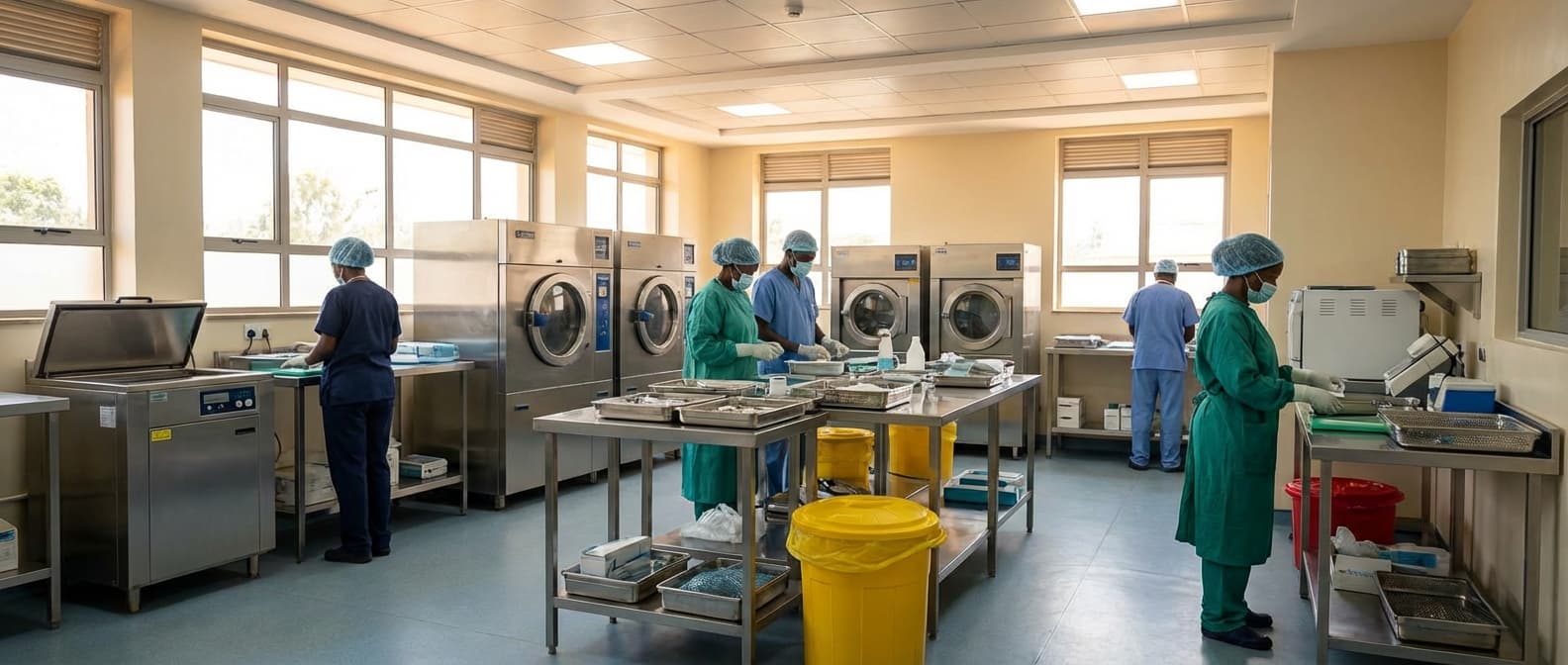
Infection-Control Readiness Support Service for Reusable Equipment in Seychelles
Engineering Excellence & Technical Support
Infection-Control Readiness Support Service for Reusable Equipment High-standard technical execution following OEM protocols and local regulatory frameworks.
Optimized Sterilization Cycle Validation
We implement and validate robust sterilization cycles for critical and semi-critical reusable medical equipment, ensuring compliance with international standards (e.g., ISO 13485, AAMI ST79) and minimizing the risk of healthcare-associated infections.
Advanced Tracking & Traceability Solutions
Our service integrates advanced RFID or barcode-based tracking systems to monitor the lifecycle of reusable equipment, from decontamination to sterilization and redeployment, providing real-time visibility and accountability to prevent reprocessing errors and enhance patient safety.
Customized Infection Prevention Training Modules
We deliver tailored, evidence-based training programs for healthcare personnel on proper decontamination, cleaning, disinfection, sterilization, and handling of reusable medical devices, fostering a culture of meticulous infection control practices specific to the Seychelles context.
What Is Infection-control Readiness Support Service For Reusable Equipment In Seychelles?
Infection-Control Readiness Support Service for Reusable Equipment in Seychelles is a specialized consultancy and operational service designed to ensure that healthcare facilities and other organizations utilizing reusable medical devices and equipment adhere to stringent infection prevention and control (IPC) standards. This service addresses the critical need for validated processes in the cleaning, disinfection, sterilization, and storage of reusable items to prevent healthcare-associated infections (HAIs) and maintain patient safety. It encompasses a comprehensive approach to evaluating existing protocols, implementing best practices, and providing the necessary training and resources to achieve and sustain a high level of readiness in managing reusable equipment.
| Service Component | Description | Key Outcome |
|---|---|---|
| Protocol Development & Implementation | Creation and rollout of standardized SOPs for cleaning, disinfection, sterilization, and storage. | Consistent and effective reprocessing of reusable equipment. |
| Staff Training & Competency Assurance | Delivery of theoretical and practical training modules with ongoing assessment. | Competent personnel proficient in IPC protocols for reusable items. |
| Equipment Validation & Maintenance | Ensuring sterilization/disinfection units meet performance standards and are calibrated. | Verified efficacy of sterilization and disinfection processes. |
| Auditing & Monitoring | Regular checks on protocol adherence, documentation, and process outcomes. | Continuous quality improvement and compliance assurance. |
| Risk Management | Identification and mitigation of risks associated with reusable equipment reprocessing. | Reduced incidence of HAIs and adverse events. |
Typical Use Cases
- Establishing a Central Sterile Services Department (CSSD): Guiding the design, setup, and operationalization of a new CSSD to centralize the reprocessing of reusable surgical instruments and other medical devices.
- Upgrading Existing IPC Infrastructure: Evaluating and recommending improvements to existing reprocessing areas, equipment, and workflow to meet modern IPC standards.
- Responding to an Outbreak of HAIs: Investigating potential sources of infection related to reusable equipment and implementing corrective actions to prevent further transmission.
- Introducing New Reusable Medical Devices: Providing guidance on the appropriate reprocessing methods and validation requirements for newly acquired reusable medical equipment.
- Ensuring Compliance with National and International Standards: Assisting facilities in achieving and maintaining accreditation or certification related to IPC and sterile processing.
- Capacity Building for Healthcare Staff: Developing and delivering comprehensive training programs for sterile processing technicians, nurses, and other relevant personnel.
- Risk Assessment for Reusable Equipment Management: Identifying potential hazards and vulnerabilities in the reprocessing cycle and developing mitigation strategies.
- Procurement Advisory for Sterilization and Disinfection Equipment: Offering technical expertise to select and procure appropriate and validated reprocessing equipment.
- Development of Emergency Preparedness Plans: Integrating reusable equipment management strategies into broader healthcare facility emergency response plans.
Who Needs Infection-control Readiness Support Service For Reusable Equipment In Seychelles?
This document outlines the target customers and departments for Infection-Control Readiness Support Services focused on reusable equipment in Seychelles. Ensuring proper sterilization, disinfection, and handling of reusable medical devices is paramount to preventing healthcare-associated infections (HAIs) and maintaining patient safety. This service aims to assist healthcare facilities in achieving and sustaining optimal infection control practices for their reusable equipment.
| Department | Role/Responsibility in Reusable Equipment Infection Control | Specific Needs Addressed by Support Service |
|---|---|---|
| Sterilization and Decontamination Units | Responsible for cleaning, disinfection, sterilization, and storage of reusable equipment. | Validation of sterilization processes, training on new technologies, development of Standard Operating Procedures (SOPs), quality assurance, equipment maintenance and calibration. |
| Operating Rooms (ORs) / Surgical Departments | Utilize a high volume of reusable surgical instruments and equipment. | Guidance on proper handling and transport of contaminated items, ensuring adequate supply of sterile instruments, identification of potential breaches in sterile technique. |
| Intensive Care Units (ICUs) / High Dependency Units (HDUs) | Handle critical reusable equipment such as ventilators, monitors, and invasive procedure kits. | Training on disinfection of complex equipment, management of single-use versus reusable item decisions, ensuring proper reprocessing of high-risk devices. |
| Outpatient Departments (OPDs) / Clinics | Use reusable instruments for minor procedures, examinations, and diagnostics. | Training on appropriate disinfection methods for non-critical and semi-critical items, inventory management of reusable equipment, compliance with national guidelines. |
| Dental Departments/Practices | Extensive use of reusable dental instruments and handpieces. | Specific protocols for dental instrument reprocessing, autoclaving efficiency, chairside infection control practices, regulatory compliance for dental settings. |
| Laboratories | Reprocess reusable lab equipment like glassware, pipettes, and specific diagnostic tools. | Validation of sterilization methods for laboratory equipment, appropriate decontamination procedures for biohazardous materials, record-keeping for sterilization cycles. |
| Pharmacy | May utilize some reusable equipment for compounding or dispensing. | Ensuring sterility of reusable compounding equipment, adherence to cleanroom standards where applicable. |
| Nursing Administration / Ward Management | Oversee the use and cleaning of reusable equipment on wards. | Education on infection prevention principles related to reusable items, ensuring availability of cleaning supplies, monitoring compliance with protocols. |
| Infection Prevention and Control (IPC) Committee/Team | Lead the facility's infection control efforts. | Support in developing and implementing IPC policies, risk assessment of reusable equipment workflows, training of staff, data collection and analysis on HAIs related to equipment. |
| Biomedical Engineering Department | Responsible for the maintenance and repair of medical equipment, including sterilization devices. | Ensuring sterilization equipment is functioning optimally, calibration of autoclaves and disinfectors, guidance on equipment suitability for reprocessing. |
Target Customers
- Public Hospitals
- Private Clinics and Hospitals
- Dental Practices
- Specialist Medical Centers (e.g., Ophthalmology, Dermatology)
- Ambulatory Surgical Centers
- Laboratories
- Any healthcare facility utilizing reusable medical, dental, or surgical equipment.
Infection-control Readiness Support Service For Reusable Equipment Process In Seychelles
This document outlines the workflow for the Infection-Control Readiness Support Service for Reusable Equipment Process in Seychelles. It details the steps from the initial inquiry to the successful execution of the service, ensuring a robust system for managing and disinfecting reusable medical equipment.
| Phase | Key Activities | Responsible Parties | Deliverables/Outcomes | Timeline (Indicative) |
|---|---|---|---|---|
| Receive inquiry from healthcare facility regarding reusable equipment infection control. Conduct preliminary discussion to understand facility's needs, existing practices, and challenges. Determine scope and feasibility of the support service. | Healthcare Facility (Client), Ministry of Health (MoH) / Designated Support Agency | Confirmed interest and preliminary understanding of requirements. | 1-2 weeks |
| Develop a detailed proposal outlining service objectives, scope, methodology, and expected outcomes. Negotiate and finalize service agreement, including terms, conditions, and cost. Secure necessary approvals from both parties. | Ministry of Health (MoH) / Designated Support Agency, Healthcare Facility (Client) | Signed Service Agreement. | 2-3 weeks |
| Conduct on-site assessment of current reusable equipment processing procedures. Evaluate existing infrastructure, equipment, supplies, and waste management systems. Review staff knowledge, skills, and adherence to protocols. Identify gaps and areas for improvement based on national/international guidelines. | Ministry of Health (MoH) / Designated Support Agency (Technical Experts), Healthcare Facility (Client) Staff | Detailed Readiness Assessment Report with identified gaps and recommendations. | 3-4 weeks |
| Develop tailored training modules based on identified gaps (e.g., cleaning, disinfection, sterilization, storage, documentation). Deliver training sessions to relevant healthcare personnel. Provide hands-on practical demonstrations and competency assessments. | Ministry of Health (MoH) / Designated Support Agency (Trainers), Healthcare Facility (Client) Staff | Trained staff, improved understanding of best practices, competency checklists. | 4-6 weeks (depending on scope) |
| Provide on-site support during the initial implementation of recommended changes. Assist in setting up or optimizing workflows and Standard Operating Procedures (SOPs). Conduct follow-up verification to ensure adherence to new protocols and effective implementation. | Ministry of Health (MoH) / Designated Support Agency (Implementation Team), Healthcare Facility (Client) Staff | Implemented improved processes, updated SOPs, verified effectiveness of new practices. | 4-8 weeks (intermittent) |
| Establish a system for regular monitoring and auditing of reusable equipment processing. Provide ongoing advisory support and address emerging challenges. Conduct periodic reviews to assess the sustainability of improvements and identify areas for further refinement. Share best practices and lessons learned. | Ministry of Health (MoH) / Designated Support Agency, Healthcare Facility (Client) | Sustainable infection control practices, reduced risk of healthcare-associated infections, continuous improvement framework. | Ongoing |
Infection-Control Readiness Support Service Workflow
- Phase 1: Inquiry and Initial Assessment
- Phase 2: Service Planning and Agreement
- Phase 3: Readiness Assessment and Gap Analysis
- Phase 4: Training and Capacity Building
- Phase 5: Implementation Support and Verification
- Phase 6: Ongoing Monitoring and Refinement
Infection-control Readiness Support Service For Reusable Equipment Cost In Seychelles
Providing infection-control readiness support services for reusable equipment in Seychelles involves a complex pricing structure influenced by several key factors. The cost is not a fixed price but rather a range determined by the scope of services, the type and volume of equipment, the required expertise, and the duration of the engagement. These services are crucial for ensuring that medical devices are safely sterilized and prepared for reuse, thereby preventing the transmission of healthcare-associated infections. Given the island nation's unique logistical considerations and the specialized nature of infection control, these factors contribute to the overall cost structure.
| Service Component/Level | Estimated Cost Range (SCR - Seychellois Rupee) | Notes |
|---|---|---|
| Initial Infection Control Audit & Gap Analysis | 15,000 - 40,000 | Covers assessment of current practices, basic recommendations. Varies by facility size. |
| Protocol Development & Standard Operating Procedures (SOPs) | 20,000 - 60,000 | Tailored SOPs for different equipment types. Depends on complexity and number of protocols. |
| Staff Training (Basic Sterilization & Infection Control) | 10,000 - 30,000 per session | Per training session, for a group of staff. Includes materials and instructor fees. |
| Staff Training (Advanced/Specialized Equipment) | 25,000 - 70,000 per session | For specialized equipment like endoscopes; may require international trainers. |
| On-Site Support (Full-time Technician/Supervisor) | 3,000 - 7,000 per day (excluding consumables) | Daily rate for dedicated personnel. Excludes cost of sterilization consumables, chemicals, etc. |
| On-Site Support (Part-time/Consultant) | 2,000 - 5,000 per day | For specific tasks or periodic oversight. |
| Equipment Validation & Calibration (Per unit) | 5,000 - 20,000+ | Cost per sterilization unit (e.g., autoclave, washer-disinfector). Varies by equipment type and complexity. |
| Ongoing Monitoring & Quality Assurance | 15,000 - 50,000 per month | Regular checks, data analysis, and reporting. Varies by facility size and frequency of monitoring. |
| Implementation of New Sterilization Technologies/Systems | Variable (Project-based) | Can range from tens of thousands to hundreds of thousands, depending on the technology. |
| Comprehensive Project Management & Implementation | Negotiable (Percentage of total project cost or fixed fee) | For large-scale overhauls or new facility setups. |
Key Pricing Factors for Infection-Control Readiness Support Services (Seychelles):
- Scope of Services: This is the most significant driver of cost. Services can range from basic training and protocol development to comprehensive on-site management of sterilization processes, including equipment maintenance and validation.
- Type and Volume of Reusable Equipment: Different types of medical equipment (e.g., surgical instruments, endoscopes, respiratory equipment) require varying levels of expertise and specific sterilization methods. The sheer quantity of equipment to be managed directly impacts labor and material costs.
- Level of Expertise Required: Services may require general infection control practitioners, specialized sterilization technicians, or engineers for complex equipment. Higher levels of specialized knowledge command higher rates.
- On-Site vs. Off-Site Support: Fully on-site dedicated teams will be more expensive than periodic consultation or remote support. Travel and accommodation for off-site personnel are additional costs.
- Frequency and Duration of Support: Whether the service is a one-time assessment, ongoing daily support, or intermittent consultation will significantly alter the total cost.
- Training and Capacity Building: The extent of training provided to local staff, including curriculum development and delivery methods, will contribute to the overall investment.
- Equipment Auditing and Assessment: Thorough audits to assess current practices, identify gaps, and recommend improvements will be priced based on the complexity and depth of the review.
- Validation and Documentation: Services related to validating sterilization processes and maintaining comprehensive records often require specialized expertise and time, thus impacting costs.
- Logistics and Accessibility: Seychelles' island geography can introduce higher costs for travel, shipping of consumables, and potentially limited availability of specialized local talent, which can be factored into pricing.
- Regulatory Compliance and Standards: Ensuring adherence to international and local infection control standards requires meticulous attention and can influence the service pricing.
- Technology Integration: If the service involves implementing new tracking systems or advanced sterilization technologies, the associated costs for acquisition and integration will be a factor.
Affordable Infection-control Readiness Support Service For Reusable Equipment Options
This service provides affordable support to organizations that rely on reusable medical equipment. We focus on ensuring robust infection-control readiness by offering tailored solutions to maintain the highest standards of cleanliness and safety. Our approach emphasizes flexibility and cost-effectiveness, making advanced infection-control practices accessible to a wider range of healthcare providers and facilities. We understand the critical role reusable equipment plays and the importance of minimizing the risk of healthcare-associated infections (HAIs). Our service is designed to empower your team with the knowledge, resources, and ongoing support needed to confidently manage your reusable equipment lifecycle, from cleaning and disinfection to storage and tracking.
| Cost-Saving Strategy | Description | Benefit |
|---|---|---|
| Streamlined Workflow Development | Our experts help optimize cleaning, disinfection, and sterilization processes, reducing time spent per item and minimizing labor costs. | Increased staff efficiency, reduced operational overhead. |
| Preventative Maintenance Guidance | Proactive recommendations for equipment maintenance to prevent malfunctions that could lead to costly replacements or downtime. | Extended equipment lifespan, reduced capital expenditure. |
| Staff Training & Competency | Comprehensive and effective training reduces errors and the need for costly re-training or dealing with infection outbreaks. | Lower risk of HAIs, reduced liability, improved patient safety. |
| Resource Optimization | Guidance on selecting appropriate cleaning agents, disinfectants, and sterilization equipment that balance efficacy with cost. | Reduced expenditure on consumables, potentially better bulk purchasing options. |
| Risk Mitigation & Liability Reduction | By ensuring robust infection control, we help facilities avoid costly fines, lawsuits, and reputational damage associated with HAIs. | Significant long-term financial protection and enhanced trust. |
Value Bundles for Infection-Control Readiness Support
- {"title":"Basic Readiness Bundle","description":"Essential infection control protocols and basic training for staff, ideal for smaller practices or those with lower volumes of reusable equipment. Includes access to a curated library of best practice guidelines."}
- {"title":"Standard Compliance Bundle","description":"Comprehensive training, on-site assessment of current practices, development of customized standard operating procedures (SOPs), and regular remote consultation. Designed for mid-sized facilities needing to strengthen their compliance."}
- {"title":"Advanced Preparedness Bundle","description":"Includes all features of the Standard bundle, plus advanced training modules (e.g., sterilization monitoring, specific equipment reprocessing), data analytics for infection control metrics, and priority support for complex scenarios. Suitable for larger hospitals and specialized clinics."}
- {"title":"Customizable Solution","description":"Tailored support packages designed to meet the unique needs and budget of any organization. We can mix and match services from our various bundles to create the perfect fit."}
Verified Providers In Seychelles
In the pristine waters and vibrant landscapes of Seychelles, accessing quality healthcare is paramount. When seeking medical assistance, the choice of provider can significantly impact your experience and outcomes. This is where Franance Health emerges as a distinguished name, offering verified providers who embody excellence in care and professionalism. Understanding their credentials and the principles that guide their practice illuminates why they represent the best choice for healthcare in Seychelles.
| Provider Type | Key Credentials & Expertise | Franance Health Assurance |
|---|---|---|
| General Practitioners | MBBS/MD degrees, extensive experience in primary care, diagnostics, and preventative medicine. | Verified for comprehensive patient management and referral capabilities. |
| Specialists (e.g., Cardiology, Dermatology, Pediatrics) | Board certifications in their respective fields, advanced degrees, specialized training, and fellowship completions. | Verified for specific sub-specialty expertise and access to advanced diagnostic tools. |
| Surgeons | Extensive surgical experience, proven success rates, adherence to sterile techniques and post-operative care protocols. | Verified for surgical proficiency, patient safety, and successful surgical outcomes. |
| Nurses (RN, LPN) | Registered Nurse (RN) or Licensed Practical Nurse (LPN) qualifications, specialized nursing certifications (e.g., critical care, pediatrics), compassionate bedside manner. | Verified for clinical proficiency, patient advocacy, and excellent care delivery. |
| Allied Health Professionals (e.g., Physiotherapists, Radiologists) | Relevant professional degrees and licenses, specialized training in their respective disciplines, up-to-date knowledge of equipment and techniques. | Verified for technical expertise, diagnostic accuracy, and effective rehabilitation/therapeutic interventions. |
Why Franance Health Providers are the Premier Choice:
- Rigorous Vetting and Verification Process: Franance Health employs a stringent selection process, ensuring that all affiliated healthcare professionals meet the highest standards of medical expertise, ethical conduct, and patient-centered care.
- Extensive Experience and Specialization: Their network comprises doctors, nurses, and specialists with proven track records and diverse areas of expertise, catering to a wide spectrum of medical needs.
- Commitment to Continuous Professional Development: Franance Health providers are dedicated to staying abreast of the latest medical advancements through ongoing training and education, guaranteeing access to cutting-edge treatments.
- Patient-Centric Approach: Every provider emphasizes empathy, clear communication, and personalized treatment plans, ensuring patients feel understood, respected, and actively involved in their healthcare journey.
- Seamless Access and Coordination: Franance Health facilitates smooth navigation of the healthcare system, assisting with appointments, referrals, and follow-up care, minimizing stress for patients.
- Adherence to International Standards: Providers are aligned with global best practices in healthcare delivery, offering a level of quality and safety that meets international expectations.
Scope Of Work For Infection-control Readiness Support Service For Reusable Equipment
This Scope of Work (SOW) outlines the services to be provided for Infection Control Readiness Support for Reusable Equipment. The objective is to ensure that healthcare facilities have robust processes, documentation, and training in place to effectively manage the cleaning, disinfection, and sterilization of reusable medical equipment, thereby minimizing the risk of healthcare-associated infections (HAIs).
| Technical Deliverable | Description | Standard Specification / Reference | Key Performance Indicators (KPIs) |
|---|---|---|---|
| Current State Assessment Report | A comprehensive report detailing the existing processes, equipment, infrastructure, and staff competency related to reusable equipment reprocessing. Includes identification of strengths, weaknesses, and areas for improvement. | ISO 13485:2016 (Quality Management Systems for Medical Devices), CDC Guidelines for Disinfection and Sterilization in Healthcare Facilities, Manufacturer's Instructions for Use (IFU) for specific equipment. | Completion of assessment within defined timeline, identification of at least 80% of critical process gaps. |
| Revised/Developed SOPs for Reusable Equipment Processing | Updated or newly created Standard Operating Procedures (SOPs) covering the entire lifecycle of reusable equipment, including receiving, cleaning, disinfection, sterilization, storage, and distribution. SOPs will be clear, concise, and easily understandable. | ISO 17665-1:2006 (Sterilization of health care products - Moist heat), AAMI ST58 (Chemical Sterilants and High-Level Disinfectants), AAMI TIR30 (Guidelines for high-level disinfection of endoscopes). | All SOPs reviewed and approved by facility stakeholders, SOPs reflect current best practices and regulatory requirements. |
| Quality Control Checklist and Monitoring Tools | Development of standardized checklists and monitoring tools to ensure compliance with SOPs at each stage of the reprocessing cycle (e.g., cleaning verification, sterilization parameter monitoring, packaging integrity checks). | Manufacturer's IFU, Biological and Chemical Indicator Manufacturer's instructions, facility's internal quality standards. | Development and validation of at least 5 key QC tools, successful pilot testing of tools. |
| Staff Training Materials and Competency Assessment Framework | Development of comprehensive training modules (presentations, hands-on demonstrations, case studies) and a robust framework for assessing staff competency in reusable equipment reprocessing. | Joint Commission Standards for Infection Prevention and Control, OSHA Hazard Communication Standard. | Development of at least 3 distinct training modules, a documented competency assessment plan, and completion rates of training by target staff. |
| Gap Analysis and Recommendations Report | A detailed report identifying specific gaps between current practices and best practice/regulatory requirements, along with actionable recommendations for remediation, including estimated timelines and resource considerations. | Evidence-based practice guidelines from professional organizations (e.g., APIC, IAHCSMM), regulatory guidance (e.g., FDA, local health departments). | Identification of all major process and equipment gaps, development of a prioritized list of recommendations, inclusion of cost-benefit analysis for key recommendations. |
| Project Status Reports and Final Project Report | Regular (e.g., weekly/bi-weekly) status reports documenting progress, challenges, and upcoming activities. A comprehensive final report summarizing all deliverables, key findings, and ongoing recommendations for continuous improvement. | Project Management Institute (PMI) standards, facility's internal reporting requirements. | Timely submission of all status reports, final report submission within agreed-upon timeframe, inclusion of all project deliverables and outcomes. |
Key Service Areas
- Assessment of Current Reusable Equipment Management Practices
- Development and Review of Standard Operating Procedures (SOPs)
- Implementation of Quality Control and Assurance Measures
- Training and Competency Assessment for Staff
- Gap Analysis and Recommendations for Improvement
- Documentation and Reporting
Service Level Agreement For Infection-control Readiness Support Service For Reusable Equipment
This Service Level Agreement (SLA) outlines the response times and uptime guarantees for the Infection-Control Readiness Support Service for Reusable Equipment. This service ensures that all provided reusable equipment is maintained in a state of readiness for infection control procedures, including timely repair, preventative maintenance, and availability of essential consumables. The objective is to minimize downtime and ensure the continuous operational capacity of critical infection control resources.
| Service Component | Response Time | Uptime Guarantee | Notes |
|---|---|---|---|
| Routine Preventative Maintenance Scheduling | Within 5 business days of notification for scheduling. | N/A (Scheduled activity, not subject to uptime) | To be scheduled during agreed-upon off-peak hours where possible. |
| Non-Critical Equipment Malfunction (Remote Diagnosis/Troubleshooting) | Within 4 business hours of reported incident. | N/A (Focus on resolution, not uptime of single unit) | Service technician will attempt remote diagnosis and provide guidance for resolution. |
| Non-Critical Equipment Malfunction (On-site Repair) | Within 8 business hours of escalation from remote diagnosis (if required). | 95% uptime for individual non-critical equipment units. | Repair completion target of 48 business hours from technician arrival, depending on part availability. |
| Critical Equipment Malfunction (Remote Diagnosis/Troubleshooting) | Within 2 business hours of reported incident. | N/A (Focus on immediate action) | Priority for immediate remote support to expedite on-site intervention. |
| Critical Equipment Malfunction (On-site Repair) | Within 4 business hours of escalation from remote diagnosis (if required). | 99% uptime for individual critical equipment units. | Repair completion target of 24 business hours from technician arrival, depending on part availability. |
| Consumable Replenishment | Within 2 business days of notification of low stock or depletion. | N/A (Proactive management) | Regular inventory checks to ensure continuous supply. |
| Emergency Equipment Replacement (if repair is not feasible within SLA) | Within 12 business hours of critical equipment failure confirmation. | N/A (Focus on immediate replacement) | Provider will supply a fully functional equivalent or superior unit. |
Scope of Service
- On-site and remote support for designated reusable infection control equipment.
- Preventative maintenance as per manufacturer specifications and infection control best practices.
- Emergency repair services for equipment malfunctions.
- Provision and restocking of associated infection control consumables (e.g., sterilization wraps, indicator strips, cleaning agents).
- Regular audits and assessments of equipment readiness and maintenance records.
Frequently Asked Questions

Ready when you are
Let's scope your Infection-Control Readiness Support Service for Reusable Equipment in Seychelles project in Seychelles.

Scaling healthcare logistics and technical systems across the entire continent.