
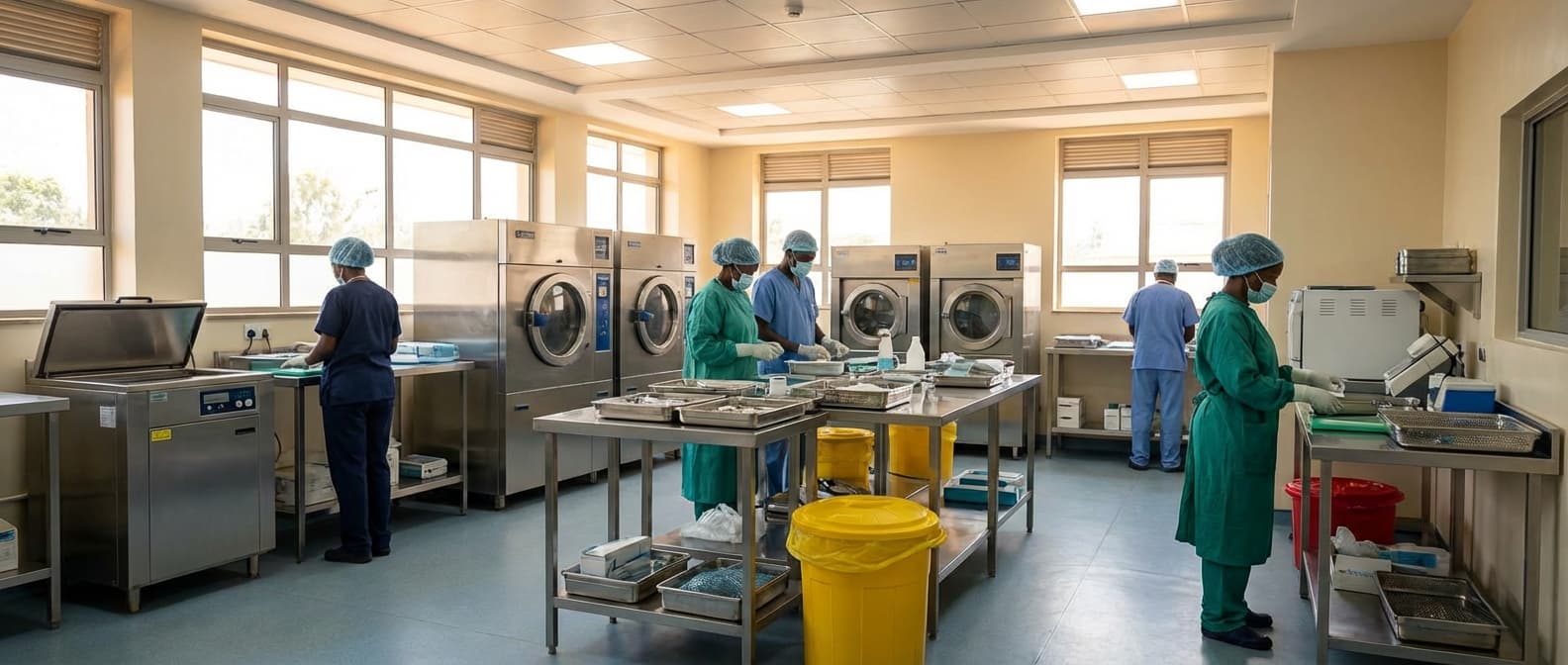
Endoscope Reprocessing Equipment Support Service in Seychelles
Engineering Excellence & Technical Support
Endoscope Reprocessing Equipment Support Service High-standard technical execution following OEM protocols and local regulatory frameworks.
Proactive IoT-Enabled Equipment Monitoring
Leveraging Internet of Things (IoT) sensors and real-time data analytics, we provide continuous, remote monitoring of your endoscope reprocessing equipment. This allows for early detection of potential issues, predictive maintenance scheduling, and minimizes unexpected downtime, ensuring operational readiness in Seychelles.
Advanced Remote Diagnostic & Support
Our certified technicians utilize secure remote access and diagnostic tools to identify and resolve equipment malfunctions swiftly, often without the need for on-site visits. This significantly reduces response times and ensures minimal disruption to your critical reprocessing workflows in Seychelles.
Specialized On-Site Technical Training
We offer comprehensive, hands-on training programs tailored to your specific endoscope reprocessing equipment models. Our certified trainers empower your biomedical and technical staff in Seychelles with the knowledge and skills for optimal equipment operation, routine maintenance, and basic troubleshooting, enhancing in-house capabilities.
What Is Endoscope Reprocessing Equipment Support Service In Seychelles?
Endoscope reprocessing equipment support service in Seychelles refers to the comprehensive range of technical assistance, maintenance, and operational support provided for automated endoscope reprocessors (AERs) and associated equipment utilized in healthcare facilities within the Seychelles. This service is critical for ensuring the efficacy, safety, and compliance of endoscope disinfection processes, thereby mitigating the risk of healthcare-associated infections (HAIs).
| Stakeholder | Need for Service | Typical Use Cases |
|---|---|---|
| Hospitals (Public & Private) | Essential for safe and effective reprocessing of flexible and rigid endoscopes used in various surgical and diagnostic procedures. Ensures compliance with infection control standards and patient safety. | Maintaining operational readiness of AERs for gastrointestinal endoscopy (gastroscopy, colonoscopy), bronchoscopy, urology (cystoscopy), arthroscopy, laparoscopy, and other endoscopic specialties. |
| Specialty Clinics (e.g., Gastroenterology, Pulmonology, Urology) | Reliable reprocessing is paramount for patient throughput and preventing cross-contamination. Downtime directly impacts service delivery. | Ensuring consistent performance of AERs for high-volume endoscopic procedures in outpatient settings. |
| Endoscopy Units/Departments | Directly responsible for the cleanliness and functionality of endoscopes and their reprocessing equipment. Require robust support to meet daily demands. | Daily operation and maintenance of AERs, including cycle monitoring, error troubleshooting, and routine cleaning procedures. |
| Biomedical Engineering Departments | Often tasked with the oversight and maintenance of medical equipment. May outsource specialized AER support but require coordination and understanding of the service. | Managing service contracts, coordinating PM schedules, and overseeing repairs to ensure overall equipment lifecycle management. |
| Regulatory and Quality Assurance Bodies | Require documented evidence of proper equipment maintenance and validation to ensure patient safety and adherence to national/international guidelines. | Reviewing maintenance logs, validation reports, and repair histories to verify compliance with infection control protocols. |
Key Components of Endoscope Reprocessing Equipment Support Service
- Installation and Commissioning: Expert setup and initial validation of new AERs and ancillary equipment to ensure they meet manufacturer specifications and regulatory requirements.
- Preventive Maintenance (PM): Scheduled routine inspections, cleaning, lubrication, calibration, and replacement of wear-and-tear components to optimize performance and longevity of the equipment.
- Corrective Maintenance and Repair: Diagnosis and resolution of equipment malfunctions, breakdowns, or performance issues by qualified technicians, often involving on-site service calls.
- Validation and Performance Testing: Periodic testing to confirm that the reprocessing cycles effectively achieve the required level of disinfection/sterilization, adhering to established standards (e.g., ISO 17665, AAMI ST58).
- Operator Training and Education: Instruction for healthcare personnel on the correct operation, troubleshooting, and routine maintenance of AERs to ensure user competency and adherence to protocols.
- Compliance and Documentation: Assistance in maintaining accurate records for maintenance, repairs, and validation activities, crucial for regulatory audits and quality assurance.
- Parts and Consumables Management: Supply and management of genuine or approved spare parts, filters, chemicals, and detergents necessary for the efficient operation of the reprocessing equipment.
- Emergency Support: Rapid response services for critical equipment failures to minimize downtime and maintain patient care continuity.
Who Needs Endoscope Reprocessing Equipment Support Service In Seychelles?
Endoscope reprocessing equipment support services are crucial for any healthcare facility in Seychelles that utilizes flexible and rigid endoscopes for diagnostic and therapeutic procedures. These services ensure the proper functioning, maintenance, and compliance of the complex machinery involved in cleaning, disinfecting, and sterilizing endoscopes, which is vital for patient safety and infection prevention.
| Target Customer/Department | Specific Needs & Services Required | Importance for Patient Safety & Efficiency |
|---|---|---|
| Hospitals (Public and Private) | Installation, calibration, routine maintenance, emergency repairs, validation of reprocessing cycles, training on equipment operation and troubleshooting, parts replacement, software updates. | Ensures consistent and effective decontamination of endoscopes, preventing cross-contamination and healthcare-associated infections (HAIs). Minimizes equipment downtime, maintaining procedure schedules and patient throughput. |
| Gastroenterology Department | Support for automated endoscope reprocessors (AERs), washer-disinfectors, drying and storage cabinets, leak testing equipment. Regular servicing of pumps, filters, and spray arms. Validation of disinfection efficacy. | Critical for preventing transmission of gastrointestinal pathogens. Reliable equipment ensures high turnaround times for diagnostic and therapeutic procedures like gastroscopies and colonoscopies. |
| Pulmonology Department | Maintenance of AERs and associated equipment for bronchoscopes. Ensuring proper drying to prevent microbial growth. Validation of disinfection parameters specific to respiratory pathogens. | Essential for safe bronchoscopy procedures, especially in patients with compromised respiratory systems. Prevents the spread of respiratory infections. |
| Urology Department | Support for reprocessing cystoscopes, ureteroscopes, and other urological endoscopes. Ensuring integrity of seals and components susceptible to urine residue. Validation of cleaning and disinfection processes for urological equipment. | Vital for preventing urinary tract infections (UTIs) and other complications following urological procedures. Efficient reprocessing facilitates timely patient care. |
| Otolaryngology (ENT) Department | Maintenance of equipment for reprocessing nasopharyngoscopes, laryngoscopes, and other ENT scopes. Ensuring proper cleaning of lumens and delicate optics. | Crucial for preventing infections in the head and neck region. Reliable equipment supports the diagnosis and treatment of various ENT conditions. |
| Operating Theatres (where endoscopies are performed) | On-site support for immediate troubleshooting, ensuring equipment readiness for scheduled surgical endoscopy procedures. Calibration and testing of reprocessors used for surgical instruments. | Minimizes delays in surgical procedures and ensures sterility of instruments, directly impacting surgical outcomes and patient safety in a critical care setting. |
| Infection Prevention and Control Department | Guidance on best practices for endoscope reprocessing, validation of reprocessing cycles, audit support, staff training on compliance. Expertise in regulatory requirements and standards. | Plays a key role in safeguarding patient health by ensuring all reprocessing activities meet stringent infection control protocols. Contributes to overall hospital safety and accreditation. |
| Biomedical Engineering Department | Collaboration on equipment maintenance schedules, preventative maintenance plans, management of spare parts inventory, troubleshooting complex technical issues, and ensuring compliance with safety regulations. | Integrates endoscope reprocessing equipment support with the broader hospital infrastructure, ensuring efficient and safe operation of medical devices. |
| Specialized Clinics (e.g., Fertility Clinics, Pain Management Clinics) | Tailored support for the specific endoscopes and reprocessing equipment used in their niche procedures. Ensuring consistent disinfection for a reduced patient volume but high-risk procedures. | Maintains the safety and efficacy of specialized procedures, preventing infections that could have significant consequences for patients undergoing fertility treatments or pain management interventions. |
| Government Health Authorities/Ministry of Health | Ensuring that public healthcare facilities have access to reliable support services for endoscope reprocessing equipment. Monitoring compliance with national and international sterilization standards. Supporting training initiatives for healthcare professionals. | Upholds public health standards across the nation, ensuring equitable access to safe endoscopic procedures and contributing to the overall quality of healthcare delivery in Seychelles. |
Target Customers & Departments in Seychelles Requiring Endoscope Reprocessing Equipment Support Service:
- {"title":"Hospitals (Public and Private)","description":"The primary users of endoscope reprocessing equipment, encompassing a wide range of departments."}
- {"title":"Specialized Clinics","description":"Facilities focusing on specific medical fields that extensively use endoscopic procedures."}
- {"title":"Government Health Authorities","description":"Overseeing public health infrastructure and ensuring compliance with sterilization standards."}
Endoscope Reprocessing Equipment Support Service Process In Seychelles
This document outlines the Endoscope Reprocessing Equipment Support Service Process in Seychelles, detailing the workflow from initial inquiry to successful service execution. The process is designed to ensure efficient, reliable, and timely support for essential medical equipment, ultimately contributing to patient safety and healthcare quality.
| Stage | Description | Key Activities | Responsible Party | Expected Outcome |
|---|---|---|---|---|
| The process begins when a healthcare facility in Seychelles contacts the service provider with a request for support related to their endoscope reprocessing equipment. This could be for scheduled maintenance, a breakdown, or a consultation. | Receive and log the inquiry (phone, email, online portal). | Client (Healthcare Facility) or Service Provider | Inquiry documented and assigned a reference number. |
| The service provider evaluates the nature and urgency of the request to determine the appropriate level of support and resources required. | Gather detailed information about the equipment (make, model, serial number), the nature of the problem, and the client's availability. Assess urgency and prioritize. | Service Provider (Support Coordinator/Engineer) | Clear understanding of the service requirement and its priority. |
| Based on the assessment, a service appointment is scheduled, and a qualified technician is dispatched to the client's location. | Propose service dates/times to the client. Confirm schedule. Prepare service order. Dispatch technician with necessary tools and spare parts (if identified). | Service Provider (Support Coordinator/Dispatch) | Confirmed service appointment and dispatched technician. |
| The technician arrives at the healthcare facility and performs the required maintenance, repair, or installation of the endoscope reprocessing equipment. | Conduct initial diagnosis. Perform scheduled maintenance (cleaning, lubrication, calibration) or necessary repairs. Replace faulty parts. Document all work performed. | Service Provider (Field Service Engineer) | Equipment functional, maintenance performed, or repair completed. |
| After the service is performed, the equipment is thoroughly tested to ensure it meets all operational and safety standards. | Perform functional tests. Conduct performance validation according to manufacturer specifications and local regulations. Ensure proper reprocessing cycle effectiveness. | Service Provider (Field Service Engineer) & Client Representative | Equipment confirmed to be operating correctly and safely. |
| The service is officially completed, and the technician hands over the equipment back to the client with all necessary documentation. | Complete service report. Obtain client sign-off on the service report. Provide client with a copy of the service report. Hand over any replaced parts if required by policy. | Service Provider (Field Service Engineer) & Client Representative | Client acknowledges completion of service and receives documentation. |
| The service provider issues an invoice for the services rendered, and the client processes the payment. | Generate and submit invoice to the client. Track payment status. Follow up on overdue payments. | Service Provider (Administration/Finance) & Client (Finance Department) | Invoice issued and payment received. |
| A follow-up is conducted to ensure client satisfaction and gather feedback on the service provided. | Contact client to confirm satisfaction. Address any lingering concerns. Gather feedback for service improvement. Log feedback for future reference. | Service Provider (Support Coordinator/Account Manager) | Client satisfaction confirmed and feedback collected for continuous improvement. |
Endoscope Reprocessing Equipment Support Service Workflow in Seychelles
- Inquiry Received
- Service Request Assessment
- Service Scheduling & Dispatch
- On-Site Service Execution
- Testing & Validation
- Service Completion & Handover
- Invoicing & Payment
- Post-Service Follow-up
Endoscope Reprocessing Equipment Support Service Cost In Seychelles
Endoscope reprocessing equipment plays a vital role in ensuring patient safety and infection control within healthcare facilities in Seychelles. The cost of support services for this specialized equipment can vary significantly due to several factors. These services typically include routine maintenance, calibration, repair, and the supply of spare parts and consumables. Understanding these pricing dynamics is crucial for budget planning and operational efficiency in Seychellois hospitals and clinics. The local currency used for these transactions is the Seychellois Rupee (SCR).
| Service Type | Estimated Range (SCR per incident/year) | Typical Inclusions |
|---|---|---|
| On-Demand Repair (Per Incident) | 1,500 - 7,000+ | Technician call-out, diagnosis, labor, minor parts. Major parts are additional. |
| Preventive Maintenance (Annual Contract - per unit) | 4,000 - 12,000+ | Scheduled inspections, cleaning, calibration, minor adjustments, basic functional tests. |
| Comprehensive Service/Full Maintenance Contract (Annual - per unit) | 8,000 - 20,000+ | Includes preventive maintenance, unlimited on-demand repairs, labor, and often specified spare parts. May exclude consumables and major component failures. |
| Spare Parts (per part) | 500 - 5,000+ | Varies greatly by part complexity and OEM pricing. |
| Consumables (e.g., filters, specific detergents - per batch/package) | 200 - 1,000+ | Specialized cleaning agents, disinfectants, filters, and seals. |
Key Pricing Factors for Endoscope Reprocessing Equipment Support Service in Seychelles
- Type and Complexity of Equipment: Different endoscope reprocessing machines (e.g., automated endoscope reprocessors (AERs), washer-disinfectors, drying and storage cabinets) have varying levels of complexity, which directly impacts maintenance and repair costs. Advanced models with more features may incur higher service fees.
- Service Provider: The choice of service provider significantly influences costs. This includes whether the service is provided by the original equipment manufacturer (OEM), an authorized third-party service company, or a local biomedical engineering firm. OEMs often have higher rates but may offer more specialized expertise and genuine parts.
- Service Level Agreement (SLA): The scope and duration of the SLA are critical. Comprehensive SLAs covering preventive maintenance, on-demand repairs, response times, and guaranteed uptime will be more expensive than basic maintenance contracts.
- Frequency and Type of Service: The cost will depend on whether the service is on-demand (ad-hoc repairs) or a scheduled preventive maintenance program. Preventive maintenance, though an upfront cost, can often reduce the likelihood of costly emergency repairs.
- Age and Condition of Equipment: Older or poorly maintained equipment may require more frequent and complex repairs, leading to higher service costs over time. Parts availability for older models can also be a factor.
- Geographic Location and Accessibility: While Seychelles is an island nation, access to remote facilities or specific logistical challenges in delivering parts or technicians might indirectly influence pricing due to increased travel and handling expenses.
- Spare Parts and Consumables: The cost of genuine OEM spare parts and specialized cleaning/disinfection consumables required for reprocessing can be a substantial component of the overall service cost.
- Technician Expertise and Training: The level of certification and specialized training of the biomedical technicians performing the service will affect their hourly rates and overall cost.
- Warranty Status: If the equipment is still under warranty, the support service might be included or offered at a reduced rate. Post-warranty support will typically be at full market price.
Affordable Endoscope Reprocessing Equipment Support Service Options
Maintaining the integrity and functionality of endoscope reprocessing equipment is crucial for patient safety and efficient clinic operations. This service focuses on providing affordable support options, ensuring your equipment is always ready for use. We understand that budget constraints are a significant factor, and we've developed flexible solutions to address this. Our goal is to offer comprehensive support without compromising quality or breaking your budget.
| Cost-Saving Strategy | Description | Example Application |
|---|---|---|
| Scheduled Preventive Maintenance: | Regularly scheduled maintenance performed by certified technicians to identify and address minor issues before they become major problems. This reduces the likelihood of unexpected breakdowns and costly emergency repairs. | A clinic opts for the 'Preventive & Predictive Maintenance Bundle' which includes quarterly maintenance visits, saving an estimated 15% on potential emergency repair costs over the year. |
| Remote Diagnostics & Troubleshooting: | Utilizing remote access technology to diagnose and often resolve equipment issues without requiring a site visit. This saves on technician travel time and allows for faster resolution of many problems. | A minor software glitch is identified and resolved remotely by a support technician within an hour, avoiding a potential two-day equipment downtime. |
| Bulk Parts Purchasing Agreements: | Negotiating discounted pricing on commonly used replacement parts when purchased in larger quantities or as part of a support contract. This reduces the individual cost of parts. | By agreeing to a 'Full Service & Parts Replacement Bundle,' a clinic secures a 10% discount on all parts included in their contract. |
| Extended Equipment Lifespan: | Investing in proper maintenance and refurbishment services to extend the operational life of existing equipment, delaying the need for expensive new purchases. | A refurbishment service for an aging washer-disinfector costs significantly less than a new unit, providing an additional 3-5 years of reliable service. |
| Optimized Service Schedules: | Tailoring service schedules to your clinic's specific usage patterns and equipment age to ensure support is provided when it's most needed, avoiding unnecessary visits. | A clinic with lower endoscope usage might opt for semi-annual preventive maintenance instead of quarterly, reducing service costs without compromising safety. |
| Training & Knowledge Transfer: | Providing your in-house staff with basic troubleshooting training and best practices to handle minor issues, reducing reliance on external support for everyday problems. | A clinic's staff receives training on basic error code interpretation, enabling them to resolve 20% of minor alerts independently. |
Key Value Bundles for Endoscope Reprocessing Equipment Support
- Basic Maintenance & Calibration Bundle: Includes scheduled preventive maintenance visits, essential calibration checks, and priority phone/remote support for minor issues. This bundle is ideal for clinics with established internal troubleshooting capabilities and primarily aims to prevent unexpected downtime.
- Preventive & Predictive Maintenance Bundle: Expands on the basic bundle by incorporating advanced diagnostic tools and predictive analytics to identify potential equipment failures before they occur. This bundle significantly reduces the risk of major breakdowns and associated emergency repair costs.
- Full Service & Parts Replacement Bundle: This comprehensive bundle covers all aspects of support, including preventive maintenance, calibration, predictive analytics, and the cost of most common replacement parts. It offers the highest level of peace of mind and predictable operational expenses.
- On-Demand Repair & Emergency Support Bundle: Designed for clinics that prefer a 'pay-as-you-go' approach but want guaranteed rapid response times for critical equipment failures. This bundle offers discounted hourly rates and priority scheduling for emergency service calls.
- Equipment Upgrade & Refurbishment Support Bundle: For clinics looking to extend the life of their existing equipment or plan for future upgrades. This bundle includes discounted rates for refurbishment services, trade-in appraisals, and expert consultation on new equipment acquisition.
Verified Providers In Seychelles
In the vibrant landscape of healthcare in Seychelles, identifying and choosing verified providers is paramount for ensuring quality and trustworthiness. Franance Health stands out as a beacon of reliability, offering a comprehensive suite of services backed by stringent credentialing processes. This commitment to verification not only assures patients of the highest standards of care but also fosters a sense of confidence in their healthcare journey.
| Credential Type | Franance Health Verification Process | Benefit to Patients |
|---|---|---|
| Medical Licenses & Registrations | Verified against Seychelles Ministry of Health and relevant international bodies. | Ensures providers are legally authorized and qualified to practice. |
| Educational Qualifications | Degrees, diplomas, and certifications authenticated from recognized universities and institutions. | Confirms foundational medical knowledge and specialized training. |
| Specialist Certifications | Validation of postgraduate training and board certifications in specific medical fields. | Guarantees expertise in specialized areas of medicine. |
| Experience & Track Record | Thorough review of professional history, including peer references and practice performance. | Provides confidence in the provider's practical application of knowledge and patient care outcomes. |
| Continuous Professional Development (CPD) | Mandatory participation in ongoing training and educational programs, with records maintained. | Ensures providers are up-to-date with the latest medical research, techniques, and technologies. |
| Background Checks & Ethical Review | Comprehensive checks for any disciplinary actions or ethical concerns. | Upholds a high standard of patient safety and trust in the medical profession. |
Why Franance Health Credentials Represent the Best Choice in Seychelles:
- Rigorous Vetting of Medical Professionals: Franance Health implements a multi-layered vetting process that goes beyond basic licensing. This includes thorough background checks, verification of educational qualifications from accredited institutions, and validation of specialist certifications.
- Emphasis on Continuous Professional Development: We mandate and track ongoing training and education for all our associated healthcare providers. This ensures they remain at the forefront of medical advancements and best practices, offering the most current and effective treatments.
- Adherence to International Healthcare Standards: Franance Health aligns its credentialing protocols with internationally recognized quality benchmarks. This commitment to global standards guarantees a level of care that is consistent with leading healthcare systems worldwide.
- Patient-Centric Approach to Provider Selection: Our credentialing process is designed to identify providers who not only possess exceptional clinical skills but also demonstrate empathy, excellent communication, and a genuine commitment to patient well-being.
- Transparent and Accessible Information: We believe in empowering patients with information. Franance Health ensures that credentials and areas of expertise for our verified providers are readily available, allowing for informed decision-making.
- Commitment to Ethical Practice: Beyond clinical competence, Franance Health's vetting includes an assessment of ethical conduct and professional integrity, ensuring all our partners uphold the highest moral standards in their practice.
Scope Of Work For Endoscope Reprocessing Equipment Support Service
This Scope of Work (SOW) outlines the services to be provided for the Endoscope Reprocessing Equipment Support Service. The objective is to ensure the optimal performance, reliability, and compliance of the endoscope reprocessing equipment throughout its lifecycle. This SOW details the technical deliverables, standard specifications, and service requirements.
| Category | Technical Deliverable | Standard Specifications/Requirements | Frequency/Trigger | Responsibility |
|---|---|---|---|---|
| Preventive Maintenance | Scheduled Equipment Inspection & Servicing | Adherence to manufacturer's recommended PM schedule (e.g., quarterly, semi-annually, annually). Includes cleaning, lubrication, calibration, functional testing, and replacement of wear parts. Detailed service report provided. | As per manufacturer's recommendations or a mutually agreed schedule. | Service Provider |
| Preventive Maintenance | Performance Verification & Calibration | Verification of critical parameters (e.g., cycle times, water temperatures, pressure, detergent concentration). Calibration of sensors and controllers to ensure accuracy within manufacturer's specifications. | During each scheduled PM, or as indicated by equipment diagnostics. | Service Provider |
| Corrective Maintenance | Emergency Repair Services | On-site response within a defined Service Level Agreement (SLA) timeframe (e.g., 4-24 hours, depending on criticality). Diagnosis and repair of equipment malfunctions. Provision of loaner parts or equipment if repair exceeds a specified time. | Upon equipment failure or reported malfunction. | Service Provider |
| Corrective Maintenance | Parts Replacement | Use of genuine OEM parts or approved equivalent parts. Parts must meet or exceed manufacturer specifications. All replaced parts documented. | As needed during corrective maintenance. | Service Provider |
| Technical Support | Remote Troubleshooting & Assistance | Availability of technical support personnel via phone or remote access to assist with minor issues, user queries, and preliminary diagnostics. | During standard business hours or as per agreed SLA. | Service Provider |
| Technical Support | On-site Technical Consultation | Provision of expert technical advice for optimization, upgrades, or complex troubleshooting when remote support is insufficient. | As required and agreed upon. | Service Provider |
| Documentation & Reporting | Service Reports | Comprehensive reports for each service visit, including: date, technician name, equipment serial number, work performed, parts used, test results, and recommendations. Reports submitted within a specified timeframe (e.g., 48-72 hours post-service). | Following each PM and corrective maintenance visit. | Service Provider |
| Documentation & Reporting | Equipment History Log | Maintenance of a detailed history log for each piece of equipment, documenting all service activities, repairs, and part replacements. Accessible to the Client. | Continuously updated. | Service Provider |
| Compliance | Adherence to Regulatory Standards | All services performed must comply with relevant industry standards (e.g., AAMI ST98, ISO 15883, FDA regulations, local health authority guidelines). Documentation of compliance verification. | Continuous and during all service activities. | Service Provider |
| Training | Operator Training & Refresher Courses | Provision of initial operator training for new equipment or significant upgrades. Offer refresher courses for existing staff as needed. Training materials provided. | Upon request or as part of equipment installation/upgrade. | Service Provider |
Service Objectives
- Maintain endoscope reprocessing equipment in optimal operational condition.
- Ensure compliance with relevant regulatory standards and manufacturer recommendations.
- Minimize downtime and extend the lifespan of the equipment.
- Provide timely and effective technical support and repair services.
- Maintain accurate and comprehensive service records.
Service Level Agreement For Endoscope Reprocessing Equipment Support Service
This Service Level Agreement (SLA) outlines the terms and conditions for the support services provided for endoscope reprocessing equipment. It defines the expected response times for issues and the guaranteed uptime for critical equipment functions. This agreement is designed to ensure the efficient and safe operation of endoscope reprocessing workflows.
| Equipment Category | Severity Level | Response Time (Business Hours) | Uptime Guarantee (Monthly) |
|---|---|---|---|
| High-Level Disinfectors (HLDs) | Critical (System Failure, Data Integrity Loss) | 2 Hours | 98% |
| High-Level Disinfectors (HLDs) | Major (Reduced Capacity, Intermittent Faults) | 4 Hours | 97% |
| Washer-Disinfectors (WDs) | Critical (System Failure, Inability to Process) | 2 Hours | 98% |
| Washer-Disinfectors (WDs) | Major (Cycle Errors, Performance Degradation) | 4 Hours | 97% |
| Automated Endoscope Scanners | Critical (Failure to Detect Contamination, System Crash) | 3 Hours | 97.5% |
| Automated Endoscope Scanners | Major (Inconsistent Detection, Communication Errors) | 6 Hours | 96% |
| Drying and Storage Cabinets | Critical (Failure to Maintain Sterility/Disinfection Environment) | 4 Hours | 95% |
| Drying and Storage Cabinets | Major (Temperature Fluctuation, Alarm Malfunctions) | 8 Hours | 94% |
Key Definitions
- Downtime: The period during which an endoscope reprocessing machine is inoperable or not functioning as intended, preventing its use in the reprocessing workflow.
- Response Time: The maximum time allowed from the initiation of a support request (e.g., phone call, ticket submission) until a qualified support technician begins to actively diagnose or address the issue.
- Uptime Guarantee: The minimum percentage of time that the specified endoscope reprocessing equipment is expected to be operational and available for use.
- Critical Equipment: Endoscope reprocessing equipment that is essential for the immediate continuity of patient care and regulatory compliance.
- Preventive Maintenance: Scheduled maintenance performed to reduce the likelihood of equipment failure and extend its lifespan.
Frequently Asked Questions

Ready when you are
Let's scope your Endoscope Reprocessing Equipment Support Service in Seychelles project in Seychelles.

Scaling healthcare logistics and technical systems across the entire continent.