
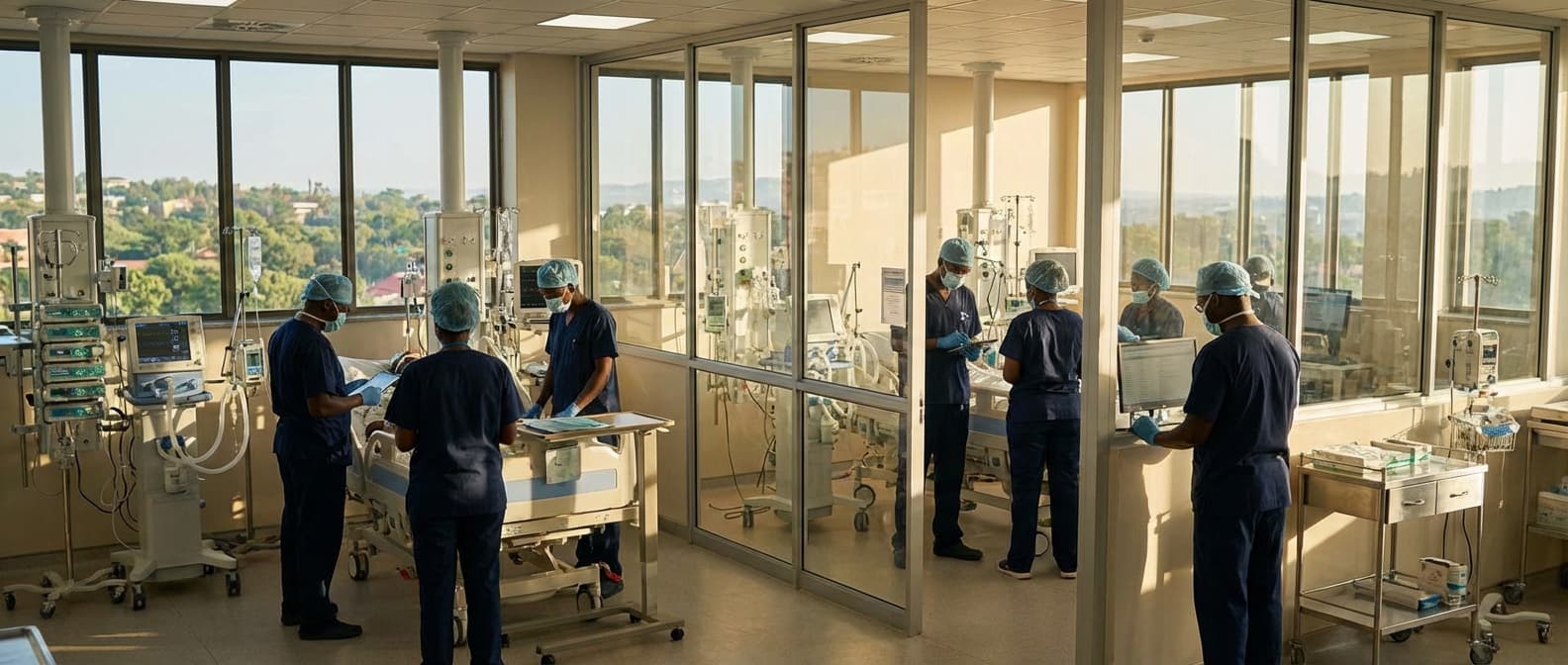
Ventilator Fleet Management & PM in Seychelles
Engineering Excellence & Technical Support
Preventive maintenance and fleet management for ICU ventilators High-standard technical execution following OEM protocols and local regulatory frameworks.
Optimized Ventilator Deployment & Readiness
Real-time tracking and predictive analytics ensure maximum ventilator availability and rapid deployment to critical care locations across Seychelles' islands, minimizing response times during emergencies.
Proactive Preventative Maintenance Scheduling
Automated, data-driven scheduling of preventative maintenance for the entire ventilator fleet, reducing unexpected failures and extending equipment lifespan, thereby ensuring consistent operational reliability.
Data-Driven Performance Monitoring & Utilization
Comprehensive monitoring of ventilator usage patterns, maintenance history, and performance metrics to identify trends, optimize resource allocation, and inform future procurement decisions for the Seychelles healthcare system.
What Is Ventilator Fleet Management & Pm In Seychelles?
Ventilator Fleet Management & Preventive Maintenance (PM) in Seychelles refers to the comprehensive operational and maintenance lifecycle management of mechanical ventilators within healthcare facilities. This service ensures the optimal functionality, safety, and cost-effectiveness of the ventilator fleet through structured planning, execution, and documentation of all related activities. It encompasses the entire lifespan of a ventilator, from initial acquisition and deployment to routine servicing, calibration, repair, and eventual decommissioning. The primary objective is to guarantee that these critical life-support devices are always available, reliable, and perform within manufacturer specifications to support patient care.
| Stakeholder/Entity | Need for Service | Typical Use Cases |
|---|---|---|
| Public Hospitals (e.g., Seychelles Hospital, Victoria Hospital) | Primary providers of critical care services requiring a reliable fleet of mechanical ventilators for ICU, operating rooms, and emergency departments. Need to ensure patient safety, regulatory compliance, and operational continuity. | Managing ventilators used in intensive care units (ICUs) for patients with respiratory failure, post-operative recovery, emergency intubations, and during public health emergencies (e.g., pandemics). |
| Private Healthcare Clinics & Hospitals | Supplementing public healthcare infrastructure, these facilities also require ventilators for elective surgeries, specialized treatments, and to manage patient flow. Need for cost-effective maintenance to preserve asset value. | Utilizing ventilators for anesthesia support during surgical procedures, critical care for patients with chronic respiratory conditions requiring acute exacerbations, and specialized respiratory therapies. |
| Ministry of Health (Seychelles) | Responsible for the overall healthcare system's performance, public health infrastructure, and resource allocation. Requires oversight of critical medical equipment to ensure national health security and preparedness. | Coordinating national ventilator deployment strategies during pandemics or widespread health crises, establishing maintenance standards, and ensuring equitable access to life-support technology across facilities. |
| Biomedical Engineering Departments/Teams | Directly responsible for the technical upkeep and operational readiness of medical equipment. Need for systematic processes to manage a diverse fleet and meet demanding service level agreements. | Performing scheduled preventive maintenance on ventilators according to established protocols, responding to emergent repair requests, conducting performance verifications, and maintaining detailed maintenance logs. |
| Medical Device Manufacturers & Distributors | May offer managed services as part of their product lifecycle support, especially for advanced or specialized ventilator models. Ensuring proper utilization and maintenance contributes to product reputation and future sales. | Providing specialized training for local technicians, offering advanced diagnostic support, supplying genuine replacement parts, and sometimes performing manufacturer-specific calibrations or repairs. |
Key Components of Ventilator Fleet Management & PM
- Inventory Management: Cataloging, tracking, and auditing all ventilators, including serial numbers, acquisition dates, warranty status, location, and maintenance history.
- Preventive Maintenance (PM) Scheduling & Execution: Developing and adhering to a rigorous PM schedule based on manufacturer recommendations, usage patterns, and regulatory requirements. This includes scheduled inspections, cleaning, lubrication, part replacement, and performance verification.
- Corrective Maintenance (CM) & Repair: Prompt identification, diagnosis, and repair of ventilator malfunctions and failures. This involves troubleshooting, sourcing genuine parts, and performing necessary repairs by qualified technicians.
- Calibration & Performance Verification: Ensuring ventilators meet precise airflow, pressure, and volume delivery standards through regular calibration and performance testing. This is critical for patient safety and therapeutic efficacy.
- Asset Tracking & Utilization Monitoring: Implementing systems to monitor the location, availability, and utilization rates of ventilators to optimize deployment and identify underutilized or overutilized assets.
- Regulatory Compliance: Adhering to all relevant national and international standards and regulations pertaining to medical device maintenance and patient safety.
- Documentation & Record Keeping: Maintaining detailed and accurate records of all maintenance activities, repairs, calibrations, inspections, and user training. This is essential for auditing, liability, and continuous improvement.
- Training & Competency Assurance: Ensuring that biomedical engineers, technicians, and clinical staff involved in operating and maintaining ventilators are adequately trained and possess the necessary competencies.
- End-of-Life Management: Planning for the safe and compliant disposal or decommissioning of ventilators that have reached the end of their operational lifespan.
- Budgeting & Financial Management: Developing and managing budgets for ventilator acquisition, maintenance, repairs, and consumables.
Who Needs Ventilator Fleet Management & Pm In Seychelles?
Ventilator fleet management and preventative maintenance (PM) are critical for ensuring the reliable and safe operation of vital medical equipment. In Seychelles, like any nation with a healthcare system, these services are essential for patient care, operational efficiency, and cost-effectiveness. The primary goal is to maximize the uptime of ventilators, minimize unexpected failures, and extend the lifespan of these expensive assets, ultimately safeguarding patient lives and optimizing resource allocation within the healthcare sector.
| Customer/Department | Key Responsibilities & Needs | Specific Services Required | Why it's Crucial for Seychelles |
|---|---|---|---|
| Public Hospitals (e.g., Victoria Hospital, Seychelles Hospital) | Primary providers of critical care, managing a diverse patient population with varying respiratory needs. Often face budget constraints and a high demand for services. | Scheduled PM, emergency repairs, inventory management, asset tracking, end-of-life planning, technician training. | Ensures consistent availability of life-saving equipment for the majority of the population, preventing critical care disruptions and reducing the impact of equipment failure on patient outcomes. Supports public health mandates. |
| Private Hospitals & Clinics | Offer specialized services and cater to a segment of the population. May have newer equipment but still require efficient management to control operational costs and maintain service quality. | Preventative maintenance contracts, repair services, calibration, performance verification, compliance audits. | Maintains high standards of patient care and service delivery, attracting and retaining patients. Optimizes investment in medical technology and reduces unexpected high repair costs. |
| Emergency Medical Services (EMS) | Operate mobile units, requiring ventilators that are robust, portable, and always ready for immediate deployment. Equipment failures in the field can have catastrophic consequences. | On-site maintenance and checks, rapid repair turnaround, battery management, calibration, ensuring operational readiness for transport. | Guarantees that ambulances and emergency response teams have reliable ventilators for pre-hospital care, directly impacting survival rates and the stability of critically ill patients during transport. |
| Tertiary Care & Specialized Centers (e.g., Intensive Care Units, Neonatal Units) | House the most critically ill patients, relying heavily on advanced and specialized ventilators. Downtime in these units has the most severe immediate impact on patient prognosis. | High-frequency PM, proactive monitoring, specialized repair expertise, integration with other critical care systems, advanced diagnostic services. | Ensures the highest level of care for the most vulnerable patients, minimizing risks associated with equipment malfunction in life-or-death situations. Crucial for maintaining specialized medical capabilities within Seychelles. |
| Government Ministry of Health | Responsible for the overall healthcare infrastructure, resource allocation, procurement, and policy development. Needs oversight and data to make informed decisions about healthcare spending and equipment acquisition. | Fleet inventory data, maintenance records, cost analysis, lifecycle management strategies, regulatory compliance reporting, long-term asset planning. | Facilitates strategic planning for healthcare infrastructure, optimizing national budget allocation for medical equipment, ensuring regulatory compliance, and supporting long-term healthcare system sustainability. Crucial for public health preparedness and response. |
Target Customers and Departments in Seychelles Requiring Ventilator Fleet Management & PM
- Public Hospitals & Healthcare Facilities
- Private Hospitals & Clinics
- Emergency Medical Services (EMS)
- Tertiary Care & Specialized Centers
- Government Ministry of Health
Ventilator Fleet Management & Pm Process In Seychelles
This document outlines the workflow for Ventilator Fleet Management and Preventive Maintenance (PM) processes within Seychelles. It details the steps involved from the initial inquiry or identification of a need for a ventilator service, through the planning and execution of maintenance, to the final documentation and reporting.
| Stage | Key Activities | Responsible Department/Personnel | Documentation/Tools | Key Outcomes |
|---|---|---|---|---|
| Inquiry & Request Initiation | Receiving requests for PM, repairs, or new ventilator acquisitions. Identifying equipment issues through regular checks or user reports. | Healthcare Facilities (Units, Hospitals), Biomedical Engineering Department (BMED), Ministry of Health | Service Request Forms, Incident Reports, Email Communications, BMED Tracking System | Acknowledgement of request, initial understanding of the need. |
| Needs Assessment & Prioritization | Evaluating the urgency of the request based on operational impact and ventilator availability. Determining the scope of work for PM or repairs. Assessing the need for new ventilators. | BMED, Clinical Leads, Hospital Administrators | Ventilator Inventory Database, Maintenance Logs, Criticality Assessment Matrix | Prioritized list of maintenance tasks, confirmed scope of work, justification for new acquisitions. |
| Resource Allocation & Scheduling | Assigning qualified biomedical technicians to tasks. Procuring necessary spare parts and consumables. Scheduling PM and repair appointments, considering operational demands of the facility. | BMED Management, Procurement Department, Facility Managers | Work Order System, Spare Parts Inventory, BMED Technician Schedule, LIMS (Laboratory Information Management System) for calibration, if applicable | Scheduled maintenance activities, availability of parts and personnel. |
| Preventive Maintenance Execution | Performing routine checks, calibration, cleaning, and functional testing of ventilators according to manufacturer guidelines and established PM protocols. | Biomedical Technicians (BMED) | PM Checklists, Calibration Equipment, Manufacturer Service Manuals, BMED Work Order System | Fully functional and calibrated ventilators, updated maintenance records. |
| Corrective Maintenance (if required) | Diagnosing and repairing malfunctions or breakdowns. Replacing faulty components. Ensuring minimal downtime for critical equipment. | Biomedical Technicians (BMED) | Diagnostic Tools, Repair Manuals, Spare Parts Inventory, BMED Work Order System | Repaired ventilators, restored functionality, minimized patient impact. |
| Testing & Quality Assurance | Conducting post-maintenance and post-repair functional tests, including safety and performance checks. Verifying calibration accuracy. | Biomedical Technicians (BMED), Quality Assurance Officer (if applicable) | Test Equipment, Calibration Certificates, BMED Work Order System | Confirmation of equipment performance to specifications, safety compliance. |
| Documentation & Reporting | Recording all maintenance activities, including date, technician, work performed, parts used, and test results. Updating inventory and maintenance logs. Generating reports for BMED and stakeholders. | Biomedical Technicians (BMED), BMED Administrator | BMED Work Order System, Electronic Health Records (EHR) integration (if applicable), Asset Management Software, Monthly/Quarterly Reports | Accurate and comprehensive maintenance history, compliance records, data for decision-making. |
| Fleet Review & Optimization | Analyzing maintenance data to identify trends, common failures, and areas for improvement. Evaluating ventilator lifespan and recommending replacements or upgrades. Optimizing PM schedules. | BMED Management, Ministry of Health Policy Makers | Fleet Management Reports, Cost-Benefit Analysis, Technology Assessment Reports | Improved fleet reliability, cost-effective maintenance strategies, informed capital expenditure planning. |
Workflow Stages: Ventilator Fleet Management & PM Process in Seychelles
- Inquiry & Request Initiation
- Needs Assessment & Prioritization
- Resource Allocation & Scheduling
- Preventive Maintenance Execution
- Corrective Maintenance (if required)
- Testing & Quality Assurance
- Documentation & Reporting
- Fleet Review & Optimization
Ventilator Fleet Management & Pm Cost In Seychelles
Managing a ventilator fleet in the Seychelles involves significant operational costs, particularly concerning preventive maintenance (PM). The pricing for these services is influenced by several factors, including the type and age of the ventilators, the complexity of the required maintenance, the availability of specialized technicians, and the cost of replacement parts. Given the island nation's geographical location, logistics and import costs for parts and specialized personnel can also add a premium. Local currency pricing will fluctuate based on the Seychellois Rupee (SCR) exchange rate and the specific service provider's cost structure.
| Service Component | Estimated Price Range (SCR) |
|---|---|
| Routine Preventive Maintenance (per unit, annual) | 10,000 - 25,000 |
| Major Service/Overhaul (per unit, as needed) | 25,000 - 60,000+ |
| On-demand Repair Call-out Fee (including travel, excluding parts) | 5,000 - 15,000 |
| Replacement Parts (e.g., sensors, batteries, tubing sets, per item) | 500 - 10,000+ |
| Fleet Management Software Subscription (annual, per unit/site) | 1,000 - 5,000 |
| Technician Training (per technician, specialized) | 20,000 - 50,000+ |
Key Pricing Factors for Ventilator Fleet Management & PM in Seychelles
- Ventilator Model & Technology: Advanced or specialized ventilators often have higher PM costs due to proprietary parts and complex calibration requirements.
- Ventilator Age & Condition: Older units may require more frequent or extensive maintenance, potentially increasing PM costs.
- Scope of PM: Routine checks, calibration, filter replacement, battery checks, and software updates all contribute to the overall PM cost. More comprehensive PM packages will be priced higher.
- Service Provider Expertise: The qualifications and experience of the technicians performing the PM are crucial. Specialized training for specific ventilator brands can increase labor costs.
- Parts Availability & Cost: The accessibility and price of original equipment manufacturer (OEM) or compatible replacement parts are major determinants. Import duties, shipping, and local markups will affect these costs.
- Location & Logistics: For an island nation like Seychelles, travel costs for technicians (if not locally based) and shipping costs for parts can significantly impact the final price.
- Contractual Agreements: Long-term maintenance contracts may offer discounted rates compared to ad-hoc service calls.
- Regulatory Compliance: Ensuring ventilators meet all current medical device regulations may necessitate specific testing and documentation, adding to the cost.
Affordable Ventilator Fleet Management & Pm Options
Managing a ventilator fleet efficiently is crucial for healthcare providers, impacting patient care, operational costs, and regulatory compliance. This document outlines affordable fleet management and preventative maintenance (PM) options, emphasizing the value of bundled services and strategic cost-saving initiatives.
| Value Bundle Option | Included Services | Potential Cost Savings | Ideal For |
|---|---|---|---|
| Basic PM & On-Demand Repair | Scheduled preventative maintenance, basic troubleshooting, and hourly rate for repairs. | Lower upfront cost, predictable PM expenses. Savings through reduced major repair costs due to timely PM. | Smaller facilities with a limited, well-maintained fleet and in-house technical expertise. |
| Comprehensive PM & Proactive Repair | Scheduled PM, priority on-demand repairs with capped labor rates, minor part replacement included. | Reduced downtime, predictable repair costs. Savings by minimizing emergency repairs and extending equipment life. | Mid-sized facilities seeking a balance of cost control and robust support. |
| Total Fleet Management Solution | All aspects of Comprehensive PM & Proactive Repair, plus inventory management, end-of-life planning, data analytics, and on-site technician support. | Significant savings through optimized inventory, leveraged purchasing, reduced downtime, and efficient resource allocation. Predictive maintenance prevents costly failures. | Large hospitals, multi-site healthcare systems, and organizations prioritizing operational efficiency and risk mitigation. |
| In-House Training & Support Package | Training programs for biomedical staff, access to specialized diagnostic tools, and remote technical support. | Empowers internal teams, reduces reliance on external services for routine tasks. Savings through reduced outsourcing costs for basic maintenance. | Facilities with a dedicated biomedical engineering department seeking to enhance capabilities and reduce external dependency. |
Key Components of Affordable Ventilator Fleet Management & PM
- Comprehensive PM Programs: Regular, scheduled maintenance is essential to prevent unexpected breakdowns, extend equipment lifespan, and ensure patient safety.
- On-Demand Repair Services: Access to skilled technicians for timely and cost-effective repairs when issues arise.
- Inventory Management & Optimization: Tracking ventilator location, usage, and service history to avoid overstocking or shortages.
- End-of-Life Planning & Replacement Strategies: Proactive planning for equipment upgrades and replacements to leverage favorable purchasing opportunities.
- Training & Skill Development: Empowering in-house biomedical staff with the knowledge and skills to perform routine maintenance and basic troubleshooting.
- Data Analytics & Reporting: Utilizing data to identify trends, predict failures, and optimize PM schedules.
- Consumables Management: Efficient sourcing and management of ventilator disposables and accessories.
- Regulatory Compliance Support: Ensuring all fleet activities adhere to relevant healthcare regulations and standards.
Verified Providers In Seychelles
Seychelles is rapidly emerging as a premier destination for medical tourism, offering world-class healthcare services. When choosing a provider in this idyllic setting, particularly for financial or health-related needs, "Franance Health" stands out. This section delves into their credentials and explains why they are considered the best choice for discerning individuals seeking high-quality and trustworthy services in Seychelles.
| Aspect | Franance Health's Commitment | Benefit to Patients |
|---|---|---|
| Quality Assurance | Rigorous accreditation and regular audits by health authorities. | Ensures the highest standards of safety and effective medical treatment. |
| Medical Expertise | Recruitment of highly qualified and internationally trained specialists. | Access to leading experts for complex medical conditions and procedures. |
| Technological Advancement | Continuous investment in state-of-the-art medical equipment. | Accurate diagnostics, efficient treatments, and improved patient outcomes. |
| Patient Care | Emphasis on personalized treatment plans and empathetic communication. | A comfortable and supportive healthcare experience tailored to individual needs. |
| Financial Clarity | Transparent and detailed billing for all services. | Peace of mind and control over medical expenses. |
Why Franance Health are Verified Providers:
- Accreditation and Regulatory Compliance: Franance Health adheres to stringent international and local healthcare standards. Their facilities and operational procedures are regularly audited by recognized regulatory bodies, ensuring the highest levels of safety, quality, and ethical practice.
- Experienced and Qualified Professionals: The organization boasts a team of highly skilled and experienced medical professionals, including specialists, surgeons, and support staff. Many have international training and extensive experience in their respective fields, guaranteeing expert care.
- Advanced Medical Technology: Franance Health invests in cutting-edge medical technology and equipment. This commitment ensures accurate diagnoses, effective treatments, and minimally invasive procedures, aligning with global best practices in healthcare delivery.
- Patient-Centric Approach: A core tenet of Franance Health is their dedication to patient well-being and satisfaction. They prioritize personalized care plans, clear communication, and a supportive environment throughout the patient's journey.
- Transparent Fee Structures: Understanding the financial aspect is crucial. Franance Health is committed to transparent pricing for all services, providing clear and comprehensive breakdowns of costs to avoid any unexpected surprises for their clients.
- Strong Reputation and Testimonials: The consistent positive feedback and testimonials from satisfied patients underscore Franance Health's reliability and the exceptional quality of care they provide. Their established reputation speaks volumes about their commitment to excellence.
- Integration with Financial Services (Implied by 'Franance'): While specific details would need to be verified, the 'Franance' in their name suggests a potential integration or understanding of financial aspects related to healthcare, which can be a significant advantage for international patients in managing their medical expenses.
Scope Of Work For Ventilator Fleet Management & Pm
This Scope of Work (SOW) outlines the requirements for comprehensive Ventilator Fleet Management and Preventive Maintenance (PM) services. The objective is to ensure the optimal performance, reliability, and availability of the entire ventilator fleet, thereby supporting continuous patient care and operational efficiency. This includes all aspects of equipment lifecycle management, from initial deployment and ongoing maintenance to eventual decommissioning and replacement planning. The SOW details the technical deliverables expected from the service provider and the standard specifications that must be adhered to throughout the contract period. Emphasis is placed on proactive maintenance, data-driven insights, and adherence to all regulatory and safety standards.
| Technical Deliverable | Description | Standard Specification/Requirement | Frequency/Timeline |
|---|---|---|---|
| Preventive Maintenance (PM) Service | Scheduled, proactive maintenance activities performed on each ventilator to ensure optimal function and prevent failures. | Performed according to manufacturer's recommended PM schedule, or a documented alternative based on risk assessment and usage. Includes cleaning, lubrication, calibration, functional testing, and replacement of wear-and-tear parts. | As per manufacturer recommendations (e.g., annually, semi-annually) or based on usage hours. |
| Corrective Maintenance (CM) / Repair Service | On-demand repair services for ventilators that have malfunctioned or are not operating within specified parameters. | Response time for critical failures (e.g., affecting patient care) not exceeding X hours. Use of genuine manufacturer parts or approved equivalent. Detailed repair logs including parts used, labor hours, and root cause analysis. | As needed, with defined response and resolution times. |
| Calibration and Performance Verification | Ensuring ventilators meet all specified performance parameters and are accurately calibrated. | Utilize calibrated test equipment traceable to national/international standards. Verification of all critical functional parameters (e.g., flow, pressure, volume, oxygen concentration). | At the time of PM, after major repairs, and as otherwise indicated by performance monitoring. |
| Asset Management and Inventory Tracking | Comprehensive tracking of all ventilators within the fleet, including location, status, maintenance history, and warranty information. | Centralized digital database for all equipment. Unique asset tagging for each unit. Real-time status updates (in-service, in-repair, out-of-service). | Ongoing, with updates upon any change in equipment status or location. |
| Compliance and Regulatory Adherence | Ensuring all maintenance activities and equipment meet current healthcare regulations and safety standards. | Adherence to FDA regulations, Joint Commission standards, local health authority requirements, and manufacturer guidelines. Documentation of all compliance-related activities. | Ongoing, with audits and reviews as required. |
| Spare Parts Management | Ensuring the availability of necessary spare parts for both PM and CM activities. | Maintain an adequate stock of critical spare parts for common failure modes. Defined lead times for non-stock parts. Inventory management system integration. | Ongoing, with regular inventory checks and replenishment strategies. |
| Technical Documentation and Record Keeping | Maintaining comprehensive and accurate records of all maintenance, repairs, and inspections. | Digital or paper-based records for each device, including service reports, calibration certificates, parts used, and technician notes. Secure storage and accessibility. | All service events, with records maintained for a minimum of X years (or as per regulatory requirements). |
| Reporting and Performance Metrics | Regular reporting on fleet status, maintenance activities, costs, and key performance indicators (KPIs). | Monthly/Quarterly reports including: Uptime percentage, Mean Time Between Failures (MTBF), Mean Time To Repair (MTTR), PM completion rates, CM costs, identified trends, and recommendations for improvement. Customizable reports available. | Monthly and Quarterly |
| Training and Competency Assessment | Ensuring technicians performing maintenance are adequately trained and competent. | Documentation of technician certifications, manufacturer-specific training, and ongoing professional development. Periodic competency assessments. | Initial onboarding and ongoing as required by regulations and manufacturer updates. |
| Risk Management and Equipment Lifecycle Planning | Proactive identification of potential risks and contribution to long-term equipment planning. | Analysis of failure data to identify recurring issues. Recommendations for equipment upgrades or replacements based on age, obsolescence, and total cost of ownership. | Quarterly and Annually |
Key Objectives of Ventilator Fleet Management & PM
- Maximize ventilator uptime and availability for patient care.
- Ensure all ventilators are maintained according to manufacturer specifications and industry best practices.
- Minimize the risk of equipment failure and associated patient harm.
- Control and optimize maintenance costs through efficient resource allocation and proactive strategies.
- Maintain detailed and accurate records of all maintenance activities, inspections, and repairs.
- Provide timely and accurate reporting on fleet status, performance, and upcoming needs.
- Ensure compliance with all relevant healthcare regulations, safety standards, and accreditation requirements.
- Support informed decision-making regarding equipment procurement, replacement, and lifecycle management.
Service Level Agreement For Ventilator Fleet Management & Pm
This Service Level Agreement (SLA) outlines the performance expectations and guarantees for the management and preventive maintenance (PM) of the organization's ventilator fleet. It defines response times for critical issues and establishes uptime guarantees to ensure the availability of essential medical equipment.
| Service Level | Description | Target Response Time | Uptime Guarantee |
|---|---|---|---|
| Critical System Failure | Complete failure or significant malfunction of a ventilator requiring immediate attention to prevent patient harm or operational disruption. | Within 1 hour of notification. | N/A (Focus on rapid resolution) |
| Urgent Issue | A malfunctioning ventilator that impacts full functionality but does not pose an immediate threat to patient safety or cause complete operational shutdown. Includes error codes requiring technician intervention. | Within 4 business hours of notification. | N/A (Focus on prompt resolution) |
| Routine Maintenance & Calibration | Scheduled preventive maintenance, calibration, and routine checks as per manufacturer recommendations and organizational protocols. | Scheduled within 1 week of notification/scheduling, completed within the agreed-upon appointment window. | N/A (Focus on scheduled completion) |
| Fleet Availability | The percentage of the total ventilator fleet that is operational and available for use at any given time. | N/A (Ongoing monitoring) | 98% uptime for the entire fleet, excluding planned downtime for scheduled PM. |
Key Performance Indicators (KPIs)
- Critical System Failure Response Time
- Non-Critical Issue Response Time
- Preventive Maintenance Completion Rate
- Equipment Uptime Guarantee
Frequently Asked Questions

Ready when you are
Let's scope your Ventilator Fleet Management & PM in Seychelles project in Seychelles.

Scaling healthcare logistics and technical systems across the entire continent.