
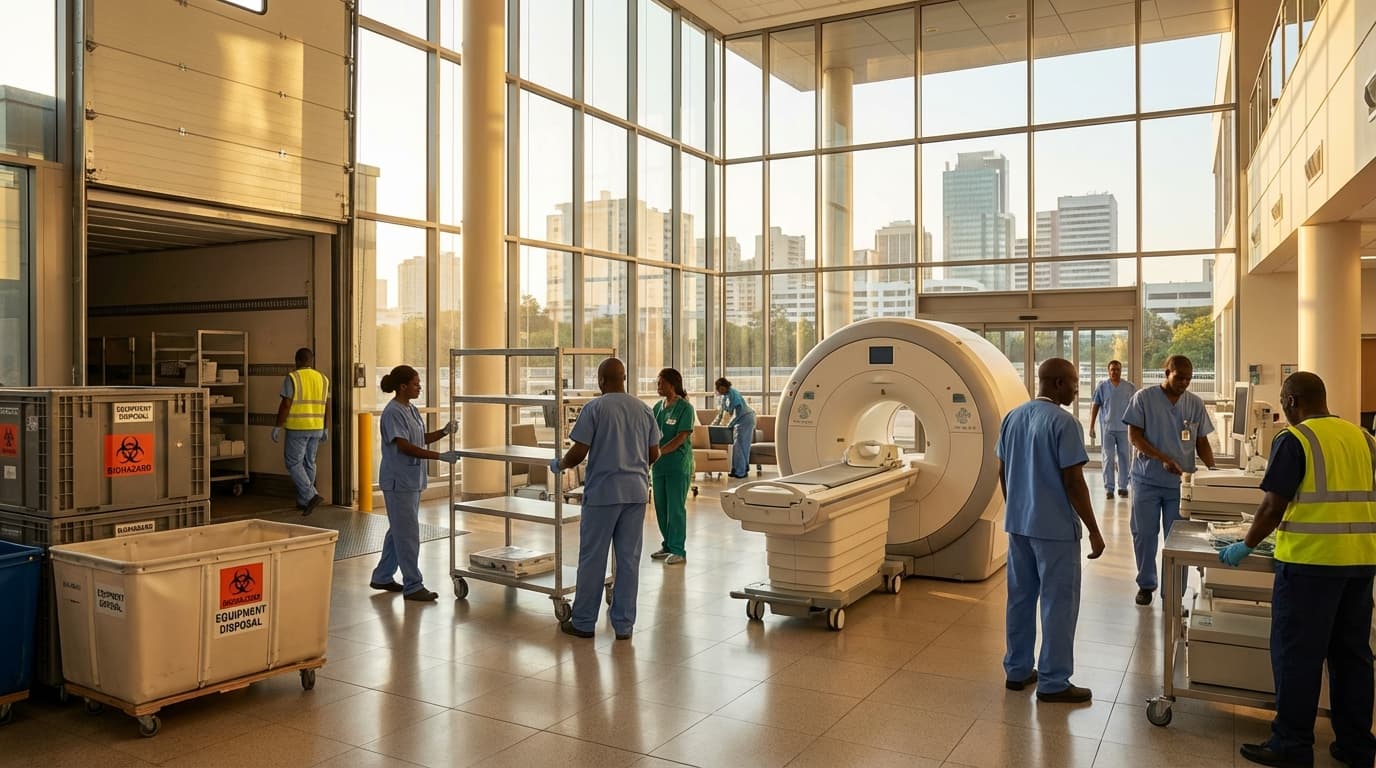
Site Restoration Service After Equipment Removal in Seychelles
Engineering Excellence & Technical Support
Site Restoration Service After Equipment Removal High-standard technical execution following OEM protocols and local regulatory frameworks.
Eco-Sensitive Site Reclamation
Leveraging advanced ecological assessment and phased revegetation strategies, we meticulously restore disturbed land to its pre-removal ecological state. Our approach prioritizes native Seychelles flora and fauna, ensuring minimal long-term environmental impact and fostering biodiversity.
Precision Grading & Soil Stabilization
Expertly engineered grading techniques are employed to re-contour the land, manage water runoff effectively, and prevent erosion. We utilize bioengineering solutions and specialized soil amendments to rapidly stabilize the terrain and promote healthy soil regeneration.
Integrated Contamination Remediation
Following rigorous soil and groundwater testing, our team implements tailored remediation plans to address any potential contaminants from equipment operation. This includes advanced bioremediation and physical containment methods to ensure complete site safety and compliance with environmental regulations.
What Is Site Restoration Service After Equipment Removal In Seychelles?
Site restoration service after equipment removal in Seychelles refers to the process of returning a land parcel, industrial site, or commercial property to its pre-installation or agreed-upon condition following the decommissioning and extraction of industrial machinery, infrastructure, or construction equipment. This service is critical for regulatory compliance, environmental remediation, and the subsequent repurposing or sale of the land. The scope of work is highly variable, contingent on the nature of the removed equipment, the duration of its presence, and the specific geological and environmental characteristics of the Seychelles' unique island ecosystems.
| Who Needs Site Restoration? | Typical Use Cases in Seychelles |
|---|---|
| Industrial Facility Operators | Closure of factories, processing plants, or manufacturing sites. |
| Construction Companies | End-of-project site reinstatement after the removal of heavy machinery, temporary structures, or site compounds. |
| Resource Extraction Companies | Rehabilitation of areas impacted by mining, quarrying, or extraction activities (less common in Seychelles due to environmental sensitivities). |
| Energy and Utilities Providers | Decommissioning of temporary power generation units, communication towers, or underground infrastructure. |
| Government Agencies and Landowners | Ensuring compliance with land use permits and preparing land for new development or conservation efforts. |
| Offshore Support Operations | Restoration of land-based facilities used for supporting offshore exploration or infrastructure projects. |
Key Components of Site Restoration Services
- Decommissioning and Disassembly: Safe and systematic dismantling of the removed equipment, including any associated support structures, foundations, or ancillaries.
- Hazardous Material Abatement: Identification, containment, and safe disposal of any hazardous substances (e.g., oils, chemicals, asbestos) that may have been present during the equipment's operational life.
- Subsurface Remediation: Excavation and treatment or removal of contaminated soil and groundwater. This often involves soil testing and the application of appropriate remediation techniques.
- Structural Demolition: Removal of any remaining concrete slabs, pilings, or other non-removable structures.
- Ground Leveling and Grading: Reshaping the land to its original or a specified contour, ensuring proper drainage and stability.
- Soil Replacement and Compaction: Importing or reusing suitable topsoil and compacting it to achieve desired load-bearing capacities.
- Revegetation and Landscaping: Reinstatement of vegetation, which can range from basic grass seeding to the planting of native flora to restore ecological balance and aesthetic appeal.
- Waste Management and Disposal: Segregation, recycling, and environmentally responsible disposal of all debris generated during the restoration process.
- Environmental Monitoring and Compliance: Ongoing monitoring to ensure that all restoration activities meet local environmental regulations and international best practices.
Who Needs Site Restoration Service After Equipment Removal In Seychelles?
Equipment removal can leave behind a significant footprint, from disturbed soil and damaged vegetation to concrete remnants and general debris. Site restoration services in Seychelles are crucial for returning these areas to a safe, functional, and aesthetically pleasing state. This process is not just about aesthetics; it's vital for environmental compliance, public safety, and future land usability.
| Target Customer/Organization | Relevant Departments/Roles | Why They Need Restoration Services |
|---|---|---|
| Industrial Facilities (e.g., Factories, Power Plants, Quarries) | Operations Management, Facilities Management, Environmental Health & Safety (EHS) Department, Project Management | To remediate land after heavy machinery, chemical spills, or structural removal; to meet environmental regulations; to prepare for new development or sale of the land. |
| Construction Companies | Project Managers, Site Supervisors, Health & Safety Officers, Environmental Compliance Officers | To restore construction sites after the removal of heavy equipment, temporary structures, and building materials; to ensure sites are safe for public access or handover. |
| Mining and Quarrying Operations | Mine Managers, Environmental Officers, Land Reclamation Specialists | To restore disturbed land following the removal of extraction equipment; to comply with reclamation laws and mitigate environmental impact. |
| Agricultural Businesses | Farm Owners, Operations Managers, Agricultural Engineers | To clear land after the removal of old farming machinery, storage structures, or irrigation systems; to prepare land for new crops or different agricultural uses. |
| Telecommunications Companies | Network Operations, Infrastructure Management, Project Managers | To restore areas where cell towers, satellite dishes, or other communication equipment have been removed; to ensure public safety and reinstate landscaping. |
| Government Agencies (e.g., Ministry of Environment, Ministry of Lands, Public Utilities Companies) | Environmental Protection Officers, Land Management Officers, Project Managers, Engineering Departments | To manage the restoration of public land after the removal of infrastructure (e.g., old pipelines, abandoned government equipment); to ensure compliance with environmental standards and public safety. |
| Oil and Gas Companies | Decommissioning Teams, Environmental Managers, Project Engineers | To restore sites after the removal of exploration or production equipment, pipelines, or storage tanks; to address potential soil contamination and environmental damage. |
| Logistics and Warehousing Companies | Facilities Managers, Operations Managers | To restore areas where heavy lifting equipment, loading docks, or temporary structures have been removed; to ensure operational efficiency and safety. |
Who Needs Site Restoration Service After Equipment Removal in Seychelles?
- Businesses and organizations that have decommissioned or relocated operational equipment.
- Government agencies responsible for public infrastructure and land management.
- Construction and development companies undertaking projects that involve temporary equipment installations.
- Agricultural operations that have removed farming machinery.
- Industrial facilities undergoing upgrades or closures.
Site Restoration Service After Equipment Removal Process In Seychelles
Our Site Restoration Service in Seychelles is designed to meticulously return your land to its pre-construction or pre-equipment state after the removal of machinery and infrastructure. We offer a comprehensive workflow, ensuring a smooth and efficient process from your initial inquiry to the final restoration.
| Phase | Key Activities | Deliverables | Typical Duration |
|---|---|---|---|
| Inquiry & Consultation | Initial contact, discussion of needs, scope identification | Understanding of project requirements | 1-3 Business Days |
| Site Assessment & Quotation | On-site inspection, condition assessment, planning for restoration | Detailed site report, comprehensive quotation | 3-7 Business Days (depending on site size) |
| Proposal & Planning | Development of restoration plan, cost breakdown, client review and approval | Approved Restoration Plan, agreed quotation | 2-5 Business Days |
| Permitting & Approvals | Liaising with authorities, submission of applications | Necessary permits and approvals (if required) | Varies significantly based on local regulations (can range from days to weeks) |
| Pre-Restoration Preparation | Site marking, safety setup, access establishment | Ready and safe work environment | 1-2 Business Days |
| Execution | Implementing all planned restoration activities | Restored site | Varies greatly based on project scope (days to weeks/months) |
| Quality Assurance & Final Inspection | Internal checks, joint client inspection | Client sign-off on completed work | 1-3 Business Days |
| Handover & Documentation | Formal project completion, provision of reports and certificates | Final project documentation | 1-2 Business Days |
Site Restoration Workflow: Inquiry to Execution
- Inquiry & Initial Consultation: You contact us with your site restoration needs. We schedule a preliminary discussion to understand the scope of work, identify the type of equipment removed, and gather essential site details.
- Site Assessment & Quotation: Our experienced team visits your Seychelles site to conduct a thorough assessment. This includes evaluating the extent of disturbance, identifying specific restoration requirements (e.g., soil grading, vegetation, debris removal), and documenting existing conditions.
- Proposal & Planning: Based on the site assessment, we develop a detailed proposal outlining the proposed restoration activities, timelines, materials, and a transparent cost breakdown. We collaborate with you to finalize the plan and address any specific concerns.
- Permitting & Approvals (if applicable): We assist in navigating any necessary local permits or environmental approvals required by Seychellois authorities for the restoration activities.
- Pre-Restoration Site Preparation: Before commencing major work, we undertake any preliminary tasks, such as marking boundaries, ensuring site access, and setting up safety measures.
- Execution of Restoration Activities: Our skilled crew implements the approved restoration plan. This may involve: * Debris & Waste Removal: Clearing all residual materials from equipment and construction. * Soil Grading & Leveling: Restoring the natural topography or specified land contours. * Erosion Control: Implementing measures to prevent soil erosion. * Revegetation/Landscaping: Introducing native plant species or undertaking landscaping as per the plan. * Compaction & Stabilization: Ensuring the stability of the restored ground.
- Quality Assurance & Inspection: Throughout the execution phase, we conduct regular internal inspections to ensure adherence to the plan and quality standards. A final joint inspection with you is scheduled upon completion.
- Final Handover & Documentation: Once you are satisfied with the restored site, we formally hand over the project. We provide comprehensive documentation of the restoration process, including before-and-after photographs and any relevant completion certificates.
- Post-Restoration Monitoring (Optional): For sensitive projects, we can offer optional post-restoration monitoring to ensure the long-term success of the ecological recovery.
Site Restoration Service After Equipment Removal Cost In Seychelles
The cost of site restoration after equipment removal in Seychelles can vary significantly depending on several factors. These include the size and complexity of the site, the type and extent of the equipment removed, the environmental impact of the original operations, and the specific restoration standards required by local regulations or client agreements. Generally, Seychelles Rupee (SCR) is the local currency used for these services. Factors influencing the price include labor costs, material acquisition, waste disposal, and any specialized ecological or geological assessments needed. The degree of damage, the presence of hazardous materials, and the desired final state of the land (e.g., returning it to its natural state, preparing for new construction) all play a crucial role in determining the overall expense.
| Restoration Scope | Estimated Cost Range (SCR) | Notes |
|---|---|---|
| Basic Site Cleanup & Debris Removal | SCR 10,000 - SCR 50,000 | Suitable for minor equipment removal with minimal site impact. Includes basic waste removal and leveling. |
| Moderate Site Restoration | SCR 50,000 - SCR 200,000 | Involves removal of larger equipment, some soil disturbance, and basic re-vegetation. May include minor soil grading. |
| Extensive Site Restoration & Remediation | SCR 200,000 - SCR 1,000,000+ | For sites with significant environmental impact, hazardous material contamination, or requiring substantial landscaping and ecological rehabilitation. Costs can escalate significantly based on the complexity of remediation. |
| Specialized Ecological Restoration | SCR 500,000 - SCR 2,000,000+ | Focuses on returning the site to its pre-disturbance ecological state, often involving native species planting, habitat restoration, and long-term monitoring. Highly dependent on site specific conditions and biodiversity goals. |
Key Pricing Factors for Site Restoration in Seychelles:
- Site Size and Accessibility: Larger or more remote sites typically incur higher costs due to increased labor and logistical needs.
- Equipment Removal Scope: The volume, weight, and nature of the removed equipment (e.g., heavy machinery, industrial components) impact the complexity of removal and subsequent restoration.
- Environmental Contamination: Presence of oil, chemicals, or other pollutants will necessitate specialized cleanup and remediation, significantly increasing costs.
- Damage Assessment and Remediation: The extent of soil disturbance, erosion, or structural damage will dictate the type and cost of repair work.
- Restoration Goals: Whether the site needs to be returned to its natural state, re-vegetated, or prepared for new development affects the services required.
- Regulatory Requirements: Seychelles' environmental laws and permitting processes will dictate the standards and procedures for restoration.
- Waste Disposal Costs: Proper and compliant disposal of debris, contaminated soil, and dismantled equipment is a significant cost component.
- Material and Equipment Costs: Sourcing of topsoil, native plants, landscaping materials, and rental of specialized restoration equipment.
- Labor Costs: Skilled labor for demolition, excavation, landscaping, and environmental specialists.
- Permits and Inspections: Fees associated with obtaining necessary permits and undergoing regulatory inspections.
Affordable Site Restoration Service After Equipment Removal Options
Removing heavy equipment from a site, whether for construction, demolition, or decommissioning, often leaves behind a disturbed landscape. Our affordable site restoration service aims to bring your property back to its pre-operation or an improved functional state without breaking the bank. We understand that budget is a key concern, which is why we offer flexible value bundles and implement proven cost-saving strategies to ensure you receive high-quality restoration at a competitive price. Our goal is to provide a seamless and cost-effective solution, minimizing your environmental and aesthetic liabilities.
| Cost-Saving Strategy | Description | Benefit to You |
|---|---|---|
| Bulk Material Sourcing | Purchasing soil, compost, and mulch in large quantities from local, trusted suppliers. | Reduced material costs passed on directly to you. |
| Efficient Equipment Utilization | Optimizing the use of our specialized restoration equipment to complete tasks quickly and effectively. | Lower labor costs and faster project completion times. |
| Strategic Phased Restoration | Breaking down the restoration process into manageable phases, allowing for staggered budgeting and execution. | Improved cash flow management and flexibility in project timelines. |
| Native & Drought-Tolerant Landscaping | Prioritizing the use of plants that are adapted to the local climate and require less maintenance and watering. | Reduced long-term maintenance costs and environmental impact. |
| Recycling & Waste Minimization | Implementing robust recycling programs for debris and utilizing materials on-site whenever possible. | Lower disposal fees and a more sustainable approach. |
| Pre-emptive Planning & Assessment | Conducting thorough site assessments to identify potential challenges and develop efficient work plans. | Minimizing unexpected costs and delays. |
Our Site Restoration Value Bundles
- {"title":"Basic Recovery Bundle","description":"Ideal for minor disturbances. Includes grading, basic debris removal, and initial soil amendment for essential recovery."}
- {"title":"Standard Restoration Bundle","description":"A comprehensive package for moderate damage. Covers extensive grading, removal of all equipment-related debris, weed suppression, and seeding with native grasses."}
- {"title":"Premium Green Bundle","description":"Our most complete option for significant impact. Includes advanced grading, complete debris and contamination remediation, topsoil replenishment, extensive seeding with custom wildflower mixes, and initial mulching."}
- {"title":"Customizable Solutions","description":"We can tailor any bundle to your specific needs and budget, allowing you to select individual services for a truly personalized restoration plan."}
Verified Providers In Seychelles
In the Seychelles, finding reliable and credentialed healthcare providers is paramount for both residents and visitors seeking quality medical services. Franance Health stands out as a leading platform dedicated to connecting individuals with verified healthcare professionals. Their rigorous credentialing process ensures that all listed providers meet stringent standards of expertise, experience, and ethical practice. This verification is not merely a formality; it's a cornerstone of patient safety and confidence, guaranteeing that you are choosing from the best the Seychelles has to offer.
| Provider Type | Key Verification Criteria | Franance Health Assurance |
|---|---|---|
| General Practitioners | Valid Medical License, Board Certification, Practice History | Ensures competent primary care and initial diagnosis |
| Specialists (e.g., Cardiologists, Dermatologists) | Specialized Medical Degree, Fellowship Training, Peer Reviews | Guarantees advanced knowledge and experience in specific fields |
| Dentists | Dental Board Registration, Continuing Education Units | Confirms up-to-date practices in oral healthcare |
| Therapists and Counselors | Relevant Degrees, Professional Licenses, Ethical Code Adherence | Assures qualified mental health support and guidance |
| Nurses | Nursing License, Specialized Certifications (if applicable) | Verifies skilled and compassionate nursing care |
Why Franance Health Credentials Matter in Seychelles:
- Rigorous Vetting Process: Franance Health employs a multi-faceted approach to verify every provider, including checking medical licenses, educational qualifications, professional accreditations, and past performance records.
- Commitment to Excellence: Only providers who demonstrate a consistent commitment to high standards of patient care and ethical conduct are listed, ensuring you receive the best possible treatment.
- Enhanced Patient Safety: By relying on Franance Health's verified credentials, you significantly reduce the risk of encountering unqualified practitioners, prioritizing your well-being.
- Access to Specialized Expertise: The platform facilitates access to a wide range of specialists, all pre-screened and verified, allowing you to find the right expert for your specific medical needs.
- Transparency and Trust: Franance Health provides a transparent overview of provider qualifications, fostering trust and empowering you to make informed decisions about your healthcare in the Seychelles.
Scope Of Work For Site Restoration Service After Equipment Removal
This Scope of Work (SOW) outlines the requirements for comprehensive site restoration services following the successful removal of equipment. The objective is to return the site to a safe, functional, and aesthetically pleasing condition, meeting all relevant regulatory and client-specific standards. This SOW details the tasks, deliverables, and standard specifications for the restoration process.
| Task/Phase | Description | Deliverables | Standard Specifications/References |
|---|---|---|---|
| Site Assessment and Preparation | Conduct a thorough inspection of the site post-equipment removal. Identify any damage, contamination, or structural issues. Develop a detailed restoration plan and obtain necessary permits. | Site assessment report, proposed restoration plan, permit applications. | ASTM E2960 (Standard Guide for Site Characterization prior to Remediation), relevant local environmental regulations, client-specific site access protocols. |
| Demolition and Debris Removal | Safely demolish and remove any remaining foundations, supports, or structures associated with the equipment. Segregate and dispose of all debris in accordance with environmental regulations. | Demolition plan, waste disposal manifests, landfill receipts. | OSHA 1926 Subpart CC (Cranes and Derricks in Construction), local demolition permits, hazardous waste manifest regulations. |
| Hazardous Material Abatement (if applicable) | Identify and remove any hazardous materials (e.g., asbestos, lead paint, PCBs) that may have been present in or around the removed equipment or its associated structures. Adhere to strict containment and disposal procedures. | Hazardous material survey report, abatement plan, air monitoring reports, waste disposal manifests for hazardous materials. | EPA AHERA (Asbestos Hazard Emergency Response Act), EPA TSCA (Toxic Substances Control Act), state and local hazardous waste regulations, NIOSH guidelines for hazardous material handling. |
| Surface Restoration | Repair or replace damaged surfaces such as concrete pads, asphalt, or compacted gravel. Restore soil grading to original or improved contours, ensuring proper drainage. Compact fill materials to specified densities. | Repaired/replaced surfaces, soil grading reports, compaction test results. | ACI 301 (Specifications for Structural Concrete), AASHTO M 145 (Classification of Soils and Soil-Aggregate Mixtures for Highway Construction Purposes), relevant local grading ordinances, project-specific compaction requirements (e.g., 95% Standard Proctor Density). |
| Utilities Reinstatement or Capping | Cap or reinstate any disturbed utilities (e.g., electrical conduits, water lines, gas lines) in accordance with utility provider standards and local regulations. Ensure all capped utilities are clearly marked and documented. | Utility reinstatement/capping reports, confirmation from utility providers, site maps showing capped utilities. | National Electrical Code (NEC), local plumbing codes, local gas utility regulations, utility provider specifications. |
| Landscaping and Revegetation | Restore disturbed vegetated areas. This may include topsoil replacement, seeding, sodding, or planting of approved vegetation. Ensure established vegetation meets aesthetic and erosion control requirements. | Topsoil placement verification, seeding/sodding reports, plant material certifications, photographic documentation of establishment. | Local soil erosion and sediment control standards, USDA NRCS (Natural Resources Conservation Service) guidelines for native vegetation, client-specified landscaping plans. |
| Final Inspection and Sign-off | Conduct a comprehensive final inspection of the restored site with the client or their representative. Address any outstanding punch list items. Obtain formal sign-off confirming completion and acceptance of the restoration work. | Final inspection report, signed acceptance documentation, as-built drawings (if applicable). | Client-specific inspection checklists, project completion criteria as defined in the contract. |
Key Areas of Restoration
- Site Assessment and Preparation
- Demolition and Debris Removal
- Hazardous Material Abatement (if applicable)
- Surface Restoration (e.g., concrete, asphalt, soil grading)
- Utilities Reinstatement or Capping
- Landscaping and Revegetation
- Final Inspection and Sign-off
Service Level Agreement For Site Restoration Service After Equipment Removal
This Service Level Agreement (SLA) outlines the response times and uptime guarantees for the Site Restoration Service provided by [Your Company Name] after the removal of [Specific Equipment Type, e.g., temporary structures, industrial machinery]. This SLA is an addendum to the Master Service Agreement (MSA) between [Your Company Name] and [Client Company Name].
| Service Element | Service Level Objective (SLO) | Measurement Method | Remedy for Failure |
|---|---|---|---|
| Response Time to Service Request (Commencement of Restoration Planning) | Acknowledge Service Request within 4 Business Hours. Initiate site assessment and restoration planning within 24 Business Hours of Service Request acknowledgment. | Time of acknowledgment recorded by [Your Company Name]'s internal system. Time of assessment commencement logged by site personnel. | 10% discount on the total Site Restoration Service fee for the affected project if the 24-Business Hour planning window is missed by more than 8 hours. |
| Uptime Guarantee (for active restoration periods) | Site Restoration Service will be actively worked on during agreed-upon project timelines, with a target availability of 95% of scheduled workdays. Unscheduled interruptions due to [Your Company Name]'s fault will not exceed 5% of scheduled workdays. | Calculated as (Scheduled Workdays - Unscheduled Interruption Days) / Scheduled Workdays. Unscheduled interruptions are those caused by [Your Company Name]'s staffing, equipment failure, or logistical issues. | For every 1% of uptime below 95% (but above 90%), a credit of 5% of the daily restoration cost for that period will be applied. For uptime below 90%, a credit of 10% of the daily restoration cost will be applied. |
| Resolution Time (Completion of Restoration) | To be defined in the individual Project Scope of Work (SOW) for each Site Restoration project, with a target of [e.g., 30] calendar days from the commencement of active restoration. | Calendar days from the official start date of active restoration work as agreed in the SOW. | If the resolution time exceeds the agreed-upon SOW timeline by more than 10% due to [Your Company Name]'s fault, [Your Company Name] will cover reasonable additional costs incurred by the Client for site access or interim measures, up to a maximum of 15% of the total Site Restoration Service fee. |
Key Definitions
- Site Restoration: The process of returning the client's site to its agreed-upon pre-removal state, including but not limited to debris removal, grading, soil remediation, revegetation, and any other specified activities.
- Equipment Removal: The successful and complete dismantling and removal of the specified equipment from the client's site by [Your Company Name] or its authorized subcontractors.
- Service Request: A formal communication initiated by the Client to [Your Company Name] requesting the commencement of Site Restoration services.
- Downtime: Any period where the Site Restoration Service is unavailable or cannot be performed due to reasons attributable to [Your Company Name]'s failure to meet the obligations outlined in this SLA. This excludes scheduled maintenance, force majeure events, and delays caused by the Client.
- Resolution: The successful completion of the Site Restoration Service to the satisfaction of the Client and in accordance with the agreed-upon scope of work.
- Business Hours: [Specify Business Hours, e.g., Monday to Friday, 9:00 AM to 5:00 PM Local Time, excluding public holidays].
Frequently Asked Questions

Ready when you are
Let's scope your Site Restoration Service After Equipment Removal in Seychelles project in Seychelles.

Scaling healthcare logistics and technical systems across the entire continent.