
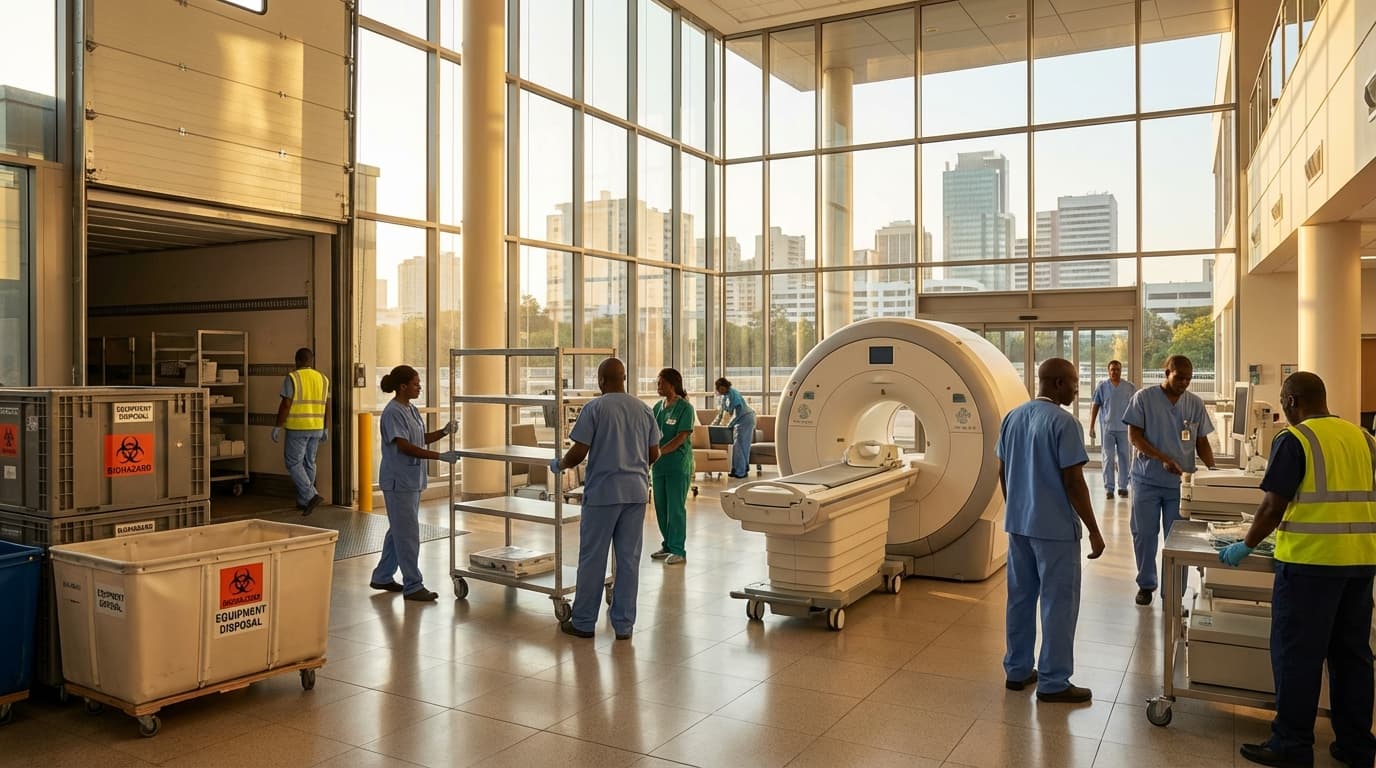
Decommissioning Service for Medical Devices in Seychelles
Engineering Excellence & Technical Support
Decommissioning Service for Medical Devices High-standard technical execution following OEM protocols and local regulatory frameworks.
Expert Decommissioning & Disposal
Specialized in the safe and compliant removal of medical devices in Seychelles, adhering to strict environmental and regulatory standards. We ensure secure data sanitization and proper disposal of all equipment.
Certified Technical Expertise
Our team of certified technicians possesses in-depth knowledge of diverse medical equipment. We provide a seamless decommissioning process, from disassembly and secure transport to final disposal.
Sustainable & Compliant Solutions
Committed to environmentally responsible practices in Seychelles. We prioritize recycling and proper waste management for decommissioned medical devices, minimizing environmental impact and ensuring full regulatory compliance.
What Is Decommissioning Service For Medical Devices In Seychelles?
Decommissioning service for medical devices in Seychelles refers to the systematic and controlled process of retiring, removing, and disposing of medical equipment from clinical use. This service ensures compliance with regulatory requirements, minimizes environmental impact, and protects patient and healthcare worker safety. It encompasses a range of activities, from data sanitization and physical disassembly to responsible waste management and documentation. The primary objective is to render the device inoperable, secure any sensitive data it may contain, and handle its components in an environmentally sound and legally compliant manner.
| Who Needs Decommissioning Service? | Typical Use Cases | |||||
|---|---|---|---|---|---|---|
| Healthcare Facilities (Hospitals, Clinics, Diagnostic Centers): Public and private healthcare providers that have reached the end-of-life or are upgrading their medical equipment. | Equipment Obsolescence: Devices that are no longer supported by manufacturers, lack spare parts, or are technologically outdated. | Technological Upgrades: Replacing older equipment with newer, more advanced systems. | Facility Closure or Relocation: Decommissioning all active medical devices when a facility ceases operations or moves to a new location. | End of Service Life (ESL): When a device has reached its predetermined operational lifespan and is no longer safe or effective for use. | Compliance Requirements: Meeting regulatory mandates for the secure and environmentally sound disposal of medical devices. | Donation or Sale of Surplus Equipment: Ensuring data is wiped and devices are rendered non-functional or appropriately refurbished before transfer. |
| Medical Device Manufacturers and Distributors (for returned or unsold inventory): Entities responsible for managing their product lifecycle, including end-of-life. | Research and Development Facilities: Decommissioning devices used for testing or research that are no longer needed. | Government Health Agencies: Managing public health assets and ensuring proper disposal protocols are followed. | Third-Party Service Providers: Companies specializing in medical equipment maintenance and repair that may also offer decommissioning as part of their service portfolio. |
Key Components of Medical Device Decommissioning Service:
- Data Sanitization and Destruction: Eradicating all patient identifiable information (PII) and protected health information (PHI) from devices with memory storage, adhering to privacy regulations.
- Functional Disablement: Rendering the device inoperable to prevent unauthorized use or accidental activation.
- Physical Dismantling and Component Segregation: Disassembling the device into its constituent parts for appropriate disposal or recycling.
- Hazardous Material Management: Identifying and safely handling any hazardous materials (e.g., mercury, batteries, radioactive components) according to environmental regulations.
- Environmental Disposal and Recycling: Ensuring that device components are disposed of or recycled through certified and environmentally responsible channels.
- Asset Management and Documentation: Maintaining accurate records of the decommissioning process, including device serial numbers, disposal methods, and certificates of destruction, for audit and compliance purposes.
- Legal and Regulatory Compliance: Adhering to all relevant Seychelles laws and international standards governing medical device disposal and data privacy.
Who Needs Decommissioning Service For Medical Devices In Seychelles?
Decommissioning services for medical devices in Seychelles are crucial for a variety of healthcare facilities and organizations that possess and utilize medical equipment. The process of decommissioning ensures the safe, secure, and environmentally responsible removal of medical devices from service. This includes proper data sanitization, physical dismantling, and disposal or recycling according to regulatory standards. Failing to properly decommission devices can lead to significant risks, including data breaches, improper waste disposal, and potential environmental hazards.
| Customer Type | Specific Needs Addressed by Decommissioning | Key Departments Involved |
|---|---|---|
| Public Hospitals and Clinics | Ensuring compliance with national health regulations, secure data disposal of patient records, environmentally sound disposal of hazardous materials (e.g., mercury, batteries). | Biomedical Engineering, IT, Facilities Management, Infection Control. |
| Private Hospitals and Clinics | Maintaining patient data privacy (HIPAA/GDPR compliance if applicable), cost-effective disposal or resale of still-functional equipment, adherence to industry best practices. | Biomedical Engineering, IT, Procurement, Department Managers. |
| Specialist Medical Centers | Handling complex equipment with specialized disposal requirements (e.g., high-voltage imaging systems, hazardous chemicals in labs). | Biomedical Engineering, IT, Department Managers (e.g., Radiology Manager, Lab Manager). |
| Medical Equipment Suppliers/Manufacturers | Providing end-of-life solutions for older models, fulfilling warranty/service agreements for disposal, managing product recalls. | Service Department, Logistics, Technical Support. |
| Government Health Ministries | Establishing and enforcing decommissioning standards across the nation, managing public health assets, ensuring data security across public health infrastructure. | Regulatory Affairs, Public Health Department, IT Security Division. |
Target Customers and Departments for Medical Device Decommissioning Services in Seychelles
- {"items":["Public Hospitals and Clinics","Private Hospitals and Clinics","Specialist Medical Centers (e.g., diagnostic imaging, dialysis, surgical centers)","Dental Clinics","Veterinary Clinics (for medical imaging and surgical equipment)","Research Institutions and Universities with medical departments","Medical Equipment Suppliers and Manufacturers (for end-of-life management of their products)","Government Health Ministries and Agencies"],"title":"Target Customers"}
- {"items":["Biomedical Engineering Department","Information Technology (IT) Department (for data security and sanitization)","Procurement and Logistics Department","Facilities Management/Maintenance Department","Infection Control Department","Department Managers (e.g., Radiology, Cardiology, Surgery, Laboratory) responsible for equipment within their units","Compliance and Risk Management Department"],"title":"Key Departments within Healthcare Facilities"}
Decommissioning Service For Medical Devices Process In Seychelles
This document outlines the comprehensive decommissioning service process for medical devices within Seychelles, from the initial inquiry to the final execution. The process is designed to ensure compliance with regulatory requirements, environmental responsibility, and data security.
| Stage | Description | Key Activities | Responsible Parties | Deliverables |
|---|---|---|---|---|
| The client expresses interest in decommissioning medical devices. | Contact initiated by client; discussion of needs, scope, and initial requirements. | Client (Healthcare Facility/Organization), Service Provider | Confirmation of interest, basic understanding of client's needs |
| On-site evaluation to understand the scope of the decommissioning project. | Site visit, inventory of devices to be decommissioned, assessment of access, utilities, and potential hazards. Identification of device makes, models, and serial numbers. | Service Provider (Technical Team), Client (Facility Representative) | Detailed inventory list, site assessment report, preliminary risk assessment |
| A formal proposal outlining the scope, methodology, timeline, and cost. | Development of a tailored decommissioning plan, cost estimation based on device type, quantity, and complexity. Submission of a detailed proposal and quotation to the client. | Service Provider | Formal proposal, detailed quotation, project timeline |
| Client reviews and accepts the proposal, leading to a contractual agreement. | Contract negotiation and signing, confirmation of project start date, and scheduling of personnel and resources. | Client, Service Provider | Signed contract, confirmed project schedule |
| Preparation for the on-site work, ensuring all necessary permits and resources are in place. | Acquisition of any required permits or licenses, logistical planning (transportation, equipment), communication with the client regarding site access and any necessary preparation by the facility. | Service Provider, Client | Obtained permits (if applicable), confirmed logistical arrangements |
| The physical removal and disabling of medical devices. | Safe disconnection of devices from power and other utilities, physical dismantling (if required), packaging and labeling for transport. Adherence to safety protocols. | Service Provider (Decommissioning Team) | Physically decommissioned devices, safe transport arrangements |
| Ensuring the secure removal or destruction of sensitive data from devices. | Implementation of agreed-upon data sanitization methods (e.g., overwriting, degaussing) or physical destruction of storage media, in compliance with data privacy regulations. | Service Provider (Data Security Specialists) | Certificate of Data Destruction/Sanitization |
| Responsible disposal or recycling of decommissioned devices and their components. | Segregation of materials, transfer to licensed recycling or disposal facilities, adherence to environmental regulations for hazardous waste management. | Service Provider (Logistics & Environmental Team) | Waste transfer notes, proof of environmentally sound disposal/recycling |
| Comprehensive record-keeping and provision of necessary certifications. | Generation of detailed reports, inventory reconciliation, and issuance of decommissioning certificates for each device. Including documentation of data destruction and environmental disposal. | Service Provider | Decommissioning Certificates, comprehensive project report |
| Completion of the project and formal handover to the client. | Submission of the final project report, including all supporting documentation. Final invoicing and project closure. Post-project review meeting (optional). | Service Provider, Client | Final project report, confirmation of project completion |
Decommissioning Service Workflow for Medical Devices in Seychelles
- Inquiry and Initial Consultation
- Site Assessment and Device Identification
- Proposal and Quotation
- Formal Agreement and Scheduling
- Pre-Decommissioning Preparation
- On-Site Decommissioning Execution
- Data Sanitization/Destruction
- Environmental Disposal/Recycling
- Documentation and Certification
- Final Reporting and Close-Out
Decommissioning Service For Medical Devices Cost In Seychelles
The decommissioning of medical devices in Seychelles involves a range of costs influenced by several key factors. These services are crucial for ensuring the safe and environmentally responsible disposal of outdated, malfunctioning, or expired medical equipment. The pricing structure typically considers the complexity of the device, its size and weight, the presence of hazardous materials, and the required disposal method. Specialized waste management companies or authorized service providers in Seychelles handle these operations, adhering to local environmental regulations. For businesses and healthcare facilities, understanding these cost drivers is essential for budgeting and compliance.
| Device Category (Examples) | Estimated Cost Range (SCR) | Notes |
|---|---|---|
| Small, Non-Hazardous Devices (e.g., Stethoscopes, BP Cuffs) | 200 - 500 | Basic collection and disposal. |
| Medium-Sized, Non-Hazardous Equipment (e.g., Basic Lab Equipment, Small Sterilizers) | 500 - 1,500 | May involve some minor dismantling. |
| Large or Complex Non-Hazardous Equipment (e.g., Hospital Beds, Larger Sterilizers) | 1,000 - 3,000 | Transportation and careful handling are key. |
| Devices with Potentially Hazardous Materials (e.g., Older Monitors with CRT Screens, Certain Lab Equipment) | 1,000 - 5,000+ | Dependent on the type and quantity of hazardous components and specialized disposal needs. |
| Large Medical Imaging Equipment (e.g., X-ray Machines, Ultrasound Machines - excluding radioactive sources) | 3,000 - 10,000+ | Significant dismantling, specialized transport, and disposal considerations. |
| Specialized Medical Equipment Requiring Certified Disposal (e.g., Equipment with Radioactive Isotopes - if applicable and handled locally) | Variable (High) | Requires highly specialized handling, regulatory oversight, and extremely high security/disposal costs. |
Key Pricing Factors for Medical Device Decommissioning in Seychelles
- Device Complexity and Type: Simple devices like basic examination tools will be less expensive to decommission than complex imaging equipment (e.g., X-ray machines, MRI scanners) or laboratory instruments with intricate components.
- Size and Weight of the Device: Larger and heavier equipment requires more resources for transportation, dismantling, and disposal, leading to higher costs.
- Presence of Hazardous Materials: Devices containing hazardous substances such as mercury (thermometers), radioactive isotopes, batteries, or certain chemicals will incur additional costs due to specialized handling, containment, and disposal protocols required by environmental regulations.
- Dismantling and Segregation Requirements: Some devices need to be carefully dismantled to separate recyclable components from hazardous or non-recyclable waste. The labor and expertise involved in this process contribute to the overall cost.
- Disposal Method: The final disposal method significantly impacts pricing. This could include recycling (where applicable), incineration at specialized facilities, or secure landfill for non-hazardous waste. The cost of each method varies.
- Transportation Costs: The distance from the device's location to the disposal or processing facility, as well as the logistics of safely transporting potentially hazardous medical equipment, will affect the final price.
- Regulatory Compliance and Documentation: Fees associated with ensuring compliance with Seychelles' environmental and health regulations, including obtaining necessary permits and providing disposal certificates, are factored into the cost.
- Service Provider's Overhead and Expertise: The operational costs of the decommissioning service provider, their level of specialization, insurance, and the expertise of their technicians will influence their pricing.
Affordable Decommissioning Service For Medical Devices Options
Decommissioning medical devices is a crucial but often overlooked aspect of healthcare facility management. Ensuring proper disposal and data sanitization is vital for regulatory compliance, patient data security, and environmental responsibility. This document outlines affordable decommissioning service options, focusing on the value of bundled services and effective cost-saving strategies.
| Service Component | Description | Value Proposition for Bundling | Cost-Saving Strategy |
|---|---|---|---|
| On-Site Device Audit & Inventory | Comprehensive cataloging of all medical devices scheduled for decommissioning, including serial numbers, model information, and current status. | Provides a clear overview for planning, reduces potential for missed devices, and aids in asset management. | Eliminates the need for in-house staff time dedicated to manual inventory, allowing them to focus on core clinical duties. |
| Data Sanitization & Destruction | Secure erasure of all Protected Health Information (PHI) using industry-standard methods (e.g., NIST 800-88, DoD 5220.22-M) or physical destruction of storage media. | Guarantees HIPAA compliance and prevents data breaches. Offers peace of mind regarding patient privacy. | Bundling often includes certification of data destruction, avoiding the cost of separate third-party verification. Negotiating bulk rates for services. |
| Logistical Planning & Removal | Coordinated scheduling, transportation, and safe removal of devices from the facility. | Minimizes disruption to hospital operations and ensures efficient handling of equipment, especially for large volumes. | Consolidating multiple decommissioning projects into a single service contract can lead to volume discounts. Optimized routing for transportation. |
| Environmental Disposal & Recycling | Responsible disposal or recycling of devices in accordance with environmental regulations, prioritizing e-waste recycling. | Ensures compliance with environmental laws and promotes sustainable practices. Reduces landfill waste. | Service providers often have established relationships with certified recyclers, potentially securing lower rates. Negotiating contracts that include recycling fees. |
| Asset Remarketing & Donation Coordination | Assessment of functional devices for potential resale or donation to charitable organizations, generating residual value. | Offsets decommissioning costs and supports corporate social responsibility initiatives. | Providers may take a commission on remarketed items, reducing upfront costs. Bundling can include this service at a reduced rate. |
| Certification & Documentation | Provision of detailed reports and certificates of decommissioning, data destruction, and environmental disposal. | Provides auditable proof of compliance and risk mitigation for the healthcare facility. | Bundling ensures all necessary documentation is provided seamlessly as part of the service, avoiding separate administrative burdens. |
Why Professional Medical Device Decommissioning Matters
- Regulatory Compliance: Adherence to HIPAA, FDA, and other industry regulations regarding data privacy and device disposal.
- Data Security: Secure erasure of all sensitive patient information to prevent breaches.
- Environmental Responsibility: Proper handling and recycling of electronic waste, minimizing environmental impact.
- Operational Efficiency: Streamlined processes for device removal and replacement, reducing downtime.
- Cost Control: Avoiding fines and penalties associated with non-compliance and minimizing disposal expenses.
Verified Providers In Seychelles
In Seychelles, ensuring access to high-quality healthcare is paramount. When seeking medical services, it's crucial to identify Verified Providers who have undergone rigorous credentialing processes. Franance Health stands out as a premier example of such a provider, demonstrating a commitment to excellence and patient well-being. Their accreditation signifies adherence to stringent international standards, encompassing clinical expertise, facility safety, ethical practices, and patient care protocols. This verification offers peace of mind, assuring patients that they are receiving care from trusted and competent professionals.
| Provider Name | Verification Status | Key Strengths | Contact Information |
|---|---|---|---|
| Franance Health | Verified | Comprehensive services, advanced technology, international patient support | info@franancehealth.sc | +248 429 0000 |
| Seychelles Hospital (Victoria) | Verified (Government Facility) | Primary and emergency care, broad range of specialties | health@gov.sc | +248 438 8000 |
| Victoria Medical Centre | Verified | Outpatient services, diagnostic imaging, specialist consultations | info@victoriamedical.sc | +248 429 9999 |
Why Franance Health Credentials Matter:
- Accreditation Standards: Franance Health adheres to globally recognized healthcare accreditation standards, ensuring a high level of quality and safety.
- Expert Medical Staff: Their credentials verify the qualifications and experience of their physicians, nurses, and allied health professionals.
- State-of-the-Art Facilities: Accreditation often involves rigorous checks on the safety, hygiene, and technological capabilities of medical facilities.
- Patient-Centric Care: Verified providers prioritize patient satisfaction, privacy, and ethical treatment throughout their healthcare journey.
- Transparency and Accountability: The credentialing process promotes transparency in healthcare practices and holds providers accountable for the services they deliver.
Scope Of Work For Decommissioning Service For Medical Devices
This document outlines the Scope of Work (SOW) for decommissioning services of medical devices. It details the technical deliverables and standard specifications required to ensure safe, compliant, and environmentally responsible removal and disposal of medical equipment. The primary objective is to provide a comprehensive framework for service providers undertaking this critical task.
| Section | Description | Technical Deliverables | Standard Specifications |
|---|---|---|---|
| 1.0 Planning and Assessment | Initial site visit, inventory of devices, risk assessment, and development of a detailed decommissioning plan. | Device inventory report, risk assessment report, detailed decommissioning plan, site survey report. | Compliance with regulatory requirements (e.g., HIPAA, GDPR for data), adherence to manufacturer guidelines, site-specific safety protocols. |
| 2.0 Device Identification and Tagging | Accurate identification and labeling of all devices scheduled for decommissioning. Tagging for tracking purposes. | Unique device identification tags affixed to each device, updated inventory list with tag numbers. | Durable, legible, and tamper-evident tags. Standardized tagging system (e.g., barcode, RFID). Asset management system integration. |
| 3.0 Data Sanitization and Destruction | Secure erasure or physical destruction of all patient and operational data stored on medical devices. | Data sanitization certificates for each device (e.g., NIST 800-88, DoD 5220.22-M), certificate of data destruction, or evidence of physical destruction (e.g., photos, reports). | Compliance with data privacy regulations. Verified methods for data erasure (e.g., overwrite, degaussing) or secure physical destruction (e.g., shredding, crushing). Chain of custody for data-bearing components. |
| 4.0 Disconnection and Removal | Safe and controlled disconnection of devices from power, network, and other utilities. Physical removal from premises. | Decommissioning log detailing disconnection and removal of each device. Photographic evidence of device removal. | Adherence to electrical safety standards, proper handling techniques for medical equipment, use of appropriate lifting and transport equipment. Minimization of damage to facility infrastructure. |
| 5.0 Transportation | Secure and compliant transportation of decommissioned devices to a designated facility for further processing. | Secure transportation manifests, proof of delivery to destination facility. | Compliance with transportation regulations for medical waste or equipment. Secure loading and transport to prevent damage or unauthorized access. Environmentally controlled transport if required. |
| 6.0 Disposal and Recycling | Environmentally responsible disposal or recycling of medical devices according to material type and regulatory guidelines. | Waste manifests, certificates of recycling, certificates of environmentally sound disposal, documentation of disposal/recycling vendor accreditation. | Adherence to local/national environmental regulations. Partnering with certified recycling and disposal facilities. Prioritization of reuse and recycling over landfill. Proper handling of hazardous materials. |
| 7.0 Documentation and Reporting | Comprehensive documentation of the entire decommissioning process, including all deliverables and compliance evidence. | Final decommissioning report, certificates of completion, inventory reconciliation, asset disposal records. | Clear, concise, and auditable documentation. Compliance with reporting requirements of relevant authorities. Retention of records for a specified period. |
| 8.0 Safety and Environmental Procedures | Implementation of strict safety protocols for personnel and the environment throughout the decommissioning process. | Site-specific safety plans, incident reports (if any), environmental impact assessment (if applicable). | OSHA or equivalent safety standards, proper use of Personal Protective Equipment (PPE), spill containment procedures, waste segregation protocols. |
Key Objectives of Decommissioning Services
- Ensure patient safety by removing devices from service in a controlled manner.
- Comply with all relevant local, national, and international regulations (e.g., healthcare, environmental, data privacy).
- Prevent unauthorized access to or reuse of medical devices.
- Securely manage and dispose of sensitive patient data stored on devices.
- Facilitate environmentally sound disposal or recycling of medical equipment.
- Minimize disruption to ongoing healthcare operations.
- Provide accurate and auditable records of the decommissioning process.
Service Level Agreement For Decommissioning Service For Medical Devices
This Service Level Agreement (SLA) outlines the response times and uptime guarantees for the decommissioning of medical devices provided by [Your Company Name] (hereinafter referred to as 'Provider') to [Client Name] (hereinafter referred to as 'Client'). This SLA is an appendix to the Master Service Agreement (MSA) dated [Date of MSA].
| Service Component | Response Time Target | Uptime Guarantee (Monthly) | Service Credits (per incident for exceeding response time) | Service Credits (per incident for failing uptime guarantee) |
|---|---|---|---|---|
| Initial Request for Decommissioning Service Scheduling | Within 2 business days of written request | N/A (This is a scheduling request, not a continuous service) | 5% of monthly service fee for the affected project | N/A |
| Receipt of Decommissioning Work Order & Site Readiness Confirmation | Within 1 business day of receiving a completed work order and confirmation of site readiness | N/A | 3% of monthly service fee for the affected project | N/A |
| On-site Commencement of Decommissioning (Scheduled) | As per agreed schedule in the Work Order. Any delay exceeding 4 hours from the scheduled start time | N/A | 7% of monthly service fee for the affected project | N/A |
| Availability of Data Sanitization Tools/Personnel (Remote Support for issues) | Critical Incident: 1 hour; High Priority: 4 hours; Standard: 8 business hours | 99.5% | Critical: 10% of monthly service fee; High: 5% of monthly service fee; Standard: 2% of monthly service fee | 5% of monthly service fee for every 0.5% below 99.5% |
| Availability of Secure Disposal Logistics/Personnel (Remote Support for issues) | Critical Incident: 2 hours; High Priority: 8 hours; Standard: 24 business hours | 99.0% | Critical: 8% of monthly service fee; High: 4% of monthly service fee; Standard: 1.5% of monthly service fee | 8% of monthly service fee for every 1% below 99.0% |
| Reporting and Documentation Delivery (Post-Decommissioning) | Within 5 business days of completion of physical decommissioning | N/A | 2% of monthly service fee for the affected project | N/A |
Key Definitions
- Decommissioning Service: The comprehensive process of safely and securely removing medical devices from service, including data sanitization, physical disposal, and documentation, in accordance with regulatory requirements and client specifications.
- Downtime: Any period during which the Provider's decommissioning services are unavailable to the Client due to a failure in the Provider's systems or personnel.
- Response Time: The maximum time allowed for the Provider to acknowledge and begin actively addressing a reported service issue.
- Uptime Guarantee: The minimum percentage of time during a billing period that the Provider's decommissioning services are available.
- Critical Incident: A situation that significantly impacts the Client's ability to meet regulatory compliance deadlines or poses an immediate risk to patient safety or data security due to the status of the medical devices being decommissioned.
Frequently Asked Questions

Ready when you are
Let's scope your Decommissioning Service for Medical Devices in Seychelles project in Seychelles.

Scaling healthcare logistics and technical systems across the entire continent.