
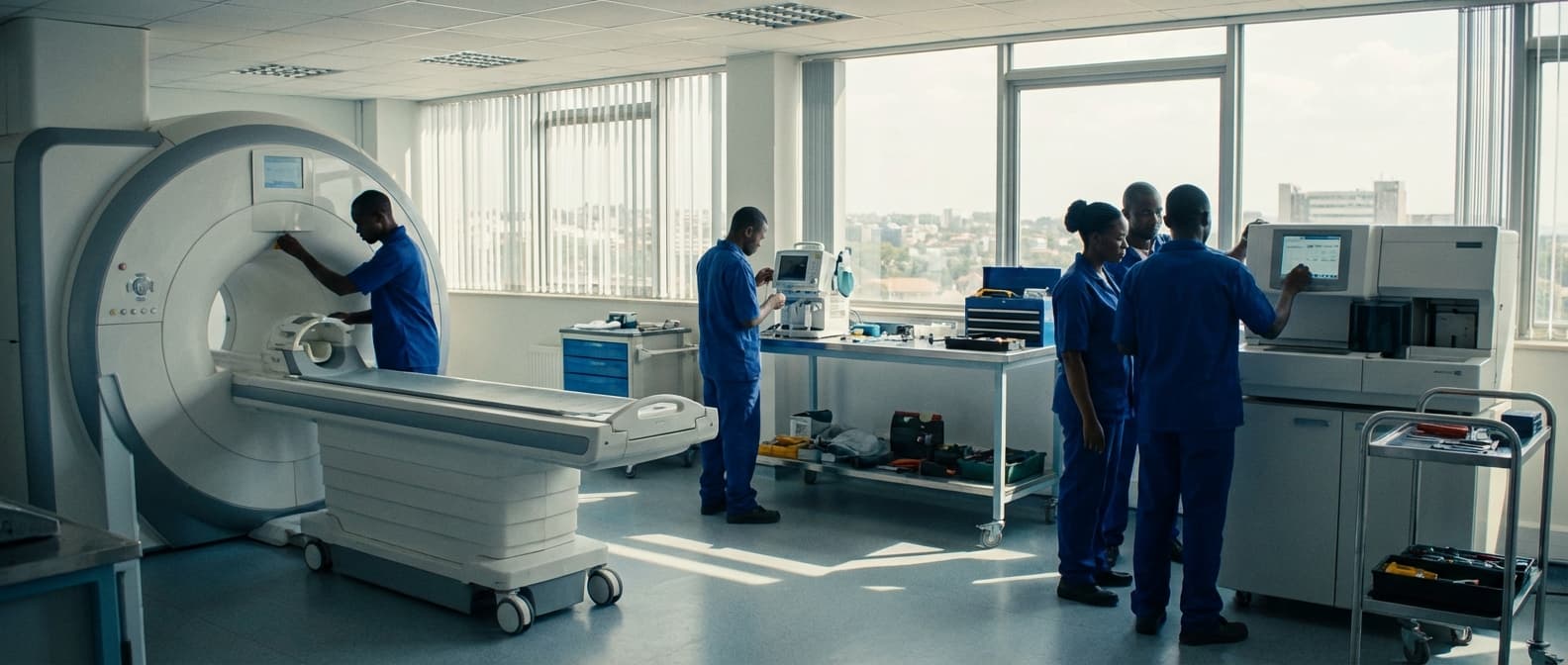
Uptime, Downtime & Root-Cause Analysis Reporting Service in Seychelles
Engineering Excellence & Technical Support
Uptime, Downtime & Root-Cause Analysis Reporting Service High-standard technical execution following OEM protocols and local regulatory frameworks.
Proactive Uptime Monitoring
Leveraging cutting-edge synthetic and real-user monitoring, we provide 24/7 real-time visibility into your Seychelles infrastructure's availability. Receive instant alerts for anomalies, ensuring minimal disruption and maximum operational continuity.
Detailed Downtime Incident Reports
When incidents occur, our service generates comprehensive downtime reports, including affected services, duration, and impact analysis. This empowers your team with the data needed for rapid incident response and stakeholder communication in Seychelles.
Automated Root Cause Analysis (RCA)
Go beyond just knowing there's an issue. Our intelligent RCA engine pinpoints the exact source of downtime events across your Seychelles digital ecosystem, providing actionable insights to prevent recurrence and optimize performance.
What Is Uptime, Downtime & Root-cause Analysis Reporting Service In Seychelles?
In Seychelles, Uptime, Downtime & Root-Cause Analysis (RCA) Reporting Service refers to a specialized offering focused on the continuous monitoring, analysis, and documentation of the operational availability and unavailability of IT systems, applications, and infrastructure. This service is critical for organizations seeking to understand and improve the reliability and performance of their digital assets. It encompasses the proactive detection of service interruptions, the detailed investigation into the underlying causes of these interruptions, and the generation of comprehensive reports for stakeholders. The primary objective is to minimize downtime, prevent recurrence of issues, and ensure optimal service delivery, ultimately safeguarding business continuity and customer satisfaction within the Seychelles economic landscape.
| Who Needs It? | Typical Use Cases | |||||||||
|---|---|---|---|---|---|---|---|---|---|---|
| Businesses with significant reliance on IT infrastructure: This includes any organization where IT systems are integral to daily operations, revenue generation, or customer service. | Financial Institutions (Banks, Insurance Companies): Ensuring uninterrupted access to banking services, trading platforms, and customer account information. Downtime can lead to significant financial losses and regulatory penalties. | E-commerce Platforms and Online Retailers: Maintaining 24/7 availability for online sales, order processing, and customer transactions. Any downtime directly impacts revenue. | Telecommunications Providers: Guaranteeing continuous connectivity for voice, data, and internet services. Service disruptions can affect a vast number of users. | Government Agencies and Public Services: Maintaining the availability of critical services like online portals, public records access, and emergency communication systems. | Hospitality and Tourism Sector (Hotels, Airlines): Ensuring the reliability of booking systems, customer relationship management (CRM) platforms, and in-house operational software. | Cloud Service Providers and Hosting Companies: Demonstrating and guaranteeing the uptime of their infrastructure to their clients, often mandated by Service Level Agreements (SLAs). | Technology Companies with SaaS Offerings: Maintaining consistent service availability and providing transparent reporting to their user base, crucial for customer retention. | Organizations Subject to Regulatory Compliance: Many industries require specific uptime guarantees and incident reporting protocols as part of their compliance framework. | IT Service Providers and Managed Service Providers (MSPs): Offering this as a value-added service to their clients to demonstrate their commitment to operational excellence and problem resolution. | Businesses Seeking to Optimize Operational Efficiency: Identifying and addressing performance bottlenecks and reliability issues to improve overall IT efficiency and reduce operational costs. |
What this Service Involves:
- Real-time Uptime Monitoring: Continuous, automated surveillance of key performance indicators (KPIs) such as server availability, application response times, network connectivity, and service accessibility. This includes proactive alerting to potential or actual service degradations.
- Downtime Detection & Classification: Immediate identification and logging of any service interruption. Downtime events are meticulously categorized based on severity, impact, and affected systems/users.
- Root-Cause Analysis (RCA): A systematic investigative process to determine the fundamental reason(s) for a downtime event. This often involves data correlation from various monitoring tools, log analysis, configuration reviews, and stakeholder interviews.
- Impact Assessment: Quantifying the business impact of downtime, including financial losses, reputational damage, and customer churn. This informs the prioritization of remediation efforts.
- Reporting & Documentation: Generation of detailed, actionable reports. These reports typically include uptime/downtime statistics, timelines of incidents, identified root causes, remediation steps taken, and recommendations for future prevention.
- Trend Analysis & Proactive Recommendations: Analyzing historical uptime and downtime data to identify recurring patterns, potential vulnerabilities, and areas for improvement in system architecture, operational procedures, or infrastructure resilience.
Who Needs Uptime, Downtime & Root-cause Analysis Reporting Service In Seychelles?
In today's dynamic business landscape, especially for organizations operating in a globalized and interconnected economy like Seychelles, maintaining continuous operational availability (uptime) and swiftly addressing any disruptions (downtime) are paramount. Beyond simply restoring services, understanding why issues occur is crucial for preventing recurrence. This is where a dedicated Uptime, Downtime & Root-Cause Analysis (RCA) Reporting Service becomes indispensable. This service provides a structured and data-driven approach to identify, analyze, and report on all aspects of system availability and its underlying causes, empowering businesses to make informed decisions, optimize their IT infrastructure, and enhance overall resilience.
| Industry/Sector | Target Customers | Key Departments Benefiting |
|---|---|---|
| Tourism & Hospitality | Hotels, Resorts, Airlines, Tour Operators, Online Travel Agencies | IT Department, Operations Management, Revenue Management, Guest Services |
| Financial Services | Banks, Insurance Companies, Investment Firms, Fintech Startups | IT Operations, Risk Management, Compliance Department, Fraud Detection |
| Telecommunications | Mobile Network Operators, Internet Service Providers, Telecommunication Infrastructure Providers | Network Operations Center (NOC), Technical Support, Service Delivery, Product Management |
| Government & Public Sector | Ministries, Public Utilities (Water, Electricity), Maritime Authorities, Port Authorities | IT Department, Infrastructure Management, Service Continuity Planning, Operations |
| E-commerce & Retail | Online Retailers, E-commerce Platforms, POS System Providers | IT Department, E-commerce Operations, Customer Support, Supply Chain Management |
| Healthcare | Hospitals, Clinics, Diagnostic Centers, Health IT Providers | IT Department, Clinical Operations, Patient Records Management, Compliance |
| Logistics & Shipping | Shipping Companies, Freight Forwarders, Logistics Service Providers | IT Department, Operations Management, Fleet Management, Customer Service |
| Technology & Software Companies | Software Developers, IT Service Providers, Cloud Hosting Providers | DevOps, Engineering, Technical Support, Product Management |
Target Customers and Departments in Seychelles
- Organizations in Seychelles with critical IT infrastructure and services that directly impact revenue, customer satisfaction, or operational efficiency.
- Businesses requiring adherence to regulatory compliance or industry best practices related to system availability and incident management.
- Companies looking to improve IT operational efficiency, reduce recurring incidents, and enhance the performance and reliability of their systems.
Uptime, Downtime & Root-cause Analysis Reporting Service Process In Seychelles
This document outlines the workflow for the Uptime, Downtime & Root-Cause Analysis Reporting Service Process in Seychelles. This service is designed to provide clients with comprehensive reports on their system's availability and the underlying causes of any disruptions. The process is initiated by an inquiry from a client and culminates in the delivery of detailed reports.
| Stage | Description | Key Activities | Responsible Party | Output | Timeline (Estimated) |
|---|---|---|---|---|---|
| Client expresses interest in the Uptime, Downtime & Root-Cause Analysis Reporting Service. | Initial contact, preliminary discussion of needs, and request for proposal/information. | Client, Service Provider Sales/Account Manager | Service Request Document, Initial Client Brief | 1-2 business days |
| Detailed understanding of the client's infrastructure, critical systems, and reporting needs. | On-site or remote meetings, system audits, identification of key performance indicators (KPIs), definition of service level agreements (SLAs) and reporting frequency. | Service Provider Technical Team, Client IT Department | Service Scope Document, Reporting Requirements Specification | 3-5 business days |
| Implementing the necessary tools and configurations to collect uptime and downtime data. | Deployment of monitoring agents, configuration of network monitoring tools, establishment of data thresholds and alert mechanisms. | Service Provider Technical Team | Configured Monitoring Systems, Baseline Performance Data | 5-10 business days (depending on infrastructure complexity) |
| Real-time identification of system disruptions and immediate notification to the client. | Automated detection of system failures, network outages, or performance degradation; instant alerts via email, SMS, or other agreed-upon channels. | Automated Monitoring System, Service Provider Operations Team | Downtime Alert Notification | Immediate upon detection |
| Investigating the underlying reasons for any detected downtime. | Analyzing logs, system events, network traffic, and other relevant data; conducting interviews with client personnel (if necessary); identifying contributing factors and the primary cause. | Service Provider Technical Analysts, Client IT Support | Root-Cause Analysis Findings | Varies based on incident complexity (e.g., 4-24 hours per incident) |
| Compiling all collected data and RCA findings into a comprehensive report. | Aggregating uptime/downtime statistics, documenting incident timelines, detailing RCA findings, and formulating actionable insights. | Service Provider Reporting Team | Draft Uptime, Downtime & RCA Report | 2-5 business days per reporting period |
| Presenting the generated report to the client for their review and understanding. | Electronically or physically delivering the report; scheduling and conducting review meetings to discuss findings and answer questions. | Service Provider Account Manager/Reporting Team, Client Management/IT | Final Uptime, Downtime & RCA Report, Meeting Minutes | 1-3 business days post-generation |
| Providing ongoing support and suggesting measures to enhance system reliability. | Discussing corrective actions based on RCA findings, advising on preventative maintenance, proposing infrastructure upgrades, and offering ongoing monitoring services. | Service Provider Technical Team/Consultants, Client IT Department | Action Plan for Improvement, Updated Service Proposals | Ongoing |
Service Workflow Stages
- Inquiry & Service Request
- Requirement Gathering & Scope Definition
- Data Collection & Monitoring Setup
- Downtime Incident Detection & Notification
- Root-Cause Analysis (RCA)
- Report Generation
- Report Delivery & Review
- Follow-up & Improvement Recommendations
Uptime, Downtime & Root-cause Analysis Reporting Service Cost In Seychelles
Estimating the cost of Uptime, Downtime, and Root-Cause Analysis (RCA) reporting services in Seychelles requires an understanding of several key pricing factors. These services are crucial for businesses to maintain operational continuity, identify and resolve issues promptly, and ultimately improve efficiency. The cost will vary based on the complexity of the infrastructure being monitored, the depth of analysis required, the frequency of reporting, and the expertise of the service provider. Generally, these services are offered on a subscription basis, with pricing tiers often dictated by the scope of support and the number of monitored assets.
Key Pricing Factors:
- Scope of Monitoring: The number and type of systems, applications, and infrastructure components being monitored directly impacts cost. More complex environments with diverse technologies will naturally incur higher fees.
- Downtime Impact Level: Critical systems that, when down, cause significant financial loss or reputational damage will command higher service levels and thus higher costs. Service Level Agreements (SLAs) for critical systems are typically more stringent.
- Reporting Frequency and Granularity: The demand for real-time alerts versus daily, weekly, or monthly reports, and the level of detail in those reports (e.g., simple uptime percentage vs. in-depth performance metrics and trend analysis) will influence pricing.
- Root-Cause Analysis Depth: Basic incident logging versus advanced forensic analysis and preventative recommendation reports will have different cost implications. The need for specialized RCA expertise will increase the price.
- Service Provider Expertise and Reputation: Established providers with proven track records and highly skilled analysts will typically charge more than newer or smaller firms.
- Integration with Existing Systems: If the reporting service needs to integrate with existing IT management tools, this can add to the initial setup cost.
- Support Level and Response Time: The guaranteed response times for alerts and the availability of 24/7 support are significant cost drivers.
- Customization Requirements: Any need for bespoke dashboards, custom alert configurations, or unique reporting formats can increase the overall cost.
Pricing Ranges in Seychelles Rupee (SCR):
It's important to note that these are estimates and can fluctuate significantly. For precise quotes, direct consultation with local or regional service providers is recommended. Many international service providers also operate in Seychelles, and their pricing might be in USD or EUR, which will need to be converted to SCR.
Small to Medium Businesses (SMBs): For SMBs with a moderate number of systems and standard reporting needs, a monthly subscription could range from SCR 2,500 to SCR 8,000. This would typically cover basic uptime monitoring, incident alerting, and summary downtime reports.
Mid-Sized Businesses: For companies with more extensive infrastructure, higher availability requirements, and a need for more detailed RCA reports, monthly costs could fall between SCR 7,500 to SCR 20,000. This might include more advanced RCA, trend analysis, and potentially some basic proactive recommendations.
Large Enterprises and Mission-Critical Operations: Businesses with highly complex, distributed systems, demanding SLAs, and requiring in-depth, proactive RCA and continuous improvement reporting can expect monthly costs ranging from SCR 18,000 to SCR 50,000+. This tier often involves dedicated account management, advanced analytics, and bespoke reporting solutions.
One-Time Setup/Implementation Fees: Depending on the provider and the complexity of the initial setup, one-time fees can range from SCR 1,000 to SCR 5,000+.
| Business Size / Complexity | Estimated Monthly Cost (SCR) | Typical Services Included |
|---|---|---|
| Small to Medium Businesses (SMBs) | 2,500 - 8,000 | Basic uptime monitoring, incident alerts, summary downtime reports |
| Mid-Sized Businesses | 7,500 - 20,000 | More extensive monitoring, detailed downtime reports, basic RCA, trend analysis |
| Large Enterprises / Mission-Critical | 18,000 - 50,000+ | Comprehensive monitoring, advanced RCA, proactive recommendations, custom reports, dedicated support |
| One-Time Setup/Implementation Fee (Variable) | 1,000 - 5,000+ | Initial configuration, integration, and system setup |
Factors Influencing Uptime, Downtime & RCA Reporting Service Costs in Seychelles
- Scope of Monitoring (number & type of assets)
- Criticality of Monitored Systems
- Reporting Frequency and Detail Level
- Depth of Root-Cause Analysis (RCA)
- Service Provider Reputation and Expertise
- Integration with Existing IT Infrastructure
- Service Level Agreements (SLAs) and Response Times
- Customization of Reports and Dashboards
- On-demand vs. Subscription-Based Services
Affordable Uptime, Downtime & Root-cause Analysis Reporting Service Options
This document outlines affordable service options for Uptime, Downtime, and Root-Cause Analysis (RCA) reporting, focusing on value bundles and cost-saving strategies. Proactive monitoring and efficient RCA are crucial for minimizing business disruption and optimizing resource allocation. We offer flexible packages designed to meet various organizational needs and budgets.
| Service Bundle | Description | Key Features | Target Audience | Estimated Price Range (Monthly) |
|---|---|---|---|---|
| Essential Uptime Monitor | Basic monitoring and alerting for critical services. | Uptime tracking, immediate downtime alerts. | Small businesses, startups, individual projects. | $50 - $150 |
| Standard Downtime Reporter | Includes essential monitoring plus automated downtime reporting. | Uptime & downtime tracking, automated reports, basic RCA insights. | Small to medium businesses (SMBs) with moderate infrastructure. | $150 - $400 |
| Advanced RCA Suite | Comprehensive monitoring, detailed downtime analysis, and in-depth RCA. | All features of Standard, plus advanced RCA tools, historical analysis, customizable dashboards. | Medium to large enterprises requiring deep operational insights. | $400 - $1,000+ |
| Enterprise-Grade Solution | Fully managed service with dedicated support and proactive threat analysis. | All Advanced features, plus 24/7 dedicated support, SLA commitments, integration with existing ITSM tools. | Large enterprises with complex, mission-critical systems. | Custom Quote (starts from $1,000+) |
Key Service Components
- Uptime Monitoring: Real-time tracking of system and application availability.
- Downtime Detection & Alerting: Immediate notification upon service interruption.
- Automated Downtime Reporting: Comprehensive logs of outages, duration, and affected services.
- Root-Cause Analysis (RCA): Investigating the underlying reasons for incidents.
- Actionable Insights & Recommendations: Guidance for preventing future occurrences.
- Customizable Dashboards & Reports: Tailored views of performance and incident data.
- Historical Data Analysis: Trend identification and long-term performance evaluation.
Verified Providers In Seychelles
In the pursuit of reliable and reputable healthcare services, especially when navigating international options, the verification of providers is paramount. In Seychelles, Franance Health stands out as a leading entity, distinguished by its rigorous credentialing process and commitment to excellence. This commitment ensures that all healthcare providers affiliated with Franance Health meet the highest standards of professionalism, expertise, and ethical practice. For individuals seeking medical care in Seychelles, understanding why Franance Health credentials represent the best choice involves examining their stringent verification protocols, focus on patient safety, and dedication to facilitating access to world-class medical professionals.
| Credentialing Aspect | Franance Health's Standard | Benefit to Patients |
|---|---|---|
| Academic and Professional Qualifications | Verified from accredited institutions and recognized licensing bodies. | Ensures foundational medical knowledge and legal authorization to practice. |
| Clinical Experience | Assessed for duration, scope, and relevant case handling. | Provides confidence in the provider's practical skills and problem-solving abilities. |
| Specialized Training and Certifications | Confirmed for relevant sub-specialties and advanced procedures. | Guarantees access to expert care for complex medical conditions. |
| Ethical Conduct and Professionalism | Adherence to a strict code of ethics, verified through references and background checks. | Promotes patient rights, confidentiality, and a trustworthy patient-provider relationship. |
| Continuing Medical Education (CME) | Requirement for regular participation in advanced training and workshops. | Ensures providers are current with the latest medical research, technologies, and treatment protocols. |
| Patient Feedback and Outcomes | Considered as part of ongoing provider evaluation. | Reflects a commitment to patient satisfaction and high-quality care delivery. |
Why Franance Health Credentials are the Best Choice:
- Rigorous Vetting Process: Franance Health employs a multi-stage verification process for all affiliated medical professionals. This includes thorough background checks, verification of academic qualifications and medical licenses from recognized institutions, and confirmation of specialized training and certifications.
- Experience and Competence Validation: Beyond formal qualifications, Franance Health assesses the practical experience and proven competence of each provider. This may involve peer reviews, analysis of past patient outcomes, and interviews to gauge their diagnostic and treatment capabilities.
- Commitment to Ethical Practice: All Franance Health providers are held to a strict code of ethics. This ensures they adhere to principles of patient confidentiality, informed consent, and professional integrity.
- Continuous Professional Development: Franance Health mandates and supports ongoing education and training for its network of providers. This guarantees that they remain up-to-date with the latest medical advancements, technologies, and best practices in their respective fields.
- Patient-Centric Approach: The credentialing process prioritizes providers who demonstrate a strong commitment to patient well-being and satisfaction. This includes communication skills, empathy, and a focus on delivering personalized care plans.
- Access to Specialized Expertise: Franance Health's rigorous credentialing allows them to curate a network of highly specialized medical professionals, ensuring patients have access to the right expertise for their specific health needs.
- Enhanced Patient Safety and Trust: By ensuring all providers are thoroughly vetted, Franance Health significantly enhances patient safety and builds trust. Patients can be confident that they are receiving care from qualified and reputable medical practitioners.
- Streamlined Healthcare Experience: The verified network provided by Franance Health simplifies the process of finding and accessing quality healthcare, saving patients time and reducing the anxiety associated with seeking medical services abroad.
Scope Of Work For Uptime, Downtime & Root-cause Analysis Reporting Service
This document outlines the Scope of Work for the Uptime, Downtime, and Root-Cause Analysis Reporting Service. It details the objectives, deliverables, responsibilities, and standard specifications required to ensure comprehensive and actionable reporting on system availability and incident resolution.
| Deliverable | Description | Frequency/Trigger | Format | Key Metrics/Information |
|---|---|---|---|---|
| Uptime/Downtime Report | A report detailing the availability of systems and services over a specified period, including durations of planned and unplanned downtime. | Daily, Weekly, Monthly (configurable) | PDF, CSV, Interactive Dashboard | Total Uptime %, Total Downtime (minutes/hours), Planned Downtime, Unplanned Downtime, Availability by Service/System, Service Level Agreement (SLA) compliance. |
| Downtime Incident Report | A detailed report for each significant unplanned downtime event, outlining the timeline, impact, and actions taken. | Triggered by any unplanned downtime exceeding a pre-defined threshold (e.g., 15 minutes). | PDF, Online Portal | Incident ID, Start Time, End Time, Duration, Affected Services/Systems, Business Impact, Severity Level, Incident Owner. |
| Root-Cause Analysis (RCA) Report | A comprehensive analysis of a downtime incident to identify the underlying causes, contributing factors, and recommend preventive actions. | Generated following a Downtime Incident Report for significant incidents. | PDF, Online Portal | Incident ID, Timeline of Events, Identified Root Cause(s), Contributing Factors, Impact Analysis, Corrective Actions Taken, Preventive Actions Recommended, Action Owners, Target Completion Dates. |
| Trend Analysis Report | An aggregated report highlighting trends, patterns, and recurring issues related to uptime, downtime, and incident resolution. | Monthly, Quarterly | PDF, Interactive Dashboard | Downtime frequency by cause, Downtime duration by cause, Mean Time Between Failures (MTBF), Mean Time To Recover (MTTR) by service/system, Top recurring incident types, Effectiveness of preventive actions. |
Objectives of the Service
- To accurately track and report on system uptime and downtime across all designated services and infrastructure.
- To conduct thorough root-cause analysis (RCA) for all significant downtime incidents.
- To provide clear, concise, and actionable reports to stakeholders.
- To identify trends and patterns in downtime events to proactively improve system reliability.
- To support continuous improvement initiatives by providing data-driven insights.
Service Level Agreement For Uptime, Downtime & Root-cause Analysis Reporting Service
This Service Level Agreement (SLA) outlines the guaranteed uptime, downtime procedures, and root-cause analysis (RCA) reporting for the [Service Name] service provided by [Your Company Name] to [Client Name].
| Metric | Uptime Guarantee | Downtime Notification Time | RCA Reporting Time |
|---|---|---|---|
| Service Availability | 99.9% Monthly Uptime | Within 15 minutes of Unscheduled Downtime detection | Within 48 business hours of Unscheduled Downtime resolution |
| Response Time to Critical Incidents | N/A (Focus on availability) | Within 30 minutes for Critical Incidents | N/A (Focus on availability) |
| Response Time to Major Incidents | N/A (Focus on availability) | Within 1 hour for Major Incidents | N/A (Focus on availability) |
Key Definitions
- Uptime: The percentage of time the Service is available and operational.
- Downtime: The percentage of time the Service is unavailable or not operational.
- Scheduled Downtime: Pre-planned maintenance periods communicated to the Client in advance.
- Unscheduled Downtime: Any unplanned interruption to the Service.
- Root-Cause Analysis (RCA): A process for identifying the underlying causes of an incident to prevent recurrence.
- Service Window: The period during which the Service is expected to be operational.
Frequently Asked Questions

Ready when you are
Let's scope your Uptime, Downtime & Root-Cause Analysis Reporting Service in Seychelles project in Seychelles.

Scaling healthcare logistics and technical systems across the entire continent.