
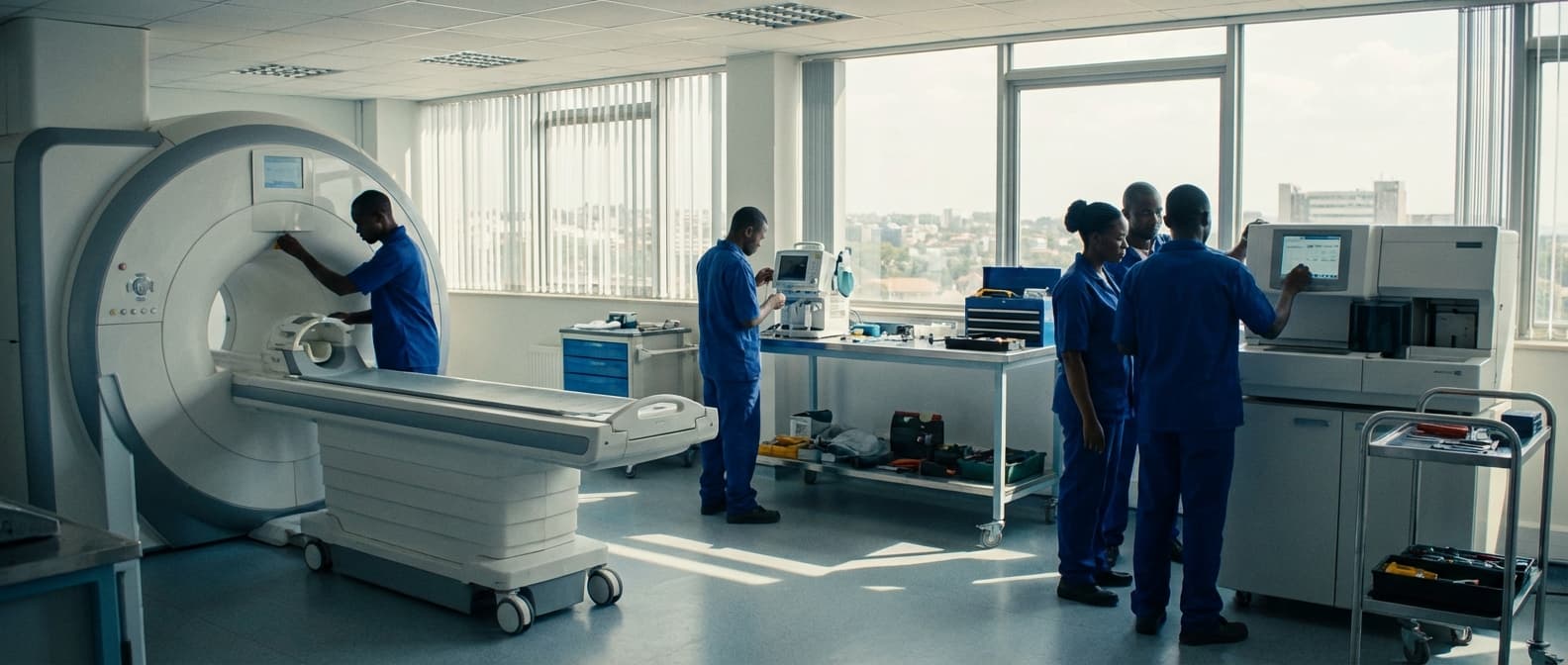
Planned Shutdown Coordination Service for Critical Equipment in Seychelles
Engineering Excellence & Technical Support
Planned Shutdown Coordination Service for Critical Equipment High-standard technical execution following OEM protocols and local regulatory frameworks.
Proactive Shutdown Scheduling
Leveraging advanced predictive analytics and historical data, our service meticulously plans critical equipment shutdowns during low-demand periods, minimizing operational impact and ensuring business continuity for Seychelles' key industries.
Integrated Stakeholder Management
We facilitate seamless communication and coordination between internal teams, external vendors, and regulatory bodies across Seychelles, ensuring all parties are aligned on shutdown objectives, timelines, and safety protocols for efficient execution.
Risk Mitigation & Contingency Planning
Our service conducts comprehensive risk assessments for planned shutdowns, developing robust contingency plans to address potential challenges and unforeseen events, thereby safeguarding the integrity and operational readiness of critical infrastructure in Seychelles.
What Is Planned Shutdown Coordination Service For Critical Equipment In Seychelles?
The Planned Shutdown Coordination Service for Critical Equipment in Seychelles is a structured organizational and technical framework designed to manage the scheduled cessation of operation for essential infrastructure and high-value assets. This service ensures that disruptive maintenance, upgrades, or decommissioning activities are executed with minimal impact on operational continuity, safety, and economic output. It encompasses a comprehensive lifecycle approach, from initial identification and justification of a shutdown to post-event analysis and optimization of future events.
| Who Needs the Service | Typical Use Cases | |||||
|---|---|---|---|---|---|---|
| Public Utilities (Water, Electricity, Telecommunications): Operators of critical infrastructure vital for national services. | Energy Sector (Power Plants, Refineries): Facilities requiring scheduled maintenance for turbines, reactors, and distribution networks. | Healthcare Facilities: Hospitals and clinics with life-support systems, diagnostic equipment, and building services (e.g., HVAC, electrical). | Transportation Infrastructure (Airports, Ports, Road Networks): Management of maintenance for air traffic control systems, navigation aids, cargo handling equipment, and structural integrity. | Industrial Manufacturing (Large-Scale Production): Enterprises with complex machinery and continuous process lines where downtime incurs significant production losses. | Government Agencies and Critical Facilities: Institutions managing essential government services or secure facilities requiring periodic system overhauls. | Financial Institutions (Data Centers): Organizations responsible for maintaining the uptime of critical IT infrastructure and data processing centers. |
| Routine and Major Maintenance: Scheduled replacement of worn components, lubrication, calibration, and comprehensive inspections. | Equipment Upgrades and Modernization: Installation of new technology, software updates, or system enhancements to improve performance or efficiency. | Compliance and Certification Activities: Work required to meet regulatory standards, safety certifications, or environmental mandates. | Decommissioning and Retirement: Planned and safe removal of obsolete or end-of-life equipment. | Infrastructure Renovation and Construction Integration: Coordinating shutdowns to facilitate integration of new infrastructure with existing critical systems. | Emergency System Testing and Redundancy Verification: Planned outages to test backup systems and ensure failover capabilities. | Asset Lifecycle Management: Strategic planning for the long-term maintenance and eventual replacement of critical assets. |
Key Components of the Planned Shutdown Coordination Service
- Scope Definition and Justification: Clearly defining the objectives, boundaries, and necessity of the shutdown, including the specific equipment involved, expected outcomes, and rationale.
- Stakeholder Identification and Engagement: Identifying all relevant internal and external parties (e.g., operators, maintenance teams, regulatory bodies, suppliers, end-users) and establishing clear communication channels and engagement protocols.
- Risk Assessment and Mitigation Planning: A systematic evaluation of potential hazards (technical, operational, safety, environmental, financial) associated with the shutdown and the development of robust mitigation strategies.
- Resource Allocation and Management: Planning and securing necessary personnel, specialized tools, equipment, materials, and external services required for the shutdown execution and subsequent restart.
- Scheduling and Timeline Development: Creating a detailed, integrated schedule that accounts for all tasks, dependencies, critical path activities, and buffer times, often utilizing project management software.
- Work Package Development: Breaking down the shutdown activities into manageable, well-defined work packages with clear scope, responsibilities, and acceptance criteria.
- Permitting and Regulatory Compliance: Ensuring all necessary permits, licenses, and regulatory approvals are obtained and adhered to throughout the shutdown process.
- Execution Oversight and Control: Real-time monitoring of progress against the schedule, proactive identification and resolution of deviations, and enforcement of safety and quality standards.
- Restart Planning and Execution: Developing and executing a detailed plan for the safe and efficient recommissioning of equipment and systems, including testing and performance verification.
- Post-Shutdown Analysis and Reporting: Conducting a thorough review of the shutdown event, documenting lessons learned, identifying areas for improvement, and generating comprehensive reports for stakeholders.
- Contingency Planning: Developing fallback plans and emergency response procedures for unforeseen events or issues that may arise during the shutdown.
Who Needs Planned Shutdown Coordination Service For Critical Equipment In Seychelles?
The Seychelles, with its vital tourism-dependent economy and critical infrastructure, faces unique challenges in maintaining operational continuity. Planned shutdown coordination services are essential for any organization that relies on critical equipment to function. These services ensure that essential maintenance, upgrades, or repairs are performed with minimal disruption, safeguarding against costly downtime and reputational damage. The careful planning and execution involved in coordinated shutdowns are paramount to preserving the seamless operation of key sectors.
| Department/Sector | Critical Equipment Examples | Impact of Uncoordinated Shutdowns | Benefit of Coordinated Shutdowns |
|---|---|---|---|
| Hospitality (Hotels & Resorts) | HVAC systems, Elevators, Kitchen equipment, Water pumps, Internet infrastructure | Guest dissatisfaction, Loss of revenue, Reputational damage, Health and safety risks | Ensured guest comfort, uninterrupted services, maintained brand image, operational efficiency |
| Aviation (Airports) | Air traffic control systems, Baggage handling systems, Security screening equipment, Runway lighting, Terminal utilities | Flight delays/cancellations, passenger inconvenience, security breaches, economic losses | Minimised disruption to flight schedules, enhanced safety and security, improved passenger experience |
| Maritime (Ports) | Cranes, Conveyor belts, Refrigeration systems, Docking equipment, Navigation aids | Cargo delays, supply chain disruptions, increased shipping costs, safety hazards | Smooth cargo movement, timely vessel turnaround, efficient port operations, maintained trade flow |
| Utilities (Power & Water) | Generators, Turbines, Transformers, Pumps, Filtration systems, Distribution networks | Widespread power outages, water shortages, economic paralysis, public health crises | Reliable service delivery, minimized downtime, public safety, sustained economic activity |
| Telecommunications | Servers, Routers, Switches, Base stations, Fiber optic networks | Internet/mobile service disruptions, communication failures, business interruption, data loss | Consistent connectivity, uninterrupted communication, business continuity, data integrity |
| Healthcare | Medical imaging equipment (MRI, CT scanners), Life support systems, Sterilization units, Laboratory equipment | Delayed medical procedures, compromised patient care, potential life-threatening situations | Uninterrupted critical medical services, patient safety, efficient healthcare delivery |
Target Customers in Seychelles Requiring Planned Shutdown Coordination Services:
- Hotels and Resorts
- Airports and Aviation Services
- Port and Maritime Operations
- Power Generation and Distribution Companies
- Water Treatment and Supply Facilities
- Telecommunications Providers
- Financial Institutions (Data Centers)
- Government Ministries and Agencies (essential services)
- Large-scale Manufacturing and Industrial Facilities (if any)
- Healthcare Facilities
Planned Shutdown Coordination Service For Critical Equipment Process In Seychelles
The Planned Shutdown Coordination Service for Critical Equipment in Seychelles is designed to ensure the safe, efficient, and minimally disruptive scheduling of maintenance and repair activities for essential operational assets. This service provides a structured framework from the initial client inquiry to the successful completion of the planned shutdown. The workflow emphasizes meticulous planning, stakeholder communication, risk mitigation, and post-execution review to maintain the integrity and availability of critical equipment.
| Phase | Key Activities | Key Deliverables/Outcomes | Responsible Parties |
|---|---|---|---|
| Inquiry & Initial Consultation | Client submits a request for planned shutdown of critical equipment. Service provider conducts an initial meeting to understand the equipment, its criticality, desired shutdown window, and preliminary objectives. | Understanding of client's needs, preliminary assessment of feasibility, confirmation of service engagement. | Client, Service Provider (Coordination Team) |
| Scope Definition & Planning | Detailed assessment of the equipment's condition and required maintenance. Defining specific tasks, their dependencies, safety protocols, and environmental considerations. Development of a detailed work plan and risk assessment. | Detailed scope of work document, comprehensive risk assessment and mitigation plan, preliminary schedule, list of required resources (personnel, materials, specialized tools). | Service Provider (Coordination Team, Technical Experts), Client (Operations, Maintenance) |
| Resource Allocation & Scheduling | Securing necessary personnel (internal and external), equipment, and materials. Finalizing the shutdown schedule, including detailed timelines for each task, hold points, and buffer times. Obtaining all necessary permits and approvals. | Finalized shutdown schedule, confirmed resource availability, secured permits and approvals, communication plan for all stakeholders. | Service Provider (Coordination Team, Procurement), Client (Operations, Safety, Procurement) |
| Pre-Shutdown Preparations | Issuance of work permits, pre-shutdown safety briefings and inductions for all personnel. Final checks of equipment status and isolation procedures. Mobilization of resources to the site. Communication of shutdown schedule to all relevant departments and external parties. | All personnel briefed and inducted, work permits issued, safety checks completed, resources in place, stakeholders informed of imminent shutdown. | Service Provider (Coordination Team, Site Supervisors), Client (Operations, Safety, Security) |
| Execution of Planned Shutdown | Implementing the scheduled maintenance and repair tasks according to the approved work plan and safety procedures. Continuous monitoring of progress, adherence to schedule, and immediate addressing of any unforeseen issues. Regular communication and reporting to the client. | Completion of planned maintenance and repair tasks, real-time progress updates, incident reports (if any), resolved issues. | Service Provider (Coordination Team, Site Supervisors, Technical Teams), Client (Operations, Quality Control) |
| Post-Shutdown Activities & Review | Testing and recommissioning of the equipment. Verification of work completion against the scope. Demobilization of resources. Conducting a post-shutdown review meeting to identify lessons learned and areas for improvement. Final reporting to the client. | Fully functional and tested equipment, signed-off work completion certificates, post-shutdown report, lessons learned documentation. | Service Provider (Coordination Team, Technical Teams), Client (Operations, Maintenance, Quality Assurance) |
Workflow Phases
- Inquiry & Initial Consultation
- Scope Definition & Planning
- Resource Allocation & Scheduling
- Pre-Shutdown Preparations
- Execution of Planned Shutdown
- Post-Shutdown Activities & Review
Planned Shutdown Coordination Service For Critical Equipment Cost In Seychelles
Coordinating planned shutdowns for critical equipment in Seychelles is a specialized service crucial for minimizing operational disruptions and ensuring safety. The cost of such a service is influenced by a variety of factors, leading to a significant price range. Key determinants include the complexity and criticality of the equipment, the duration of the shutdown, the required level of expertise, and the associated logistical challenges within the Seychelles context, such as transportation and remote access. Furthermore, the scope of work, including pre-shutdown planning, execution, and post-shutdown verification, directly impacts the overall cost.
| Service Component | Estimated Cost Range (SCR - Seychellois Rupee) |
|---|---|
| Initial Consultation & Assessment | 5,000 - 15,000 SCR |
| Detailed Planning & Risk Assessment (per day) | 8,000 - 25,000 SCR |
| Project Management & Coordination (per day) | 15,000 - 40,000 SCR |
| Specialized Technical Supervision (per day/per expert) | 10,000 - 30,000 SCR |
| Safety Officer Services (per day) | 7,000 - 20,000 SCR |
| Logistics & Site Access Support | Variable (based on complexity and location) |
| Communication & Stakeholder Management | 5,000 - 15,000 SCR (initial setup) |
| Post-Shutdown Reporting & Review | 7,000 - 20,000 SCR |
| Full Shutdown Coordination Package (Indicative) | 150,000 - 1,000,000+ SCR |
Key Pricing Factors for Planned Shutdown Coordination in Seychelles
- Equipment Criticality and Complexity: Highly critical or complex machinery (e.g., power generation turbines, desalination plants, large industrial machinery) demands more rigorous planning and specialized personnel, increasing costs.
- Shutdown Duration: Longer planned shutdowns naturally incur higher costs due to extended labor, resource allocation, and potential revenue loss for the client.
- Scope of Services: Comprehensive services encompassing planning, risk assessment, scheduling, stakeholder communication, on-site supervision, safety management, and post-shutdown reporting will be more expensive than basic coordination.
- Expertise and Skill Requirements: The need for specialized engineers, technicians, safety officers, and project managers with specific experience in the relevant industry will affect pricing.
- Logistical Challenges: Factors unique to Seychelles, such as inter-island transportation, remote site access, accommodation, and availability of specialized equipment, can significantly impact costs.
- Number of Personnel Required: The size of the coordination team and the specialized labor involved in the shutdown process directly correlates with the overall expense.
- Safety and Regulatory Compliance: Adherence to stringent safety protocols and local regulations adds to the cost through training, equipment, and potential certifications.
- Technology and Tools: The use of advanced planning software, diagnostic tools, or remote monitoring technologies can influence the service price.
- Contingency Planning: The level of detail and resources dedicated to contingency and emergency response planning will be factored into the cost.
Affordable Planned Shutdown Coordination Service For Critical Equipment Options
Our Affordable Planned Shutdown Coordination Service is designed to minimize downtime and maximize efficiency for your critical equipment maintenance. We offer flexible value bundles and implement proven cost-saving strategies to ensure your planned shutdowns are executed smoothly, safely, and within budget. By outsourcing this complex coordination, you can focus on your core operations while we handle the intricacies of planning, scheduling, and resource management.
| Cost-Saving Strategy | Description | Benefit |
|---|---|---|
| Optimized Scheduling | Leveraging advanced scheduling software and experienced planners to identify concurrent tasks and minimize overall shutdown duration. | Reduced labor costs, faster return to production, and minimized revenue loss. |
| Bulk Procurement & Vendor Negotiation | Aggregating service needs and negotiating favorable rates with pre-qualified vendors for parts, labor, and specialized services. | Lower material and service expenses, ensuring quality and reliability. |
| Preventative Maintenance Integration | Aligning planned shutdowns with scheduled preventative maintenance to address multiple issues in one go. | Fewer unplanned outages, reduced emergency repair costs, and extended equipment lifespan. |
| Resource Optimization | Ensuring the right personnel and equipment are available at the right time, avoiding idle time and overstaffing. | Lower labor costs and improved operational efficiency. |
| Remote Monitoring & Diagnostic Support | Utilizing technology to identify potential issues before they escalate, allowing for proactive planning and reduced on-site interventions. | Minimized site visits, faster issue resolution, and reduced travel expenses. |
| Standardized Workflows | Implementing proven, repeatable processes for shutdown planning and execution. | Increased efficiency, reduced errors, and consistent quality outcomes. |
Value Bundles to Suit Your Needs
- {"title":"Essentials Package","description":"Ideal for organizations with established internal maintenance teams. Focuses on core planning and scheduling support."}
- {"title":"Proactive Package","description":"Includes Essentials plus risk assessment, detailed resource allocation, and preliminary safety plan development."}
- {"title":"Comprehensive Package","description":"Our most robust offering, encompassing full project management, vendor coordination, detailed safety management, post-shutdown analysis, and continuous improvement recommendations."}
Verified Providers In Seychelles
In the competitive landscape of healthcare, particularly in a destination like Seychelles, identifying 'Verified Providers' is paramount for ensuring quality, safety, and efficacy. Franance Health stands out as a beacon of excellence, meticulously vetting and accrediting healthcare facilities and professionals. This rigorous credentialing process is not merely a formality; it's a guarantee of adherence to the highest international standards, making Franance Health credentials a definitive mark of trust and the best choice for discerning individuals seeking healthcare services in Seychelles.
| Criterion | Franance Health Verified Provider | Standard Providers (Unverified) | Why it's the Best Choice |
|---|---|---|---|
| Quality of Care | Consistently meets and exceeds international standards for patient outcomes and satisfaction. | Variable; may not adhere to standardized quality metrics. | Ensures superior treatment and a higher likelihood of positive health results. |
| Patient Safety Measures | Rigorous adherence to evidence-based safety protocols, including infection control and risk management. | May vary significantly; less consistent implementation of safety practices. | Minimizes risks and ensures a secure healthcare environment. |
| Professional Qualifications | All medical professionals are thoroughly vetted for credentials, licenses, and ongoing training. | Verification may be superficial or absent, leading to potential gaps in expertise. | Guarantees access to highly competent and up-to-date medical professionals. |
| Facility and Technology Standards | Equipped with advanced, well-maintained medical equipment and modern facilities. | May operate with older or less advanced technology, potentially impacting diagnostic accuracy and treatment effectiveness. | Facilitates accurate diagnoses and access to cutting-edge treatment options. |
| Ethical Practice and Transparency | Committed to ethical conduct, open communication, and patient-centered decision-making. | Ethical standards can be inconsistent, and transparency may be lacking. | Promotes trust, informed consent, and respectful patient care. |
Why Franance Health Credentials Matter in Seychelles
- Uncompromising Quality Assurance: Franance Health's verification process involves in-depth assessments of clinical practices, patient safety protocols, and staff qualifications, ensuring that accredited providers consistently deliver exceptional care.
- International Best Practices: We align our standards with globally recognized healthcare benchmarks, providing patients with the confidence that they are receiving treatment equivalent to that found in leading medical institutions worldwide.
- Patient Safety First: Every Franance Health verified provider undergoes stringent safety evaluations, from infection control measures to emergency preparedness, prioritizing the well-being of every patient.
- Expert Clinical Staff: Our accreditation extends to the expertise and experience of medical professionals. Franance Health ensures that practitioners associated with our verified providers possess the necessary qualifications, licenses, and continuous professional development.
- Ethical Standards and Transparency: We uphold strict ethical guidelines for all our accredited partners, promoting transparent communication, informed consent, and patient-centered care.
- Access to Advanced Facilities and Technology: Franance Health verifies that its accredited providers are equipped with state-of-the-art medical technology and modern facilities, crucial for accurate diagnostics and effective treatments.
Scope Of Work For Planned Shutdown Coordination Service For Critical Equipment
This Scope of Work (SOW) outlines the services required for the Planned Shutdown Coordination Service for Critical Equipment. The objective is to ensure the safe, efficient, and timely execution of planned maintenance and upgrade activities for critical operational equipment, minimizing downtime and associated risks. This SOW details the technical deliverables and standard specifications to be adhered to by the service provider.
| Deliverable/Activity | Description | Standard Specification/Requirement | Acceptance Criteria |
|---|---|---|---|
| Shutdown Plan Development | Creation of a detailed plan for each planned shutdown, including scope, timeline, resources, and safety procedures. | Industry best practices for planned maintenance, specific equipment manuals, and site safety regulations. | Approved shutdown plan by all relevant stakeholders (Operations, Maintenance, Safety). Completion of pre-shutdown hazard identification and risk assessment report. |
| Resource Management | Identification, procurement, and allocation of all required personnel (internal/external), specialized tools, equipment, and materials. | Qualified personnel with relevant certifications, calibrated tools, and materials meeting specified quality standards. | Availability of all confirmed resources on-site as per the shutdown schedule. Signed-off resource allocation matrix. |
| On-Site Coordination and Supervision | Direct management of all activities during the shutdown period, ensuring adherence to the plan, safety, and quality standards. | Experienced site supervisors, adherence to lockout/tagout procedures, work permit systems, and environmental regulations. | Daily progress reports, incident-free execution of critical tasks. Compliance with all safety audits conducted during the shutdown. |
| Communication and Reporting | Establishment of clear communication channels and regular reporting to all stakeholders. | Daily progress meetings, issue escalation protocols, and end-of-shift reports. | Real-time status updates, timely resolution of reported issues, and a comprehensive final shutdown report. |
| Post-Shutdown Review and Documentation | Conducting a post-shutdown analysis to identify successes, challenges, and areas for improvement. Compiling all relevant documentation. | Lessons learned workshops, root cause analysis for any deviations, and archiving of all shutdown-related documents. | Documented lessons learned report with actionable recommendations. Complete and organized archive of all shutdown documentation, including permits, checklists, and as-built drawings. |
| Safety Management | Implementation and enforcement of all safety regulations and procedures throughout the shutdown. | Adherence to site-specific safety procedures, provision of safety equipment, and daily safety briefings. | Zero Lost Time Injuries (LTIs) or Occupational Illnesses. Compliance with all safety regulations as verified by site safety officers. |
Key Responsibilities and Deliverables
- Develop and maintain a comprehensive Planned Shutdown Schedule in collaboration with operational and maintenance teams.
- Conduct pre-shutdown risk assessments and develop mitigation strategies.
- Coordinate all necessary resources, including personnel, tools, equipment, and materials.
- Oversee and manage on-site shutdown activities, ensuring adherence to safety protocols and procedures.
- Facilitate communication and reporting among all stakeholders.
- Conduct post-shutdown reviews and lessons learned sessions.
- Provide detailed documentation of all shutdown activities.
Service Level Agreement For Planned Shutdown Coordination Service For Critical Equipment
This Service Level Agreement (SLA) outlines the terms and conditions for the Planned Shutdown Coordination Service provided for critical equipment. It defines the expected response times for service requests and the uptime guarantees for the coordination system itself. This agreement is designed to ensure minimal disruption during planned maintenance activities and to provide a robust and reliable service for our clients.
| Service Component | Response Time Guarantee | Uptime Guarantee |
|---|---|---|
| Initial response to a submitted planned shutdown request (acknowledgment) | Within 2 business hours | N/A |
| Availability of the Planned Shutdown Coordination Platform (for submitting requests, accessing schedules, and documentation) | N/A | 99.9% (monthly average) |
| Response to critical system alerts or failures within the coordination platform | Within 30 minutes | N/A |
| Confirmation of scheduled shutdown slot after initial request | Within 1 business day | N/A |
| Delivery of pre-shutdown planning meeting minutes and action items | Within 2 business days of meeting conclusion | N/A |
Scope of Service
- Coordination of planned shutdown schedules for critical equipment.
- Communication and notification to relevant stakeholders regarding shutdown activities.
- Facilitation of pre-shutdown planning meetings and workshops.
- Post-shutdown review and reporting.
- Management of a central repository for shutdown documentation.
Frequently Asked Questions

Ready when you are
Let's scope your Planned Shutdown Coordination Service for Critical Equipment in Seychelles project in Seychelles.

Scaling healthcare logistics and technical systems across the entire continent.