
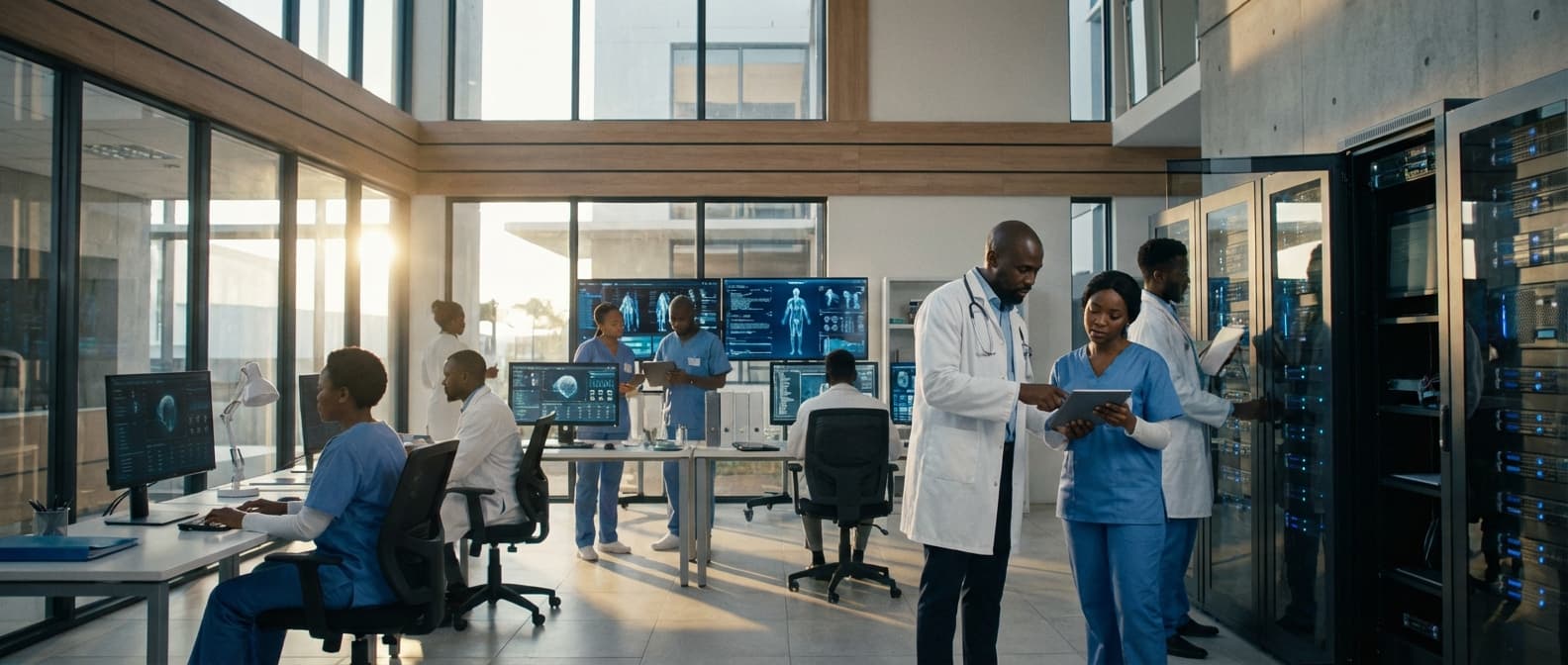
Tele-Radiology in Seychelles
Engineering Excellence & Technical Support
24/7 access to certified radiologists providing rapid, accurate remote interpretation of diagnostic imaging studies. High-standard technical execution following OEM protocols and local regulatory frameworks.
Enhanced Diagnostic Speed
Leveraging high-speed internet and cloud-based platforms, tele-radiology enables immediate transfer and interpretation of medical images. This drastically reduces report turnaround times, allowing for faster patient diagnosis and treatment initiation, critical in remote island settings.
Access to Subspecialist Expertise
Tele-radiology connects Seychelles' healthcare facilities with a global network of subspecialist radiologists. This overcomes geographical limitations, providing access to expert opinions in fields like neuro-radiology, pediatric radiology, and interventional radiology, ensuring patients receive world-class diagnostics locally.
Improved Resource Utilization & Cost-Effectiveness
By centralizing radiologist services and reducing the need for on-site specialists, tele-radiology optimizes the use of expensive imaging equipment. This leads to significant cost savings for Seychelles' healthcare system and ensures efficient allocation of limited medical resources.
What Is Tele-radiology In Seychelles?
Tele-radiology in Seychelles refers to the practice of transmitting radiological images (such as X-rays, CT scans, MRIs, and ultrasounds) from one geographic location to another for interpretation by a radiologist. This service leverages telecommunications technology to overcome the geographical limitations of accessing specialized radiological expertise. In Seychelles, an archipelago nation with distributed healthcare facilities and potentially limited on-site availability of specialist radiologists, tele-radiology plays a crucial role in extending diagnostic capabilities and improving patient care. The service involves the secure and efficient transmission of digital medical images and associated patient data to remote radiologists for interpretation. These interpretations are then communicated back to the referring physician, enabling timely diagnosis and treatment planning. The system typically involves image acquisition at a local facility, followed by a secure upload to a Picture Archiving and Communication System (PACS) or a dedicated tele-radiology platform. Remote radiologists then access these images via a secure network, perform their analysis, generate a report, and transmit it back to the originating site. This process ensures that patients in remote or underserved areas of Seychelles receive the same level of diagnostic quality as those in more centralized locations.
| Who Needs Tele-radiology in Seychelles? | Typical Use Cases in Seychelles |
|---|---|
| Patients in remote islands or geographically isolated areas of Seychelles who lack on-site access to specialist radiologists. | Emergency department consultations for suspected fractures, intracranial hemorrhages, or acute abdominal conditions when on-site expertise is unavailable. |
| Primary healthcare facilities and smaller hospitals in Seychelles that do not have full-time radiologists on staff. | Follow-up imaging for chronic conditions such as cancer, cardiovascular disease, or musculoskeletal disorders, requiring expert interpretation. |
| Busy urban hospitals in Seychelles that may experience high patient volumes and require supplementary interpretation services to reduce turnaround times. | Screening programs (e.g., mammography, lung nodule screening) where large volumes of images need efficient and rapid analysis. |
| Healthcare providers requiring second opinions on complex or challenging cases. | Post-operative imaging assessment to monitor patient recovery and detect complications. |
| Situations requiring subspecialty interpretations (e.g., neuroradiology, musculoskeletal radiology, pediatric radiology) not readily available locally. | Teleradiology facilitates the outsourcing of specific subspecialty reads, particularly for complex pathologies. |
Key Components and Stakeholders of Tele-radiology in Seychelles:
- Image Acquisition Modalities: X-ray, CT, MRI, Ultrasound.
- Digital Imaging and Communications in Medicine (DICOM) Standard: For image data format.
- Picture Archiving and Communication System (PACS): For storing, retrieving, and distributing medical images.
- Tele-radiology Platform/Software: For secure image transmission, report generation, and workflow management.
- Secure Network Infrastructure: For reliable and HIPAA-compliant data transfer.
- Referring Physicians: Healthcare professionals requesting radiological interpretations.
- Radiologists: Specialist physicians interpreting radiological images remotely.
- Radiology Technologists: Performing image acquisition at local facilities.
- IT Support Staff: Maintaining the technical infrastructure.
Who Needs Tele-radiology In Seychelles?
Seychelles, a nation reliant on tourism and a growing healthcare sector, can significantly benefit from tele-radiology services. This technology offers a critical solution for improving diagnostic accuracy, increasing accessibility to specialized imaging interpretations, and optimizing resource utilization within the archipelago. The primary need stems from the geographical distribution of its islands, the potential for specialist shortages, and the desire to maintain high healthcare standards for its population and the influx of tourists.
| Department/Facility | Key Needs Addressed by Tele-Radiology |
|---|---|
| Outlying Island Clinics | Access to expert interpretation, reduced patient transfer costs, timely diagnosis. |
| Seychelles Hospital (Radiology Dept.) | Overcapacity management, subspecialty expertise, 24/7 coverage, reduced burnout. |
| Private Clinics | Enhanced service offering, competitive advantage, rapid interpretation for patients. |
| Emergency Medicine | Critical and rapid interpretation of acute findings, improved patient outcomes. |
| Orthopedics | Expert interpretation of complex fractures, joint assessments, and pre/post-operative imaging. |
| Neurology | Prompt interpretation of stroke, head injury, and neurological condition imaging. |
| Cardiology | Specialized interpretation of cardiac imaging (e.g., CT angiography). |
| Public Health Screening | Efficient large-volume image review for disease detection and monitoring. |
Target Customers and Departments for Tele-Radiology in Seychelles
- {"title":"Primary Healthcare Facilities & Outlying Islands","description":"Clinics and hospitals on islands with limited or no in-house radiology expertise. This ensures that patients on remote islands receive timely and expert diagnostic interpretations without the need for costly and time-consuming travel to the main island."}
- {"title":"Seychelles Hospital (Victoria)","description":"The main referral hospital, which may experience high volumes of imaging studies. Tele-radiology can augment their existing radiology department, providing overflow support, subspecialty interpretations, and facilitating faster turnaround times, especially during off-hours or staff shortages."}
- {"title":"Private Healthcare Providers","description":"Private clinics and hospitals catering to both local residents and tourists seeking prompt and high-quality medical care. Tele-radiology can offer them access to advanced diagnostic interpretations, enhancing their service offerings and competitiveness."}
- {"title":"Specialty Clinics","description":"Clinics focusing on specific areas like orthopedics, neurology, or cardiology that require specialized radiologist input for complex imaging. Tele-radiology provides access to subspecialists who may not be locally available."}
- {"title":"Emergency Services & Critical Care Units","description":"Ensuring rapid interpretation of emergency imaging (e.g., CT scans for trauma, X-rays for fractures) is vital. Tele-radiology can provide 24/7 access to expert interpretations, crucial for immediate patient management and improved outcomes."}
- {"title":"Public Health Initiatives","description":"Supporting nationwide screening programs for conditions like tuberculosis or cancer, where large volumes of images need efficient and accurate review."}
Tele-radiology Process In Seychelles
Tele-radiology in Seychelles involves a structured workflow to ensure efficient and accurate diagnostic imaging services are delivered remotely. This process is crucial for providing specialized radiology expertise to healthcare facilities across the islands, overcoming geographical limitations. The workflow begins with an inquiry or a request for a radiological examination, followed by the acquisition of imaging data, secure transmission, expert interpretation by a remote radiologist, and finally, the delivery of the diagnostic report back to the referring physician.
| Step | Description | Key Players Involved | Technology/Tools Used |
|---|---|---|---|
| A referring physician at a local clinic or hospital identifies the need for a radiological examination for a patient. They initiate a request, often through an internal system or a dedicated form, specifying the clinical indication and the type of imaging required (e.g., X-ray, CT scan, Ultrasound). | Referring Physician, Healthcare Assistant/Nurse | Electronic Health Record (EHR) system, Request Forms |
| The patient undergoes the prescribed radiological examination at the local facility. The technologist captures the images and prepares them for transmission, ensuring they are in a DICOM (Digital Imaging and Communications in Medicine) format and de-identified to protect patient privacy. | Radiology Technologist | Medical Imaging Equipment (X-ray, CT, Ultrasound machines), DICOM standard |
| The prepared DICOM images are securely transmitted from the local facility to a central teleradiology hub or a cloud-based platform. This transmission must be encrypted and comply with data protection regulations. | Radiology Technologist, IT Support | Secure VPN, Encrypted File Transfer Protocols (e.g., SFTP), Cloud Storage |
| Upon receipt, the images are cataloged and assigned to an available and appropriately qualified radiologist within the teleradiology network. The radiologist accesses the images and associated clinical information through a secure web-based teleradiology platform. | Teleradiology Administrator/PACS Manager, Remote Radiologist | Teleradiology Software Platform, PACS (Picture Archiving and Communication System) |
| The remote radiologist reviews the images, considers the clinical history, and provides a professional interpretation. This involves identifying any abnormalities, diagnosing the condition, and formulating a comprehensive report. | Remote Radiologist | High-resolution medical monitors, Teleradiology workstation, Diagnostic software |
| The radiologist dictates or writes a diagnostic report, which is then often reviewed by another radiologist for quality assurance. The final report is securely transmitted back to the referring physician at the local healthcare facility, typically through the teleradiology platform or integrated EHR. | Remote Radiologist, Report Editor/QA Radiologist, Teleradiology Administrator | Speech Recognition software, Teleradiology reporting module, Secure electronic delivery |
| The referring physician reviews the report and integrates it into the patient's care plan. Feedback mechanisms are in place to allow referring physicians to communicate with radiologists regarding difficult cases or to provide follow-up information, contributing to continuous quality improvement. | Referring Physician, Remote Radiologist | Teleradiology platform feedback module, Case review sessions |
Tele-Radiology Workflow in Seychelles: From Inquiry to Execution
- Inquiry and Request Generation
- Image Acquisition and Data Preparation
- Secure Image Transmission
- Radiologist Assignment and Teleradiology Platform Access
- Image Interpretation and Diagnosis
- Report Generation and Distribution
- Feedback and Quality Assurance
Tele-radiology Cost In Seychelles
Tele-radiology services are becoming increasingly accessible in Seychelles, offering a valuable solution for remote diagnostic imaging. The cost of these services can fluctuate based on several key factors, including the complexity of the examination, the subspecialty of the radiologist, and the urgency of the report. It's important for healthcare providers and patients in Seychelles to understand these pricing dynamics to budget effectively for essential diagnostic imaging.
| Imaging Modality | Estimated Cost Range (SCR) | Notes |
|---|---|---|
| X-ray (e.g., Chest X-ray) | 400 - 800 | Basic diagnostic imaging. |
| Ultrasound (e.g., Abdominal, Pelvic) | 700 - 1,500 | Covers a range of abdominal and pelvic scans. |
| CT Scan (e.g., Head, Abdomen) | 2,500 - 6,000 | More complex scans, pricing can vary significantly by region scanned. |
| MRI Scan (e.g., Brain, Knee) | 4,000 - 9,000+ | Generally the most expensive due to equipment and expertise. |
| Mammography | 800 - 1,800 | Specific breast imaging. |
| Specialty Consultations (per report) | 500 - 2,000+ | Additional fee for subspecialist review of complex cases. |
Key Factors Influencing Tele-Radiology Costs in Seychelles:
- Type of Imaging Modality: X-rays are generally the least expensive, followed by ultrasounds, CT scans, and MRIs, which are more complex and require specialized equipment and expertise.
- Complexity of the Examination: A simple chest X-ray will cost less than a complex orthopedic scan or a full-body MRI.
- Subspecialty of the Radiologist: Reporting by a subspecialist (e.g., neuroradiologist, pediatric radiologist) often incurs higher fees due to their advanced training and specific expertise.
- Urgency of the Report (Turnaround Time): Expedited reports, required for critical cases, typically come with a premium fee compared to standard reporting times.
- Volume and Contractual Agreements: Larger healthcare facilities or those with long-term contracts may negotiate more favorable rates.
- Provider's Overhead and Technology Investment: The costs associated with maintaining tele-radiology platforms, secure data transmission, and qualified personnel are factored into pricing.
- Local Economic Conditions and Exchange Rates: While services are often billed in USD or EUR, the Seychellois Rupee (SCR) equivalent will be influenced by current exchange rates.
Affordable Tele-radiology Options
Tele-radiology has become an increasingly valuable tool for healthcare providers, offering access to expert diagnostic imaging interpretation remotely. For organizations seeking affordable tele-radiology solutions, understanding the nuances of value bundles and implementing effective cost-saving strategies is crucial. This approach ensures high-quality patient care without compromising budget.
| Cost-Saving Strategy | Description | Impact on Affordability |
|---|---|---|
| Negotiate Volume-Based Discounts | Engage with tele-radiology providers to secure lower per-study costs when committing to a higher volume of interpretations. | Directly reduces the cost per image read, especially for larger practices or hospitals. |
| Utilize Off-Peak or Tiered Pricing | Some providers offer lower rates for routine reads performed during non-peak hours or for tiered services where higher urgency or subspecialty reads come at a premium. | Optimizes spending by leveraging less expensive service tiers when urgency is not critical. |
| Standardize Reporting Templates | Work with your tele-radiology provider to implement standardized reporting templates. This reduces radiologist interpretation time and improves consistency. | Increases radiologist efficiency, potentially leading to lower overall service costs due to faster turnaround and reduced need for clarification. |
| Leverage Subspecialty Pools Wisely | Instead of paying for dedicated subspecialist access for every case, consider pools that offer broader subspecialty coverage for a defined cost. | Reduces costs associated with highly specialized reads by accessing them through a shared resource. |
| Consider Long-Term Contracts | Committing to longer contract durations can often result in more favorable pricing structures. | Secures stable and potentially lower rates over an extended period. |
| Evaluate Technology Integration Costs | Understand the cost of integrating tele-radiology platforms with your existing PACS and EMR systems. Opt for providers with seamless integration capabilities. | Minimizes upfront and ongoing IT expenses by choosing solutions that are easy to implement and maintain. |
| Implement Efficient Workflow Protocols | Develop clear protocols for image transmission, study prioritization, and report delivery to minimize delays and redundant work. | Streamlines operations, leading to faster turnaround times and potentially reducing the volume of studies needing expedited (and often more expensive) interpretation. |
Understanding Value Bundles in Tele-Radiology
- {"title":"What are Value Bundles?","description":"Value bundles in tele-radiology are pre-defined packages of services designed to offer comprehensive coverage at a predictable cost. Instead of paying per study, organizations can subscribe to a bundle that includes a specific volume of interpretations, turnaround time guarantees, access to subspecialty radiologists, and sometimes even integrated reporting software."}
- {"title":"Benefits of Value Bundles","description":"Bundles streamline billing, reduce administrative overhead, and provide cost predictability. They often come with service level agreements (SLAs) that ensure quality and timely reporting, fostering a more integrated and efficient workflow."}
- {"title":"Common Bundle Components","description":"Typical components include: a set number of image interpretations per month/quarter, defined turnaround times (e.g., stat, routine), access to various subspecialties (neurology, musculoskeletal, pediatric, etc.), quality assurance measures, and integration with existing PACS (Picture Archiving and Communication System)."}
Verified Providers In Seychelles
In Seychelles, finding reliable healthcare is paramount. Franance Health stands out as a beacon of trust and quality. Their rigorous credentialing process ensures that all listed providers meet the highest standards of expertise, ethics, and patient care. This commitment to verification offers peace of mind to residents and visitors alike, guaranteeing access to safe and effective medical services. Choosing a Franance Health verified provider means opting for a healthcare experience characterized by professionalism, advanced medical knowledge, and a patient-centric approach.
| Credentialing Aspect | Franance Health Verification Process | Benefit to Patients |
|---|---|---|
| Medical License & Registration | Thorough checks against official Seychelles medical regulatory bodies. | Ensures providers are legally qualified and authorized to practice. |
| Professional Qualifications & Specializations | Verification of degrees, certifications, and postgraduate training. | Guarantees access to specialists with the right expertise for your needs. |
| Clinical Experience & Track Record | Review of past performance, peer evaluations, and case management history. | Confirms providers have a proven history of successful patient outcomes. |
| Ethical Conduct & Compliance | Background checks for adherence to medical ethics and professional conduct. | Provides assurance of compassionate and trustworthy care. |
| Continuing Medical Education (CME) | Confirmation of ongoing professional development and up-to-date knowledge. | Ensures patients receive treatment based on the latest medical advancements. |
| Facility Accreditation (if applicable) | Verification of the standards and safety protocols of affiliated clinics and hospitals. | Guarantees a safe and well-equipped environment for treatment. |
Why Franance Health Credentials Matter
- Uncompromising Quality Standards
- Ethical Medical Practices
- Verified Expertise and Experience
- Patient Safety and Trust
- Access to Premier Healthcare Facilities
- Streamlined and Reliable Healthcare Navigation
Scope Of Work For Tele-radiology
This Scope of Work (SOW) outlines the requirements for the provision of tele-radiology services. It details the technical deliverables, standard specifications, and operational procedures necessary to ensure high-quality, efficient, and secure remote interpretation of medical imaging studies. The objective is to provide timely and accurate radiological diagnoses to support patient care, especially in areas with limited access to on-site radiologists.
| Deliverable/Specification | Description | Standard/Requirement | Verification Method |
|---|---|---|---|
| Radiological Interpretation Services | Remote interpretation of various imaging modalities (X-ray, CT, MRI, Ultrasound, Mammography, Nuclear Medicine). | Interpretation by board-certified/eligible radiologists with relevant subspecialty expertise. Turnaround times (TAT) as defined in Service Level Agreements (SLAs). | Review of historical reports, audit trails, and stakeholder feedback. |
| Reporting Platform | Secure web-based platform for receiving images, generating reports, and communicating with referring physicians. | Must support DICOM, HL7, and other relevant healthcare standards. User-friendly interface. Read-only access for referring physicians. | Demonstration of platform capabilities. Security audits. |
| Image Transmission and Archiving | Secure and reliable transmission of DICOM images from originating sites to the tele-radiology provider's PACS or PACS-like system. | Adherence to DICOM standards. Robust encryption (e.g., AES-256) for data in transit and at rest. Compliance with data retention policies. | Testing of transmission protocols. Verification of encryption implementation. Review of archiving procedures. |
| Connectivity and Bandwidth | Sufficient and reliable internet connectivity at both originating and service provider sites. | Minimum bandwidth requirements to be defined based on expected imaging volume and modality. Redundant connectivity solutions recommended. | Performance testing during peak hours. Uptime monitoring reports. |
| Security Measures | Implementation of comprehensive security protocols to protect patient data. | HIPAA/GDPR compliance. Multi-factor authentication. Access controls. Regular security vulnerability assessments and penetration testing. | Review of security policies and procedures. Third-party security audit reports. |
| Quality Assurance (QA) Program | Systematic process for monitoring and improving the quality of interpretations and services. | Regular peer review of reports, feedback mechanisms, and continuous professional development for radiologists. | QA reports. Analysis of discrepancy rates. Radiologist performance metrics. |
| Integration with EMR/EHR | Ability to integrate with the client's existing Electronic Medical Record (EMR) or Electronic Health Record (EHR) system for seamless data exchange. | Support for HL7 v2.x or FHIR. Secure API development or interface engine configuration. | Successful test integration. Verification of data flow and accuracy. |
| Disaster Recovery and Business Continuity | Plans and infrastructure to ensure continued service availability in case of disruptions. | Redundant data centers, backup systems, and documented recovery procedures with defined RTO/RPO. | Review of DR/BCP plans. Periodic DR testing. |
| Reporting Turnaround Times (TAT) | Defined timeframes for the delivery of radiology reports based on urgency. | Critical/STAT reads: < 30-60 minutes. Routine reads: < 24-48 hours. Specific TATs to be agreed upon in the SLA. | Monitoring of report timestamps. SLA compliance reports. |
Key Areas Covered by this Scope of Work
- Service Provision and Uptime Requirements
- Technical Infrastructure and Connectivity
- Data Security and Privacy (HIPAA/GDPR Compliance)
- Reporting and Communication Standards
- Quality Assurance and Performance Monitoring
- System Integration and Interoperability
- Training and Support
- Billing and Invoicing Procedures
Service Level Agreement For Tele-radiology
This Service Level Agreement (SLA) outlines the guaranteed response times and uptime for the Tele-Radiology services provided by [Your Company Name] to [Client Company Name]. This agreement aims to ensure the reliable and timely delivery of diagnostic imaging interpretations.
| Service Component | Guaranteed Response Time | Service Level Objective (SLO) | Uptime Guarantee |
|---|---|---|---|
| Routine Studies (e.g., X-ray, non-contrast CT) | Within 24 hours of request received | 99.5% | 99.8% |
| STAT/Urgent Studies (e.g., trauma CT, acute stroke MRI) | Within 1 hour of request received | 99.8% | 99.9% |
| Complex Studies (e.g., advanced MRI protocols, interventional radiology) | Within 12 hours of request received | 99.7% | 99.8% |
| Tele-Radiology Platform Access | N/A | N/A | 99.9% |
Key Performance Indicators (KPIs) and Guarantees
- {"title":"Response Time Guarantee","description":"This section defines the maximum allowable time from the moment a report request is received by our system to the moment the initial report is generated and made available."}
- {"title":"Uptime Guarantee","description":"This section defines the minimum percentage of time the Tele-Radiology platform and associated services will be available and accessible to the client."}
- {"title":"Definition of 'Report Request Received'","description":"A report request is considered 'received' when it is successfully logged by our Tele-Radiology PACS/RIS system, including all necessary patient and imaging data."}
- {"title":"Definition of 'Initial Report Generated'","description":"An 'initial report' is considered generated when a radiologist has completed and signed off on the preliminary interpretation of the provided imaging study."}
- {"title":"Definition of 'Platform Availability'","description":"'Platform availability' refers to the accessibility of the Tele-Radiology platform for submitting new studies, accessing reports, and communication functionalities. Scheduled maintenance is excluded from this definition."}
Frequently Asked Questions

Ready when you are
Let's scope your Tele-Radiology in Seychelles project in Seychelles.

Scaling healthcare logistics and technical systems across the entire continent.