
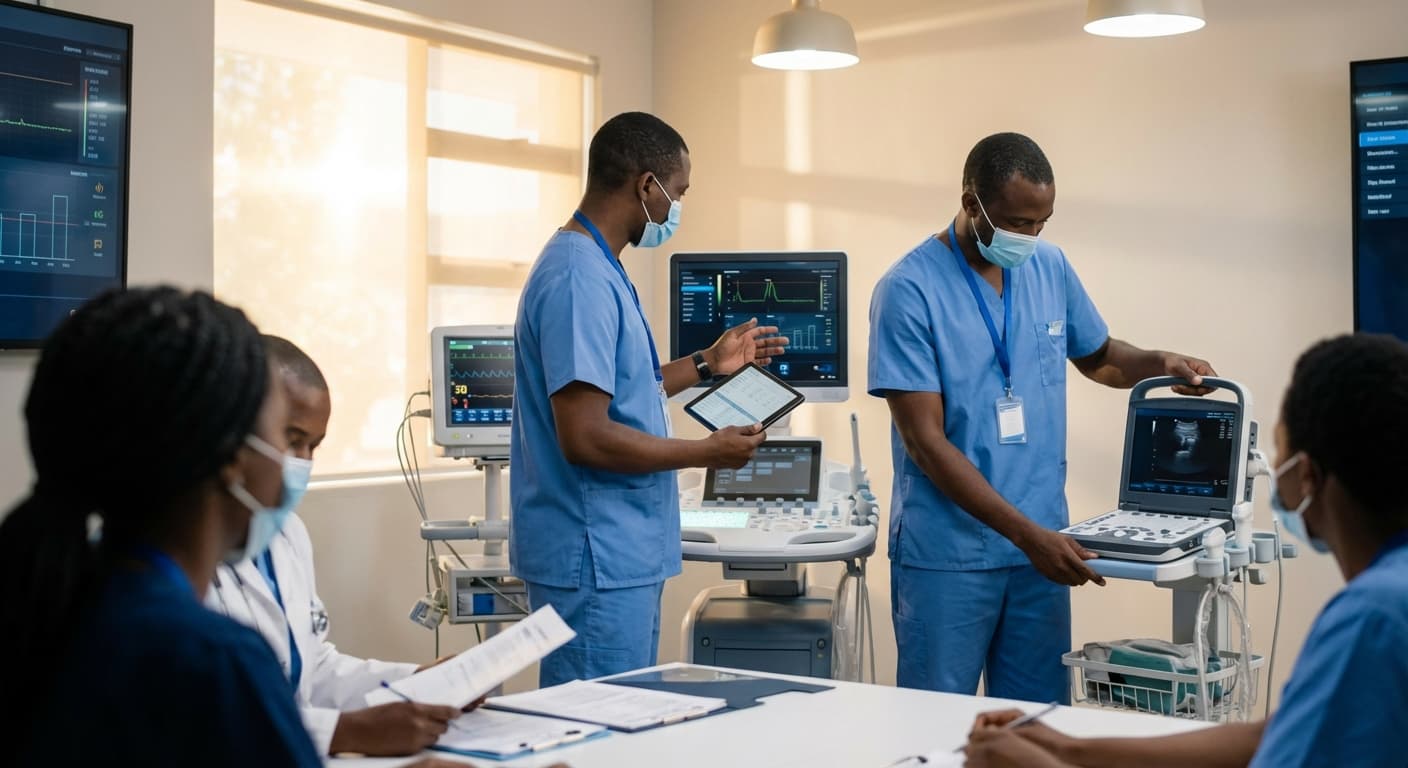
Clinical Needs Assessment for Medical Equipment in Seychelles
Engineering Excellence & Technical Support
Clinical Needs Assessment for Medical Equipment High-standard technical execution following OEM protocols and local regulatory frameworks.
Data-Driven Needs Prioritization
Leveraging epidemiological data and health outcome trends specific to Seychelles to identify and prioritize medical equipment needs that will have the greatest impact on public health and disease burden. This ensures resource allocation is targeted towards critical areas.
Stakeholder-Centric Procurement Strategy
Implementing a collaborative approach involving healthcare professionals, administrators, and supply chain experts from Seychelles to define equipment specifications, assess usability, and ensure post-purchase support, thereby guaranteeing long-term operational success and user satisfaction.
Sustainable Infrastructure Integration
Assessing existing power, IT, and maintenance infrastructure in Seychelles to ensure new medical equipment is compatible, maintainable, and supported by local technical capacity, promoting long-term sustainability and minimizing reliance on external expertise.
What Is Clinical Needs Assessment For Medical Equipment In Seychelles?
A Clinical Needs Assessment for Medical Equipment in Seychelles is a systematic process designed to evaluate and prioritize the medical equipment requirements of healthcare facilities within the Seychelles archipelago. This service is crucial for ensuring that available resources are strategically allocated to address the current and future healthcare needs of the population, thereby optimizing patient care, improving health outcomes, and enhancing the overall efficiency and sustainability of the healthcare system. The assessment identifies gaps in existing equipment inventory, assesses the condition and functionality of current assets, and forecasts future demands based on epidemiological trends, population demographics, and evolving healthcare service delivery models. It aims to provide evidence-based recommendations for the procurement, maintenance, and replacement of medical equipment, ensuring compliance with national health policies and international standards.
| Who Needs It | Typical Use Cases | |
|---|---|---|
| Ministry of Health (Seychelles) | Developing national health infrastructure plans, allocating capital budgets for healthcare, establishing procurement policies, and ensuring equitable distribution of medical resources across public health facilities. | Developing national health infrastructure plans, allocating capital budgets for healthcare, establishing procurement policies, and ensuring equitable distribution of medical resources across public health facilities. |
| Public and Private Healthcare Facilities (Hospitals, Health Centers, Clinics) | Identifying specific equipment deficiencies, justifying capital expenditure requests, optimizing equipment utilization, planning for service upgrades (e.g., establishing new diagnostic services), and ensuring compliance with regulatory standards. | Identifying specific equipment deficiencies, justifying capital expenditure requests, optimizing equipment utilization, planning for service upgrades (e.g., establishing new diagnostic services), and ensuring compliance with regulatory standards. |
| Healthcare Providers and Professionals | Ensuring access to appropriate and functional equipment for effective diagnosis, treatment, and patient management. This directly impacts their ability to provide quality care. | Ensuring access to appropriate and functional equipment for effective diagnosis, treatment, and patient management. This directly impacts their ability to provide quality care. |
| International Development Partners and Funding Agencies | Evaluating the justification and impact of proposed equipment donations or grants, ensuring alignment with Seychelles' health priorities, and assessing the long-term sustainability of equipment investments. | Evaluating the justification and impact of proposed equipment donations or grants, ensuring alignment with Seychelles' health priorities, and assessing the long-term sustainability of equipment investments. |
| Medical Equipment Suppliers and Manufacturers | Understanding the specific market needs and future demands for medical equipment within Seychelles to inform their product development and sales strategies. | Understanding the specific market needs and future demands for medical equipment within Seychelles to inform their product development and sales strategies. |
Key Components of a Clinical Needs Assessment for Medical Equipment
- Inventory of existing medical equipment: Detailed cataloging of all functional and non-functional equipment, including make, model, serial number, purchase date, and current location.
- Condition assessment and functionality testing: Evaluation of the operational status, calibration, and maintenance history of existing equipment.
- Gap analysis: Identification of equipment that is missing, outdated, or insufficient to meet current service demands.
- Needs forecasting: Projection of future equipment requirements based on epidemiological data, disease prevalence, service expansion plans, and technological advancements.
- Clinical workflow analysis: Assessment of how existing and proposed equipment integrates into clinical pathways and impacts patient care delivery.
- Cost-benefit analysis: Evaluation of the financial implications of procurement, maintenance, training, and disposal of equipment.
- Prioritization of equipment needs: Ranking of identified needs based on clinical impact, urgency, cost-effectiveness, and alignment with national health priorities.
- Development of procurement and replacement strategies: Formulation of plans for acquiring new equipment and phasing out obsolete or unserviceable items.
- Recommendations for training and capacity building: Identification of personnel training requirements for the effective operation and maintenance of new equipment.
- Sustainability and lifecycle management: Consideration of long-term operational costs, maintenance plans, and eventual disposal of equipment.
Who Needs Clinical Needs Assessment For Medical Equipment In Seychelles?
Clinical Needs Assessment (CNA) for medical equipment in Seychelles is a critical process that ensures healthcare facilities are equipped with the right tools to deliver optimal patient care. This assessment identifies gaps in existing equipment, determines the necessity of new or replacement equipment based on clinical demand and technological advancements, and prioritizes procurement to maximize impact and resource efficiency. The process involves evaluating current patient demographics, disease prevalence, service offerings, and the condition and suitability of existing medical devices.
| Department/Unit | Key Needs Addressed by CNA | Examples of Equipment Considered |
|---|---|---|
| Emergency Department (ED) | Rapid diagnosis and stabilization, life support, critical care. | Defibrillators, ventilators, advanced monitors, portable ultrasound, resuscitation equipment. |
| Surgical Wards/Operating Theatres | Safe and effective surgical procedures, minimally invasive techniques, post-operative care. | Surgical microscopes, laparoscopic equipment, anesthesia machines, electrosurgical units, advanced imaging (C-arm). |
| Intensive Care Unit (ICU) | Continuous patient monitoring, advanced life support, critical interventions. | High-dependency ventilators, advanced cardiac output monitors, dialysis machines, specialized infusion pumps. |
| Diagnostic Imaging (Radiology/Ultrasound) | Accurate and timely diagnosis of various conditions. | MRI scanners, CT scanners, digital X-ray machines, advanced ultrasound machines (e.g., 4D, Doppler), mammography units. |
| Laboratory Services | Precise and efficient diagnostic testing, molecular diagnostics. | Automated hematology analyzers, chemistry analyzers, PCR machines, immunoassay analyzers, microscopes. |
| Maternity and Neonatal Units | Safe delivery, care for premature and sick newborns, maternal health monitoring. | Incubators, phototherapy units, fetal monitors, neonatal ventilators, specialized delivery tables. |
| Outpatient Clinics/Primary Care | General diagnosis, minor procedures, chronic disease management. | Diagnostic ECG machines, spirometers, ophthalmoscopes, otoscopes, basic laboratory testing equipment. |
| Rehabilitation Services | Physical therapy, occupational therapy, patient recovery and mobility. | Therapeutic exercise equipment, hydrotherapy units, specialized mobility aids, electrotherapy devices. |
| Central Sterile Supply Department (CSSD) | Sterilization and disinfection of medical equipment to prevent infections. | Autoclaves, washer-disinfectors, sterile packaging machines. |
| Information Technology (IT) / Health Informatics | Integration of equipment with Electronic Health Records (EHRs), data management, telemedicine capabilities. | PACS (Picture Archiving and Communication System) compatible imaging equipment, telemedicine platforms, data analysis software. |
Target Customers and Departments for Clinical Needs Assessment in Seychelles
- {"title":"Public Healthcare Facilities","description":"These are the primary beneficiaries of CNA, as they serve the majority of the Seychellois population. Ensuring these facilities are well-equipped is paramount for equitable healthcare access."}
- {"title":"Private Healthcare Providers","description":"While often having more resources, private clinics and hospitals also benefit from CNA to ensure their equipment aligns with current medical practices and patient expectations, and to optimize their investments."}
- {"title":"Specialized Medical Centers","description":"Facilities focusing on specific areas like cardiology, oncology, or diagnostics require in-depth CNA to acquire and maintain highly specialized and advanced medical equipment."}
- {"title":"District Hospitals and Health Centers","description":"These facilities, often located in remote areas, need CNAs to ensure they have essential equipment for primary and emergency care, bridging geographical access gaps."}
- {"title":"Ministry of Health (MoH)","description":"The MoH is a key stakeholder, utilizing CNA findings for strategic planning, budget allocation, national health infrastructure development, and policy formulation regarding medical technology."}
Clinical Needs Assessment For Medical Equipment Process In Seychelles
This document outlines the workflow for conducting a Clinical Needs Assessment (CNA) for medical equipment in Seychelles. The CNA process is crucial for ensuring that healthcare facilities acquire appropriate, functional, and well-maintained medical equipment that aligns with clinical needs, patient care standards, and national health priorities. The workflow encompasses several key stages, from the initial identification of a need to the final execution of equipment procurement and implementation.
| Stage | Description | Key Activities | Responsible Parties | Deliverables |
|---|---|---|---|---|
| The process begins when a need for new or replacement medical equipment is identified by a healthcare facility or department. | Formal request/inquiry submission, initial problem statement. | Healthcare Facility Staff, Department Heads, Ministry of Health (MoH) - Procurement/Planning Unit. | Inquiry form, initial request document. |
| A detailed assessment of the specific clinical needs and the rationale for acquiring the equipment. | Clinical audit, service gap analysis, review of patient caseloads, impact on patient outcomes, alignment with national health strategies. | Clinical Staff, Biomedical Engineers, MoH - Planning Unit, Clinical Governance Committee. | Needs assessment report, justification document, preliminary impact assessment. |
| Gathering comprehensive data to support the needs assessment and inform decision-making. | Literature review (evidence-based practice), benchmarking with similar facilities, user feedback, data on existing equipment performance, cost-benefit analysis. | Biomedical Engineers, Clinical Staff, MoH - Planning Unit, Health Economics Unit. | Benchmarking reports, user feedback summaries, cost-benefit analysis report, performance data. |
| Ranking needs based on urgency, impact, and available resources, and developing a budget. | Ranking of equipment needs (e.g., critical, essential, desirable), estimation of capital and operational costs, identification of funding sources, budget proposal submission. | MoH - Planning Unit, Finance Department, Senior Management, Ministry of Finance. | Prioritized list of equipment needs, approved budget for procurement, funding allocation plan. |
| Defining the technical, functional, and performance specifications for the required equipment. | Detailed technical specifications (performance, safety, standards compliance), functional requirements, consumables and spare parts needs, after-sales service requirements, warranty period. | Biomedical Engineers, Clinical Users, MoH - Procurement Unit, Standards and Quality Assurance Unit. | Technical specification document, user requirement document, Bill of Quantities (BOQ). |
| Launching the formal procurement process based on approved specifications and budget. | Preparation of tender documents, advertisement of tender, pre-qualification of suppliers (if applicable). | MoH - Procurement Unit, Legal Department, Finance Department. | Tender documents, published tender notices, list of pre-qualified suppliers. |
| Evaluating bids and selecting the most suitable equipment and supplier. | Bid evaluation (technical and financial), supplier presentations, site visits (if necessary), negotiation, recommendation for award. | Tender Evaluation Committee (comprising clinical users, biomedical engineers, procurement officers), MoH - Approval Committee. | Evaluation report, recommended supplier and equipment, approval letter. |
| Finalizing the contract and overseeing the delivery of the equipment. | Contract signing, order placement, shipment tracking, customs clearance, receiving inspection. | MoH - Procurement Unit, Finance Department, Logistics/Warehouse Unit, Biomedical Engineering Department. | Signed contract, delivery confirmation, Goods Received Note (GRN). |
| Ensuring the equipment is correctly installed, tested, and ready for clinical use. | Site preparation, installation by supplier technicians, functional testing, performance verification, calibration, issuance of commissioning certificate. | Biomedical Engineering Department, Supplier Technicians, Clinical Users. | Installation report, commissioning certificate, initial test results. |
| Training clinical and technical staff on the proper use, operation, and basic maintenance of the equipment. | Training needs analysis, development of training modules, delivery of training, competency assessment of users. | Supplier Trainers, Biomedical Engineering Department, Clinical Educators, Clinical Staff. | Training records, competency assessment reports, user manuals. |
| Establishing and implementing a plan for regular maintenance, repairs, and technical support. | Development of preventive maintenance schedules, planned maintenance execution, reactive maintenance and repair, spare parts management, service contract management. | Biomedical Engineering Department, MoH - Maintenance Unit, Supplier Service Technicians. | Maintenance schedules, repair logs, spare parts inventory, service contract agreements. |
| Assessing the effectiveness and impact of the acquired equipment and identifying areas for improvement. | Periodic review of equipment performance, user satisfaction surveys, impact on patient care and clinical outcomes, financial performance review, post-implementation review. | MoH - Planning Unit, Clinical Governance Committee, Biomedical Engineering Department, Health Economics Unit. | Performance reports, user satisfaction reports, impact assessment studies, lessons learned document. |
Clinical Needs Assessment Workflow for Medical Equipment in Seychelles
- Inquiry and Initiation
- Needs Identification and Justification
- Data Collection and Analysis
- Prioritization and Budgeting
- Specification Development
- Procurement Process Initiation
- Equipment Selection and Approval
- Procurement and Delivery
- Installation and Commissioning
- Training and Competency Assessment
- Ongoing Maintenance and Support
- Monitoring and Evaluation
Clinical Needs Assessment For Medical Equipment Cost In Seychelles
This clinical needs assessment aims to understand the pricing landscape of essential medical equipment within Seychelles. A comprehensive understanding of cost factors and price ranges is crucial for effective resource allocation, procurement planning, and ensuring accessible healthcare services. Several key factors influence the cost of medical equipment in Seychelles, including import duties, shipping and logistics, supplier markups, warranty and after-sales service agreements, and the specific technological sophistication of the equipment. Due to Seychelles being an island nation, shipping and logistical costs can be significant. Furthermore, the availability of local service technicians and spare parts can impact the long-term operational cost and initial purchase price. Pricing is primarily conducted in Seychellois Rupees (SCR), though quotations may initially be in USD or EUR due to international sourcing.
The following sections delve into specific equipment categories, providing estimated price ranges in SCR and outlining key considerations. It is important to note that these figures are indicative and can fluctuate based on market conditions, supplier negotiations, and specific model configurations.
| Equipment Category | Typical Unit (SCR) | Estimated Price Range (SCR) | Key Considerations |
|---|---|---|---|
| Diagnostic Imaging (Basic Ultrasound) | Portable/Trolley-based | 150,000 - 500,000 | Image quality, portability, transducer types, software features |
| Diagnostic Imaging (X-ray - Fixed) | Standard room system | 750,000 - 3,000,000+ | Detector type (CR/DR), tube power, image processing, installation complexity |
| Patient Monitoring Systems | Basic bedside monitor (ECG, SpO2, NIBP) | 50,000 - 200,000 | Number of parameters, screen size, connectivity options, portability |
| Ventilators (Basic ICU) | Non-invasive and invasive modes | 200,000 - 700,000 | Ventilation modes, breath delivery technologies, portability, monitoring features |
| Anesthesia Machines | Integrated vaporizers, ventilation | 400,000 - 1,500,000+ | Anesthetic agent compatibility, gas flow control, integrated ventilator, monitoring |
| Surgical Lights | Ceiling mounted, single/double dome | 70,000 - 300,000 | Illumination intensity (lux), color temperature, articulation, LED vs. halogen |
| Operating Tables | Standard manual/hydraulic | 150,000 - 600,000 | Weight capacity, articulation, specialty procedures, ease of cleaning |
| Sterilizers (Autoclaves) | Tabletop/Floor standing | 80,000 - 400,000 | Chamber size, cycle types (gravity/vacuum), pressure, temperature, safety features |
| Laboratory Equipment (Hematology Analyzer) | 3-part differential | 100,000 - 350,000 | Throughput, number of parameters, reagent system, maintenance |
| Laboratory Equipment (Biochemistry Analyzer) | Semi-automatic benchtop | 150,000 - 500,000 | Throughput, test menu, photometry, ISE modules, automation |
| Infusion Pumps | Basic volumetric | 25,000 - 80,000 | Flow rate accuracy, safety features, alarm systems, battery life |
| Defibrillators (AED) | Automated External Defibrillator | 30,000 - 100,000 | Ease of use, electrode types, battery life, data storage |
Key Pricing Factors for Medical Equipment in Seychelles
- Import Duties and Taxes: Seychelles levies import duties and taxes on medical equipment, adding to the landed cost.
- Shipping and Logistics: As an island nation, transportation costs (air and sea freight) are a significant component.
- Supplier Markups: Local distributors and international suppliers incorporate their profit margins.
- Warranty and After-Sales Service: The duration and scope of warranty, along with the availability of local service and spare parts, affect pricing.
- Technological Sophistication: Advanced features, imaging capabilities, and digital integration generally increase costs.
- Brand Reputation: Well-established brands often command higher prices due to perceived quality and reliability.
- Bulk Purchasing Power: Larger orders may secure discounts from suppliers.
- Currency Exchange Rates: Fluctuations in SCR against major currencies (USD, EUR) can impact imported equipment costs.
Affordable Clinical Needs Assessment For Medical Equipment Options
A thorough clinical needs assessment is crucial for identifying the most appropriate and cost-effective medical equipment. This process involves understanding current patient care demands, future service expansion plans, technological advancements, and budgetary constraints. By focusing on value bundles and implementing strategic cost-saving measures, healthcare providers can optimize their equipment acquisition and utilization, ensuring high-quality patient care without unnecessary financial strain.
| Value Bundles | Description | Cost-Saving Strategies | Description | ||||||||||
|---|---|---|---|---|---|---|---|---|---|---|---|---|---|
| Equipment + Training + Support Packages | Manufacturers often offer bundled solutions that include the equipment, initial user training, and ongoing technical support. This simplifies procurement and ensures immediate operational readiness. | Leasing vs. Purchasing | Leasing offers lower upfront costs and allows for regular upgrades to newer technology, which can be cost-effective for equipment with a short lifecycle or rapid obsolescence. | Volume Discounts & Group Purchasing | For larger acquisitions or when collaborating with other institutions, negotiating volume discounts or leveraging group purchasing organizations can significantly reduce per-unit costs. | Refurbished or Pre-owned Equipment | For less critical or well-established technologies, high-quality refurbished equipment can offer substantial savings without compromising functionality, provided it comes with a warranty. | Negotiate Maintenance Contracts | Carefully review and negotiate service and maintenance agreements. Consider multi-year contracts for potential discounts, but ensure coverage aligns with actual needs. | Phased Implementation | Instead of acquiring all equipment at once, a phased approach allows for better budget management and the opportunity to learn from early deployments before scaling up. | Standardization | Where feasible, standardizing on a single manufacturer or model can simplify training, maintenance, and spare parts inventory, leading to economies of scale. |
| Consumables & Service Integration | Some bundles include recurring costs like consumables or preventative maintenance services, providing predictable budgeting and potentially bulk discounts on supplies. | Strategic Partnerships | Developing strong relationships with trusted vendors can lead to better pricing, priority service, and access to pilot programs or early technological releases. | Technology Refresh Cycles | Understanding the typical lifecycle of different equipment types allows for proactive planning and avoids the cost of maintaining outdated or inefficient systems. | Evaluate ROI Carefully | When considering advanced or expensive equipment, conduct a thorough Return on Investment (ROI) analysis, factoring in improved patient outcomes, increased throughput, and potential revenue generation. | Remote Monitoring & Diagnostics | Opt for equipment with remote monitoring capabilities to reduce the need for on-site service calls, saving time and money on maintenance. | Used Equipment Marketplaces | Explore reputable marketplaces for pre-owned equipment, verifying seller credentials and equipment condition thoroughly. |
Key Components of an Affordable Clinical Needs Assessment
- Define Clinical Requirements: Precisely determine the types of procedures, patient populations, and diagnostic/therapeutic needs the equipment must address.
- Evaluate Existing Infrastructure: Assess compatibility with current facilities, IT systems, and existing equipment maintenance protocols.
- Involve Clinical Stakeholders: Engage physicians, nurses, technicians, and administrators to gather diverse perspectives and ensure buy-in.
- Research Market Options: Explore a range of manufacturers, models, and technologies, considering both established and emerging solutions.
- Consider Total Cost of Ownership (TCO): Look beyond the initial purchase price to include installation, training, maintenance, consumables, and potential upgrade costs.
- Prioritize Essential Features: Differentiate between 'must-have' functionalities and 'nice-to-have' features to avoid overspending on unnecessary capabilities.
- Assess Workflow Integration: Ensure new equipment seamlessly integrates into existing clinical workflows to maximize efficiency and minimize disruption.
Verified Providers In Seychelles
Finding verified healthcare providers in Seychelles is crucial for ensuring quality and trustworthy medical care. Franance Health stands out as a premier choice due to its rigorous credentialing process and commitment to patient well-being. This document outlines what 'verified providers' means in the Seychellois context and why Franance Health's network is the optimal selection for your healthcare needs.
| Franance Health Credentialing Factor | Why it Represents the Best Choice |
|---|---|
| Rigorous Vetting Process: Franance Health employs a multi-stage verification process that goes beyond basic licensing. | Ensures that only highly qualified and ethical practitioners are included in their network, minimizing risk for patients. |
| Focus on Specialization: We actively seek out providers with specific specializations relevant to common and complex health needs in Seychelles. | Allows patients to access expert care without the need for extensive overseas travel for specialized treatments. |
| Commitment to Continuous Improvement: Franance Health encourages and monitors ongoing professional development and training for its network. | Guarantees that patients receive care that is up-to-date with the latest medical advancements and best practices. |
| Patient-Centric Approach: Our verification includes assessing providers' communication skills and their dedication to a patient-first philosophy. | Promotes a positive and supportive healthcare experience, fostering trust and effective doctor-patient relationships. |
| Transparency and Accessibility: Franance Health provides clear information about the credentials and specializations of its verified providers. | Empowers patients to make informed decisions about their healthcare providers and feel confident in their choices. |
What 'Verified Providers' Means in Seychelles
- Licensing and Registration: Verified providers have obtained all necessary licenses and registrations from the Seychelles Ministry of Health and other relevant regulatory bodies. This confirms they meet the basic legal requirements to practice.
- Professional Qualifications: Verification includes a thorough review of the healthcare professional's educational background, specialized training, and certifications from recognized institutions.
- Experience and Competence: Franance Health assesses the practical experience and demonstrated competence of practitioners through peer reviews, case studies, and in some instances, direct observation or interviews.
- Adherence to Ethical Standards: Verified providers are committed to upholding the highest ethical standards in patient care, including confidentiality, informed consent, and professional conduct.
- Facility Accreditation (where applicable): For clinics and hospitals, verification extends to facility accreditation, ensuring they meet standards for safety, hygiene, and equipment maintenance.
Scope Of Work For Clinical Needs Assessment For Medical Equipment
This Scope of Work (SOW) outlines the objectives, deliverables, and standard specifications for a comprehensive clinical needs assessment to identify and prioritize medical equipment requirements. The assessment will focus on current clinical practices, patient demographics, projected service expansion, and integration with existing infrastructure. The ultimate goal is to ensure that procured medical equipment aligns with clinical needs, enhances patient care, and optimizes resource utilization.
| Deliverable | Description | Standard Specifications/Requirements |
|---|---|---|
| Clinical Needs Assessment Report | A comprehensive document detailing current and future medical equipment needs based on clinical workflows, patient volume, acuity, and technological advancements. | Must include: Executive Summary, Introduction, Methodology, Findings (broken down by department/specialty), Gap Analysis, Prioritized Equipment List, Budgetary Considerations, Risk Assessment, Recommendations for procurement and implementation. |
| Equipment Prioritization Matrix | A matrix ranking identified medical equipment based on clinical impact, urgency, cost-effectiveness, and alignment with strategic goals. | Includes: Equipment Name, Clinical Justification, Urgency Score, Clinical Impact Score, Estimated Cost, Strategic Alignment Score. |
| Detailed Equipment Specifications (Template) | Standardized templates for capturing detailed technical and functional specifications for each prioritized piece of equipment. | Template to include: Equipment Name, Manufacturer/Model (if known), Intended Use/Clinical Application, Key Technical Specifications (e.g., power requirements, dimensions, connectivity), Performance Requirements, Safety Features, Regulatory Compliance (e.g., FDA, CE marking), Training Requirements, Maintenance Requirements, Warranty Information, Integration Requirements with existing systems. |
| Stakeholder Workshop Minutes | Records of discussions, decisions, and feedback gathered from clinical staff, IT, biomedical engineering, and administration during validation workshops. | Includes: Date, Attendees, Agenda, Key Discussion Points, Action Items, Decisions Made. |
| Risk Mitigation Plan for Procurement | An outline of potential risks associated with medical equipment procurement and proposed strategies to mitigate them. | Covers: Supply chain disruptions, vendor reliability, technology obsolescence, budget overruns, integration challenges. |
Key Stages of the Clinical Needs Assessment
- Phase 1: Project Initiation and Planning
- Phase 2: Data Collection and Analysis
- Phase 3: Equipment Identification and Prioritization
- Phase 4: Reporting and Recommendations
- Phase 5: Stakeholder Review and Validation
Service Level Agreement For Clinical Needs Assessment For Medical Equipment
This Service Level Agreement (SLA) outlines the commitment for providing clinical needs assessment services for medical equipment. It specifies response times for requests and defines uptime guarantees for related consultation platforms and documentation portals.
| Service Component | Response Time Target | Uptime Guarantee | Notes |
|---|---|---|---|
| Needs Assessment Request Submission and Acknowledgement | 2 business hours | N/A | Acknowledgement confirms receipt and assignment of a dedicated consultant. |
| Initial Consultation Scheduling | 8 business hours | N/A | Scheduling of a preliminary discussion to understand specific requirements. |
| Documentation Review and Feedback | 2 business days | N/A | Review of provided clinical workflows, equipment lists, and operational data. |
| Needs Assessment Report Delivery | 7 business days (after initial consultation and documentation receipt) | N/A | Delivery of a comprehensive report detailing identified needs and recommendations. |
| Uptime for Online Consultation Portal | N/A | 99.5% | Guaranteed availability of the platform for scheduled and ad-hoc consultations. |
| Uptime for Document Repository | N/A | 99.8% | Guaranteed availability for uploading, accessing, and managing assessment-related documents. |
Key Service Components
- Needs Assessment Request Submission and Acknowledgement
- Initial Consultation Scheduling
- Documentation Review and Feedback
- Needs Assessment Report Delivery
- Uptime for Online Consultation Portal
- Uptime for Document Repository
Frequently Asked Questions

Ready when you are
Let's scope your Clinical Needs Assessment for Medical Equipment in Seychelles project in Seychelles.

Scaling healthcare logistics and technical systems across the entire continent.