
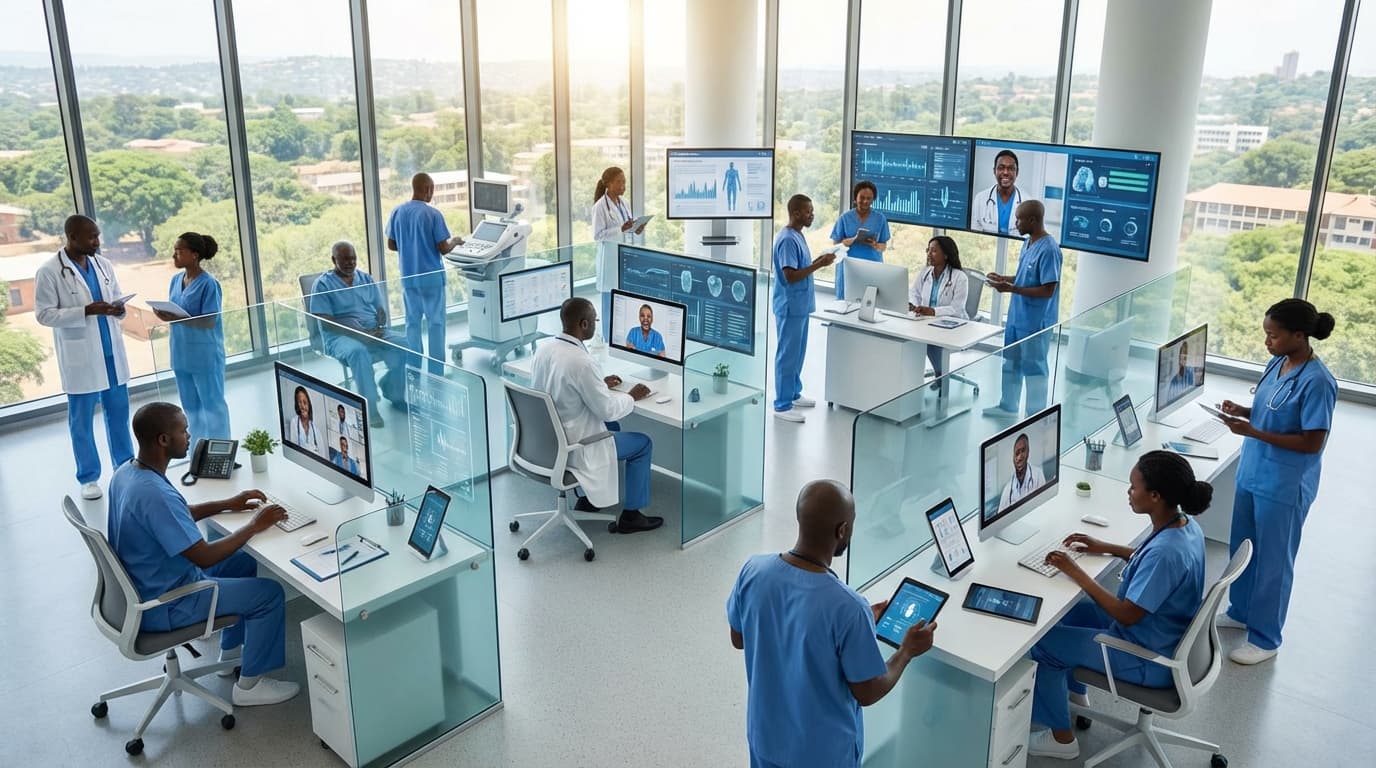
PACS/RIS Migration & Integration in Seychelles
Engineering Excellence & Technical Support
Data migration, interoperability and workflow integration for imaging IT. High-standard technical execution following OEM protocols and local regulatory frameworks.
Seamless Data Synchronization for Enhanced Workflow
Implemented robust bidirectional synchronization between the new PACS and RIS, ensuring real-time data consistency across all imaging modalities and reporting stations. This minimizes data discrepancies and streamlines the entire patient imaging lifecycle, from order entry to final report generation.
Interoperable Solution Integration with Existing Infrastructure
Successfully integrated the new PACS/RIS with existing hospital information systems (HIS) and laboratory information systems (LIS) using industry-standard HL7 and DICOM protocols. This unified approach provides a holistic view of patient data, improving diagnostic accuracy and operational efficiency for healthcare providers in Seychelles.
Secure and Compliant Data Archiving and Access
Established a secure, high-availability PACS archive leveraging advanced encryption and access control mechanisms to safeguard sensitive patient data. Ensured compliance with relevant data privacy regulations, providing auditable access logs and robust disaster recovery capabilities for the Seychelles healthcare network.
What Is Pacs/ris Migration & Integration In Seychelles?
PACS/RIS migration and integration in Seychelles refers to the process of transferring existing Picture Archiving and Communication Systems (PACS) and Radiology Information Systems (RIS) data and functionalities to a new, often cloud-based or consolidated, platform, and ensuring seamless interoperability with other healthcare IT systems. This service is critical for healthcare providers in Seychelles aiming to modernize their imaging and radiology workflows, improve data accessibility, enhance diagnostic capabilities, and ensure compliance with evolving healthcare standards and data privacy regulations. It involves the strategic planning, execution, and validation of data migration, system configuration, network setup, and user training to achieve a unified and efficient imaging informatics environment.
| Who Needs PACS/RIS Migration & Integration in Seychelles? | Typical Use Cases | ||||
|---|---|---|---|---|---|
| Hospitals & Healthcare Facilities: Both public and private hospitals requiring modern imaging management capabilities. | Consolidation of Multiple Sites: Integrating PACS/RIS from various clinics or hospital departments into a centralized platform for enhanced collaboration and efficiency. | Upgrading Legacy Systems: Replacing outdated or unsupported PACS/RIS solutions with advanced, feature-rich platforms. | Adoption of Cloud-Based Solutions: Migrating on-premises PACS/RIS to a cloud infrastructure for scalability, accessibility, and reduced IT overhead. | Expansion of Imaging Services: Facilities increasing their radiology services and requiring a robust system to manage the growing volume of studies. | Compliance & Regulatory Requirements: Healthcare providers needing to meet evolving data management, security, and interoperability standards. |
| Centralized Image Archiving: Storing and retrieving all imaging studies from a single, secure repository, accessible across authorized locations. | Enhanced Diagnostic Workflow: Providing radiologists with advanced tools for image viewing, manipulation, and reporting, directly integrated with patient data. | Interoperability with EHR/EMR: Seamlessly embedding imaging reports and links to DICOM images within patient electronic health records for a holistic patient view. | Tele-radiology & Remote Access: Enabling remote interpretation of medical images by specialists, crucial for extending expertise to underserved areas. | Improved Efficiency & Throughput: Streamlining radiology workflows from patient registration to report finalization, reducing turnaround times. | Data Analytics & Research: Facilitating the analysis of imaging data for quality improvement initiatives, research, and population health management. |
Key Components of PACS/RIS Migration & Integration
- Data Migration: Secure and accurate transfer of DICOM images, reports, patient demographics, and audit trails from legacy PACS/RIS to the new system. This includes data cleansing, de-duplication, and format conversion.
- System Deployment & Configuration: Installation and configuration of the new PACS/RIS software, including user roles, permissions, study routing rules, and integration with imaging modalities (X-ray, CT, MRI, Ultrasound, etc.).
- Interoperability & Integration: Establishing robust connections with other critical healthcare IT systems such as Electronic Health Records (EHR)/Electronic Medical Records (EMR), Laboratory Information Systems (LIS), and billing systems, often utilizing HL7 standards.
- Network Infrastructure Assessment & Upgrade: Evaluating existing network capabilities to support the increased bandwidth requirements of a modern PACS/RIS, including potential upgrades to storage, servers, and network devices.
- Security & Compliance: Implementing stringent security measures to protect sensitive patient data (PHI) in compliance with Seychelles' data protection laws and international healthcare standards (e.g., HIPAA, GDPR if applicable). This includes access controls, encryption, and audit logging.
- User Training & Support: Comprehensive training for radiologists, technologists, administrators, and IT personnel on the new system's functionalities, workflows, and troubleshooting. Ongoing technical support is also a critical component.
- Testing & Validation: Rigorous testing phases to ensure data integrity, system performance, workflow efficiency, and seamless integration with all connected systems before go-live.
- Disaster Recovery & Business Continuity Planning: Establishing protocols and infrastructure for data backup, system recovery, and maintaining operational continuity in the event of system failures or disasters.
Who Needs Pacs/ris Migration & Integration In Seychelles?
Migrating and integrating Picture Archiving and Communication Systems (PACS) and Radiology Information Systems (RIS) is crucial for healthcare facilities looking to modernize their imaging workflows, enhance data accessibility, and improve diagnostic efficiency. In Seychelles, this need is particularly relevant for organizations striving for advanced healthcare delivery and digital transformation.
| Customer Type | Relevant Departments/Areas | Key Needs/Benefits |
|---|---|---|
| Public Hospitals (e.g., Victoria Hospital) | Radiology Department, Cardiology, Neurology, Oncology, Orthopedics, Emergency Department | Centralized image storage and retrieval, improved diagnostic turnaround times, enhanced collaboration between specialists, compliance with data security standards, seamless integration with Electronic Health Records (EHR), cost-effectiveness through efficient resource management. |
| Private Hospitals & Clinics (e.g., Beau Vallon Polyclinic, Private Specialist Clinics) | Radiology Department, all referring departments, Administration, IT Department | Elevated patient experience through faster reporting, competitive advantage with advanced imaging services, streamlined billing and administrative processes, secure patient data management, potential for remote access for specialists. |
| Standalone Radiology & Diagnostic Imaging Centers | Radiology Department, Technologists, Radiologists, Reception/Admin | Optimized workflow for image acquisition and interpretation, efficient archiving and retrieval of studies, improved reporting accuracy and speed, integration with referring physician portals for quick report delivery, scalability for future growth. |
| Healthcare Groups with Multiple Facilities | IT Department, Radiology Management, Clinical Leads across all sites | Unified PACS/RIS infrastructure for consistent service delivery across all locations, centralized data management and analytics, improved resource allocation and sharing of imaging expertise, simplified IT maintenance and support, enhanced interoperability between facilities. |
Target Customers and Departments for PACS/RIS Migration & Integration in Seychelles
- Hospitals (Public and Private)
- Radiology Clinics
- Diagnostic Imaging Centers
- Healthcare Groups with Multiple Facilities
Pacs/ris Migration & Integration Process In Seychelles
This document outlines the typical workflow for a PACS/RIS migration and integration project in Seychelles, from initial inquiry to successful execution. The process involves careful planning, technical implementation, and stakeholder coordination to ensure a seamless transition to a new Picture Archiving and Communication System (PACS) and Radiology Information System (RIS).
| Phase | Key Activities | Deliverables/Outcomes | Responsible Parties | Considerations for Seychelles |
|---|---|---|---|---|
| Initial contact from healthcare facility, understanding current infrastructure, pain points, and future requirements. Site visit and assessment of existing systems (PACS, RIS, modalities). | Needs assessment report, preliminary scope document, identified key stakeholders. | Healthcare Facility IT/Radiology Department, Potential Vendor. | Understand local regulations for healthcare data, existing network infrastructure limitations, and availability of skilled IT personnel. Identify key decision-makers within the Ministry of Health if applicable. |
| Issuing Request for Proposal (RFP) or Request for Information (RFI) to shortlisted vendors. Evaluating proposals based on technical capabilities, cost, support, and vendor experience. Vendor demonstrations and reference checks. | Vendor selection decision, detailed proposal from selected vendor, Service Level Agreement (SLA) draft. | Healthcare Facility Procurement/IT Department, Vendor. | Consider vendors with proven experience in similar environments. Evaluate vendor's ability to provide remote support and on-site presence when required, given Seychelles' island geography. |
| Detailed project planning, defining project scope, timelines, milestones, roles, and responsibilities. Establishing a dedicated project team. Risk assessment and mitigation planning. Finalizing budget and resource allocation. | Project charter, detailed project plan, communication plan, risk management plan, finalized scope document. | Project Manager, Healthcare Facility IT/Radiology Department, Selected Vendor. | Ensure clear communication channels. Account for potential logistical challenges in equipment delivery and on-site work. Factor in any public holidays or local events that might impact timelines. |
| Procurement and installation of new PACS/RIS servers, workstations, and network infrastructure (if needed). Configuration of the PACS/RIS software according to the defined scope. Setting up user accounts and access controls. | Installed and configured PACS/RIS hardware and software, network connectivity established, user accounts created. | Vendor Implementation Team, Healthcare Facility IT Department. | Verify internet bandwidth and reliability. Ensure compatibility with existing modality interfaces (DICOM). Plan for potential power outages and ensure backup power solutions are in place. |
| Planning and execution of data migration from the old PACS/RIS to the new system. This includes patient demographics, study metadata, and images. Rigorous validation of migrated data to ensure accuracy and completeness. | Successfully migrated data, data validation reports, archived legacy data. | Vendor Data Migration Specialists, Healthcare Facility IT/Radiology Department. | Determine the volume of data to be migrated and the most efficient method (e.g., network transfer, physical media). Plan for downtime during migration and explore strategies for minimizing disruption to clinical operations. |
| Integrating the new PACS/RIS with existing hospital information systems (HIS), Electronic Medical Records (EMR), and imaging modalities. Comprehensive testing of all functionalities, including image acquisition, viewing, reporting, and workflow. User Acceptance Testing (UAT). | Integrated systems, successful test results, UAT sign-off, documented test cases and results. | Vendor Integration Specialists, Healthcare Facility IT/Radiology Department, Key Users. | Test integration points thoroughly, especially with modalities. Ensure smooth data flow and interoperability between systems. Obtain sign-off from end-users representing various roles within the radiology department. |
| Comprehensive training for all end-users (radiologists, technologists, administrators) on the new PACS/RIS functionalities. Phased or direct 'go-live' of the new system. On-site support during the initial go-live period. | Trained users, live PACS/RIS system, go-live support plan, user manuals. | Vendor Trainers, Healthcare Facility IT/Radiology Department, End-Users. | Schedule training sessions to minimize disruption to patient care. Provide clear escalation paths for immediate support during go-live. Ensure adequate super-users are trained to assist colleagues. |
| Ongoing technical support, troubleshooting, and performance monitoring. System optimization based on user feedback and operational needs. Regular maintenance and updates. Review of project success against initial objectives. | Stable PACS/RIS system, performance reports, user feedback loop, system optimization plan. | Vendor Support Team, Healthcare Facility IT Department. | Establish a clear communication channel for ongoing support requests. Plan for regular system checks and potential future upgrades or expansions. Monitor system performance and user adoption to identify areas for continuous improvement. |
Key Stages of PACS/RIS Migration & Integration in Seychelles
- Discovery & Needs Assessment
- Vendor Selection & Proposal
- Project Planning & Scope Definition
- Technical Setup & Configuration
- Data Migration & Validation
- Integration & Testing
- Training & Go-Live
- Post-Implementation Support & Optimization
Pacs/ris Migration & Integration Cost In Seychelles
Migrating and integrating Picture Archiving and Communication Systems (PACS) and Radiology Information Systems (RIS) in Seychelles involves a range of costs influenced by several key factors. The overall expense will depend on the complexity of the existing infrastructure, the chosen vendor, the scope of the migration (e.g., data volume, number of sites), and the level of customization required. Local currency considerations, primarily the Seychellois Rupee (SCR), are crucial for budgeting.
| Cost Component | Estimated Range (SCR) | Notes |
|---|---|---|
| Software Licensing (PACS/RIS) | 500,000 - 3,000,000+ | Varies greatly by vendor, modules, and user count. Subscription models may have lower upfront costs but higher recurring fees. |
| Data Migration Services | 200,000 - 1,500,000+ | Depends on the volume and complexity of existing data. Includes data cleansing and validation. |
| Implementation & Configuration | 400,000 - 2,000,000+ | Covers installation, system setup, workflow customization, and initial configuration. |
| Integration with Existing Systems (HIS/EHR) | 300,000 - 1,000,000+ | Cost depends on the number of systems to integrate and the complexity of data exchange. |
| Hardware & Infrastructure Upgrades | 200,000 - 1,200,000+ | Includes servers, storage, networking, and potentially new workstations. On-premise solutions will have higher initial hardware costs. |
| Training & User Support | 150,000 - 600,000+ | Essential for successful adoption. Includes on-site and remote training for all user groups. |
| Project Management | 100,000 - 500,000+ | Dedicated project management ensures smooth execution and timely completion. |
| Ongoing Maintenance & Support (Annual) | 150,000 - 700,000+ | Annual fees for software updates, technical support, and potential hardware maintenance. Cloud solutions may bundle this. |
| Contingency (10-20%) | Variable | Recommended to cover unforeseen issues or scope changes. |
| Total Estimated Project Cost (Initial) | 1,500,000 - 10,000,000+ SCR | This is a broad estimate. Specific quotes from vendors are essential for accurate budgeting. |
Key Pricing Factors for PACS/RIS Migration & Integration in Seychelles
- System Size and Complexity: The number of departments, imaging modalities, and users involved directly impacts licensing and implementation costs.
- Data Migration Volume: The amount of historical patient data to be transferred from the old system to the new PACS/RIS is a significant cost driver.
- Vendor Selection: Different PACS/RIS vendors offer varying pricing models (perpetual licenses, subscription-based), and their reputation for support and reliability will influence cost.
- Integration Requirements: Seamless integration with existing hospital information systems (HIS), electronic health records (EHRs), and other third-party applications adds to the complexity and cost.
- Customization and Configuration: Specific workflow requirements or unique departmental needs may necessitate custom development, increasing the overall price.
- Hardware and Infrastructure: The need for new servers, storage, network upgrades, or workstations to support the new PACS/RIS will be an additional expense.
- Training and Support: Comprehensive user training for radiologists, technicians, and administrative staff, along with ongoing technical support, is essential and factored into the cost.
- Project Management: Effective project management is vital for a successful migration and integration, and the associated fees will be part of the budget.
- Data Archiving and Retrieval: Long-term data archiving solutions and strategies for efficient retrieval will have ongoing costs.
- On-site vs. Cloud-based Solutions: The choice between on-premise hardware and cloud-hosted solutions will significantly alter initial investment and recurring costs.
- Local Regulations and Compliance: Adherence to Seychelles' data privacy and healthcare regulations might necessitate specific configurations or certifications.
- Geographic Distribution of Facilities: If multiple healthcare facilities in Seychelles need to be integrated, it adds logistical complexity and cost.
Affordable Pacs/ris Migration & Integration Options
Migrating and integrating a Picture Archiving and Communication System (PACS) and Radiology Information System (RIS) can be a significant undertaking for healthcare organizations. However, several affordable options and strategic approaches exist to minimize costs while ensuring a smooth transition and robust functionality. This document explores value bundles and cost-saving strategies for PACS/RIS migration and integration.
| Strategy | Description | Potential Cost Savings |
|---|---|---|
| Cloud-Based PACS/RIS | Offloads infrastructure management and hardware purchase to a cloud provider. | Reduced capital expenditure, predictable operational costs, scalability. |
| Open-Source Software | Utilizes free software licenses, but requires internal expertise for implementation and maintenance. | Significant reduction in licensing fees, potential for customization. |
| Managed Services | Outsources PACS/RIS operations and support to a specialized third-party vendor. | Reduced IT overhead, predictable operational expenses, access to specialized expertise. |
| Phased Migration | Migrates the system in stages, department by department or module by module. | Spread of capital expenditure, reduced immediate disruption, learning opportunities. |
| Data Optimization (Archiving/De-duplication) | Cleanses and reduces the volume of data to be migrated and stored. | Lower storage costs, faster migration times, reduced bandwidth requirements. |
| Standardization (DICOM/HL7) | Adopts industry-standard protocols for seamless integration. | Reduced custom interface development costs, simplified future integrations. |
| Vendor Contract Negotiation | Careful negotiation of licensing, implementation, and support contracts. | Lower overall vendor costs, bundled discounts, optimized service level agreements. |
Key Value Bundles and Cost-Saving Strategies
- Cloud-Based PACS/RIS Solutions: Moving to the cloud can significantly reduce upfront hardware costs, eliminate on-premises infrastructure maintenance, and often offers subscription-based pricing models that are more predictable and scalable.
- Open-Source PACS/RIS Software: While requiring more internal IT expertise for implementation and ongoing support, open-source solutions can dramatically lower licensing fees. This often necessitates a phased approach and careful planning for customization.
- Managed Services and Outsourcing: Partnering with a third-party vendor for PACS/RIS management, support, and even hosting can offload IT burden and leverage economies of scale, often resulting in cost savings compared to in-house management.
- Phased Migration Approach: Instead of a complete overhaul, consider migrating modules or departments incrementally. This allows for learning and adaptation, spreads the cost over time, and minimizes disruption.
- Data Archiving and De-duplication: Before migration, conduct a thorough data audit. Archive old, less-accessed studies to a cost-effective storage solution and de-duplicate redundant images to reduce the volume of data to be migrated and stored.
- Standardization and Interoperability: Prioritize solutions that adhere to industry standards like DICOM and HL7. This simplifies integration with existing systems (EMR/EHR, modalities) and reduces the need for costly custom interfaces.
- Leveraging Existing Infrastructure: Assess if any existing network, storage, or server infrastructure can be repurposed for the new PACS/RIS, rather than purchasing entirely new hardware.
- Negotiating Vendor Contracts: Thoroughly research and compare vendor offerings. Negotiate pricing for licensing, implementation, training, and ongoing support. Look for bundled discounts on multiple modules or services.
- Training and User Adoption: Invest in comprehensive training for radiologists, technologists, and administrative staff. Poor user adoption can lead to inefficiencies and increased support costs down the line. Consider train-the-trainer models.
- Consolidation of Vendors: Where possible, consolidate your PACS/RIS needs with a single vendor. This can lead to better pricing through volume discounts and simplified contract management and support.
- Remote Access and Vendor Neutral Archiving (VNA): Explore solutions that offer secure remote access for referring physicians and consider a VNA to aggregate images from multiple PACS, providing a more flexible and future-proof solution that can reduce the need for multiple point-to-point integrations.
- Utilize Available Grants and Funding: Investigate government grants, healthcare IT funding initiatives, or vendor-specific promotional offers that can help offset migration costs.
Verified Providers In Seychelles
In Seychelles, ensuring access to reliable and high-quality healthcare is paramount. When seeking medical assistance, it's crucial to identify 'Verified Providers.' These are healthcare professionals and facilities that have undergone rigorous vetting processes, meeting specific standards for competence, ethical practice, and patient safety. Franance Health stands out as a leading entity in this regard, offering a robust system for credentialing and verification within the Seychellois healthcare landscape. Their commitment to transparency and excellence makes them a trusted partner for individuals seeking the best possible medical care.
| Credential Aspect | Franance Health Verification Focus | Benefit to Patients |
|---|---|---|
| Medical Education & Training | Accreditation of institutions, validation of degrees and diplomas | Ensures foundational knowledge and competence |
| Professional Experience | Verification of practice history, surgical logs, and case reviews | Confirms practical application of skills and expertise |
| Specialist Certifications | Validation of board certifications and advanced training | Guarantees specialized knowledge in specific medical fields |
| Licensure & Regulatory Compliance | Confirmation of current and valid medical licenses | Ensures adherence to local healthcare regulations |
| Ethical Conduct & Professionalism | Background checks, peer reviews, and absence of disciplinary actions | Promotes trust, integrity, and patient-centered care |
| Patient Feedback & Outcomes | Mechanisms for collecting and analyzing patient testimonials (where applicable) | Provides insights into provider's patient experience and efficacy |
Why Franance Health Credentials Represent the Best Choice:
- Rigorous Vetting Process: Franance Health employs a comprehensive and multi-layered verification system that goes beyond basic licensing. This includes scrutinizing educational qualifications, professional experience, specialist certifications, and a clean disciplinary record.
- Commitment to Ethical Standards: Verification by Franance Health signifies adherence to the highest ethical principles in healthcare delivery, ensuring patient rights are respected and medical decisions are made in the patient's best interest.
- Enhanced Patient Safety: Through their verification process, Franance Health helps to mitigate risks by identifying and endorsing providers who demonstrate a strong commitment to patient safety protocols and best practices.
- Transparency and Trust: Franance Health's verified provider network offers an unparalleled level of transparency, allowing patients to make informed decisions with confidence, knowing they are engaging with qualified and reputable healthcare professionals.
- Access to Specialized Care: By verifying a wide range of providers, including specialists, Franance Health facilitates access to the specific medical expertise needed for diverse health concerns within Seychelles.
- Continuous Monitoring and Re-verification: The commitment of Franance Health doesn't end with initial verification. They often engage in ongoing monitoring and periodic re-verification to ensure providers maintain their high standards over time.
Scope Of Work For Pacs/ris Migration & Integration
This Scope of Work (SOW) outlines the requirements and deliverables for the migration and integration of the existing Picture Archiving and Communication System (PACS) and Radiology Information System (RIS) to a new, unified platform. The objective is to enhance workflow efficiency, improve data accessibility, and ensure seamless integration with other hospital information systems. This document details the technical deliverables and the standard specifications to be adhered to throughout the project lifecycle.
| Technical Deliverable | Description | Standard Specification/Requirement |
|---|---|---|
| Migration Strategy Document | Detailed plan outlining the approach, methodology, tools, and timeline for data and system migration. | Includes risk assessment, rollback procedures, and communication plan. Compliant with DICOM standards for image data. |
| Migrated Image Archive | All historical imaging studies (DICOM objects) successfully transferred and accessible within the new PACS. | Data integrity verified against original studies. Studies retained according to hospital retention policies. |
| Migrated RIS Database | All associated patient demographics, exam orders, reports, and scheduling information from the RIS migrated to the new RIS database. | Data accuracy and completeness validated. Adherence to HL7 standards for data exchange. |
| Configured PACS/RIS Platform | The new PACS/RIS system installed, configured, and customized to meet the operational needs of the radiology department. | Includes user roles, access controls, study routing rules, and configurable templates. Follows ITIL best practices for system management. |
| Integration Interfaces | Established and validated interfaces for seamless data exchange with other hospital systems (EHR, Dictation, etc.). | Utilizes industry-standard protocols like HL7, DICOM, FHIR. Ensures bidirectional data flow where applicable. |
| Test Plan & Reports | Comprehensive test cases, execution logs, and final reports for all testing phases (unit, integration, system, UAT). | Includes performance metrics, defect tracking, and sign-off procedures. |
| User Training Materials | Documentation and resources for training end-users on the new PACS/RIS system. | Includes user manuals, quick reference guides, and presentation slides. |
| System Administrator Guide | Detailed documentation for IT staff responsible for managing and maintaining the new PACS/RIS system. | Covers installation, configuration, troubleshooting, backup, and recovery procedures. |
| Go-Live Support Plan | Outline of support activities during and immediately after the system go-live. | Includes escalation procedures, issue resolution timelines, and post-implementation review. |
| Final Project Report & Handover | Comprehensive documentation of the project, including lessons learned and formal transfer of ownership to the client's IT operations. | All deliverables signed off by both parties. |
Key Project Phases & Objectives
- System Analysis & Planning: Thorough assessment of the current PACS/RIS architecture, data volume, user roles, and integration points. Define migration strategy, timelines, and resource allocation.
- Data Migration: Secure and accurate transfer of all historical imaging studies, reports, and associated metadata from the legacy PACS/RIS to the new platform. Includes data validation and integrity checks.
- System Configuration & Customization: Installation and configuration of the new PACS/RIS platform according to hospital requirements. Customization of workflows, user interfaces, and reporting templates.
- Integration: Establishing robust connections and data exchange between the new PACS/RIS and existing hospital systems such as Electronic Health Record (EHR), Dictation Systems, and other departmental applications.
- Testing & Validation: Comprehensive testing of all migrated data, system functionalities, workflows, and integrations. User Acceptance Testing (UAT) to ensure satisfaction and readiness.
- Training & Go-Live: Training for all relevant end-users (radiologists, technologists, administrators) on the new system. Successful deployment and post-go-live support.
- Documentation & Handover: Delivery of complete system documentation, including technical manuals, user guides, and training materials. Formal handover to the hospital's IT operations team.
Service Level Agreement For Pacs/ris Migration & Integration
This Service Level Agreement (SLA) outlines the terms and conditions regarding the response times and uptime guarantees for the PACS/RIS migration and integration services provided by [Your Company Name]. This SLA is an integral part of the overall service agreement between [Your Company Name] and [Client Name].
| Incident Severity | Definition | Response Time Target | Resolution Time Target |
|---|---|---|---|
| Critical Incident | System outage preventing all users from accessing core PACS/RIS functionalities. | 15 Minutes (during Business Hours) | 4 Hours (during Business Hours) |
| Major Incident | System outage affecting a significant subset of users or preventing access to critical functionalities. | 30 Minutes (during Business Hours) | 8 Business Hours |
| Minor Incident | Issue causing inconvenience but not preventing core functionalities. | 2 Business Hours (during Business Hours) | 3 Business Days |
| Feature Request/Enhancement | Request for new features or modifications not related to operational issues. | 1 Business Day (Acknowledgement) | N/A (Subject to separate project scope and timelines) |
Definitions
- PACS (Picture Archiving and Communication System): A medical imaging technology that stores, retrieves, manages, and distributes digital images.
- RIS (Radiology Information System): A computer system that manages medical imaging and associated data, including patient scheduling, billing, and reporting.
- Downtime: Any period during which the PACS/RIS system is unavailable or significantly degraded, preventing users from performing essential functions.
- Maintenance Window: Scheduled periods for system updates, patches, or hardware upgrades. Downtime during a Maintenance Window is excluded from Uptime Guarantees.
- Critical Incident: A system outage that prevents all users from accessing core PACS/RIS functionalities (e.g., image viewing, reporting, ordering).
- Major Incident: A system outage affecting a significant subset of users or preventing access to critical, but not all, functionalities.
- Minor Incident: An issue that causes inconvenience but does not prevent core functionalities from being accessed. This may include slow performance, intermittent errors, or non-critical feature failures.
- Business Hours: Defined as [Specify Business Hours, e.g., Monday to Friday, 8:00 AM to 6:00 PM Local Time, excluding public holidays].
Frequently Asked Questions

Ready when you are
Let's scope your PACS/RIS Migration & Integration in Seychelles project in Seychelles.

Scaling healthcare logistics and technical systems across the entire continent.