
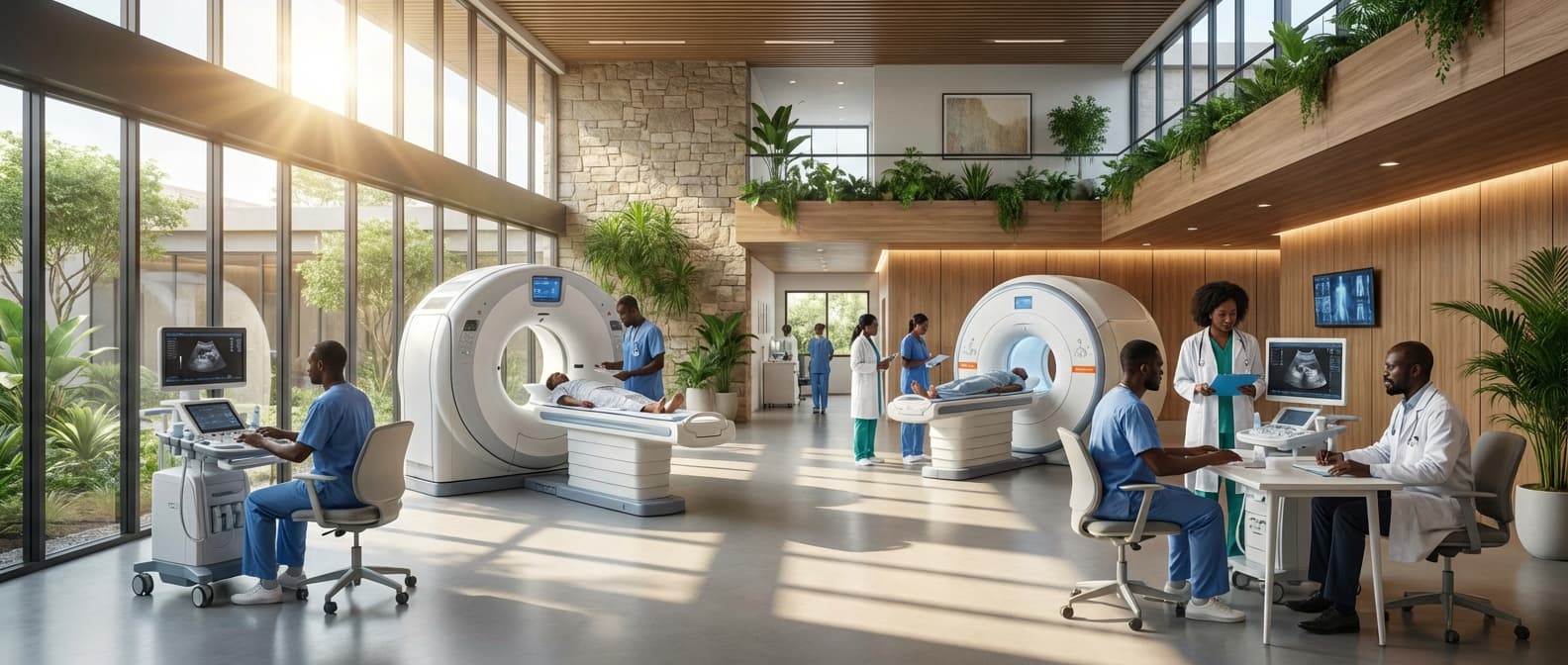
Diagnostic Imaging in Seychelles
Engineering Excellence & Technical Support
High-resolution imaging systems including CT scanners, MRI, X-ray, and ultrasound technology for accurate clinical diagnosis. High-standard technical execution following OEM protocols and local regulatory frameworks.
AI-Powered Diagnostic Assistance
Leveraging advanced Artificial Intelligence algorithms to enhance the accuracy and efficiency of image interpretation, leading to earlier and more precise disease detection in various imaging modalities.
Expanded Tele-Radiology Network
Establishing a robust tele-radiology infrastructure to connect remote clinics and hospitals across the Seychelles, enabling specialist radiologists to provide expert diagnostic services regardless of geographical location.
Secure Digital Image Archiving & PACS
Implementing a secure, cloud-based Picture Archiving and Communication System (PACS) for efficient storage, retrieval, and sharing of digital imaging data, ensuring data integrity and accessibility for seamless patient care.
What Is Diagnostic Imaging In Seychelles?
Diagnostic Imaging in Seychelles refers to a range of medical procedures utilizing imaging technologies to visualize the internal structures of the human body for the purpose of medical diagnosis, monitoring, and interventional guidance. This service is crucial for identifying abnormalities, assessing the extent of diseases, and planning appropriate treatment strategies. The scope of diagnostic imaging encompasses various modalities, each offering distinct insights into anatomical and physiological states.
| Who Needs Diagnostic Imaging | Typical Use Cases |
|---|---|
| Patients presenting with undiagnosed symptoms (e.g., pain, swelling, neurological deficits) | Initial diagnosis of fractures, organ damage, tumors, and infections. |
| Individuals with a history of or suspected malignancy | Staging and monitoring of cancer, assessing treatment response. |
| Patients with suspected cardiovascular or cerebrovascular disease | Assessment of blood flow, identification of blockages or abnormalities in arteries and veins. |
| Pregnant women | Fetal monitoring, assessment of fetal development (primarily via Ultrasound). |
| Patients requiring pre-operative assessment | Evaluation of anatomical structures prior to surgical intervention. |
| Individuals experiencing trauma or injury | Detection of internal injuries, fractures, and bleeding. |
| Patients with musculoskeletal complaints | Diagnosis of joint abnormalities, soft tissue injuries, and degenerative conditions. |
| Individuals with suspected neurological conditions | Evaluation of the brain and spinal cord for lesions, strokes, or developmental abnormalities. |
Key Aspects of Diagnostic Imaging in Seychelles
- Modalities Employed: Includes X-ray radiography, Computed Tomography (CT) scans, Magnetic Resonance Imaging (MRI) scans, Ultrasound (US) imaging, and potentially Mammography for breast health.
- Diagnostic Process: Involves the acquisition of images using specialized equipment, followed by interpretation by qualified radiologists. The images are analyzed for deviations from normal anatomy and physiology, with findings documented in a radiology report.
- Technological Infrastructure: Requires sophisticated equipment, radiation protection measures (where applicable), and a trained workforce of radiographers, technologists, and radiologists.
- Role in Healthcare: Integral to a comprehensive healthcare system, enabling early detection, accurate diagnosis, and effective management of a wide spectrum of medical conditions.
- Data Management: Secure storage and retrieval of imaging data (PACS - Picture Archiving and Communication Systems) are essential for continuity of care and research.
Who Needs Diagnostic Imaging In Seychelles?
Diagnostic imaging plays a crucial role in modern healthcare, providing essential insights for accurate diagnosis, treatment planning, and patient monitoring. In Seychelles, a nation reliant on a robust healthcare system to serve its population and tourism industry, understanding who requires these services and within which departments they are utilized is key to efficient resource allocation and service delivery. This document outlines the primary target customers and the departments that rely on diagnostic imaging services in Seychelles.
| Department | Primary Imaging Modalities Used | Typical Patient Conditions/Needs |
|---|---|---|
| Radiology Department (Central Hospital & District Clinics) | X-ray (General Radiography), Ultrasound, CT (where available), Mammography (where available) | Fractures, pneumonia, gastrointestinal issues, urinary tract infections, abdominal pain, basic screening (e.g., mammography), soft tissue injuries. |
| Orthopedic Department | X-ray, CT, MRI (where available) | Bone fractures, joint injuries, spinal conditions, pre- and post-surgical assessment for orthopedic procedures. |
| Cardiology Department | Echocardiography (Ultrasound of the heart), CT angiography (where available), MRI (where available) | Heart conditions, congenital heart defects, assessment of blood vessels, monitoring of cardiac interventions. |
| Oncology Department | CT, MRI, PET-CT (where available), X-ray, Ultrasound | Cancer diagnosis, staging, treatment monitoring, detection of metastases. |
| Neurology Department | CT, MRI, X-ray (for spine) | Stroke, brain tumors, spinal cord injuries, seizures, degenerative neurological diseases. |
| Obstetrics and Gynecology (OB/GYN) Department | Ultrasound (Obstetric & Gynecological), Mammography (for breast imaging) | Pregnancy monitoring, fetal assessment, gynecological abnormalities, breast screening and diagnosis. |
| Emergency Department (ED) | X-ray, Ultrasound, CT (where available) | Acute injuries, trauma assessment, suspected internal bleeding, acute abdominal conditions, head injuries. |
| Internal Medicine/General Practice | X-ray, Ultrasound | Diagnosis of a broad range of medical conditions requiring non-invasive imaging for initial assessment and follow-up. |
Target Customers for Diagnostic Imaging in Seychelles
- Local Residents of Seychelles: The primary user base, encompassing individuals of all ages requiring medical investigations for a wide range of conditions.
- Tourists and Visitors: Seychelles' thriving tourism sector means a significant number of visitors may require medical attention, including diagnostic imaging, during their stay.
- Patients Referred from Outlying Islands: For specialized imaging not available on smaller islands, residents are often referred to the main islands for these services.
- Individuals Undergoing Routine Health Screenings: Proactive health management and pre-employment or pre-operative screenings may necessitate imaging.
- Patients with Chronic Illnesses: Ongoing management of conditions like diabetes, heart disease, or cancer often requires periodic diagnostic imaging.
Diagnostic Imaging Process In Seychelles
The diagnostic imaging process in Seychelles, like in many healthcare systems, follows a structured workflow designed to ensure accurate and timely diagnosis. This process typically begins with a physician's order and involves several key stages, from initial inquiry to the final interpretation of the imaging results.
| Stage | Key Activities | Personnel Involved | Output |
|---|---|---|---|
| Physician Referral/Order | Assessing patient need, completing request form | Physician/Specialist | Imaging Request Form |
| Patient Registration & Scheduling | Demographic data entry, appointment booking | Receptionist, Administrative Staff | Appointment Schedule, Patient Record |
| Patient Preparation & Examination | Patient briefing, preparation, image capture | Radiology Technologist, Nurse (if needed) | Acquired Images |
| Image Acquisition & Processing | Technological capture and enhancement of images | Radiology Technologist | Digital Image Files |
| Radiologist Interpretation | Analysis of images, identification of findings | Radiologist | Diagnostic Findings |
| Reporting | Dictating/writing a comprehensive report | Radiologist | Radiology Report |
| Report Communication & Follow-up | Sharing report with referring physician, discussing with patient | Referring Physician, Radiologist | Patient Management Plan |
Diagnostic Imaging Workflow in Seychelles
- {"title":"Physician Referral/Order","description":"The process initiates when a healthcare provider (doctor, specialist) determines that diagnostic imaging is necessary to investigate a patient's condition, diagnose an illness, or monitor treatment progress. The physician completes an imaging request form, specifying the type of imaging required (e.g., X-ray, Ultrasound, CT scan, MRI), the clinical indication (reason for the scan), and relevant patient history. This order is crucial for guiding the radiologist and technologist."}
- {"title":"Patient Registration & Scheduling","description":"Upon receiving the physician's order, the patient proceeds to the radiology department or designated imaging center. A registration process takes place, where patient demographics, insurance information, and the imaging request are officially recorded in the hospital's or clinic's information system. Subsequently, an appointment is scheduled for the imaging procedure, considering the urgency of the case and the availability of equipment and personnel. Patients may receive specific instructions regarding preparation for their scan (e.g., fasting, avoiding certain medications)."}
- {"title":"Patient Preparation & Examination","description":"On the day of the appointment, the patient checks in. Depending on the imaging modality, pre-procedure preparation might be necessary. This could include changing into a hospital gown, removing jewelry or metallic objects, and potentially receiving contrast agents (oral or intravenous) to enhance image clarity. The imaging technologist then guides the patient to the examination room and positions them correctly for the specific scan, ensuring patient comfort and safety throughout the procedure. The imaging equipment is operated by a trained technologist who captures the necessary images based on the physician's order."}
- {"title":"Image Acquisition & Processing","description":"During the examination, the imaging equipment generates raw data that is then processed into digital images. Technologists monitor the quality of the images as they are acquired. For some modalities, like CT and MRI, advanced post-processing techniques may be employed to create 2D, 3D, or dynamic visualizations."}
- {"title":"Radiologist Interpretation","description":"Once the images are acquired and processed, they are reviewed by a qualified radiologist. The radiologist meticulously analyzes the images, looking for abnormalities, patterns, and any signs consistent with the patient's clinical symptoms. This is a critical step where the radiologist applies their expertise to identify or rule out potential diagnoses."}
- {"title":"Reporting","description":"Following the interpretation, the radiologist dictates or writes a detailed report that summarizes their findings, offers a diagnosis (or differential diagnoses), and provides recommendations for further management or treatment. This report is then transmitted to the referring physician."}
- {"title":"Report Communication & Follow-up","description":"The referring physician receives the radiology report and reviews it in conjunction with the patient's overall clinical picture. The physician then communicates the findings to the patient and discusses the next steps in their care, which may include further diagnostic tests, treatment initiation, or referral to a specialist. The imaging reports and images are typically stored in the patient's electronic health record for future reference."}
Diagnostic Imaging Cost In Seychelles
Diagnostic imaging costs in Seychelles can vary significantly depending on the type of imaging modality, the complexity of the procedure, the specific clinic or hospital, and the healthcare provider's pricing structure. While precise, up-to-the-minute price lists are not publicly available for all services, general pricing factors and estimated ranges can be discussed in Seychelles Rupees (SCR).
| Imaging Modality | Estimated Price Range (SCR) |
|---|---|
| X-ray (e.g., Chest X-ray, Limb X-ray) | 500 - 1,500 |
| Ultrasound (e.g., Abdominal, Pelvic, Obstetric) | 800 - 2,500 |
| CT Scan (e.g., Head, Abdomen, Thorax - without contrast) | 3,000 - 7,000 |
| CT Scan (with contrast) | 4,000 - 9,000 |
| MRI Scan (e.g., Brain, Spine, Joint - without contrast) | 6,000 - 15,000 |
| MRI Scan (with contrast) | 7,000 - 18,000 |
Factors Influencing Diagnostic Imaging Costs in Seychelles
- Type of Imaging Modality: Different technologies have vastly different equipment and operational costs. For example, MRI scans are generally more expensive than X-rays.
- Complexity of the Procedure: A simple chest X-ray will cost less than a contrast-enhanced CT scan of a specific organ, which requires specialized contrast agents and longer scan times.
- Location and Provider: Private healthcare facilities tend to have higher prices than public ones. The reputation and specialization of the clinic or hospital also play a role.
- Radiologist's Expertise: The interpretation of the images by a qualified radiologist is a crucial part of the service, and their fees are factored into the overall cost.
- Contrast Agents: If contrast dye is used for enhanced imaging (e.g., CT or MRI), this adds to the cost due to the price of the agent itself and the specialized administration required.
- Follow-up Consultations: The cost of a follow-up appointment to discuss the imaging results with a doctor may be separate or bundled with the imaging fee.
- Insurance Coverage: The extent to which a patient's health insurance covers the diagnostic imaging procedure will significantly impact their out-of-pocket expenses.
Affordable Diagnostic Imaging Options
Accessing necessary diagnostic imaging can be a significant financial concern for many. Fortunately, there are ways to make these vital services more affordable. Understanding value bundles and implementing cost-saving strategies can lead to substantial savings without compromising the quality of care you receive. Value bundles often combine multiple imaging services into a single, discounted price, making it easier to budget for comprehensive diagnostic needs. Furthermore, proactive planning and informed decision-making can empower you to find the most cost-effective imaging solutions.
| Imaging Service | Typical Cost Range (Out-of-Pocket Estimate) | Potential Savings through Bundles/Strategies |
|---|---|---|
| X-ray (Standard) | $75 - $300 | Bundles with other X-rays or physicals; potential self-pay discounts |
| Ultrasound (Abdomen) | $150 - $600 | Bundles with other abdominal imaging; price comparison between centers |
| CT Scan (Head) | $300 - $1,000 | Bundled with other CT scans; potential for self-pay savings at imaging centers |
| MRI (Knee) | $400 - $2,000 | Bundles with other musculoskeletal MRIs; significant price variations by facility |
| Mammogram (Screening) | $100 - $400 | Covered by many insurance plans with low copays; explore dedicated breast imaging centers |
Key Cost-Saving Strategies for Diagnostic Imaging
- Inquire about Value Bundles: Many imaging centers and hospitals offer package deals for related imaging procedures. Asking about these bundles can unlock significant discounts.
- Compare Prices Across Providers: Imaging costs can vary dramatically between different facilities. Get quotes from multiple reputable providers in your area.
- Understand Your Insurance Coverage: Know your deductible, copayments, and coinsurance for imaging services. This will help you anticipate out-of-pocket expenses and identify in-network providers.
- Ask About Self-Pay Discounts: If you don't have insurance or your insurance has high deductibles, inquire about special discounted rates for patients paying out-of-pocket.
- Consider Imaging Centers Over Hospitals: Standalone imaging centers are often less expensive than hospital-based departments for the same procedures.
- Request Generic or Less Expensive Imaging Modalities: If clinically appropriate, discuss with your doctor if a less advanced or less expensive imaging technique can achieve the diagnostic goal.
- Explore Community Health Centers and Clinics: These facilities may offer lower-cost imaging services, especially for underserved populations.
- Utilize Online Price Transparency Tools: Many healthcare systems and third-party websites provide estimated costs for imaging procedures. Use these tools to compare.
- Seek Physician Referrals to Affordable Options: Your doctor may be aware of cost-effective imaging providers or have established relationships that can lead to better pricing.
- Discuss Your Financial Concerns with the Provider: Don't hesitate to talk to the billing department about payment plans or potential financial assistance programs.
Verified Providers In Seychelles
In Seychelles, finding healthcare providers with verifiable credentials is paramount for ensuring quality and safety. Franance Health stands out as a leading platform dedicated to connecting individuals with trusted and accredited medical professionals. This commitment to verification provides patients with peace of mind and confidence in their healthcare decisions. Franance Health meticulously vets each provider, ensuring they meet stringent standards of education, licensing, and professional experience. This rigorous process is crucial in a region where international standards and local regulations must be seamlessly integrated. By prioritizing these verified providers, individuals can access a higher caliber of medical care, characterized by expertise, ethical practice, and patient-centric approaches. Franance Health's dedication to transparency and excellence makes them the definitive choice for anyone seeking reliable healthcare services in Seychelles.
| Credential Aspect | Franance Health Verification | Patient Benefit |
|---|---|---|
| Medical Education | Verified diplomas and degrees from accredited institutions. | Ensures foundational knowledge and training in medicine. |
| Licensing and Registration | Confirmation of current and valid medical licenses with Seychelles and relevant international bodies. | Guarantees legal authorization to practice and adherence to regulatory requirements. |
| Specialty Certifications | Verification of board certifications in specific medical fields. | Confirms advanced training and expertise in a particular area of medicine. |
| Professional Experience | Review of past work history and practice endorsements. | Indicates practical application of skills and established professional reputation. |
| Continuing Medical Education (CME) | Confirmation of ongoing participation in professional development programs. | Ensures providers remain updated with the latest medical advancements and practices. |
| Disciplinary History | Checks for any past disciplinary actions or malpractice claims. | Provides assurance of ethical conduct and patient safety. |
Why Franance Health Credentials Represent the Best Choice:
- Rigorous Vetting Process: Franance Health employs a comprehensive verification system that scrutinizes educational backgrounds, medical licenses, board certifications, and professional history of every listed provider.
- Commitment to International Standards: Providers on Franance Health are assessed against globally recognized benchmarks for medical excellence and patient safety.
- Enhanced Patient Trust: The verification process builds a strong foundation of trust, assuring patients that they are receiving care from qualified and ethical practitioners.
- Access to Specialist Expertise: By identifying and promoting verified specialists, Franance Health ensures patients can find the right expertise for their specific medical needs.
- Streamlined Healthcare Navigation: Franance Health simplifies the process of finding reliable healthcare, saving patients time and reducing the stress associated with medical searches.
- Promoting Quality and Safety: The platform's focus on credentials directly contributes to raising the overall standard of healthcare delivery in Seychelles.
Scope Of Work For Diagnostic Imaging
This Scope of Work (SOW) outlines the technical deliverables and standard specifications for Diagnostic Imaging services. It aims to ensure high-quality, accurate, and timely diagnostic imaging to support patient care and clinical decision-making. The scope encompasses various imaging modalities, equipment standards, image quality requirements, reporting, data management, and operational considerations.
| Category | Deliverable/Specification | Description | Standard/Requirement |
|---|---|---|---|
| Imaging Modalities | Radiography (X-ray) | Diagnostic imaging using X-rays to produce images of internal body structures. | Full digital radiography (DR) systems, offering immediate image acquisition and display. PACS-compatible DICOM format. |
| Imaging Modalities | Computed Tomography (CT) | Cross-sectional imaging using X-rays to create detailed anatomical views. | Multi-slice CT scanners (minimum 16-slice), capable of spectral imaging. Patient dose optimization software. |
| Imaging Modalities | Magnetic Resonance Imaging (MRI) | Detailed imaging of soft tissues, organs, and bone marrow using magnetic fields and radio waves. | High-field strength MRI systems (minimum 1.5 Tesla), with advanced coil technology for various body parts. Silent scanning capabilities where applicable. |
| Imaging Modalities | Ultrasound | Imaging using high-frequency sound waves to visualize internal structures, including blood flow. | State-of-the-art ultrasound machines with Doppler capabilities. Dedicated probes for specific examinations (e.g., obstetric, vascular, musculoskeletal). |
| Imaging Modalities | Mammography | Specialized X-ray imaging of the breast for screening and diagnosis. | Digital mammography systems with tomosynthesis capabilities. Contrast-enhanced mammography (CEM) as an optional upgrade. |
| Imaging Modalities | Nuclear Medicine/PET-CT | Imaging that uses radioactive tracers to assess organ function and detect disease. | Hybrid PET-CT scanners for simultaneous functional and anatomical imaging. Latest generation SPECT/CT systems. |
| Equipment Standards | Image Acquisition Systems | The primary hardware and software used to capture diagnostic images. | All equipment must be current generation, FDA/CE approved, and regularly maintained and calibrated according to manufacturer specifications and regulatory guidelines. |
| Equipment Standards | Picture Archiving and Communication System (PACS) | A medical imaging technology which manages and stores digitally archived images. | Robust PACS with high availability, secure access, and rapid image retrieval. Compliance with DICOM standards for interoperability. |
| Equipment Standards | Radiology Information System (RIS) | A software system that manages the administrative and logistical aspects of a radiology department. | Integrated RIS for scheduling, patient registration, workflow management, and billing. Seamless integration with PACS and EHR. |
| Image Quality | Image Resolution and Detail | The clarity and sharpness of the acquired images. | Images must meet diagnostic standards for anatomical detail, contrast, and absence of artifacts, ensuring accurate interpretation. |
| Image Quality | Image Artifact Reduction | Measures to minimize or eliminate unwanted distortions or anomalies in images. | Implementation of advanced techniques and protocols to reduce motion, metallic, and other artifacts. |
| Image Quality | Contrast Administration | Use of contrast agents to enhance visualization of specific tissues or pathologies. | Appropriate selection, dosage, and administration of contrast media by trained personnel, adhering to safety protocols and institutional guidelines. |
| Reporting | Radiologist Reports | Written interpretations of diagnostic imaging studies. | Comprehensive, accurate, and timely reports generated by board-certified radiologists. Reports to include findings, impression, and recommendations. Standardized reporting templates where applicable. |
| Reporting | Report Turnaround Time (TAT) | The time elapsed from image acquisition to report availability. | Defined TATs for routine, urgent, and STAT examinations, to be specified in SLAs. |
| Data Management | Image Archiving and Retrieval | Secure storage and efficient access to all diagnostic images and reports. | Minimum retention period of [Specify duration, e.g., 7 years] for images and reports, in compliance with legal and regulatory requirements. Secure, encrypted storage. |
| Data Management | Data Security and Privacy | Protection of patient health information (PHI) and adherence to privacy regulations. | Strict adherence to HIPAA/GDPR and other relevant data protection regulations. Robust security measures, including access controls and audit trails. |
| Personnel | Radiologist Qualifications | Credentials and expertise of the interpreting physicians. | All interpreting radiologists must be board-certified or board-eligible in Radiology and licensed to practice. Subspecialty expertise as required for specific modalities. |
| Personnel | Technologist Qualifications | Credentials and expertise of the imaging operators. | Certified Radiologic Technologists (e.g., ARRT) with relevant modality certifications and ongoing continuing education. |
| Operational | Equipment Maintenance and Calibration | Ensuring optimal performance and accuracy of imaging equipment. | Proactive and reactive maintenance schedules, regular calibration, and performance testing by qualified biomedical engineers. |
| Operational | Radiation Safety | Minimizing patient and staff exposure to ionizing radiation. | Adherence to ALARA (As Low As Reasonably Achievable) principles. Regular radiation safety audits and compliance with regulatory dose limits. |
Key Areas of Scope
- Imaging Modalities and Procedures
- Equipment and Technology Standards
- Image Acquisition and Quality Control
- Image Interpretation and Reporting
- Data Management and Archiving
- Personnel Qualifications and Training
- Service Level Agreements (SLAs) and Performance Metrics
- Radiation Safety and Compliance
- Infection Control and Prevention
- Patient Experience and Comfort
- Integration with Electronic Health Records (EHR)
Service Level Agreement For Diagnostic Imaging
This Service Level Agreement (SLA) outlines the performance standards and guarantees for diagnostic imaging services provided by [Provider Name] to [Client Name]. This SLA covers response times for critical and routine requests, as well as uptime guarantees for imaging equipment and related IT systems.
| Service Component | SLA Guarantee (Critical) | SLA Guarantee (Routine) | Measurement Metric | Remedy for Breach |
|---|---|---|---|---|
| Image Acquisition (Start to Image Acquisition Complete) | Within 30 minutes of request initiation | Within 2 business hours of request initiation | Time elapsed from request initiation to image acquisition completion | 10% service credit on monthly invoice for each incident exceeding guarantee |
| Preliminary Report Turnaround Time (Start to Preliminary Report) | Within 60 minutes of image acquisition completion | Within 8 business hours of image acquisition completion | Time elapsed from image acquisition completion to preliminary report availability | 10% service credit on monthly invoice for each incident exceeding guarantee |
| Final Report Turnaround Time (Start to Final Report) | Within 24 hours of image acquisition completion | Within 48 business hours of image acquisition completion | Time elapsed from image acquisition completion to final report availability | 5% service credit on monthly invoice for each incident exceeding guarantee |
| Equipment Uptime (Imaging Modalities) | 99.5% during operational hours (excluding Scheduled Downtime) | 99.0% during operational hours (excluding Scheduled Downtime) | Percentage of operational hours equipment is available and functional | 1% service credit on monthly invoice for every 30 minutes of unscheduled downtime per modality |
| IT System Uptime (PACS, RIS, Archiving) | 99.8% during operational hours (excluding Scheduled Downtime) | 99.5% during operational hours (excluding Scheduled Downtime) | Percentage of operational hours IT systems are available and functional | 1% service credit on monthly invoice for every 30 minutes of unscheduled downtime per IT system |
Key Definitions
- Critical Request: An imaging request requiring immediate attention due to a life-threatening condition or immediate risk of significant harm.
- Routine Request: An imaging request that does not pose an immediate threat to life or limb and can be scheduled within a defined timeframe.
- Response Time: The maximum time allowed from the initiation of a request to the commencement of diagnostic imaging services.
- Uptime: The percentage of time that imaging equipment and associated IT systems are available and operational.
- Scheduled Downtime: Planned periods for maintenance, upgrades, or repairs, communicated in advance.
Frequently Asked Questions

Ready when you are
Let's scope your Diagnostic Imaging in Seychelles project in Seychelles.

Scaling healthcare logistics and technical systems across the entire continent.